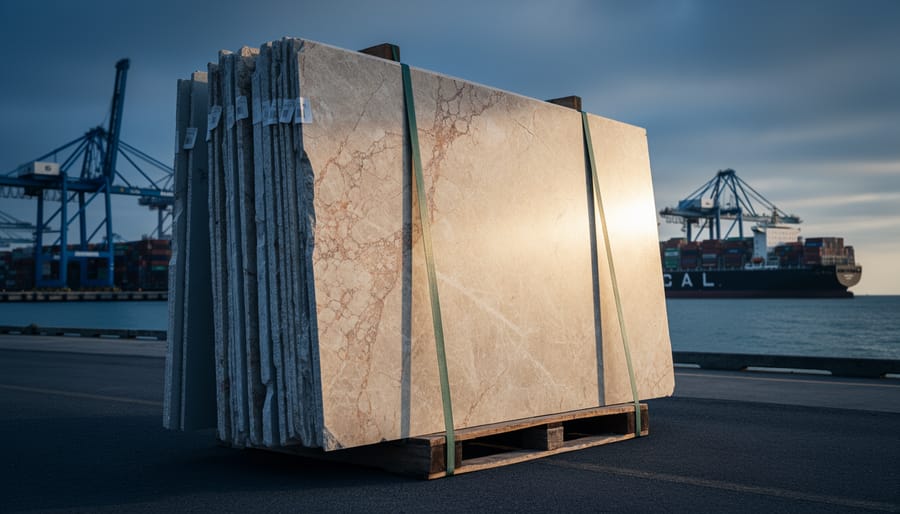
Global stone supply chains face unprecedented disruption as trade tensions, sanctions, and territorial disputes ripple through quarries from Turkey to India. The marble countertop delayed by three months, the travertine project quote that doubled overnight, or the sudden unavailability of a specific granite—these aren’t isolated incidents but symptoms of geopolitical shifts fundamentally reshaping how natural stone moves across borders.
Transportation routes that have carried stone for decades now face blockades, tariffs, and rerouting through costlier corridors. Quarries in conflict zones shut down without warning. Sanctions against major exporting nations force buyers to scramble for alternative sources at premium prices. Meanwhile, emerging trade alliances create new opportunities even as traditional supply partnerships dissolve.
For professionals specifying stone and consumers investing in permanent installations, understanding these forces has become essential. The beautiful Carrara marble or exotic quartzite you planned may originate from regions currently entangled in international disputes, directly affecting your project timeline and budget. Energy costs tied to geopolitical events influence everything from extraction to shipping, while currency fluctuations caused by sanctions can change pricing overnight.
This article examines how specific geopolitical events disrupt stone availability, translates abstract concepts like trade embargoes into practical project implications, and provides strategies for navigating supply uncertainty. Through current case studies and expert insights, you’ll gain the knowledge to anticipate disruptions, evaluate alternatives, and make informed decisions despite an increasingly volatile global marketplace.
How Global Tensions Disrupt Your Stone Supply
Where Your Stone Actually Comes From
Natural stone isn’t uniformly distributed across the globe. Specific geological formations, formed over millions of years, concentrate certain stone types in particular regions, creating distinct geographic monopolies that significantly impact global supply chains.
Italy dominates the luxury marble market, particularly with Carrara marble from Tuscany. The country’s centuries-old quarrying expertise and unmatched deposits of white and veined marbles make it the benchmark for premium materials. Meanwhile, India has emerged as the world’s largest granite exporter, with major quarries in Rajasthan, Karnataka, and Tamil Nadu producing everything from black galaxy granite to colorful varieties at competitive prices.
China holds a unique position as both a major producer and the world’s largest stone processor. Its vast territory contains diverse stone types, from limestone to slate, while its manufacturing infrastructure processes imported blocks from other countries for global distribution. Brazil’s geological diversity yields exclusive materials like Azul Bahia granite and exotic quartzites found nowhere else, commanding premium prices despite complex export logistics.
Turkey bridges Europe and Asia as a key supplier of marble, travertine, and limestone, leveraging its proximity to major markets. The country’s Afyon region produces significant white marble volumes, competing directly with Italian suppliers.
This geographic concentration means that political instability, trade policies, or infrastructure disruptions in any single country can immediately affect global availability and pricing. Understanding where your stone originates helps anticipate potential supply chain vulnerabilities and plan accordingly for your projects.
The Domino Effect: From Quarry to Your Countertop
When geopolitical tensions flare, the journey of natural stone from mountainside to your kitchen becomes significantly more complicated. Understanding this chain reaction helps explain why your granite countertop suddenly costs more or takes longer to arrive.
The disruption typically begins at the source. When Russia invaded Ukraine in 2022, European granite quarries faced immediate fuel shortages and energy cost spikes, forcing some operations to temporarily halt extraction. Similarly, trade sanctions against specific countries have blocked access to premium marble varieties, creating artificial scarcity in markets that previously enjoyed steady supply.
Processing facilities represent the next vulnerable point. Many stone slabs undergo initial cutting and finishing near quarries before international shipment. Political instability in major production regions like Turkey and India has occasionally disrupted these operations. In 2023, civil unrest in certain Indian states delayed container shipments by weeks, leaving distributors with empty warehouses and frustrated customers.
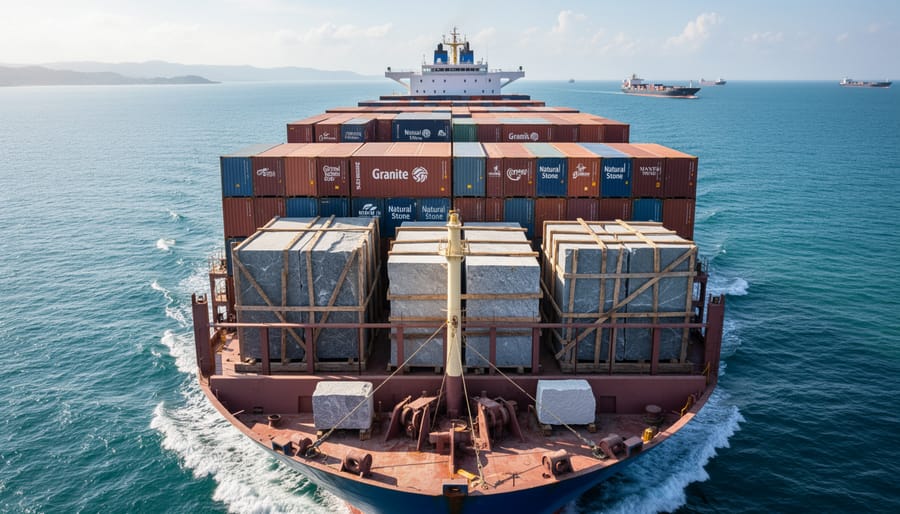
Shipping represents perhaps the most dramatic bottleneck. The 2021 Suez Canal blockage demonstrated how a single incident can paralyze global supply chains. More recently, Houthi attacks on commercial vessels in the Red Sea forced shipping companies to reroute around Africa, adding three weeks and thousands of dollars to each container’s journey. These detours affect everything from Brazilian quartzite to Italian Carrara marble.
The final mile brings additional challenges. Customs delays intensify during diplomatic tensions, as increased inspections slow clearance times. Trade tariffs suddenly imposed between nations can add 25 percent or more to landed costs overnight.
For your project, this means a countertop ordered from overseas might experience multiple delays across this interconnected chain. A single geopolitical event rarely causes complete stoppage, but several concurrent disruptions create compounding effects that transform routine purchases into extended negotiations with suppliers about availability and revised pricing.
Current Flashpoints Affecting Stone Availability
Trade Restrictions and Tariffs
Trade restrictions and tariffs significantly influence the natural stone market, directly affecting both project costs and material availability. When governments impose sanctions on stone-producing nations or increase import duties, the ripple effects reach everyone from large-scale developers to homeowners planning kitchen renovations.
Import tariffs function as additional taxes on foreign stone products, immediately raising prices at the point of entry. For example, when the United States imposed tariffs on granite imports from specific countries, the cost increase was passed through the supply chain, making certain stones 15-30% more expensive for end consumers. These price adjustments often happen quickly, sometimes catching projects mid-specification.
Sanctions present even more dramatic challenges. When diplomatic relations deteriorate and trade embargoes are enacted, entire categories of stone can become temporarily unavailable in certain markets. This forces designers and architects to pivot to alternative materials or sources, potentially compromising aesthetic vision or project timelines.
Export restrictions from source countries add another layer of complexity. Some nations limit raw stone exports to protect domestic processing industries, reducing global supply and driving up prices. Others restrict specific stone types deemed culturally significant or environmentally sensitive.
Savvy industry professionals can mitigate some cost impacts through strategic approaches. Utilizing foreign trade zones allows importers to defer or reduce tariff payments legally. Diversifying supplier networks across multiple countries provides flexibility when restrictions target specific regions. Long-term contracts can lock in pricing before anticipated tariff increases, though this requires careful market analysis and risk assessment.
Shipping Route Disruptions
Maritime shipping lanes serve as the primary arteries for transporting heavy stone materials across continents, with approximately 90% of natural stone moving by sea. When regional conflicts emerge near critical chokepoints, the ripple effects reach project timelines and budgets worldwide.
The Suez Canal, Red Sea, and Strait of Hormuz represent particularly vulnerable passages. Recent tensions in these regions have forced shipping companies to reroute vessels around Africa’s Cape of Good Hope, adding 10-14 days to journey times and increasing fuel costs by 30-40%. For marble slabs from Turkey or granite blocks from India destined for North American markets, these detours translate directly to higher freight charges.
Insurance premiums also spike during regional instabilities. War risk insurance can add $50,000-$100,000 per shipment when vessels transit conflict zones, costs that manufacturers typically pass to end customers. Container availability becomes another concern as shipping lines reduce service frequency on affected routes.
The Black Sea corridor disruptions have particularly impacted European stone imports, with Ukrainian granite and Turkish travertine facing extended delivery windows. Projects requiring specific stone varieties from these regions now contend with 8-12 week delays compared to pre-conflict timelines, forcing architects and designers to consider alternative materials or adjust project schedules accordingly.
Energy Costs and Production Shutdowns
Energy prices significantly influence the natural stone supply chain, as quarrying and processing are energy-intensive operations. When production regions experience energy crises—whether from fuel shortages, price spikes, or electricity disruptions—the ripple effects reach global markets quickly.
Quarries rely heavily on diesel-powered machinery for extraction, while processing facilities consume massive amounts of electricity for cutting, polishing, and finishing stone slabs. In Europe, recent energy price surges forced several Italian and Spanish marble processors to temporarily halt operations or reduce production capacity by up to 40%. Turkish quarries, another major source of natural stone, faced similar challenges when natural gas supplies became uncertain.
These production shutdowns directly translate to longer lead times and higher costs for projects worldwide. When processors shut down, inventory depletes rapidly, and restarting operations after energy stabilizes can take weeks or months. Many producers pass increased energy costs directly to buyers, with processing fees rising 15-30% in affected regions.
For architects and designers, this reality means earlier planning becomes essential. Projects with fixed budgets may need to explore alternative stone sources from regions with stable energy supplies, or consider adjusting specifications to accommodate available materials. Industry professionals should maintain communication with suppliers about potential energy-related disruptions and build flexibility into project timelines to accommodate these increasingly common production interruptions.
Real-World Impact on Your Stone Projects
Price Volatility and Budget Planning
Geopolitical disruptions have triggered significant price fluctuations across popular stone varieties. Italian Carrara marble, for instance, experienced price increases of 15-25% between 2021 and 2023 due to energy costs and export complications. Brazilian quartzite saw similar spikes of 20-30% as logistics challenges compounded production expenses. Indian granite, despite being more abundant, faced 10-18% increases driven by freight costs and currency fluctuations.
These volatile market conditions require strategic budget planning. When initiating stone projects, architects and designers should build in a 15-20% contingency buffer above quoted prices to accommodate potential increases during procurement timelines. Lock in pricing through purchase agreements whenever possible, particularly for large-scale projects with extended timelines.
Request multiple quotes from suppliers who source from different regions to compare options and identify more stable pricing. Consider specifying acceptable alternatives in project plans, allowing flexibility if preferred materials become prohibitively expensive. For residential projects, homeowners should secure material deposits early to guarantee pricing, even if installation occurs months later.
Working closely with stone suppliers who maintain transparent communication about geopolitical factors affecting their inventory helps anticipate changes. Many reputable suppliers now offer price-lock guarantees for 60-90 days, providing valuable protection during uncertain periods. Additionally, phasing projects to prioritize essential stone installations while postponing decorative elements can help manage costs when budgets tighten unexpectedly. Planning proactively transforms price volatility from a project threat into a manageable variable.
Extended Lead Times and Project Delays
Geopolitical disruptions have significantly extended natural stone procurement timelines, with delays now ranging from 8 to 16 weeks beyond traditional lead times. Projects that once took three months from order to installation may now require six months or longer, depending on the stone’s origin and current shipping conditions.
For architects and project managers, building in contingency time is essential. When planning renovations or new construction involving imported stone, add at least 20-30% buffer time to your original timeline estimates. This accounts for potential customs delays, rerouted shipments, and port congestion resulting from trade restrictions or geopolitical tensions.
Consider breaking projects into phases that allow flexibility if certain stone varieties face unexpected delays. Establishing relationships with multiple suppliers across different regions provides alternative sourcing options when primary suppliers encounter geopolitical obstacles.
Communication with clients about realistic timelines upfront prevents frustration and scope changes mid-project. Request detailed shipping documentation and tracking information from suppliers, and schedule regular check-ins to monitor progress. For time-sensitive projects, exploring domestically quarried alternatives or maintaining adequate stone inventory on-site before construction begins can mitigate risks associated with international supply chain uncertainties.
Limited Selection and Availability Issues
Geopolitical disruptions have significantly reduced access to premium stone varieties from traditional source countries. Materials like Carrara marble from Italy, Calacatta varieties, and certain exotic granites face unpredictable availability due to export restrictions, trade sanctions, and transportation bottlenecks. For instance, sanctions affecting Russian suppliers have limited access to specific quartzites and labradorites, while ongoing tensions in other regions have disrupted granite and limestone shipments.
This scarcity requires project stakeholders to embrace flexibility in material selection. Rather than specifying a single stone variety, architects and designers should identify acceptable alternatives from different geographic sources. Working closely with suppliers early in the design phase helps identify available options that meet aesthetic and performance requirements. Maintaining an approved substitutes list prevents project delays when preferred materials become unavailable. Additionally, considering domestic stone sources or materials from politically stable regions reduces exposure to supply chain volatility while often decreasing lead times and transportation costs.
Strategic Solutions for Architects and Designers
Early Sourcing and Material Procurement
Geopolitical disruptions have made early sourcing essential for successful stone projects. Industry professionals now recommend initiating material procurement 6-12 months ahead of installation dates, rather than the traditional 3-6 month window. This extended timeline accounts for potential shipping delays, customs complications, and supply chain volatility.
Building buffer time into project schedules protects against unforeseen disruptions. Consider adding 20-30% contingency time for international stone shipments, particularly from regions experiencing political tensions or infrastructure challenges. This cushion prevents costly project delays and maintains client relationships when unexpected issues arise.
Leveraging modern procurement technology helps identify available inventory and alternative sources quickly. Digital platforms provide real-time visibility into global stone supplies, enabling faster decision-making when primary sources face disruptions.
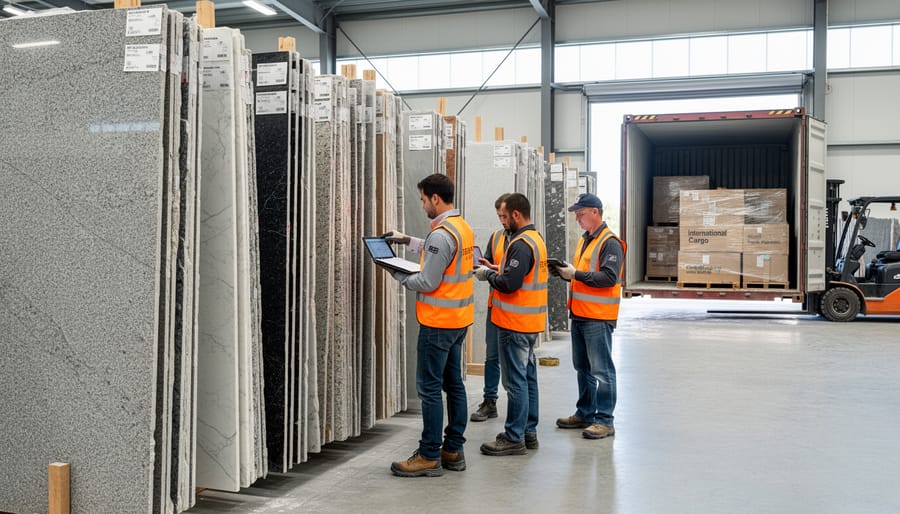
Working closely with experienced stone suppliers who maintain diverse sourcing networks offers additional protection. Reputable suppliers often pre-purchase materials and maintain strategic inventory, reducing your exposure to sudden geopolitical shifts. Establish relationships with multiple suppliers across different regions to ensure backup options when primary sources become compromised. Early communication about project requirements allows suppliers to secure materials before political situations deteriorate or demand spikes occur.
Diversifying Stone Sources
When traditional stone sources become unreliable due to geopolitical tensions, proactive diversification becomes essential for project continuity and budget stability. Start by researching geological equivalents—many stone types exist in multiple global locations with similar characteristics. For example, if Italian Carrara marble faces supply disruptions, consider comparable white marbles from Greece, Turkey, or Portugal that offer similar aesthetics and performance.
Working with suppliers who maintain diversified distribution networks provides built-in flexibility when specific regions become problematic. These established networks can quickly pivot to alternative quarries without compromising project timelines.
Request samples from multiple countries during the specification phase rather than committing to a single source. This allows you to evaluate quality, color matching, and pricing across regions while identifying backup options. Industry associations and stone trade shows offer valuable opportunities to discover emerging suppliers from politically stable regions.
Consider stones from North America, Australia, and Scandinavia, which typically offer greater supply chain predictability. While these sources may carry different price points, the added reliability often justifies the investment, particularly for large-scale or time-sensitive projects where delays prove costly.

Client Communication About Delays and Costs
When geopolitical issues affect your stone project, proactive and honest communication builds trust and strengthens client relationships. Start the conversation early—as soon as you identify potential delays or cost increases—rather than waiting until problems escalate. Explain the specific geopolitical factor in simple terms: “Trade restrictions between our country and the quarry’s location have added inspection requirements” is more helpful than vague references to “international complications.”
Present concrete impacts with transparency. Share how tariffs, shipping delays, or material shortages will affect timelines and budgets, offering documentation when available. Most clients appreciate understanding the external forces at play rather than feeling blindsided by changes.
Provide options alongside challenges. Present alternative stone sources, modified timelines, or design adjustments that maintain project integrity while navigating constraints. When possible, quantify uncertainties: “We’re seeing 15-20% cost increases” gives clients planning parameters.
Frame geopolitical factors as industry-wide challenges rather than failures of your business, while taking ownership of solutions. Document all communications in writing to establish a clear record. This transparent approach transforms a potentially negative experience into a demonstration of your professionalism and problem-solving capabilities, often resulting in stronger client partnerships despite temporary setbacks.
Smart Alternatives for Homeowners
Exploring Domestic Stone Options
North American quarries offer exceptional natural stone alternatives that eliminate exposure to international supply chain disruptions. The United States and Canada produce premium materials including Vermont Danby marble, Georgia Cherokee marble, and Canadian granite varieties that rival imported options in both quality and aesthetic appeal.
Domestic quarries provide distinct advantages beyond geopolitical stability. Transportation costs decrease significantly when stone travels hundreds rather than thousands of miles, reducing both project budgets and carbon footprints. Lead times shrink from months to weeks, allowing architects and designers to maintain project schedules without the uncertainty of customs delays or shipping interruptions.
Tennessee marble, quarried continuously since the 1800s, graces iconic buildings nationwide and offers warm tones comparable to Italian travertine. Minnesota’s Cold Spring granite delivers durability and color consistency for commercial applications. These sustainable domestic sourcing options ensure reliable supply chains while supporting local economies and American craftsmanship. For projects facing import uncertainties, exploring these regional alternatives provides both practical solutions and distinctive design possibilities without compromising on quality or visual impact.

Comparable Stone Varieties Worth Considering
When your preferred stone becomes difficult to source due to geopolitical disruptions, several visually comparable alternatives can maintain your design vision without compromising quality. Understanding these substitutions helps you navigate supply chain challenges while staying within budget and timeline constraints.
If Carrara marble from Italy faces availability issues, consider Danby marble from Vermont or Cherokee marble from Georgia. Both offer similar white backgrounds with gray veining, though Danby tends toward slightly cooler tones. For projects requiring the warm beige tones of Turkish travertine, Persian travertine or Mexican travertine provide comparable aesthetics with different sourcing routes.
When Brazilian quartzites experience shipping delays, look to Indian quartzites like Fantasy Brown or Fusion. These materials deliver similar hardness ratings and dramatic veining patterns. Similarly, if Chinese granite supplies tighten, domestic alternatives from North Carolina, Georgia, or South Dakota offer excellent substitutes across various color palettes.
For soapstone traditionally sourced from Brazil or India, Virginia soapstone provides a reliable domestic option with identical thermal properties and that characteristic soft feel. When Norwegian larvikite proves difficult to obtain, Canadian labradorite offers comparable iridescent properties and deep charcoal coloring.
The key to successful substitution lies in working with experienced stone suppliers who can provide actual samples rather than relying solely on digital images. Regional variations in mineral composition mean that even stones from the same geological family can display subtle differences in color saturation, veining density, and surface texture that only physical comparison reveals.
Long-Term Outlook: What to Expect
Industry Adaptation and Resilience
The natural stone industry has responded to recent geopolitical disruptions by fundamentally rethinking how materials move from quarry to project site. Leading suppliers are now establishing relationships with quarries across multiple continents rather than relying on single sources, ensuring that trade restrictions or political tensions in one region won’t halt operations entirely.
Many fabricators have begun investing in enhanced supply chain transparency systems, using digital tools to track materials from extraction through delivery. This visibility allows them to identify potential bottlenecks early and pivot to alternative sources when necessary.
Regional warehousing has also emerged as a critical strategy. By maintaining larger domestic inventories of popular stone varieties, suppliers can buffer against international shipping delays and sudden import restrictions. Some companies are exploring partnerships with quarries in politically stable regions that have been historically underutilized, such as those in South America and parts of Africa.
These adaptations come with upfront costs, but they’re proving essential for maintaining project timelines and customer confidence in an increasingly unpredictable global environment.
Monitoring Geopolitical Developments
Staying informed about geopolitical developments requires monitoring multiple indicators that signal potential supply chain disruptions. Track trade policy announcements from major stone-exporting countries like India, China, Brazil, and Italy, as new tariffs or export restrictions can immediately impact availability and pricing. International shipping rates serve as an early warning system—sudden increases in container costs or freight insurance premiums often precede broader supply constraints.
Industry publications and trade associations provide valuable insights into emerging challenges. Organizations like the Natural Stone Institute and Marble Institute of America regularly publish market analyses and alerts about regional disruptions. Subscribe to logistics industry newsletters that cover port congestion, shipping route changes, and customs policy updates.
Political stability indexes and economic sanctions lists help identify risk areas before they affect your projects. Government trade websites, including the U.S. International Trade Commission and European Union trade portals, offer official data on import volumes and regulatory changes.
For real-time awareness, follow commodity shipping trackers and global news sources focused on infrastructure and international relations. Building relationships with multiple stone suppliers also provides ground-level intelligence about emerging issues, enabling proactive adjustments to material selections and project timelines before disruptions escalate.
Navigating the complexities of geopolitical forces affecting natural stone supply chains may seem daunting, but understanding these dynamics positions you to make smarter, more resilient decisions for your projects. The global nature of stone sourcing means that trade policies, tariffs, transportation disruptions, and regional conflicts will continue influencing pricing and availability. However, this knowledge transforms uncertainty into opportunity.
The key takeaway is that flexibility has become essential in today’s marketplace. Building relationships with suppliers who source from multiple regions, considering alternative materials that achieve similar aesthetic goals, and planning projects with extended lead times can help mitigate supply chain volatility. Being proactive rather than reactive separates successful projects from delayed ones.
Despite these challenges, natural stone remains an exceptional investment. Its durability, timeless beauty, and unique character cannot be replicated by manufactured alternatives. When you understand the forces affecting availability and cost, you can better evaluate value and make informed choices that align with both your vision and budget.
The most critical step you can take is partnering with knowledgeable suppliers who monitor geopolitical developments and maintain diverse sourcing networks. These industry experts serve as your frontline advocates, helping you navigate disruptions, identify opportunities, and secure materials that meet your specifications. By fostering these relationships and staying informed about global trends, you ensure your natural stone projects succeed regardless of the geopolitical landscape.