
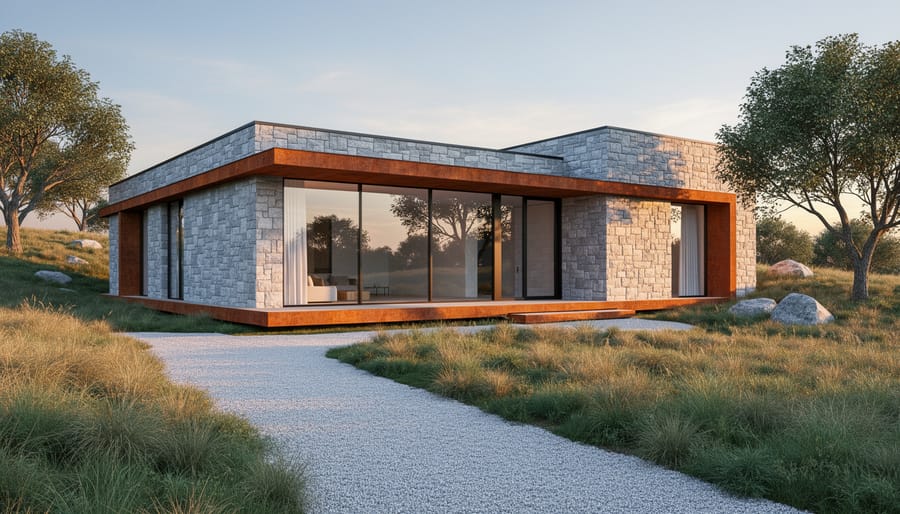
Contemporary stone houses represent architecture’s most compelling intersection of timeless durability and forward-thinking sustainability. While glass, steel, and concrete dominate modern construction conversations, natural stone delivers superior thermal mass, zero off-gassing, and a carbon footprint that decreases over the building’s 100-plus year lifespan. Recent studies show stone-clad homes reduce heating and cooling costs by 25-30% compared to conventional construction, with materials that require minimal processing and generate virtually no construction waste.
The contemporary application differs dramatically from rustic stone cottages or historic masonry. Today’s architects leverage precision-cut stone veneers, engineered anchoring systems, and mixed-material facades that pair limestone with expansive glazing or granite with weathered steel. This design evolution addresses both aesthetic minimalism and practical performance: stone naturally regulates interior temperatures, withstands extreme weather without deterioration, and eliminates the maintenance cycles plaguing synthetic materials.
The financial equation extends beyond initial material costs. Stone’s longevity eliminates replacement expenses, its energy efficiency compounds savings annually, and property values consistently appreciate 8-12% above comparable homes. For architects specifying materials and homeowners weighing long-term investments, understanding stone’s thermal properties, regional sourcing options, and installation methodologies transforms it from a luxury finish into a strategic building decision. This guide provides data-driven analysis, real project costs, and technical specifications that demystify contemporary stone construction for informed material selection.
The Modern Stone House Revolution
Breaking the Rustic Stereotype
Contemporary stone architecture has shattered the notion that stone construction means rustic cottages or medieval fortresses. Today’s architects employ sophisticated design techniques that reimagine stone as a sleek, modern building material perfectly suited to minimalist aesthetics.
The transformation begins with precision cutting technology. Computer-controlled water jets and diamond wire saws now slice stone into panels as thin as 20mm, creating lightweight cladding that appears to float on building facades. This precision allows for razor-sharp edges and seamless joints that emphasize clean geometries rather than the chunky, irregular profiles of traditional stonework.
Large-scale glass integration has become the hallmark of contemporary stone homes. Floor-to-ceiling windows contrast beautifully with solid stone walls, creating visual tension between transparency and mass. This interplay floods interiors with natural light while the thermal mass of stone provides passive climate control. Frameless glass corners and retractable walls blur boundaries between stone-clad living spaces and outdoor environments.
Modern designers also exploit stone’s natural textures in unexpected ways. Honed finishes replace rough-hewn surfaces for a refined matte appearance, while book-matched slabs showcase symmetrical veining patterns as artistic focal points. Some architects use stone in horizontal bands alternating with other materials, creating stratified facades that emphasize linear movement rather than vertical weight.
The result is architecture that celebrates stone’s inherent qualities—durability, texture, connection to place—while expressing distinctly contemporary design principles through innovative fabrication and thoughtful composition.
Stone Meets Modern Architecture
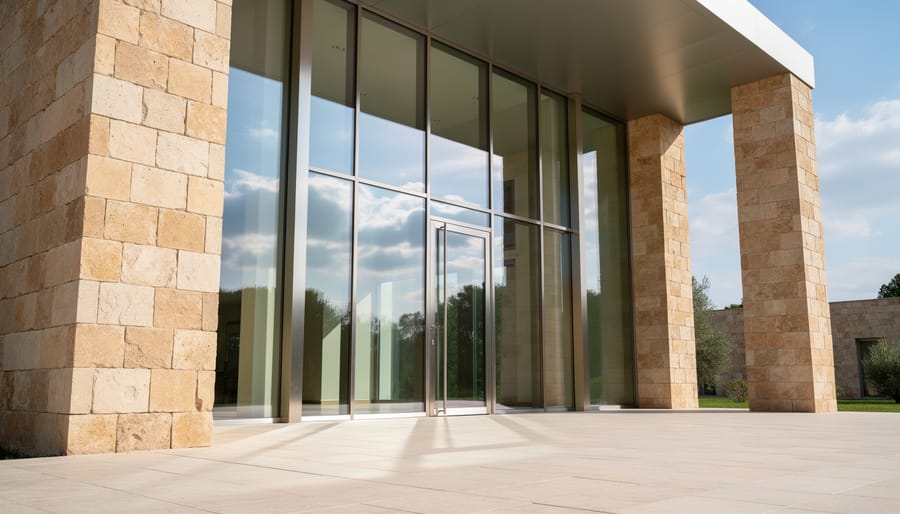
Contemporary architecture has discovered that stone’s ancient appeal creates striking contrasts when paired with decidedly modern materials. The juxtaposition of rough-hewn limestone or sleek marble against expansive glass walls produces visual tension that defines cutting-edge design. Steel frames support cantilevered stone volumes, while polished concrete floors transition seamlessly into natural stone feature walls.
The Tunquen House in Chile exemplifies this approach, combining massive granite boulders with floor-to-ceiling glass panels that frame Pacific Ocean views. Local stone anchors the structure to its coastal setting while modern glazing dissolves boundaries between interior and exterior spaces. Similarly, the Stone House in Spain by Nomo Studio wraps traditional stone masonry around a minimalist steel-and-glass core, creating dialogue between vernacular building methods and contemporary minimalism.
Modern stone facades frequently incorporate ventilated rainscreen systems where stone cladding hangs on metal frameworks, improving thermal performance while achieving the monolithic appearance of solid masonry. This technique appears in projects like the UK’s Flint House, where structural glass meets precisely cut local flint.
Material combinations serve functional purposes beyond aesthetics. Stone’s thermal mass regulates temperature fluctuations, complementing high-performance glass that maximizes daylight. Concrete structural systems enable open floor plans while stone provides acoustic dampening and textural warmth. These partnerships leverage each material’s strengths, proving that contemporary stone architecture succeeds through thoughtful integration rather than mere juxtaposition.
Sustainability Benefits That Actually Matter
Thermal Mass: Your Built-In Climate Control
Stone’s exceptional thermal mass makes it one of nature’s most efficient climate regulators. Unlike lightweight building materials that rapidly gain and lose heat, stone absorbs thermal energy slowly during the day and releases it gradually at night. This natural temperature moderation can reduce heating and cooling costs by 20-30% compared to conventional construction methods.
The science is straightforward: dense stone materials like limestone, granite, and marble have high heat capacity, meaning they store significant thermal energy without dramatic temperature swings. In a contemporary stone house, exterior walls absorb solar heat during winter days and radiate warmth into living spaces throughout the evening, reducing furnace runtime. During summer, the same thick walls remain cool, creating a natural buffer against outdoor heat.
Real-world examples demonstrate impressive results. A 2,800-square-foot stone residence in Colorado reported annual energy savings of $2,400 after incorporating 12-inch limestone walls with proper insulation. Similarly, a Vermont home using locally quarried granite achieved a 35% reduction in HVAC costs compared to the regional average for similar-sized homes.
The key to maximizing thermal mass benefits lies in thoughtful sustainable stone design. Strategic placement of stone walls, consideration of solar orientation, and combining thermal mass with modern insulation techniques create homes that naturally maintain comfortable temperatures year-round. This passive climate control reduces dependence on mechanical systems, lowering both operating costs and environmental impact while ensuring consistent indoor comfort.
The 200-Year Advantage
While most modern homes require major renovations or replacement within 50-75 years, contemporary stone houses offer a fundamentally different value proposition. Stone’s exceptional durability translates into centuries of structural integrity with minimal maintenance, creating multi-generational value that far exceeds initial investment costs.
Natural stone requires no painting, re-siding, or structural repairs that plague conventional materials. While wood siding needs replacement every 20-30 years and fiber cement every 50 years, properly installed stone facades maintain their structural and aesthetic qualities for 200+ years. This longevity dramatically reduces lifecycle costs and eliminates the environmental burden of repeated material production, transportation, and disposal.
The financial mathematics are compelling: a stone house costing 15-20 percent more upfront avoids 3-4 cycles of exterior replacement that wood or composite materials require over two centuries. Beyond individual savings, this durability reduces construction waste by an estimated 75 percent over the building’s lifetime, significantly lowering the carbon footprint associated with renovation cycles. For homeowners and developers prioritizing long-term value and environmental responsibility, stone’s extended lifespan represents both fiscal prudence and ecological stewardship.
Local Sourcing Cuts Carbon Footprint
Choosing regionally sourced stone significantly reduces the carbon footprint of your contemporary stone house. Transportation accounts for a substantial portion of building material emissions, with stone shipped internationally generating up to 40% more carbon dioxide compared to locally quarried alternatives. By selecting stone from nearby quarries, you minimize fuel consumption and emissions while reducing overall project costs.
Local sourcing also strengthens regional economies by supporting quarry workers, stone fabricators, and related businesses in your community. Many areas have distinctive stone varieties that reflect their geological heritage, allowing your home to connect authentically with its landscape. For example, limestone from Texas quarries or granite from New England creates designs rooted in place.
Responsible quarrying practices matter equally. Look for suppliers committed to land reclamation, water management, and minimal ecosystem disruption. Progressive quarries rehabilitate extraction sites by restoring native vegetation and creating wildlife habitats after operations conclude. Some even convert former quarries into community spaces or nature preserves.
When selecting local stone, request documentation about quarrying methods and environmental certifications. Ask about dust control measures, energy efficiency initiatives, and plans for site restoration. Transparency in these practices ensures your sustainable design choices support genuinely responsible operations that prioritize both environmental stewardship and long-term community benefit.
Design Strategies for Contemporary Stone Homes
Mixing Materials for Maximum Impact
Contemporary stone houses achieve their distinctive character through thoughtful material combinations that balance visual interest with environmental responsibility. The key lies in selecting complementary materials that enhance stone’s natural beauty while advancing sustainability objectives.
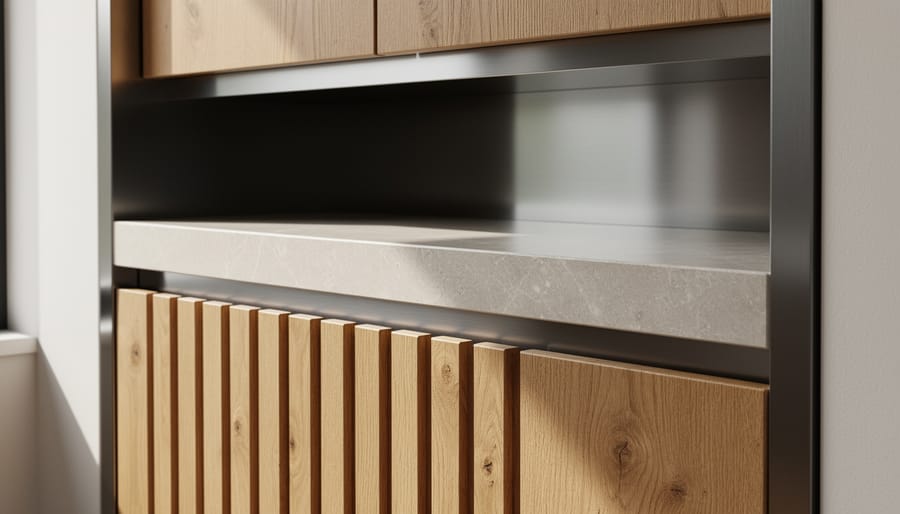
Wood and stone create an inherently sustainable pairing rooted in biophilic design principles. Reclaimed timber beams or locally sourced hardwood cladding soften stone’s mass while adding warmth to minimalist interiors. This combination performs well thermally, as wood’s insulating properties complement stone’s thermal mass. Consider vertical wood siding against horizontal stone coursing to create dynamic visual rhythm while both materials age gracefully with minimal maintenance requirements.
Metal elements introduce industrial refinement without compromising eco-credentials. Weathering steel frames and aluminum window systems offer durability spanning decades, reducing replacement cycles. Black-framed glazing creates striking contrast against limestone or travertine facades, while bronze or copper detailing develops natural patinas that eliminate painting needs. These metals are highly recyclable, aligning with circular economy principles.
Glass maximizes daylight penetration and passive solar gain while showcasing stone features from multiple angles. Floor-to-ceiling glazing can frame stone accent walls as living art pieces, reducing artificial lighting demands. High-performance low-E glass maintains thermal efficiency, crucial when large openings adjoin stone’s natural temperature regulation capabilities.
The most successful contemporary stone houses limit their material palette to three or four complementary elements. This restraint creates cohesive design language while simplifying construction logistics and reducing embodied carbon from excessive material sourcing. Each material should serve both aesthetic and performance functions, ensuring that visual impact supports rather than contradicts sustainability goals.
Stone Applications Beyond Walls
Contemporary stone architecture extends far beyond exterior cladding, with designers discovering innovative applications throughout the home. These creative implementations showcase stone’s versatility while reinforcing sustainable design principles.
In flooring applications, large-format stone tiles create seamless indoor-outdoor transitions, particularly effective in open-plan living spaces. Materials like limestone, travertine, and slate offer excellent thermal mass properties, absorbing heat during the day and releasing it at night to naturally regulate interior temperatures. This passive climate control reduces HVAC demands while providing timeless aesthetic appeal.
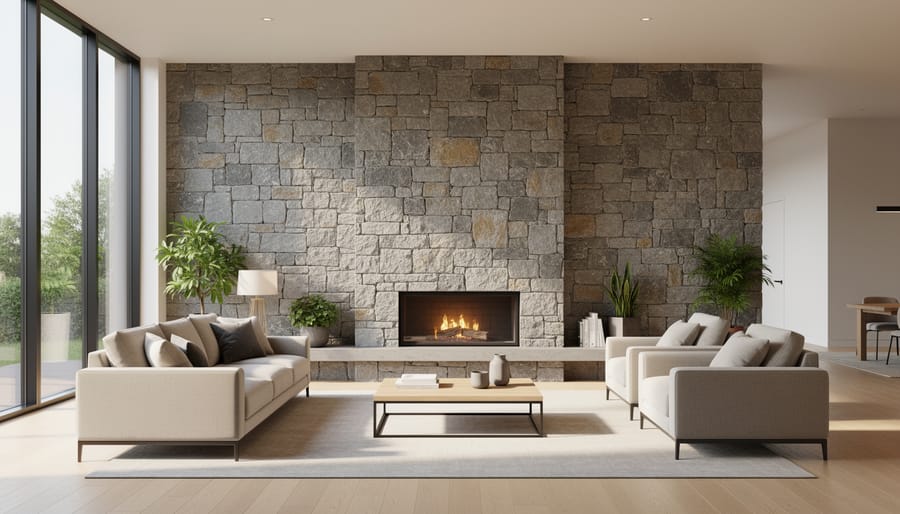
Stone accent walls serve as dramatic focal points in contemporary interiors, whether featuring textured split-face finishes or polished slabs with striking veining patterns. These installations add depth and visual interest without overwhelming minimalist design schemes. Kitchen islands and bathroom vanities crafted from solid stone slabs demonstrate both luxury and practicality, offering durable surfaces that improve with age.
Outdoor spaces benefit significantly from stone integration. Patios, walkways, and retaining walls constructed from native stone blend architecture with landscape, creating cohesive site-responsive designs. Gabion walls filled with local stone provide modern aesthetics while offering excellent drainage and habitat opportunities for beneficial insects.
Fireplace surrounds, staircase treads, and window sills represent additional opportunities for strategic stone placement. These elements introduce natural texture and color variation that synthetic materials cannot replicate. When sourced regionally, these applications minimize transportation emissions while supporting local economies. The key lies in selecting appropriate stone types for specific functions, considering factors like porosity, slip resistance, and maintenance requirements to ensure longevity and performance.
Maximizing Natural Light in Stone Structures
Contemporary stone houses need not feel dark or cave-like when proper design strategies are employed. The key lies in creating generous openings that invite natural light deep into the interior spaces while showcasing the stone’s inherent beauty.
Strategic window placement forms the foundation of a light-filled stone home. Floor-to-ceiling glazing, particularly on south-facing walls, maximizes solar gain and creates dramatic contrasts between solid stone masses and transparent glass. Clerestory windows positioned high on walls allow light to penetrate while maintaining privacy, and they effectively illuminate interior stone surfaces to reveal texture and grain patterns.
Open floor plans prevent compartmentalization that can trap darkness in stone structures. Removing unnecessary interior walls allows light to flow freely throughout the space, while double-height volumes enable vertical light distribution. When interior stone walls are necessary, consider partial-height designs or incorporate glass panels to maintain visual connectivity and light transmission.
Light-colored stone selections naturally enhance brightness. Limestone, travertine, and lighter granite varieties reflect more light than darker alternatives, creating airier atmospheres. Polished or honed finishes amplify this effect compared to heavily textured surfaces.
Implementing thoughtful lighting strategies for stone architecture, including layered artificial lighting and reflective surfaces like mirrors or light-colored furnishings, further prevents the heavy feeling often associated with stone construction. These combined approaches ensure contemporary stone homes remain bright, welcoming spaces that celebrate both natural materials and abundant daylight.
Choosing the Right Stone for Your Project
Popular Stones in Modern Architecture
Contemporary architects favor several stone types for their distinct aesthetic and performance characteristics. Limestone remains a top choice for its versatility and warm, neutral tones that complement minimalist designs. Its natural porosity allows for various finishes, from honed to polished, making it ideal for both exterior cladding and interior features. The material’s thermal mass properties also contribute to passive climate control in modern sustainable homes.
Granite delivers exceptional durability and weather resistance, making it particularly suitable for high-traffic areas and exterior applications. Its crystalline structure provides natural variation in color and pattern, adding visual interest to contemporary facades while requiring minimal maintenance over decades of use.
Marble brings timeless elegance to modern interiors, with its distinctive veining creating statement features in bathrooms, kitchens, and living spaces. While more porous than granite, proper sealing makes it viable for contemporary residential applications where its aesthetic impact justifies the additional care requirements.
Sandstone offers excellent workability and comes in earthy tones that connect modern homes to their natural surroundings. Its slip-resistant texture makes it practical for outdoor spaces, while its breathability helps regulate interior humidity levels naturally.
Slate provides exceptional longevity and low water absorption, making it perfect for roofing and flooring in contemporary designs. Its layered structure creates subtle texture variations, and its dark tones complement modern color palettes while offering superior weather protection that can last over a century.
Climate and Performance Matching
Selecting the right stone for your contemporary home requires careful consideration of your local climate conditions. Different stone types respond differently to moisture, freeze-thaw cycles, and temperature fluctuations, making regional compatibility essential for long-term performance and minimal maintenance.
In regions with harsh winters and freeze-thaw cycles, opt for dense, low-porosity stones like granite or quartzite. These materials resist water absorption, preventing the expansion and contraction that causes cracking and spalling. Limestone and sandstone, while beautiful, require careful sealing in these environments and may need more frequent maintenance.
For humid coastal areas, choose stones with natural resistance to salt exposure and moisture. Granite performs exceptionally well in these conditions, while certain marbles may be prone to etching from salt spray. In hot, arid climates, lighter-colored stones help reflect heat and maintain comfortable interior temperatures, while their thermal mass properties stabilize indoor conditions.
Consider how your stone will be exposed. Exterior cladding faces harsher conditions than interior applications and requires more durable materials. Horizontal surfaces like patios and pool decks need slip-resistant finishes and superior drainage characteristics. Understanding your climate’s specific challenges ensures your stone house remains both beautiful and structurally sound for generations.
Real-World Stone House Success Stories
Case Study 1: Minimalist Mountain Retreat
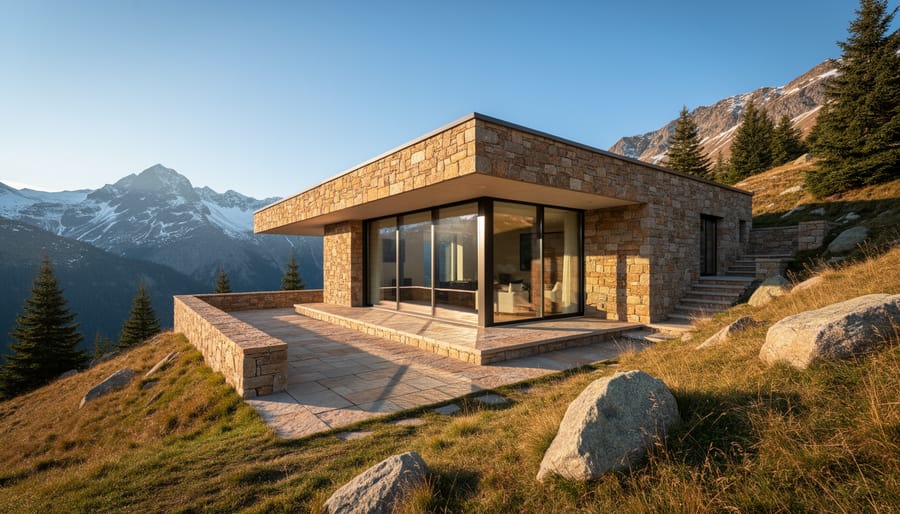
Nestled into a hillside in the Colorado Rockies, this 2,400-square-foot retreat demonstrates how contemporary stone architecture can achieve both thermal efficiency and visual harmony with its surroundings. The design team selected locally quarried sandstone for the exterior walls, reducing transportation emissions by 60% compared to imported materials while creating a natural color palette that mirrors the surrounding rock formations.
The home’s southern facade features floor-to-ceiling glass protected by carefully calculated stone overhangs that block harsh summer sun while welcoming lower-angle winter light. This passive solar strategy, combined with the stone’s thermal mass properties, maintains interior temperatures within a comfortable range year-round, reducing HVAC energy consumption by 45% compared to conventional construction.
Interior stone walls serve as thermal batteries, absorbing heat during the day and slowly releasing it at night. The architects specified 18-inch-thick limestone walls in high-traffic areas, achieving a thermal lag of approximately 12 hours. This natural temperature regulation eliminated the need for radiant floor heating in common spaces, saving $18,000 in installation costs.
The project joins other contemporary stone success stories proving that traditional materials can meet modern performance standards. Construction costs ran 15% higher than wood-frame alternatives initially, but projected energy savings of $2,800 annually provide payback within eight years while creating a structure designed to last generations with minimal maintenance.
Case Study 2: Urban Stone Integration
The Greenwich Street Residence in Manhattan’s West Village demonstrates how stone can anchor contemporary urban design while respecting neighborhood character. Architect Sarah Chen integrated locally-sourced bluestone with floor-to-ceiling glass panels to create a four-story townhouse that balances transparency with privacy.
The front facade features reclaimed bluestone from Pennsylvania quarries, chosen specifically to complement the historic district’s aesthetic while reducing the carbon footprint associated with material transportation. The stone’s rough-hewn texture contrasts deliberately with smooth glass surfaces, creating visual interest without overwhelming the narrow 20-foot-wide lot.
Inside, the design team employed limestone for interior accent walls and a central staircase, using book-matched slabs to emphasize the stone’s natural veining. This installation required just 12 panels to cover 240 square feet, minimizing waste while maximizing visual impact. The thermal mass provided by these interior stone elements helps regulate temperature fluctuations common in urban environments, reducing HVAC demands by approximately 18 percent annually.
Perhaps most innovative is the rooftop terrace, where permeable stone pavers allow rainwater infiltration while providing a durable surface for outdoor living. The project consumed 40 percent less embodied energy compared to an equivalent steel-and-concrete structure, while the stone’s durability ensures minimal maintenance over the building’s projected 100-year lifespan. This case illustrates how thoughtful stone integration addresses urban density challenges while advancing sustainability goals.
Cost Considerations and Long-Term Value
Initial Investment vs. Lifetime Savings
Building a contemporary stone house requires a higher upfront investment than conventional construction, typically adding 15-30% to initial costs depending on stone type and design complexity. Natural stone materials range from $15-40 per square foot for quality limestone or granite, while premium options exceed $50 per square foot. However, this initial premium translates into substantial long-term financial advantages.
Energy efficiency delivers immediate returns. Stone’s thermal mass reduces heating and cooling costs by 20-40% annually compared to wood-frame construction. In a 2,500 square foot home, this translates to $800-1,500 saved yearly on utilities. Over 30 years, energy savings alone can offset 40-60% of the additional construction costs.
Maintenance expenses reveal even more dramatic differences. Stone exteriors require minimal upkeep beyond occasional cleaning, while wood siding needs repainting every 7-10 years at $5,000-15,000 per application. Vinyl and other synthetic materials degrade and require replacement within 20-30 years. Stone facades remain structurally sound and aesthetically appealing for centuries with virtually no maintenance investment.
Resale value provides the final financial advantage. Stone homes consistently command 5-10% higher market prices and sell faster than comparable properties. Real estate data shows stone construction appeals to buyers seeking durability and premium aesthetics, making it a sound investment that appreciates over time. When evaluating total cost of ownership across 50 years, stone construction often proves more economical than conventional alternatives despite higher initial expenses.
Maintenance Realities
Contrary to popular belief, stone requires less maintenance than many modern building materials, though specific care varies by stone type and finish. Polished interior surfaces need regular cleaning with pH-neutral cleaners to prevent etching on calcareous stones like marble and limestone. Honed and textured finishes are more forgiving but may require periodic sealing, typically every one to three years depending on porosity and exposure.
Exterior stone facades benefit from the material’s inherent durability. Most contemporary installations use non-porous stones like granite or properly sealed sandstone that resist weathering with minimal intervention. Annual inspections of mortar joints and sealant around windows prevent water infiltration, the primary concern in any stone assembly. In regions with freeze-thaw cycles, choosing appropriate stone density becomes critical.
Interior stone floors in high-traffic areas may develop a natural patina over time, which many designers consider desirable. For those preferring original appearance, professional refinishing every decade restores surfaces without replacement. Modern penetrating sealers have significantly reduced maintenance demands compared to topical treatments used historically, allowing stone’s natural breathability while providing stain resistance. The key is selecting appropriate stone types for specific applications during the design phase rather than relying on intensive maintenance protocols later.
The contemporary stone house represents more than an architectural trend—it embodies a thoughtful response to our era’s most pressing environmental challenges. Throughout this exploration, we’ve seen how natural stone delivers exceptional thermal performance, radical material longevity, and minimal lifecycle impacts that synthetic alternatives struggle to match. The carbon storage capacity, reduction in operational emissions, and inherent durability position stone as a foundational material for buildings designed to perform well for centuries, not merely decades.
However, stone isn’t a universal solution for every project. Geographic availability, specific design requirements, budget constraints, and project timelines all influence whether stone is the optimal choice. Some contemporary designs benefit from hybrid approaches that combine stone’s strengths with other sustainable materials, while certain architectural visions may call for different solutions entirely.
If you’re considering stone for your next residential or commercial project, the path forward begins with informed consultation. Engage with experienced stone specialists who understand both material properties and regional sourcing options. Collaborate with architects familiar with contemporary stone applications who can integrate thermal mass principles, passive design strategies, and aesthetic vision into cohesive plans. Request material samples, visit completed stone projects in person, and investigate quarry certifications to ensure your selections align with sustainability values.
The contemporary stone house isn’t just architecture—it’s a commitment to building better, lasting structures that honor both environmental stewardship and timeless design principles.


