
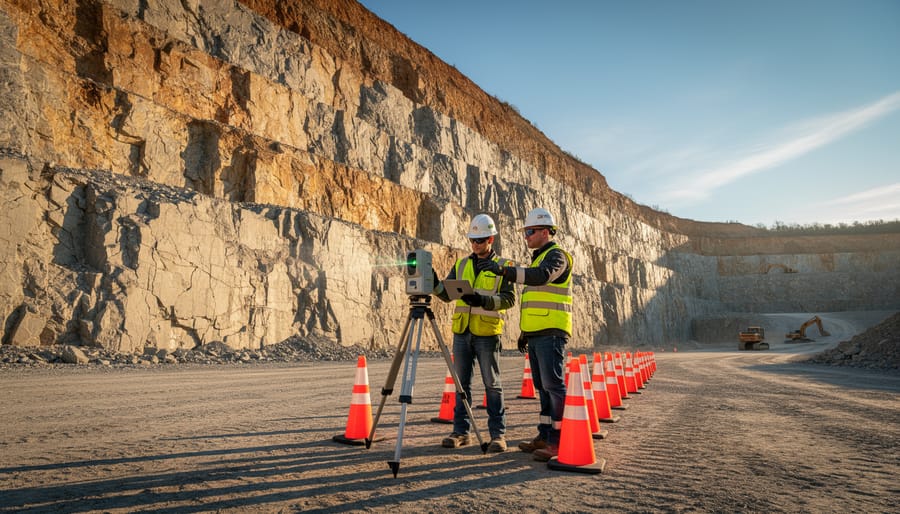
Highwall safety represents one of the most critical considerations in modern stone quarrying, where towering rock faces can reach heights exceeding 100 feet and present significant risks to workers, equipment, and operational continuity. Understand that highwall instability accounts for approximately 30% of serious quarry incidents, making proactive management essential rather than optional. Implement daily visual inspections by trained personnel who can identify warning signs like rock displacement, water seepage, and vegetation changes that indicate potential failure zones. Establish clear exclusion zones at the base of highwalls, typically measuring at least one-and-a-half times the wall height, preventing unauthorized access and equipment operation in high-risk areas. Deploy geotechnical monitoring systems including ground-penetrating radar and laser scanning technology to detect subtle movements before catastrophic failures occur, providing early warning that saves lives and protects assets.
The connection between highwall safety and stone quality runs deeper than many realize. Responsible quarrying operations that prioritize wall stability produce superior stone products with fewer defects, as controlled extraction methods reduce fracturing and preserve the material’s structural integrity. When quarries maintain rigorous safety protocols, they demonstrate operational excellence that extends throughout their entire supply chain, from extraction to your architectural project.
This comprehensive guide examines the technical aspects of highwall management while translating complex engineering concepts into practical knowledge that helps you evaluate quarry safety standards and make informed sourcing decisions for your natural stone needs.
What Makes a Quarry Highwall Dangerous
Natural Geological Weaknesses
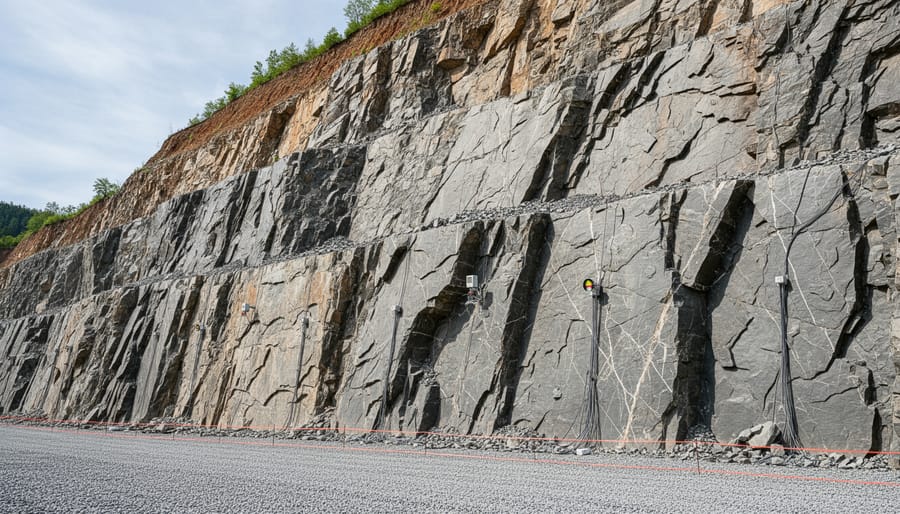
Rock formations in quarry highwalls contain inherent structural weaknesses that significantly impact stability and safety. Understanding these natural geological features is essential for anyone involved in stone extraction or sourcing.
Fractures represent breaks in rock continuity without significant displacement. These cracks, formed by tectonic stress or weathering processes, create pathways for water infiltration that can accelerate deterioration. In quarry environments, even minor fractures can propagate under the stress of excavation, leading to unexpected collapses.
Bedding planes are horizontal layers where sedimentary rocks naturally separate. These planes of weakness formed during the rock’s original deposition often contain clay or softer materials that erode more readily than surrounding stone. When bedding planes align unfavorably with the highwall face, they create conditions for large-scale sliding failures.
Joints are systematic fractures occurring in predictable patterns throughout rock masses. Unlike random fractures, joints typically form perpendicular sets that divide rock into distinct blocks. The orientation and spacing of these joints directly influence how rock will break during extraction and whether sections of the highwall are prone to toppling or wedge failures.
Natural discontinuities also include faults, shear zones, and solution cavities in limestone formations. These features interrupt rock continuity and create zones where failure is more likely to initiate. Responsible quarry operators conduct thorough geological assessments to identify these weaknesses before extraction begins, ensuring both worker safety and stone quality.
Human-Induced Stress Factors
While natural processes contribute to highwall instability, quarrying operations themselves introduce significant stress factors that can accelerate deterioration and failure. Understanding these human-induced pressures is essential for maintaining safe working environments and ensuring sustainable stone extraction.
Blasting operations represent one of the most significant destabilizing forces in quarries. The controlled explosions used to fragment rock create powerful shock waves that travel through the surrounding rock mass, generating microfractures and widening existing discontinuities. Repeated blasting can progressively weaken the highwall structure, reducing its overall stability over time. The vibrations produced don’t just affect the immediate blast zone—they propagate considerable distances, potentially compromising rock integrity hundreds of feet away from the detonation point.
Slope angle modifications during extraction also play a critical role in highwall stability. As quarrying deepens and operations remove supporting material from the base of highwalls, the angle and height of these faces change. Steeper slopes created to maximize material recovery increase gravitational stress on the rock mass, raising the likelihood of failure. Each cut into the quarry floor alters stress distribution patterns, potentially triggering instability in previously stable sections.
Equipment vibration from heavy machinery, drilling operations, and material transport further contributes to cumulative stress, gradually degrading the structural integrity of quarry faces.
The Real Risks: Rockfall and Slope Failure
Types of Rockfall Events
Understanding the different types of rockfall events is essential for implementing effective safety measures in quarry operations. These failures occur through distinct mechanisms, each presenting unique hazards that require specific prevention strategies.
Planar slides happen when rock masses detach along a single, continuous surface of weakness, such as a bedding plane or joint. The failure plane typically dips out of the highwall face at an angle steep enough to overcome friction but not so steep that individual blocks simply fall. These events can involve significant volumes of material moving as a coherent mass down the slope.
Wedge failures occur at the intersection of two discontinuous surfaces, creating a wedge-shaped block that slides out along the line where these planes meet. This type of failure is common in areas where multiple joint sets intersect, and the geometry allows the wedge to move freely from the face. The size can range from small blocks to massive sections of the highwall.
Toppling failures involve tall, column-like rock formations that rotate forward around a pivot point near their base. This mechanism typically affects rock with steep discontinuities that dip into the face, creating slender columns susceptible to overturning under their own weight or external forces like water pressure.
Rockfalls represent the direct detachment and freefall of individual blocks or fragments from the highwall face. These events, while often involving smaller volumes than other failure types, pose immediate danger due to their sudden nature and unpredictable trajectories. Factors like freeze-thaw cycles, weathering, and vibration from quarrying operations commonly trigger rockfalls.
Warning Signs Before Failure
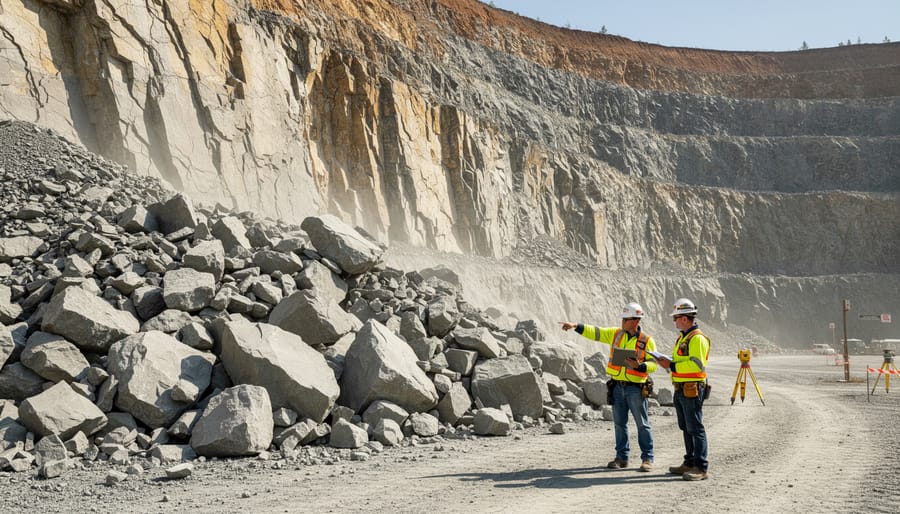
Recognizing warning signs before a highwall failure occurs can mean the difference between preventing a catastrophic event and facing serious consequences. Understanding these indicators is essential for quarry operators, safety personnel, and anyone involved in natural stone extraction.
The most common precursor to failure is crack development. Tension cracks typically appear parallel to the highwall face, often starting at the crest and extending downward. These cracks may initially be hairline fractures but can widen over time, sometimes reaching several inches. Fresh cracks exposing unweathered rock surfaces are particularly concerning, as they indicate recent movement.
Ground displacement provides another critical warning. Watch for vertical settlement at the highwall crest, where the ground surface begins dropping. Horizontal movement, where the highwall face or portions of it bulge outward, signals imminent instability. You might also observe rocks or debris accumulating at the base of the wall, indicating material is already breaking away from the face.
Surface changes offer visual clues that demand attention. New seepage areas or springs appearing on the highwall face suggest changing groundwater conditions that can reduce stability. Vegetation stress, such as tilting trees or sudden changes in plant health near the crest, indicates ground movement. Similarly, disruption of drainage patterns or ponding water in areas that were previously well-drained can compromise structural integrity.
Additionally, listen for unusual sounds like popping, cracking, or grinding noises emanating from the highwall. These acoustic signals often precede visible failure and warrant immediate evacuation and assessment by qualified geotechnical professionals.
How Responsible Quarries Monitor Highwall Stability
Visual Inspection Protocols
Visual inspection protocols serve as the cornerstone of comprehensive highwall safety programs in quarry operations. These systematic assessments combine regular geological surveys with detailed photographic documentation to create a continuous safety monitoring framework. Qualified geotechnical engineers typically conduct thorough inspections on predetermined schedules—often quarterly or following significant weather events, blasting activities, or seismic occurrences.
During inspections, professionals document visible changes in rock face conditions, including new fracture patterns, weathering progression, water seepage points, and potential instability indicators like loose blocks or displaced material. High-resolution photography creates historical records that enable comparison over time, revealing subtle deterioration patterns that might escape casual observation.
Expert assessments go beyond surface-level examination, incorporating specialized equipment such as laser scanning technology and photogrammetry to detect millimeter-scale movements. These digital tools complement traditional visual methods, providing quantifiable data about highwall deformation and stability trends.
Documentation from visual inspections directly informs operational decisions, from equipment placement to worker proximity zones. For architects and designers sourcing natural stone, these inspection records demonstrate quarry operators’ commitment to responsible extraction practices, ensuring that materials come from facilities prioritizing both worker safety and geological sustainability. This diligence ultimately translates to consistent product quality and ethical sourcing credentials.
Advanced Monitoring Technologies
Modern quarry operations increasingly rely on sophisticated monitoring technologies that detect potential hazards before they become critical safety threats. These early warning systems protect workers while ensuring the continuous, responsible extraction of high-quality natural stone.
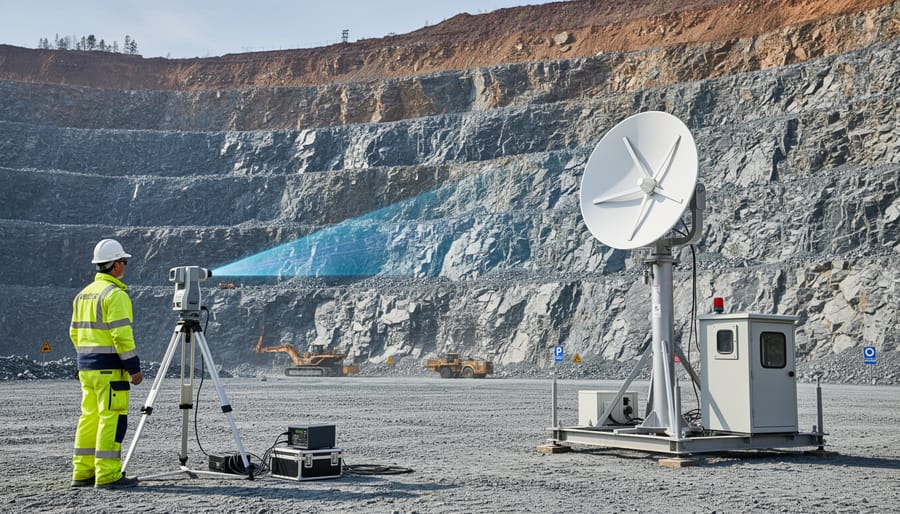
Ground-based radar systems continuously scan highwall faces, detecting millimeter-level movements that might indicate instability. Unlike visual inspections, these systems operate 24/7 in all weather conditions, automatically alerting supervisors when movement exceeds predetermined thresholds. This technology has proven particularly valuable in detecting slow-moving failures that develop over days or weeks.
Laser scanning creates highly detailed 3D models of quarry walls, allowing engineers to track subtle geometric changes over time. By comparing successive scans, operators can identify bulging, cracking, or other deformation patterns that signal deteriorating rock conditions. This data also helps optimize extraction planning to avoid high-risk zones.
Drone-based photogrammetry provides rapid aerial assessment of areas too dangerous for personnel to access directly. Equipped with high-resolution cameras and LiDAR sensors, drones document highwall conditions, identify new cracks, and monitor vegetation that might indicate groundwater seepage.
Crack meters and tiltmeters installed at strategic locations provide real-time data on specific features of concern. These instruments measure opening rates in existing fractures and detect rotation in potentially unstable blocks, enabling proactive intervention before collapse occurs.
Together, these technologies form integrated monitoring systems that significantly enhance worker safety while maintaining the operational efficiency necessary for producing the premium natural stone products that architects and designers specify with confidence.
Data Analysis and Risk Assessment
Quarry operators employ sophisticated analysis techniques to transform raw monitoring data into actionable safety insights. Modern systems use algorithms that establish baseline patterns for each highwall section, flagging deviations that might indicate developing instability. For example, when monitoring data shows displacement rates accelerating from 2mm per month to 8mm per month, operators can predict potential failure timeframes and evacuate affected zones.
Risk assessment involves correlating multiple data streams. A combination of increased crack width, rising groundwater levels, and subtle ground vibrations creates a more concerning picture than any single indicator alone. Geotechnical engineers analyze historical patterns, rock type characteristics, and weather forecasts to calculate probability scores for different failure scenarios.
This proactive approach enables preventive measures before catastrophic events occur. When data suggests elevated risk, operators may implement immediate actions like reducing blast intensity, installing additional support systems, or temporarily halting extraction in vulnerable areas. For stone purchasers and designers, this rigorous analytical framework provides assurance that materials are sourced from responsibly managed operations where safety drives operational decisions, ultimately protecting both workers and the consistent quality of extracted stone products.
Proven Risk Management Strategies
Engineering Controls and Slope Design
Effective engineering controls form the foundation of highwall stability in quarry operations. These measures directly impact both worker safety and the quality of extracted stone materials that eventually reach architects and designers.
Bench configuration plays a crucial role in highwall stability. Engineers design stepped platforms, or benches, into the quarry face to reduce overall slope height and provide access for maintenance and inspection. Typical bench widths range from 15 to 30 feet, depending on rock characteristics and equipment requirements. These benches interrupt the vertical face, reducing the potential for large-scale failures while creating catch platforms for smaller rockfalls.
Slope angle optimization requires careful geological assessment. While steeper slopes maximize stone extraction, they must balance economic considerations against safety requirements. Most stable highwalls maintain overall slope angles between 35 and 55 degrees, with individual face angles varying based on rock strength, joint orientation, and weathering patterns. Geotechnical engineers use sophisticated modeling to determine optimal configurations for each unique geological setting.
Drainage systems prevent water infiltration, a primary cause of slope instability. Horizontal drains bored into the highwall, combined with surface ditches and collection systems, redirect groundwater away from critical areas. Proper drainage reduces pore pressure within rock masses and minimizes freeze-thaw damage in colder climates.
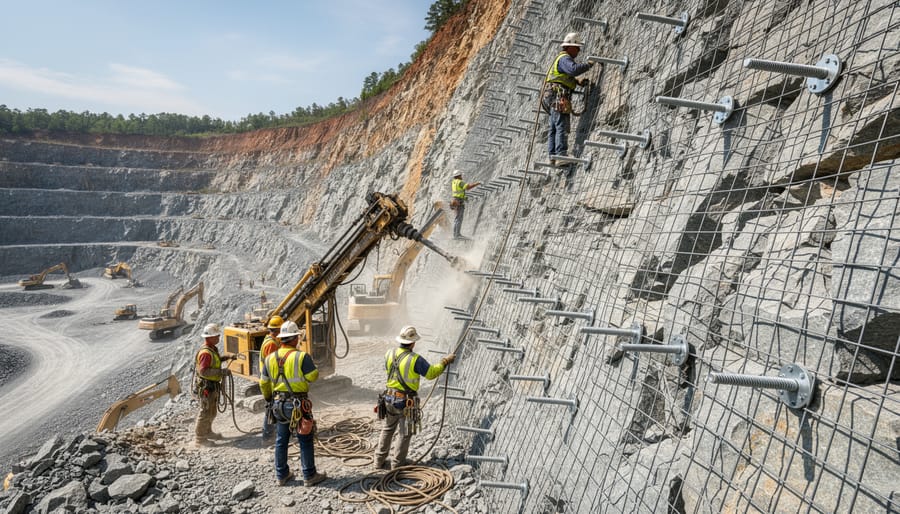
Structural support measures include rock bolts, mesh reinforcement, and shotcrete applications for areas requiring additional stability. These interventions secure potentially unstable blocks while allowing continued safe extraction of premium stone materials. Regular monitoring through surveying equipment and visual inspections ensures these systems remain effective throughout the quarry’s operational life.
Active Stabilization Techniques
Active stabilization transforms potentially hazardous highwall conditions into secure extraction environments through targeted engineering interventions. These proactive measures address existing instabilities while preventing future deterioration.
Rock bolting involves drilling deep into the highwall face and installing steel reinforcement bars, effectively stitching fractured rock masses together. This technique transfers loads from unstable zones to more competent rock layers, creating a unified structural system. Pattern bolting, where bolts are installed in systematic grids, provides comprehensive support across large highwall surfaces.
Wire mesh installation works in conjunction with rock bolting to contain smaller rock fragments and prevent progressive raveling. High-tensile steel mesh draped over highwall faces catches loose material before it falls, protecting workers and equipment below. Modern mesh systems incorporate flexible cable nets that accommodate slight ground movement while maintaining protective integrity.
Scaling operations systematically remove loose or unstable material using excavators equipped with specialized tools or controlled manual techniques. This preventive approach eliminates hazards before they become incidents, particularly effective after blasting or freeze-thaw cycles.
Controlled blasting employs precision explosive techniques to remove overhanging blocks or reduce slope angles in unstable areas. Unlike production blasting, these specialized operations use carefully calculated charge weights and blast patterns to minimize vibration impact on surrounding rock while achieving desired safety outcomes. Together, these stabilization methods ensure responsible stone extraction that prioritizes worker safety and operational sustainability.
Protective Barriers and Safety Zones
Physical barriers form the foundation of highwall protection in modern quarrying operations. Catch benches, engineered platforms built into the highwall face at regular intervals, intercept falling rock before it reaches working areas below. These benches typically measure 15-30 feet wide and are positioned every 30-50 feet of vertical height, depending on rock stability and regulatory requirements.
Perimeter fencing establishes clear exclusion zones around active highwall areas, preventing unauthorized access and maintaining safe distances for workers. Industry standards recommend minimum setback distances of 1.5 times the highwall height, though geological conditions may require greater separation. Warning signage, visible barriers, and designated pathways guide personnel away from hazard zones.
Equipment placement strategies further minimize exposure risk. Operators position drilling rigs, excavators, and haul trucks to maintain maximum standoff distance while completing necessary tasks. Remote-controlled machinery increasingly allows critical operations to proceed without placing workers directly beneath unstable faces.
Regular barrier inspections verify structural integrity and proper drainage, as water accumulation on catch benches can trigger failures. These protective systems integrate with broader emergency response protocols, ensuring rapid evacuation routes remain clear and rescue access points stay accessible. Together, these layered defenses create redundant protection that accounts for both predictable hazards and unexpected geological events.
Safety Standards and Best Practices in Natural Stone Extraction
Regulatory Requirements
Highwall safety in quarry operations falls under strict regulatory oversight designed to protect workers and ensure responsible extraction practices. In the United States, two primary agencies govern these operations: the Mine Safety and Health Administration (MSHA) and the Occupational Safety and Health Administration (OSHA). MSHA holds primary jurisdiction over most quarry operations, setting comprehensive standards for ground control, scaling procedures, and highwall inspection protocols. These regulations require regular geotechnical assessments, mandatory setback distances from highwall edges, and documented safety procedures. OSHA safety standards complement MSHA requirements, particularly for operations that fall outside traditional mining classifications.
Internationally, countries maintain varying standards for highwall management. European Union member states follow directives that emphasize risk assessment and worker consultation, while countries like Australia and Canada have developed comprehensive frameworks specific to their geological conditions. These regulations typically mandate competent person inspections, engineering controls for unstable formations, and emergency response protocols. For architects and designers sourcing natural stone, understanding these regulatory frameworks provides assurance that materials come from operations maintaining the highest safety and environmental standards, directly connecting responsible extraction practices to product integrity.
Industry Certifications and Training
Proper training and certification programs form the foundation of highwall safety management in quarry operations. Workers operating near highwalls must complete comprehensive training that covers hazard recognition, emergency response procedures, and site-specific protocols. The Occupational Safety and Health Administration (OSHA) requires designated competent persons who possess the knowledge and authority to identify existing and predictable hazards and implement corrective measures promptly.
Competent person training typically includes geological assessment techniques, visual inspection methods, scaling procedures, and equipment operation. These individuals must demonstrate proficiency in evaluating rock stability, weather-related risks, and determining when conditions necessitate work stoppage. Many quarry operators invest in Mine Safety and Health Administration (MSHA) certifications, which provide specialized instruction for surface mining operations.
Professional certifications such as Certified Mine Safety Professional (CMSP) and various geotechnical engineering credentials enhance safety expertise across the industry. Regular refresher courses ensure workers stay current with evolving best practices and regulatory requirements. This commitment to ongoing education directly impacts the quality and reliability of extracted stone, as properly trained teams recognize when geological conditions might compromise material integrity. Similar to stone processing safety measures, highwall safety protocols require continuous skill development and adherence to industry standards.
What This Means for Natural Stone Consumers
When you invest in natural stone for your home or commercial project, you’re not just purchasing a beautiful material—you’re also supporting a complex extraction and processing operation. Understanding the connection between highwall safety and your final product reveals why responsible quarrying practices matter.
Quarries that prioritize highwall safety typically demonstrate a broader commitment to operational excellence. These safety-conscious facilities maintain rigorous quality control standards throughout the extraction process, which directly impacts the stone you receive. When workers can safely access different bench levels and extraction zones, they can selectively mine the highest-quality material rather than rushing through hazardous conditions. This careful approach results in fewer structural defects, more consistent coloration, and superior dimensional accuracy in the finished product.
Beyond product quality, highwall safety reflects a company’s ethical standards. Facilities investing in geotechnical monitoring, proper slope management, and comprehensive worker training signal a commitment to responsible business practices. This matters increasingly to architects, designers, and consumers who value transparency in their supply chain. When choosing quality natural stone, asking about safety protocols and certifications provides insight into a supplier’s overall reliability and integrity.
The economic reality also supports this connection. Well-managed quarries with strong safety records experience fewer operational disruptions, equipment damage, and material losses from preventable accidents. These efficiencies translate to more consistent product availability and stable pricing. Additionally, operations maintaining proper highwall safety can access reserves more completely and sustainably, ensuring long-term supply reliability for your current and future projects. When evaluating natural stone suppliers, remember that excellent safety practices serve as a reliable indicator of the quality, consistency, and ethical standards behind every slab.
Highwall safety represents far more than regulatory compliance—it’s the foundation upon which responsible natural stone production is built. When quarries prioritize rigorous safety protocols, they protect their most valuable asset: the skilled workers who extract these timeless materials from the earth. This commitment to safety creates a ripple effect throughout the entire supply chain, ensuring that every slab of granite, limestone, or marble reaches your project through ethical, sustainable practices.
The connection between safety management and product quality cannot be overstated. Quarries that implement comprehensive highwall monitoring, engineered slope design, and continuous worker training consistently deliver superior materials with fewer disruptions. This operational excellence translates directly to reliable supply chains and the beautiful, durable stone products that transform architectural visions into reality.
As you source natural stone for your next project, ask suppliers about their safety practices. Inquire about geotechnical assessments, inspection frequencies, and worker training programs. These questions demonstrate your commitment to responsible sourcing and help ensure that the stunning natural stone enhancing your spaces comes from operations that value both human safety and environmental stewardship. Beautiful design and ethical production can—and should—go hand in hand.