
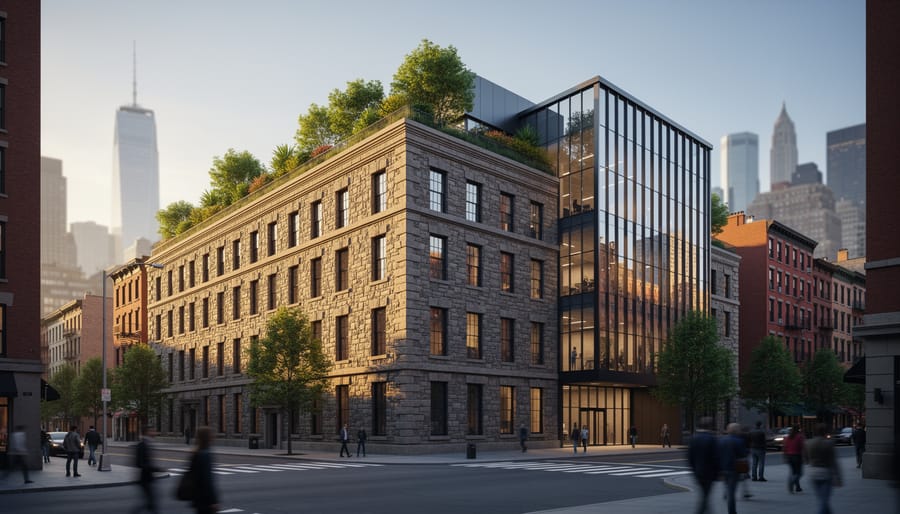
Old stone buildings represent some of the most compelling opportunities for adaptive reuse in contemporary architecture. Their thick walls, solid foundations, and inherent durability provide a structural advantage that modern construction often struggles to replicate, while their historical character adds irreplaceable aesthetic value to any redevelopment project. Rather than demolition and replacement, transforming these structures into new uses preserves cultural heritage, reduces construction waste by up to 95%, and typically costs 10-20% less than new construction.
The robust nature of stone masonry makes these buildings exceptionally suited for conversion. Limestone, granite, and marble structures built a century ago often exceed modern building code requirements for load-bearing capacity, allowing architects to reimagine interior spaces without compromising structural integrity. Industrial warehouses become residential lofts, churches transform into community centers, and abandoned mills find new life as mixed-use developments.
This approach addresses critical urban challenges. With approximately 38% of global carbon emissions originating from the construction industry, adaptive reuse offers a sustainable alternative by retaining embodied energy within existing materials. Every ton of preserved stone eliminates the environmental cost of quarrying, processing, and transporting new material. Historic stone buildings also anchor neighborhood identity, providing continuity that purely new construction cannot achieve.
The process requires careful evaluation of existing conditions, understanding of historic preservation standards, and creative problem-solving to integrate modern systems within century-old walls. Success depends on respecting the original structure’s character while meeting contemporary performance standards for energy efficiency, accessibility, and safety. When executed thoughtfully, adaptive reuse of stone buildings creates spaces that honor the past while serving present and future needs.
What Makes Stone Buildings Perfect Candidates for Adaptive Reuse
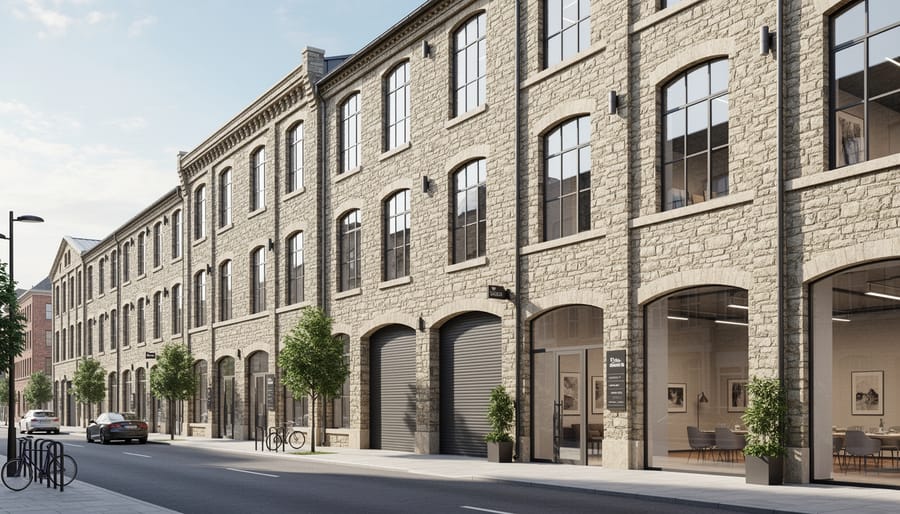
Structural Advantages of Historic Stone Construction
Historic stone buildings possess inherent structural qualities that make them exceptionally suited for adaptive reuse projects. The massive load-bearing walls found in these structures, often constructed from limestone, granite, or marble, provide superior weight distribution capabilities that can accommodate contemporary additions, equipment, and occupancy loads. These thick masonry walls typically range from 18 to 36 inches, offering structural redundancy that modern buildings rarely achieve.
The foundation systems of historic stone buildings demonstrate remarkable stability, having settled and stabilized over decades or centuries. This long-term settlement eliminates concerns about differential movement that plague newer construction, providing a reliable base for renovation work. The historic stone durability evident in these foundations often surpasses modern concrete in compression strength and moisture resistance.
Stone’s inherent fire resistance and thermal mass contribute additional advantages for modern conversions. The material’s non-combustible nature reduces insurance costs and enhances building safety codes compliance, while its thermal properties improve energy efficiency in climate control systems. This combination of structural integrity, proven longevity, and material performance creates an ideal foundation for adaptive reuse projects, allowing architects and developers to confidently integrate contemporary systems within time-tested envelopes.
Natural Stone’s Sustainability Edge
When preserving and repurposing stone buildings, the environmental advantages become immediately apparent. Every existing stone structure represents a significant investment of embodied energy—the total energy consumed in quarrying, processing, transporting, and installing the material. By choosing adaptive reuse over demolition and new construction, this embodied energy remains productive rather than being lost to landfills.
The environmental case strengthens further when considering waste reduction. Demolishing a stone building generates massive amounts of debris that burden waste management systems. Adaptive reuse eliminates this waste stream entirely while preserving materials that took centuries to form and decades to craft into architectural elements. This approach aligns perfectly with sustainable stone design principles that prioritize resource conservation.
Carbon footprint comparisons reveal dramatic differences. New construction requires extracting virgin materials, manufacturing new components, and transporting everything to the building site. Each step generates substantial greenhouse gas emissions. Adaptive reuse sidesteps most of these carbon-intensive processes, reducing a project’s overall climate impact by an estimated 50-75% compared to new builds.
Natural stone’s inherent recyclability adds another sustainability dimension. If portions of a structure require modification, salvaged stone can be repurposed elsewhere in the building or sold for use in other projects. This circular approach to materials extends the lifecycle indefinitely, transforming historic structures into environmental assets that continue serving communities while minimizing ecological impact for generations to come.
Common Types of Stone Buildings Being Repurposed Today
Industrial Mills and Warehouses
Historic industrial mills and warehouses built with granite and limestone have become prime candidates for adaptive reuse projects. These structures, originally designed to house manufacturing operations, feature thick load-bearing stone walls that provide exceptional durability and thermal mass. The robust construction typical of 19th and early 20th-century industrial architecture creates column-free interior spaces ideal for conversion into residential lofts, creative studios, and mixed-use developments. The exposed stone walls, often left intact during renovation, serve as dramatic architectural features that blend industrial heritage with contemporary design. Many successful conversions maintain the buildings’ original stone facades while reconfiguring interiors to accommodate modern amenities and updated building systems. The natural fire resistance and sound-dampening properties of granite and limestone make these materials particularly well-suited for multi-tenant residential and commercial applications. Developers increasingly recognize that these stone industrial buildings offer unique character impossible to replicate in new construction, commanding premium values in urban real estate markets while preserving community heritage.
Religious Buildings and Civic Structures
Historic religious and civic buildings represent some of the most promising opportunities for adaptive reuse, thanks largely to their robust stone construction. Churches built with limestone and sandstone often feature soaring ceilings, intricate masonry, and exceptional acoustics that translate beautifully into performance venues, art galleries, or unique residential lofts. Their thick stone walls provide natural insulation and soundproofing, reducing operational costs for new uses. Former courthouses and municipal buildings constructed from marble and granite offer similar advantages, with grand staircases, columned facades, and spacious interiors that adapt well to boutique hotels, community centers, or mixed-use developments. The inherent durability of these natural stone materials means structural systems typically remain sound after decades of use, requiring primarily interior updates rather than complete reconstruction. Preservation tax incentives often apply to these conversions, making them financially attractive while maintaining the architectural heritage that defines community identity and character.
Commercial and Residential Historic Properties
Historic stone buildings possess an inherent durability and architectural character that makes them ideal candidates for adaptive reuse. Nineteenth and early twentieth-century banks, with their imposing granite and limestone facades, frequently transform into upscale restaurants and boutique hotels, where original vault doors become design focal points and marble-clad banking halls serve as dramatic dining spaces. Former stone townhouses across urban centers are being reimagined as modern residences and creative offices, preserving exterior masonry while updating interiors for contemporary living. Similarly, historic hotels constructed with local limestone or sandstone find renewed purpose through thoughtful renovation, maintaining their stone craftsmanship while incorporating modern amenities. These conversions honor the material integrity of the original structures while demonstrating how natural stone’s longevity supports sustainable development practices. The thermal mass of thick stone walls provides energy efficiency benefits, while the patina of aged stone adds authentic character impossible to replicate in new construction.
Agricultural and Rural Stone Structures
As urban areas expand into previously rural landscapes, historic agricultural structures are finding new purpose. Stone barns, grain silos, and farmhouses constructed from local limestone, granite, or fieldstone present compelling opportunities for adaptive reuse. These buildings often occupy prime locations at the edges of growing cities, making them valuable assets for residential conversions, restaurants, event venues, and community spaces.
The thick stone walls that once provided thermal mass for livestock and crop storage now offer exceptional insulation properties for modern uses. Original timber framing, exposed stone masonry, and soaring interior volumes create distinctive architectural character that’s impossible to replicate in new construction. Many rural stone structures also sit on generous parcels of land, allowing for complementary additions while preserving the historic core.
Successful conversions respect the agricultural heritage while meeting contemporary building codes. Stone foundation systems typically require assessment and potential reinforcement, but the walls themselves often remain structurally sound after centuries of use. Strategic window additions bring natural light into previously dim interiors without compromising the exterior character. The key lies in balancing preservation of authentic materials with necessary modern amenities, creating spaces that honor their working past while serving vibrant new functions in evolving communities.
Modern Design Strategies for Stone Building Adaptive Reuse
The Contrast Approach: Old Meets New
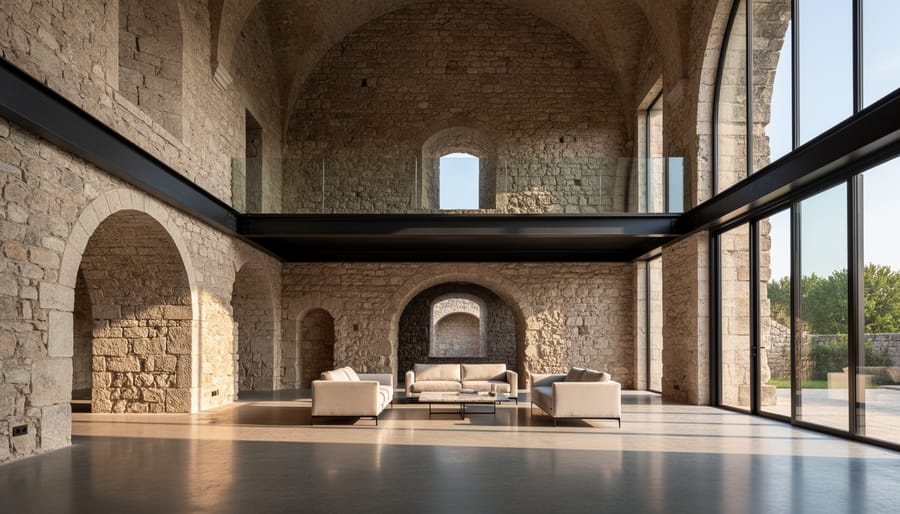
The contrast approach celebrates the dialogue between historical and contemporary elements, creating visual tension that honors a building’s heritage while establishing its modern relevance. This strategy employs transparent glass curtain walls, exposed steel beams, and polished concrete floors alongside weathered limestone walls and carved granite details. The juxtaposition amplifies the unique qualities of each material—the rough texture of original masonry gains depth when paired with sleek modern surfaces, while contemporary additions appear sharper against time-worn stone.
Successful implementations often feature glass-enclosed additions that frame historic facades, allowing natural light to flood interiors while preserving exterior character. Steel staircases and mezzanines introduce vertical circulation without compromising original stone volumes. Modern mechanical systems integrate discreetly, respecting the integrity of load-bearing stone walls. This approach proves particularly effective in stone transforming modern cities, where adaptive reuse projects balance preservation requirements with contemporary needs. The result is neither pure restoration nor complete renovation, but rather an honest architectural narrative that acknowledges different eras while creating functional spaces for today’s users.
Preserving Stone Character While Meeting Modern Codes
Successfully repurposing historic stone buildings requires careful navigation between preservation standards and contemporary safety requirements. The challenge lies in maintaining architectural integrity while implementing necessary upgrades for accessibility, fire safety, and energy performance.
Modern building codes often mandate seismic reinforcement, improved egress routes, and updated mechanical systems. Strategic interventions allow these additions without compromising historic stone elements. Installing climate control systems within existing cavities, adding discreet fire suppression equipment, and reinforcing foundations from below preserve visible stonework while meeting current standards.
Accessibility presents unique opportunities for thoughtful design. Glass elevators within stone towers, carefully positioned ramps that complement original grading, and sensitively designed entrance modifications demonstrate how contemporary needs can coexist with historic fabric. When integrating modern stone facades for additions, matching original materials in type and finish creates visual continuity.
Energy efficiency improvements demand particular attention. Interior insulation systems, high-performance windows fitted within existing openings, and strategic weatherization protect stone from moisture damage while reducing operational costs. Working with preservation specialists and code officials early in the planning process identifies viable solutions that honor both historic character and public safety requirements, ensuring these structures remain functional for generations to come.
Exposing and Celebrating Original Stone Features
Uncovering original stonework in adaptive reuse projects requires careful assessment and specialized techniques to reveal architectural character while preserving structural integrity. Begin by conducting a thorough survey with stone conservation specialists to identify stone types—whether limestone, sandstone, granite, or marble—as each requires specific cleaning and treatment methods.
The removal of later additions, such as plaster, paint, or rendering, demands gentle approaches. Low-pressure steam cleaning, chemical poultices, and micro-abrasive techniques can safely expose stone surfaces without causing damage. Historic masonry techniques like ashlar, rubble stone, or coursed construction should be documented and preserved, as these details tell the building’s story and add authentic texture.
Once exposed, cleaning methods vary by stone composition. Porous stones like limestone benefit from pH-neutral cleaners, while dense granite can withstand more robust treatments. Always test cleaning solutions on inconspicuous areas first. Repair damaged sections using compatible mortars that match original lime-based compositions, avoiding modern cement that can trap moisture and cause deterioration.
Showcase remarkable stonework through thoughtful design integration. Feature exposed stone walls as focal points in commercial or residential spaces. Highlight architectural details like carved keystones, corbels, or decorative quoins through strategic placement of furniture and fixtures. Consider how lighting stone interiors can emphasize texture and craftsmanship, using directional lighting to create dramatic shadows that accentuate the stone’s natural relief and historical character.
Document all discoveries photographically for historical records and future maintenance planning.
Technical Considerations When Working with Historic Stone
Structural Assessment and Reinforcement
Before any adaptive reuse project begins, a thorough structural assessment is essential to understand the existing condition of the stone building. This evaluation examines several critical components: the integrity of individual stone units, checking for cracks, spalling, or weathering; mortar joint stability, identifying areas where repointing may be necessary; and foundation soundness, ensuring it can support new loads and uses.
Professional structural engineers use both visual inspections and non-destructive testing methods to map the building’s current state without damaging historic fabric. Common techniques include ground-penetrating radar, infrared thermography, and acoustic testing to identify hidden voids or moisture issues within masonry walls.
The assessment results inform a reinforcement strategy that balances modern safety requirements with preservation principles. Necessary upgrades might include discrete steel reinforcement systems, carbon fiber wrapping for compromised elements, or foundation underpinning. The goal is always minimal intervention—strengthening where needed while retaining as much original stonework as possible.
Many historic stone structures possess inherent strength that exceeds modern requirements, reducing the need for extensive modifications. When reinforcement is necessary, architects and engineers collaborate to ensure new structural elements remain hidden or sympathetic to the building’s character, preserving its architectural integrity while meeting contemporary building codes and the demands of new programmatic uses.
Stone Cleaning and Restoration Methods
Successful adaptive reuse projects require careful assessment and restoration of existing stonework. Each stone type demands specific cleaning approaches: limestone responds well to gentle steam cleaning and low-pressure water washing, while granite’s durability permits slightly more aggressive methods. Sandstone, being porous and delicate, requires careful attention with pH-neutral cleaners to prevent deterioration. Marble necessitates the gentlest treatment, avoiding acidic solutions that can etch its surface.
Professional stone cleaning should always begin with the least invasive method, testing inconspicuous areas first. Chemical cleaners must match the stone’s composition and the type of soiling present. For heavily soiled facades, poulticing techniques can draw out deep-set stains without damaging the original material.
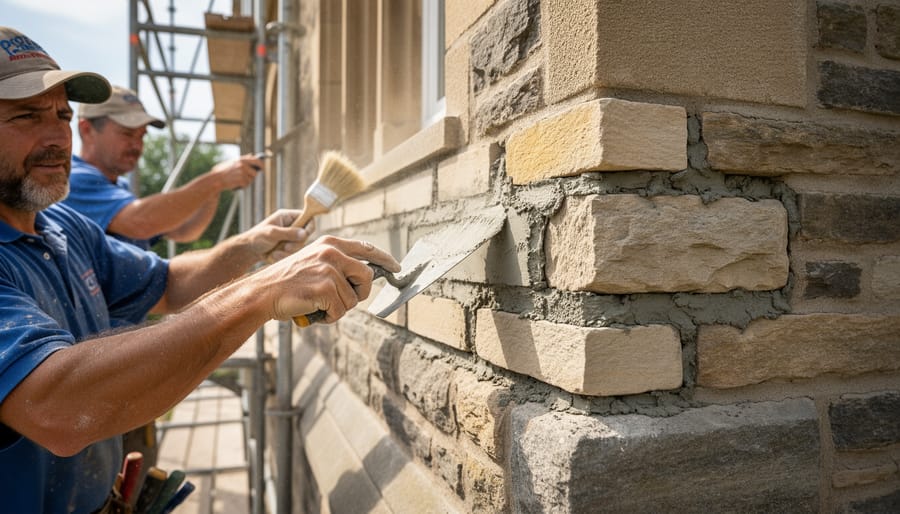
Repointing deteriorated mortar joints is essential for structural integrity and weatherproofing. The replacement mortar must match the original in composition, strength, and permeability—typically lime-based for historic buildings rather than harder Portland cement, which can damage softer stones.
When stone replacement becomes necessary, source matching stone from the original quarry when possible. If unavailable, carefully select alternatives that match the original’s physical properties, color, and texture. Skilled masons can integrate new stones seamlessly, preserving the building’s historic character while ensuring long-term performance.
Moisture Management and Weatherproofing
Water infiltration poses one of the most critical challenges in adaptive reuse of stone buildings. Historic stone structures often lack modern moisture barriers, and decades of wear can compromise mortar joints and drainage systems. Before introducing new uses, conduct thorough moisture assessments to identify problem areas, including foundation drainage, roof connections, and window penetrations.
Repointing deteriorated mortar joints with lime-based mortars matching the original composition allows walls to breathe naturally while preventing water intrusion. Unlike cement mortars, lime permits moisture vapor transmission, essential for maintaining the integrity of historic stone walls. Installing or upgrading gutters, downspouts, and perimeter drainage systems directs water away from foundations, preventing basement flooding and structural damage.
Modern climate control systems require careful integration to avoid trapping moisture within stone walls. Interior insulation should be vapor-permeable, and HVAC systems must maintain appropriate humidity levels, typically between 40-60 percent. Consider installing discrete dehumidification systems in particularly vulnerable areas like basements. When adding new openings for mechanical systems, protect cut edges with appropriate flashing and sealants. Strategic placement of vapor barriers on the warm side of insulated assemblies prevents condensation while maintaining the breathability that stone structures require for long-term health.
Real-World Case Studies: Successful Stone Building Transformations
Industrial to Residential Conversion
The Cotton Mill Lofts in Manchester exemplifies successful industrial-to-residential conversion. This 19th-century stone textile mill now houses 120 modern apartments while preserving its architectural heritage. The developers retained the building’s original limestone exterior walls, which ranged from 18 to 24 inches thick, providing exceptional thermal mass and soundproofing between units.
The conversion team employed several key preservation techniques. They carefully cleaned the limestone facades using low-pressure water and gentle chemical treatments to remove industrial grime without damaging the stone’s surface. Original sandstone window surrounds and decorative corbels were cataloged, restored, and reinstalled in their historical positions. Interior exposed stone walls became signature design features in many units, with masons repointing mortar joints using lime-based compounds matching the original material composition.
Modern interventions balanced preservation with contemporary living standards. New window systems were custom-fabricated to fit existing stone openings, maintaining the building’s historic appearance while meeting energy efficiency requirements. The ground floor retail spaces showcase the original timber beams against limestone walls, creating dramatic contrast. This project demonstrates how industrial stone structures can successfully transition to residential use while honoring their material legacy and providing sustainable housing solutions.
Civic Building to Cultural Center
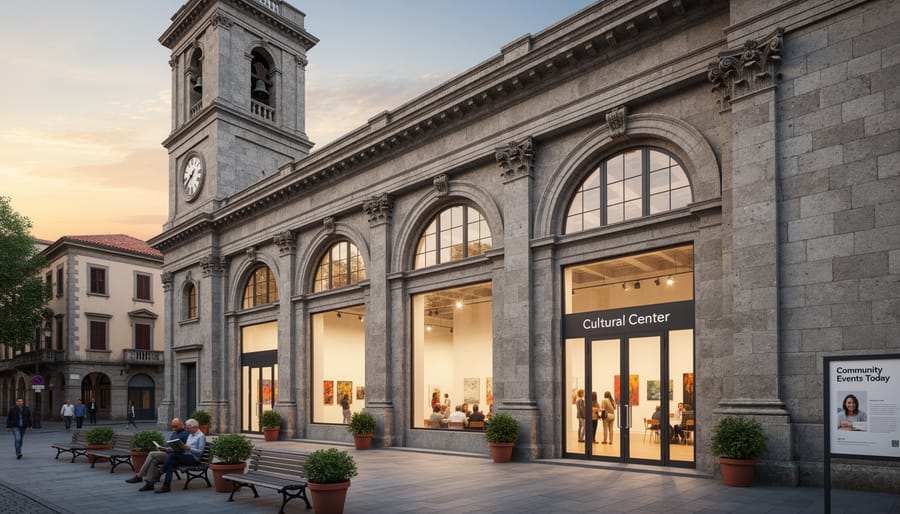
The Old Courthouse Arts Center in St. Louis, Missouri demonstrates how civic stone buildings can transition successfully into cultural hubs. Originally constructed in 1864 with rusticated limestone facades and granite columns, this Renaissance Revival courthouse served the city’s judicial system for over a century before declining usage prompted its transformation in the 1990s.
The building’s durable stone construction proved ideal for adaptive reuse. The massive load-bearing limestone walls, originally designed to project governmental authority, now provide excellent acoustic properties for gallery spaces and performance venues. Architects preserved the exterior stonework while retrofitting interior spaces with climate control systems essential for art preservation. The original marble staircases and ornamental stone details became focal points that enhance the cultural experience rather than simply serving functional purposes.
Today, the center houses multiple galleries, a 300-seat theater, and community workshop spaces. The building’s thermal mass, inherent in its thick stone walls, helps regulate interior temperatures and reduces energy costs. This project illustrates how monumental civic architecture can find renewed purpose while maintaining historical integrity, serving communities for generations beyond their original governmental function.
Commercial to Mixed-Use Development
A historic limestone warehouse in Chicago’s West Loop exemplifies successful commercial to mixed-use conversion. Built in 1890, the four-story structure originally served as a wholesale distribution center, featuring thick limestone walls, large timber beams, and oversized windows designed for natural lighting. The adaptive reuse project preserved these defining stone elements while transforming the building into a vibrant mixed-use development.
The ground floor now houses retail shops and cafes, capitalizing on the building’s street presence and the durability of its limestone facade. The second and third floors accommodate creative office spaces, where exposed stone walls create an authentic industrial aesthetic highly sought by modern businesses. The top floor was converted into residential lofts, maintaining the original limestone window surrounds and adding modern amenities within the robust structural envelope.
This project demonstrates how stone buildings accommodate diverse programs simultaneously. The inherent strength of limestone construction allowed for internal modifications without compromising structural integrity, while the building’s thermal mass provides energy efficiency benefits across all three uses, reducing operating costs for tenants and owners alike.
The Economic and Community Benefits of Stone Building Reuse
Cost Advantages Over New Construction
Adaptive reuse projects often deliver significant cost advantages compared to new construction, with studies showing savings of 10-20% on average. The existing structural framework, particularly in solid stone buildings, eliminates substantial foundation and structural costs that would otherwise consume a major portion of a new build budget. Stone walls already in place represent completed work with materials that would be prohibitively expensive to source and install today.
Tax incentives provide additional financial benefits. The Federal Historic Preservation Tax Incentives program offers a 20% income tax credit for certified rehabilitation of income-producing historic properties. Many states and municipalities offer complementary programs, including property tax abatements and facade improvement grants. These incentives can significantly offset renovation expenses while preserving architectural heritage.
Beyond direct tax benefits, adaptive reuse projects typically face shortened approval timelines compared to new construction. Existing utility connections, established access points, and grandfathered zoning classifications reduce both soft costs and development timeline. The embodied energy already invested in stone structures also represents avoided costs, as demolition and new material production carry both financial and environmental price tags. Developers can leverage these advantages to create economically viable projects while maintaining the character and durability that make historic stone buildings uniquely valuable assets.
Neighborhood Revitalization and Character Preservation
Adaptive reuse of historic stone buildings plays a vital role in preserving neighborhood character while stimulating economic development. When communities retain their stone structures, they maintain tangible connections to architectural heritage that defines local identity. These buildings serve as landmarks that tell the story of a place, creating a sense of continuity between past and present that resonates with residents and visitors alike.
The restoration and repurposing of stone buildings often catalyzes broader neighborhood investment. Historic stone structures attract businesses, restaurants, and cultural venues seeking distinctive spaces with authentic character that new construction cannot replicate. This influx of activity generates jobs, increases property values, and draws both tourists and new residents who value architectural preservation.
Beyond economics, maintaining stone buildings supports sustainable development by reducing demolition waste and preserving embodied energy. Communities that embrace adaptive reuse demonstrate environmental stewardship while honoring their heritage. The durability of natural stone ensures these structures can serve future generations, adapting to changing needs without losing their fundamental character. Local governments increasingly recognize this value, offering tax incentives and streamlined permitting for projects that preserve historic stone buildings while breathing new life into aging neighborhoods.
Adaptive reuse of stone buildings represents far more than a preservation strategy—it’s a forward-thinking approach to sustainable urban development that honors our architectural heritage while meeting contemporary needs. These enduring structures, built from marble, limestone, granite, and other natural stone, possess an inherent resilience that makes them ideal candidates for transformation. Their solid construction, timeless aesthetic appeal, and structural integrity provide a foundation that new construction simply cannot replicate.
As cities grapple with housing shortages, commercial space demands, and environmental concerns, adaptive reuse offers a practical solution that reduces construction waste, preserves embodied energy, and maintains the character that gives communities their identity. The process bridges past and present, creating spaces that tell a story while serving modern functions. Stone buildings that once housed factories, churches, or municipal offices now thrive as residential lofts, cultural centers, boutique hotels, and mixed-use developments.
Looking ahead, the role of stone building adaptive reuse in urban planning will only grow more critical. Climate goals require us to reconsider demolition as a default option, while preservation efforts benefit from demonstrating that historic structures can be economically viable and functionally relevant. The durability of natural stone ensures these buildings will continue standing for generations, ready to adapt once again as needs evolve. By choosing to reimagine rather than replace, we create sustainable cities that respect their past while embracing innovation and progress.