Divide your natural stone maintenance into quarterly intervals, scheduling deep cleaning and sealing in spring before weather extremes hit, monthly inspections during summer’s peak heat and traffic, preventive treatments in fall before freeze-thaw cycles begin, and protective measures throughout winter when ice and salt pose the greatest threats. This systematic approach prevents the costly mistake of reactive maintenance—addressing damage only after it occurs—which typically costs three to five times more than preventive care.
Mark your calendar for spring resealing between March and May, when temperatures stabilize above 50°F and stone surfaces can properly absorb sealants after winter moisture has dried. Summer months demand weekly debris removal and monthly deep cleaning to prevent organic staining from leaves, pollen, and outdoor entertaining. Fall preparation, ideally completed by October, includes comprehensive joint inspection, crack sealing, and applying penetrating sealers that guard against moisture infiltration before temperatures drop.
Professional stone contractors recommend scheduling annual deep maintenance during your region’s mild season—spring for northern climates, fall for southern areas—when weather conditions optimize product performance and curing times. Document each maintenance session with photos and notes, creating a historical record that reveals patterns in wear, identifies problem areas before they escalate, and ensures you’re neither over-maintaining (wasting time and money) nor under-maintaining (risking permanent damage).
A well-executed seasonal schedule transforms landscape stone from a maintenance burden into a low-effort, high-return investment that maintains its beauty and structural integrity for decades rather than years.
Why Natural Stone Landscapes Require Seasonal Attention
Natural stone landscapes add timeless beauty and value to outdoor spaces, but they’re far from maintenance-free. Understanding how natural stone responds to weather is essential for preserving its appearance and structural integrity throughout the year.
Temperature fluctuations pose significant challenges to stone surfaces. As temperatures rise and fall, stone expands and contracts at varying rates. This movement can gradually weaken mortar joints, create hairline cracks, and compromise the stone’s surface integrity. The effect becomes particularly pronounced during spring and fall when daily temperature swings are most dramatic.
Moisture presents another critical concern across all seasons. During warmer months, water penetrates stone pores and can promote biological growth like algae, moss, and mildew. In winter, that same moisture becomes dangerous through freeze-thaw cycles. When water freezes inside stone pores, it expands by approximately nine percent, creating internal pressure that leads to spalling, cracking, and surface deterioration. A single winter can produce dozens of these cycles, making cold-weather protection vital.
UV exposure also affects stone differently throughout the year. Prolonged summer sun can fade certain stone types and degrade sealants, reducing their protective capabilities. The intensity of UV rays at different times of year determines how frequently you’ll need to reapply protective treatments.
Different stone types exhibit varying vulnerabilities. Limestone and sandstone are sedimentary stones with higher porosity, making them especially susceptible to moisture absorption and freeze-thaw damage. These stones require more frequent sealing and winter preparation. Granite, being dense and less porous, withstands weather extremes better but still needs attention to prevent surface staining and biological growth. Slate offers good weather resistance but can delaminate along its natural layers when water penetrates and freezes. Understanding your specific stone type helps you anticipate seasonal challenges and plan maintenance accordingly, ensuring your landscape investment remains beautiful and structurally sound for decades.
Spring Maintenance: Recovery and Renewal
Post-Winter Inspection and Damage Assessment
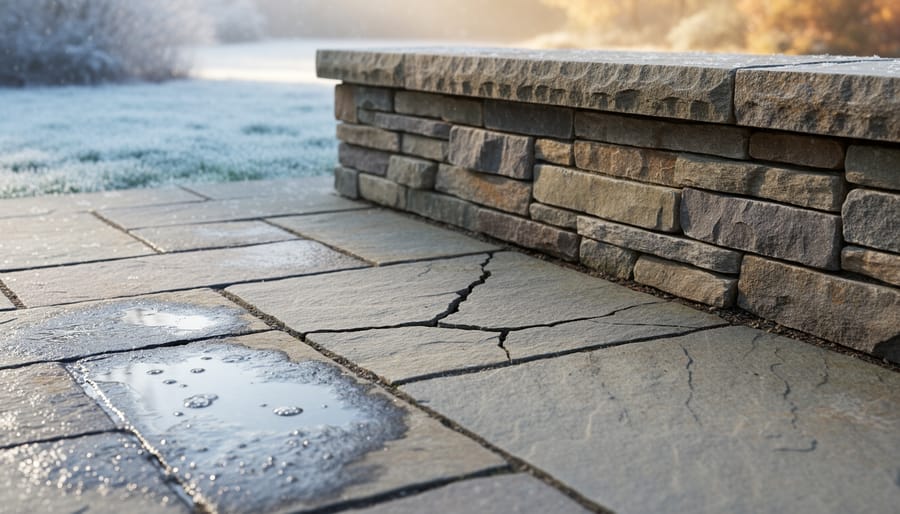
Once temperatures stabilize and snow melts, conduct a thorough inspection of all stone surfaces. Winter’s freeze-thaw cycles can cause significant damage that, if addressed early, prevents costly repairs down the road.
Start by examining joints and mortar lines for cracks or gaps where water penetration may have occurred. Walk the entire hardscape looking for individual pavers or stones that have shifted, heaved, or settled unevenly—these create tripping hazards and allow water to pool in unintended areas.
Check for surface damage including chips, spalling, or flaking, which often result from water freezing within the stone’s pores. Pay special attention to edges and corners where impact damage is most common. Look for white, powdery deposits known as efflorescence—this salt residue indicates moisture movement through the stone and may signal drainage issues requiring attention.
Document problem areas with photos and notes about their severity. Minor surface cracks might only need sealing, while significant displacement or structural movement requires professional assessment. Address high-priority repairs immediately, particularly those affecting safety or allowing continued water infiltration.
Create a repair list organized by urgency: immediate concerns like loose stepping stones, short-term projects such as repointing mortar joints, and longer-term considerations like drainage improvements. This systematic approach ensures your stone features remain beautiful and functional throughout the coming seasons.
Deep Cleaning and Stain Removal
Regular deep cleaning prevents long-term damage and maintains the natural beauty of your stone surfaces. The frequency and intensity of cleaning depend on your stone type, location, and exposure to elements.
Start by understanding your stone’s composition before selecting cleaners. Acidic solutions can etch marble, limestone, and travertine, while alkaline cleaners work best for granite and slate. Always test cleaning products on an inconspicuous area first. Following proper cleaning techniques protects your investment and extends the life of your stone features.
Salt deposits from winter de-icing require prompt attention in spring. Mix warm water with a pH-neutral stone cleaner and scrub gently with a soft-bristle brush. Rinse thoroughly to prevent residue buildup. For organic stains like algae, moss, or mildew, use specialized stone-safe cleaners designed for biological growth removal.
Pressure washing offers effective cleaning but demands caution. Use a wide fan tip, maintain at least 12 inches distance from the surface, and keep pressure below 1200 PSI for most natural stones. Higher pressures can erode softer stones and damage joint sand in pavers. Move the wand consistently to avoid streaking or surface damage.
For stubborn stains, create a poultice using the appropriate cleaning agent mixed with an absorbent material. Apply it to the stain, cover with plastic, and allow 24-48 hours for the poultice to draw out the discoloration. Schedule deep cleaning twice yearly, typically in spring after winter damage assessment and fall before harsh weather arrives.
Resealing and Protection
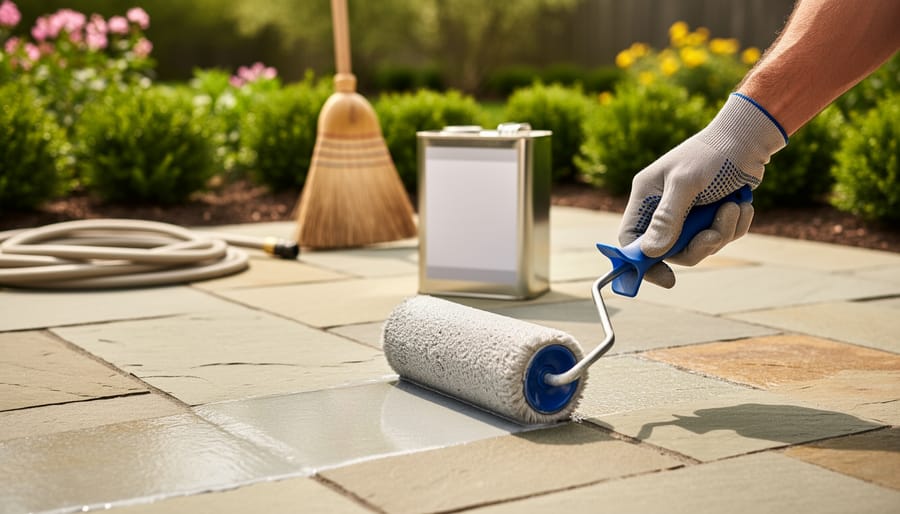
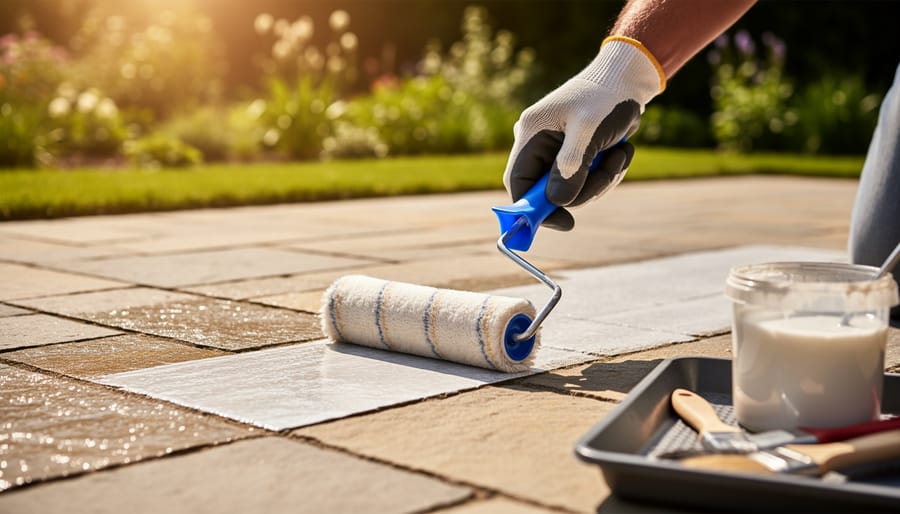
Timing is crucial when applying protective sealers to outdoor stone surfaces. For most climates, spring and fall offer ideal conditions—moderate temperatures between 50-80°F and low humidity allow sealers to cure properly. Avoid sealing during extreme heat, direct sunlight, or when rain is forecasted within 24-48 hours.
Choose a penetrating sealer specifically formulated for outdoor use, as these products resist UV degradation and temperature fluctuations. Water-based sealers work well for most applications and are environmentally friendly, while solvent-based options provide enhanced protection in harsh climates. Always verify the sealer is appropriate for your specific stone type—limestone, granite, and slate have different porosity levels requiring different formulations.
Coverage rates typically range from 100-300 square feet per gallon, depending on stone porosity. Apply sealer using a pump sprayer, roller, or brush in thin, even coats. Most installations require two coats with a 30-minute interval between applications. Remove excess sealer within 5-10 minutes to prevent haziness. Reseal high-traffic areas every 1-2 years and protected areas every 3-5 years, adjusting frequency based on water absorption tests.
Summer Maintenance: Protection and Preservation
Managing Heat and UV Exposure
Intense sun exposure poses unique challenges for natural stone landscapes, varying significantly by stone type. Darker stones like granite and basalt absorb more heat, reaching surface temperatures that can exceed 150°F on summer days, while lighter stones such as travertine and limestone reflect more sunlight and remain cooler. This thermal stress can cause expansion and contraction cycles that gradually weaken mortar joints and create microcracks in the stone surface.
UV radiation is a primary culprit in color fading, particularly affecting sedimentary stones and those with iron-rich mineral content. Sandstone and certain limestones are especially vulnerable, showing noticeable lightening after prolonged exposure. To minimize fading, apply UV-resistant sealers during spring months, reapplying every 2-3 years depending on exposure intensity.
Thermal expansion becomes critical in large paved areas where insufficient expansion joints can lead to buckling or cracking. Inspect joint spacing quarterly and ensure proper drainage systems are functioning. Standing water amplifies heat absorption and accelerates deterioration. Adequate drainage prevents moisture from becoming trapped beneath stones, which can cause spalling when rapid temperature changes occur. Clean drainage channels and weep holes monthly during peak summer months to maintain proper water flow and protect your investment.
Routine Cleaning and Weed Control
Establishing a consistent cleaning routine prevents minor issues from becoming major problems. Sweep your natural stone surfaces weekly to remove dirt, leaves, and debris that can stain or trap moisture. For patios and walkways, use a leaf blower or soft-bristled broom to avoid scratching the stone surface.
Rinse stone features bi-weekly with clean water using a garden hose. This simple practice removes accumulated dust and prevents organic matter from settling into joints and surface pores. Pay special attention to shaded areas where moisture lingers, as these spots are more susceptible to algae and moss growth.
Address weeds promptly when they appear in joints and crevices. Hand-pull weeds while they’re small, ensuring you remove the entire root system. For persistent weed problems, use polymeric sand in paver joints to create a barrier that inhibits growth. Avoid harsh chemical herbicides near natural stone, as they can cause discoloration or damage sealants.
Inspect surfaces monthly for early signs of organic growth like green or black staining. If caught early, most growth can be removed with water and a stiff brush. Between deep cleanings, this routine maintenance preserves your stone’s appearance and extends the time between professional treatments, ultimately protecting your investment year-round.
Water Feature and Pool Surround Care
Stone around pools and water features requires specialized attention due to constant moisture exposure and chemical contact. Check for efflorescence and mineral deposits monthly, removing them with pH-neutral cleaners designed for natural stone. Chlorine and pool chemicals can etch certain stones, so rinse surrounding pavers weekly during swimming season and reseal every 1-2 years with a penetrating sealer that maintains slip resistance.
Water staining often appears as dark patches on porous stones like limestone or sandstone. Address this during spring maintenance by applying poultices to draw out moisture-related discoloration. For pool copings and wet areas, test slip resistance annually using a tribometer or simple water test—if surfaces feel slick when wet, apply a slip-resistant treatment.
Before winter, drain water features completely and cover stone surrounds to prevent freeze-thaw damage. Clean filters and check that drainage systems function properly to avoid standing water that can penetrate stone and cause spalling when temperatures drop.
Fall Maintenance: Preparation and Prevention
Leaf and Debris Management
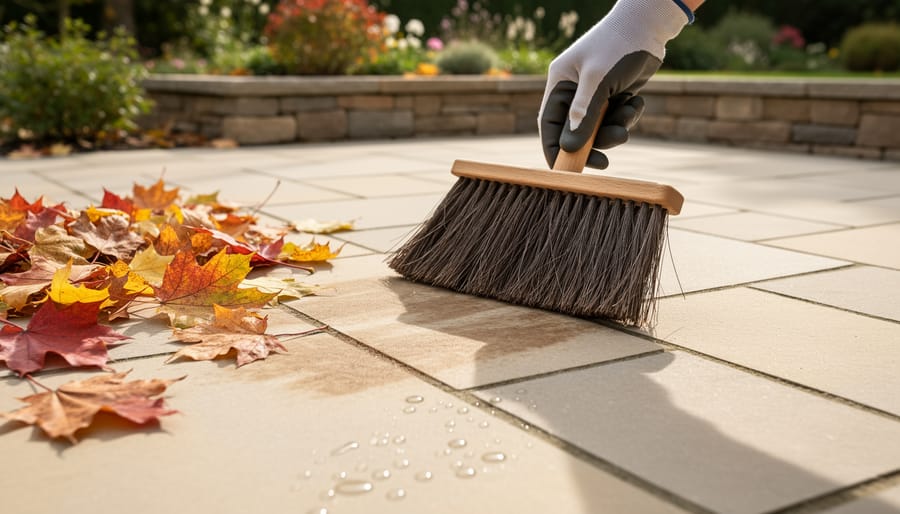
Fallen leaves and organic debris pose a greater threat to natural stone than many property owners realize. While a light scattering of leaves might seem harmless, allowing them to accumulate creates conditions for permanent damage. Decomposing organic matter releases tannins and acids that can penetrate stone pores, causing stubborn staining that becomes increasingly difficult to remove over time. Preventing organic matter damage requires regular removal, especially during fall when leaf drop peaks.
Focus on areas where debris tends to collect: along stone borders, in corners of patios, and around water features. Use soft-bristled brooms or leaf blowers rather than metal rakes that might scratch stone surfaces. Pay particular attention to gutters and drainage systems near stone installations. Clogged drains can cause water to pool on stone, accelerating weathering and increasing freeze-thaw damage risk in colder months. Clean gutters monthly during peak leaf season and inspect drainage pathways after major storms. Remove any organic buildup from stone joints and crevices, as trapped moisture combined with decomposing matter accelerates deterioration and encourages moss or mold growth.
Pre-Winter Sealing Assessment
Before winter’s harsh freeze-thaw cycles begin their damaging work, conduct a thorough assessment of your stone surfaces’ protective sealer. This proactive step can prevent costly repairs and extend the life of your natural stone features.
Start by performing a simple water absorption test. Sprinkle water on various sections of your stone surfaces, particularly high-traffic areas and those exposed to direct weather. If the water beads up and sits on the surface, your sealer is still effective. However, if water absorbs quickly and darkens the stone within 5-10 minutes, it’s time to reapply.
Focus special attention on vulnerable areas that experience the most stress: steps, pool copings, fountain edges, and any horizontal surfaces where water can pool. These locations are prime candidates for moisture infiltration that will expand when frozen, causing cracks and spalling.
Apply a high-quality penetrating sealer designed for your specific stone type during a dry period when temperatures remain above 50°F for at least 48 hours. This allows proper curing before winter arrives. For heavily weathered areas showing signs of deterioration, consider applying two coats, allowing adequate drying time between applications. Document the date and product used for future reference in your maintenance schedule.
Joint and Mortar Inspection
Before winter arrives, inspecting joints and mortar becomes critical for protecting your natural stone installations from freeze-thaw damage. Water that seeps into compromised joints can expand when frozen, causing cracks, displacement, and structural deterioration throughout the cold months.
Begin by examining the joints between pavers and flagstones in walkways and patios. Look for gaps, missing sand, or deteriorated polymeric materials. Rake out loose debris and refill with appropriate jointing material—polymeric sand for wider joints or mortar for tighter applications. This prevents water infiltration and keeps pavers stable.
Stone walls require careful mortar inspection. Check for crumbling, gaps, or receding mortar lines. Repointing involves removing damaged mortar to a depth of about three-quarters of an inch and filling with fresh mortar that matches the original in composition and color. This preserves both structural integrity and aesthetic appeal.
Pay special attention to drainage patterns around all stone features. Ensure water flows away from structures rather than pooling near joints or foundations. Clear drainage channels, regrade settled areas, and verify that weep holes in retaining walls remain unobstructed. Completing these tasks in fall, ideally six weeks before the first freeze, gives repairs adequate curing time and prevents costly winter damage.
Winter Maintenance: Minimal Intervention, Maximum Protection
Safe Snow and Ice Removal
Winter weather demands careful attention to protect your natural stone surfaces from damage during snow and ice removal. The tools and techniques you choose make a significant difference in preserving your investment.
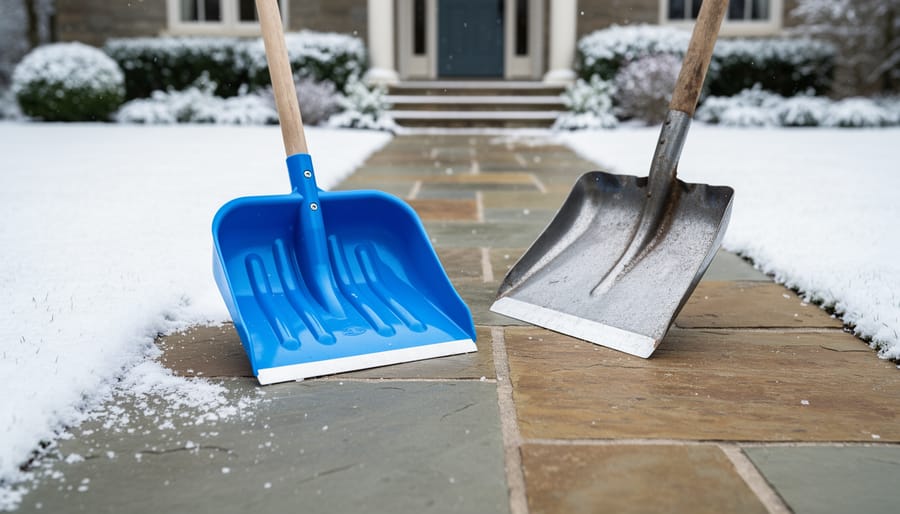
Always use plastic or rubber-edged shovels when clearing snow from stone surfaces. Metal shovels and ice scrapers can scratch, chip, or gouge natural stone, particularly softer varieties like limestone and sandstone. When shoveling, hold the tool at a slight angle rather than scraping directly against the surface, and push snow away rather than using aggressive chopping motions.
For stubborn ice, avoid metal pry bars or chippers entirely. Instead, apply a thin layer of calcium magnesium acetate or sand for traction. Traditional rock salt (sodium chloride) can deteriorate stone over time and damage surrounding vegetation, while calcium chloride may cause surface spalling in freeze-thaw cycles. If you must use deicers, choose products specifically labeled as safe for natural stone and apply sparingly.
When clearing steps or pathways, work methodically from top to bottom to prevent water from refreezing on lower surfaces. Remove snow promptly after each storm—allowing it to melt and refreeze repeatedly creates more hazardous ice buildup and increases the risk of moisture penetration that can cause cracking or spalling during subsequent freeze-thaw cycles.
Deicing Product Selection
Selecting the right deicing products is crucial for protecting your natural stone surfaces during winter months. Traditional rock salt (sodium chloride) can damage stone through crystallization and surface spalling, making it a poor choice for flagstone, limestone, and other porous materials.
The safest alternatives include calcium magnesium acetate (CMA) and products containing calcium chloride, which are less corrosive and reduce the risk of stone deterioration. Sand mixed with minimal salt provides traction without excessive chemical exposure. Always verify that any commercial deicer is labeled as safe for concrete and natural stone applications.
Application methods matter as much as product selection. Rather than broadcasting deicers directly onto stone surfaces, apply them sparingly along walkway edges or use sand for traction on the stone itself. For steps and high-traffic areas, consider installing heating mats beneath the stone during installation as a long-term solution that eliminates chemical deicers entirely.
Protecting surrounding vegetation is equally important, as salt runoff damages plants and soil. Create physical barriers using burlap screens around sensitive plantings near treated pathways. Direct meltwater away from garden beds through proper drainage planning. After winter, flush treated areas with fresh water to dilute any accumulated salts in the soil and prevent root damage to nearby shrubs and perennials. If you notice white residue or discoloration on stone surfaces come spring, this indicates excessive deicer use that requires adjustment in future seasons.
Creating Your Custom Maintenance Calendar
Developing a personalized maintenance calendar ensures your natural stone landscape receives the right care at the right time. Start by identifying your USDA hardiness zone, as this determines when spring thaw begins, when fall preparations should start, and how severe winter protection needs to be. A homeowner in Zone 7 will have different timing than someone in Zone 3 or 10.
Next, catalog your stone features and their specific materials. Granite, limestone, bluestone, and sandstone each have unique porosity levels and sensitivities. Create an inventory list noting the stone type, location, current condition, and last sealing date for each feature. This becomes your maintenance roadmap.
A basic calendar template should divide the year into four seasonal sections. For spring, schedule inspection and cleaning tasks immediately after the last frost. Mark mid-spring for pressure washing and repairs. Summer entries should include monthly visual checks and spot cleaning. Fall requires sealing verification and preparing stones for winter. Winter calls for periodic snow removal and ice management reviews.
Consider using a digital calendar with reminders set two weeks before each task. This advance notice allows you to gather supplies, check weather forecasts, and schedule professionals if needed. Many homeowners find success with spreadsheet templates that track completion dates, products used, and observations about stone condition over time.
Weather patterns matter more than calendar dates. In regions with unpredictable springs, schedule sealing when you can expect three consecutive days above 50 degrees Fahrenheit with no rain. Coastal areas should increase cleaning frequency due to salt exposure, while arid climates may extend time between deep cleanings but require more attention to thermal expansion issues.
Document everything with dated photos. This visual record helps you notice gradual changes like efflorescence development, shifting pavers, or deteriorating mortar joints before they become major problems. Your calendar becomes not just a schedule but a comprehensive maintenance history that proves invaluable for warranty claims, property valuations, or when consulting with restoration specialists.
Common Maintenance Mistakes That Damage Natural Stone
Even well-intentioned maintenance can cause significant damage to natural stone when common mistakes go unchecked. Understanding these errors helps protect your investment and preserve the beauty of your landscape features.
One of the most damaging mistakes involves using acidic or abrasive cleaners. Products containing vinegar, lemon juice, or harsh chemicals can etch marble, limestone, and travertine surfaces, leaving dull spots and permanent damage. Always choose pH-neutral cleaners specifically formulated for natural stone. Read product labels carefully and test any new cleaner on an inconspicuous area first.
Excessive pressure washing represents another frequent error. While pressure washers seem efficient, using too much pressure or holding the nozzle too close can erode softer stones, dislodge mortar joints, and force water beneath the surface where it causes freeze-thaw damage. Limit pressure to 1,500 PSI maximum for most natural stone, maintain a 12-inch distance, and use a wide-angle nozzle.
Applying inappropriate sealers creates problems ranging from discoloration to trapped moisture. Not all sealers suit every stone type. Porous stones like sandstone need penetrating sealers, while dense granite may require topical options. Using the wrong product can alter appearance, prevent proper breathing, or provide inadequate protection. Consult manufacturer specifications or a stone professional before sealing.
Neglecting drainage issues accelerates deterioration more than almost any other factor. Standing water penetrates stone, promoting staining, efflorescence, and structural damage through repeated freezing and thawing cycles. Ensure proper grading, clear debris from drainage channels regularly, and address pooling water immediately.
Prevention begins with education. Research your specific stone type, maintain a consistent seasonal schedule, and when uncertain about products or techniques, consult experienced stone care professionals. Small preventive measures today avoid costly repairs tomorrow.
When to Call a Professional
While regular DIY maintenance handles most landscape stone care, certain situations demand specialized expertise. Recognizing when to call in professionals can prevent minor issues from becoming costly disasters and ensure your investment remains protected.
Major damage requiring professional stone restoration includes deep cracks, significant spalling or flaking, widespread staining that resists standard cleaning methods, and extensive efflorescence that indicates underlying moisture problems. Structural concerns like settling pavers, failing retaining walls, or unstable stone steps also warrant immediate professional assessment, as these pose safety risks beyond aesthetic concerns.
Large-scale projects such as complete patio resealing, extensive color enhancement treatments, or refinishing techniques like honing or polishing require specialized equipment and experience that most homeowners lack. Similarly, if you’re uncertain about the type of stone you have or which products are safe to use, consulting an expert prevents potentially irreversible damage.
When selecting a stone maintenance professional, look for specific qualifications. They should have demonstrated experience with your particular stone type, provide references from similar projects, and carry appropriate insurance. Ask about the products and methods they use, ensuring they align with manufacturer recommendations. A reputable professional will conduct a thorough assessment before quoting, explain their approach clearly, and offer maintenance guidance for preserving their work. Certifications from industry organizations and membership in trade associations indicate commitment to professional standards and ongoing education in stone care techniques.
A well-executed landscape maintenance schedule is your most valuable tool for protecting your natural stone investment. By following a seasonal approach tailored to your climate and specific stone features, you’ll preserve the natural beauty that drew you to stone in the first place while significantly extending its lifespan. Consistent, timely care prevents minor issues from escalating into expensive repairs or premature replacement.
The distinction between proactive maintenance and reactive fixes cannot be overstated. Regular seasonal attention—whether it’s spring sealing, summer debris management, fall preparation, or winter protection—costs a fraction of what you’ll spend addressing neglect-related damage like deep staining, cracking, or structural deterioration.
Start your maintenance schedule today by identifying which season you’re currently in and tackling the corresponding priority tasks. Whether you’re addressing immediate needs like pre-winter sealing or planning ahead for spring cleaning, taking that first step establishes a protective routine that will serve your stone surfaces for decades. Review your schedule quarterly, adjust for unexpected weather events, and don’t hesitate to consult professionals for specialized treatments. Your stone deserves this commitment, and the lasting results will prove the effort worthwhile.