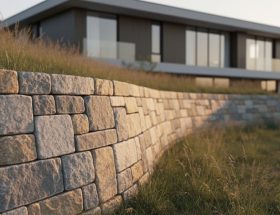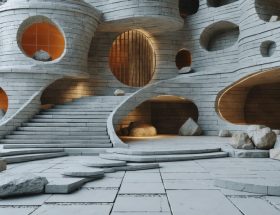
Architecture no longer demands permanence. The traditional view of stone as an immovable, forever-fixed material is being revolutionized by modular design systems that transform natural stone into adaptable, reconfigurable building elements. These innovations allow spaces to evolve with changing needs—walls become partitions, facades shift to accommodate new functions, and interiors reorganize without demolition or waste.
Design modular stone panels with concealed mechanical fastening systems that enable disassembly and reconfiguration without damaging the material. Specify standardized dimensional units that create interchangeable components across projects, reducing custom fabrication costs while maintaining design flexibility. Incorporate adjustable substructure frameworks using aluminum or steel rails that accommodate movement and allow stone elements to be repositioned as spatial requirements change.
This approach serves property owners seeking long-term investment value, architects designing for uncertain future uses, and developers requiring flexible commercial spaces. Projects ranging from corporate offices to retail environments now embrace stone’s durability while rejecting its traditional inflexibility. The result is architecture that respects both material heritage and contemporary demands for sustainability—reusing rather than replacing, adapting rather than demolishing. When stone moves from permanent installation to intelligent system, buildings gain decades of relevance without the environmental cost of reconstruction.
What Makes Stone Architecture Adaptable?
The Core Principles of Modular Stone Systems
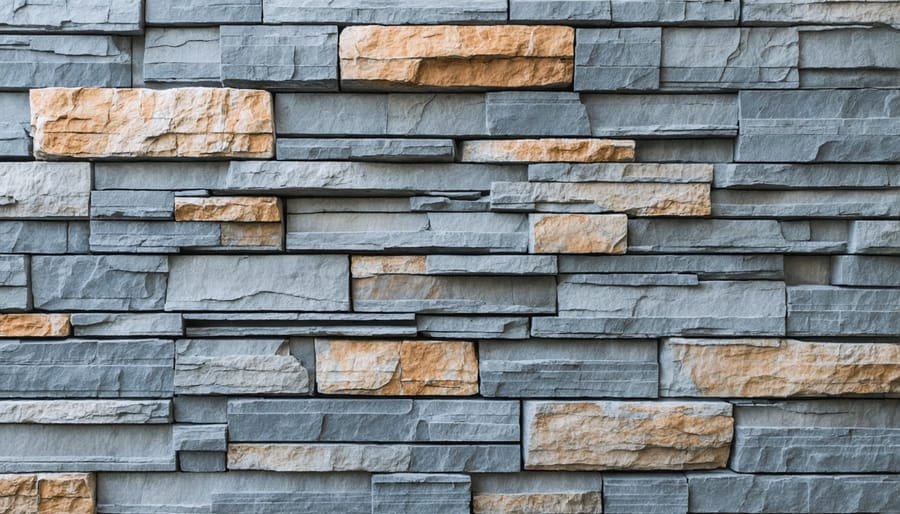
Modular stone systems represent a paradigm shift in how we approach natural stone construction, transforming traditional permanent installations into flexible architectural solutions. At the heart of this innovation lies three foundational principles that enable unprecedented adaptability.
First, standardized units form the backbone of modular design. By manufacturing stone components in predetermined dimensions and specifications, these systems create building blocks that can be combined in multiple configurations. This standardization doesn’t compromise aesthetic variety—different stone types, finishes, and thicknesses can all conform to modular measurements, offering designers creative freedom within a structured framework.
Second, flexible installation methods distinguish modular approaches from conventional masonry. Rather than relying solely on mortar and permanent adhesives, smart stone design incorporates mechanical fastening systems, rail mountings, and interlocking mechanisms. These methods reduce installation time, minimize waste, and critically, allow for repositioning without damaging the stone.
Third, reversible connections enable true reconfigurability. Clips, brackets, and specially designed joinery systems secure stone panels firmly while maintaining the ability to disassemble and relocate them. This principle extends the lifecycle of stone materials, supporting sustainable practices by allowing components to be reused across multiple projects or adapted as spatial needs evolve. Together, these principles create architectural systems that honor stone’s timeless qualities while embracing contemporary demands for flexibility.
Natural Stone vs. Traditional Static Installation
Traditional stone installation treats natural materials as permanent, immovable elements within a structure. Once mortared or adhered in place, these installations require significant demolition and waste generation if changes become necessary. This approach locks building owners into rigid layouts that can’t easily adapt to evolving needs or preferences.
Modular stone systems fundamentally reimagine this relationship. By utilizing mechanical fastening systems, concealed brackets, or interlocking panel designs, natural stone becomes reconfigurable without compromising its inherent durability or aesthetic appeal. Individual panels can be removed, relocated, or replaced as spaces transform over time.
The cost implications differ substantially between approaches. While traditional installations may present lower initial expenses, modular systems demonstrate superior lifetime value through reusability and reduced labor during renovations. Rather than discarding materials during redesigns, the same premium stone surfaces can be repurposed across multiple configurations.
From a sustainability perspective, modular approaches align with circular economy principles by extending material lifecycles and minimizing construction waste. This adaptability proves particularly valuable in commercial environments where tenant requirements shift frequently, allowing property owners to refresh spaces without environmental burden or excessive capital expenditure.
Real-World Applications That Prove the Concept
Residential Spaces: Walls That Move With Your Life
Modern homeowners are discovering that stone doesn’t have to mean permanent. Adaptable residential design now incorporates natural stone in surprisingly flexible ways that evolve with changing family needs.
Stone accent walls mounted on track systems allow homeowners to reposition decorative panels without demolition. One California family installed limestone panels on aluminum frames that slide to reveal or conceal a home office space, transforming their living room layout seasonally. The stone provides acoustic benefits and visual warmth while maintaining complete flexibility.
Movable room dividers featuring thin stone veneers offer another solution. These freestanding partitions, weighing significantly less than solid stone walls, can separate open-plan spaces for privacy or swing open for entertaining. A Denver couple uses slate-clad dividers to create a temporary nursery that will easily convert back to a master suite extension as their child grows.
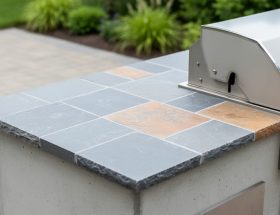
Outdoor living spaces benefit equally from modular stone design. Porcelain pavers that mimic natural stone sit on adjustable pedestals, creating patios that homeowners can reconfigure or relocate without excavation. This approach proved invaluable for a Seattle family who redesigned their backyard layout three times in five years, simply lifting and rearranging pavers to accommodate a play structure, then a garden, and eventually an outdoor kitchen. The investment in adaptable materials eliminated repeated hardscaping costs while maintaining the timeless aesthetic of natural stone.
Commercial Environments: Flexibility for Changing Business Needs
Commercial spaces face constant pressure to evolve with market trends, brand refreshes, and shifting business models. Modular stone systems offer the flexibility these environments demand without the disruption and expense of complete renovations.
In retail, brands use reconfigurable stone panels to update store aesthetics seasonally or during rebranding campaigns. A luxury boutique in Manhattan recently transformed its facade and interior walls using interlocking marble tiles, allowing for pattern changes that align with seasonal collections. The system reduced renovation time from weeks to days while maintaining the premium aesthetic stone provides.
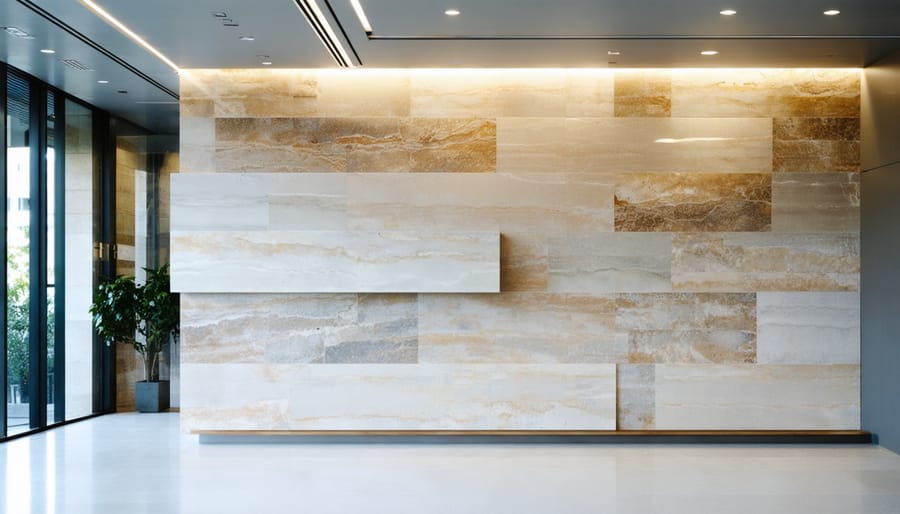
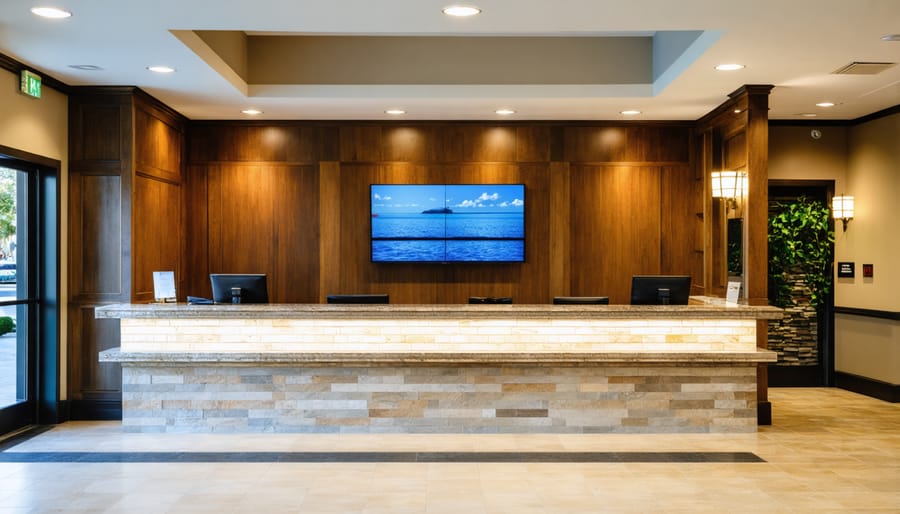
Hotels leverage adaptable stone designs in lobbies and common areas to refresh their appearance between ownership changes or repositioning efforts. One boutique hotel chain implemented a modern stone design featuring removable limestone panels with integrated lighting channels, enabling dramatic visual updates without structural modifications.
Office buildings benefit similarly, with modular stone systems allowing companies to reconfigure reception areas, conference rooms, and collaborative spaces as organizational needs shift. Demountable stone walls provide acoustic benefits and visual warmth while supporting the fluid layouts modern workplaces require. This approach preserves capital investment while accommodating growth, contraction, or departmental reorganization—proving that permanent materials can serve temporary needs.
Public Architecture: Museums and Cultural Spaces
Museums and cultural institutions face unique spatial challenges as they host rotating exhibitions, educational programming, and community events within the same footprint. Adaptable stone design offers an elegant solution that honors these buildings’ permanence while enabling functional flexibility.
Many contemporary museums incorporate movable stone partition walls mounted on concealed tracking systems. These panels, crafted from lighter stone varieties or engineered stone composites, can reconfigure gallery spaces to accommodate exhibitions of varying scales without compromising the material’s visual impact. The Louvre Abu Dhabi demonstrates this principle through its modular stone cladding system that creates intimate viewing areas or expansive exhibition halls as needed.
Stone flooring in cultural spaces increasingly features demountable systems with interlocking panels. This approach allows institutions to access underfloor utilities, modify traffic patterns, or temporarily protect surfaces during installation periods. The result is practical maintenance without sacrificing the aesthetic gravitas that natural stone provides.
Multipurpose gathering spaces benefit from stone elements with integrated flexibility, such as retractable stone-faced stages or movable benches carved from solid blocks. These solutions maintain architectural integrity while serving diverse programming needs, from lectures to performances to social gatherings, proving that adaptability and timeless design can coexist harmoniously.
The Technical Advantages of Modular Stone Design
Installation Speed and Reduced Labor Costs
Prefabricated modular stone systems dramatically accelerate project timelines by shifting much of the fabrication work to controlled factory environments. Traditional stone installation requires extensive on-site cutting, fitting, and adjustment—processes that demand specialized labor and can extend construction schedules by weeks or months. In contrast, modular systems arrive pre-cut and pre-assembled, reducing on-site installation time by up to 60% in many applications.
This efficiency translates directly to reduced labor costs. Fewer skilled stonemasons are needed on-site, and the simplified installation process allows general contractors to handle much of the work with basic training. The precision manufacturing also minimizes material waste and eliminates costly errors that often occur during custom on-site fabrication.
Weather delays become less critical since the bulk of work happens indoors at the manufacturing facility. Building owners benefit from shorter construction periods, which means reduced financing costs, earlier occupancy, and faster return on investment. For renovation projects, the speed advantage is particularly valuable, minimizing disruption to existing operations while delivering the timeless beauty and durability of natural stone.
Maintenance and Replacement Simplicity
One of the most practical advantages of modular stone architecture is the ease of maintenance and component replacement. Unlike traditional stone installations that require extensive reconstruction when damage occurs, adaptable systems allow individual modules to be removed and replaced without affecting surrounding elements. This targeted approach significantly reduces both downtime and labor costs.
When a single stone panel becomes damaged or requires updating, contractors can simply detach the affected module from its mounting system and install a replacement. The process typically takes hours rather than days, minimizing disruption to building occupants and operations. This modularity also extends the lifespan of the entire installation, as worn sections can be refreshed without committing to a complete renovation.
The financial benefits are substantial. Property owners avoid the costs associated with large-scale demolition, material waste, and extended contractor engagements. Additionally, replacement modules can be sourced and fabricated off-site while the building remains fully functional, eliminating the need for prolonged construction zones or temporary closures.
Sustainability Through Reusability
Modular stone architecture champions sustainability through reusability by fundamentally rethinking the lifecycle of building materials. Unlike conventional construction where stone installations become permanent fixtures destined for landfills during renovations, adaptable systems allow natural stone to maintain its value across multiple applications. These disassemblable designs significantly reduce construction waste—a major contributor to environmental degradation—while preserving the embodied energy already invested in quarrying, processing, and transporting the material.
When building needs evolve, modular stone components can be carefully dismantled and reinstalled in new configurations or different locations entirely. This approach extends material lifespan indefinitely, transforming stone from a single-use resource into a durable asset that serves multiple projects throughout its existence. The environmental advantage multiplies when considering that each reuse eliminates the carbon footprint associated with quarrying new stone and disposing of old materials. For environmentally conscious property owners and designers, this circular approach to stone architecture represents a practical pathway toward reducing construction’s environmental impact without compromising the timeless beauty and durability that natural stone provides.
Design Possibilities: What You Can Create
Pattern Flexibility and Customization
Modular stone systems unlock unprecedented creative freedom by allowing designers to reconfigure installations without replacing materials. Individual units can be rearranged to create entirely new visual compositions, making pattern changes and texture mixing remarkably straightforward. A herringbone layout can transform into a linear pattern, while contrasting stone finishes—polished marble alongside honed limestone—can be repositioned to refresh spatial dynamics.
This flexibility proves particularly valuable for seasonal design updates in hospitality and retail environments. Hotels might reconfigure lobby feature walls between summer and winter, adjusting stone arrangements to complement seasonal color palettes. Commercial spaces benefit from the ability to update aesthetics without major construction, reducing downtime and renovation costs. The same inventory of modular panels serves multiple design iterations, extending material lifecycle while maintaining visual freshness. This approach transforms natural stone from a permanent architectural decision into an adaptable design tool that evolves with changing aesthetic preferences.
Integrating Technology and Lighting
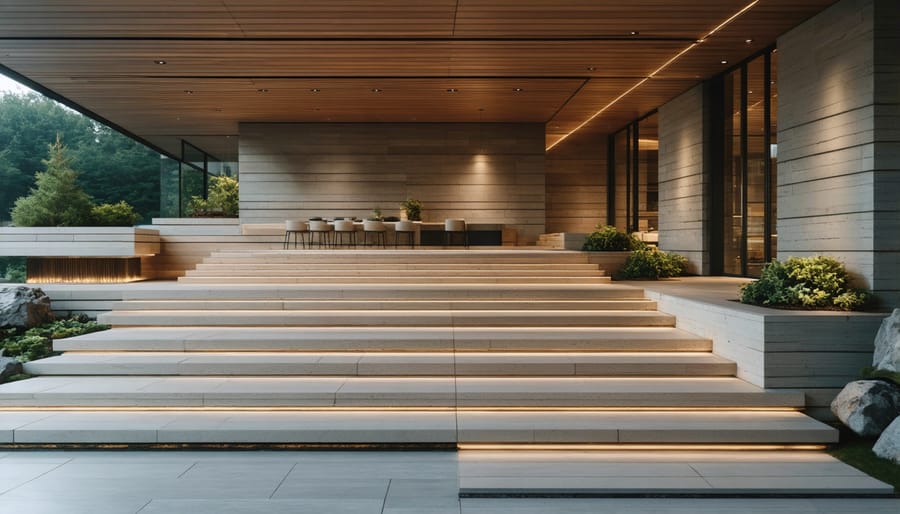
Modern modular stone systems are engineered to seamlessly incorporate technological infrastructure while maintaining the natural elegance of the material. Integrated channel systems within stone panels allow for concealed LED lighting that can highlight architectural features or provide ambient illumination, with electrical pathways designed for easy access and upgrades without disturbing the entire installation.
Digital displays and interactive surfaces can be embedded into stone modules, creating dynamic information hubs in commercial lobbies or wayfinding systems in public spaces. These technology-ready panels feature recessed mounting points and cable management solutions that keep installations clean and professional.
Smart building technologies benefit significantly from modular stone design. Sensors for occupancy detection, air quality monitoring, and temperature control can be discretely integrated into stone elements, with modular construction allowing for system updates as technology advances. This forward-thinking approach ensures that buildings remain technologically current without requiring major renovations. The key advantage lies in the accessibility: individual panels can be removed and replaced to accommodate new technologies, transforming stone architecture from a static element into a responsive, evolving building component that adapts to future innovation.
Selecting the Right Modular Stone System for Your Project
Key Questions to Ask Your Stone Supplier
Before selecting stone for adaptable architecture projects, engage your supplier with targeted questions. First, inquire about load-bearing capacity and structural ratings for modular applications, ensuring the stone can safely support anticipated configurations. Ask which connection systems they recommend—mechanical fasteners, interlocking profiles, or specialized mounting hardware—and whether these allow for non-destructive disassembly. Discuss stone type compatibility with your design intent; some materials like limestone and sandstone machine more easily for precise modular cuts, while others like granite offer superior durability for high-traffic reconfigurable spaces. Request information about dimensional tolerances and quality consistency across multiple shipments, critical for projects requiring future expansion or reconfiguration. Finally, confirm whether they provide technical support for calculating movement joints, thermal expansion considerations, and assembly documentation. Understanding your supplier’s experience with modular projects and their ability to provide matching materials years later ensures your adaptable design remains viable throughout its lifecycle.
Budget Considerations: Initial Investment vs. Long-Term Value
Modular stone systems typically require 15-25% higher upfront investment compared to traditional installations due to specialized mounting hardware, precision fabrication, and engineering requirements. However, lifecycle cost analysis reveals significant long-term advantages. Adaptable systems eliminate future demolition and disposal expenses, which can account for 30-40% of renovation budgets. When spatial needs change, panels can be repositioned rather than replaced, preserving your initial material investment. Over a 20-year period, adaptable architecture often delivers 35-50% cost savings through reduced renovation frequency and labor expenses. The resale value proposition also strengthens as buyers increasingly prioritize flexible spaces. Consider that traditional stone installations become sunk costs during remodels, while modular systems retain material value and reduce construction waste fees. For commercial properties, the ability to reconfigure without extended closures translates to maintained revenue streams during updates.
Modular stone design stands at the intersection of timeless beauty and contemporary flexibility, proving that permanence and adaptability need not be opposing forces. As our built environments continue to evolve in response to changing needs, economic pressures, and environmental concerns, natural stone’s integration into reconfigurable systems positions it as a cornerstone of sustainable architecture. The notion that beautiful spaces must be static is rapidly becoming obsolete—today’s most innovative projects demonstrate that elegance can be responsive, and quality materials can serve multiple purposes across their lifecycle.
If you’re planning a project that values both aesthetic excellence and functional flexibility, now is the time to explore how modular natural stone can transform your vision into reality. Consulting with experienced natural stone specialists will reveal surprising possibilities for creating spaces that adapt without compromise. Whether you’re designing a commercial interior that anticipates future reconfigurations or a residential space that can grow with your family, adaptable stone solutions offer lasting value that extends far beyond their initial installation.