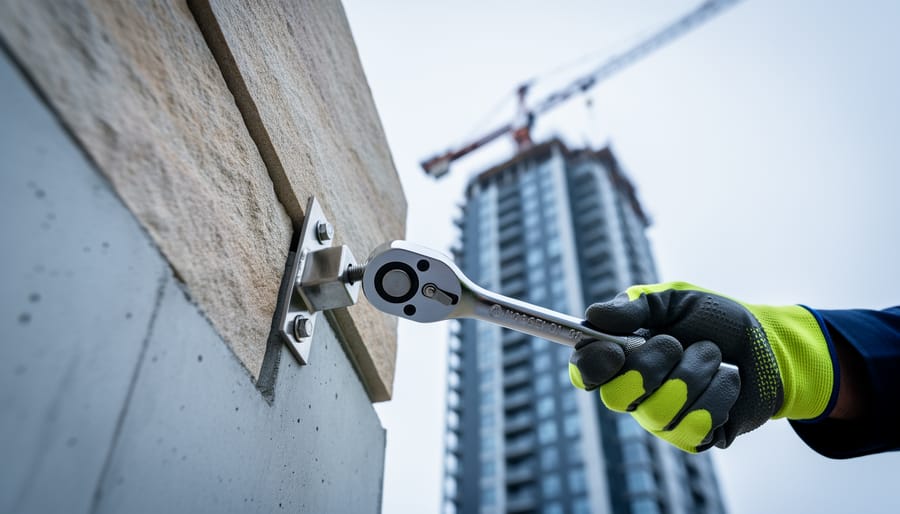
Understanding IBC seismic certification requirements separates compliant stone cladding installations from potential structural liabilities. When stone veneer exceeds four stories or 40 feet in height in seismic design categories D, E, or F, the International Building Code mandates specific anchoring systems, detailed structural calculations, and often third-party testing to verify the installation can withstand lateral forces without failure.
Verify your project’s seismic design category through local building departments, as this single classification determines whether you need standard attachment methods or enhanced seismic-resistant systems. Projects in high-seismic zones require engineered drawings stamped by licensed professionals, prescriptive code limitations on panel size and weight, and anchoring systems tested to ASTM C1354 standards demonstrating resistance to prescribed seismic forces.
Document compliance through a comprehensive submittal package including structural calculations, anchor load capacities, stone physical properties from ASTM C99 and C880 testing, and installation details showing flexible joints that accommodate building movement. Many jurisdictions now require special inspection during installation to verify anchor spacing, embedment depths, and proper use of seismic clips or wire anchoring systems.
The certification process protects building occupants while preserving aesthetic vision. Stone facades in seismic zones have performed successfully for decades when properly engineered, but failures resulting from inadequate attachment systems have led to increasingly stringent enforcement. Understanding these requirements early in design prevents costly redesigns and ensures your natural stone installation meets both safety standards and architectural goals.
What IBC Seismic Certification Actually Means for Stone Cladding
The Building Codes Behind the Certification
The International Building Code establishes the regulatory foundation for seismic certification of stone cladding systems through specific sections that address structural safety in earthquake-prone regions. Chapter 16, focused on structural design requirements, serves as the primary reference point for professionals specifying natural stone facades. This chapter works in concert with ASCE 7 (Minimum Design Loads for Buildings and Other Structures) to establish seismic design categories and performance expectations.
At the heart of stone cladding compliance is ASTM C1242, the Standard Guide for Selection, Design, and Installation of Dimension Stone Attachment Systems. This standard provides detailed guidance on anchoring methods, material specifications, and testing protocols specific to natural stone applications. Unlike energy code compliance, which focuses on thermal performance, seismic certification addresses the structural integrity of stone panels during ground motion events.
The IBC requires that exterior stone cladding systems be designed as components and cladding elements, meaning they must accommodate building movement without failure. This involves calculating seismic forces based on the structure’s location, height, and seismic design category. Referenced standards also include ASTM C99 for flexural strength testing and ASTM E330 for structural performance evaluation under dynamic loads.
Understanding these code requirements is essential for architects and contractors working in seismic zones, as non-compliance can result in project delays, costly redesigns, or worse, structural failure during seismic events. The framework balances safety with design flexibility, allowing creative stone applications while maintaining rigorous performance standards.
Seismic Design Categories and What They Mean for Your Project
The International Building Code assigns every location in the United States to a specific Seismic Design Category (SDC) ranging from A through F, with A representing minimal seismic risk and F indicating the highest risk. This classification system directly determines how rigorously your stone cladding must be anchored and what engineering documentation you’ll need to provide.
Your project’s SDC is determined by three factors: the site’s geographic location, the soil conditions at your building site, and the occupancy category of your structure. Buildings housing large numbers of people or essential services receive stricter classifications. You can determine your SDC by consulting seismic maps in the IBC or working with a structural engineer familiar with your area.
For stone cladding projects, the SDC assignment has immediate practical implications. In Category A or B zones, where seismic activity is minimal, standard anchorage methods typically suffice, and engineering requirements remain relatively straightforward. As you move into Category C, the code begins requiring more detailed calculations and potentially stronger anchoring systems.
Categories D, E, and F represent high seismic zones—primarily along the West Coast, parts of Alaska, and certain areas near the New Madrid fault zone. Projects in these categories face the most stringent requirements. You’ll need comprehensive engineering analysis, special inspection protocols, and anchorage systems specifically designed to accommodate seismic movement. The stone panels must be able to shift independently from the building structure during an earthquake without dislodging or creating falling hazards.
Understanding your SDC early in the design phase prevents costly redesigns later. It influences everything from anchor spacing and embedment depth to the types of sealants used between panels, ensuring your stone facade performs safely when seismic forces occur.
Why Stone Cladding Requires Special Seismic Attention
The Physics of Stone Movement During Earthquakes
During an earthquake, buildings don’t remain static. They sway, shift, and flex in response to ground motion, with different parts of the structure moving at different rates. The building’s frame might deflect several inches in either direction, while the foundation experiences a different set of forces. This dynamic movement creates a challenging environment for rigid materials like natural stone.
Stone cladding, whether granite, marble, or limestone, has minimal flexibility. When anchored directly to a moving building frame without proper accommodation for this movement, the stone faces two critical risks: it can crack under the stress of differential movement, or it can detach entirely from the building envelope, creating a serious safety hazard for people below.
This is where flexible anchorage systems become essential. These engineered systems function like shock absorbers for your building’s facade. They allow the structural frame to move independently from the stone panels, absorbing and distributing seismic forces without transferring destructive stress to the brittle stone material.
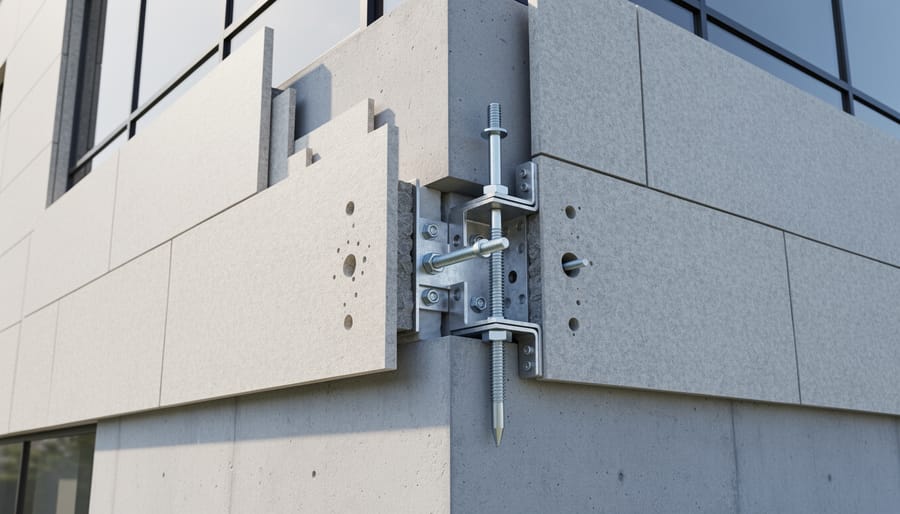
Modern anchorage systems incorporate engineered gaps, flexible joints, and specialized hardware designed to accommodate both in-plane and out-of-plane movement. The anchors themselves are designed to slide, pivot, or compress within controlled parameters, maintaining the stone’s position while preventing the transmission of damaging forces. This engineering ensures that even as the building moves during seismic activity, the stone cladding remains securely attached and intact, protecting both the structure and public safety.
Common Failure Points in Non-Compliant Installations
Understanding where stone cladding systems typically fail during seismic events helps prevent costly mistakes and dangerous situations. Most failures occur at predictable weak points when installations bypass proper certification requirements.
The most common failure point involves inadequate anchoring systems. Non-compliant installations often use insufficient anchor spacing or incorrect anchor types that cannot accommodate the lateral movement occurring during earthquakes. When anchors fail, entire stone panels can detach from the building facade, creating serious safety hazards. Visual evidence from past seismic events shows panels that have separated completely or developed dangerous bulges indicating imminent failure.
Connection points between stone panels and the underlying support structure represent another critical vulnerability. Installations that skip engineering review frequently lack proper expansion joints or use rigid connections that cannot flex during seismic activity. This rigidity causes stone to crack or shatter rather than move safely with the building structure.
Inadequate structural backing also contributes to system failures. Lightweight framing systems not designed to handle seismic loads become overwhelmed during ground motion, causing the entire cladding assembly to shift or collapse. Documentation from building inspections reveals cases where backing systems were visibly undersized for the stone weight and seismic requirements.
Panel thickness and size issues emerge when installers prioritize aesthetics over engineering specifications. Oversized panels without proper certification create excessive point loads that anchors cannot sustain during lateral movement. Similarly, panels that are too thin lack the structural integrity to remain intact under seismic stress, developing stress fractures that compromise the entire installation’s safety performance.
Essential Components of Compliant Seismic Anchorage Systems
Anchor Types and Load Requirements
Selecting the appropriate anchor system is fundamental to achieving IBC seismic certification for stone cladding installations. The International Building Code recognizes three primary anchor types, each suited to specific applications and load conditions.
Mechanical anchors are the most common solution for stone veneer installations. These systems use stainless steel clips, brackets, or dowels that physically connect individual stone panels to the building substrate. They excel in projects where individual panel adjustment is necessary and where gravity loads combined with seismic forces require precise distribution. Mechanical anchors work particularly well with stones between 1.25 and 2 inches thick, providing both lateral and vertical support through strategically placed connection points.
Dowel systems represent a more integrated approach, where pins are inserted into pre-drilled holes in both the stone and the structural backing. These systems distribute loads across multiple points of contact, making them ideal for heavier stone panels or installations in higher seismic zones. The dowels themselves must be designed to accommodate both shear forces during seismic events and the natural expansion and contraction of stone materials.
Continuous support systems, often incorporating metal channels or rails, provide ongoing support along the entire length or height of stone panels. These systems are particularly effective for thin stone veneers and large-format installations where point-loading could create stress concentrations.
Load calculations for anchor systems must account for several factors: the dead load of the stone itself, anticipated wind pressures, and the seismic design forces specific to the building’s location. Engineers typically calculate these loads using the component and cladding provisions outlined in ASCE 7, factoring in the building’s seismic design category and the amplification factors that apply to exterior cladding systems. Proper load analysis ensures anchors can handle not just normal operating conditions but also the dynamic forces generated during seismic activity.
Flexible Joint Systems and Movement Accommodation
During seismic events, buildings move in unpredictable ways. Stone cladding systems must accommodate this movement without cracking, dislodging, or compromising the building envelope. The IBC addresses this challenge through requirements for flexible joint systems that allow individual panels to shift independently while maintaining overall facade integrity.
Expansion joints represent the primary mechanism for movement accommodation. These deliberately placed gaps between stone panels, typically filled with flexible sealants, absorb lateral and vertical displacement during earthquakes. The IBC mandates specific joint widths based on expected seismic movement calculations, usually ranging from three-eighths to three-quarters of an inch depending on panel size and seismic zone classification.
Isolation joints serve a different but equally critical function. These joints separate stone cladding from the primary structure at key locations like floor lines, structural columns, and building corners. By creating deliberate separation points, isolation joints prevent the transfer of structural forces directly into rigid stone panels, which could otherwise cause catastrophic failure.
Soft joints incorporate compressible materials like closed-cell foam backer rods beneath flexible sealants. This two-stage system provides superior movement capacity compared to sealant alone. The compressible backing prevents three-sided adhesion, a common failure point where sealant bonds to three surfaces simultaneously and loses its ability to stretch.
Proper joint design extends beyond width calculations. The IBC requires consideration of joint depth-to-width ratios, typically two-to-one for optimal sealant performance. Material selection matters equally, with polyurethane and silicone sealants preferred for their durability and movement capacity exceeding twenty-five percent of joint width without failure.
The Testing and Certification Process
Laboratory Testing Requirements
To verify that stone cladding systems can withstand seismic forces, manufacturers must conduct rigorous physical testing under laboratory conditions. These tests simulate the dynamic movements buildings experience during earthquakes, providing measurable proof that installations will remain secure when it matters most.
Racking tests form the foundation of seismic certification. During these procedures, a full-scale mock-up of the cladding system is mounted on a specially designed frame that applies controlled lateral forces. The test apparatus pushes and pulls the assembly to replicate the building drift that occurs during seismic events. Engineers carefully monitor how the stone panels, anchors, and support systems respond to these horizontal movements, measuring deflection points and identifying potential failure modes.
Load testing evaluates the capacity of anchoring systems to hold stone panels under various stress conditions. Technicians apply both static and dynamic loads that exceed normal service conditions, ensuring adequate safety factors. These tests verify that anchors, clips, and fasteners maintain their grip even when subjected to forces significantly greater than design loads.
Cyclic testing takes evaluation further by repeatedly subjecting the system to loading and unloading sequences. This mimics the back-and-forth ground motion characteristic of earthquakes, which can fatigue materials over multiple cycles. Systems must demonstrate they can endure numerous cycles without degradation, loosening, or failure. Test results provide quantifiable data on displacement limits, connection strength, and overall system durability. Successful completion of these laboratory procedures generates the documentation required for IBC compliance and gives architects confidence in specifying stone cladding for seismic zones.
Documentation and Approval Process
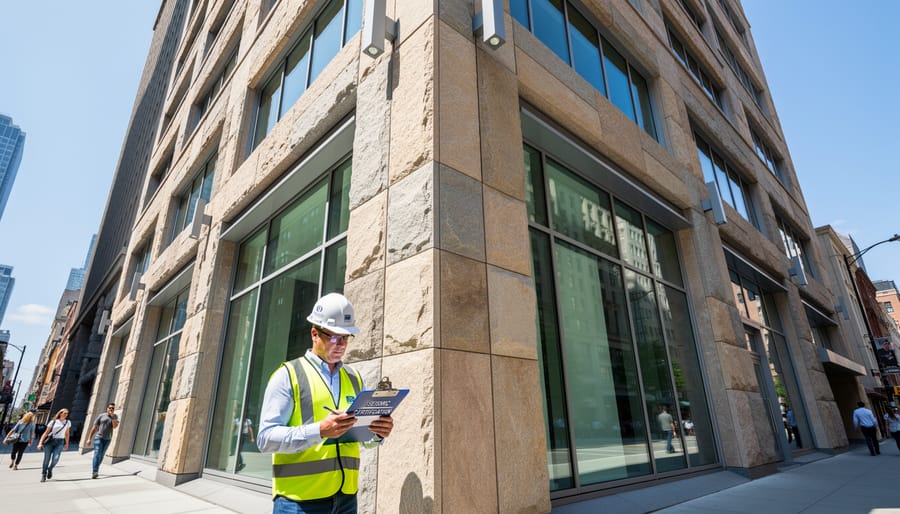
Achieving IBC seismic certification for stone cladding requires meticulous documentation that demonstrates code compliance to building officials. The process begins with sealed engineering calculations prepared by a licensed structural or civil engineer. These calculations must verify that the anchoring system can withstand the seismic forces specific to your project’s location and Seismic Design Category.
Essential documentation includes detailed shop drawings showing anchor placement, spacing, and connection details; product data sheets for all anchors and fasteners with load ratings; and test reports from accredited laboratories demonstrating the system’s performance under simulated seismic conditions. Many manufacturers provide pre-engineered systems with certified test data, which can significantly streamline approval.
Building officials will review these documents during the permitting phase and conduct inspections at critical construction stages. Inspectors typically examine anchor installation before stone placement, verifying proper embedment depths, spacing, and torque specifications. Photographic documentation of the installation process proves invaluable if questions arise later.
For complex facades, peer review by an independent engineer may be required. Maintaining organized records throughout construction, including field reports and any approved modifications, ensures smooth project closeout and provides valuable documentation for building owners and future renovations.
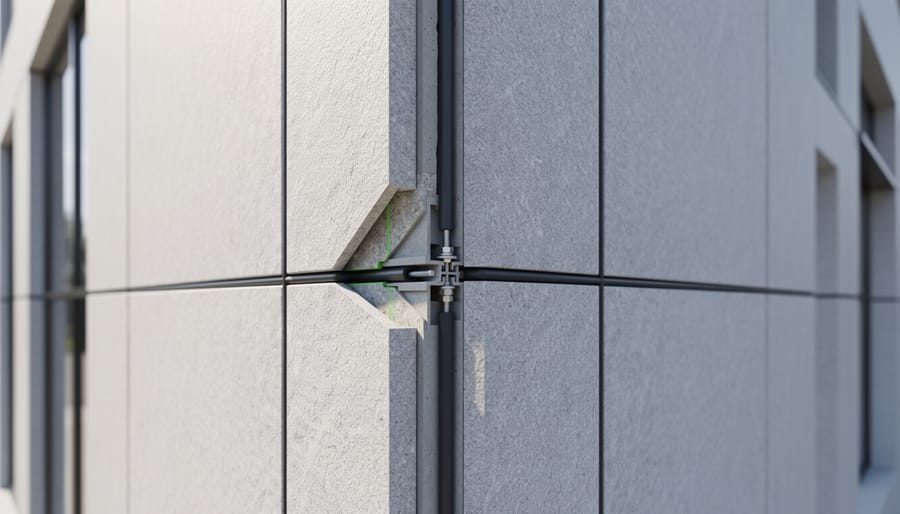
Real-World Application: From Specification to Installation
Working With Architects and Engineers on Compliant Designs
Successful seismic-compliant stone cladding projects require close collaboration between multiple stakeholders from the earliest design phases. Stone suppliers, fabricators, architects, and structural engineers must work together to ensure aesthetic vision aligns with safety requirements under modern building codes.
Architects should involve stone specialists during schematic design to discuss material selection, thickness requirements, and attachment methods suitable for the project’s seismic design category. Engineers need detailed stone properties—including density, flexural strength, and modulus of rupture—to perform accurate calculations for anchoring systems and deflection limits. Stone suppliers can provide certified test data and recommend materials with proven performance in seismic applications.
Fabricators contribute valuable input on practical installation considerations, including tolerances, anchor spacing, and joint details that accommodate building movement during seismic events. Regular coordination meetings help identify potential conflicts early, such as incompatible anchor loads or panel sizes exceeding safe handling limits.
Documentation is critical throughout this process. Maintain clear records of material specifications, test reports, structural calculations, and shop drawings. Submit these for approval according to your jurisdiction’s requirements, allowing adequate review time.
Design teams should also consider long-term maintainability and inspection access when detailing seismic-compliant systems. Properly designed anchorage systems often include provisions for periodic inspection and potential future replacement. By establishing open communication channels and respecting each discipline’s expertise, teams can deliver stone cladding projects that meet both aesthetic expectations and critical life-safety performance standards.
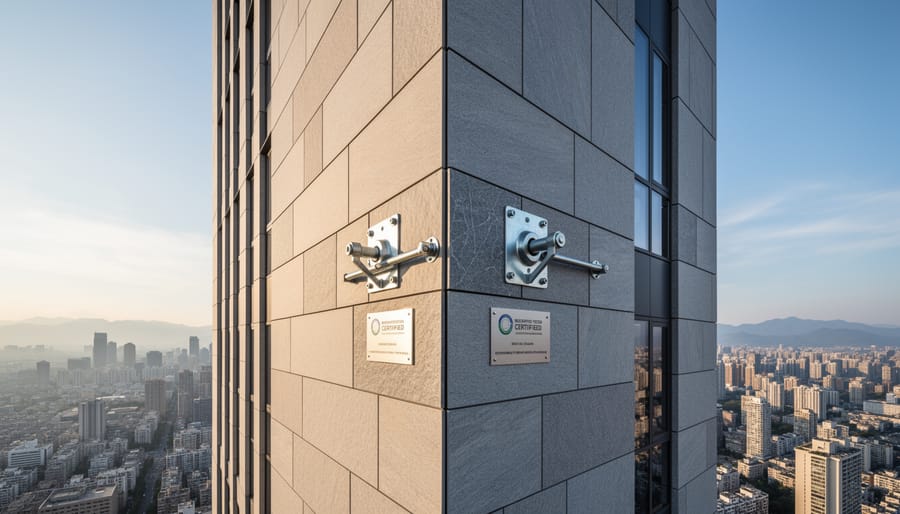
Case Study: High-Rise Stone Facade in Seismic Zone 4
A 42-story mixed-use tower in downtown Los Angeles presented unique challenges when specifying its limestone and granite facade system. Located in Seismic Design Category D, the project required strict adherence to IBC Chapter 15 provisions for anchored veneer in high-seismic applications.
The design team initially proposed a traditional mortar-set stone installation over metal lath and weather-resistant barrier. However, preliminary calculations revealed that the building’s anticipated lateral displacement during a design-level earthquake would exceed the system’s capacity. The stone panels, each measuring 4 feet by 8 feet and weighing approximately 85 pounds per square foot, needed a more flexible anchoring solution.
The solution involved transitioning to a mechanically anchored stone cladding system with engineered relief joints. Each stone panel was secured using stainless steel anchors with slotted connections, allowing for three-dimensional movement while maintaining the facade’s integrity. The design incorporated horizontal relief joints every two floors, accommodating inter-story drift ratios up to 2 percent as required by code.
Testing proved critical to certification. Full-scale mockups underwent dynamic racking tests simulating seismic displacement. Additional impact testing verified the system could withstand debris impact scenarios. These tests, conducted at an accredited laboratory, provided the performance data necessary for building department approval.
The project required collaboration between the stone fabricator, structural engineer, and a specialized facade consultant to develop shop drawings demonstrating code compliance. The additional engineering and testing added approximately 8 weeks to the schedule and increased facade costs by 18 percent, but ensured life-safety performance and satisfied IBC seismic certification requirements. The building received its certificate of occupancy in 2019 and has since become a model for similar high-rise stone applications in seismic zones.
Common Misconceptions About Seismic Certification for Stone
Navigating seismic certification requirements can be confusing, leading to several persistent misconceptions that create unnecessary anxiety or expose projects to compliance risks.
One common myth is that all natural stone installations require the same level of seismic certification regardless of location. In reality, IBC seismic requirements vary significantly based on your project’s Seismic Design Category, which is determined by geographic location, soil conditions, and building characteristics. A project in low-seismic California may have minimal requirements, while high-seismic zones demand rigorous testing and engineering.
Another misconception is that thicker stone automatically performs better in seismic events. While thickness matters, the anchoring system’s design and flexibility are far more critical. A properly engineered thin stone veneer system with appropriate clips and clearances often outperforms thick stone with rigid connections that can’t accommodate building movement.
Many believe that seismic certification is solely the stone supplier’s responsibility. However, compliance requires collaboration among multiple parties. The stone fabricator may provide material testing, but the engineer designs the anchoring system, the installer executes the specifications, and the general contractor coordinates inspections. Understanding your specific role prevents dangerous gaps in the certification process.
Some professionals assume that meeting local building codes eliminates the need for additional seismic documentation. However, jurisdictions interpret IBC requirements differently, and inspectors may request specific calculations, testing reports, or engineer stamps beyond basic code minimums. Always confirm local amendment requirements early in the design phase.
Finally, there’s a persistent belief that seismic certification dramatically increases project costs. While testing and engineering do add expenses, they’re typically a small percentage of total project costs and prevent far more expensive failures, repairs, or liability issues. The investment in proper certification protects both building occupants and your professional reputation.
What Property Owners and Designers Need to Know
Questions to Ask Your Stone Supplier and Installer
Before committing to a stone cladding project in a seismic zone, ask your supplier and installer these essential questions to ensure compliance and safety:
Does your installation team have specific training and experience with seismic-rated stone installations? Request documentation of completed projects in seismic zones and ask for references from similar installations.
Can you provide proof that your anchoring systems are IBC-compliant for our seismic design category? Verified test reports and ICC-ES evaluation reports should be readily available.
What quality control measures do you implement during installation to ensure seismic standards are met? Look for detailed inspection protocols and third-party verification processes.
Will you provide complete documentation of all materials, anchors, and installation methods used? This documentation is essential for building inspections and future maintenance.
How do you handle site-specific engineering requirements for our project’s seismic zone? Each project may require customized calculations based on local conditions and building height.
What warranty coverage do you offer, and does it specifically address seismic performance? Understanding warranty limitations helps protect your investment.
Can you walk us through your typical installation process for seismic compliance? A knowledgeable contractor will explain substrate preparation, anchor spacing, movement joints, and inspection checkpoints clearly and confidently.
Red Flags That Indicate Non-Compliance
Recognizing warning signs early can prevent costly compliance failures and safety issues. One major red flag is the absence of seismic calculations or documentation during the design phase. If your design team cannot produce specific calculations showing how the stone cladding system will perform under seismic loads, the project likely lacks proper engineering oversight.
Another concern is when contractors or suppliers claim that “standard” installation methods work everywhere, regardless of seismic zone. Building codes mandate different requirements based on Seismic Design Categories, and a one-size-fits-all approach indicates insufficient understanding of IBC requirements.
Watch for missing or inadequate anchoring specifications. If project documents don’t clearly detail anchor types, spacing, materials, and load capacities, the system may not meet seismic performance standards. Similarly, be wary of value engineering proposals that reduce anchoring systems or eliminate movement joints without proper engineering analysis.
Lack of manufacturer certifications or testing documentation represents a significant red flag. Reputable systems include ICC-ES evaluation reports or independent testing proving seismic performance. If these documents aren’t readily available, question the system’s compliance.
Finally, contractors unfamiliar with seismic detailing requirements or unable to explain how their installation addresses lateral movement should raise concerns. Proper seismic installation requires specialized knowledge that general contractors may not possess without additional training or certification.
IBC seismic certification for stone cladding is not merely a bureaucratic requirement—it’s a fundamental life-safety measure that protects building occupants from one of the most significant risks during seismic events: falling facade elements. When properly specified, tested, and installed according to IBC standards, natural stone cladding systems can withstand the lateral forces and movement that earthquakes generate, remaining securely attached to the building structure rather than becoming dangerous projectiles. The investment in proper certification and compliance pays dividends not only in occupant safety but also in preserving the aesthetic and financial value of your natural stone facade for decades to come.
For architects, designers, and building owners considering natural stone for projects in seismic zones, prioritizing IBC compliance from the earliest design phases is essential. This means working with experienced fabricators and installers who understand anchor calculations, testing protocols, and proper installation techniques. While the certification process requires additional documentation and potentially higher upfront costs, the alternative—non-compliant installations that risk catastrophic failure—is simply unacceptable. By ensuring your stone cladding project meets or exceeds IBC seismic requirements, you’re making a responsible choice that protects people, preserves your investment, and demonstrates professional due diligence in building design and construction.