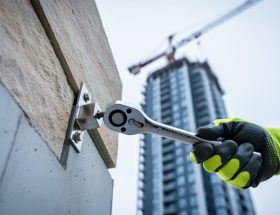
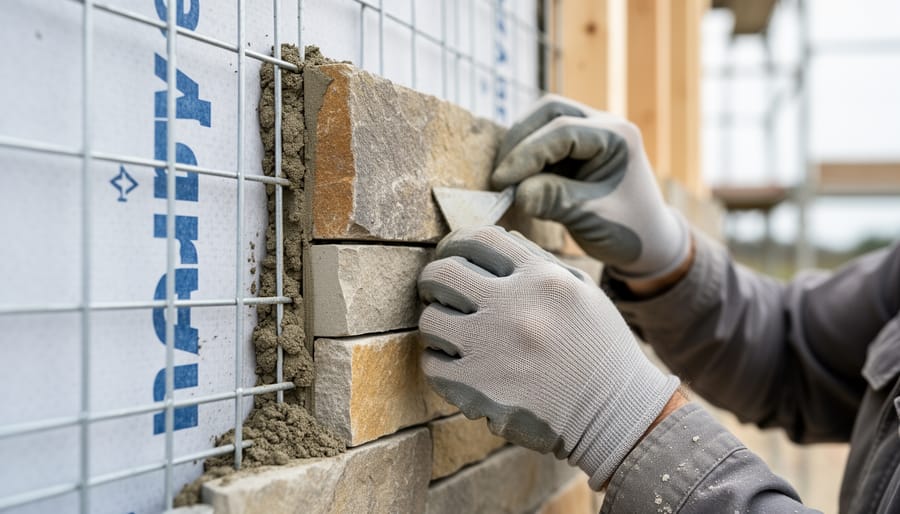
Anchored stone veneer transforms building exteriors with authentic natural stone beauty while meeting stringent structural requirements that protect both property and occupants. Unlike thin adhesive-applied veneers, this system mechanically fastens each stone unit to the building structure using corrosion-resistant ties and metal lath, creating a durable exterior cladding capable of withstanding wind loads, seismic forces, and decades of weather exposure.
Building codes governing anchored stone veneer installations have evolved significantly, particularly following updates to the International Building Code and International Residential Code. These regulations specify precise requirements for stone thickness, weight limitations, fastener spacing, weather-resistant barriers, and structural support systems. Understanding these code provisions before beginning design or construction prevents costly delays, failed inspections, and potential safety hazards.
The complexity of code compliance stems from multiple factors working together: the veneer must be properly anchored to resist lateral forces, adequately supported to handle dead loads, detailed to manage moisture infiltration, and installed by qualified craftspeople following manufacturer specifications. Each jurisdiction may adopt different code versions or impose additional local amendments, making compliance a moving target that requires current knowledge and careful attention.
This comprehensive guide clarifies the regulatory landscape surrounding anchored stone veneer installations. Whether you’re an architect specifying materials, a contractor planning construction sequencing, or a homeowner evaluating project feasibility, you’ll find practical guidance on navigating code requirements, understanding technical specifications, obtaining necessary approvals, and avoiding common compliance pitfalls that jeopardize project success.
What Is Anchored Stone Veneer and Why Codes Matter
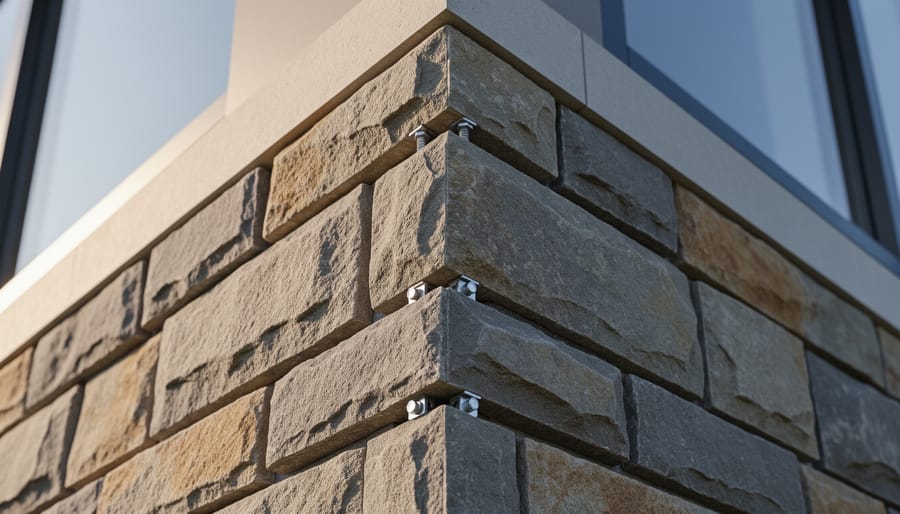
Anchored vs. Adhered Stone Veneer: The Key Differences
Understanding the fundamental differences between anchored and adhered stone veneer is essential when planning your project and ensuring code compliance.
Adhered stone veneer, also known as thin veneer, typically measures less than 1.25 inches thick and weighs approximately 12-15 pounds per square foot. This lighter-weight option attaches directly to an approved substrate using mortar or adhesive, similar to tile installation. Because of its minimal weight and direct attachment method, adhered veneer falls under less stringent building code requirements and can often be installed on standard wall assemblies.
Anchored stone veneer represents a different approach entirely. These stones generally exceed 1.25 inches in thickness and weigh significantly more, ranging from 35 to 50 pounds per square foot. Rather than relying solely on adhesive bonding, each individual stone piece is mechanically fastened to the wall structure using metal anchors, ties, or clips. This creates a physically secured connection independent of mortar.
The substantial weight difference explains why anchored veneer faces stricter code requirements. Building codes treat anchored installations more like structural cladding systems rather than simple finishes. This classification triggers requirements for engineered designs, specific structural support calculations, detailed inspection protocols, and adherence to wind load and seismic provisions outlined in the International Building Code.
The mechanical anchor system also creates an air space between the stone and the building envelope, providing drainage and ventilation benefits that affect moisture management strategies and overall wall assembly design. These factors collectively demand greater attention to engineering, installation expertise, and regulatory oversight throughout the construction process.
The Safety Stakes: Why Code Compliance Isn’t Optional
Code compliance for anchored stone veneer isn’t just bureaucratic red tape—it’s essential protection against serious consequences. Non-compliant installations can lead to structural failure, where improperly anchored veneer detaches from buildings, creating dangerous falling hazards that risk injury or death. These failures often stem from inadequate anchoring systems, incorrect weight calculations, or missing weather-resistant barriers that allow moisture infiltration and compromise structural integrity.
The liability implications are equally significant. Contractors and property owners face potential lawsuits when non-compliant installations fail, with legal responsibility extending to everyone involved in the project. Insurance companies routinely deny claims for damage resulting from work that didn’t meet code requirements, leaving property owners facing substantial repair costs out-of-pocket.
Permit complications create additional headaches. Building departments require inspections at various installation stages, and skipping proper permitting can halt projects mid-construction, necessitate expensive remediation, or even require complete removal and reinstallation. When selling a property, unpermitted work surfaces during title searches, potentially derailing transactions or reducing property values. Some jurisdictions impose fines for unpermitted construction, compounding financial losses. Simply put, the cost of compliance is minimal compared to the devastating consequences of cutting corners on anchored stone veneer installations.
Primary Code Standards Governing Anchored Stone Cladding
International Building Code (IBC) Requirements
The International Building Code (IBC) establishes comprehensive standards for anchored stone veneer through Chapter 14, which specifically addresses exterior walls. These provisions require that all masonry veneer systems, including natural stone, be designed to resist both gravity loads and lateral forces such as wind pressure and seismic activity.
According to IBC Chapter 14, anchored stone veneer must be attached to the structural backing using corrosion-resistant metal anchors or ties. The code mandates specific anchor spacing, typically one anchor per 2.67 square feet of wall area, though this varies based on stone thickness and installation height. For stones exceeding 10 pounds per square foot or installations above certain heights, engineers must provide detailed load calculations demonstrating adequate structural support.
The IBC also addresses thickness limitations, generally restricting anchored veneer to a maximum of 5 inches when installed over wood framing and up to 10 inches over masonry or concrete backing. Water-resistive barriers and proper drainage cavities are mandatory to prevent moisture infiltration and ensure long-term performance.
Compliance with IBC seismic requirements is particularly critical in high-risk zones, where additional anchoring and structural detailing may be necessary. The code requires that attachment systems accommodate building movement while maintaining secure connections.
Building officials enforce these provisions through plan review and field inspections, verifying proper anchor installation, backing materials, and drainage systems. Professional engineers often provide stamped calculations and installation drawings to demonstrate code compliance for complex projects or unique stone applications.
ASTM Standards for Stone Veneer Systems
The American Society for Testing and Materials establishes crucial benchmarks that govern anchored stone veneer installations. ASTM C1242 serves as the foundation, defining terminology and classification systems for exterior dimension stone veneers. This standard ensures consistent material specifications across the industry, establishing minimum thickness requirements and performance characteristics that stone must meet before installation.
ASTM C1354 provides comprehensive guidance on proper installation practices, detailing mechanical fastening methods, spacing requirements, and moisture management protocols. This standard addresses anchor types, placement patterns, and load distribution principles essential for long-term structural integrity. Following these guidelines helps prevent common installation failures and ensures systems perform as engineered.
For performance verification, ASTM E330 establishes testing procedures for water penetration resistance under static air pressure differences. This testing simulates wind-driven rain conditions that veneer systems encounter in real-world applications. Projects requiring building department approval typically must demonstrate compliance through laboratory testing conducted according to this standard.
Together, these standards create a framework that protects both installers and property owners. Understanding these requirements early in project planning helps architects specify appropriate materials, contractors execute proper installation techniques, and building officials verify compliance. Many jurisdictions reference these ASTM standards directly in local building codes, making familiarity with their requirements essential for successful project approval and completion.
Local Code Variations You Need to Know
While national codes provide the foundation for anchored stone veneer installation, regional and local jurisdictions often impose stricter requirements tailored to their specific environmental challenges. Building departments in seismic zones, particularly those in California and the Pacific Northwest, mandate enhanced anchorage systems with additional tie spacing and may require structural calculations verified by a licensed engineer. These modifications ensure veneer systems can withstand lateral forces during earthquakes without detachment.
Coastal regions and areas prone to high winds frequently specify corrosion-resistant anchors and weather-resistant barriers that exceed minimum code standards. Some jurisdictions require upgraded fastener materials like stainless steel in salt-air environments to prevent premature failure. Climate considerations also play a role—freeze-thaw zones may require specific mortar formulations and drainage provisions to prevent moisture accumulation and thermal damage.
Beyond structural and environmental factors, local authorities may have unique interpretations of fire safety standards or aesthetic guidelines for historic districts. Before beginning your project, consult with your local building department early in the design phase to identify any supplementary requirements. This proactive approach prevents costly redesigns and ensures your anchored stone veneer installation meets all applicable regulations for your specific location.
Critical Components of Code-Compliant Installation
Structural Support and Load-Bearing Requirements
Understanding the structural requirements for anchored stone veneer is essential to ensure long-term stability and safety. The backing wall must have adequate capacity to support both the dead load of the stone and any lateral forces that may occur.
Stone veneer typically weighs between 12 to 18 pounds per square foot, depending on thickness and stone type. This weight requires careful calculation during the design phase. The backing wall, whether wood frame, concrete masonry, or steel stud construction, must be engineered to handle this additional load without deflection or failure. Building codes generally require the backing structure to support at least 50 pounds per square foot to provide an appropriate safety margin.
Wood-framed backing walls should include minimum 7/16-inch oriented strand board or 1/2-inch plywood sheathing over structural studs spaced according to design loads. For installations exceeding standard height or weight parameters, engineered sheathing solutions may be necessary. Masonry backing walls must meet minimum thickness requirements, typically 4 inches for concrete masonry units, and demonstrate adequate compressive strength.
Steel stud framing requires particular attention, as deflection limits are more critical than with wood framing. Studs must be appropriately gauged and spaced, often 16 inches on center or closer, depending on the stone weight and installation height.
Foundation support is equally important. The building’s foundation must account for the additional veneer weight, extending load calculations from the roof down through all supporting members. Professional structural evaluation ensures the entire assembly, from foundation to anchor points, can safely accommodate the anchored stone veneer system throughout the building’s lifespan.
Mechanical Anchoring Systems and Fastener Specifications
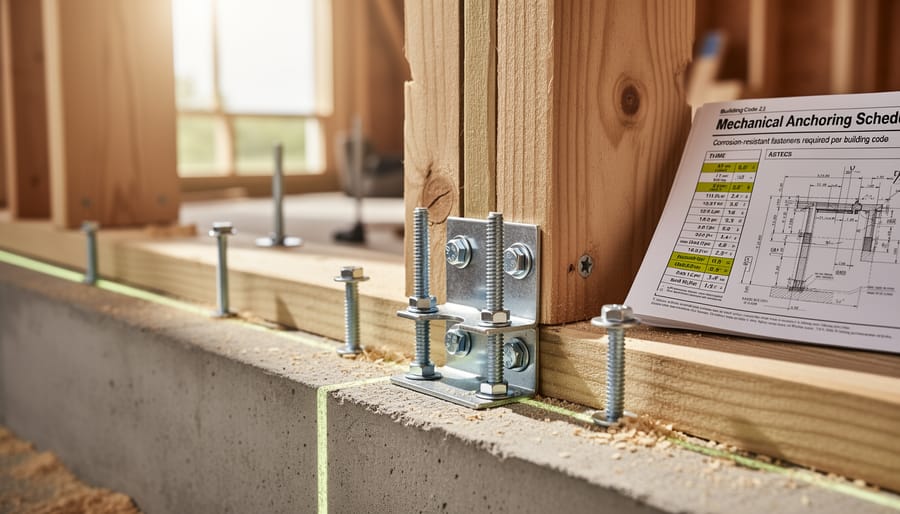
Mechanical anchoring systems form the critical connection between stone veneer and the structural wall, requiring careful selection based on substrate type, stone weight, and environmental exposure. The most common anchor types include wire ties, strap anchors, and adjustable clip systems, each designed for specific installation conditions and stone characteristics.
Wire ties, typically fabricated from 9-gauge or heavier stainless steel wire, remain the most widely used anchor system for residential applications. These anchors connect through drilled holes in the stone back to fasteners embedded in the structural wall, allowing for necessary movement while maintaining secure attachment. Strap anchors provide greater load-bearing capacity for larger or heavier stone panels, making them suitable for commercial projects with more demanding structural requirements.
Anchor spacing directly impacts system performance and code compliance. The International Building Code typically requires anchors at maximum intervals of 24 inches horizontally and 18 inches vertically, though specific spacing depends on stone size, weight, and wind load calculations. Each stone panel generally requires a minimum of two anchors, with additional support needed for pieces exceeding certain dimensions.
Corrosion resistance is non-negotiable in anchor selection. Stainless steel Types 304 or 316 represent the minimum acceptable material standards, with Type 316 recommended for coastal environments or areas with high moisture exposure. Hot-dip galvanized steel may be permitted in certain low-exposure applications, but building officials increasingly favor stainless steel for all installations.
Fastener selection must account for substrate composition. Concrete and masonry substrates accept threaded anchors or expansion bolts, while wood framing requires appropriate screws driven into studs. Metal stud applications need self-drilling screws rated for the gauge thickness encountered, ensuring adequate pull-out resistance under anticipated loads.
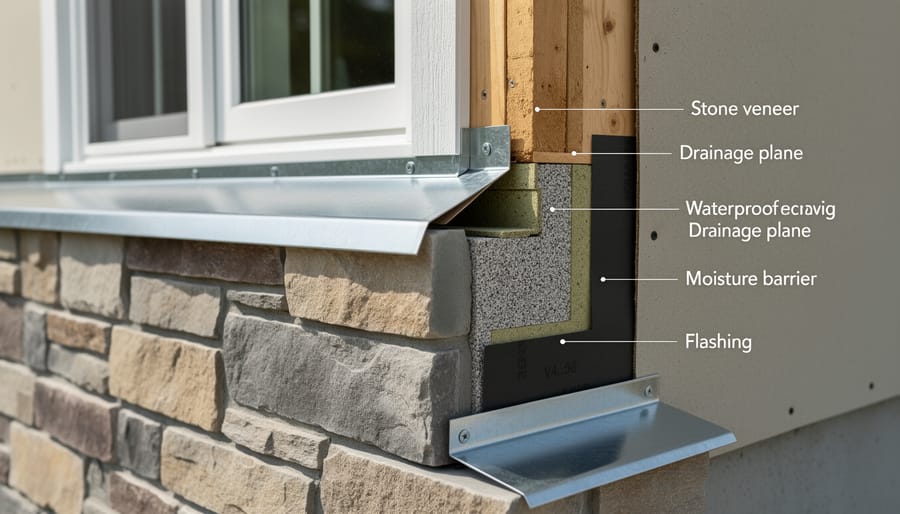
Water Management and Weather Barrier Systems
Proper water management is essential for anchored stone veneer installations to prevent moisture damage and ensure long-term performance. A weather-resistant barrier must be installed over the substrate before stone installation, creating a secondary line of defense against water penetration. This barrier should meet local building code requirements and be compatible with the chosen drainage system.
A drainage plane between the stone and the barrier is critical. This air gap, typically one inch minimum, allows moisture to drain freely and provides ventilation. Install corrosion-resistant metal lath or approved rainscreen systems to maintain this cavity while supporting the stone veneer.
Weep holes placed at the base of walls and above openings allow accumulated water to escape. These openings should be spaced according to code requirements, typically every 24 to 33 inches horizontally, and kept free of mortar during installation. Quality flashing at all vulnerable points—including window and door heads, sills, and wall terminations—directs water away from the building envelope.
Through-wall flashing must extend beyond the stone face and integrate properly with the weather barrier system. Pay special attention to termination details where stone meets other materials. Proper integration of these moisture management elements supports both structural integrity and energy code compliance by preventing thermal bridging and moisture-related failures.
Seismic and Wind Load Considerations
In high-risk seismic and wind zones, anchored stone veneer systems face significantly enhanced seismic and wind requirements to protect building occupants and property. The International Building Code mandates specific design criteria based on geographical location, with Seismic Design Categories D, E, and F requiring additional anchorage strength and more frequent testing protocols. These wind load considerations include flexible joint details that accommodate building movement while maintaining panel integrity. Stone panels must undergo rigorous ASTM testing to verify lateral force resistance, including pull tests and structural analysis. Engineers typically specify stainless steel anchors with higher capacities and reduced spacing in these applications. Movement joints become critical components, allowing thermal expansion and structural deflection without transferring stress to the veneer system, preventing catastrophic failure during seismic events or extreme wind conditions.
The Permitting and Inspection Process
Documentation Required for Permit Approval
Securing permit approval for anchored stone veneer requires comprehensive documentation that demonstrates code compliance and structural integrity. Building departments typically require a complete submittal package before reviewing your project.
Start with engineered calculations prepared by a licensed structural engineer. These calculations must verify that the building’s structural frame can support the additional dead load of the stone veneer, anchoring system, and backing materials. The engineer will analyze load paths, connection points, and lateral force resistance.
Installation drawings are essential, showing detailed sections of the veneer assembly, anchor placement patterns, spacing dimensions, and connection methods to the substrate. These drawings should clearly indicate stone thickness, cavity depth, flashing locations, and weep hole positions at regular intervals.
Product specifications for all materials complete the package. Include technical data sheets for the stone itself, metal anchors, mortar mixes, weather-resistant barriers, and any sealants or joint materials. These specifications must demonstrate that products meet referenced standards such as ASTM C1780 for anchored stone veneer installation.
Manufacturer certifications confirming that anchoring devices meet load-bearing requirements and corrosion-resistance standards are mandatory. Many jurisdictions also require third-party testing reports validating anchor performance under both static and cyclic loading conditions.
Finally, provide proof that your installer holds appropriate licenses and certifications. Some localities require special masonry contractor licensing for stone veneer work exceeding certain heights or square footage thresholds.
What Inspectors Look for During Installation
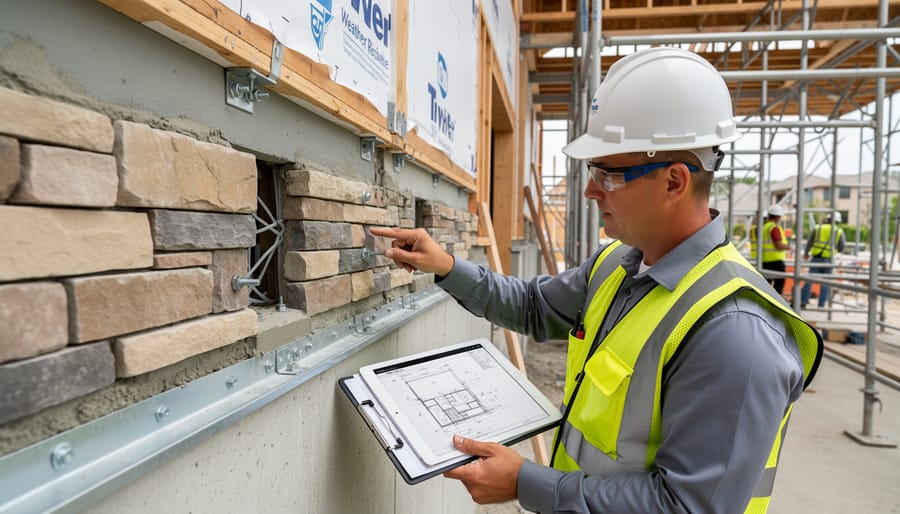
Building inspectors evaluate anchored stone veneer installations at multiple stages to verify code compliance and structural integrity. Understanding their focus areas helps ensure your project passes inspection without costly delays or corrections.
Initial inspections typically occur after wall framing and weather-resistant barriers are installed but before veneer attachment begins. Inspectors verify proper substrate preparation, including correct moisture barrier installation, appropriate wall structure for the additional stone weight, and proper flashing details at openings and terminations. They’ll check that specified materials match approved plans and that adequate structural support exists for the anticipated load.
During installation, inspectors examine anchor placement and spacing, which must comply with manufacturer specifications and local amendments to building codes. Common failure points include improper anchor embedment depth, inadequate mortar coverage around anchors, incorrect spacing patterns, and missing or improperly installed corrosion-resistant ties. Inspectors also verify proper mortar joint tooling and weep hole placement for moisture management.
Final inspections focus on completed work quality, including proper clearances from grade and walking surfaces, adequate expansion joints, and correct installation of all trim and termination details. Inspectors may probe mortar joints to verify proper cure and bonding.
To prepare for inspections, maintain detailed installation photographs documenting each phase, keep all product specification sheets and compliance certificates on site, and ensure installers understand the approved plans. Schedule inspections promptly at required milestones rather than waiting until substantial work has progressed. Having your stone supplier’s technical data readily available demonstrates professionalism and can quickly resolve questions about material compliance or installation methods.
Common Code Compliance Mistakes and How to Avoid Them
Inadequate Structural Support
Stone veneer failures frequently stem from inadequate structural support, as designers and installers underestimate the significant weight these materials impose on building frameworks. Natural stone typically weighs 12-15 pounds per square foot for 1.25-inch thick veneer, plus the weight of mortar and backing materials. This combined load demands proper engineering calculations before installation begins.
Building codes require structural members to support dead loads, live loads, and environmental forces without deflection exceeding specified limits. The backing wall system must transfer stone weight to the foundation through adequate framing, sheathing rated for the imposed loads, and properly sized fasteners. Engineers should verify that existing structures can accommodate additional veneer weight, particularly on upper floors or older buildings where load-bearing capacity may be compromised.
Common miscalculations include failing to account for moisture absorption, which increases stone weight, and neglecting horizontal wind loads that create lateral forces on anchor systems. Professional structural analysis ensures compliance with code requirements while preventing costly failures and safety hazards.
Improper Anchor Spacing and Installation
Anchor spacing violations represent one of the most frequent code compliance failures in stone veneer installation. Building codes typically require anchors at maximum 16-inch intervals horizontally and 24-inch intervals vertically, though specific requirements vary by stone weight and thickness. Installers taking shortcuts may stretch these distances to save time and materials, significantly compromising structural integrity.
Common mistakes include inconsistent spacing patterns, missed anchor points at stone edges, and inadequate fastener penetration into structural backing. Using incorrect anchor types for the substrate material is another prevalent issue—installing masonry anchors into wood framing or vice versa creates immediate structural deficiencies. Each anchor must penetrate at least one inch into solid backing material to develop proper holding strength.
The consequences of improper installation become apparent over time. Inadequately anchored stones develop movement, creating visible lippage and alignment issues. In severe cases, individual stones or entire sections can detach from the building facade, presenting serious safety hazards. Wind loads and seismic forces magnify these problems, particularly on upper building stories where lateral forces increase.
During inspections, building officials typically examine anchor spacing through random field verification, measuring distances between visible tie points and sometimes requiring destructive testing to confirm proper installation behind the veneer.
Insufficient Weather Protection
Moisture infiltration represents one of the most damaging yet preventable failures in anchored stone veneer installations. When moisture barriers are omitted entirely or installed incorrectly, water can penetrate behind the stone facing and become trapped against the substrate. This creates an ideal environment for deterioration, including corrosion of metal anchors and ties, efflorescence staining on stone surfaces, and structural damage to backing materials.
Building codes require proper water-resistive barriers and flashing systems specifically to address this vulnerability. The barrier must be installed with correct overlaps, sealed penetrations, and continuous coverage across the entire wall assembly. Equally important is the incorporation of weep holes and drainage planes that allow any moisture that does enter the cavity to escape rather than accumulate.
The consequences of inadequate weather protection often don’t appear immediately, making this deficiency particularly insidious. Over time, however, corroded anchors lose their load-bearing capacity, potentially leading to stone displacement or complete failure. Freeze-thaw cycles exacerbate moisture-related damage, causing spalling and cracking in both the veneer and substrate. Proper installation of weather-resistive barriers according to manufacturer specifications and code requirements is essential for long-term system performance and occupant safety.
Working with Qualified Professionals
Credentials and Certifications to Look For
When hiring a contractor for anchored stone veneer installation, verify they hold the appropriate credentials demonstrating their expertise. Look for professionals with masonry contractor licenses specific to your state, as these ensure they’ve met baseline competency requirements and carry necessary insurance coverage.
Manufacturer-specific training and certifications are particularly valuable. Many stone and mortar manufacturers offer technical training programs that teach proper installation techniques, adhesive application, and code-compliant methods. Contractors who’ve completed these programs understand product specifications and warranty requirements, reducing the risk of installation failures.
Industry certifications from organizations like the Masonry Society (TMS) or the International Masonry Institute (IMI) indicate advanced knowledge of masonry principles and building science. The National Concrete Masonry Association (NCMA) also provides valuable education programs focused on anchored veneer systems.
Additionally, seek contractors experienced with local building departments and familiar with regional code requirements. Ask for documentation of completed training, references from similar projects, and proof of liability insurance. Qualified installers should readily discuss compliance with ASTM standards, structural engineering requirements, and inspection protocols, demonstrating their commitment to code-compliant, durable installations.
Questions to Ask Before Hiring
Before signing a contract, ask prospective installers specific questions to ensure your project meets code requirements. Start by inquiring about their knowledge of local building codes and IBC Chapter 14 provisions for anchored veneer systems. Request examples of similar projects they’ve completed and whether inspections passed on the first attempt.
Ask about their experience with structural calculations and whether they work with licensed engineers when required. Clarify who pulls permits and schedules inspections—this responsibility typically falls on the contractor but should be explicitly defined.
Discuss material sourcing and whether proposed stone products meet ASTM standards for strength and durability. Request documentation proving compliance with applicable codes.
Inquire about their quality assurance process, including how they verify proper anchor spacing, flashing installation, and weather barrier integration. Understanding their inspection protocols reveals their commitment to code-compliant work.
Finally, review warranty provisions carefully. A comprehensive warranty should cover both materials and workmanship, typically for a minimum of one year, with clear terms about what circumstances void coverage and the process for addressing deficiencies discovered during or after final inspection.
Code compliance in anchored stone veneer installation is not merely a bureaucratic formality—it is the foundation of a safe, durable, and valuable building enhancement. By adhering to established standards like the IBC and local building codes, you protect your investment from structural failures, moisture damage, and costly repairs down the road. Proper installation techniques, including correct anchor spacing, appropriate weather-resistant barriers, and adequate flashing details, ensure your stone veneer will perform as intended for decades to come.
Beyond safety and longevity, code-compliant installations directly impact property value. Homes and buildings with properly installed stone veneer command higher resale values and avoid the complications that arise during property transfers when unpermitted or non-compliant work is discovered. Insurance claims and liability issues are also minimized when installations meet regulatory standards.
The complexity of anchored stone veneer systems demands expertise. Working with qualified professionals—licensed contractors, experienced masons, and knowledgeable design teams—ensures that your project meets all applicable codes from the outset. These professionals understand the nuances of material selection, structural loading calculations, and regional climate considerations that directly affect installation requirements. Prioritizing compliance and professional expertise from the planning stage through final inspection will deliver a beautiful, enduring stone veneer installation that performs reliably and adds lasting value to your property.