
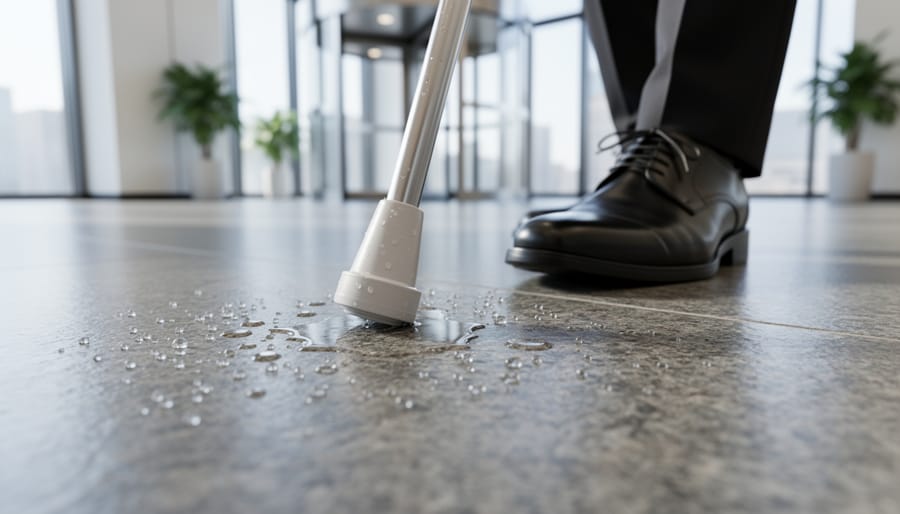
Understanding ADA slip resistance requirements protects building occupants from falls while ensuring your project meets federal accessibility standards. The Americans with Disabilities Act (ADA) mandates a minimum Dynamic Coefficient of Friction (DCOF) of 0.42 for level surfaces and walkways, measured using the DCOF AcuTest according to ANSI A137.1 standards. This threshold applies to both wet and dry conditions, making surface selection particularly critical for natural stone installations in entrances, bathrooms, commercial kitchens, and other areas exposed to moisture.
Specify the appropriate stone finish from the outset based on location and traffic patterns. Honed, flamed, or textured finishes typically achieve higher DCOF values than polished surfaces, which often fall below 0.42 when wet. Request certified slip resistance test results from your stone supplier before finalizing material selections, as DCOF values vary significantly between stone types, even within the same finish category. Granite and slate generally offer better slip resistance than marble or limestone when similarly finished.
Verify compliance through third-party testing rather than relying solely on manufacturer claims. Independent testing laboratories use standardized equipment and methods to measure DCOF accurately, providing documentation necessary for inspections and liability protection. Plan for periodic retesting, as foot traffic, cleaning products, and sealers alter surface characteristics over time, potentially reducing slip resistance below acceptable thresholds.
What the ADA Actually Requires for Slip Resistance
The DCOF Standard Explained
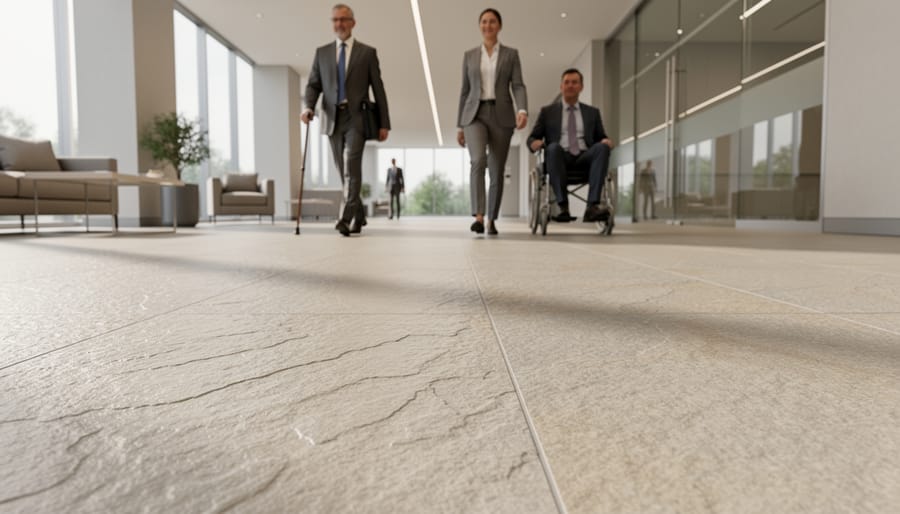
The Dynamic Coefficient of Friction, or DCOF, is the measurement standard that determines whether a walking surface meets ADA slip resistance requirements. The ADA mandates that level floor surfaces achieve a minimum DCOF of 0.42 or greater when tested under specific conditions. This numerical threshold represents the amount of friction between a shoe sole and the floor surface during movement, providing a quantifiable way to assess slip resistance.
In practical terms, the DCOF value indicates how much traction a surface provides when someone walks across it. A higher number means greater slip resistance. The 0.42 threshold was established based on extensive research into pedestrian safety, biomechanics, and real-world slip-and-fall incidents. Surfaces measuring below this standard are considered potentially hazardous, particularly in commercial and public environments where foot traffic varies widely.
Understanding what this number means helps in making informed flooring decisions. For example, polished marble might measure around 0.30 to 0.35 DCOF, falling short of compliance, while honed or textured finishes of the same stone can easily exceed 0.42. The difference between a compliant and non-compliant surface often comes down to finish selection rather than the stone type itself.
The DCOF requirement matters for several critical reasons beyond legal compliance. It directly impacts liability exposure for property owners, insurance considerations, and most importantly, user safety. A surface that meets the 0.42 standard significantly reduces slip-and-fall risks in both dry and wet conditions, though it’s important to note that ADA testing occurs under wet conditions to simulate worst-case scenarios. This conservative approach ensures that flooring performs safely across various environmental conditions encountered in everyday use.
Where ADA Slip Resistance Applies
ADA slip resistance requirements apply primarily to commercial and public spaces where accessibility is mandated by law. This includes government buildings, healthcare facilities, educational institutions, retail stores, restaurants, hotels, and office buildings. Areas of common circulation such as hallways, lobbies, ramps, and entryways must meet the minimum DCOF AcuTest value of 0.42 for level surfaces.
Wet areas deserve special attention. Bathrooms, locker rooms, pool decks, commercial kitchens, and outdoor walking surfaces exposed to weather conditions require careful material selection to maintain compliance when moisture is present. The ADA standard assumes normal wet conditions, not standing water or contamination.
Residential properties, including single-family homes and individual apartment units, are generally exempt from ADA requirements unless they serve a public function or fall under Fair Housing Act provisions. However, common areas in multifamily housing developments typically must comply.
Interestingly, stairs and stepped surfaces are currently exempt from the 0.42 DCOF requirement under ADA guidelines, though local building codes may impose additional requirements. Despite this exemption, slip resistance remains a critical safety consideration best addressed during the design phase rather than after installation.
How Different Stone Types Measure Up to ADA Standards
High-Performance Stones for ADA Compliance
Selecting natural stone that inherently meets ADA compliance standards simplifies both initial installation and long-term maintenance. Several stone types and finishes naturally achieve the required DCOF values without additional treatments.
Granite with thermal finishes stands out as a top performer for slip resistance. The thermal finishing process creates a rough, textured surface that typically achieves DCOF values between 0.60 and 0.80, well above the 0.42 minimum threshold. This finish works particularly well in high-traffic commercial environments and exterior applications where weather exposure demands superior traction.
Honed limestone offers an excellent balance between aesthetics and functionality, generally providing DCOF values ranging from 0.50 to 0.65. Unlike polished limestone, which can be dangerously slippery when wet, the honed finish maintains a smooth appearance while creating enough surface texture for safe foot traffic in commercial lobbies, retail spaces, and public corridors.
Natural slate presents another reliable option, with its inherent cleft surface delivering DCOF values typically between 0.55 and 0.75. The stone’s natural layering creates micro-textures that enhance grip without aggressive surface treatments, making it ideal for both interior and exterior walkways.
Textured travertine, when properly finished with brushed or tumbled treatments, achieves DCOF values from 0.50 to 0.70. The stone’s naturally porous structure combined with appropriate finishing techniques creates a slip-resistant surface that maintains the material’s distinctive aesthetic appeal while meeting compliance standards for commercial installations.
When specifying these materials, always request DCOF testing documentation specific to the exact finish and stone lot being considered, as variations in mineral composition and finishing techniques can affect performance values.
Stones That Need Extra Treatment
Certain stone types present inherent challenges when it comes to meeting ADA slip resistance requirements due to their natural characteristics and popular finishes. Understanding which stones typically need additional treatment helps architects and designers make informed decisions during the specification phase.
Polished marble stands as one of the most common stones requiring surface modification. While prized for its elegant appearance and luxurious aesthetic, a polished marble surface typically achieves a DCOF value between 0.20 and 0.35—well below the ADA’s 0.42 minimum threshold. The polishing process creates an exceptionally smooth, glass-like surface that reduces friction, making it particularly hazardous in wet conditions. Marble’s calcite composition and ability to take a high polish contribute to its slippery nature.
Polished granite faces similar challenges despite being harder than marble. Standard polished granite surfaces generally measure between 0.30 and 0.40 DCOF, occasionally falling short of compliance requirements. The crystalline structure of granite, combined with professional polishing techniques, creates a reflective surface that sacrifices slip resistance for visual appeal.
Smooth travertine presents a different scenario. Unlike polished stones, travertine’s natural porosity might suggest better traction, but filled and honed travertine finishes often fail to meet ADA standards. The filling process smooths the stone’s characteristic pits and voids, reducing the textural variation that provides grip. These surfaces typically register DCOF values around 0.35 to 0.40.
The fundamental issue across these stone types is that their most aesthetically desirable finishes—those that showcase color depth, pattern clarity, and reflective qualities—inherently reduce surface friction. To achieve ADA compliance while maintaining visual appeal, these stones require surface treatments such as honing to specific grit levels, flaming, sandblasting, or application of anti-slip coatings. Understanding these limitations during project planning prevents costly remediation work and ensures both beauty and safety coexist in the final installation.
Surface Finishes That Meet ADA Slip Resistance
Texture-Based Finishes for Maximum Safety
Surface texture plays a critical role in meeting ADA slip resistance standards while maintaining the aesthetic appeal of natural stone. Several mechanical finishing techniques reliably achieve the required DCOF threshold of 0.42 or higher for wet surfaces, each offering distinct visual characteristics and performance levels.
Flamed finishes, created by applying intense heat to crystallize the stone surface, consistently deliver DCOF values ranging from 0.60 to 0.85. This technique works exceptionally well with granite and similar dense stones, producing a rough, non-reflective surface that provides excellent traction in both wet and dry conditions. The flamed texture offers a rustic, natural appearance ideal for outdoor applications, plazas, and high-traffic commercial environments where safety is paramount.
Thermal finishes achieve similar slip resistance results through controlled heating processes, typically producing DCOF values between 0.55 and 0.75. While comparable to flaming, thermal finishing allows for slightly more control over the final texture depth, making it suitable for projects requiring specific aesthetic outcomes without compromising safety performance.
Brushed finishes utilize wire brushes to create subtle texture while preserving more of the stone’s natural color and pattern. This technique generally achieves DCOF values from 0.50 to 0.65, making it appropriate for interior spaces where a softer visual appeal is desired alongside compliance. The brushed surface works particularly well in hospitality settings, retail environments, and residential applications where elegance meets functionality.
Sandblasted finishes employ high-pressure abrasive techniques to roughen the stone surface uniformly. With typical DCOF values between 0.55 and 0.70, sandblasting offers excellent customization potential, allowing fabricators to adjust intensity based on specific project requirements. This finish provides a matte appearance with consistent texture across the entire surface, making it popular for both commercial and institutional projects.
When Honed and Polished Finishes Work
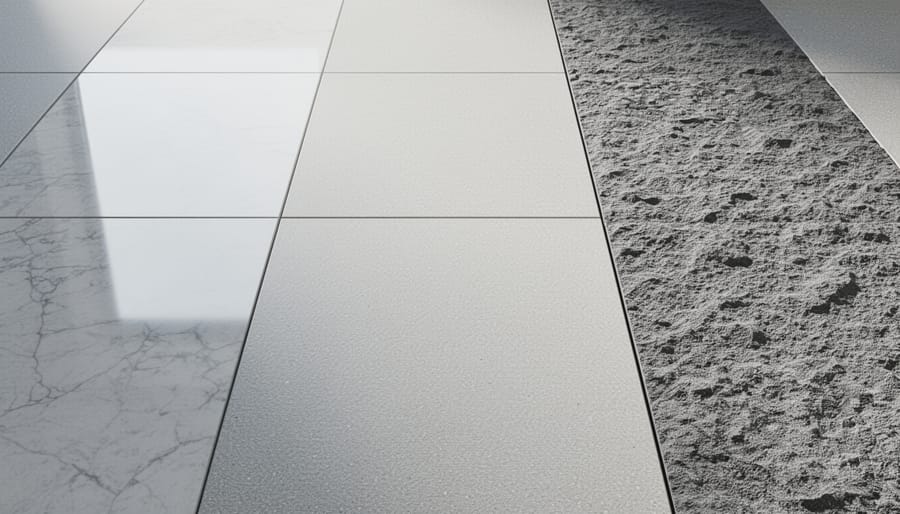
While honed and polished finishes are prized for their elegant appearance, they present challenges for ADA compliance. These smoother finishes typically achieve DCOF values between 0.30 and 0.42, falling short of the required 0.42 threshold in most cases. However, certain stone types with inherent texture can meet requirements even when honed. Limestone and travertine, due to their naturally porous surface structure, sometimes achieve compliant slip resistance when honed, particularly unfilled travertine with its characteristic voids. Some granites with pronounced crystalline texture also perform adequately.
The key is understanding context and application. Honed finishes may work in specific commercial areas with lower traffic or controlled environments where moisture exposure is minimal. For residential applications not subject to ADA requirements, honed and polished finishes offer broader flexibility. When considering these smoother finishes for ADA-regulated spaces, always request laboratory DCOF testing on the exact stone and finish combination before specifying. Some fabricators can apply specialized treatments or slight texturing to honed surfaces that preserve aesthetic appeal while improving slip resistance. These hybrid approaches can bridge the gap between design preferences and compliance requirements, though they require careful evaluation and testing documentation.
Anti-Slip Treatments and Coatings
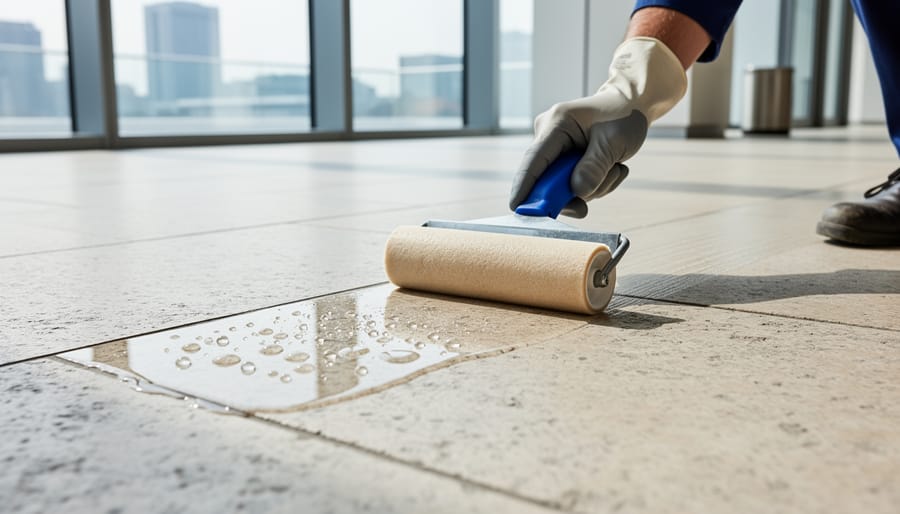
When existing stone surfaces fall short of the ADA’s DCOF requirement of 0.42 or higher, anti-slip treatments offer a practical remediation solution. These products work by either creating microscopic texture through chemical etching or adding grip-enhancing coatings to the surface.
Chemical anti-slip treatments penetrate stone surfaces to create micro-textures that increase friction without dramatically altering appearance. These solutions typically last 1-3 years on moderate-traffic floors and require professional application to ensure even coverage and optimal results. They work particularly well on polished granite, marble, and porcelain tiles that are inherently slippery.
Topical coatings provide an alternative approach, applying a slip-resistant layer directly onto the stone surface. While effective at boosting traction, these coatings require more frequent maintenance and reapplication, especially in high-traffic commercial environments. Property managers should factor in the ongoing maintenance schedule when budgeting for compliance solutions.
Before selecting any treatment, conduct DCOF testing on a sample area to verify the product achieves the required 0.42 threshold. Keep in mind that these treatments can subtly change the stone’s appearance and may affect future cleaning protocols. Regular slip resistance testing ensures treatments remain effective over time, maintaining both safety and ADA compliance.
Testing and Verifying Your Stone Floor’s Slip Resistance
DCOF Testing Methods
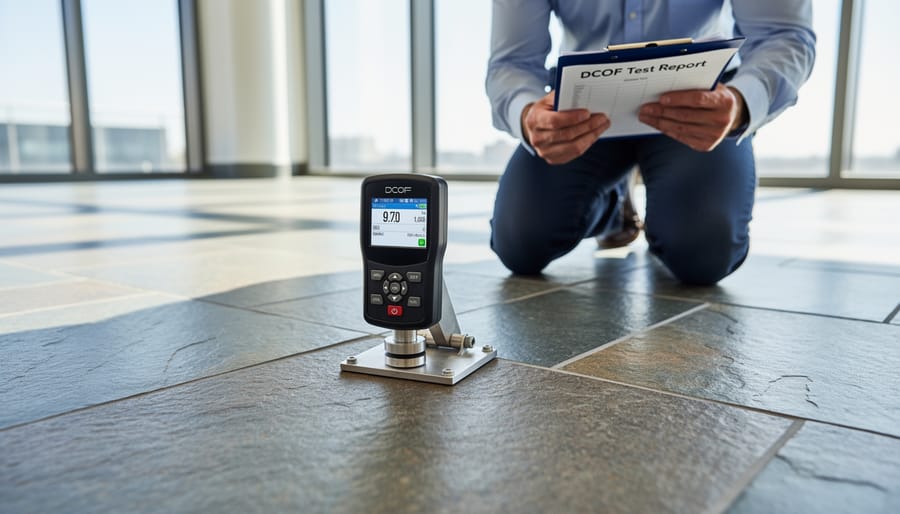
The ADA references the ANSI A326.3 standard, which specifies the BOT-3000E tribometer as the approved device for measuring slip resistance through DCOF testing. This portable instrument uses a standardized sensor to simulate the contact between a shoe sole and the floor surface, providing objective, repeatable measurements that determine compliance.
The BOT-3000E testing protocol requires specific conditions to ensure accuracy. The device measures wet dynamic coefficient of friction by applying a precise amount of water to the floor surface before each test. The tribometer’s sensor, which mimics the properties of a typical shoe sole, is then drawn across the wetted surface at a controlled speed while measuring the resistance. Multiple readings at different locations are required to account for natural variations in the stone surface.
Testing should ideally occur before installation to verify that your selected stone and finish combination meets the 0.42 DCOF threshold. Many reputable stone suppliers provide pre-tested products with documented DCOF values, which can streamline the specification process. However, post-installation testing is equally important to confirm that field conditions and installation methods haven’t compromised slip resistance.
Regular retesting is recommended, particularly in high-traffic commercial environments. Testing should also be conducted whenever flooring maintenance procedures change or if the surface undergoes restoration treatments, as these can significantly alter slip resistance properties. Facility managers should maintain documentation of all DCOF testing results to demonstrate ongoing compliance and support liability protection.
Getting Professional Certification
While property owners can conduct preliminary slip resistance assessments, hiring accredited testing professionals ensures accurate DCOF measurements and legally defensible documentation. Professional testing becomes essential during new construction, major renovations, or when addressing liability concerns. Similar to professional certification requirements for other building components, qualified tribometer operators follow standardized protocols that stand up to scrutiny during inspections or legal proceedings.
Comprehensive documentation should include laboratory test reports showing DCOF values, installation records with flooring specifications, and maintenance logs demonstrating ongoing compliance efforts. Keep dated photographic evidence of surface conditions and any remedial measures taken. These records prove due diligence if slip-and-fall incidents occur.
Maintain testing documentation for the life of the installation, with periodic retesting every 3-5 years or after significant refinishing work. Store calibration certificates for testing equipment and certifications of technicians who performed assessments. This documentation package protects against liability claims while demonstrating commitment to safety standards. Many insurance providers offer reduced premiums when facilities maintain proper slip resistance records and follow documented maintenance schedules.
Common Mistakes That Lead to Non-Compliance
Installation Errors to Avoid
Poor installation practices can undermine even the most carefully selected slip-resistant stone. One critical mistake is applying the wrong type of sealer or using excessive amounts. Film-forming sealers create a glossy surface layer that significantly reduces slip resistance, regardless of the stone’s original DCOF rating. Always verify that sealers are labeled as penetrating and won’t compromise surface texture.
Inadequate surface preparation before installation also creates problems. Failing to remove contaminants, dust, or residue from stone surfaces can prevent proper adhesion and affect the finished texture. Additionally, over-polishing during installation eliminates the micro-texture needed for slip resistance. Following proper stone installation standards helps prevent these issues.
Another common error involves improper grouting techniques. Using glossy or inappropriate grout compounds in wet areas reduces overall floor friction. Grout lines should complement the stone’s slip-resistant properties rather than create slick pathways.
Finally, rushing the installation process without conducting post-installation DCOF testing leaves compliance verification to chance. Testing after completion ensures that installation methods haven’t compromised the stone’s slip resistance and confirms ADA compliance before the space opens to public use.
How Maintenance Affects Compliance
Even floors that initially meet ADA slip resistance requirements can fall out of compliance through improper maintenance practices. The choice of cleaning products, waxes, and floor finishes significantly impacts a surface’s dynamic coefficient of friction (DCOF). High-gloss waxes and certain polishing compounds create a smooth layer that reduces traction, potentially dropping DCOF values below the 0.42 threshold. Acrylic sealers and buffing processes commonly used on polished stone can similarly compromise slip resistance.
Maintenance staff often unknowingly use products designed for aesthetics rather than safety. Traditional floor polishes that enhance shine typically decrease surface roughness, the key factor in slip resistance. Additionally, residue buildup from improper cleaning or using incorrect dilution ratios creates slippery films on the surface.
To maintain compliance, facility managers should establish maintenance protocols that preserve the original surface texture. This includes using pH-neutral cleaners specifically formulated for stone, avoiding wax-based products on walking surfaces, and conducting periodic DCOF testing to verify continued compliance. Regular maintenance schedules should document products used and cleaning methods employed, creating an accountability trail that demonstrates ongoing attention to safety standards. When refinishing becomes necessary, specify that contractors must maintain the required slip resistance values rather than simply restoring appearance.
Maintaining ADA Compliance Over Time
Cleaning Protocols for Slip-Resistant Stone
Maintaining slip resistance requires using pH-neutral cleaners specifically formulated for natural stone. Acidic or alkaline cleaners can erode surface textures that provide traction, reducing DCOF values over time. Daily maintenance should involve dust mopping or vacuuming to remove grit and debris that can polish stone surfaces and compromise slip resistance.
For wet cleaning, use clean water with appropriate stone-safe detergents, changing solutions frequently to prevent redepositing soils. Avoid oil-based soaps, waxes, and coating products that create slippery films on stone surfaces. These treatments may enhance appearance initially but significantly reduce friction and fail to meet ADA requirements.
High-traffic areas benefit from periodic deep cleaning using auto-scrubbers with appropriate brushes or pads. Avoid excessive burnishing or polishing techniques that smooth textured finishes. For exterior applications, pressure washing can restore surface roughness when performed correctly, but always retest DCOF values after any aggressive cleaning.
Establish a written maintenance protocol documenting cleaning products, frequencies, and procedures. This documentation demonstrates compliance efforts and helps identify any practices that might degrade slip resistance. After cleaning, allow sufficient drying time before reopening areas to foot traffic, as even compliant surfaces become hazardous when wet without proper drainage or maintenance.
When to Re-Test and Re-Treat
Regular testing ensures your stone flooring maintains ADA compliance throughout its lifespan. High-traffic commercial areas should undergo slip resistance testing annually, while moderate-traffic spaces can be evaluated every two to three years. Residential installations typically require testing only when noticeable wear patterns emerge or during renovation planning.
Watch for warning signs that retreatment is necessary: visible wear patterns in high-traffic zones, increasingly slippery surfaces when wet, or loss of textured finish appearance. Stone floors in entryways exposed to weather often need retreatment sooner due to dirt, moisture, and debris accelerating surface polish.
When testing reveals DCOF values below 0.42, immediate action is required. Options include professional honing to restore texture, applying slip-resistant treatments, or installing supplementary safety measures like mats in critical areas. Document all testing results and maintenance activities to demonstrate ongoing compliance efforts. Proactive monitoring prevents costly emergency interventions and maintains safe walking surfaces for all users, protecting both occupants and property owners from liability concerns.
Achieving ADA slip resistance compliance with stone flooring requires a thoughtful approach that balances safety, aesthetics, and regulatory requirements. The DCOF threshold of 0.42 serves as your baseline, but successful implementation goes beyond simply meeting this minimum standard. By understanding how different stone types, finishes, and treatments affect slip resistance, you can make informed decisions that prioritize pedestrian safety without compromising design vision.
Proactive testing is essential. Rather than assuming compliance based on finish alone, verify actual DCOF values through proper testing methods before installation. This prevents costly remediation and ensures your project meets accessibility standards from the start. Remember that compliance is ongoing, not a one-time achievement. Establish regular maintenance protocols that preserve slip resistance over time, including appropriate cleaning methods and periodic re-evaluation of high-traffic areas.
Whether you’re specifying stone for a commercial lobby, healthcare facility, or public space, the key is proper specification from the outset. Work with suppliers who understand ADA requirements, request certified test data, and consider environmental factors that may affect performance. By taking these proactive steps, you create safe, beautiful spaces that serve all users while maintaining full regulatory compliance.