
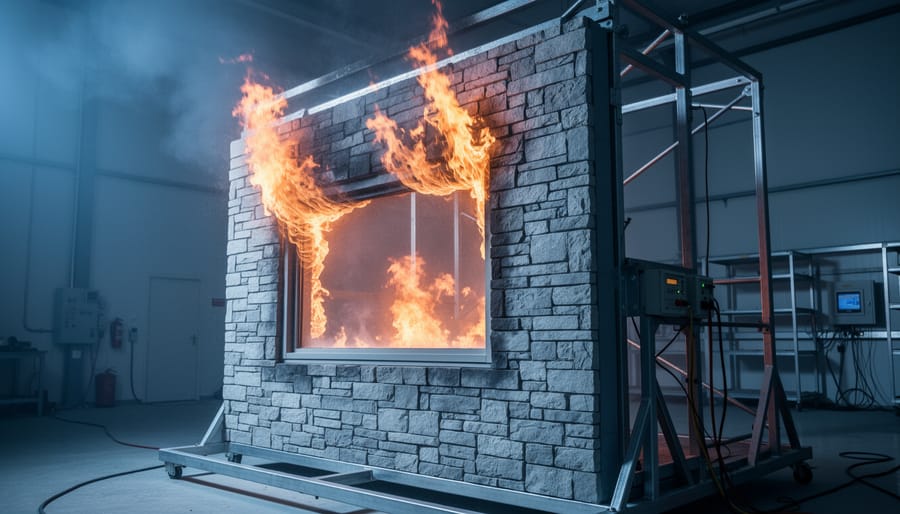
NFPA 285 determines whether your stone veneer façade project can legally proceed on buildings with combustible wall assemblies—and misunderstanding this fire safety standard costs the construction industry millions in project delays, redesigns, and compliance failures every year.
This fire test standard, officially titled “Standard Fire Test Method for Evaluation of Fire Propagation Characteristics of Exterior Wall Assemblies Containing Combustible Components,” evaluates how quickly flames can spread vertically and horizontally across a building’s exterior when combustible materials like foam insulation exist behind the façade. The International Building Code mandates NFPA 285 testing for buildings over three stories with specific occupancy types when your wall assembly includes both combustible components and exterior cladding systems.
The stakes are significant. Buildings that fail to meet NFPA 285 requirements face rejection by building officials, mandatory redesigns that can add months to construction timelines, and potential liability issues if fire safety concerns arise post-construction. For projects using natural stone veneer—a non-combustible material—the compliance pathway depends entirely on the complete wall assembly, not just the stone itself.
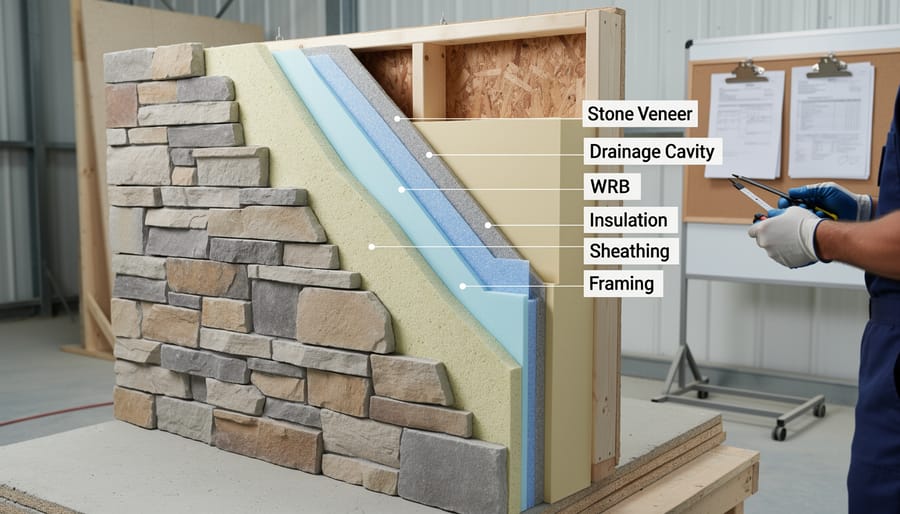
Stone veneer manufacturers and installers must understand that NFPA 285 testing evaluates the entire system: the substrate, weather-resistant barriers, insulation, air gaps, attachment methods, and the veneer material working together as one assembly. A stone veneer that passes when installed over concrete block may fail when mounted over wood framing with foam insulation, even though stone itself is inherently fire-resistant.
This guide clarifies when NFPA 285 applies to your stone veneer project, how to achieve compliant wall assemblies, and which installation methods satisfy code requirements without compromising design intent or project budgets.
What Is NFPA 285 and Why It Exists
The Test That Could Save Lives
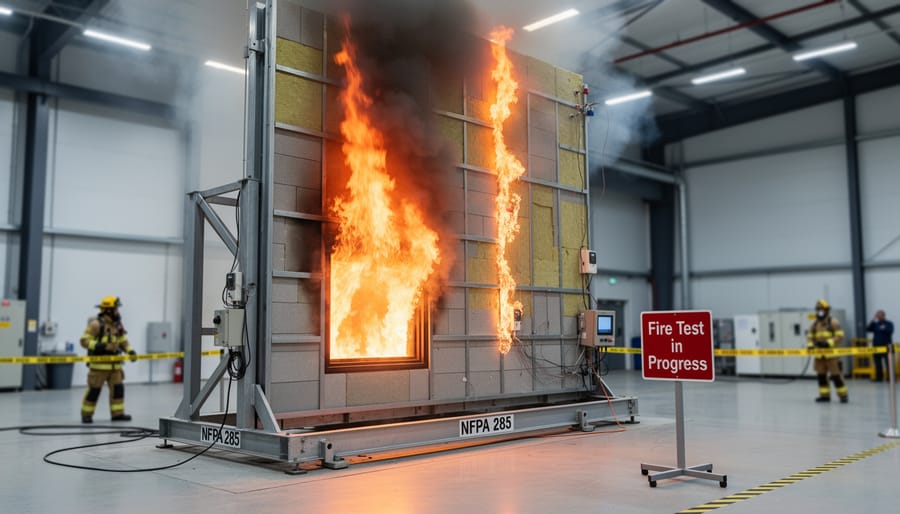
The NFPA 285 test simulates a real-world fire scenario to evaluate whether a wall assembly can resist vertical and horizontal flame spread. Understanding what happens during this test helps explain why it’s considered the gold standard for multi-story building safety.
The test uses a two-story test apparatus that mimics an actual building corner. The wall assembly being tested—including exterior cladding, insulation, air barriers, and structural backing—is installed exactly as it would be in a real building. This means every component matters, from the stone veneer to the adhesive system holding it in place.
During the test, a fire begins in a combustion chamber at the base of the first floor, simulating flames coming through a window opening from a room fire. A gas burner supplies a controlled heat source of approximately 300,000 BTUs for 30 minutes. Simultaneously, additional burners along the first floor apply direct flame exposure to the wall surface.
Throughout this controlled burn, technicians monitor several critical factors. They track flame spread both vertically up the building and laterally across the wall surface. Temperature sensors measure heat release at various points. Observers watch for any signs of the fire spreading into wall cavities or igniting combustible components within the assembly.
To pass NFPA 285, the wall assembly must meet strict criteria. Flames cannot spread to the upper story in a way that would ignite the room above. The fire must not propagate significantly beyond the directly exposed area. The assembly cannot exhibit sustained flaming or contribute excessive fuel to the fire. Most importantly, the test evaluates the entire system—not individual materials in isolation.
This comprehensive approach explains why you cannot simply substitute materials in a tested assembly. Changing from one stone veneer product to another, or modifying the insulation type, creates an entirely new system that requires its own testing. The pass or fail determination depends on how all components perform together under fire conditions, ensuring the assembly won’t accelerate fire spread in an actual emergency.
Stone Veneer and Facade Fire Safety: The Critical Connection
It’s Not Just the Stone—It’s the Entire System
When specifying natural stone veneer for a building facade, many people assume the stone itself is the only component that matters for fire safety. After all, natural stone is inherently non-combustible. However, NFPA 285 testing reveals a crucial reality: it’s not just about the stone—it’s about everything behind it working together as a complete system.
Modern building envelopes are complex assemblies consisting of multiple layers, each serving a specific purpose. Behind that beautiful granite, limestone, or marble facade, you typically find rigid foam insulation boards that help buildings meet energy code compliance requirements. You’ll also find water-resistive barriers to protect against moisture infiltration, air gaps or drainage cavities to manage condensation, and various adhesives, sealants, and fasteners holding everything in place.
The problem is that many of these components are combustible. Expanded polystyrene (EPS) and extruded polystyrene (XPS) foam insulation can ignite and burn. Some water-resistive barriers contain flammable materials. Even the air cavity itself can act as a chimney, allowing flames to spread vertically between the stone veneer and the building structure.
During a fire event, flames can enter the wall assembly through windows, damaged sections, or penetrations. Once inside, heat can cause foam insulation to melt, ignite, or release toxic gases. The cavity spaces can accelerate flame spread upward, potentially reaching floors above the fire’s origin. This creates a dangerous situation where a building appears to have a non-combustible stone exterior, yet the hidden components allow fire to travel through the wall system.
This is precisely why NFPA 285 requires testing the entire wall assembly, not individual components. A non-combustible stone veneer doesn’t automatically make the whole system safe. The test evaluates how all materials interact under fire conditions: Does the insulation melt away and expose the structure? Do flames spread through the cavity? Does the assembly maintain its integrity?
Understanding this systems-based approach is essential for anyone specifying or installing stone veneer on buildings where NFPA 285 applies. You cannot simply choose stone and assume compliance. Every component—from the structural backup to the outermost finish—must work together to prevent dangerous fire propagation.
NFPA 285 Compliance Requirements for Stone Veneer Projects
When Is NFPA 285 Testing Required?
NFPA 285 testing becomes mandatory when specific conditions related to building height, construction type, and occupancy classification align with IBC compliance requirements. Understanding when this standard applies is essential for architects, designers, and building professionals planning projects with exterior wall assemblies that include combustible components.
The International Building Code typically requires NFPA 285 testing for buildings classified as Type I, II, III, or IV construction that exceed specific height thresholds. Generally, buildings taller than 40 feet with combustible water-resistive barriers, exterior insulation, or other combustible materials in the wall assembly must demonstrate compliance through NFPA 285 testing. The exact height trigger varies depending on construction type and occupancy classification.
Occupancy groups also play a critical role in determining when testing is required. High-risk occupancies such as Group I (institutional facilities including hospitals and care facilities) and Group R (residential buildings including apartments and dormitories) face stricter requirements. For these occupancies, NFPA 285 testing may be required at lower heights or with fewer combustible components than other building types.
Buildings with noncombustible exterior walls that incorporate only noncombustible insulation and water-resistive barriers are typically exempt from NFPA 285 requirements. Natural stone veneer systems, when properly designed with noncombustible components throughout the assembly, can often avoid the need for this testing.
However, it’s important to recognize that even small amounts of combustible materials in foam-based insulation, certain air barriers, or adhesive systems can trigger the requirement. Building officials have final authority in determining whether specific assemblies require NFPA 285 compliance, making early consultation with local code authorities essential for project planning and avoiding costly design changes during construction.
Achieving Compliance: Your Three Options
When your project requires NFPA 285 compliance, you have three distinct pathways to meet the standard. Each approach offers different advantages depending on your project timeline, budget, and design flexibility needs.
The most straightforward option is using pre-tested assemblies. Manufacturers often conduct NFPA 285 testing on specific wall assembly combinations and make these results publicly available. By matching your design exactly to a tested assembly—including the same insulation type, thickness, air barriers, and attachment methods—you can rely on existing test data. This approach is typically the fastest and most cost-effective, since you avoid testing expenses. However, it limits your design flexibility. Any deviation from the tested assembly, no matter how minor, invalidates the test results and requires retesting.
The second pathway involves conducting full-scale testing of your specific wall assembly. This option provides maximum design freedom, allowing you to specify the exact materials and configuration your project requires. Testing facilities burn actual wall sections measuring 13 feet wide by 20 feet tall, evaluating flame spread and heat release. The primary drawback is cost—full-scale NFPA 285 testing typically ranges from 25,000 to 50,000 dollars per assembly, plus the expense of building and shipping the test specimen. Testing also requires careful scheduling, as facilities often book months in advance, which can impact your project timeline.
The third option is utilizing alternative materials or methods that don’t trigger NFPA 285 requirements. For example, if your building height or occupancy type doesn’t fall under the standard’s scope, or if you can use materials classified as noncombustible throughout the assembly, you may avoid testing altogether. This requires careful coordination with your design team and building officials early in the design process.
Most projects benefit from consulting with manufacturers and facade specialists during design development to identify the most practical compliance pathway before finalizing specifications.
How to Specify NFPA 285-Compliant Stone Veneer Systems

Working with Tested Assemblies
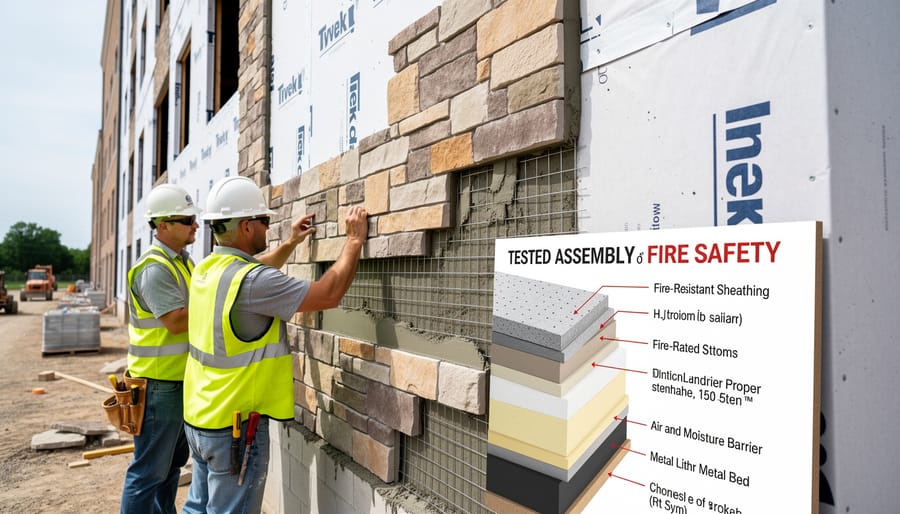
Finding and verifying tested assemblies is a critical step in achieving NFPA 285 compliance for stone veneer projects. The most reliable source for tested assemblies is the manufacturer’s technical documentation, which should include detailed test reports from accredited laboratories. Many manufacturers maintain online databases of their NFPA 285-compliant systems, specifying every component down to the exact fastener type and spacing. Additionally, organizations like Underwriters Laboratories (UL) and Intertek maintain searchable databases of certified systems that designers can reference during the specification process.
The cardinal rule when working with tested assemblies is that every single component must match the tested configuration exactly. This means using the identical cladding material, water-resistive barrier, insulation type and thickness, air gap dimensions, attachment methods, and even the specific adhesives or sealants called for in the test report. Seemingly minor deviations can fundamentally alter the assembly’s fire performance, potentially transforming a compliant system into one that fails to meet the standard’s requirements.
Documentation is essential throughout the project lifecycle. Maintain copies of the complete test report, manufacturer’s installation instructions, and submittal data for all materials. During construction, require contractors to provide product data sheets and certifications confirming that installed materials match the approved assembly. Photographic documentation of the installation process can prove invaluable if compliance questions arise later.
Common substitution mistakes that void compliance include switching insulation products based solely on R-value without considering combustibility characteristics, using a different thickness of the same insulation type, substituting generic fasteners for those specified in the test, or changing the cavity depth behind the stone veneer. Even using a different stone thickness or finish than what was tested can affect results. Building officials may reject substitutions unless backed by engineering analysis or additional testing demonstrating equivalency. When in doubt, contact the system manufacturer or the testing laboratory before making any changes to the approved assembly.
Compatible Materials and Components
Achieving NFPA 285 compliance with stone veneer facades requires careful selection of all wall assembly components. The test evaluates the entire system as a unit, meaning every material—from insulation to air barriers to attachment hardware—must work together to prevent flame spread.
Mineral wool insulation has demonstrated consistent success in NFPA 285 assemblies due to its inherent fire resistance and non-combustible nature. This insulation type can withstand temperatures exceeding 2000°F without melting or contributing fuel to a fire. Some polyisocyanic (polyiso) foam insulations have also achieved compliance when properly configured within tested assemblies, though results vary significantly by manufacturer and thickness.
Water-resistive barriers play a critical role in tested assemblies. Fluid-applied membranes and mechanically-attached sheet barriers specifically designed for NFPA 285 compliance have shown reliable performance. These barriers must resist ignition and prevent fire propagation while maintaining their primary moisture management function. Never substitute materials within a tested assembly, as even seemingly minor changes can invalidate compliance.
Air barriers require equal scrutiny. Self-adhered membranes and spray-applied systems that have undergone NFPA 285 testing as part of complete wall assemblies provide documented performance data. The barrier’s combustibility characteristics directly impact how fire might travel through the cavity space behind stone cladding systems.
Attachment methods matter significantly. Stainless steel anchors, ties, and support systems typically perform well in fire testing, while certain composite or polymer-based components may compromise assembly performance. Always verify that your specific attachment hardware matches the tested configuration exactly. Using components from the same manufacturers identified in test reports helps ensure replicability and maintains compliance integrity throughout construction.
Common Pitfalls and Compliance Failures
Despite clear testing requirements, many building projects encounter NFPA 285 compliance failures due to preventable mistakes. Understanding these common pitfalls helps project teams avoid costly delays, legal liability, and safety risks.
Material substitutions represent the most frequent compliance failure. A wall assembly passes NFPA 285 testing as a complete system, meaning every component matters. When contractors substitute materials—even seemingly minor items like adhesives, insulation brands, or backing materials—they invalidate the test results. For example, switching from the tested mineral wool insulation to a different manufacturer’s product, despite similar specifications, creates an untested assembly that doesn’t meet code requirements. Each component must match the tested assembly exactly.
Installation errors also compromise compliance regularly. Common mistakes include incorrect fastener spacing, improper flashing details, missing fire-stopping components, or deviating from specified installation sequences. These errors may seem insignificant during construction but fundamentally alter how the assembly performs during a fire event. Documentation requirements often get overlooked as well—inspectors need proof that installed materials match tested assemblies through proper labeling and certification.
Many professionals misunderstand test report limitations, assuming that if one stone product passes, all similar stones will pass. NFPA 285 tests entire wall systems, not individual materials. A granite panel that performed well in one assembly configuration may behave differently with alternative substrates, insulation types, or cavity depths. Test reports specify exact parameters and conditions; applying results beyond these boundaries violates compliance standards.
The consequences of non-compliance extend beyond failed inspections. Building owners face potential certificate of occupancy delays, expensive remediation requiring complete facade removal, increased insurance premiums, and liability exposure if fire incidents occur. Architects may encounter professional liability claims and damaged reputations. Contractors risk project delays, financial penalties, warranty disputes, and legal action. In severe cases, non-compliant buildings have required millions of dollars in retrofit costs.
Successful NFPA 285 compliance demands careful attention to tested assembly specifications, proper installation oversight, thorough documentation, and collaboration among all project stakeholders from design through construction completion.
The Future of Facade Fire Safety and Stone Veneer
The facade fire safety landscape is evolving rapidly, driven by tragic incidents and a growing commitment to occupant protection. NFPA 285 represents the current benchmark, but the industry continues advancing toward even more rigorous standards and innovative solutions that balance safety with design freedom.
One emerging trend is the development of enhanced testing protocols that more accurately simulate real-world fire conditions. Researchers are exploring multi-story testing scenarios and evaluating long-term performance of assemblies under various environmental stresses. These advancements will likely influence future iterations of NFPA 285 and related building codes, potentially requiring more comprehensive documentation and periodic re-testing of wall assemblies.
The natural stone industry has responded proactively to these evolving requirements. Manufacturers are investing in extensive testing programs to validate their products within compliant wall assemblies, creating libraries of tested systems that simplify specification for design professionals. This collaborative approach between stone suppliers, attachment system manufacturers, and insulation producers has yielded innovative assembly designs that achieve NFPA 285 compliance without sacrificing the timeless beauty of natural stone.
Material science innovations are also contributing to safer facades. New fire-resistant barriers, improved cavity designs that limit flame spread, and advanced anchoring systems specifically engineered for tested assemblies are becoming industry standards. These developments demonstrate that aesthetic excellence and fire safety are not mutually exclusive goals.
Forward-thinking architects are now incorporating fire safety considerations at the earliest design stages rather than treating compliance as an afterthought. This proactive mindset, combined with manufacturer transparency about tested assemblies and ongoing education initiatives, is creating a safer built environment. As regulations continue tightening globally, the stone veneer industry’s commitment to testing, innovation, and education positions natural stone as a responsible choice for modern high-performance building envelopes.
NFPA 285 compliance should never be viewed as a limitation on your design vision. When it comes to natural stone veneer, this standard actually expands your possibilities by providing a clear pathway to incorporate beautiful, durable materials into multi-story buildings while maintaining the highest safety standards. Stone veneer systems that have passed NFPA 285 testing offer both the aesthetic appeal you’re looking for and the fire-resistance performance required by code.
The key takeaways are straightforward but critical: always verify that your complete wall assembly has been tested according to NFPA 285, never substitute materials or components without confirmation that the modified assembly maintains its listing, and document everything thoroughly for building officials. Working with knowledgeable suppliers who understand these compliance requirements will save you time, money, and potential headaches during the approval process.
Remember that NFPA 285 testing evaluates the entire wall system as a unit. The stone veneer, water-resistive barrier, insulation, air gaps, and structural backing all work together to achieve compliance. Changing even one component can invalidate the tested assembly’s approval.
Whether you’re designing a luxury residential tower, a commercial office building, or an institutional facility, natural stone veneer can be part of your compliant exterior wall system. Don’t let concerns about fire testing deter you from specifying these timeless materials. Instead, consult with stone veneer specialists who have experience with NFPA 285 requirements and can guide you toward tested assemblies that meet both your aesthetic goals and regulatory obligations.