

Smoke infusion transforms ordinary ingredients into culinary masterpieces, but traditional smoking methods often damage surfaces, create safety hazards, and offer limited control over smoke intensity. Natural stone provides an elegant solution that addresses these challenges while elevating your cooking space into a sophisticated entertainment feature.
Stone’s unique thermal properties make it ideal for smoke infusion applications. Dense materials like granite and basalt absorb and radiate heat evenly, preventing hot spots that char food or crack cooking surfaces. Their non-porous nature when properly sealed resists smoke staining and flavor contamination between uses, unlike wood or metal alternatives that retain residues. The thermal mass of thick stone slabs stabilizes smoking temperatures, giving you precise control over smoke penetration and flavor development.
Modern smoke infusion setups integrate stone in three primary ways: as direct cooking surfaces that impart subtle mineral notes while protecting underlying structures, as heat-resistant surrounds for smoke generators that contain embers safely, and as architectural elements in outdoor kitchens that complement fire features aesthetically. Soapstone excels for handheld smoking stones due to its exceptional heat retention and smooth texture. Slate works beautifully as backing material for mounted smoke boxes, providing both thermal protection and visual appeal.
The intersection of functionality and design makes stone-based smoke infusion systems particularly valuable for homeowners investing in outdoor entertaining spaces. These installations withstand weather extremes, require minimal maintenance, and add lasting value while delivering restaurant-quality results that impress guests and elevate everyday meals into memorable culinary experiences.
The Science Behind Stone and Smoke Infusion
Why Stone Holds and Transfers Smoke Better Than Other Materials
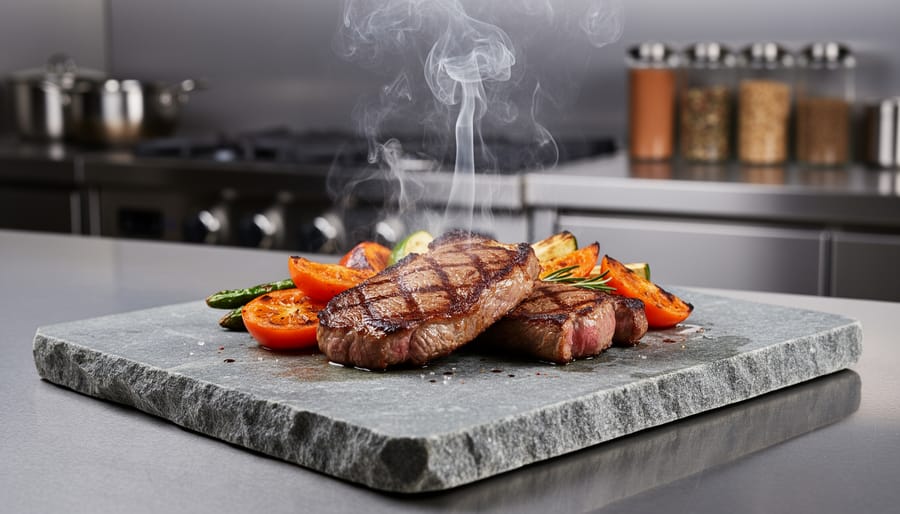
Stone’s exceptional performance in smoke infusion stems from its unique physical properties at the microscopic level. Unlike metal or ceramic surfaces, natural stone features an intricate porous structure with countless tiny cavities and channels throughout its composition. These microscopic pores act as natural reservoirs, actively trapping smoke particles when exposed to smoldering wood or herbs.
The mineral composition of stone plays an equally important role. Calcium carbonate, silica, and other naturally occurring minerals create a slightly alkaline surface that interacts favorably with smoke compounds. This chemical compatibility allows the stone to absorb aromatic molecules without altering their essential characteristics, preserving the intended flavor profile.
What sets stone apart is its ability to release captured smoke gradually over time. Rather than emitting an overwhelming burst of smoke flavor, the porous structure meters out the infusion at a controlled rate. This slow release prevents the bitter, acrid taste that often results from over-smoking foods. The thermal mass of stone also contributes to this process, maintaining consistent temperatures that promote steady, even smoke distribution.
This combination of porosity, mineral interaction, and thermal stability makes stone uniquely suited for achieving sophisticated, well-balanced smoke infusion in both culinary and entertaining applications.
Heat Distribution Properties That Prevent Surface Damage
Stone’s molecular structure creates a natural advantage for smoke infusion by distributing heat evenly across its entire surface. Unlike metal grills or cast iron that develop concentrated hot spots, natural stone absorbs thermal energy and disperses it uniformly. This even distribution prevents the localized overheating that causes wood chips to ignite into flames rather than smolder, maintaining the consistent low-temperature combustion essential for controlled smoke generation.
The thermal properties that allow stone to reach optimal stone temperatures for cooking also protect the surface from smoke-related damage. When wood chips smolder at the ideal 570-750°F range, stone surfaces resist the charring and carbon buildup that plague metal alternatives. The material’s high thermal mass means it won’t spike in temperature when smoke material is added, preventing the scorching that creates bitter flavors and unsightly staining.
This stability extends to the food itself. Even heat from below ensures proteins and vegetables receive gentle, consistent warmth while absorbing aromatic smoke compounds, eliminating the risk of burnt exteriors and raw interiors common with uneven heat sources.
Best Natural Stones for Smoke Infusion Applications
Granite: The Workhorse for High-Heat Smoke Applications
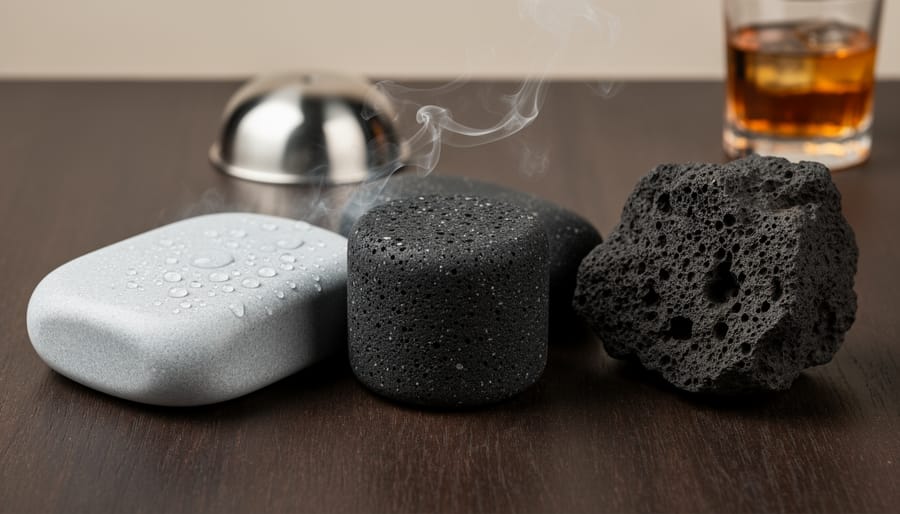
Granite stands as the gold standard for smoke infusion applications, combining exceptional durability with the heat resistance necessary for repeated high-temperature exposure. Granite’s thermal properties allow it to withstand direct flame and sustained temperatures exceeding 1,200°F without cracking or discoloration, making it ideal for outdoor kitchens and entertainment areas where smoke infusion becomes a regular feature.
The stone’s naturally low porosity, typically between 0.4% and 1.5%, prevents smoke particles and food oils from penetrating the surface. This characteristic ensures easier maintenance and prevents flavor transfer between smoking sessions. Unlike softer stones, granite resists scratching and wear from metal smoking equipment, maintaining its appearance even with frequent use.
For outdoor installations, granite’s resistance to freeze-thaw cycles and weathering makes it particularly valuable. It performs reliably in built-in smoking stations, countertop cooking areas, and dedicated smoke chambers where aesthetic appeal meets functional demand. When properly sealed, granite surfaces require minimal upkeep while delivering decades of consistent performance in demanding culinary environments.
Soapstone: Natural Non-Stick Properties for Clean Smoke Flavor
Soapstone stands out among natural stones for smoke infusion thanks to its unique talc-based composition, which creates inherently non-stick surfaces without chemical treatments. This metamorphic rock contains high concentrations of talc, magnesium, and other minerals that form a naturally smooth, non-porous surface resistant to staining and flavor absorption.
The stone’s dense structure distributes heat remarkably evenly, eliminating hot spots that can cause uneven smoking or burning. This consistent thermal performance ensures your ingredients receive uniform smoke exposure, resulting in predictable, repeatable flavor profiles. Unlike porous materials such as brick or certain granites, soapstone won’t absorb moisture, oils, or aromatic compounds from previous smoking sessions.
This non-porous characteristic proves essential for preventing flavor cross-contamination between different smoking sessions. Whether you’re smoking delicate fish one day and robust beef the next, soapstone maintains flavor integrity without transferring residual tastes. The surface requires minimal maintenance—simple washing with soap and water restores it to pristine condition. For outdoor kitchen applications, this durability translates to years of reliable performance with authentic smoke flavor in every session.
Lava Stone: Porous Structure for Maximum Smoke Capture
Lava stone stands out as the premier choice for smoke infusion thanks to its honeycomb-like porous structure. Formed from rapidly cooled volcanic rock, lava stone contains countless tiny air pockets that trap and absorb smoke particles with remarkable efficiency. This natural porosity creates a surface area significantly larger than its physical size, allowing it to capture maximum smoke flavor and release it gradually during cooking.
Despite its exceptional absorption capacity, lava stone remains surprisingly lightweight compared to denser alternatives. The same porous qualities that enhance smoke capture also make it easy to handle and position in smokers or grills. Maintenance is straightforward—the stone can be cleaned between uses and retains its smoke-capturing properties through multiple cooking sessions. For outdoor kitchen applications, lava stone’s durability and heat resistance make it practical for both permanent installations and portable setups, delivering consistent smoke infusion without deterioration or flavor contamination over time.
Marble: Aesthetic and Functional for Indoor Applications
Marble offers an elegant solution for indoor smoke infusion applications where controlled, subtle flavor enhancement is desired. Its moderate thermal properties allow for gentle heat distribution, making it ideal for cold-smoking cheese, butter, or delicate ingredients in residential kitchens. The stone’s natural beauty transforms functional cooking equipment into decorative focal points. Polished marble surfaces retain coolness longer than denser stones, preventing over-smoking while creating visually stunning food presentations. Popular choices include white Carrara for contemporary spaces and darker varieties for traditional settings. When used with small smoking chambers or cloche arrangements, marble provides both temperature regulation and aesthetic refinement without overwhelming indoor environments with excessive smoke.
Installation Methods for Stone Smoke Infusion Systems
Outdoor Kitchen Integration
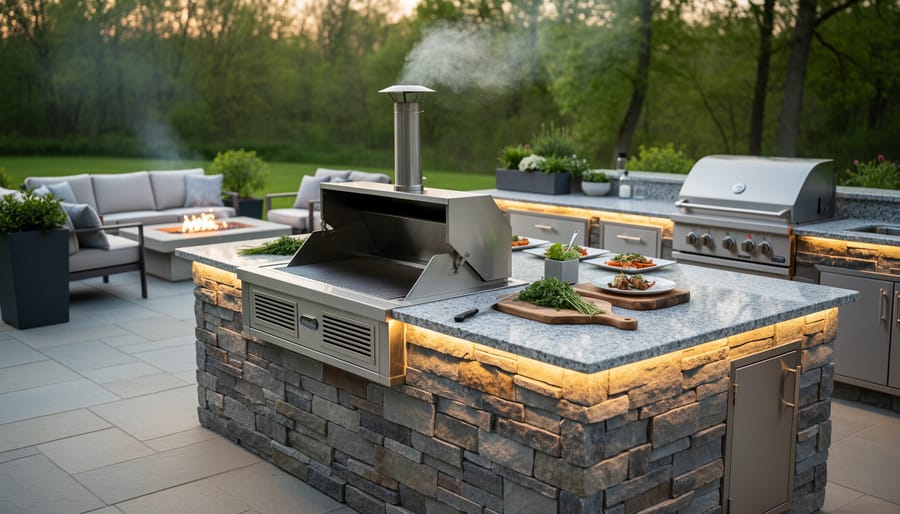
Integrating smoke chambers into outdoor kitchens requires careful planning to balance functionality with safety. Begin by positioning your stone smoke chamber at least three feet from combustible materials and property lines. Dense stones like soapstone or granite work best as chamber materials due to their exceptional heat retention and non-porous nature.
Ventilation is paramount. Install an overhead exhaust hood rated for wood smoke, maintaining minimum clearances of 30 inches above cooking surfaces. For ground-level chambers, ensure adequate airflow by positioning the structure in an open area away from enclosed spaces where smoke could accumulate.
When designing heated stone platforms, create a stable foundation using compacted gravel and sand base layers beneath mortared stone pavers. The platform should extend 12 inches beyond the chamber perimeter to catch stray embers. Consider incorporating fire-resistant grout joints rated to withstand temperatures exceeding 1000°F.
Safety features should include fire-rated underlayment, accessible water sources within 25 feet, and clearly marked emergency shut-off valves for gas-assisted ignition systems. Many municipalities require permits for permanent outdoor cooking structures, so verify local building codes before construction. Professional installation ensures proper drainage, structural stability, and compliance with fire safety regulations while preserving the aesthetic appeal of your natural stone investment.
Indoor Applications and Ventilation Requirements
Installing smoke-generating stone features indoors requires careful planning to ensure safety and comfort. Proper ventilation is paramount—these systems must connect to commercial-grade exhaust hoods or dedicated ventilation systems capable of handling continuous smoke production. Building codes typically classify indoor smoke infusion features similarly to commercial cooking equipment, requiring adequate airflow rates measured in cubic feet per minute (CFM) based on room volume.
Architects must coordinate with mechanical engineers early in the design phase to size ductwork appropriately and maintain negative pressure around the stone feature. Most jurisdictions require permits and inspections for indoor installations. Fire-rated materials often need to surround the smoke chamber, and smoke detectors may require relocation or specialized programming to prevent false alarms. Heat-resistant stone selections like granite or soapstone work best for indoor applications due to their stability and minimal off-gassing. For residential installations, expect costs to increase significantly compared to outdoor versions due to ventilation infrastructure requirements.
Portable Stone Smoke Infusion Setups
Not every smoke infusion setup requires permanent construction. Portable stone platforms made from dense granite or soapstone slabs offer flexibility for different cooking scenarios, from backyard gatherings to temporary event spaces. These movable units typically measure 18-24 inches square and feature integrated grooves or channels to direct smoke flow while protecting underlying surfaces from heat damage.
Handheld stone cooking tools designed for smoke infusion include slate domes that trap aromatic smoke over individual servings and carved volcanic rock chambers that allow controlled exposure to smoldering wood chips. These tools excel at tableside presentations where visual impact enhances the dining experience. Compact stone smoker boxes with fitted lids enable home cooks to experiment with smoke infusion techniques without investing in larger infrastructure, making this traditional culinary method accessible for apartment dwellers and those with limited outdoor space.
Maintenance and Safety Considerations
Cleaning Smoke Residue from Stone Surfaces
Regular cleaning maintains both the aesthetic appeal and functional performance of stone surfaces used in smoke infusion applications. After each use, allow the stone to cool completely before cleaning. For routine maintenance, brush away loose ash and debris with a soft-bristled brush, then wipe surfaces with a damp cloth using warm water and pH-neutral stone cleaner. Avoid acidic cleaners like vinegar or lemon juice, which can etch natural stone and compromise its sealing properties.
For stubborn smoke residue, create a paste using baking soda and water, apply gently with a soft cloth using circular motions, then rinse thoroughly. Never use abrasive scrubbers or wire brushes that could scratch the surface and create areas where residue accumulates. If your stone is sealed, reapply food-safe sealant annually or as recommended by the manufacturer to maintain protective barriers against smoke penetration. Deep staining may require professional restoration, but proper routine care typically prevents permanent discoloration while preserving the stone’s natural beauty and durability for years of smoke infusion use.
Sealing Requirements and When to Reseal
Smoke-exposed stone requires proper sealing to prevent residue buildup and moisture absorption. Food-safe penetrating sealers are essential for culinary applications, protecting against oils and acidic compounds while maintaining the stone’s natural appearance. For outdoor kitchens and high-use smoking chambers, resealing every 6-12 months ensures optimal performance. Indoor applications with moderate use may extend to annual resealing. Always clean stone surfaces thoroughly before applying fresh sealant. Regular stone maintenance and sealing prevents permanent staining and preserves both functionality and aesthetic appeal. Test water absorption by placing droplets on the surface; if water beads up, the seal remains effective.
Fire Safety and Temperature Monitoring
Proper temperature management is essential for safe smoke infusion setups using stone. Maintain smoking chambers between 225-275°F for optimal flavor without damaging stone surfaces. Position smoke sources at least 12 inches from stone walls to prevent thermal shock and cracking. Install heat-resistant gaskets between metal components and stone to distribute heat evenly. Use infrared thermometers to monitor surface temperatures, ensuring they remain below 350°F on contact points. Always provide adequate ventilation to prevent combustion gas buildup, and never leave smoking operations unattended. Stone’s natural fire resistance makes it ideal for these applications, but respecting temperature thresholds extends longevity and maintains safety standards in both residential and commercial installations.
Real-World Applications and Case Studies
Residential Outdoor Living Space Transformation
When the Morrison family renovated their backyard patio in Portland, Oregon, they wanted to elevate their outdoor entertaining with smoke-infused cuisine. Rather than purchasing expensive commercial equipment, they commissioned a custom lava stone smoke chamber integrated into their existing outdoor kitchen island.
The project took approximately three weeks from design to completion, with installation handled by a local masonry contractor experienced in natural stone work. The total investment was $4,200, which included the lava stone materials, custom fabrication of the dual-chamber system, and professional installation. The Morrisons selected black vesicular lava stone for its superior heat retention and porous structure ideal for absorbing and releasing smoke flavors.
After six months of regular use, Sarah Morrison reports exceptional satisfaction with the results. “We use it weekly for everything from smoked salmon to vegetables,” she explains. “The stone chambers maintain consistent temperature without the harsh chemical smell of metal smokers.” The lava stone requires minimal maintenance beyond occasional brushing, and the family appreciates how the natural material complements their existing stone countertops. The installation has become a conversation centerpiece during gatherings, combining functional cooking capability with striking visual appeal.
Restaurant Smoke Bar Installation
The Ember Room, a contemporary steakhouse in Portland, transformed their tableside service with a custom granite smoke station that has become their signature feature. The restaurant commissioned a 36-inch square station crafted from honed black granite, equipped with recessed bowls for smoldering wood chips and integrated ventilation channels. This setup allows servers to infuse cocktails, cheese plates, and desserts directly at the table.
Working with their local health department proved straightforward once the restaurant provided documentation showing granite’s non-porous classification and heat resistance specifications. The department approved the installation after confirming proper ventilation integration and establishing protocols for wood chip sourcing and storage. The granite surface requires only standard commercial sanitizing procedures between uses.
Customer response has exceeded expectations, with the smoke station featured in over sixty percent of dining room orders. The visual theater of smoke cascading over cocktails and the tactile appeal of the cool stone surface has driven both social media engagement and repeat visits. The granite station withstands nightly use without staining or damage, maintaining its polished appearance after eighteen months of continuous service. Restaurant management reports the installation paid for itself within seven months through increased beverage program revenue.
Stone-based smoke infusion represents a sophisticated evolution in culinary technique, combining ancient materials with modern cooking innovation. Throughout this exploration, we’ve seen how natural stone delivers exceptional durability that withstands repeated exposure to high temperatures and smoke without degrading or releasing harmful substances. The inherent safety advantages of non-porous, heat-resistant stones like granite and soapstone provide peace of mind for both home cooks and professional chefs, while the neutral composition of these materials ensures that smoke flavors remain pure and uncontaminated.
Beyond functionality, the aesthetic appeal of natural stone transforms smoke infusion from a simple cooking method into an architectural statement piece. Whether integrated into outdoor kitchens, indoor hearths, or custom entertaining spaces, stone smoking chambers become focal points that blend seamlessly with various design styles.
As you consider incorporating smoke infusion into your culinary repertoire or design projects, natural stone options offer unmatched longevity and performance. Consulting with experienced stone professionals can help you identify the ideal stone type, thickness, and configuration for your specific needs, ensuring a customized solution that delivers exceptional results for years to come. The investment in quality stone materials pays dividends through enhanced flavor experiences and enduring visual impact.