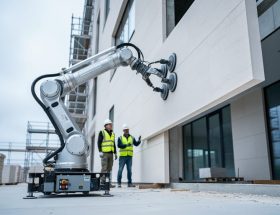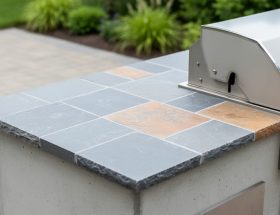
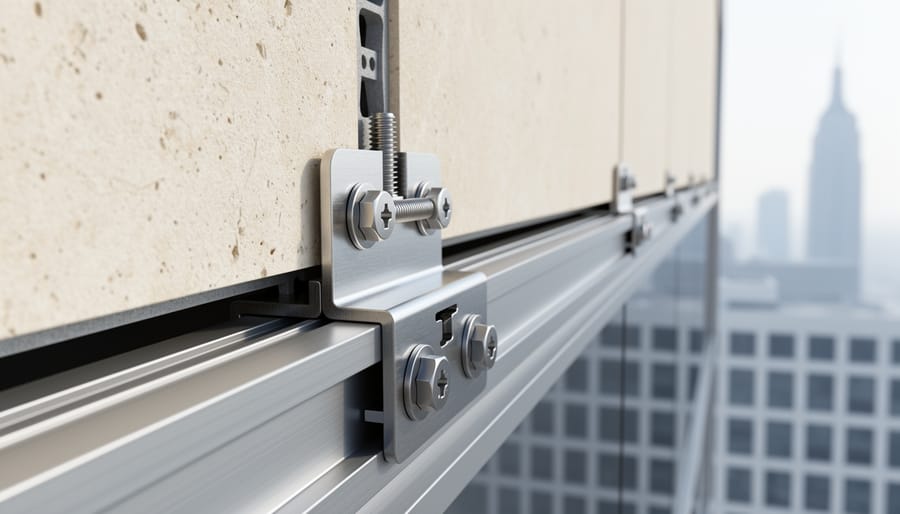
Mechanical installation systems anchor natural stone permanently to building structures through engineered metal brackets, clips, and pins—eliminating traditional mortar bonding for superior performance in high-stress applications. These precision-engineered fixing methods distribute weight loads across structural frameworks, enabling stone facades on high-rise buildings, exterior cladding that withstands seismic activity, and interior features requiring exact alignment without adhesive degradation risks.
Understanding mechanical systems proves essential before committing to stone projects, as installation methods directly impact long-term durability, seismic compliance, and natural stone installation costs. Unlike conventional adhesive methods, mechanical fixing creates ventilated cavity systems that prevent moisture accumulation, thermal stress cracking, and staining from trapped water—common failures in traditionally installed stone work.
Modern mechanical installation encompasses three primary system categories: undercut anchors that grip stone from concealed recesses, kerf-slot systems using continuous edge channels, and through-bolt connections for maximum load capacity. Each system addresses specific architectural requirements, from lightweight interior panels requiring minimal structural modification to heavy exterior cladding demanding engineered load calculations and building code compliance.
The technical precision required for mechanical installation demands careful planning across material selection, anchor specification, structural coordination, and installation sequencing. Proper system selection depends on stone thickness, panel dimensions, building height, local wind loads, seismic zone classifications, and substrate conditions—factors that distinguish professional-grade installations from inadequate fixing approaches that compromise both safety and aesthetic longevity.
What Is Mechanical Installation for Stone?

The Core Components of Mechanical Systems
Mechanical installation systems rely on several interconnected components working together to secure stone panels safely and permanently. Understanding these elements helps ensure proper specification and installation outcomes.
Anchors form the foundation of any mechanical system, embedding directly into the building’s structural substrate—whether concrete, steel, or masonry. These load-bearing devices transfer the stone’s weight and wind loads to the building structure. Common types include expansion anchors, undercut anchors, and cast-in-place channels.
Pins and dowels create the critical connection between anchors and stone panels. Typically manufactured from stainless steel or other corrosion-resistant materials, these cylindrical fasteners insert into drilled holes within the stone edge or back, maintaining precise alignment while allowing controlled movement.
Brackets serve as intermediary support elements, bridging the gap between structural anchors and stone panels. These engineered components accommodate varying cavity depths and provide adjustability during installation. Quality brackets incorporate slots or holes that permit thermal expansion and contraction without stressing the stone.
Clips offer discrete fastening solutions, particularly for thinner panels. These spring-loaded or fixed devices grip stone edges or slot into kerf cuts, distributing loads across multiple contact points.
Rails create continuous support lines, especially beneficial for horizontal applications like cladding systems. These extruded metal channels accept multiple clips or brackets, streamlining installation while maintaining consistent reveal lines.
Support systems integrate all components into cohesive assemblies engineered for specific loading conditions, stone dimensions, and environmental factors. Proper component selection and coordination ensure long-term structural integrity and aesthetic performance.
When Mechanical Installation Is Required
Mechanical installation becomes essential in situations where adhesive alone cannot provide adequate support or where building codes and safety standards demand reinforced attachment methods. Understanding these scenarios helps ensure both structural integrity and regulatory compliance.
Exterior building facades represent one of the most critical applications for mechanical fixing systems. Stone cladding on building exteriors faces constant exposure to wind loads, thermal expansion and contraction, moisture infiltration, and seismic forces. These environmental stresses make adhesive-only installations insufficient and potentially dangerous. Mechanical anchoring systems distribute these loads effectively while allowing for necessary movement.
Large format slabs, typically measuring 48 inches or larger in any dimension, require mechanical support due to their substantial weight and size. Even lightweight materials become challenging to support with adhesive alone when surface areas increase. The combination of mechanical anchors with adhesive ensures these impressive installations remain secure throughout their lifespan.
Heavy stone varieties like granite, basalt, and certain marbles demand mechanical installation methods. When stone weighs more than 15 pounds per square foot, most building codes mandate supplemental mechanical support regardless of the quality of adhesive used. The physics of gravity and material weight make this requirement non-negotiable.
Seismic zones require mechanical systems that can accommodate building movement during earthquakes. These specialized installations use flexible anchoring points that allow stone to move with the building structure rather than cracking or detaching. Areas with seismic activity ratings of Zone 3 or higher typically have strict mechanical installation requirements.
High-traffic commercial environments like hotel lobbies, shopping centers, and transportation terminals benefit from mechanical installation due to vibration, impact risks, and the consequences of potential failure. Building codes in many jurisdictions specifically mandate mechanical fixing for vertical stone installations in public spaces, prioritizing occupant safety above all considerations.
Types of Mechanical Fixing Systems
Pin and Dowel Systems
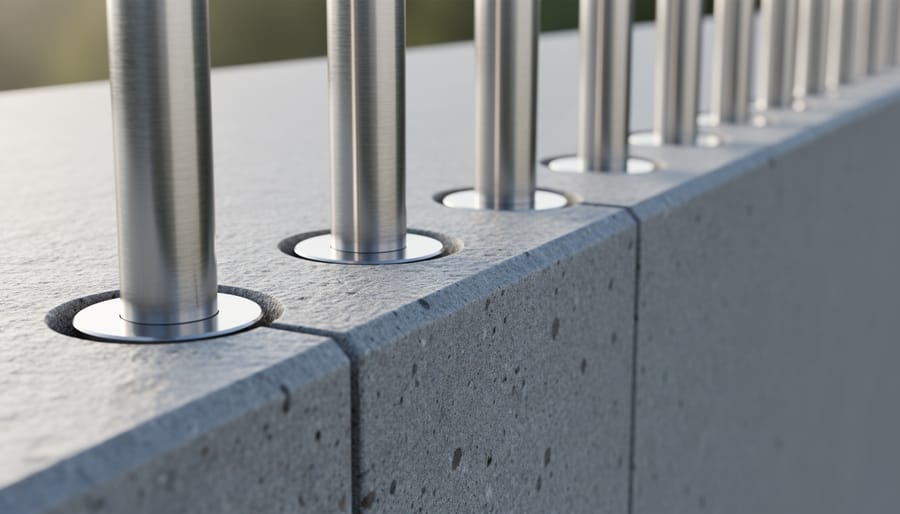
Pin and dowel systems create secure anchor points by drilling directly into the stone material, establishing mechanical connections between the slab and substrate. This method involves inserting metal pins or dowels into precisely drilled holes at the edges or backs of stone pieces, which then connect to corresponding anchors in the mounting surface.
For flooring applications, pins are typically installed along slab edges, extending into the substrate below to prevent lateral movement and provide stability underfoot. The system proves particularly valuable for thin stone tiles or areas experiencing high traffic loads. In vertical installations, dowels inserted into the back of stone panels distribute weight across multiple anchor points, creating a robust connection that resists both gravitational and lateral forces.
Load-bearing capacity depends on several critical factors: pin diameter and material composition, stone thickness and density, drilling depth, and the number of anchor points per slab. Engineers calculate required pin sizes and spacing based on the stone’s weight, installation height, and expected environmental stresses. Granite and other dense stones generally accommodate higher loads than softer materials like limestone or marble, which require more conservative anchor spacing to prevent fracturing around drill points. Professional installers must account for the stone’s natural cleavage planes when positioning pins to avoid creating weak points that could compromise structural integrity.
Bracket and Anchor Systems
Bracket and anchor systems represent the most common mechanical installation method for stone facades and cladding applications. These systems utilize metal components—typically stainless steel or aluminum—to support stone panels from behind or below, creating a secure attachment to the building structure while allowing the stone to remain visible from the exterior.
The primary components include anchors that embed into or attach to the back of stone panels, and brackets that connect these anchors to the building’s structural framework. This configuration effectively distributes the stone’s weight across multiple support points rather than concentrating stress in single locations. Load transfer occurs through both vertical support, where brackets bear the weight from below, and lateral restraint, where anchors prevent the stone from pulling away from the wall.
Modern bracket systems accommodate thermal expansion and contraction through adjustable connections, preventing stress fractures in the stone. They also create an air cavity between the stone and building wall, promoting drainage and ventilation that protects both materials from moisture damage. Installation requires precise calculations to determine anchor spacing based on panel size, stone type, wind loads, and seismic requirements, ensuring each component adequately supports its designated portion of the facade’s total weight.
Kerf-Slot Systems
Kerf-slot systems represent an innovative approach to mechanical stone installation, utilizing continuous grooves precisely cut into the edges of stone panels. These slots, typically 3-6mm wide and 10-20mm deep, accommodate metal rails or anchoring systems that provide robust, concealed support for stone facades and cladding.
The kerf-cutting process involves specialized diamond blade equipment that creates uniform channels along stone edges during fabrication. Metal profiles—usually stainless steel or aluminum—slide into these grooves and connect to the building’s structural framework, distributing loads evenly across the panel’s perimeter rather than at discrete points.
Modern facade design increasingly favors kerf-slot systems for their aesthetic and practical advantages. The continuous support eliminates visible hardware on stone faces, creating seamless appearances ideal for contemporary architecture. This method excels in large-format installations where panels exceed traditional size limitations, with some systems supporting slabs up to 3 meters in length.
Applications extend beyond vertical facades to include soffit installations and feature walls in commercial spaces. The system’s adjustability facilitates precise alignment during installation, accommodating building tolerances while maintaining consistent reveals between panels. Kerf-slot systems particularly suit thinner stone profiles (20-30mm), maximizing material efficiency without compromising structural integrity. This technology has become essential for achieving the clean, minimalist aesthetics demanded in modern architectural design while ensuring long-term performance and safety.
Undercut Anchor Systems
Undercut anchor systems represent a sophisticated approach to mechanical fixing that creates virtually invisible connections between stone panels and support structures. Unlike traditional anchors, these systems utilize specially drilled holes with an enlarged cavity beneath the surface—essentially a mushroom-shaped void that allows the anchor head to expand and lock securely within the stone mass.
The installation process requires precision drilling equipment capable of creating the undercut profile, typically using diamond-tipped bits. Once the hole is prepared, the anchor insert is positioned and tightened, causing the mechanical components to expand into the undercut cavity. This expansion creates a powerful grip that distributes loads across a larger internal surface area, reducing stress concentration points.
The primary advantage of undercut anchors lies in their aesthetic appeal—the fixing point remains nearly invisible on the stone face, making them ideal for high-end architectural applications where visual continuity is paramount. These systems work exceptionally well for feature walls, cladding panels, and decorative elements where exposed fixings would compromise the design intent. Additionally, undercut anchors provide excellent load-bearing capacity and can be installed after stone fabrication, offering flexibility during the construction sequence.
Rail and Clamp Systems
Rail and clamp systems represent one of the most versatile mechanical installation methods for stone cladding. This approach uses aluminum or stainless steel rails mounted to the building structure, creating a framework onto which individual stone panels attach via adjustable clamps. The clamps grip the stone edges or connect through specially cut kerfs in the panel backs, eliminating the need for visible drilling through the stone face.
The primary advantage lies in installation speed and flexibility. Installers can quickly position and secure panels, making adjustments on-site to accommodate minor variations in panel size or building alignment. This system proves particularly valuable for large-scale commercial projects where time efficiency matters. The rail framework also creates an air cavity behind the stone, promoting ventilation and moisture management while allowing access for future maintenance or panel replacement. Many architects favor rail and clamp systems for their clean appearance and the ability to create uniform joint spacing across expansive facades.
The Installation Process: Step-by-Step
Pre-Installation Planning and Assessment
Successful mechanical installation begins long before the first anchor is drilled. A thorough structural evaluation is essential to determine whether the existing building can support the additional weight and forces imposed by mechanically attached stone. This assessment should examine wall composition, load-bearing capacity, and existing substrate conditions.
Load calculations form the cornerstone of safe installation. Engineers must account for the dead load (weight of the stone itself), wind loads, seismic forces in applicable regions, and thermal movement. These calculations directly influence anchor selection, spacing, and attachment system design. For example, a large-format granite panel on a high-rise building exterior faces dramatically different forces than interior limestone cladding.
Stone selection interacts closely with mechanical systems. Thicker stones generally provide more edge distance for anchors, while certain stone types may be more prone to stress cracking around fixing points. The stone’s finish, veining patterns, and natural fracture planes all influence anchor placement strategies.
System selection depends on multiple factors: project budget, aesthetic goals, stone characteristics, building height, and local building codes. Consulting a qualified structural engineer is not optional but mandatory for projects involving mechanical installation. Their expertise ensures code compliance, occupant safety, and long-term performance of the installation.
Substrate Preparation
Proper substrate preparation is fundamental to successful mechanical stone installation. The backing structure must possess adequate load-bearing capacity to support both the stone weight and the stresses transmitted through the anchor system. Before installation begins, structural engineers should evaluate the substrate’s ability to withstand the specified loads, accounting for safety factors and long-term performance.
For concrete substrates, the surface must be clean, structurally sound, and free from contaminants that could compromise anchor performance. Concrete should have a minimum compressive strength of 2,500 psi, though higher-strength concrete may be required for heavy stone panels or high-wind locations. Steel framing systems require welded connections or mechanical fasteners designed to transfer loads without deformation.
Waterproofing considerations are critical in exterior applications. Install a weather-resistant barrier behind the stone cladding to prevent moisture infiltration, ensuring proper overlap and sealing at penetrations. Create a drainage plane that allows water to escape rather than accumulate behind the stone. Air gaps between the stone and substrate facilitate drainage and ventilation, reducing moisture-related problems.
Anchor points must be precisely located according to engineering drawings. Mark and verify locations before drilling to ensure proper alignment with stone attachment points. Use appropriate drilling methods for each substrate type to prevent cracking or weakening the structure. This preparation phase establishes the foundation for secure, long-lasting stone installations.

Stone Preparation and Hardware Installation
Proper stone preparation begins with precision drilling and cutting, building on the stone fabrication techniques established during fabrication. Fabricators use diamond-tipped drill bits and specialized saws to create anchor holes and kerfs at exact specifications, typically with tolerances within 1/16 inch. Each hole must be drilled to precise depths to accommodate anchors, pins, or brackets without compromising the stone’s structural integrity.
Quality control at this stage is critical. Installers verify hole locations against shop drawings, check for proper alignment, and inspect edges for chips or cracks that could weaken the installation. Hardware components are then carefully fitted into prepared openings, with stainless steel being the preferred material for corrosion resistance. Epoxy adhesives or mechanical fasteners secure the hardware, ensuring each connection can handle the expected load requirements. This meticulous preparation phase directly impacts the safety and longevity of the entire installation.
Mounting and Adjustment
Proper mounting begins with precise measurements and careful handling of each stone panel. Installers position the stone according to layout plans, ensuring consistent spacing between panels—typically 3/8 to 1/2 inch for mortar joints or minimal gaps for dry-set systems. Anchors are inserted through pre-drilled holes and secured to the substrate, with torque specifications followed exactly to avoid cracking. Shims and adjustable clips allow fine-tuning of alignment both vertically and horizontally, confirmed with levels and plumb lines throughout the process.
Critical to long-term performance is accommodating movement. Expansion joints must be placed every 12 to 20 feet, depending on stone type and climate conditions. These joints absorb thermal expansion and contraction, preventing stress cracks. Anchoring systems should allow slight movement while maintaining stability—rigid connections can lead to failure as the building settles or experiences temperature fluctuations. Sealants applied to joints remain flexible, compressing and expanding with the stone while maintaining weather-tight integrity.
Critical Safety and Performance Considerations
Load Distribution and Structural Support
Mechanical installation systems must account for how stone weight transfers through anchoring components to the building structure. Engineers distinguish between dead loads—the permanent weight of the stone itself—and live loads, which include temporary forces like wind pressure, seismic activity, and thermal expansion. A typical granite panel weighing 30-40 pounds per square foot creates substantial dead load that anchors must support indefinitely without deformation or failure.
Building codes mandate specific safety factors, typically requiring mechanical systems to support 4-5 times the calculated load. This redundancy accounts for material variations, installation tolerances, and unexpected stresses. For example, if a stone panel exerts 200 pounds of force on an anchor, the system must reliably support 800-1,000 pounds.
The load path—how weight transfers from stone through brackets and fasteners into the structural frame—determines system integrity. Proper distribution prevents stress concentration at single points, which causes cracking or anchor pullout. Engineers calculate required anchor spacing, embedment depth, and fastener specifications based on stone dimensions, weight, installation height, and environmental exposure. Professional structural analysis ensures compliance with International Building Code requirements and local jurisdiction standards, protecting both building occupants and long-term installation performance.
Thermal Movement and Expansion Joints
Natural stone expands and contracts continuously with temperature fluctuations, a phenomenon that mechanical installation systems must address to prevent cracking and structural failure. Stone can move several millimeters across large panels depending on temperature variation and material type. Effective mechanical systems incorporate expansion joints—deliberate gaps left between stone panels that absorb this movement without transferring stress to the stone itself.
These joints typically range from 6-12mm wide and are filled with flexible sealants that compress and expand alongside the stone. Anchor systems contribute by allowing controlled movement at connection points rather than rigidly fixing the stone in place. Specialized clips and brackets feature slotted holes or spring-loaded mechanisms that permit vertical and horizontal adjustment while maintaining secure attachment to the substrate.
Without proper accommodation for thermal movement, stone facades develop stress fractures, anchors fail, or panels bow outward dangerously. Professional installers calculate expected movement based on panel size, stone type, color (darker stones absorb more heat), and local climate conditions. This engineering approach ensures installations remain structurally sound and visually intact throughout seasonal temperature changes, demonstrating why mechanical systems outperform adhesive-only methods in exterior applications.
Corrosion Prevention
Selecting compatible materials between stone and metal fasteners is essential for preventing corrosion and unsightly staining that can compromise both aesthetics and structural integrity. Galvanic corrosion occurs when dissimilar metals come into contact in the presence of moisture, creating an electrochemical reaction that degrades the metal components. This is particularly concerning with natural stone installations, as many stone types are porous and retain moisture.
Stainless steel anchors and fasteners are the industry standard for mechanical stone installation due to their superior corrosion resistance and compatibility with most stone types. Grade 304 stainless steel works well for interior applications, while Grade 316 stainless steel is recommended for exterior or coastal environments where chloride exposure is higher. Avoid using carbon steel, aluminum, or galvanized fasteners, as these materials can corrode and cause rust stains that penetrate deeply into lighter-colored stones like marble and limestone.
When working with specific stone types, consider additional compatibility factors. Certain stones with high iron content may themselves contribute to staining, making proper fastener selection even more critical for long-term performance.
Common Mistakes That Lead to Failure
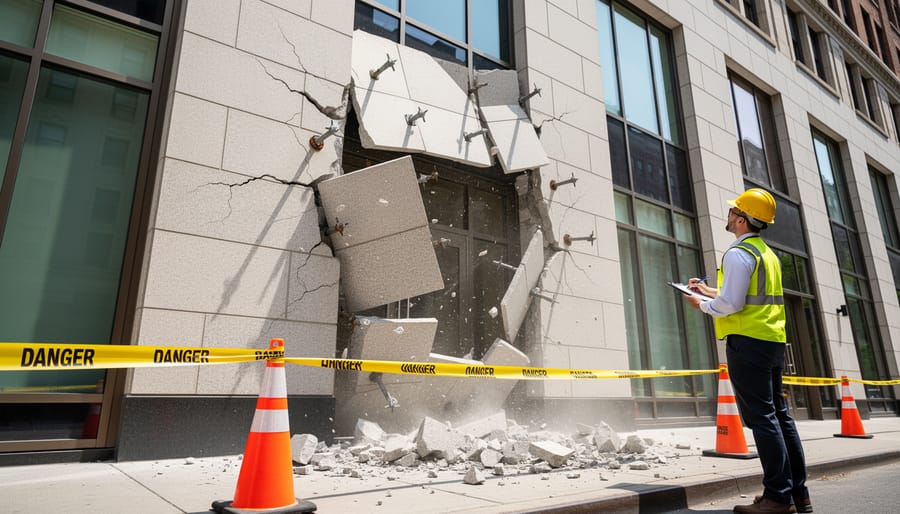
Inadequate Structural Support
Insufficient structural support represents one of the most serious mechanical installation failures, potentially leading to catastrophic results. When anchoring systems are undersized or substrates lack adequate strength, stone panels can detach from facades with little warning. The consequences extend beyond property damage—falling stone poses significant safety risks to pedestrians and building occupants below.
Warning signs often appear gradually before complete failure occurs. Look for visible gaps developing between panels and the building surface, indicating anchor pull-out or substrate deterioration. Cracking sounds, surface bulging, or stone panels that appear to bow outward suggest the mounting system is struggling under load. Rust staining around anchor points may signal corrosion weakening the connection integrity. Water infiltration behind panels accelerates substrate degradation, particularly in masonry or concrete walls not properly waterproofed. Regular professional inspections can identify these indicators early, allowing corrective action before dangerous conditions develop. Architects and contractors must carefully calculate load requirements and verify substrate capacity during the design phase to prevent inadequate support scenarios.
Wrong Hardware Selection
Choosing the wrong hardware creates serious structural risks and potential liability. Undersized anchors or fasteners may seem adequate initially but can fail catastrophically under load, particularly with heavier stones like granite or thick marble slabs. Mixing incompatible metals—such as aluminum clips with stainless steel anchors—accelerates galvanic corrosion, weakening connections over time. Similarly, standard construction fasteners lack the corrosion resistance needed for exterior applications or humid environments like bathrooms and kitchens.
Weight calculations must account for the stone’s actual density, not generic estimates. A two-inch thick granite panel weighs significantly more than limestone of the same size, requiring appropriately rated support systems. Using plastic anchors instead of metal expansion bolts, or selecting clips rated for lighter materials, compromises safety regardless of installation quality. Always specify hardware designed explicitly for stone installation, with load ratings exceeding your project requirements and materials suitable for the specific environmental conditions.
Poor Installation Techniques
Even the most advanced mechanical systems fail when installation techniques are substandard. Improper hole drilling represents one of the most critical errors—drilling holes too close to stone edges creates stress concentrations that lead to cracking, while undersized holes prevent proper anchor expansion and oversized holes compromise grip strength. Inadequate spacing between fixing points creates uneven load distribution, causing certain anchors to bear excessive weight while others remain underutilized.
Over-tightening fasteners is another common mistake that generates localized stress, potentially fracturing the stone immediately or creating hairline cracks that propagate over time. Conversely, under-tightening allows movement and vibration that gradually loosens the entire assembly. Perhaps most problematic is failing to account for thermal expansion and contraction—stone expands and contracts with temperature changes, and rigid installations without appropriate tolerance gaps will develop stress cracks or buckle.
These installation errors compromise both safety and aesthetics, leading to costly repairs, premature replacement, and potential liability issues. Professional installers understand that precision during installation directly determines long-term performance, making proper technique as important as the quality of materials selected. Regular inspection protocols can identify early warning signs before minor installation flaws escalate into major structural concerns.
Choosing the Right System for Your Project
Application-Specific Recommendations
Selecting the right mechanical installation system depends on your specific application, stone type, and environmental conditions. For exterior facades, kerf-mounted anchors or channel systems work best with granite, limestone, and sandstone panels, providing robust wind-load resistance and thermal movement accommodation. These systems require engineered support structures and weatherproofing details to prevent moisture infiltration.
Interior walls benefit from lighter-duty solutions like Z-clips or French cleat systems for thin stone veneers. These work well with marble, travertine, and slate in lobby areas, feature walls, and accent surfaces where aesthetic impact matters most. The systems allow for easier maintenance access and future replacement if needed.
For flooring applications, mechanical fastening typically applies only to raised access floors or special circumstances where adhesive methods aren’t suitable. Stone pavers can be mechanically secured to pedestal systems in rooftop installations or elevated terraces.
Countertop installation rarely requires mechanical anchoring except for cantilevered sections or islands requiring additional support brackets. These applications demand concealed fastening systems that don’t compromise the stone’s appearance.
Specialty applications like stone cladding over metal studs, seismic zones, or high-traffic commercial spaces each demand system-specific solutions. Consult with structural engineers and installation specialists to ensure proper system selection matching your stone type, panel size, and performance requirements.
Working with Qualified Installers
Selecting qualified installers for mechanical stone installations requires careful vetting of credentials and experience. Look for contractors with certifications from recognized organizations like the Natural Stone Institute or equivalent professional bodies that demonstrate technical proficiency in anchor systems and structural attachments. Request documentation of at least five years of experience specifically with mechanically-fixed stone applications, not just general stonework.
Essential questions to ask potential contractors include: What specific mechanical fastening systems have you worked with? Can you provide references from projects similar in scope and material? How do you ensure compliance with local building codes and structural load requirements? Request examples of their work, particularly installations involving similar stone types and weights. Qualified installers should readily discuss their approach to substrate evaluation, fastener selection, and quality control measures. They should also carry comprehensive liability insurance and provide detailed warranties covering both materials and workmanship. Don’t hesitate to request site visits to previous installations to assess long-term performance and craftsmanship quality.
Mechanical installation represents far more than a technical specification—it’s the invisible foundation that ensures your natural stone investment delivers beauty, safety, and performance for decades to come. While adhesive methods may appear simpler or more economical initially, proper mechanical fixing systems provide unmatched reliability and longevity, particularly for heavy stone applications, exterior installations, and high-traffic environments.
The value proposition of mechanical installation extends beyond immediate installation costs. When you consider the potential expenses of premature failure—stone replacement, structural repairs, safety liability, and business disruption—investing in proper mechanical systems becomes clearly economical. Quality fixing systems protect both your financial investment and the irreplaceable beauty of natural stone, ensuring that architectural vision translates into enduring reality.
Throughout this article, we’ve explored the various mechanical systems available, from traditional anchors to advanced rail systems, each engineered for specific applications and performance requirements. The diversity of options means there’s a proper solution for virtually any project, whether you’re installing a residential fireplace surround or cladding a commercial high-rise.
However, the sophistication of these systems demands expertise. Mechanical installation requires precise engineering calculations, thorough understanding of load dynamics, proper material selection, and meticulous execution. This isn’t a realm for improvisation or cost-cutting shortcuts.
For your next natural stone project, consult with qualified stone fabricators, experienced installers, and structural engineers who understand mechanical fixing systems. Their expertise ensures that your stone installation will be as structurally sound as it is visually stunning—a lasting testament to quality craftsmanship and proper engineering principles.