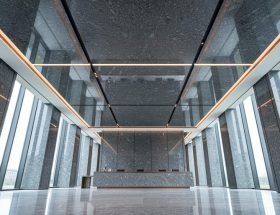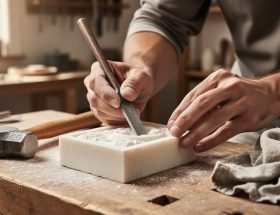
Natural stone fabricators transform raw slabs of marble, granite, quartzite, and other stone materials into precisely crafted furniture pieces, countertops, and architectural elements that define luxury interiors. These specialized craftspeople bridge the gap between design vision and physical reality, combining traditional stoneworking techniques with advanced CNC technology to achieve tolerances within millimeters.
Understanding what separates exceptional fabricators from average ones directly impacts your project’s outcome. Elite fabricators possess deep material knowledge, recognizing how each stone variety responds to cutting, polishing, and finishing processes. They anticipate structural limitations, suggest optimal thickness specifications, and engineer invisible seams that preserve the stone’s natural beauty. This expertise prevents costly mistakes like edge chipping, improper vein matching, or inadequate support structures that compromise longevity.
The fabrication process involves multiple critical stages: initial templating to capture exact measurements, precision cutting using diamond-blade saws or waterjet systems, edge profiling to create desired finishes, and final polishing that reveals the stone’s full character. Quality fabricators invest in climate-controlled workshops to prevent thermal expansion issues and maintain detailed documentation throughout each phase.
Selecting the right fabricator requires evaluating their portfolio for complexity and finish quality, verifying their insurance coverage and material handling protocols, and confirming their experience with your specific stone type. Request references from recent projects similar in scope to yours, and visit their facility to assess equipment capabilities and organizational standards. The difference between adequate and exceptional fabrication often determines whether your natural stone investment becomes a lasting masterpiece or a source of ongoing frustration.
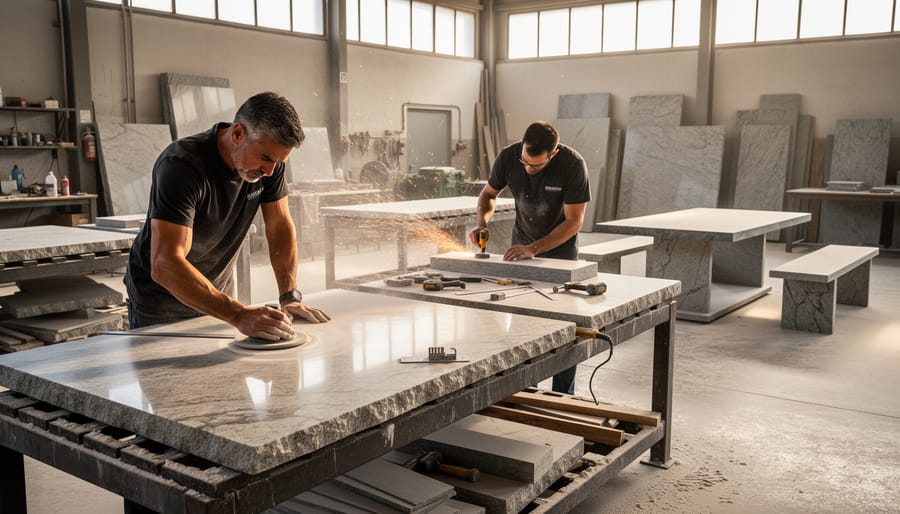
What Natural Stone Fabricators Actually Do
From Slab to Showpiece: The Fabrication Process
The transformation of raw stone slabs into refined furniture pieces is a meticulous process that combines cutting-edge technology with artisan craftsmanship. Understanding this journey helps consumers and designers appreciate the expertise required to create stunning natural stone furniture.
The process begins with templating, where fabricators create precise measurements of the intended piece. Modern fabricators use digital templating systems that capture exact dimensions and contours, ensuring a perfect fit. For complex furniture designs like curved console tables or waterfall-edge islands, this precision is critical.
Next comes the cutting phase. Advanced CNC (Computer Numerical Control) machines and bridge saws slice through stone slabs with remarkable accuracy. Water jets cool the blades and suppress dust while cutting intricate shapes and cutouts. For furniture applications, fabricators must account for grain direction and veining patterns to maximize the stone’s visual impact.
Edge profiling adds character and sophistication to the piece. Fabricators use specialized router bits to create profiles ranging from simple beveled edges to ornate ogee and dupont designs. The chosen edge profile significantly influences the furniture’s overall aesthetic and style.
Surface finishing options determine the final appearance and texture. Polishing brings out the stone’s natural luster, while honed finishes offer a matte elegance. Leathered and brushed finishes add tactile dimension perfect for furniture applications.
Finally, reinforcement techniques ensure durability. Fabricators apply epoxy resins to fill natural fissures and attach steel or fiberglass mesh backing to vulnerable areas. For furniture pieces like tabletops, additional support structures prevent cracking during transport and daily use. These hidden reinforcements guarantee that beautiful stone furniture remains both functional and long-lasting.
Specialized Skills That Set Master Fabricators Apart
Master fabricators possess a unique combination of technical knowledge and artistic sensibility that elevates their work beyond basic stone cutting. Their expertise begins with a deep understanding of stone geology—recognizing how different minerals, density variations, and natural fissures within marble, granite, quartzite, and other materials affect cutting approaches and structural integrity. This geological knowledge prevents costly mistakes and ensures long-lasting installations.
Precision measurement represents another cornerstone skill. Expert fabricators employ advanced templating techniques, often using digital measurement systems that capture dimensions accurate to within millimeters. This precision becomes critical when fitting stone pieces into existing spaces or creating seamless joins between multiple slabs, particularly for large furniture pieces like dining tables or kitchen islands.
Tool mastery extends beyond simply operating equipment. Accomplished fabricators understand which diamond blades, polishing pads, and routing bits work best for specific stone types and desired finishes. They skillfully manipulate computer-controlled CNC machines while maintaining traditional hand-finishing techniques that machines cannot replicate.
Perhaps most distinctive is their artistic vision for pattern matching. Master fabricators read stone like a language, visualizing how veining patterns flow across slabs and selecting cuts that create visual harmony. When crafting bookmatched furniture pieces or large surfaces, they orchestrate the stone’s natural artistry to create stunning, cohesive designs. This skill transforms functional furniture into statement pieces that showcase the stone’s inherent beauty while meeting structural requirements.
Natural Stone Furniture Types and Fabrication Challenges
Tables and Dining Surfaces
Creating natural stone tables and dining surfaces presents unique fabrication challenges that require expert knowledge and precision. Experienced fabricators must carefully assess cantilever support requirements, particularly for overhangs exceeding 12 inches, where hidden steel supports or corbels become essential to prevent cracking or failure.
Thickness considerations vary based on the stone type and intended use. While 2cm slabs work for smaller accent tables with proper support, dining tables typically require 3cm material for structural integrity. Fabricators may laminate edges to create the appearance of thicker slabs while managing weight and cost.
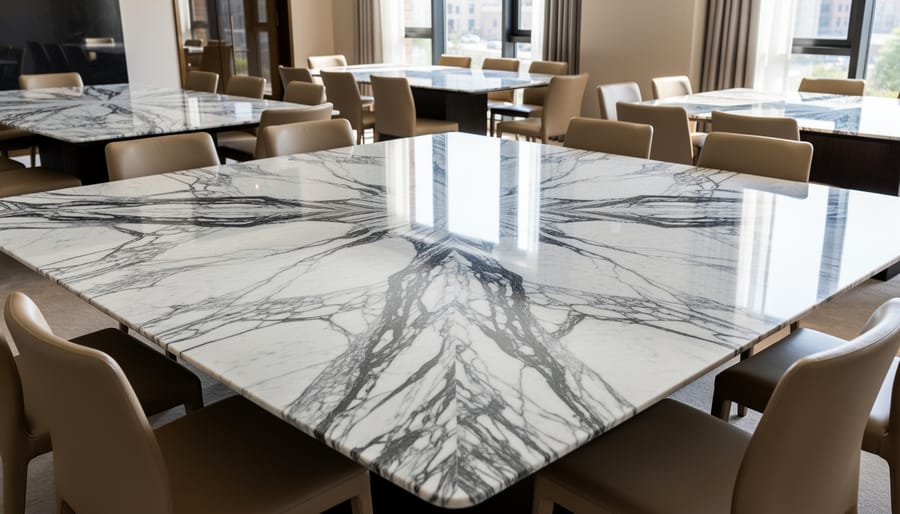
For expansive dining surfaces, strategic seam placement becomes critical. Skilled fabricators position seams along natural veining patterns or at less visible locations, ensuring book-matched or sequence-matched pieces for visual continuity. Advanced epoxy color-matching techniques minimize seam visibility.
Edge detail options significantly impact the final aesthetic. From simple eased edges to elaborate ogee or dupont profiles, fabricators use specialized router bits and hand-finishing techniques to achieve clean, consistent results. The edge profile choice affects both the visual weight and practical durability of the piece, with rounded edges offering better chip resistance for high-traffic dining areas.
Benches, Shelving, and Storage Pieces
Natural stone benches, shelving units, and storage pieces present unique engineering challenges that skilled fabricators must address to ensure both beauty and functionality. Unlike typical furniture, these pieces must support significant weight while showcasing the stone’s aesthetic qualities.
Load-bearing calculations form the foundation of any successful stone furniture project. Fabricators assess the stone’s tensile strength, particularly important for cantilevered shelves or unsupported bench seats. Granite and quartzite typically handle greater loads than softer materials like marble or limestone. A standard floating shelf, for example, requires thickness calculations based on span length and expected weight—typically 1.5 to 2 inches for moderate loads up to 36 inches in length.
Bracket integration demands careful planning to maintain visual appeal while providing essential support. Experienced fabricators employ concealed mounting systems, recessed hardware, and strategically placed steel reinforcement bars within routed channels. For benches, hidden steel frames can support the stone slab while creating the illusion of a floating design.
The key to structural integrity lies in proper material selection and reinforcement placement. Fabricators often recommend book-matched slabs for symmetrical shelving units or specify mesh backing for thinner pieces. Understanding grain direction and natural fissures helps prevent future cracking under load, ensuring these functional art pieces endure for generations while maintaining their striking appearance.
Specialty and Artistic Furniture
Natural stone fabricators extend their expertise far beyond conventional furniture, creating extraordinary sculptural pieces that blur the line between function and art. Custom stone tables with dramatic waterfall edges, carved pedestals, and statement seating demonstrate the material’s versatility in skilled hands. Many fabricators collaborate closely with interior designers and architects to bring ambitious visions to life, whether crafting a monolithic marble desk or an intricately inlaid console table.
Inlay work represents one of the most labor-intensive specialties, requiring precision cutting to create geometric patterns, floral motifs, or abstract designs using contrasting stone types. Fabricators may combine marble with semi-precious stones like malachite or lapis lazuli for museum-quality results. Mixed-material furniture has also gained popularity, with fabricators partnering with metalworkers and woodworkers to integrate stone into hybrid designs featuring brass frames, walnut bases, or steel supports.
The collaborative process typically begins with concept sketches and material selection, followed by digital modeling to ensure structural integrity and aesthetic balance. Experienced fabricators serve as technical advisors, guiding designers through feasibility considerations, weight distribution, and long-term durability. This partnership approach ensures that artistic vision meets practical reality, resulting in furniture pieces that serve as functional heirlooms and conversation-starting centerpieces.
Tools and Technology Modern Fabricators Use
CNC Machines and Digital Templating
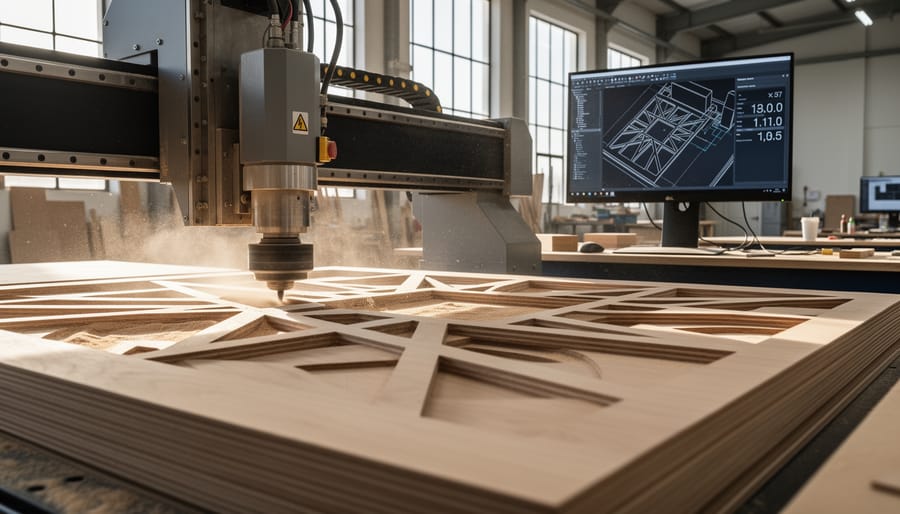
Today’s natural stone fabricators leverage modern fabrication technology that has transformed the industry. CNC (Computer Numerical Control) machines work from digital templates created by specialized software, translating complex designs into precise cutting instructions. This technology brings three significant advantages to natural stone fabrication.
First, precision reaches levels unattainable with manual cutting. CNC machines execute cuts with tolerances measured in fractions of millimeters, ensuring perfect seams and flawless edge details. Second, material waste decreases substantially as the software optimizes cutting patterns to maximize usable stone from each slab. This efficiency benefits both cost and environmental sustainability.
Most importantly, CNC technology enables intricate designs that were previously impractical or impossible. Curved edges, waterfall countertops, book-matched patterns, and complex inlays become achievable with consistent results. Digital templating eliminates measurement errors by creating exact digital replicas of installation spaces, ensuring pieces fit perfectly on the first attempt. For custom furniture applications like stone-topped dining tables or credenzas, this precision means seamless integration with wooden or metal elements, expanding creative possibilities for designers and architects.
Traditional Hand-Finishing Techniques
Despite technological advances, certain finishing techniques demand the irreplaceable precision of skilled hands. Hand-honing, polishing intricate edges, and achieving custom textures on delicate stone varieties require artisan expertise that machines cannot replicate. Master fabricators use specialized hand tools to refine radii on curved edges, create seamless transitions at inside corners, and perfect details around fixtures where automated equipment cannot reach.
This traditional craftsmanship proves essential for high-end furniture pieces featuring complex profiles, waterfall edges, or book-matched patterns requiring flawless alignment. Hand-finishing also allows fabricators to address unique challenges presented by each stone slab—working with natural veining patterns, managing mineral inclusions, and adjusting techniques based on stone density and composition.
The superior results are evident in smoother edge profiles, more consistent sheens, and details that showcase both the stone’s natural beauty and the craftsperson’s skill. For discerning clients, this hands-on approach represents the difference between adequate fabrication and exceptional artistry.
Quality Control and Testing Equipment
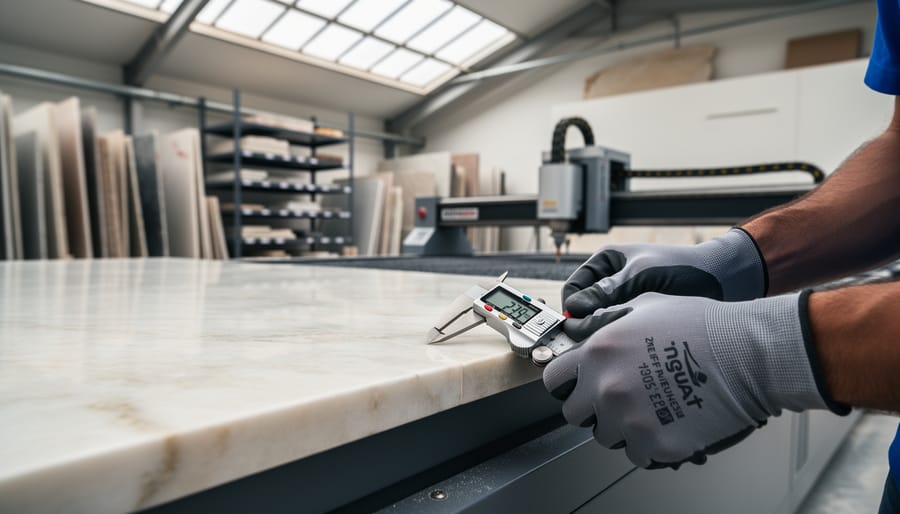
Professional fabricators employ rigorous quality control measures throughout the production process to ensure every piece meets exacting standards. Structural integrity testing includes stress analysis and load-bearing assessments, particularly crucial for countertops and table surfaces that will support daily use. Fabricators use precision measuring instruments like laser levels and digital calipers to verify dimensional accuracy within millimeters.
Surface finish quality undergoes thorough inspection under specialized lighting that reveals any inconsistencies in polishing or texture. Many shops maintain sample boards demonstrating different finish grades to ensure client expectations align with final results. Seam placement and adhesion receive particular attention, with fabricators conducting pull tests on bonded joints to confirm strength.
Safety standards verification includes checking for sharp edges, proper support structure installation, and confirming that sealants meet food-safe requirements for kitchen applications. Reputable fabricators document their testing procedures and maintain quality records, providing clients with confidence that their investment will perform beautifully for decades. This commitment to verification distinguishes experienced professionals from less thorough operations.
Choosing the Right Stone for Your Furniture Project
Marble vs. Granite vs. Quartzite: Fabricator Insights
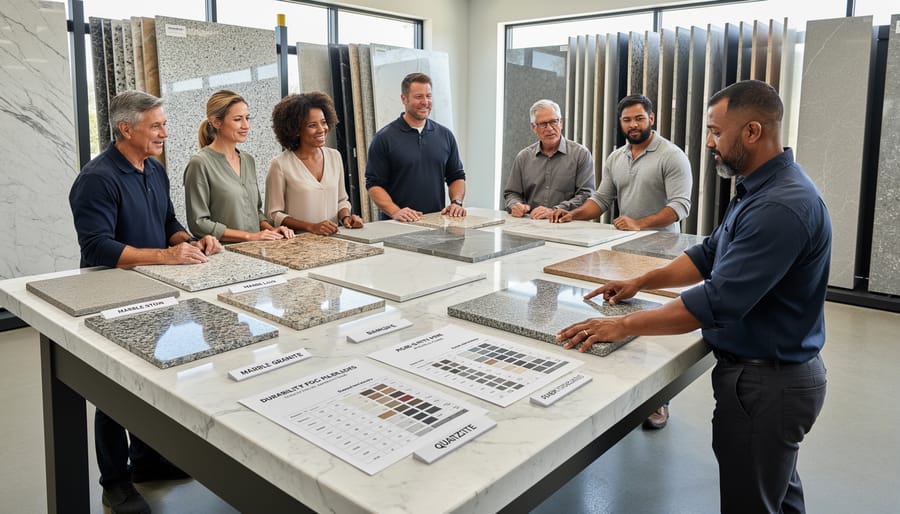
From a fabricator’s perspective, each natural stone presents distinct characteristics that influence both the fabrication process and final application. Understanding these differences helps ensure optimal material selection for your furniture project.
Quartzite stands as the hardest of the three, rating 7 on the Mohs scale compared to granite’s 6-7 and marble’s 3-4. This exceptional hardness makes quartzite highly resistant to scratching and etching, ideal for high-use surfaces like kitchen islands and dining tables. However, its density requires specialized diamond blades and longer cutting times, potentially affecting fabrication costs. Quartzite’s low porosity rivals granite, requiring only periodic sealing.
Granite offers an excellent balance of durability and workability. Its moderate hardness resists scratches while remaining easier to fabricate than quartzite. With porosity ranging from low to moderate depending on variety, granite typically needs annual sealing. Fabricators appreciate granite’s consistency during cutting and polishing, making it cost-effective for various furniture applications including countertops, bar tops, and accent pieces.
Marble, while softer and more porous, delivers unmatched elegance and veining patterns. Its lower hardness simplifies fabrication but demands careful handling to prevent chipping. Marble requires regular sealing and proves best suited for lower-traffic furniture applications like console tables, fireplace surrounds, and decorative elements where aesthetic impact outweighs durability concerns.
Experienced fabricators can guide material selection based on your specific use case, budget, and maintenance preferences, ensuring your natural stone furniture piece performs beautifully for years to come.
Slab Selection and Pattern Matching
Selecting the right slab marks the critical first step in any natural stone furniture project. Experienced fabricators begin by thoroughly examining each slab for structural integrity, identifying potential fissures, weak points, or natural inclusions that could compromise the final piece. This evaluation requires trained eyes capable of distinguishing between aesthetic veining and problematic cracks.
The art of pattern matching separates exceptional fabricators from average ones. When a furniture project requires multiple stone pieces, such as a waterfall edge island or matching tabletops, fabricators strategically map cuts to ensure veining flows naturally across seams. They photograph slabs, create digital layouts, and sometimes physically arrange pieces before cutting to visualize the final appearance.
Book-matching and quarter-matching techniques allow fabricators to create stunning mirror or sequential patterns that enhance the stone’s inherent beauty. For large furniture applications, they consider how light will interact with the surface and position the most dramatic veining as focal points. This process maximizes material usage while minimizing waste, though achieving perfect continuity sometimes requires sourcing additional slabs from the same quarry block. Quality fabricators involve clients in slab selection, helping them understand how different cutting strategies will impact both aesthetics and structural performance in their custom furniture pieces.
Real-World Case Studies: Fabrication Excellence
Case Study 1: Cantilevered Marble Console Table
A luxury residential project required a floating console table in Calacatta marble that appeared to defy gravity. The challenge: creating a 72-inch cantilevered piece with no visible supports while maintaining structural integrity.
The fabrication team began with structural analysis, calculating load distribution and stress points. They selected a 2-inch thick slab and reinforced it with a steel armature embedded within the stone itself. This hidden framework extended into the wall mounting system, transferring weight safely to structural elements.
Precision was critical. The fabricators used CNC technology to mill cavities for the steel framework, ensuring tolerances within 1/32 of an inch. The mounting plate, concealed within the wall, featured multiple anchor points distributing the load across wall studs.
The team conducted load testing before installation, suspending weights from the cantilevered end to verify safety margins. Installation required coordination with contractors to reinforce the wall structure adequately.
The finished piece appears impossibly balanced, showcasing both the marble’s natural beauty and the fabricator’s engineering expertise. This project demonstrates how skilled fabricators transform challenging design concepts into functional reality.
Case Study 2: Multi-Material Coffee Table with Stone Inlay
A Seattle-based furniture designer partnered with a natural stone fabricator to create a contemporary coffee table featuring a walnut base with recessed marble inlay. This project exemplified the precision required when combining materials with different expansion rates and handling characteristics.
The fabricator worked closely with the woodworker to determine exact tolerances for the stone pieces, accounting for seasonal wood movement. Using CNC technology, they cut three interlocking Carrara marble segments that would nest within the routed wooden frame, maintaining gaps of just 1/16 inch for expansion.
The primary challenge involved matching the thickness profiles precisely. The stone needed final polishing after installation to achieve a seamless surface with the wood. The fabricator created templates from the woodworker’s measurements, then dry-fitted components twice before final installation.
This collaboration highlighted how successful multi-material projects depend on clear communication between trades, understanding each material’s behavior, and the fabricator’s ability to achieve tolerances beyond standard countertop work. The result demonstrated how stone fabricators contribute specialized technical knowledge to elevate custom furniture design.
Case Study 3: Commercial Lobby Furniture Suite
A prestigious downtown office building required a complete lobby furniture suite featuring 12 coordinated pieces, including reception desks, seating benches, and accent tables. The fabricator sourced slabs from the same quarry block of Calacatta marble to ensure consistent veining patterns across all furniture elements—a critical requirement for visual cohesion in commercial spaces.
The project demanded precise template creation for each custom piece, with stone selected and oriented to create a flowing narrative throughout the lobby. Fabricators reinforced thinner sections with steel frameworks and applied commercial-grade sealants to withstand heavy daily traffic. Edge profiles were standardized across pieces while accommodating different functional requirements, such as rounded safety edges for seating versus crisp waterfall edges for display tables.
Installation occurred over three nights to minimize business disruption, with the fabrication team coordinating with contractors to ensure perfect placement. The final result showcased seamless stone continuity across the entire suite, demonstrating how experienced fabricators manage complex multi-piece projects while meeting stringent commercial durability and aesthetic standards.
Working With a Fabricator: What to Expect
The Initial Consultation and Design Phase
The initial consultation sets the foundation for a successful natural stone project. Come prepared with measurements, photos of your space, and inspiration images that capture your aesthetic preferences. Fabricators need to understand your project scope, budget range, timeline, and functional requirements—such as whether countertops will endure heavy cooking or if a table will be used outdoors.
Effectively communicating your vision means being specific about color preferences, veining patterns, and finish types. Bring fabric swatches, paint samples, or other materials you’re matching. Don’t hesitate to ask to see full slabs rather than small samples, as natural stone varies dramatically across each piece.
Essential questions to ask during your meeting include: What stone types best suit my application? How do you handle seams on larger installations? What is your lead time and installation process? Can you provide references from similar projects? Inquire about their quality control measures, warranty coverage, and maintenance recommendations specific to your chosen stone.
A reputable fabricator will listen carefully, offer honest guidance about what’s feasible within your budget, and explain any limitations of your selected material. This collaborative dialogue ensures expectations align before fabrication begins, preventing costly misunderstandings later in the process.
Understanding Timelines and Costs
Natural stone fabrication typically requires two to four weeks from template to installation, though complex projects may extend longer. This timeline accounts for precision cutting, edge profiling, finishing, and careful quality checks that ensure your investment lasts decades. Attempting to compress this schedule often leads to compromised craftsmanship and potential structural issues.
Several factors influence fabrication costs beyond the stone itself. Material rarity, slab thickness, edge detail complexity, and cutout requirements all impact pricing. Transportation logistics and installation difficulty also contribute significantly. A honed finish generally costs less than polished or leathered surfaces due to reduced labor intensity. Custom furniture pieces with intricate curves or matching book-matched patterns require additional time and expertise, justifying higher investment.
Reputable fabricators provide detailed quotes breaking down materials, labor, and installation separately. Be wary of unusually low estimates, as they often indicate shortcuts in sealing, support structure, or craftsmanship quality. Remember that natural stone furniture represents a long-term investment. Rushing fabrication to meet arbitrary deadlines compromises the structural integrity and aesthetic perfection that make natural stone exceptional. Quality fabricators protect your investment by refusing to sacrifice standards for speed.
Red Flags vs. Green Flags When Choosing a Fabricator
When evaluating fabricators, watch for red flags like reluctance to show their facility, missing insurance documentation, or inability to provide recent client references. Vague timelines, significantly lower pricing than competitors, and lack of modern equipment often signal inexperience. Be wary of fabricators who cannot discuss material characteristics or limitations in detail.
Green flags include membership in industry organizations like the Marble Institute of America, which demonstrates commitment to professional standards. Quality fabricators eagerly showcase their workshop, highlighting specialized equipment like CNC machines and water-jet cutters. They maintain comprehensive portfolios with documented projects similar to yours, complete with before-and-after documentation.
Request references from recent projects and actually contact them. Experienced fabricators provide detailed written estimates breaking down materials, labor, and timeline expectations. They discuss stone selection honestly, including potential challenges with your chosen material. Their team asks thoughtful questions about your project requirements and usage patterns.
Visit the facility to observe cleanliness, organization, and safety protocols. Quality fabricators coordinate seamlessly with professional stone installation teams and maintain clear communication throughout the project. Look for fabricators who offer warranties on both materials and workmanship, demonstrating confidence in their craftsmanship.
Sustainability and Responsible Fabrication Practices
Today’s leading natural stone fabricators recognize that environmental responsibility goes hand-in-hand with quality craftsmanship. By implementing thoughtful practices throughout their operations, these professionals minimize environmental impact while delivering exceptional furniture pieces built to last generations.
Quality fabricators prioritize responsible stone sourcing, partnering with quarries that demonstrate ethical labor practices and sustainable extraction methods. This commitment ensures that each slab originates from operations that minimize ecosystem disruption and support local communities. Many fabricators also verify chain-of-custody documentation, providing transparency about where materials come from and how they reach the workshop.
Waste reduction represents another critical sustainability pillar. Advanced CNC technology and precision cutting techniques maximize material yield from each slab, with experienced fabricators carefully planning cuts to minimize offcuts. Remnant pieces find new purpose in smaller applications like side tables, shelving, or decorative accents rather than ending up in landfills. Some workshops even collect stone dust for recycling into construction aggregates or terrazzo products.
Water recycling systems have become standard in responsible fabrication facilities. These closed-loop systems filter and reuse water during cutting and polishing operations, dramatically reducing consumption compared to traditional methods. This not only conserves resources but also prevents contaminated runoff from entering local water systems.
Perhaps most importantly, natural stone furniture inherently embodies sustainability through longevity. Unlike manufactured materials that degrade or fall out of fashion, properly fabricated stone pieces remain functional and beautiful for decades, even centuries. This durability eliminates the need for replacement, reducing long-term resource consumption and waste. When consumers invest in expertly crafted stone furniture, they’re choosing pieces that transcend disposable design culture while honoring environmental stewardship.
Creating furniture from natural stone represents an intersection of ancient craft and contemporary design, where skilled fabricators transform raw geological materials into functional works of art. The difference between adequate stonework and exceptional pieces lies in the expertise, precision, and artistic vision that qualified fabricators bring to each project. These professionals are not simply service providers executing specifications—they are essential collaborators who understand material behavior, structural requirements, and design possibilities that can elevate your furniture from ordinary to extraordinary.
When you partner with a skilled natural stone fabricator, you invest in pieces designed to last generations. Their technical knowledge prevents costly mistakes, their craftsmanship ensures structural integrity, and their attention to detail creates the refined finishes that distinguish heirloom-quality furniture. The best fabricators listen to your vision while offering insights drawn from years of hands-on experience with stone’s unique properties and potential.
If you’re considering a natural stone furniture project, take time to consult with qualified fabricators early in your design process. Review their portfolio, discuss your specific requirements, and ask questions about their approach to custom work. The right fabricator partnership will transform your stone furniture vision into a tangible reality that serves your space beautifully for decades to come.