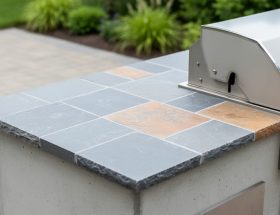

Stone robots are revolutionizing how natural stone gets cut, shaped, and installed in construction projects. These robotic systems combine advanced programming with precision machinery to automate tasks that traditionally required skilled craftspeople working manually for hours or days. The technology spans from CNC machines that carve intricate patterns into granite countertops to mobile robotic arms that position heavy stone panels on building facades with millimeter accuracy.
The automation addresses critical industry challenges: labor shortages, safety risks from handling massive stone slabs, and the need for consistent precision in complex installations. A single robotic system can execute cuts and placements that would typically require multiple workers, reducing installation time by 40-60% while minimizing material waste through exact measurements.
Understanding stone robotics means recognizing three core capabilities. First, robotic fabrication systems transform raw stone blocks into finished products through computer-controlled cutting, polishing, and edge profiling. Second, installation robots physically handle and position stone elements on-site, eliminating the ergonomic strain and safety hazards of manual lifting. Third, integrated software bridges design files directly to machine execution, ensuring what architects envision matches what gets installed.
This technology isn’t replacing human expertise entirely. Rather, it shifts skilled workers from physically demanding tasks to supervisory roles, programming, and quality control. For architects specifying stone and consumers investing in natural stone projects, stone robots represent faster timelines, tighter tolerances, and expanded design possibilities that manual methods cannot achieve.
What Are Stone Robots?

Key Technologies Behind Stone Installation Robots
Stone installation robots represent a convergence of several advanced technologies working in harmony to achieve precision and efficiency. At the foundation are sophisticated sensor systems that continuously monitor positioning, weight distribution, and environmental factors. These sensors provide real-time feedback, enabling robots to make micro-adjustments during installation and maintain accuracy within millimeters.
AI-powered vision systems serve as the robot’s eyes, using cameras and depth sensors to scan stone slabs, identify patterns, detect flaws, and calculate optimal placement. Machine learning algorithms enable these systems to improve over time, recognizing different stone types and adjusting handling techniques accordingly. This visual intelligence is particularly valuable when working with book-matched slabs or creating intricate patterns.
Robotic arms provide the mechanical strength and dexterity needed to manipulate heavy stone pieces. Equipped with multiple axes of movement, these arms can rotate, extend, and position materials with remarkable precision. Advanced suction and gripping systems complement these arms, using vacuum technology or mechanical grippers specifically designed for stone’s smooth, heavy surfaces. These systems distribute pressure evenly to prevent damage while maintaining secure holds on slabs weighing hundreds of pounds.
Automated positioning platforms work in tandem with the robotic arms, moving materials through installation sequences with programmed accuracy. GPS and laser-guided systems ensure that each stone piece aligns perfectly with architectural plans, while integrated software coordinates all components, translating digital designs into physical reality with minimal human intervention.
The Traditional Stone Installation Challenge
Natural stone installation has historically resisted automation for reasons that become clear when you examine the physical realities of the work. Unlike manufacturing environments with standardized materials, stone installers work with heavy, irregular pieces weighing anywhere from 50 to several hundred pounds. Each slab possesses unique veining patterns, varying thickness, and natural imperfections that require human judgment to position correctly.
The physical demands are extraordinary. Workers must repeatedly lift, maneuver, and precisely place these massive slabs while maintaining millimeter-level accuracy in alignment and leveling. A single granite countertop section can weigh 200 pounds, requiring multiple installers and creating significant safety risks. Back injuries, muscle strains, and repetitive stress injuries are common occupational hazards that drive up labor costs and limit the available workforce.
Precision requirements add another layer of complexity. Stone installations demand exact measurements, perfect seam matching across multiple pieces, and careful consideration of load-bearing factors. Traditional installation methods rely heavily on experienced craftspeople who can assess site conditions, make real-time adjustments, and ensure proper adhesion and support systems.
The industry now faces a critical skilled labor shortage. Fewer young workers are entering stone trades, while experienced installers retire at increasing rates. Training new installers takes years, as they must develop the physical stamina, technical knowledge, and aesthetic judgment required for quality work. This shortage drives up labor costs, extends project timelines, and limits the industry’s growth potential.
These converging challenges create an environment where automation becomes not just desirable but necessary for the industry’s future sustainability.
How Stone Robots Work in Real-World Installation
Measurement and Digital Mapping
Before any stone is cut or positioned, robotic systems must first understand the installation environment with exceptional accuracy. This process begins with advanced 3D scanning technology, typically using laser scanners or photogrammetry equipment mounted on the robot or operated as standalone units. These scanners capture millions of data points across walls, floors, and other surfaces, creating detailed digital models that account for every irregularity, angle, and dimension.
The scanning process maps existing conditions down to millimeter-level precision, identifying surface variations that might affect stone placement. This data feeds into specialized software that compares the as-built environment against architectural plans, highlighting discrepancies that could impact installation. The system then generates precise coordinates for each stone piece, calculating exact placement positions and any necessary adjustments.
This digital mapping eliminates the traditional measure-twice-cut-once approach, replacing it with comprehensive spatial data that guides the entire installation. The technology proves particularly valuable in complex projects involving curved surfaces, intricate patterns, or challenging architectural features. By creating a complete digital twin of the installation site, robots can plan optimal stone placement strategies before physical work begins, reducing material waste and ensuring seamless alignment across large-scale projects.

Material Handling and Positioning
Stone robots excel at handling the substantial weight and dimensions that make manual stone installation so physically demanding. These machines use powerful vacuum suction systems or specialized gripping mechanisms to lift slabs weighing hundreds or even thousands of pounds—tasks that would otherwise require multiple workers and present significant safety risks.
The positioning process relies on sophisticated sensor technology and computer-controlled actuators. Operators guide the robot to place stones within millimeter-level accuracy, ensuring proper alignment with architectural plans. Many systems feature intuitive controls, allowing installers to make fine adjustments in real-time through joystick interfaces or touchscreen panels.
Modern stone robots can rotate slabs 360 degrees and tilt them to various angles, which proves especially valuable when installing countertops, vertical cladding, or complex geometric patterns. The machines maintain steady, controlled movements throughout the entire process, eliminating the sudden shifts or drops that can damage expensive stone materials.
This precision handling reduces installation time considerably. What might take a crew several hours to position manually can often be accomplished in 30 minutes or less with robotic assistance, while simultaneously reducing the physical strain on workers and minimizing the risk of costly material damage during placement.
Quality Control and Adjustment
Precision is critical when installing natural stone, where even millimeter-level variations can disrupt patterns or compromise structural integrity. Stone robots address this challenge through integrated sensor systems that continuously monitor and verify placement accuracy throughout the installation process.
Most advanced stone robots employ a combination of laser scanners, vision cameras, and proximity sensors that work together to ensure perfect positioning. Before placing each stone piece, the robot’s vision system captures the installation area and compares it against the digital design specifications. This real-time verification identifies any discrepancies between the planned layout and actual conditions on-site.
When sensors detect misalignment—whether from substrate irregularities, previous installation variations, or environmental factors—the robot’s control system automatically calculates necessary corrections. The robotic arm then executes micro-adjustments, typically within tolerances of 0.5 millimeters or less, ensuring each piece aligns precisely with its neighbors and the overall design intent.
Some systems incorporate force-feedback sensors that measure the pressure applied during placement, preventing damage to delicate stone materials while ensuring proper adhesion. After positioning, the sensors perform a final verification scan, documenting the exact placement coordinates for quality assurance records.
This sensor-driven approach eliminates the cumulative errors that can occur in manual installation, where small mistakes compound across large areas. The result is consistently accurate installations that maintain pattern integrity across entire surfaces, whether for intricate mosaics or large-format cladding applications. For projects requiring exacting standards—such as feature walls or precision-cut stone flooring—this quality control capability represents a significant advantage over traditional methods.
Benefits of Robotic Stone Installation
For Homeowners and Property Owners
For homeowners and property owners, stone robots represent a significant advancement in how natural stone is installed in residential and commercial spaces. The most immediate benefit is speed—what traditionally takes several days of manual labor can be completed in a matter of hours with robotic precision. This translates directly into reduced labor costs, as fewer workers are needed on-site for shorter durations.
The precision these systems deliver ensures that stone slabs fit together perfectly, with minimal gaps and consistent spacing throughout the installation. This level of accuracy is difficult to achieve consistently with manual methods, regardless of installer skill level. For property owners, this means a more polished, professional appearance that enhances the overall aesthetic of countertops, flooring, or facade applications.
Another practical advantage is reduced disruption to your daily routine. Faster installation times mean less noise, less dust, and less interference with your home or business operations. The robotic systems also minimize material waste through optimized cutting patterns, which can lower overall project costs. Finally, the consistent quality across the entire installation eliminates variations that sometimes occur when multiple installers work on different sections of a project, ensuring uniform results from start to finish.
For Installers and Contractors
For installers and contractors, stone robots represent a significant advancement in workplace safety and operational capacity. These automated systems dramatically reduce the physical strain associated with handling heavy stone slabs, which often weigh several hundred pounds. By transferring the burden of lifting, positioning, and maneuvering materials to robotic equipment, workers face substantially lower injury risks from repetitive motion, muscle strain, and lifting accidents that have historically plagued the stone installation industry.
The safety improvements extend beyond physical strain. Robotic systems minimize human exposure to dangerous tasks like cutting and grinding, reducing the risk of accidents involving sharp tools and heavy materials. This translates directly to lower workers’ compensation claims and insurance costs for installation businesses.
From a business perspective, stone robots enable contractors to accept more complex projects and tighter timelines. The precision and consistency of robotic fabrication mean fewer installation errors and material waste, while the speed of automated processes allows crews to complete jobs faster. Smaller teams can handle projects that previously required larger crews, improving profitability without compromising quality. For forward-thinking contractors, investing in robotic technology creates a competitive advantage in bidding for high-end commercial and residential projects where precision and efficiency are paramount.
For Architects and Designers
For architects and designers, robotic stone installation technology fundamentally expands creative possibilities. Complex geometric patterns, intricate mosaics, and custom designs that were previously cost-prohibitive or technically challenging become feasible options. The precision of robotic systems allows for tighter tolerances—often within millimeters—enabling seamless alignment across large installations and making ambitious design visions achievable.
This technology particularly benefits projects with repetitive patterns or installations requiring exact replication across multiple locations. A custom lobby floor design, for example, can be programmed once and executed identically in branch locations nationwide. The digital precision also facilitates better integration with other building systems, as stone elements can be positioned with architectural exactness.
Perhaps most valuable for project planning is timeline predictability. Traditional installation timelines vary significantly based on installer availability and skill level. Robotic systems provide consistent, measurable production rates, allowing for more accurate scheduling and reduced coordination uncertainty. This reliability helps architects meet deadlines and manage client expectations more effectively.
The technology also enables better visualization during the design phase, as digital programming creates precise previews of the final installation before work begins, reducing costly surprises during construction.
Current Limitations and Considerations
While stone robots represent a significant advancement in fabrication and installation technology, several practical limitations currently restrict their widespread adoption. Understanding these challenges helps set realistic expectations for projects considering robotic automation.
The most immediate barrier is financial investment. Industrial stone robots typically require capital expenditures ranging from $150,000 to over $500,000, depending on capabilities and configuration. This substantial upfront cost places the technology beyond reach for many small to mid-sized fabrication shops and contractors. Additionally, ongoing expenses for maintenance, software updates, and specialized tooling add to the total ownership cost.
Skilled operator requirements present another consideration. Despite automation, these systems need trained personnel who understand both stone fabrication principles and robotic programming. The current shortage of workers with this hybrid skill set means companies must invest significantly in training programs or compete for limited talent, adding time and expense to implementation.
Site accessibility remains a practical constraint for installation robots. These machines require adequate space for setup, level working surfaces, and sometimes specific power requirements. Historic buildings, tight urban locations, or projects with challenging terrain may prove incompatible with current robotic systems. Traditional installation methods often provide greater flexibility in confined or irregular spaces.
Certain applications still benefit from human expertise and judgment. Complex restoration work requiring aesthetic decision-making, projects involving rare or fragile antique stone, and installations demanding real-time problem-solving often exceed current robotic capabilities. The nuanced understanding that experienced stone craftspeople bring to matching veining patterns, addressing unexpected substrate issues, or adapting to design changes on-site remains difficult to replicate through automation.
Equipment availability also limits adoption. With relatively few manufacturers producing stone-specific robotic systems, lead times for purchasing and installation can extend several months. Service and technical support networks remain underdeveloped in many regions, potentially creating operational risks for companies dependent on these systems for production capacity.
Real-World Applications and Case Studies
Stone robots are transforming how natural stone is handled across multiple industry sectors, delivering measurable improvements in efficiency, precision, and safety. Understanding where this technology excels helps stakeholders evaluate its potential for their specific needs.
In commercial flooring projects, stone robots have proven particularly valuable for large-scale installations in airports, hotels, and corporate campuses. A recent installation at a luxury hotel chain utilized robotic systems to place over 15,000 square feet of marble flooring, reducing installation time by 40% while maintaining consistent grout line spacing within 1/16 inch tolerance. The technology eliminated the need for multiple workers to manually lift and position heavy slabs, significantly reducing workplace injury risks.
For countertop installations, fabrication shops are deploying stone robots to handle the heaviest materials, particularly large-format slabs that exceed 800 pounds. These systems excel at positioning oversized kitchen islands and commercial food preparation surfaces where precision fit is critical. One fabrication company reported that robotic assistance enabled their team to complete complex multi-slab installations 30% faster while reducing material damage during handling.
Building facade applications represent another growing deployment area. Stone robots assist with mounting exterior cladding panels on high-rise construction projects, where precision alignment and worker safety are paramount. The technology enables consistent placement of stone veneer panels even in challenging weather conditions, maintaining project schedules that might otherwise face delays.
Custom design projects benefit significantly from robotic precision. Architectural features like curved reception desks, circular medallions, and intricate mosaic patterns require exact placement that stone robots can replicate consistently. Interior designers are increasingly specifying complex stone installations knowing that robotic assistance makes previously impractical designs achievable within reasonable budgets and timelines.
These real-world applications demonstrate that stone robots deliver the greatest value in projects involving heavy materials, large-scale installations, precision requirements, or repetitive placement tasks.

What This Means for Your Next Stone Project
Before incorporating robotic installation into your stone project, consider whether the technology aligns with your specific needs. This approach makes the most sense for large-scale commercial installations, repetitive patterns requiring precise alignment, projects with complex geometric designs, or tight timelines where speed matters. Residential projects can benefit too, particularly for extensive floor installations or intricate bathroom layouts, though the cost-benefit equation differs from commercial applications.
When interviewing contractors about robotic capabilities, ask targeted questions. How long has the company been using robotic systems? Can they provide references from similar projects? What brand of equipment do they use, and how does it integrate with their traditional installation methods? Request a demonstration or site visit to see the technology in action. Understand their backup plan if equipment malfunctions mid-project.
Cost considerations extend beyond installation rates. While robotic installation typically commands a premium of 15-30 percent over traditional methods, evaluate the total project value. Factor in reduced installation time, which may lower overall labor costs and allow earlier occupancy. Consider the warranty implications of precision installation, which can reduce long-term maintenance expenses. For large commercial projects, these factors often offset the initial premium.
Market availability varies significantly by region. Major metropolitan areas typically have multiple contractors offering robotic services, while rural markets may require bringing in specialized teams from outside your area, adding travel costs. Contact regional natural stone associations or fabricators for referrals to qualified robotic installers. As this technology continues expanding, availability will improve, but currently, advance planning is essential. Schedule consultations early in your project timeline to assess feasibility and secure qualified contractors before construction deadlines approach.
Stone robots represent a significant leap forward in how we approach natural stone installation, but they’re best understood as powerful tools that enhance rather than eliminate human expertise. The reality is that robotic installation technology works most effectively when paired with skilled craftspeople who understand material properties, design intent, and project-specific challenges. This collaborative approach delivers faster timelines, improved precision, and enhanced safety while preserving the artistry that defines quality stonework.
Looking ahead, expect to see continued refinement in automation capabilities, with systems becoming more adaptable to diverse project types and installation environments. The next few years will likely bring improved sensor technology, better integration with design software, and more accessible entry points for smaller fabricators and contractors. For those considering this technology, focus on understanding how automation fits your specific project needs rather than viewing it as an all-or-nothing proposition. The stone industry’s future lies not in choosing between tradition and innovation, but in thoughtfully combining both to achieve results neither could accomplish alone.