
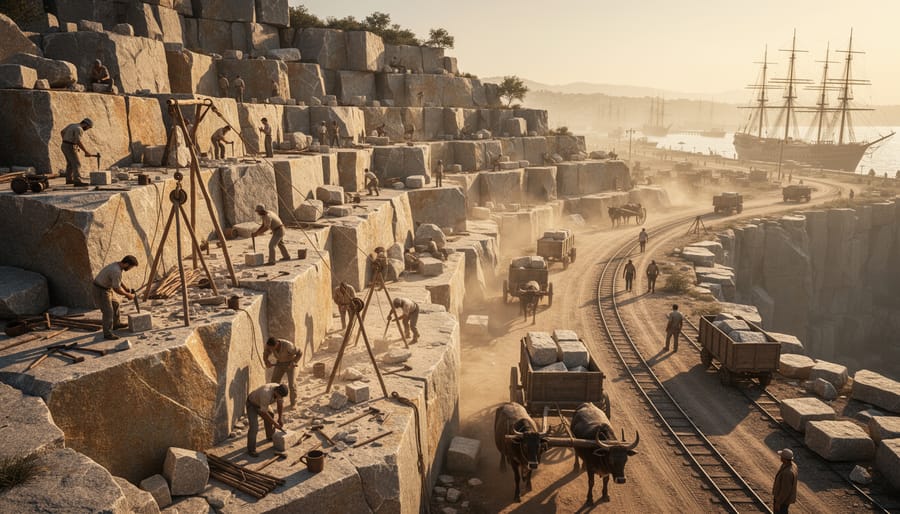
For centuries, the extraction and trade of natural stone mapped the ambitions of empire across continents, leaving an indelible mark on both landscape and culture. From the marble quarries of Carrara supplying Roman conquests to the granite mines of colonial India shipping materials to British imperial projects, stone extraction became inseparable from the mechanics of colonial expansion. European powers systematically identified, claimed, and exploited mineral-rich territories, transforming indigenous quarrying traditions into industrial operations that prioritized metropolitan demand over local needs.
This colonial legacy fundamentally shaped the global stone trade we navigate today. The infrastructure, trade routes, and market hierarchies established during colonial rule continue to influence how we source, value, and specify natural stone. Understanding this history reveals why certain materials gained prestige while others remained overlooked, why specific quarrying regions developed extensive export capabilities, and how knowledge transfer occurred—or was deliberately withheld—from colonized populations.
The cultural implications extend beyond economics. Colonial stone extraction disrupted traditional building practices, displaced communities, and created dependencies that persisted long after political independence. Sacred sites were quarried, architectural heritage was dismantled for export, and local craftsmanship was devalued in favor of European aesthetic preferences. For today’s architects, designers, and industry professionals, recognizing these historical patterns informs more ethical sourcing decisions and deeper appreciation for the provenance of materials. This examination connects past exploitation to present responsibility, encouraging informed choices that honor both stone’s natural origins and the human communities involved in its extraction.
The Economics of Colonial Stone Extraction

Resource Identification and Control
Colonial powers systematically transformed stone extraction from community-based practices into industrial operations through detailed geological surveys. Beginning in the mid-19th century, European colonial administrations deployed trained geologists to map mineral and stone deposits across colonized territories in India, Africa, and Southeast Asia. These surveys went far beyond simple documentation, creating legal frameworks that redefined land ownership and resource access.
The British Geological Survey’s work in India exemplifies this process. Between 1851 and 1947, surveyors cataloged granite, marble, and sandstone deposits while simultaneously establishing colonial mining codes that required formal permits for quarrying. Indigenous communities who had managed local quarries for generations suddenly found themselves classified as unauthorized operators on their ancestral lands. Traditional quarrying rights, often passed down through families or governed by customary law, were invalidated in favor of colonial licensing systems.
French colonial authorities in Madagascar and Indochina implemented similar structures, granting extraction rights to European companies while local populations were relegated to manual labor roles. These surveys created detailed maps that identified the most commercially valuable deposits, which colonial governments then auctioned or leased to metropolitan businesses. The revenue generated flowed back to colonial treasuries rather than benefiting local communities.
This systematic appropriation had lasting consequences. Post-independence nations inherited legal frameworks that prioritized industrial extraction over traditional stewardship, creating ongoing disputes about quarry ownership and resource management that persist in many former colonies today.
Labor Systems and Human Cost
The extraction of stone during the colonial era came at an immense human cost, built upon systems of forced labor and exploitation that remain largely undocumented in the materials’ histories. Colonial powers relied heavily on enslaved labor, indentured servants, and coerced indigenous populations to operate quarries across Africa, Asia, and the Americas.
In Indian sandstone and granite quarries, British colonial administrators implemented exploitative contract systems that trapped workers in cycles of debt bondage. Workers labored under dangerous conditions with minimal tools, often for bare subsistence wages. Mortality rates in these quarries were staggering, with heat exhaustion, rockfalls, and industrial accidents claiming countless lives that went largely unrecorded in official documents.
Similarly, marble extraction in colonial territories utilized forced labor from local populations. In parts of Africa and Southeast Asia, indigenous communities were compelled to work in quarries through various coercive mechanisms, including taxation systems that forced people into wage labor to pay colonial levies. These workers performed backbreaking tasks of cutting, hauling, and loading stone, often under brutal overseers and without basic safety protections.
The indentured servitude system transported workers from India and China to quarries across British and French colonies, promising opportunities but delivering exploitation. These laborers faced restricted movement, withheld wages, and living conditions that differed little from slavery.
Understanding this history matters for today’s stone industry. The elegant marble facades and granite monuments extracted during this period carry the weight of human suffering within their grain. This legacy challenges us to examine current sourcing practices and ensure that modern stone extraction respects worker dignity, provides fair compensation, and maintains safe conditions. Recognizing this history allows the industry to move forward more ethically, honoring those whose labor literally built the colonial world while committing to fundamentally different practices today.
Major Colonial Stone Trade Routes and Quarries
Indian Subcontinent: Marble and Sandstone
The Indian subcontinent became a cornerstone of British colonial stone extraction, with Rajasthan’s marble quarries and widespread sandstone deposits serving imperial architectural ambitions throughout the 19th and early 20th centuries. The British recognized the exceptional quality of Makrana marble, the same white marble used in the Taj Mahal, establishing systematic quarrying operations that shipped this prized material to construction sites across India and beyond.
Rajasthani marble extraction intensified under colonial administration, with British engineers introducing mechanized cutting techniques while relying on local quarrying expertise developed over centuries. The colonial government controlled extraction rights, establishing regulatory frameworks that prioritized imperial projects while local craftspeople provided the skilled labor essential to quarrying operations.
Sandstone extraction occurred across multiple regions, including Agra, Fatehpur Sikri, and Rajasthan’s Dholpur district. The distinctive red sandstone from these areas became synonymous with Indo-Saracenic architecture, the colonial architectural style blending Indian and European elements.
Notable colonial-era structures showcase these materials extensively. The Victoria Memorial in Kolkata utilized Makrana marble for its gleaming white exterior, requiring thousands of tons extracted and transported by rail networks built partially to facilitate such material movement. Mumbai’s Gateway of India combined basalt with yellow Gwalior sandstone, while New Delhi’s government buildings, designed by Edwin Lutyens, incorporated both red sandstone and marble in grand proportions.
The extraction infrastructure established during colonial rule fundamentally transformed India’s stone industry, creating trade networks and quarrying techniques that continue influencing modern operations, though contemporary practices increasingly emphasize sustainable extraction and fair labor conditions absent during the colonial period.
African Quarries: Granite and Unique Stones
Africa’s vast geological wealth became a primary target for colonial powers seeking building materials and decorative stone. South Africa’s granite quarries, particularly around Paarl and the Cape Peninsula, were exploited extensively by British and Dutch colonizers from the 17th century onward. These dense, durable granites were shipped to Europe for monumental architecture and urban infrastructure projects, while simultaneously being used to construct colonial administrative buildings and port facilities across the continent.
In Zimbabwe, formerly Rhodesia, British colonizers extracted the distinctive black granite now known commercially as Absolute Black or Galaxy Black. These quarries, established in the late 1800s, employed forced labor systems that extracted both stone and human dignity. The material became prized in European markets for its uniform color and exceptional polishing qualities.
Egypt’s ancient quarries experienced renewed exploitation during the 19th and early 20th centuries. Colonial administrators claimed rights to historic sites, removing not only ancient monuments but also continuing to extract the famous Aswan granite and limestone that had built the pyramids. British and French companies established modern quarrying operations, exporting premium Egyptian stone while local populations received minimal economic benefit.
The colonial stone trade from Africa established supply chains that persist today, though modern operations increasingly emphasize ethical sourcing and fair labor practices. Understanding this history helps contemporary buyers make informed decisions about stone provenance and supplier ethics.
Southeast Asian Stone Networks
Southeast Asia’s rich geological deposits made the region a crucial supplier of building materials during the colonial period. European powers, particularly the Dutch, French, and British, systematically extracted limestone, sandstone, and volcanic stone from present-day Vietnam, Indonesia, and Myanmar, integrating these materials into global stone trade routes that connected Asia to Europe and beyond.
Vietnamese limestone quarries, especially around Thanh Hoa and Ninh Binh provinces, provided dense, weather-resistant stone for colonial administrative buildings and Catholic cathedrals throughout French Indochina. The distinctive gray-white limestone became synonymous with French colonial architecture across Vietnam, Cambodia, and Laos.
Indonesian volcanic andesite and sandstone from Java and Sumatra offered superior durability in tropical climates. Dutch colonizers exploited these quarries extensively, shipping stone throughout the Indonesian archipelago for plantation houses, trading posts, and military installations. The dark volcanic stone proved particularly suitable for foundations and load-bearing structures.
Myanmar’s rich deposits of limestone and specialty marbles attracted British interest, with quarries near Mandalay producing high-quality white and cream-colored stone. Colonial extraction methods disrupted traditional quarrying practices while introducing mechanized techniques that increased production but often compromised local communities’ access to these resources. This legacy continues to influence regional stone industries today.
Architectural Legacy: How Colonialism Shaped Stone Use
Colonial Buildings as Stone Showcases
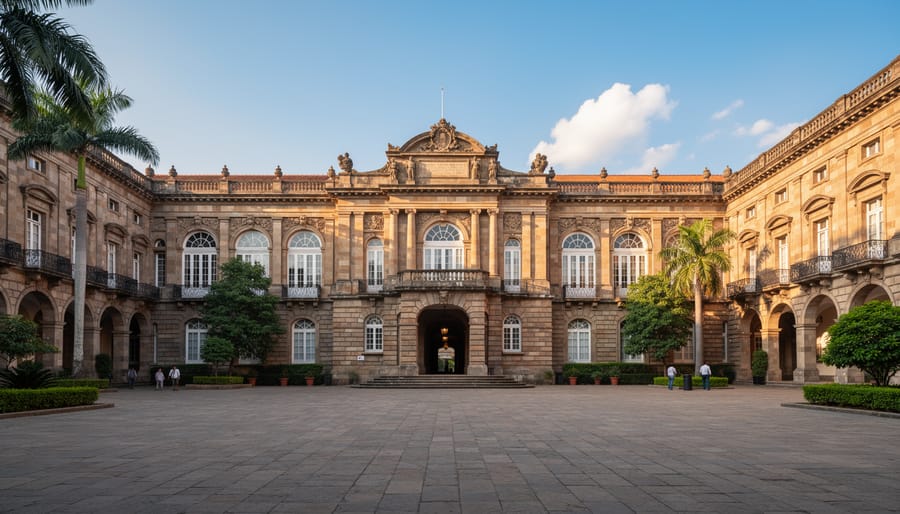
Colonial powers transformed their territories through grand architectural statements that served dual purposes: demonstrating political authority while showcasing the natural stone resources they controlled. Government buildings, railway stations, courthouses, and monuments became physical manifestations of extraction capabilities, displaying varieties of marble, granite, limestone, and sandstone quarried from colonized regions.
The British Raj exemplified this approach through structures like the Victoria Memorial in Kolkata, constructed with white Makrana marble from Rajasthan. This deliberate material choice connected the building to Mughal architectural heritage while asserting control over indigenous quarrying traditions. Similarly, the Gateway of India in Mumbai utilized local yellow basalt and concrete, establishing a colonial aesthetic that would influence regional architecture for decades.
In Africa, colonial administrations erected government buildings using locally quarried stone to minimize transportation costs while maximizing visual impact. The Union Buildings in Pretoria combined light sandstone with darker accents, creating a distinctive palette that became synonymous with administrative architecture across southern Africa. These structures required extensive quarrying operations that fundamentally altered local landscapes and labor systems.
Railway infrastructure projects particularly demonstrated stone extraction capabilities. Stations, bridges, and viaducts required massive quantities of cut stone, creating demand that shaped entire regional economies. The use of durable granite for foundation work and decorative stones for facades established technical standards and aesthetic preferences that persist in contemporary construction.
These colonial-era buildings created lasting material legacies. The stone types selected, finishing techniques employed, and architectural styles promoted during this period influenced subsequent generations of builders and designers. Understanding this historical context helps modern professionals recognize how colonial extraction practices shaped current stone availability, regional architectural traditions, and the global natural stone trade’s geographical patterns.
The Displacement of Indigenous Stone Traditions
Colonial powers didn’t simply extract stone from conquered territories—they fundamentally disrupted centuries-old quarrying traditions and the deep cultural meanings attached to stone. Indigenous communities had developed sophisticated relationships with their local geology, understanding which stones held spiritual significance, which were suitable for specific architectural purposes, and how to quarry sustainably within their environmental contexts.
When European colonizers arrived, they prioritized stone types familiar to their architectural vocabularies—primarily white marble, granite, and limestone—often dismissing locally preferred materials as primitive or unsuitable. In India, British colonizers favored imported marble over traditional sandstone for government buildings, despite sandstone’s superior performance in local climate conditions. Similarly, Spanish conquistadors in Latin America overlooked indigenous volcanic stone traditions, instead establishing marble quarries that mimicked European aesthetics.
This displacement extended beyond material preferences. Colonial administrators often banned or severely restricted indigenous access to sacred quarries, severing communities from sites of spiritual and historical importance. Traditional quarrying methods, which typically involved smaller-scale extraction and ceremonial practices, were replaced by industrial operations that prioritized volume and profit over cultural preservation.
Local master craftspeople found their skills devalued as colonial architecture demanded European-trained stonemasons and imposed foreign design standards. Apprenticeship systems that had transmitted knowledge across generations were disrupted, leading to the loss of unique carving techniques and regional stone-working traditions.
The legacy of this displacement persists today. Many indigenous quarrying communities still lack access to traditional sites, and knowledge of pre-colonial stone practices continues to erode. Understanding this history is essential for contemporary architects and designers seeking to make ethically informed material choices that respect local stone traditions.
Cultural Impact and Knowledge Systems
Lost and Preserved Traditional Techniques
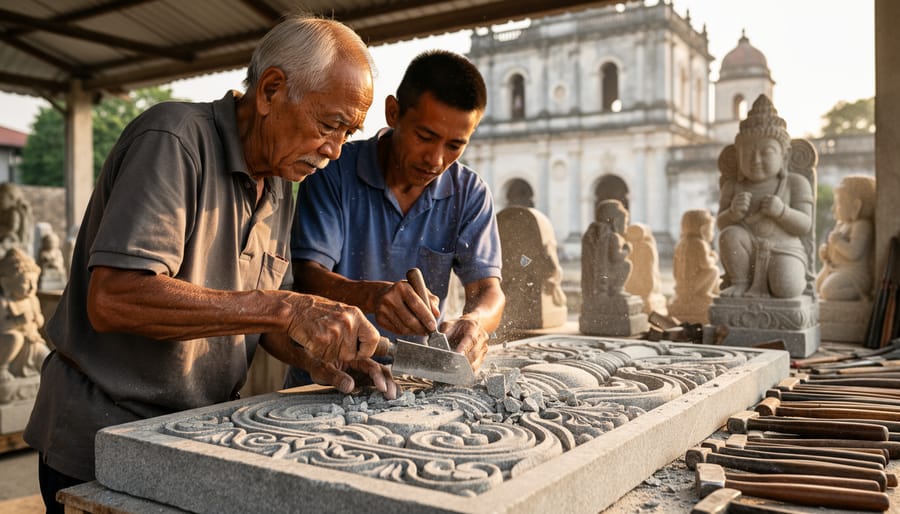
Colonial encounters dramatically altered indigenous stone working traditions across the globe, with some techniques lost entirely while others survived through resilience and adaptation. In regions like India, Mesoamerica, and West Africa, sophisticated stone carving and quarrying methods developed over millennia faced systematic suppression as colonial powers imposed European architectural styles and production methods.
Many indigenous communities possessed advanced knowledge of local geology, including optimal quarrying seasons, stone aging techniques, and specialized hand-tool methods that minimized material waste. Colonial administrators often dismissed these practices as primitive, favoring mechanized European approaches that prioritized extraction speed over quality or sustainability. In some cases, skilled indigenous craftspeople were forced to adapt their techniques to serve colonial building projects, creating a hybrid of traditional knowledge and imposed methods.
Documentation of these lost techniques remains incomplete, as colonial records typically focused on output rather than methodology. However, archaeological evidence and oral histories have helped reconstruct some practices. For instance, the precision stone-fitting techniques of Andean cultures and the intricate lattice work of Mughal craftspeople demonstrate sophistication that modern tools struggle to replicate.
Certain traditions survived through cultural persistence, particularly in communities that maintained control over local quarries or where traditional architecture remained in demand. Today, there is growing recognition of these preserved techniques’ value, not only for cultural heritage but for their potential contributions to sustainable stone working practices that emphasize material respect and minimal environmental impact.
Sacred Stones and Colonial Disruption
Colonial powers systematically extracted stones from sites of cultural significance, disrupting indigenous communities and their spiritual practices. Temples, burial grounds, and ceremonial spaces were often dismantled or damaged as valuable materials like marble, granite, and sandstone were harvested for colonial construction projects and shipped to European metropoles.
In India, British colonizers removed sacred stones from Hindu temples and Buddhist stupas, repurposing them for administrative buildings and railway infrastructure. Similarly, in Egypt, ancient monuments faced systematic quarrying, with obelisks and carved stones transported to adorn European capitals. These extractions went beyond physical theft—they severed the spiritual and cultural connections communities maintained with their sacred landscapes for generations.
Local populations faced forced labor in quarries on their own ancestral lands, receiving minimal compensation while colonial authorities profited from the trade. The environmental degradation from intensive extraction altered local ecosystems and water sources, compounding the social disruption.
The lasting impact remains visible today. Many communities lost irreplaceable cultural heritage, and the historical trauma of these extractions continues to influence contemporary attitudes toward stone sourcing and cultural preservation. Understanding this history helps modern stone professionals make more ethical sourcing decisions and recognize the importance of respecting cultural heritage in extraction practices. It also underscores the need for transparent supply chains that honor the origins and significance of materials used in contemporary design.
The Modern Stone Industry: Colonial Foundations
Persistent Trade Inequalities
The economic patterns established during colonial rule continue to shape the global stone trade today, creating persistent disadvantages for producing nations. Many stone-exporting countries in Africa, Asia, and Latin America still function primarily as suppliers of raw materials rather than finished products, mirroring colonial-era resource extraction models. This arrangement means that while labor-intensive quarrying occurs locally, value-added processes like cutting, polishing, and finishing often happen in wealthy consumer nations, where profit margins are substantially higher.
Pricing structures reflect this imbalance. Quarry workers and local companies in producing regions typically receive a fraction of the final retail price consumers pay. For example, raw granite blocks exported from India or Brazil might sell for $500 per cubic meter at the quarry, but the same stone, once processed and marketed in Europe or North America, can command prices ten to twenty times higher. This disparity persists partly because former colonial powers and their trading partners established the infrastructure, shipping networks, and market relationships that still dominate international commerce.
Ownership patterns compound these inequalities. Foreign corporations or international joint ventures control many of the most productive quarries in developing nations, with profits flowing outward rather than supporting local economies. Even when domestic companies own extraction operations, they often lack access to the capital, technology, and market connections needed to move up the value chain into processing and retail.
These structural inequalities limit economic development opportunities in stone-producing regions, perpetuating wealth gaps that originated during colonial occupation. Understanding these dynamics helps industry professionals make more informed sourcing decisions and supports efforts toward fairer trade practices.
Infrastructure and Technology Transfer
Colonial powers fundamentally transformed stone extraction in their territories by introducing industrial-scale quarrying technologies that replaced traditional methods. European colonizers brought steam-powered cutting equipment, rail systems for transport, and systematic geological surveying techniques to regions across Africa, Asia, and South America during the 19th and early 20th centuries.
In India, British colonial administrators established mechanized granite quarries that shifted production from small-scale, artisanal operations to large commercial enterprises. They introduced wire saws, derricks, and standardized block sizing that aligned with European architectural specifications. Similar transformations occurred in Egyptian limestone quarries and Brazilian granite deposits, where colonial infrastructure investments prioritized extraction efficiency over traditional practices.
This technology transfer created lasting impacts on local industries. The machinery, extraction techniques, and quality standards introduced during colonial periods became foundational to modern quarrying operations in these regions. Many contemporary quarries in former colonies still utilize descendants of these original systems, though significantly updated with modern automation.
However, this transfer was rarely equitable. Colonial powers retained control over the most valuable deposits and export markets, while local populations provided labor without developing technical expertise or business ownership. The infrastructure built during this period primarily served colonial export needs rather than local development.
Understanding this legacy helps explain why certain regions became dominant stone suppliers in global markets. The industrial frameworks established during colonialism created competitive advantages that persist today, influencing where architects and designers source materials. This historical context remains relevant when evaluating the ethics and sustainability of contemporary stone procurement practices.
Moving Forward: Ethical Sourcing and Recognition
What Ethical Sourcing Means Today
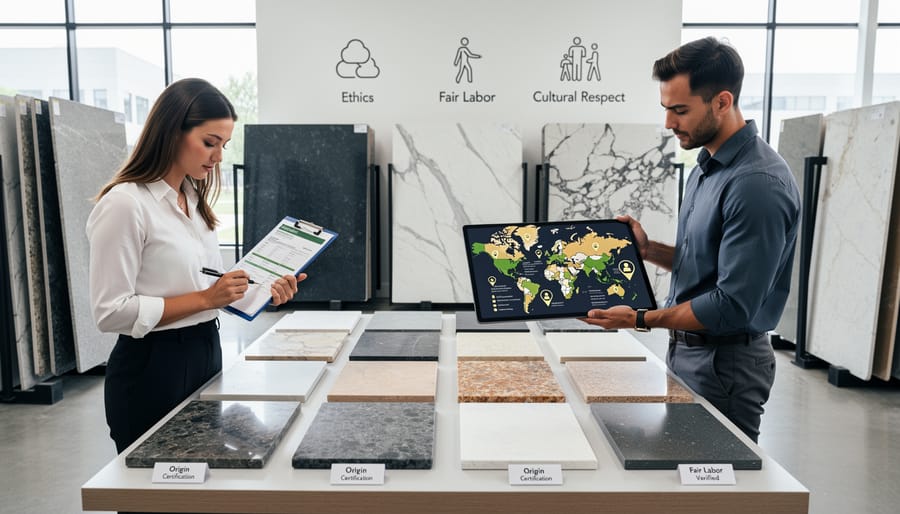
Today’s ethical sourcing requires verifiable action, not just statements of intent. Begin by requesting documentation from suppliers that demonstrates compliance with labor standards. Look for certifications from independent organizations like Fair Trade or the Betterwork program, which conduct regular audits of working conditions, wages, and worker rights at extraction sites.
Environmental standards should include proof of responsible quarrying practices. Ask suppliers about land rehabilitation plans, water management systems, and carbon footprint assessments. Reputable quarries maintain transparent records of their environmental impact and actively work to minimize ecological disruption.
Community benefit is equally crucial. Ethical suppliers demonstrate how their operations support local economies through fair wages, infrastructure investment, and skills training programs. Request information about community consultation processes and benefit-sharing agreements that ensure indigenous and local populations receive meaningful economic participation rather than mere token involvement.
Third-party verification provides the strongest assurance. Organizations like the Natural Stone Council and the Building Research Establishment offer frameworks for assessing sustainability and ethical practices. Consider suppliers who participate in these programs and willingly share audit results.
Finally, establish long-term relationships with transparent suppliers. Those committed to ethical sourcing welcome questions, provide facility access, and maintain open communication about their supply chains. This transparency distinguishes genuine ethical commitment from greenwashing, enabling informed decisions that honor both quality craftsmanship and social responsibility.
Honoring Cultural Heritage in Stone Selection
Understanding the cultural significance of stone materials requires thorough research and genuine community engagement before specifying any material for a project. Begin by consulting historical records, anthropological studies, and regional cultural databases to identify stones with ceremonial, spiritual, or heritage value to Indigenous and local communities. Many stones hold deep meaning tied to creation stories, healing practices, or ancestral connections that may not be immediately apparent.
Direct consultation with cultural representatives and community leaders is essential. Reach out to tribal councils, heritage organizations, and local historians who can provide context about traditional stone uses and any sensitivities around extraction or commercial application. Some communities may welcome collaborative projects that honor their heritage, while others may request certain materials remain untouched.
When culturally significant stones are appropriate for use, establish transparent partnerships that include benefit-sharing agreements, proper attribution, and community input on how materials are marketed and described. Document the stone’s cultural story accurately, avoiding romanticized or appropriative narratives.
Consider alternative materials when research reveals potential conflicts. The natural stone industry offers thousands of options, making it possible to achieve desired aesthetics while respecting cultural boundaries. This approach not only prevents harm but often reveals compelling stories that add authentic meaning to architectural projects, creating spaces that honor rather than exploit global stone heritage.
Understanding the historical context of colonial stone extraction doesn’t diminish the inherent beauty and value of natural stone—rather, it deepens our appreciation and sharpens our responsibility as modern consumers and professionals. The geological wonders that once fueled empires remain remarkable materials, but today we have the opportunity to engage with them through an ethical framework our predecessors lacked.
Moving forward consciously means asking informed questions about sourcing, labor practices, and environmental impact when selecting stone for projects. It means recognizing that marble, granite, and limestone carry cultural significance beyond their aesthetic properties, particularly for regions where extraction shaped economic and social structures. This awareness doesn’t require abandoning natural stone; instead, it calls for supporting suppliers who prioritize fair labor conditions, environmental stewardship, and equitable partnerships with source communities.
The stone industry has evolved considerably, with many quarries now operating under strict regulations and ethical standards. By acknowledging colonial legacies while embracing transparent modern practices, we honor both the material’s history and the people connected to its extraction. Natural stone remains an unparalleled choice for durability, beauty, and timelessness in design. The goal isn’t to reject this extraordinary resource but to ensure our relationship with it reflects contemporary values of fairness, sustainability, and respect. When we choose natural stone with historical awareness and ethical consideration, we participate in writing a more conscious chapter in its ongoing story—one that celebrates craftsmanship while advancing justice.