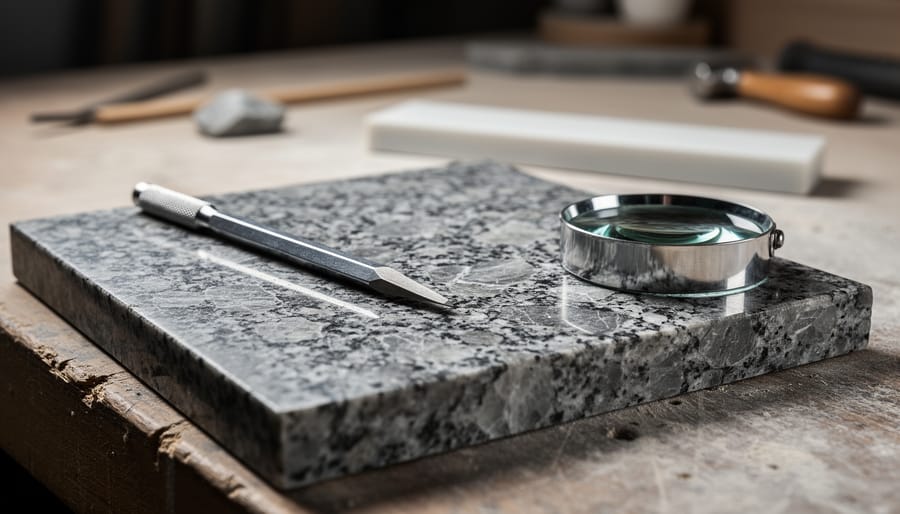
Examine a granite countertop sample closely and you’ll notice variations in how light reflects off different crystals, differences in surface texture, and subtle color variations—each telling you something fundamental about the mineral composition beneath. These observable characteristics are physical properties, measurable traits that scientists and stone professionals use to identify minerals without altering their chemical structure. Understanding these six diagnostic properties—hardness, luster, color, streak, cleavage, and specific gravity—transforms how you evaluate natural stone for your projects.
The same properties geologists use to classify minerals directly impact the performance of stone in your kitchen, bathroom, or commercial space. A mineral’s hardness rating determines whether it will scratch under daily use. Its cleavage patterns explain why certain stones chip or break along predictable lines. Specific gravity influences installation requirements and structural load calculations. For anyone selecting countertops, flooring, or architectural elements, knowing these identification methods provides practical insight into durability, maintenance needs, and appropriate applications.
This knowledge bridges the gap between laboratory mineralogy and real-world stone selection. Whether you’re a homeowner researching natural stone benefits, an architect specifying materials for a project, or a designer explaining options to clients, understanding mineral identification creates informed decision-making. These six properties serve as your practical toolkit for evaluating stone performance, predicting longevity, and matching materials to their ideal applications with confidence and precision.
Why Mineral Properties Matter for Stone Selection
Understanding how individual minerals contribute to a stone’s overall performance is essential for making informed selection decisions. Natural stone isn’t a single, uniform material—it’s a composite of various minerals, each bringing distinct physical properties that collectively determine how the stone will perform in real-world applications.
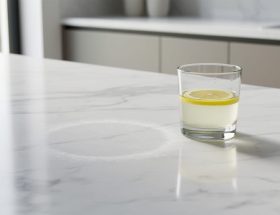
The minerals within a stone directly influence its chemical resistance, which is critical for kitchen countertops, bathroom vanities, and commercial spaces where exposure to acids, cleaning products, or other substances occurs regularly. For example, granite’s high quartz content provides excellent acid resistance, while marble’s calcite composition makes it vulnerable to etching from acidic substances like lemon juice or vinegar.
Durability also stems from mineral composition. A stone’s hardness, cleavage patterns, and crystal structure determine its ability to withstand foot traffic, impacts, and daily wear. Quartzite, composed primarily of interlocking quartz crystals, offers exceptional durability for high-traffic areas, while softer stones like soapstone may be better suited for lower-impact applications despite their appealing aesthetic qualities.
In residential settings, these mineral properties help homeowners choose between materials that look beautiful initially versus those that maintain their appearance over decades. Commercial projects require even more careful consideration, as the wrong stone selection can lead to costly replacements, safety hazards from worn surfaces, or maintenance nightmares.
By understanding the six key physical properties that identify minerals—and how they interact within natural stone—you can predict performance outcomes, avoid unsuitable applications, and select materials that deliver both aesthetic appeal and long-term functionality. This knowledge transforms stone selection from guesswork into a strategic, informed decision-making process.
Hardness: The First Line of Defense
What Hardness Means for Chemical Resistance
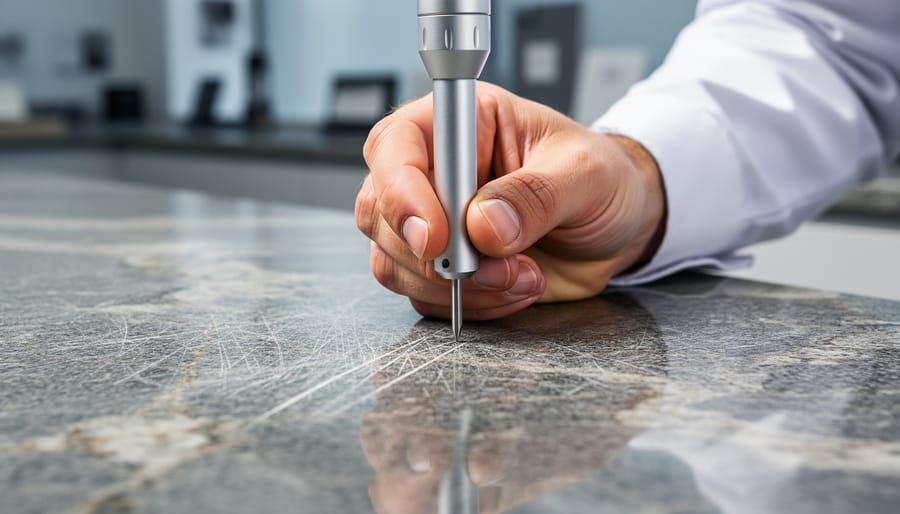
A mineral’s hardness directly influences its ability to resist chemical attack and etching. Harder minerals generally possess tighter atomic structures with stronger chemical bonds, making them less susceptible to acid etching and chemical degradation. This relationship is particularly important when selecting stone for kitchens, bathrooms, and commercial spaces where cleaning products and acidic substances are common.
For example, granite, composed primarily of hard minerals like quartz and feldspar (6-7 on Mohs scale), demonstrates excellent resistance to most household acids and cleaning chemicals. In contrast, marble and limestone, composed of softer calcite (3 on Mohs scale), react readily with acidic substances like lemon juice, vinegar, and many commercial cleaners, resulting in dull spots called etching.
This property directly impacts maintenance requirements and cleaning product selection. Softer stones require pH-neutral cleaners specifically formulated for natural stone, while harder materials tolerate a wider range of cleaning solutions. Understanding this connection helps homeowners and professionals choose appropriate stones for specific applications and establish proper maintenance protocols. Stones installed in high-use areas with potential chemical exposure should prioritize harder minerals to minimize long-term damage and preserve aesthetic appeal.
Real-World Applications
Understanding mineral properties directly influences successful stone selection across different applications. In residential kitchens, granite’s high hardness rating (6-7 on Mohs scale) and low porosity make it ideal for countertops that withstand daily knife work and spills. A 2022 installation at the Riverside Hotel demonstrates this principle—the design team selected quartzite for lobby flooring specifically because its hardness (7) could handle heavy foot traffic without showing wear patterns that softer marble would display.
For bathroom applications, marble remains popular despite its lower hardness (3-4) because the space experiences less abrasive activity. However, professionals increasingly recommend testing acid sensitivity before installation, as citrus-based cleaners can etch calcium carbonate surfaces. Commercial spaces require different considerations: a recent office building case study in Chicago specified dense, non-porous granite for elevator surrounds after analyzing cleavage patterns and specific gravity to ensure dimensional stability under temperature fluctuations.
The key takeaway is matching mineral properties to specific performance requirements. Hardness determines scratch resistance, porosity affects stain susceptibility, and understanding these characteristics prevents costly mistakes while ensuring long-term satisfaction with natural stone installations.
Cleavage and Fracture: Understanding How Stone Breaks
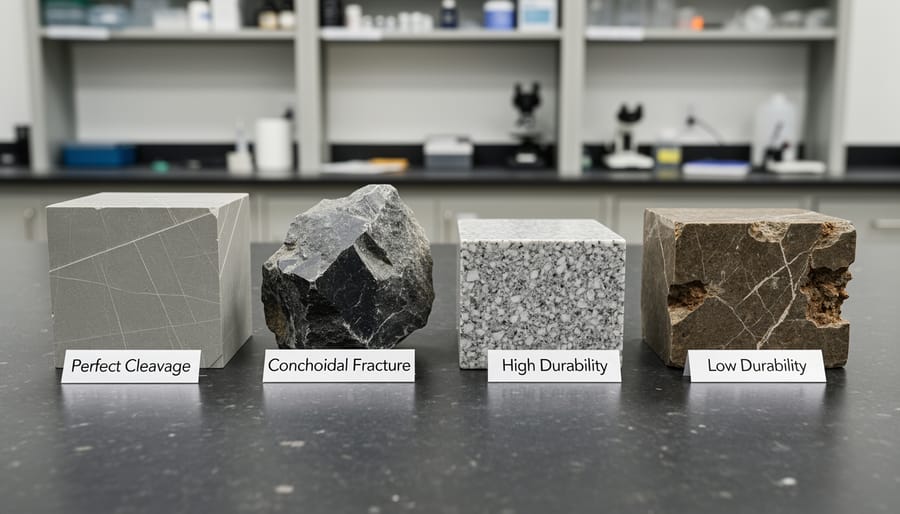
Impact on Installation and Long-Term Performance
Understanding a mineral’s cleavage patterns is essential for professionals working with natural stone, as these internal structural weaknesses significantly influence fabrication processes and long-term durability. During installation, fabricators must account for cleavage planes when cutting and shaping stone. Materials with perfect cleavage, like slate, can split cleanly along predictable planes, making them ideal for thin applications but requiring careful handling during transport and installation. Conversely, minerals with poor or no cleavage, such as quartz, resist fracturing and can be cut in any direction, allowing for intricate edge profiles and detailed work.
Cleavage also affects how stone responds to environmental stresses after installation. Materials with pronounced cleavage planes may be more vulnerable to impact damage in high-traffic areas, as force applied perpendicular to these planes can cause splitting. Temperature fluctuations pose another challenge, particularly for stones with distinct cleavage, as differential expansion can exploit these natural weaknesses. Understanding a stone’s thermal stress resistance helps designers select appropriate materials for exterior applications or areas near heat sources. Proper sealing and maintenance become especially important for cleaved materials to prevent moisture infiltration along these planes, which could lead to freeze-thaw damage in colder climates.
Luster: More Than Just Appearance
When light strikes a mineral surface, the way it reflects back reveals important information about the mineral’s composition and surface characteristics. This quality, known as luster, goes far beyond aesthetics—it directly impacts how natural stone performs in real-world applications, particularly regarding maintenance requirements and chemical resistance.
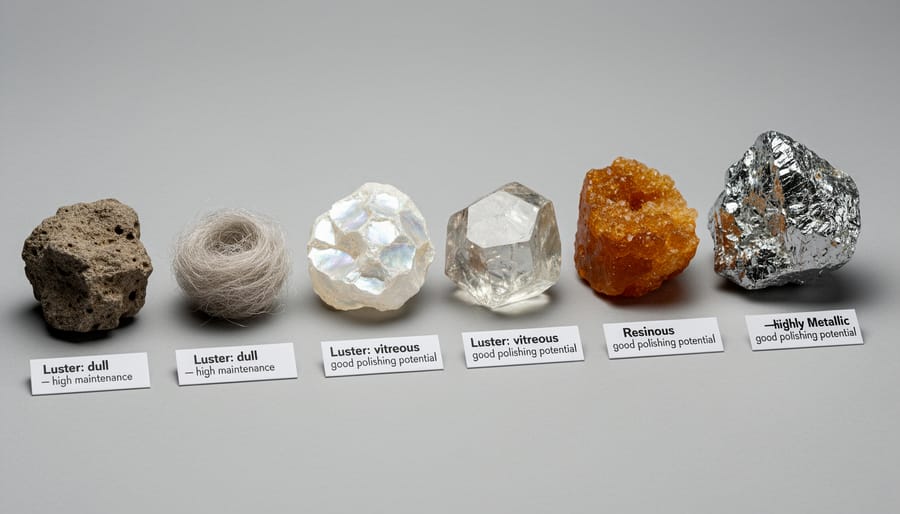
Mineralogists classify luster into two main categories: metallic and non-metallic. Metallic luster appears in minerals containing metal elements and reflects light like polished metal. However, most minerals used in architectural applications display non-metallic luster, which includes several distinct types. Vitreous (glassy) luster is common in quartz and many granites, creating that brilliant shine when polished. Pearly luster, seen in minerals with layered structures like mica, produces an iridescent sheen. Silky luster occurs in fibrous minerals, while resinous luster resembles hardened resin.
Understanding luster helps predict polishing potential and maintenance needs. Minerals with vitreous luster typically accept high polishes that remain durable over time, making them ideal for countertops and high-traffic floors. Conversely, stones with pearly or silky luster may resist polishing or require specialized techniques to achieve desired finishes.
Luster also indicates surface chemistry. Minerals with different lusters respond differently to cleaning products and acidic substances. For instance, the vitreous luster of quartz-rich stones generally indicates better chemical resistance than calcite-based stones with similar appearance but different surface interaction properties. This knowledge guides appropriate selection of cleaning methods and helps prevent damage from incompatible products, ensuring your natural stone investment maintains its beauty and functionality for decades.
Color: The Indicator of Chemical Composition
Color Stability and Chemical Exposure
Mineral pigments that create color in natural stone exhibit varying degrees of stability when exposed to environmental factors. Understanding these reactions helps prevent unwanted discoloration and ensures long-term aesthetic appeal in your stone installations.
Acids pose the most significant threat to calcite-based stones like marble and limestone. Even mild acidic substances—lemon juice, vinegar, or wine—can etch polished surfaces, dulling the finish and altering appearance. Conversely, granite and quartzite, composed primarily of quartz and feldspars, demonstrate excellent acid resistance, making them ideal for kitchen countertops and high-traffic areas.
Alkali exposure from harsh cleaning products can affect certain minerals differently. Iron-bearing minerals like biotite may oxidize when exposed to alkaline cleaners, causing rust-colored staining. This reaction is particularly problematic in lighter-colored stones where discoloration becomes immediately visible.
UV exposure gradually fades some mineral pigments, especially in stones containing organic compounds or certain transition metal oxides. Outdoor installations of darker stones may lighten over years of sun exposure, though this process typically occurs slowly and uniformly.
To maintain color integrity, always use pH-neutral cleaners specifically formulated for natural stone. Test any new cleaning product on an inconspicuous area first, and promptly wipe up acidic spills on sensitive stones. For outdoor applications, consider selecting minerals with proven UV stability to ensure lasting beauty.
Streak: The Hidden Chemical Signature
While color can be deceptive, a mineral’s streak reveals its true chemical signature. The streak test involves rubbing a mineral across an unglazed porcelain tile, leaving behind a powder trail that shows the mineral’s actual color in powdered form. This simple yet revealing test can expose what lies beneath a mineral’s sometimes misleading surface appearance.
For natural stone applications, understanding streak becomes particularly valuable when assessing chemical stability and staining potential. A mineral that leaves a dark or colored streak may contain iron compounds or other elements that can oxidize or react with cleaning products. This explains why certain stones develop rust-colored staining when exposed to acidic cleaners or why some marbles yellow over time in specific environments.
Hematite provides a classic example: despite appearing metallic gray or black, it leaves a distinctive reddish-brown streak that reveals its iron-rich composition. This iron content makes hematite-bearing stones vulnerable to acidic substances and moisture, potentially causing discoloration in countertops or flooring applications.
For architects and designers, the streak test offers practical insights into long-term performance. Stones containing minerals with pronounced streaks may require specialized sealers or careful product selection for maintenance. Understanding this property helps predict how a stone will respond to cleaning agents, acidic spills, or alkaline substances commonly found in residential and commercial settings. When specifying natural stone for high-traffic areas or environments with chemical exposure, considering the streak characteristics of component minerals ensures more durable, aesthetically stable installations that maintain their appearance over decades of use.
Specific Gravity: Density and Porosity Connections
Selecting Stone Based on Density Requirements
Understanding density helps you select the right stone for demanding applications where chemical resistance matters most. Denser stones like granite and quartzite typically offer superior protection against chemical etching and staining, making them ideal choices for high-performance environments.
For laboratory countertops, prioritize stones with densities above 2.65 g/cm³. Granite and engineered quartz excel in these settings because their tight crystalline structure resists acids, bases, and solvents commonly used in research facilities. Their minimal porosity prevents chemical absorption that could compromise surface integrity over time.
Restaurant kitchens benefit from similar density considerations. Commercial food preparation areas face constant exposure to acidic ingredients like citrus, vinegar, and tomatoes. Dense stones withstand these daily challenges without etching or dulling, maintaining their appearance and hygiene standards through years of heavy use.
Outdoor installations require careful density evaluation due to freeze-thaw cycles and environmental exposure. Stones with higher density and lower porosity resist water absorption, preventing internal damage when moisture freezes and expands. Granite remains the premier choice for exterior applications, offering weather resistance and chemical stability against acid rain and atmospheric pollutants.
When specifying stone for these applications, always request density measurements and porosity ratings from suppliers. This data-driven approach ensures your selection meets performance requirements while delivering the aesthetic qualities your project demands.
Putting It All Together: Evaluating Stone for Your Project
Understanding these six physical properties—hardness, cleavage, luster, streak, specific gravity, and crystal form—gives you a powerful framework for selecting the right stone for your project. Rather than relying solely on appearance, you can make informed decisions based on how minerals will perform in specific environments.
Start by identifying your project’s primary demands. Kitchen countertops face acidic foods and liquids, making hardness and chemical resistance critical. Marble’s moderate hardness (Mohs 3-4) and calcium carbonate composition mean it etches with acids, while granite’s harder minerals (Mohs 6-7) offer superior resistance. For bathroom applications, consider how cleavage patterns affect water resistance—stones with perfect cleavage may develop microfractures over time in moisture-rich environments.
Traffic levels directly correlate to hardness requirements. Commercial lobbies need stones rating 6 or higher on the Mohs scale to resist abrasion from foot traffic and grit. Residential spaces offer more flexibility, allowing softer stones like limestone (Mohs 3-4) in low-traffic areas.
Evaluate your maintenance capabilities honestly. High-luster stones like polished marble showcase their beauty but require regular sealing and careful cleaning to prevent etching. Honed or textured finishes on harder stones disguise wear patterns while maintaining elegance with less intensive care.
Chemical exposure assessment proves essential. Laboratory countertops, outdoor kitchens, and pool surrounds encounter harsh conditions where specific gravity and mineral composition indicate durability. Dense stones with higher specific gravity typically resist staining and weathering better than porous alternatives.
When comparing stone options, create a checklist matching these six properties against your requirements. Request technical specifications from suppliers, including Mohs hardness ratings, absorption rates related to specific gravity, and mineral composition analysis. This scientific approach, combined with aesthetic preferences, ensures you select stone that performs beautifully for decades rather than disappoints within years.
Understanding these six fundamental physical properties—color, streak, luster, hardness, cleavage, and specific gravity—provides the foundation for making informed decisions about natural stone selection. Each property reveals essential information about a mineral’s structure and composition, which directly translates to how that stone will perform in real-world applications. Together, these characteristics determine a stone’s resistance to chemical attack, its durability under stress, and its suitability for specific environments.
When evaluating natural stone for your project, remember that no single property tells the complete story. A stone’s chemical resistance depends on its mineral composition, which these physical properties help identify. Its technical performance in high-traffic areas relates to hardness and cleavage patterns, while aesthetic longevity connects to color stability and luster retention.
Working with knowledgeable stone professionals who understand these mineralogical principles ensures you’ll select materials that meet both your design vision and performance requirements. Whether you’re choosing countertops for a busy kitchen, flooring for a commercial space, or cladding for an exterior facade, informed selection based on these fundamental properties leads to installations that deliver lasting beauty and exceptional functionality for decades to come.