Showing 100 Result(s)
Close-up view inside a home oven showing a preheated pizza stone on the lowest rack as a hand slides a margherita pizza from a wooden peel onto the stone, with warm orange oven glow and a softly blurred kitchen in the background.
Culinary Stone Applications

Why 500°F Is Wrong: The Real Temperature Your Pizza Stone Needs

Preheat your pizza stone to 500-550°F (260-288°C) for at least 45 minutes to achieve the crispy, evenly-browned crust that rivals pizzeria results. This temperature range allows natural stone materials like granite, marble, or cordierite to fully saturate with heat and transfer it efficiently to your dough upon contact.
The science behind optimal pizza stone temperature lies in thermal conductivity—different stone materials absorb and radiate heat at varying rates. Dense stones like granite require higher temperatures and longer preheating times, while porous materials like clay-based cordierite reach working temperature faster …

Carved sacred geometry mandala with inlaid Tree of Life on a natural stone wall, lit by side sunlight, showing marble and dark granite textures with a softly blurred sanctuary interior behind.
Aesthetic and Style Trends

These Ancient Symbols Transform Stone and Light Into Sacred Spaces

Spiritual symbols carved into stone create permanent expressions of meaning that transcend generations. Ancient civilizations understood this power—from Egyptian temples adorned with sacred geometry to Buddhist stupas featuring lotus motifs in granite. Today’s architects and designers are rediscovering how these timeless symbols, when thoughtfully integrated into natural stone installations, transform ordinary spaces into sanctuaries that resonate with deeper purpose.
The marriage of spiritual iconography and natural stone offers unique advantages for meaningful design. Stone’s durability ensures these symbols maintain…

Granite outdoor dining table with a honed finish in an outdoor kitchen at golden hour, sharply focused tabletop with blurred stainless grill, stone cabinetry, pergola, and landscaped garden in the background.
Exterior and Landscaping

Why Your Outdoor Kitchen Needs a Stone Dining Table (And Which Type to Choose)

A stone outdoor dining table transforms your patio or garden into a permanent entertaining destination that withstands decades of sun, rain, and temperature extremes while requiring minimal upkeep. Unlike wood that warps or metal that rusts, natural stone surfaces maintain their structural integrity and aesthetic appeal through countless seasons, making them the cornerstone of well-designed outdoor kitchens.
Select granite for high-traffic outdoor dining areas where heat resistance and durability matter most. This dense igneous rock resists scratches from serving dishes, handles hot cookware without damage, and stands up to harsh UV…

Close-up of a stone hand axe and carved ceremonial bowl on a limestone slab, warmly side-lit, with a blurred modern stone courtyard and standing monoliths in the background.
Cultural and Regional Stone Usage

Ancient Stone Tools That Still Shape Modern Ceremonial Spaces

Stone implements have shaped human civilization for over 3.4 million years, serving purposes far beyond simple tools. From Paleolithic hand axes to intricate ceremonial vessels, these enduring artifacts reveal humanity’s earliest attempts to transform raw materials into objects of profound cultural significance.
Ancient societies recognized what modern designers are rediscovering: stone possesses unique properties that elevate functional objects into lasting symbols. The weight, permanence, and tactile quality of stone communicate gravity and intention in ways few materials can match. Archaeological evidence from Göbekli Tepe…

Modern lobby with polished marble floors, a textured limestone feature wall, and suspended acoustic ceiling baffles illuminated by soft daylight from clerestory windows; glass atrium and staircase in the background.
Technical Properties

Why Natural Stone Makes Spaces Quieter (Or Louder) Than You Think

The sound quality of your space depends fundamentally on how materials absorb, reflect, or diffuse acoustic energy. Natural stone, with its density and mass, creates distinct acoustic signatures that can either enhance or compromise your environment’s sonic character. Understanding these properties empowers you to select and specify stone that serves both aesthetic and functional acoustic goals.
Dense materials like granite and marble reflect most sound waves, creating bright, reverberant spaces ideal for lobbies and atriums where you want sound to carry and create a sense of grandeur. Their reflective surfaces bounce …

Mobile robotic arm with vacuum grippers positioning a large limestone panel on a building facade as two workers in PPE supervise, with scaffolding and stacked stone in the background under soft overcast light.
Installation and Manufacturing

Stone Robots Are Transforming How We Install Natural Stone (Here’s What You Need to Know)

Stone robots are revolutionizing how natural stone gets cut, shaped, and installed in construction projects. These robotic systems combine advanced programming with precision machinery to automate tasks that traditionally required skilled craftspeople working manually for hours or days. The technology spans from CNC machines that carve intricate patterns into granite countertops to mobile robotic arms that position heavy stone panels on building facades with millimeter accuracy.
The automation addresses critical industry challenges: labor shortages, safety risks from handling massive stone slabs, and the need for consistent …

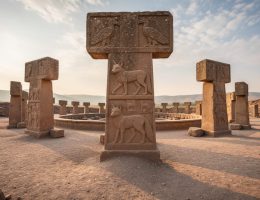
Low-angle wide view of T-shaped stone pillars at Göbekli Tepe with animal relief carvings, lit by golden hour sunlight, with additional stone circles and distant Anatolian hills in the background
Stone-Inspired Architectural Legacies

These Ancient Stone Carvings Changed Temple Architecture Forever

Long before architects conceived soaring cathedrals or sculptors shaped Renaissance masterpieces, ancient craftsmen were transforming raw stone into humanity’s earliest three-dimensional art. The oldest stone sculptures, dating back over 30,000 years, reveal not just artistic ambition but sophisticated understanding of geology, tool-making, and material properties that continue to inform how we work with natural stone today.
These prehistoric carvings represent more than historical curiosities. They demonstrate stone’s unique capacity to preserve human expression across millennia, a permanence that explains why …

Colonial-era stepped stone quarry with workers extracting large blocks, ox-drawn carts and a narrow-gauge rail running toward a hazy harbor with sailing ship masts at golden hour
Historical and Cultural Context

How Colonial Stone Quarries Built Empires (And Changed Architecture Forever)

For centuries, the extraction and trade of natural stone mapped the ambitions of empire across continents, leaving an indelible mark on both landscape and culture. From the marble quarries of Carrara supplying Roman conquests to the granite mines of colonial India shipping materials to British imperial projects, stone extraction became inseparable from the mechanics of colonial expansion. European powers systematically identified, claimed, and exploited mineral-rich territories, transforming indigenous quarrying traditions into industrial operations that prioritized metropolitan demand over local needs.
This colonial legacy …

Modern living room with a honed limestone wall, polished marble coffee table, wood accents, and indoor plants lit by soft natural daylight, with a blurred garden outside the window.
Psychological and Emotional Impact

Natural Stone Won’t Fix Your Emotions (But Here’s What It Can Actually Do)

The search for emotional stability through crystals reflects a deeper human need: creating environments that nurture mental wellbeing. While metaphysical crystal properties lack scientific validation, natural stone does demonstrably influence emotional health through measurable environmental and psychological mechanisms.
Natural stone materials create biophilic connections that reduce cortisol levels and promote calm. Research confirms that incorporating earth-derived materials into living spaces lowers stress responses and enhances emotional regulation. The tactile quality, thermal mass, and visual permanence of stone trigger …

Gloved hand using a microfiber pad to apply a color-enhancing sealer on weathered travertine patio tiles near a pool, warm side lighting, shallow depth of field.
Artistic Craftsmanship Insights

Transform Your Stone: Professional Coloring Techniques That Bring Natural Beauty to Life

Transform faded travertine, limestone, or marble surfaces by applying penetrating color enhancers that restore depth and richness to weathered stone. These specialized stains penetrate porous natural stone, reviving original hues while protecting against future deterioration—ideal for pool decks, patios, and interior floors showing signs of age.
Customize concrete pavers, flagstone walkways, and stone veneers using acid-based or water-based staining systems that create permanent color changes through chemical reactions or surface bonding. Acid stains produce variegated, organic patterns in earth tones, while water-based options …