
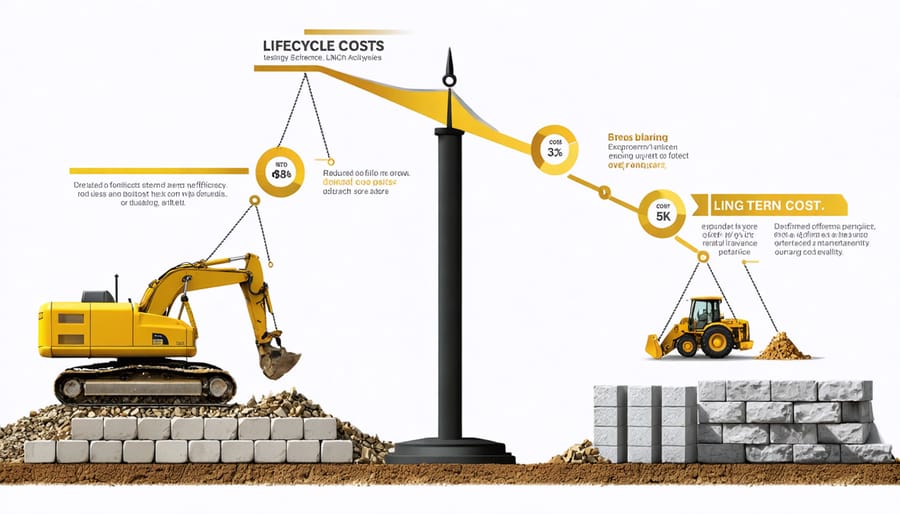
Understanding life cycle cost analysis transforms seemingly simple stone project decisions into strategic long-term investments. When evaluating natural stone installations, this comprehensive financial assessment captures not just initial purchase and installation costs, but maintenance, repair, and eventual replacement expenses over the project’s entire lifespan.
Consider a commercial building’s granite facade installation: while premium granite might cost 30% more upfront than lower-grade alternatives, its superior durability typically reduces maintenance costs by 45% over two decades and extends replacement intervals by 15-20 years. This analytical approach reveals that premium materials often deliver better value despite higher initial investments.
Life cycle cost analysis empowers stakeholders to make data-driven decisions by quantifying both obvious and hidden expenses. From energy efficiency impacts to labor costs for periodic maintenance, this methodology provides a clear financial roadmap for the entire project lifecycle. For architects, contractors, and property owners, mastering this analysis becomes crucial for delivering projects that balance immediate budget constraints with long-term economic benefits.
By examining real-world applications and systematic calculation methods, professionals can confidently navigate material selection, installation techniques, and maintenance strategies that optimize both performance and financial returns.
Breaking Down a Stone Project’s True Costs

Initial Investment Costs
The initial project costs for natural stone installations typically encompass several key components that must be carefully considered. The primary expense is the material cost, which varies significantly based on stone type, quality, and market availability. For a typical 1,000-square-foot commercial installation, premium marble might cost between $15-30 per square foot for materials alone.
Installation costs generally account for 30-40% of the initial investment, including professional labor, specialized equipment, and necessary substrate preparation. Additional setup expenses include transportation, which typically ranges from $2-5 per square foot depending on distance and material weight.
Auxiliary materials such as setting beds, adhesives, and sealants contribute approximately 10-15% to the upfront costs. Engineering and design fees, particularly for complex installations, usually account for 5-8% of the initial budget. Permits and compliance documentation, while varying by location, typically add another 2-3% to the total investment.
These components create a comprehensive initial cost structure that serves as the foundation for accurate life cycle cost analysis calculations.
Operational and Maintenance Expenses
Regular maintenance and operational costs form a significant portion of a stone installation’s life cycle expenses. Based on industry data, routine cleaning typically accounts for 15-20% of annual maintenance budgets. Professional cleaning services, performed quarterly, average $2-4 per square foot, while daily maintenance by in-house staff requires dedicated labor hours and cleaning supplies.
Implementing sustainable maintenance practices can help optimize these costs while extending the stone’s lifespan. Sealing requirements vary by stone type and usage, with high-traffic areas needing resealing every 12-18 months at approximately $1.50-3.00 per square foot.
Additional maintenance considerations include periodic inspections ($200-400 annually), grout repair (averaging $300-500 every 2-3 years), and potential surface restoration ($8-15 per square foot every 5-10 years). These costs can be significantly reduced through preventive maintenance and proper initial installation. Creating a detailed maintenance schedule and budget helps prevent unexpected expenses and ensures optimal stone performance throughout its lifecycle.
Case Study: Marble vs. Alternative Materials
Initial Installation Comparison
When comparing initial installation costs across different stone materials, granite typically commands the highest upfront investment at $40-100 per square foot installed, followed by marble at $35-75 per square foot. Limestone and travertine present more moderate options, ranging from $30-60 per square foot installed.
Labor costs vary significantly based on complexity, with basic installations starting at $8 per square foot and intricate patterns or special finishing requirements pushing costs up to $25 per square foot. Additional materials like setting beds, grout, and sealants add approximately $5-10 per square foot to the total cost.
Equipment requirements also factor into initial costs. While basic cutting tools suffice for simpler installations, specialized equipment for complex cuts or large-scale projects can add $1,000-3,000 to the setup costs. Protective materials and waste disposal typically account for 5-10% of the total installation budget.
Transportation and handling costs vary by distance and material weight, generally adding $2-5 per square foot for local delivery, with long-distance shipping potentially doubling these figures.

Year-by-Year Maintenance Costs
Maintenance costs for natural stone installations typically follow a predictable pattern, with regular annual expenses and periodic major maintenance requirements. In our example project, a commercial lobby with 1,000 square feet of marble flooring, the yearly maintenance costs break down as follows:
Regular cleaning and maintenance (performed weekly): $3,600 annually
Deep cleaning and sealing (performed annually): $2,000
Periodic repairs and replacements (averaged annually): $1,500
Professional inspection costs: $800
These figures account for labor, cleaning supplies, sealants, and replacement materials. The total annual maintenance cost averages $7,900, though this can fluctuate based on usage patterns and environmental conditions.
Years 1-5 typically maintain steady costs, with slight increases due to inflation. However, years 6-10 often see a 15-20% increase in maintenance requirements as the stone begins to show wear. By years 11-15, some areas may require more extensive restoration or partial replacement, potentially increasing annual costs by 25-30%.
To optimize maintenance costs, implement a proactive maintenance schedule and address issues promptly. This approach typically reduces long-term expenses by 20-25% compared to reactive maintenance strategies. Keep detailed records of all maintenance activities and costs to better predict future expenses and identify potential cost-saving opportunities.
Remember that local labor rates, climate conditions, and usage patterns can significantly impact these figures, so adjust estimates accordingly for your specific situation.
Long-term Value Assessment
The long-term value assessment of natural stone installations reveals significant benefits that extend beyond initial costs. Properties featuring high-quality stone applications typically experience a 2-5% increase in market value compared to similar properties with conventional materials. This appreciation is particularly notable in luxury residential and commercial spaces, where natural stone’s durability and timeless appeal contribute to sustained property values.
Natural stone’s longevity plays a crucial role in its value proposition. While the initial investment may be higher, properly maintained stone installations can last 50-100 years or more, far exceeding the lifespan of alternative materials. This extended service life translates to reduced replacement costs and minimal maintenance expenses over time.
Additionally, stone’s thermal properties can contribute to energy efficiency, potentially reducing heating and cooling costs by 10-15% annually. When conducting a comprehensive value assessment, it’s essential to consider these operational savings alongside the material’s ability to maintain its aesthetic appeal and structural integrity over decades of use. These factors combine to create a compelling argument for stone as a long-term investment that appreciates rather than depreciates over time.
Calculating Your Project’s Lifecycle Costs
Essential Cost Factors
When conducting a life cycle cost analysis for stone projects, several critical cost factors must be considered to ensure accurate long-term projections. Initial material and installation costs form the foundation of the calculation, including the price of stone selection, fabrication, and professional installation services. Today’s modern planning tools help streamline these calculations.
Ongoing maintenance requirements represent another significant factor, encompassing regular cleaning, sealing, and periodic professional treatments. These costs vary depending on the stone type, location, and usage patterns. Energy implications should also be factored in, particularly for large-scale installations where stone materials can impact heating and cooling efficiency.
Replacement and repair costs must be anticipated, including potential damage from wear, accidents, or environmental factors. The expected lifespan of different stone types and installation methods directly influences these projections. Insurance and warranty considerations should be included, as premium materials often come with extended coverage options.
Environmental impact costs, while sometimes harder to quantify, are increasingly important in today’s market. These may include sustainability certifications, recycling potential, and end-of-life disposal considerations. Transportation and logistics expenses should also be calculated, particularly for projects requiring specialized handling or long-distance shipping.
All these factors contribute to a comprehensive understanding of the true cost of stone installation over its complete lifecycle, enabling more informed decision-making and accurate budget planning.
Using the LCC Formula
The Life Cycle Cost (LCC) formula can be broken down into manageable components for practical application. The basic formula is:
LCC = Initial Cost + Maintenance Costs + Operating Costs + Replacement Costs – Salvage Value
Let’s consider a practical example using natural stone flooring for a commercial space:
Initial Cost: $50,000 (including materials and installation)
Annual Maintenance: $2,000
Operating Costs: $500/year (cleaning supplies and labor)
Expected Replacement: None (with proper maintenance)
Salvage Value: $10,000 (estimated after 20 years)
For a 20-year analysis period with a 3% discount rate, we would:
1. Calculate the present value of annual maintenance:
$2,000 × Present Value Factor (20 years, 3%) = $29,832
2. Calculate the present value of operating costs:
$500 × Present Value Factor (20 years, 3%) = $7,458
3. Subtract the present value of salvage value:
$10,000 × Present Value Factor (20 years, 3%) = $5,537
Therefore:
LCC = $50,000 + $29,832 + $7,458 – $5,537 = $81,753
This calculation helps stakeholders understand the true long-term cost of the stone installation, enabling better-informed decisions while considering both immediate and future financial implications.
Cost-Saving Strategies Without Compromising Quality
Implementing cost-saving strategies while maintaining stone quality requires careful planning and consideration of various factors throughout the project lifecycle. By incorporating effective risk management strategies, project managers can optimize costs without sacrificing the end result.
One of the most effective approaches is to invest in proper material selection upfront. Choose stones that naturally require less maintenance and have proven durability in similar applications. For example, selecting granite for high-traffic areas may cost more initially but reduces long-term maintenance expenses and replacement needs.
Preventive maintenance scheduling can significantly reduce lifecycle costs. Establish a regular maintenance routine that includes periodic sealing, cleaning, and inspection. This proactive approach helps identify potential issues before they become costly problems and extends the stone’s lifespan.
Consider implementing these practical cost-saving measures:
1. Bundle maintenance contracts for multiple areas or properties to negotiate better rates
2. Train facility staff in proper stone care to reduce the need for specialized services
3. Use high-quality, appropriate cleaning products to prevent damage and extend maintenance intervals
4. Schedule routine maintenance during off-peak hours to minimize disruption and associated costs
5. Document all maintenance activities to optimize future scheduling and budget allocation
Modern technology also offers cost-saving opportunities. Using digital monitoring systems and predictive maintenance software can help identify optimal maintenance timing and prevent unnecessary interventions. These tools can track wear patterns, environmental conditions, and usage rates to inform maintenance decisions.
Another crucial strategy is to establish relationships with reliable suppliers and maintenance contractors. Long-term partnerships often lead to preferential pricing and priority service, which can reduce both immediate and long-term costs. These relationships also ensure consistency in material quality and maintenance standards.
When selecting installation methods and materials, consider options that may cost more initially but offer superior longevity and reduced maintenance requirements. For instance, using higher-grade setting materials and waterproofing systems can prevent costly repairs and replacements down the line.
Remember that proper documentation of all maintenance activities, costs, and outcomes helps refine future strategies and improve cost efficiency over time. This data-driven approach enables better decision-making and more accurate lifecycle cost projections.
Life cycle cost analysis (LCCA) proves to be an invaluable tool for making informed decisions about natural stone investments. Through our examination of various examples and methodologies, we’ve seen how LCCA helps stakeholders understand the true costs and benefits of stone installations over their entire lifespan.
Key takeaways from our analysis include the importance of considering initial costs alongside long-term maintenance, repair, and replacement expenses. The case studies presented demonstrate that while premium natural stone materials may have higher upfront costs, their durability and longevity often result in lower total ownership costs compared to alternative materials.
To implement LCCA effectively in your stone project, we recommend:
– Gathering comprehensive data on initial costs, including material, installation, and design fees
– Calculating realistic maintenance schedules and associated costs
– Factoring in regional climate conditions and usage patterns
– Considering potential energy savings and environmental benefits
– Including end-of-life disposal or recycling costs
Remember that LCCA is not just about identifying the cheapest option, but rather finding the most cost-effective solution that meets your project’s requirements and quality standards. By taking a systematic approach to cost analysis, you can make well-informed decisions that balance immediate budget constraints with long-term value and performance.
For optimal results, consult with stone industry professionals who can provide accurate cost data and maintenance recommendations specific to your project needs.