
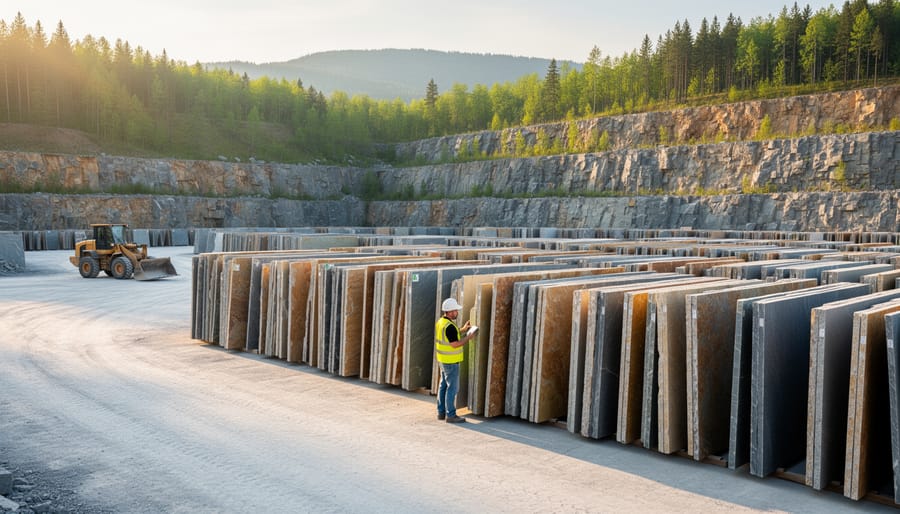
Strategic sourcing of sustainable stone requires a systematic approach that balances environmental responsibility with project requirements and budget constraints. The global natural stone industry faces increasing scrutiny over quarrying practices, carbon emissions from transportation, and labor conditions—making informed procurement decisions more critical than ever.
Define your project’s sustainability criteria before engaging suppliers. Establish clear benchmarks for environmental impact, including acceptable quarry rehabilitation standards, maximum transportation distances, and required third-party certifications such as Natural Stone Council certification or equivalent regional standards. Document these requirements in a formal sourcing policy that all stakeholders can reference throughout the procurement process.
Evaluate supplier transparency as your primary qualification metric. Request detailed documentation of extraction methods, energy consumption data, waste management protocols, and chain-of-custody records. Suppliers committed to sustainability will readily provide quarry site assessments, environmental impact reports, and evidence of community engagement programs.
Prioritize regional sourcing to minimize transportation emissions while supporting local economies. Stone transported over 500 miles can double its carbon footprint compared to locally sourced alternatives. Conduct a comprehensive assessment of quarries within your geographic region before exploring international options.
Verify certifications through independent audit rather than accepting supplier claims at face value. Cross-reference certification numbers with issuing organizations, review audit dates to ensure currency, and confirm that certifications cover the specific quarry locations supplying your project. This seven-step framework transforms sustainable sourcing from an aspirational goal into a repeatable, measurable process that delivers both environmental and business value.
Why Strategic Sourcing Matters in Natural Stone Selection
The natural stone industry extracts over 300 million tons of material annually, leaving an environmental footprint that extends from quarry sites to fabrication facilities and transportation networks worldwide. Yet despite this massive scale, many purchasing decisions happen without consideration of where stone comes from, how it’s extracted, or the conditions under which workers operate. This disconnect between consumption and consequence creates significant risks for everyone involved in the stone supply chain.
Strategic sourcing addresses these challenges by establishing a systematic approach to material selection that balances aesthetic requirements, budget constraints, and environmental responsibility. Unlike traditional purchasing methods that focus primarily on price and availability, sustainable stone sourcing evaluates the complete lifecycle of materials, from extraction practices to transportation logistics and long-term performance.
The consequences of non-strategic sourcing extend beyond environmental concerns. Projects frequently encounter supply chain disruptions when working with unreliable suppliers, leading to costly delays and material inconsistencies. Quality issues emerge when buyers lack verification processes, resulting in stone that doesn’t meet project specifications or durability requirements. Environmental damage from unregulated quarrying operations includes habitat destruction, water contamination, and excessive energy consumption during extraction and processing.
For architects and designers, these risks translate directly into project challenges, client dissatisfaction, and potential liability issues. Consumers face uncertainty about whether their stone purchases align with their values and quality expectations. Industry professionals recognize that reputation increasingly depends on demonstrating responsible sourcing practices.
The solution lies in implementing a structured framework that transforms sourcing from a transactional activity into a strategic decision-making process. This approach protects project outcomes while advancing industry-wide improvements in environmental stewardship and operational transparency.
Step 1: Assess Your Project Requirements and Sustainability Goals

Defining Your Stone Specifications
Before you begin sourcing, establish clear technical specifications for your stone selection. Start by evaluating durability requirements based on your application. Flooring demands high wear resistance and slip ratings, while countertops need stain and scratch resistance. Vertical cladding prioritizes lower weight and secure anchoring properties.
Climate compatibility is essential for longevity. Consider freeze-thaw cycles in colder regions, which require low-absorption stones like granite or dense limestone. In coastal environments, select materials resistant to salt exposure and moisture penetration. Hot, arid climates benefit from heat-resistant stones with minimal thermal expansion.
Application type dictates thickness, finish, and edge detailing. Flooring typically requires 3/4-inch to 1.25-inch thickness with honed or flamed finishes for traction. Countertops work well at 2-3 centimeters with polished surfaces, while exterior cladding may range from 3/4-inch to 2 inches depending on installation method.
Define your aesthetic preferences including color palette, veining patterns, and finish options. Review physical samples under various lighting conditions, as digital images rarely capture true stone character. Modern sourcing technologies can help visualize options, but hands-on evaluation remains crucial for final selection decisions.
Setting Measurable Sustainability Benchmarks
Establishing clear, measurable benchmarks transforms sustainability from an abstract goal into trackable outcomes. Start by setting carbon footprint reduction targets specific to your supply chain, such as reducing transportation emissions by 30% within two years or sourcing from quarries that use renewable energy for at least 50% of operations.
Ethical labor standards require concrete criteria: third-party certifications confirming fair wages, maximum working hours, and safe conditions at extraction sites. Specify that suppliers must provide transparent documentation of labor practices and undergo regular independent audits.
For biodiversity protection, establish measurable criteria like maintaining buffer zones around sensitive ecosystems, implementing quarry rehabilitation plans with native species reintroduction, and conducting environmental impact assessments before operations begin. Quantify these expectations with specific metrics, such as restoring 100% of depleted quarry land within five years of closure.
Local sourcing preferences should balance environmental benefits with project requirements. Define geographic parameters that reduce transportation distances while maintaining quality standards. For example, prioritize stone sourced within 500 miles for projects where regional varieties meet design specifications, significantly lowering transportation emissions while supporting local economies and preserving regional architectural character.
Step 2: Research and Identify Sustainable Quarries
Key Certifications and Standards
When evaluating quarry operations and suppliers, understanding key certifications provides valuable assurance of sustainable practices. The Natural Stone Institute offers several accreditation programs that demonstrate a supplier’s commitment to quality and environmental responsibility. Their certifications verify adherence to industry best practices in extraction, processing, and handling, ensuring both product integrity and ethical operations.
ISO 14001 certification represents international recognition of effective environmental management systems. Suppliers with this certification have implemented structured approaches to minimize environmental impact, reduce waste, and continuously improve sustainability performance. This standard indicates that a company actively monitors its environmental footprint and maintains documented procedures for pollution prevention and resource conservation.
Local environmental permits are equally critical indicators of responsible sourcing. These permits demonstrate compliance with regional regulations governing water usage, land reclamation, dust control, and habitat protection. Legitimate quarries maintain current permits and often exceed minimum requirements, implementing additional measures to protect local ecosystems.
When reviewing supplier credentials, request documentation of all certifications and permits. Verify that certifications are current and issued by recognized bodies. Suppliers transparent about their credentials typically maintain higher standards overall, making certification verification an essential step in your sourcing evaluation process.
Evaluating Quarry Practices
When evaluating potential stone suppliers, asking targeted questions about quarry operations reveals their commitment to sustainability. Start by inquiring about extraction methods—do they employ selective quarrying techniques that minimize environmental disruption, or use wire saws and water jets instead of explosives to reduce vibration and dust?
Land rehabilitation questions are essential. Ask suppliers to detail their site restoration plans, including topsoil preservation, native plant reseeding schedules, and post-closure land use commitments. Request documentation showing completed rehabilitation projects.
Water management practices significantly impact local ecosystems. Inquire about water recycling systems, sediment control measures, and how quarries prevent contamination of nearby water sources. Responsible operators implement closed-loop water systems that minimize freshwater consumption.
Understanding energy sources helps assess carbon footprint. Does the quarry use renewable energy? What percentage of operations run on solar, wind, or hydroelectric power? Request data on energy consumption per cubic meter of stone extracted.
Waste reduction programs demonstrate operational efficiency. Ask about stone recovery rates, how cutting waste is repurposed, and whether dust and slurry undergo processing for alternative uses like construction aggregates. Technologies supporting supply chain transparency enable verification of these practices, allowing you to validate supplier claims through documented evidence rather than relying solely on verbal assurances.
Step 3: Evaluate Transportation and Carbon Footprint

The True Cost of Distance
Transportation generates vastly different emissions depending on mode. Ocean freight produces approximately 10-40 grams of CO2 per ton-kilometer, making it remarkably efficient for heavy materials like stone. Rail transport emits roughly 20-50 grams, while trucking generates 60-150 grams per ton-kilometer. Air freight, rarely used for stone due to weight, produces over 500 grams.
Local stone doesn’t always win the sustainability battle. A regionally quarried stone transported 200 miles by truck can generate similar emissions to stone shipped 5,000 miles by cargo vessel then trucked 50 miles inland. The equation shifts when considering quarry practices—an overseas operation using renewable energy and water reclamation systems may offset transportation impacts compared to a nearby quarry with poor environmental controls.
Imported stone remains justified when local alternatives don’t exist, when specific geological properties are required for structural integrity, or when overseas suppliers demonstrate superior sustainability practices. The key is evaluating total lifecycle impact rather than distance alone. Request transportation documentation from suppliers, including shipping manifests and carbon calculations, to make informed comparisons between sourcing options.
Optimizing Delivery Logistics
Transportation represents a significant portion of stone sourcing’s carbon footprint, making logistics optimization essential for sustainability. Begin by consolidating shipments whenever possible—combining multiple orders reduces trips and emissions per unit. Work with suppliers who operate efficient distribution networks and prioritize full truckloads over partial shipments.
Choose carriers committed to low-emission transport options, including newer fuel-efficient vehicles, hybrid fleets, or those investing in alternative fuels. Sea freight typically generates lower emissions than air transport for international shipments, though transit time increases. Request detailed shipping documentation to verify routes and methods align with your sustainability goals.
Partner with suppliers who demonstrate sustainable logistics practices, such as optimized route planning software, warehouse locations near major projects, or carbon offset programs. Some forward-thinking stone suppliers now offer regional distribution centers that minimize long-haul transportation. Request transparency about their logistics operations and carbon tracking systems. Consider the total supply chain distance when selecting suppliers—sometimes paying slightly more for closer sources yields better environmental outcomes than distant budget options requiring extensive transportation.
Step 4: Verify Ethical Labor and Community Impact
Labor Standards and Worker Safety
When evaluating stone suppliers, prioritize those who uphold ethical labor practices throughout their operations. Look for evidence of fair wages that meet or exceed local living standards, safe working conditions with proper protective equipment, and strict policies prohibiting child labor. Verify that workers have the right to organize and voice concerns without retaliation.
Request third-party certifications such as SA8000 or Fair Trade verification, which independently audit labor conditions. Conduct site visits when possible to observe workplace conditions firsthand. Review supplier documentation including employment contracts, safety training records, and worker complaint procedures. Ask for transparency reports that detail labor practices and any corrective actions taken. Suppliers committed to worker welfare will readily share this information and demonstrate continuous improvement efforts. Remember that responsible sourcing protects both workers and your reputation while supporting sustainable industry practices.
Community Engagement and Economic Impact
Responsible stone sourcing extends beyond environmental considerations to encompass meaningful community engagement and economic development. Leading quarries prioritize local employment, offering fair wages and skills training that create long-term career opportunities rather than temporary extraction jobs. They invest in local infrastructure improvements, from roads to schools, ensuring communities benefit tangibly from resource extraction on their land.
Transparent communication with neighboring communities through regular town halls and feedback mechanisms helps address concerns proactively. Fair compensation for land use, coupled with revenue-sharing agreements, prevents exploitation and ensures equitable distribution of economic benefits. Many exemplary operations establish community development funds that support healthcare, education, and small business initiatives beyond the quarry’s immediate operations.
By sourcing from quarries with demonstrated community partnerships, buyers contribute to regional prosperity while securing ethically produced materials. This approach transforms stone extraction from a purely extractive industry into a catalyst for sustainable local development, creating value that extends far beyond the quarried material itself.
Step 5: Assess Quarry Restoration and Land Management Practices
Active Quarry Environmental Management
Responsible quarry operations implement comprehensive environmental management systems throughout active extraction. Dust suppression techniques include water spraying systems, vegetative barriers, and regular road maintenance to minimize airborne particulate matter that affects both workers and surrounding communities. Water recycling systems capture and reuse process water, reducing freshwater consumption by up to 90% in some operations while preventing contaminated runoff from entering local watersheds.
Active habitat protection measures involve creating buffer zones around sensitive ecosystems, implementing seasonal extraction schedules that respect wildlife breeding cycles, and continuous monitoring of biodiversity indicators. Leading quarries employ environmental officers who conduct regular assessments and adjust operations to minimize ecological disruption.
Progressive rehabilitation transforms exhausted quarry sections into functional landscapes even while extraction continues elsewhere on the site. This approach includes topsoil preservation, native species replanting, and slope stabilization. By rehabilitating incrementally rather than waiting until closure, operators reduce the overall environmental footprint and demonstrate long-term stewardship. These ongoing practices distinguish truly sustainable sources from operations focused solely on extraction efficiency.
Post-Extraction Site Restoration
Responsible stone sourcing doesn’t end when extraction stops. Leading quarry operators implement comprehensive post-extraction site restoration plans that transform industrial landscapes into valuable community assets. At minimum, legal requirements mandate basic reclamation—stabilizing slopes, managing water drainage, and preventing erosion. However, best practices extend far beyond compliance.
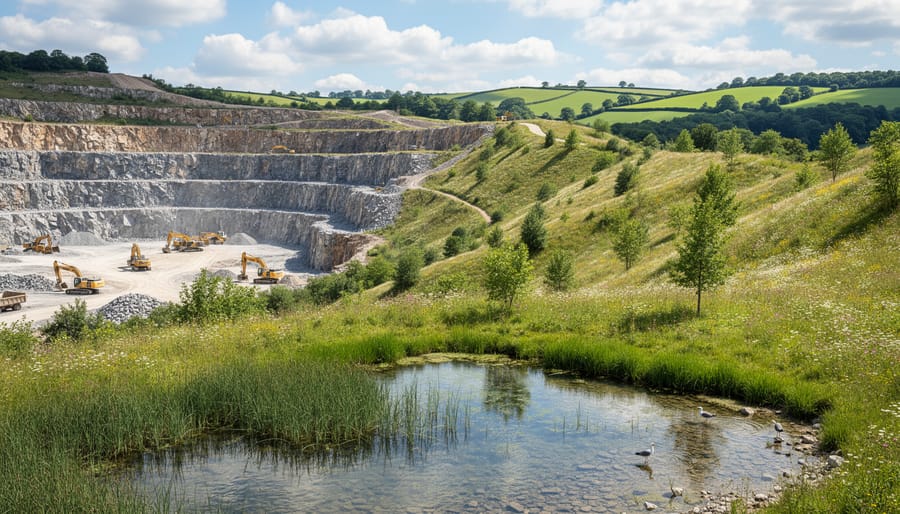
Progressive restoration efforts include strategic re-vegetation using native plant species that restore biodiversity and create wildlife corridors. Some former quarry sites become thriving wetland habitats, while others transform into recreational parks, nature reserves, or water features that serve surrounding communities. These conversions demonstrate how extraction sites can deliver long-term environmental and social value.
When evaluating suppliers, examine their restoration track record. Request documentation of completed reclamation projects, including before-and-after assessments and ecological monitoring data. Suppliers committed to genuine sustainability invest in habitat creation, soil regeneration, and community engagement throughout the restoration process. The most forward-thinking operations even plan for site afterlife before extraction begins, integrating restoration into their operational strategy rather than treating it as an afterthought.
Step 6: Review Material Efficiency and Waste Reduction
Maximizing Stone Utilization
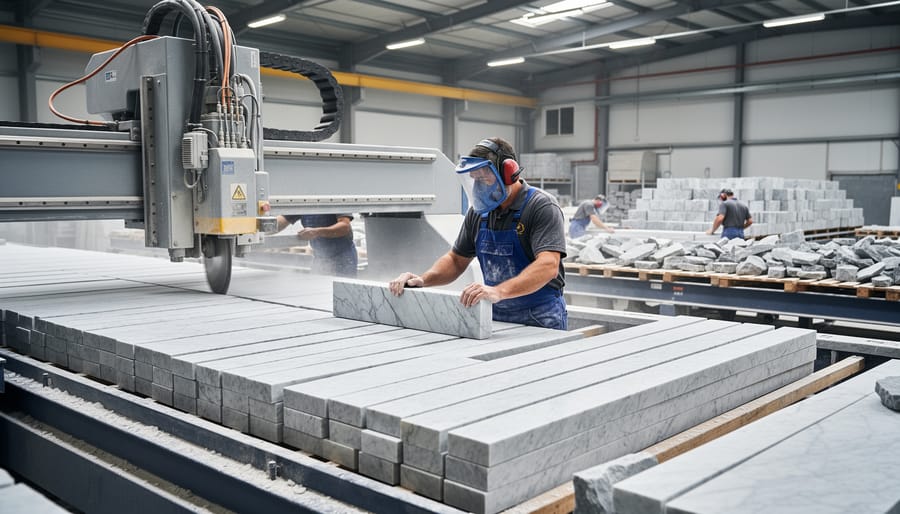
Modern stone sourcing prioritizes maximizing every piece extracted from the quarry. Advanced cutting technologies like CNC waterjet and diamond wire saws enable precision fabrication with minimal waste, creating intricate designs while preserving more usable material. Custom sizing strategies match stone dimensions to specific project requirements, significantly reducing offcuts that might otherwise go unused.
Implementing comprehensive grading systems ensures stones of varying quality levels find appropriate applications. Premium grades serve high-visibility installations, while lower grades work perfectly for structural applications, landscaping, or aggregate production. Some suppliers now repurpose stone dust and small fragments into composite materials or soil amendments.
Progressive stone suppliers track utilization rates across their operations, often achieving 85-90% material usage compared to industry averages of 60-70%. Request detailed information about how your supplier manages offcuts and secondary materials. Suppliers committed to zero-waste principles demonstrate both environmental responsibility and operational efficiency, often passing cost savings to customers while reducing the environmental footprint of your project.
By-Product Innovation and Waste Valorization
Modern stone processing generates by-products that align with circular economy principles, transforming what was once waste into valuable resources. Stone dust, for instance, serves as a cost-effective aggregate for road construction and concrete production, while smaller chips become decorative landscaping materials for pathways and garden beds. Agricultural applications benefit from crushed stone used as soil amendment and natural lime, improving crop yields without synthetic additives. These innovative reuse strategies divert thousands of tons from landfills annually while creating additional revenue streams for quarry operators. When evaluating suppliers, ask specifically about their by-product management programs and partnerships with industries that utilize these materials. Leading operations now achieve near-zero waste through systematic valorization, proving that responsible sourcing extends beyond the primary product to encompass the entire extraction process.
Step 7: Establish Long-Term Supplier Partnerships
Creating Accountability Frameworks
Establishing accountability frameworks ensures your suppliers maintain their commitments long-term. Begin by scheduling quarterly performance reviews that measure key metrics like delivery timelines, quality consistency, and environmental compliance. These reviews should compare actual performance against the standards you established during contract negotiations.
Implement annual third-party audits of quarry operations to verify labor practices, environmental management, and safety protocols remain compliant. Request sustainability reports that document water usage, energy consumption, carbon emissions, and waste reduction efforts. This data provides transparency and helps identify areas for improvement.
Create continuous improvement agreements that incentivize suppliers to exceed baseline requirements. Set incremental targets for reducing environmental impact or enhancing worker conditions, with bonuses tied to achievement. Document all findings and corrective actions in a centralized system accessible to your procurement team.
Regular communication maintains alignment between your sustainability goals and supplier capabilities. Schedule semi-annual strategy sessions to discuss industry trends, regulatory changes, and emerging best practices. This collaborative approach transforms suppliers into partners invested in shared success rather than transactional vendors focused solely on fulfilling orders.
Benefits of Consistent Sustainable Partnerships
Establishing consistent partnerships with sustainable stone suppliers delivers tangible advantages that extend beyond environmental responsibility. Price stability becomes more predictable as long-term relationships often include negotiated rate structures that protect against market volatility. Quality assurance improves significantly when suppliers understand your specific requirements and standards, reducing defects and project delays. Supply reliability strengthens through prioritized access to materials, particularly important for premium stone varieties with limited availability. These partnerships also foster joint innovation, where suppliers and buyers collaborate on advancing extraction techniques, reducing waste, and developing eco-friendly processing methods. Perhaps most valuable for architects and designers, documented sustainable sourcing practices enhance project credentials for green building certifications and strengthen your professional reputation among environmentally conscious clients. When suppliers become invested partners rather than transactional vendors, both parties benefit from shared knowledge, improved efficiency, and collective progress toward industry-wide sustainability goals that preserve natural stone resources for future generations.
Real-World Success: Sustainable Stone Sourcing in Action
When the Riverside Cultural Center in Portland embarked on constructing their new 45,000-square-foot facility, the project team committed to implementing all seven strategic sourcing steps for their extensive natural stone requirements. The results validated their methodical approach.
The design called for limestone flooring, granite cladding, and slate roofing—approximately 12,000 square feet of material. By establishing clear sustainability criteria upfront, the team identified three quarries within 500 miles that met their environmental standards. Each quarry provided third-party certifications for responsible extraction practices and documented restoration plans.
During the evaluation phase, the team discovered that a Montana quarry offering limestone had recently implemented water recycling systems that reduced consumption by 60 percent. Though their initial quote was 8 percent higher than alternatives, the proximity advantage reduced transportation emissions by an estimated 15 tons of CO2. The selection committee approved the premium cost, recognizing long-term value alignment.
The project achieved LEED Gold certification, with sustainable stone sourcing contributing significantly to earned points. Measurably, the project reduced its carbon footprint by 22 percent compared to similar facilities using conventionally sourced materials. Construction waste decreased by 18 percent due to careful quantity planning and the quarry’s precision cutting services.
The most valuable lesson learned involved early supplier engagement. By involving the quarry representatives during the design development phase, the team optimized stone selection for both aesthetic goals and material efficiency. This collaboration eliminated costly design changes and reduced excess ordering.
The Riverside Cultural Center demonstrates that strategic sourcing delivers tangible benefits. Their documented success has since influenced three additional municipal projects in the region to adopt similar comprehensive sourcing frameworks, creating a ripple effect of responsible procurement practices.
Sustainable stone sourcing represents far more than an ethical checkbox—it’s a strategic business practice that delivers measurable advantages in quality, supply chain reliability, and market positioning. By implementing these seven strategic sourcing steps, you’re not simply making responsible choices; you’re investing in superior materials backed by transparent supply chains, building partnerships with accountable suppliers, and differentiating your projects in an increasingly conscious marketplace.
Natural stone, when responsibly sourced, stands as one of the most sustainable building materials available. Its durability ensures centuries of use, its extraction footprint can be minimized through proper practices, and its end-of-life recyclability makes it a genuinely circular material. Unlike manufactured alternatives, stone doesn’t rely on energy-intensive production processes or synthetic compounds.
The competitive advantage extends beyond environmental credentials. Projects built on sustainable sourcing principles experience fewer supply disruptions, better material consistency, and enhanced reputation among clients who increasingly prioritize responsible practices. Start by evaluating your current suppliers against these seven steps, identify gaps in your sourcing strategy, and commit to gradual improvements. Whether you’re an architect specifying materials, a contractor managing procurement, or a homeowner planning a renovation, these steps provide a roadmap toward sourcing decisions that benefit your project, your business, and the planet.