
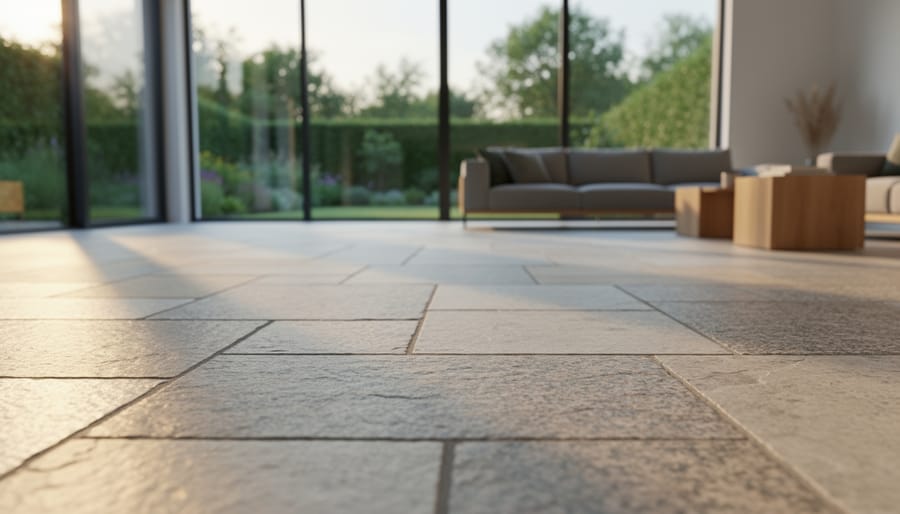
Natural stone delivers measurable energy performance through three fundamental mechanisms: thermal mass that stabilizes indoor temperatures by absorbing and slowly releasing heat, reducing HVAC cycling by up to 30%; inherent insulation properties with R-values ranging from 0.08 to 0.20 per inch depending on stone density and composition; and passive climate control that minimizes temperature fluctuations between day and night. Understanding these properties transforms how architects and homeowners approach sustainable building design.
Stone’s energy efficiency extends beyond thermal performance. Dense materials like granite and marble naturally regulate humidity levels while requiring zero operational energy, unlike manufactured alternatives that demand continuous production inputs and generate substantial carbon emissions. A limestone facade or slate roof installed today continues moderating building temperatures for centuries without degradation, replacement, or maintenance energy costs. This longevity factor alone makes natural stone one of the most sustainable materials available.
The science is clear: buildings incorporating natural stone in floors, walls, and exteriors demonstrate 15-25% lower heating and cooling costs compared to conventional construction. These aren’t theoretical projections but documented results from residential homes to commercial structures worldwide, proving that stone energy performance directly impacts both environmental footprint and operational budgets.
What Is Stone Energy?
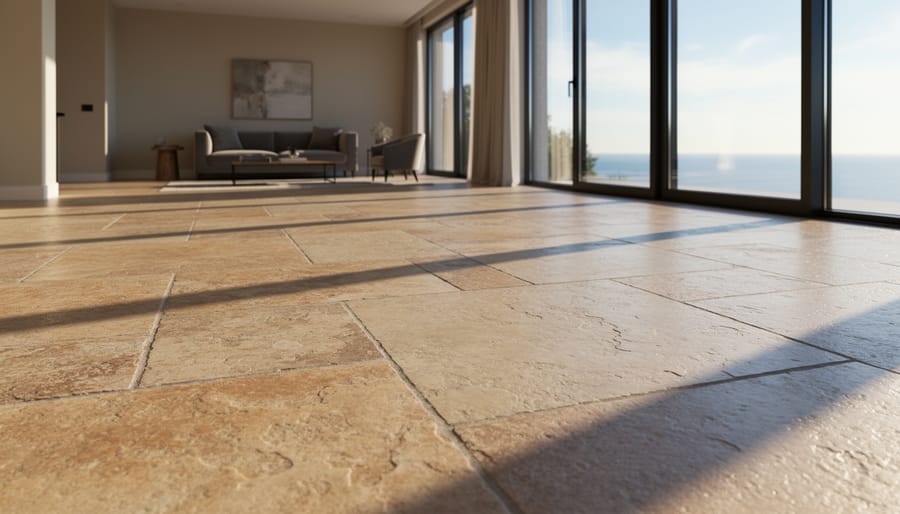
The Science Behind Thermal Mass
Natural stone’s remarkable ability to manage thermal energy lies in three fundamental physical properties that work together to create what scientists call thermal mass.
The first property is specific heat capacity, which measures how much energy a material can absorb before its temperature changes. Stone has a high specific heat capacity, meaning it takes considerable energy to heat it up or cool it down. Think of it like a large pot of water on the stove compared to a small cup—the pot takes much longer to boil because it holds more thermal energy.
Density is the second critical factor. Natural stone is significantly denser than conventional building materials like wood or drywall. This density allows stone to store more heat energy within the same volume. A granite countertop, for example, contains far more mass than a wooden one of equal size, giving it greater capacity to hold thermal energy.
The third property is thermal conductivity, which describes how quickly heat moves through a material. Stone has moderate conductivity—it absorbs heat slowly from its surroundings and releases it gradually over time. This delayed response creates a natural temperature buffering effect.
Together, these properties enable stone to function as a thermal battery. During warm periods, stone absorbs excess heat from the environment, keeping spaces cooler. When temperatures drop, that stored energy radiates back slowly, providing natural warmth. This cycle reduces the need for mechanical heating and cooling, translating directly into energy savings and improved comfort in homes and commercial spaces.
Why Natural Stone Outperforms Synthetic Materials
Natural stone’s superior thermal performance stems from its unique physical properties that synthetic materials simply cannot replicate. While concrete typically has a thermal mass of 1.8-2.4 kJ/kg·K, natural stones like granite and marble range from 0.79-0.90 kJ/kg·K, allowing them to absorb and release heat more efficiently throughout daily temperature cycles.
The density advantage is equally impressive. Granite weighs approximately 2,700 kg/m³ compared to standard concrete at 2,400 kg/m³, providing 12% greater thermal storage capacity per cubic meter. This translates directly to reduced heating and cooling loads in buildings. Studies show that structures incorporating natural stone can achieve 15-30% better energy performance than those using conventional materials like brick or concrete block.
When comparing R-values, which measure insulation effectiveness, natural stone demonstrates consistent thermal resistance ranging from R-0.08 to R-0.44 per inch depending on stone type. While this may seem lower than insulation materials, stone’s thermal mass works synergistically with modern insulation systems to create optimal building envelopes. The key lies in stone’s ability to moderate temperature swings, reducing HVAC system cycling by up to 25% compared to lightweight wall assemblies.
Recent natural stone innovations have further enhanced these properties through improved installation techniques and hybrid systems. Unlike synthetic alternatives that degrade over time, natural stone maintains its thermal properties indefinitely, providing consistent energy performance throughout a building’s lifespan without the need for replacement or maintenance that synthetic materials require.
How Stone Energy Reduces Your Building’s Carbon Footprint
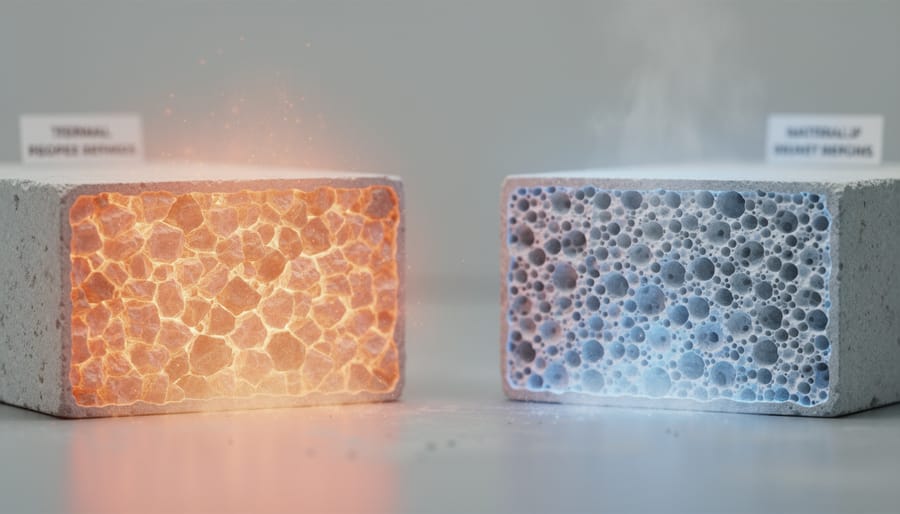
Passive Heating and Cooling
Natural stone’s inherent thermal mass makes it one of the most effective passive climate control materials available in building design. Thermal mass refers to a material’s ability to absorb, store, and slowly release heat energy, creating a natural buffer against temperature fluctuations that can dramatically reduce heating and cooling demands.
During winter months, stone materials absorb heat from sunlight streaming through windows or from active heating systems throughout the day. As evening temperatures drop, the stone gradually releases this stored warmth back into interior spaces, maintaining comfortable conditions long after heating systems cycle off. This heat retention can reduce overnight heating requirements by 20-30% in properly designed spaces.
Summer cooling benefits work through a similar principle but in reverse. Stone’s high thermal mass absorbs excess heat from indoor air during peak afternoon temperatures, preventing spaces from overheating. When evening arrives and outdoor temperatures decline, strategic ventilation allows the stone to release accumulated heat, effectively resetting the thermal battery for the next day’s cycle. In Mediterranean climates, thick stone walls have kept interiors naturally cool for centuries without mechanical air conditioning.
The effectiveness of passive temperature regulation depends on several factors: stone thickness, density, placement relative to sun exposure, and climate zone. Darker stones like granite and basalt absorb heat more efficiently than lighter varieties, while denser materials provide greater storage capacity. When integrated thoughtfully into building envelopes or interior features like accent walls and flooring, natural stone transforms from simple finish material into an active energy-saving component that works continuously without consuming power.
Long-Term Energy Savings
Buildings incorporating stone’s thermal mass properties consistently demonstrate measurable reductions in heating and cooling costs. A multi-family residential project in Portland, Oregon, featuring interior limestone walls, reported 23% lower annual energy bills compared to similarly-sized conventional buildings in the same climate zone. The stone’s ability to absorb daytime heat and release it gradually overnight reduced HVAC runtime by nearly one-third during shoulder seasons.
Commercial applications show even more dramatic results. An office building in Austin, Texas, designed with thick granite facades and stone-clad interior walls, achieved 31% energy savings over code-minimum performance standards. The thermal buffering effect kept interior temperatures stable despite significant outdoor temperature swings, reducing peak cooling demand and associated utility costs.
In Mediterranean climates, traditional stone construction has long proven its value. A modern renovation project in California that restored original stone walls while upgrading insulation documented a 28% decrease in summer cooling costs. The stone’s thermal lag prevented rapid heat transfer during hot afternoons, maintaining comfortable indoor conditions with minimal mechanical intervention. These savings typically translate to 15-30 year payback periods, making stone an economically viable long-term investment for energy-conscious building owners.
Durability Equals Sustainability
When evaluating true sustainability, longevity matters as much as initial environmental impact. Natural stone installations routinely last centuries with minimal maintenance, while alternative materials like vinyl, laminate, or engineered composites typically require replacement every 10-30 years. Each replacement cycle demands new manufacturing energy, transportation emissions, and disposal of old materials—often to landfills where synthetic products don’t biodegrade.
Consider a granite countertop installed today. It will likely serve multiple generations without needing replacement, avoiding the repeated energy costs that alternatives incur over the same timeframe. A limestone facade on a building can endure 200+ years, eliminating the need for re-cladding that consumes energy through demolition, production, and reinstallation. This durability dramatically reduces lifetime energy consumption per square foot of material used, making stone’s sustainability advantage compound over time. The embodied energy invested once continues delivering value for centuries, not decades.
Maximizing Stone Energy in Your Project
Best Stone Types for Thermal Performance
Not all natural stone offers the same thermal performance, and understanding these differences is crucial for optimizing energy efficiency in your project. Each stone type possesses unique characteristics that make it more suitable for specific climates and applications.
Granite stands out as the premier choice for thermal mass applications. With a thermal diffusivity ranging from 1.2 to 1.6 mm²/s and excellent heat retention capabilities, granite absorbs warmth during the day and releases it gradually at night. This makes it ideal for climates with significant temperature swings and applications like radiant floor heating systems.
Marble offers moderate thermal conductivity, typically between 2.5 to 3.5 W/mK, making it effective for interior applications where temperature regulation matters. Its smooth, dense surface facilitates efficient heat transfer in both passive solar designs and hydronic heating installations. Marble works particularly well in Mediterranean and temperate climates where moderate thermal performance is sufficient.
Limestone presents lower thermal conductivity compared to granite and marble, ranging from 1.3 to 2.2 W/mK. This quality makes it suitable for applications requiring some insulation properties alongside thermal mass benefits. Limestone performs well in mild climates and heritage restoration projects where traditional materials are preferred.
Slate provides a balance between thermal mass and insulation, with thermal conductivity around 1.5 to 2.5 W/mK. Its layered structure creates natural air pockets that enhance insulation while still offering reasonable heat storage capacity. Slate excels in roofing applications and exterior cladding in variable climates.
When selecting stone, consider your climate zone, intended application, and whether you prioritize heat retention or insulation. Combining different stone types strategically throughout a building can optimize overall thermal performance.
Strategic Placement for Maximum Impact
The energy-capturing potential of natural stone depends significantly on its location within your building design. Understanding solar exposure patterns and thermal dynamics enables you to maximize stone’s natural heat retention and release properties.
For flooring applications, prioritize areas receiving direct sunlight, particularly south-facing rooms in the Northern Hemisphere or north-facing spaces in the Southern Hemisphere. Stone floors positioned in these high-exposure zones absorb solar radiation throughout the day, gradually releasing warmth during evening hours. Dense materials like granite, marble, and limestone work exceptionally well in these applications, with darker colors capturing more thermal energy than lighter alternatives.
Interior accent walls benefit from strategic placement considerations that account for seasonal sun paths. Position stone walls perpendicular to primary windows in living spaces to maximize afternoon light absorption. This configuration allows the stone to function as a thermal battery, moderating temperature fluctuations and reducing HVAC demands.
Exterior facades require careful orientation analysis. East and west-facing stone installations experience the most dramatic temperature swings, making them ideal for showcasing thermal mass benefits. However, proper ventilation gaps behind cladding prevent excessive heat transfer during peak summer months.
Consider room function when planning installations. High-traffic areas like kitchens and family rooms benefit most from stone’s thermal regulation, while bedrooms may require supplementary temperature control. Consult with architects early in the design phase to integrate stone effectively within your building’s passive solar strategy, ensuring optimal energy performance year-round.
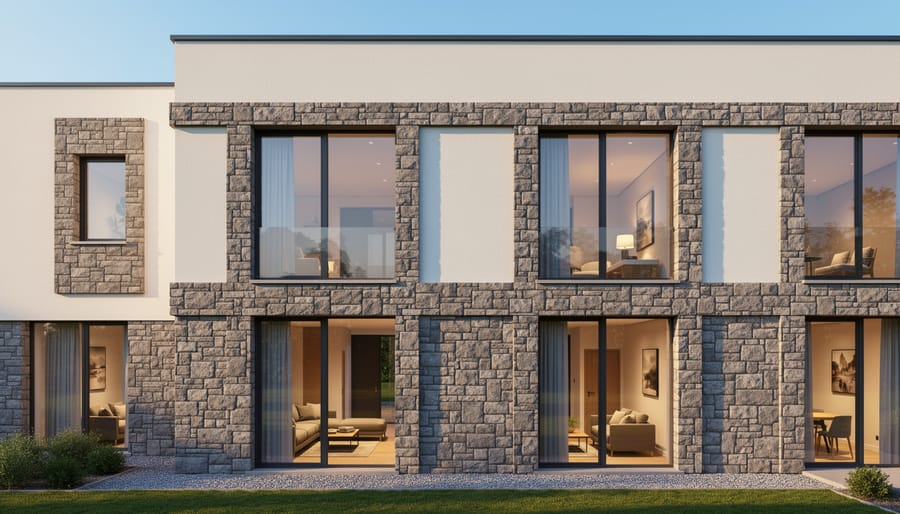
Combining Stone with Modern Energy Systems
Stone’s thermal mass capabilities reach their full potential when integrated with modern energy systems. When combined with radiant floor heating, stone flooring becomes an efficient heat distribution platform, absorbing warmth during heating cycles and releasing it gradually throughout the day. This synergy reduces energy consumption by maintaining stable temperatures with fewer heating cycles.
Solar gain strategies particularly benefit from stone’s thermal properties. Strategic placement of stone floors and walls in sun-exposed areas allows the material to capture and store solar heat during daylight hours, then release it during cooler evening periods. This passive solar approach can significantly reduce heating demands in well-designed spaces.
Geothermal systems paired with stone create highly efficient climate control solutions. The constant temperature exchange between geothermal loops and stone’s thermal mass results in minimal energy fluctuation, allowing HVAC systems to operate more efficiently. These integrated approaches demonstrate how ancient materials enhance cutting-edge sustainable building practices, reducing both operational costs and environmental impact while maintaining superior comfort levels throughout all seasons.
Real-World Stone Energy Success Stories
Natural stone’s energy-saving potential isn’t just theoretical—it’s delivering measurable results in buildings across the country. Here are three compelling examples that demonstrate how strategic stone applications are reducing energy costs and improving building performance.
The Denver Mountain Retreat demonstrated impressive thermal performance when homeowners renovated their 3,200-square-foot home using 18-inch thick sandstone walls on the south-facing elevation. The regional stone, quarried just 40 miles away, was selected specifically for its thermal mass capabilities in Colorado’s climate with dramatic temperature swings. After one year of monitoring, the homeowners documented a 34% reduction in heating costs compared to the pre-renovation period. Winter interior temperatures remained 8-12 degrees warmer during cold nights without additional heating, while summer afternoons stayed noticeably cooler. The project architect noted that the stone walls absorbed daytime solar heat and released it gradually through evening hours, significantly reducing furnace runtime during shoulder seasons.
A commercial office building in Austin, Texas provides compelling data on cooling cost savings through strategic limestone integration. The four-story structure incorporated Texas limestone for exterior cladding and an interior thermal wall system. Building management tracked energy consumption for two years post-completion, comparing results against a neighboring building of similar size with conventional construction. The stone-enhanced building consumed 28% less energy for cooling annually, translating to approximately $47,000 in reduced electricity costs. The thermal mass effect proved particularly valuable during Texas heat waves, when the stone’s ability to moderate temperature spikes reduced peak demand charges substantially.
Perhaps most striking is a LEED Gold-certified community center in Vermont that achieved net-zero energy status partly through Vermont slate flooring throughout 4,500 square feet of common areas. Combined with radiant floor heating and passive solar design, the dense slate floor serves as a thermal battery. Sensors showed the floor surface temperature varied only 4-6 degrees throughout daily cycles, despite 30-degree exterior temperature fluctuations. The facility director reported the building required 42% less heating energy than originally modeled, with the thermal mass effect cited as a primary contributing factor. Installation costs for the slate were recovered within seven years through energy savings alone, making it both an environmental and financial success.
Common Misconceptions About Stone and Energy Efficiency
Despite natural stone’s proven energy benefits, several persistent myths continue to circulate. Let’s examine the facts behind these common misconceptions.
Myth 1: Stone Makes Rooms Cold
Many people assume stone flooring or walls create uncomfortably cold spaces. In reality, stone’s thermal mass works to stabilize temperatures rather than lower them. While stone surfaces may feel cool to the touch initially, they absorb and store heat from sunlight, heating systems, and even ambient room temperature. Once warmed, stone releases this heat gradually, maintaining comfortable conditions for hours. In properly insulated buildings, stone actually helps reduce temperature fluctuations, creating more consistent comfort levels throughout the day and night.
Myth 2: Stone Quarrying Requires Excessive Energy
Critics often claim that extracting natural stone consumes too much energy. However, modern quarrying techniques have significantly reduced energy requirements through technological advances in cutting and processing. More importantly, natural stone requires minimal processing compared to manufactured alternatives. Once extracted and cut, stone is essentially ready for use, whereas synthetic materials demand energy-intensive manufacturing processes involving high-temperature kilns, chemical treatments, and transportation of raw materials. A comprehensive synthetic materials comparison reveals that natural stone often has a lower embodied energy footprint over its lifecycle.
Myth 3: Synthetic Materials Are More Eco-Friendly
While marketed as sustainable alternatives, many synthetic materials contain petroleum-based components, require significant manufacturing energy, and have limited lifespans. Natural stone, conversely, is a non-toxic, naturally occurring material that lasts generations without replacement. Its durability eliminates the repeated environmental costs of manufacturing, shipping, and installing replacement materials, making it genuinely sustainable for long-term construction projects.
Natural stone represents a remarkable convergence of ancient wisdom and modern sustainability needs. For thousands of years, builders have intuitively understood what contemporary science now confirms: stone’s exceptional thermal mass, durability, and minimal environmental impact make it an intelligent choice for energy-conscious construction. Unlike synthetic materials that require continuous replacement and generate significant waste, stone performs reliably for generations while actually improving a building’s energy profile.
The evidence is clear across residential homes, commercial spaces, and institutional buildings worldwide. Stone naturally regulates temperature fluctuations, reduces HVAC demands, and creates healthier indoor environments without relying on manufactured treatments or coatings. When sourced responsibly and installed properly, it delivers measurable energy savings while maintaining timeless aesthetic appeal that never requires energy-intensive renovations to stay current.
As you plan your next construction or renovation project, consider how natural stone can serve both your design vision and sustainability goals. Whether you’re an architect specifying materials for a commercial development, a designer crafting a residential space, or a homeowner making long-term investment decisions, stone offers proven energy benefits alongside enduring beauty. Explore how this ancient material can become your most modern solution for responsible, energy-efficient building.