
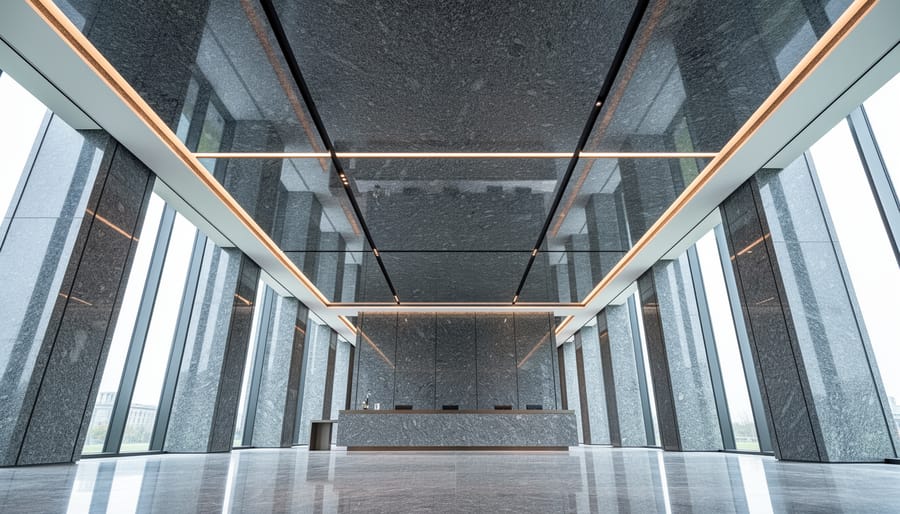
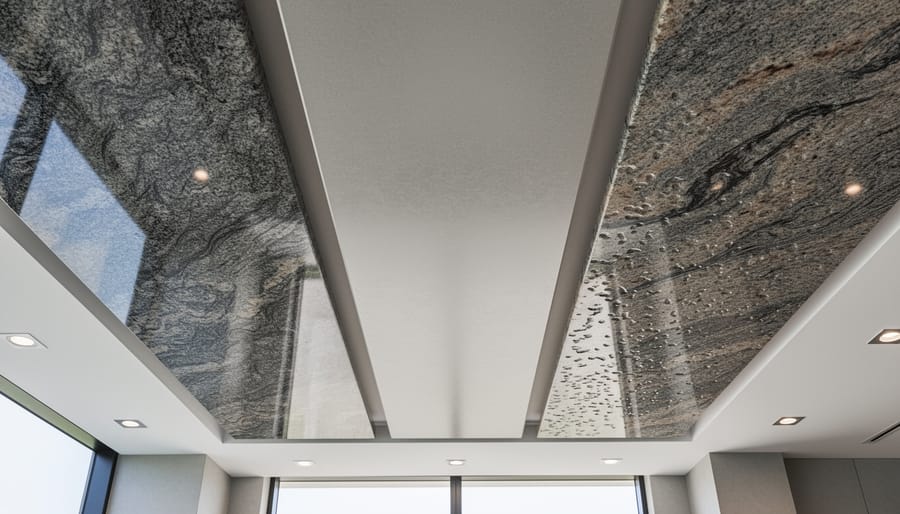
Granite ceilings represent one of the most ambitious applications of natural stone in contemporary architecture, transforming overhead spaces into breathtaking focal points that combine geological grandeur with engineering precision. While traditional ceiling materials fade into the background, granite commands attention through its crystalline patterns, dimensional depth, and timeless elegance that evolves with changing light throughout the day.
The feasibility of installing granite overhead depends on three critical factors: structural load capacity, panel thickness reduction techniques, and specialized mounting systems. Modern thin-panel technology has revolutionized granite ceiling installation by reducing slab thickness to 10-20mm while maintaining structural integrity through honeycomb or composite backing systems. This innovation decreases weight from 170 pounds per square foot for full-thickness slabs to manageable 15-30 pounds, making installation possible in spaces previously deemed unsuitable for stone.
Strategic applications deliver maximum impact without compromising safety. Accent sections above reception areas, coffered ceiling insets, and suspended island features provide dramatic visual interest while limiting structural requirements. Engineers typically specify mechanical anchoring systems with redundant safety features, including steel framework integration, adhesive bonding, and individual panel restraints that exceed building code requirements by significant margins.
Cost considerations range from $150-400 per square foot installed, positioning granite ceilings as premium architectural statements reserved for high-impact commercial spaces, luxury residential projects, and hospitality environments where material distinction justifies investment. Understanding technical requirements, design integration strategies, and long-term performance characteristics enables informed decision-making for projects where overhead stone surfaces can transform ordinary spaces into extraordinary experiences.
What Makes Granite Ideal for Ceiling Applications
Structural Advantages of Granite Overhead
Modern granite ceiling installations rely on engineered thin veneers rather than full-thickness slabs, making the application structurally feasible. These veneers typically measure between 3mm to 20mm in thickness, reducing weight by up to 80% compared to traditional granite slabs while maintaining the stone’s distinctive appearance and durability.
The key to safe installation lies in proper weight distribution across the ceiling’s structural framework. Engineers calculate load-bearing capacity by assessing the building’s existing support system, often reinforcing joists or adding supplementary steel framework when necessary. A typical thin granite veneer weighs approximately 5-15 pounds per square foot, comparable to certain tile installations and well within the tolerance of properly engineered ceiling structures.
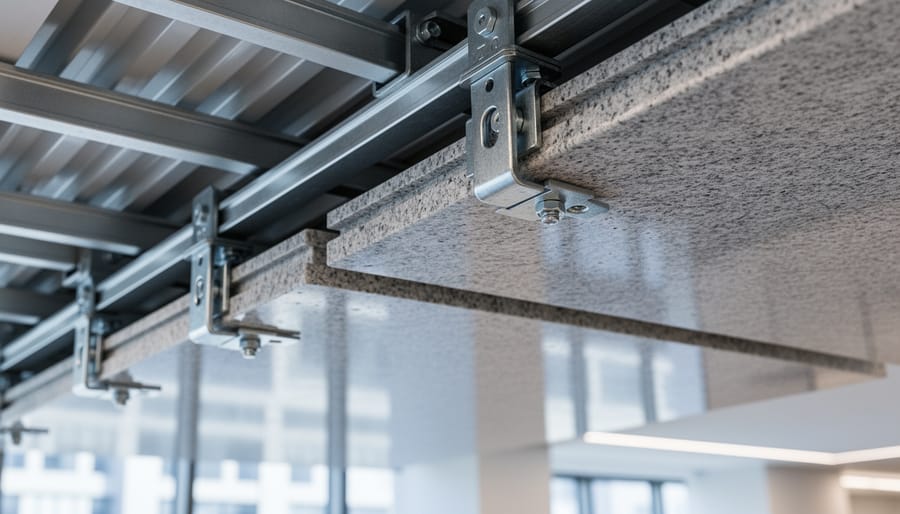
Advanced adhesive systems and mechanical anchoring methods work in tandem to secure granite panels overhead. High-strength epoxies bond the veneer to cement backer boards or directly to structural surfaces, while stainless steel clips provide additional mechanical support at panel edges. This redundant fastening approach ensures safety even in seismic zones.
Professional structural assessment remains essential before any granite ceiling project. Licensed engineers evaluate factors including span distances, dead load capacity, and dynamic forces to determine feasibility. When properly engineered and installed by experienced professionals, granite ceilings meet or exceed building codes while delivering exceptional aesthetic impact.
Aesthetic Impact and Design Versatility
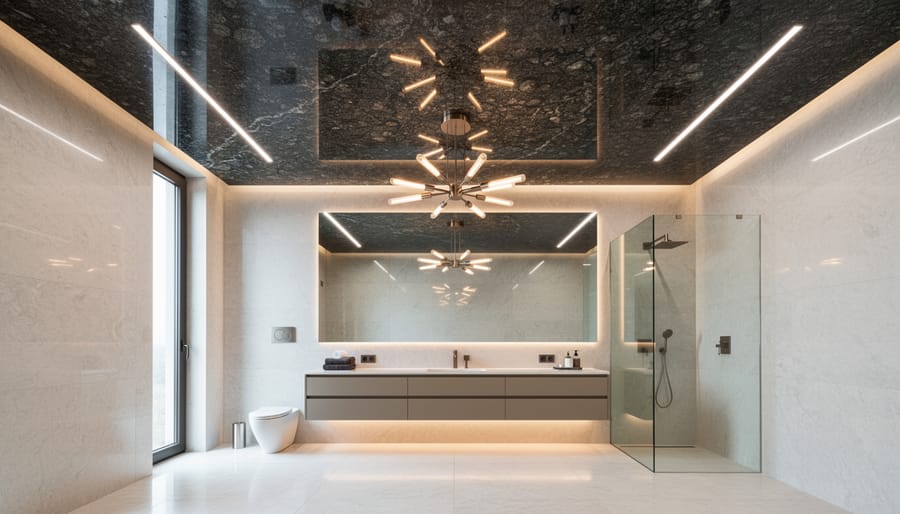
Granite ceilings create extraordinary visual drama through the stone’s inherent natural variations, transforming overhead spaces into captivating focal points. The mineral composition of granite produces distinctive patterns ranging from subtle speckled textures to bold veining, with color palettes spanning cool grays and blacks to warm beiges, reds, and even blues. When installed overhead, these patterns take on new dimension as viewers experience perspectives typically reserved for floors and walls.
The interaction between lighting and granite ceiling surfaces fundamentally shapes the aesthetic impact. Polished finishes reflect light dramatically, creating luminous effects that amplify ambient and accent lighting while making spaces feel more expansive. Honed and leathered finishes offer softer light diffusion, contributing to intimate, sophisticated atmospheres. Strategic lighting placement can highlight the stone’s crystalline structure, making mica and quartz particles sparkle subtly throughout the day.
Design versatility extends across architectural styles. In contemporary settings, book-matched granite slabs create mirror-image patterns that emphasize geometric precision. Traditional spaces benefit from the stone’s timeless elegance, while rustic environments gain authenticity through textured finishes. Granite ceilings complement natural stone light fixtures beautifully, establishing cohesive material narratives. Designers can specify full-ceiling coverage for maximum impact or incorporate granite as ceiling accents, coffers, or decorative panels to balance visual weight with practical considerations.
Installation Techniques for Granite Ceilings
Thin Veneer vs. Full Thickness Slabs
When considering granite for ceiling applications, you’ll encounter two primary installation approaches: thin veneer and full thickness slabs. Thin veneer panels typically measure between 3/8″ to 3/4″ thick and are reinforced with backing materials like aluminum honeycomb or fiberglass mesh. These lightweight alternatives significantly reduce structural load, weighing approximately 3-5 pounds per square foot compared to full thickness slabs that can exceed 12-15 pounds per square foot.
Full thickness slabs, ranging from 2cm to 3cm, offer authentic mass and visual depth but require substantial structural support and engineered mounting systems. The cost differential is considerable—thin veneer installations generally run 30-40% less expensive than full thickness applications when factoring in both material and installation expenses.
Thin veneer proves ideal for retrofit projects, suspended ceiling grids, and situations where structural capacity is limited. This approach mirrors techniques used in granite wall cladding, where lightweight panels deliver aesthetic impact without compromising building integrity. Full thickness slabs excel in new construction luxury projects where maximum visual impact and authentic stone presence justify the additional investment and engineering requirements. Your choice ultimately depends on structural capabilities, budget parameters, and desired aesthetic outcomes.
Mechanical Anchoring Systems
Installing granite overhead requires specialized mechanical anchoring systems engineered to support substantial weight while maintaining safety and aesthetic appeal. These systems differ significantly from standard ceiling installations due to the unique demands of natural stone.
Kerf-rail systems represent the most common mounting solution for granite ceilings. These involve cutting narrow slots (kerfs) into the back edges of stone panels, into which aluminum or stainless steel rails slide. The rails then attach to a structural framework above, creating an invisible support system that allows the granite to appear floating. This method distributes weight evenly across multiple anchor points.
Clip systems offer another reliable approach, using metal clips that grip the stone edges and connect to ceiling-mounted tracks or brackets. These clips are typically crafted from corrosion-resistant materials and designed with adjustable tension to accommodate slight variations in stone thickness. They allow for thermal expansion and contraction, preventing stress fractures.
For larger installations, grid suspension systems similar to commercial ceiling frameworks provide robust support. These incorporate steel channels anchored directly to structural elements, creating a secondary support structure. Cross-bracing and redundant anchoring ensure load distribution across multiple beams.
All mechanical systems require attachment to structural elements, not just drywall or suspended ceiling grids. Professional engineering calculations determine proper anchor spacing, typically every 16 to 24 inches, based on stone weight and dimensions. Stainless steel fasteners prevent corrosion and maintain long-term integrity in various environmental conditions.
Adhesive and Hybrid Methods
For lighter granite panels or thinner stone veneers, specialized adhesives can work in conjunction with mechanical fastening systems to provide enhanced security and load distribution. This hybrid approach is particularly valuable in installations where maximum safety is paramount or where the ceiling design requires seamless visual continuity.
High-performance construction adhesives formulated specifically for natural stone create a secondary bonding layer between the granite and substrate. Epoxy-based systems and polyurethane adhesives designed for stone applications offer superior adhesion strength and flexibility to accommodate thermal expansion. However, adhesives alone should never serve as the primary attachment method for overhead granite installations due to weight considerations and safety regulations.
The hybrid method typically involves applying structural adhesive to the back of the granite panel while simultaneously using mechanical anchors or a rail system as the primary support. This combination offers several advantages: the adhesive helps distribute stress across the panel surface, reduces potential movement or vibration, and provides backup security should mechanical fasteners experience any loosening over time.
Professional installers must ensure proper surface preparation, including cleaning and priming both the stone and substrate. Adhesive application requires specific environmental conditions regarding temperature and humidity for optimal curing. Building codes in most jurisdictions mandate that mechanical systems remain the load-bearing component, with adhesives serving only as supplementary reinforcement.
Design Applications and Space Considerations
Residential Applications
Granite ceilings transform residential interiors into sophisticated showcases of natural elegance. In grand foyers and entryways, overhead granite installations create immediate visual impact, establishing a tone of refined luxury from the moment guests arrive. The material’s inherent depth and crystalline structure catch and reflect light throughout the day, adding dynamic interest to these transitional spaces.
Bathrooms and home spas represent ideal applications for granite ceilings, where the stone’s moisture resistance pairs perfectly with its aesthetic appeal. A natural stone bathroom featuring granite overhead elements creates a cohesive, spa-like atmosphere that elevates daily routines into restorative experiences. The stone’s natural patterns add organic beauty without overwhelming smaller spaces.
Master suite sitting areas, wine cellars, and home libraries benefit from strategic granite ceiling accents that define zones within open floor plans. Rather than covering entire ceilings, many homeowners opt for coffered designs, medallions, or border treatments that incorporate granite alongside complementary materials. These applications balance the stone’s visual weight while maintaining architectural interest. Home theaters and entertainment spaces also leverage granite’s acoustic properties and dramatic presence, creating memorable environments that blend function with unmistakable luxury.
Commercial and Hospitality Spaces
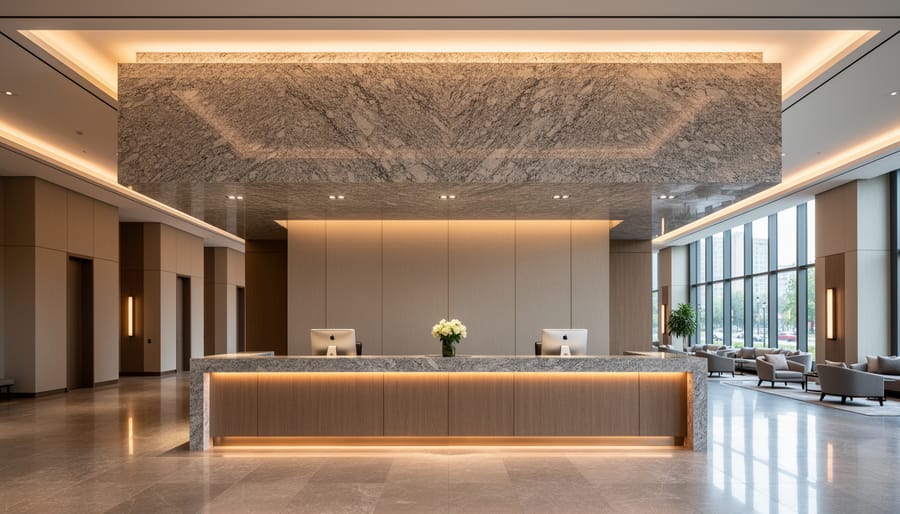
Hotels, restaurants, corporate lobbies, and high-end retail spaces increasingly incorporate granite ceilings to establish an immediate impression of quality and permanence. In luxury hotel lobbies, granite ceiling installations create dramatic focal points that signal exceptional standards to guests upon entry. Five-star properties particularly favor this application in reception areas, where the material’s natural variations and depth add architectural gravitas without overwhelming the space.
Fine dining establishments use granite ceiling panels in intimate dining rooms or wine cellars, where the stone’s cool elegance complements upscale ambiance. Corporate headquarters leverage granite ceilings in executive floors and boardrooms to project stability and success. The material’s durability makes it especially practical for high-traffic commercial environments, requiring minimal maintenance while retaining its appearance for decades. Banks and financial institutions have historically favored granite ceiling treatments in public-facing spaces, where the stone’s association with permanence reinforces institutional trust. These commercial applications typically employ thinner panels and sophisticated mounting systems to balance aesthetic impact with structural requirements.
Accent Areas vs. Full Coverage
The decision between full ceiling coverage and strategic accent areas significantly impacts both aesthetics and practicality. Full granite ceiling coverage creates a dramatic, immersive experience that transforms an entire space with luxurious continuity. This approach works exceptionally well in smaller rooms like powder bathrooms or wine cellars, where the bold statement doesn’t overwhelm and structural loads remain manageable.
Strategic accent applications offer greater flexibility and cost-effectiveness. Granite panels within coffered ceiling designs add textural interest while maintaining reasonable weight distribution. Entry foyers benefit from granite ceiling medallions that draw the eye upward, while kitchen islands can feature granite soffits that coordinate with countertops below. Accent panels also allow designers to highlight specific architectural features or create visual focal points without committing to the structural requirements of full coverage.
From a practical standpoint, accent installations typically cost 60-75% less than full coverage while still delivering substantial visual impact. They also simplify maintenance access to electrical and HVAC systems. Many designers recommend starting with accent areas in one space before considering more extensive applications, allowing clients to experience the material’s unique characteristics firsthand.
Selecting the Right Granite for Ceiling Projects
Color and Pattern Considerations
Granite’s appearance transforms dramatically when installed overhead, primarily due to how light interacts with the stone’s surface from below rather than above. Colors often appear deeper and more saturated on ceilings since natural and artificial light sources illuminate the stone’s crystalline structure from different angles. Light-colored granites with subtle veining, such as whites, creams, and light grays, typically work best for ceiling applications as they reflect light effectively and prevent spaces from feeling enclosed or dark.
Bold veining patterns visible in darker granites can create striking visual drama on ceilings but require careful consideration of room proportions and lighting design. Veining runs in specific directions within each slab, and the orientation matters significantly when viewed from below. Horizontal veining can make rooms feel wider, while vertical patterns draw the eye upward, emphasizing ceiling height.
Backlighting techniques, similar to those used in illuminated stone countertops, can dramatically enhance translucent granite varieties on ceilings, revealing hidden depth and color variations invisible under standard lighting. Testing samples in actual installation conditions with your specific lighting setup is essential, as showroom appearances under overhead fluorescent lights differ vastly from how the stone will look when installed on a ceiling with recessed or ambient lighting.
Finish Options for Overhead Stone
The finish you select for overhead granite installations dramatically affects both the aesthetic impact and practical performance when viewed from below. Each surface treatment creates distinct visual characteristics that influence how light interacts with the stone and how patterns appear to observers beneath.
Polished finishes deliver maximum reflectivity and color depth, creating mirror-like surfaces that amplify natural veining and crystalline structures within the granite. This high-gloss appearance works exceptionally well in areas with strategic lighting, as the surface captures and reflects light throughout the space. However, the glossy finish may also reveal installation imperfections more readily and can create glare if positioned near bright light sources.
Honed finishes provide a smooth, matte surface with minimal light reflection. This softer appearance often feels more sophisticated and contemporary when overhead, reducing visual intensity while still showcasing the stone’s natural color variations. The reduced sheen minimizes glare concerns and creates a more understated elegance suitable for residential applications or spaces requiring visual calm.
Leathered finishes introduce subtle texture through specialized brushing techniques, adding dimensional interest without excessive shine. When applied to ceiling installations, this finish catches light at varying angles, creating gentle shadow play that emphasizes the granite’s natural character. The textured surface also conceals minor surface variations better than polished options.
Brushed and flamed finishes, while less common for interior ceilings, offer rougher textures that provide slip resistance and rustic appeal. These treatments work particularly well in outdoor covered areas or specific architectural contexts where pronounced texture enhances the design narrative. Consider your lighting design, viewing distance, and overall aesthetic goals when selecting the optimal finish for your overhead stone application.
Structural and Safety Requirements
Load-Bearing Assessments
Before installing any granite ceiling application, a comprehensive structural assessment by a licensed structural engineer is essential. Granite’s weight—typically 12 to 13 pounds per square foot for standard half-inch thick slabs—places significant demands on existing ceiling joists and support systems. Thicker applications or full slab installations can exceed 20 pounds per square foot, requiring substantial reinforcement or specialized support frameworks.
Professional evaluation should examine several critical factors: the load-bearing capacity of existing ceiling structures, the condition of ceiling joists and their spacing, attachment points for mounting systems, and the overall building integrity. Engineers calculate live loads, dead loads, and safety factors to determine whether existing structures can support the additional weight or if reinforcement is necessary.
Many residential ceiling structures designed for standard drywall or plaster (typically rated for 5-10 pounds per square foot) require significant upgrades. This may involve adding supplementary joists, installing steel support beams, or implementing suspension systems that transfer weight to load-bearing walls rather than relying solely on ceiling structures.
Skipping this assessment poses serious safety risks including ceiling collapse, structural damage, and potential injury. The investment in professional evaluation—typically ranging from $500 to $2,000—is minimal compared to installation costs and provides essential peace of mind.
Building Codes and Compliance
Installing granite on ceilings requires strict adherence to building codes that vary by jurisdiction. The International Building Code (IBC) governs most commercial projects, while residential applications typically follow International Residential Code (IRC) standards. These codes mandate specific load calculations for overhead materials, with granite requiring structural engineering approval due to its substantial weight—typically 12-13 pounds per square foot for 3/4-inch thick slabs.
Seismic considerations are particularly critical in earthquake-prone regions. Building codes in California, Japan, and other seismically active areas require additional anchoring systems and flexible mounting hardware that allows controlled movement during seismic events. Engineers must calculate both vertical and lateral load capacities, ensuring mounting systems can withstand forces from multiple directions.
Safety factors of 4:1 or 5:1 are standard requirements, meaning support systems must handle four to five times the actual weight of installed granite. All anchoring hardware must be non-corrosive and specifically rated for overhead applications. Professional installation by licensed contractors with stone ceiling experience is essential, as improper installation poses serious liability and safety risks. Documentation including structural calculations, material certifications, and installation photos should be maintained for insurance and inspection purposes.
Cost Factors and Investment Considerations
Granite ceiling projects represent a significant investment, with costs varying considerably based on several key factors. Understanding these elements helps stakeholders make informed decisions about whether this premium application aligns with their budget and project goals.
Material costs constitute the foundation of any granite ceiling project. Granite slabs or tiles suitable for ceiling installation typically range from $40 to $200 per square foot, depending on the stone’s origin, rarity, color, and finish. Exotic varieties with unique veining patterns command premium prices, while more common domestic granite offers cost-effective alternatives. Thin granite panels (typically 10-20mm thick) specifically engineered for ceiling applications generally cost 20-40% more than standard flooring-grade material due to specialized fabrication requirements.
Installation expenses often exceed material costs, ranging from $75 to $300 per square foot. This premium reflects the technical complexity, specialized equipment needs, and skilled labor required for overhead stone installation. Projects demanding custom support systems, adhesive backing, or intricate mechanical fastening drive costs toward the higher end. Structural reinforcement, if necessary, adds $30 to $100 per square foot depending on existing ceiling capacity.
Long-term value considerations favor granite ceiling investments. The material’s exceptional durability means minimal maintenance costs over decades, unlike painted or suspended ceilings requiring periodic replacement. Energy efficiency benefits from granite’s thermal mass can reduce HVAC expenses by 5-15% in appropriate climates. Additionally, granite ceilings significantly enhance property value, with luxury homes and commercial spaces commanding 10-25% premiums when featuring high-end natural stone applications.
Most projects require consultation with structural engineers ($1,500-$5,000) and experienced stone installers to ensure safety compliance and optimal results.
Maintenance and Longevity of Granite Ceilings
Granite ceilings require minimal maintenance compared to other architectural finishes, making them an attractive long-term investment. The inherent durability of granite, combined with proper care, ensures these installations maintain their beauty for decades.
Regular cleaning involves dry dusting with a microfiber cloth or gentle vacuuming to remove surface debris. For deeper cleaning, use a pH-neutral stone cleaner diluted in water, applied with a soft cloth or mop. Avoid acidic cleaners, vinegar, or abrasive products that can etch or dull the surface. Since ceiling installations experience less exposure to contaminants than floors or countertops, they typically require cleaning only once or twice yearly.
Sealing requirements depend on the granite variety and finish. Polished granite generally needs resealing every three to five years, while honed finishes may require more frequent application. Conduct a simple water test by placing drops on the surface—if water beads rather than absorbing within minutes, the seal remains effective. Professional natural stone installation companies often recommend specific sealers based on the chosen material.
The lifespan of properly installed granite ceilings extends well beyond 50 years, with many installations lasting the lifetime of the building. The mounting system should be inspected every five years to ensure structural integrity, particularly in seismic regions. Unlike painted or suspended ceilings that require periodic replacement, granite ceilings represent a true permanent installation, maintaining their appearance and structural performance indefinitely when basic maintenance protocols are followed.
Granite ceilings represent a bold architectural statement that combines natural beauty with lasting durability. When properly planned and executed, these stunning overhead installations transform ordinary spaces into extraordinary environments that captivate and inspire. The key to success lies in understanding the material’s unique characteristics, respecting structural requirements, and applying appropriate installation techniques.
Working with experienced professionals is essential when considering granite for ceiling applications. Stone specialists, structural engineers, and skilled installers bring the technical expertise necessary to navigate load considerations, mounting systems, and safety protocols. Their knowledge ensures your vision becomes reality without compromising structural integrity or aesthetic appeal.
Whether you’re designing a luxury residence, upscale commercial space, or prestigious public building, granite ceilings offer unmatched elegance and permanence. The investment in professional guidance and quality installation pays dividends through decades of maintenance-free beauty and increased property value.
Ready to explore granite ceiling possibilities for your next project? Consult with certified stone specialists who can evaluate your space, recommend suitable materials, and develop a comprehensive installation plan. Transform your vision into reality with the timeless sophistication of natural stone overhead.