# Butcher Block Countertops: Pros and Cons
Butcher block countertops bring warmth and character to kitchens, but they demand far more maintenance than most homeowners anticipate. Before you commit to wood surfaces, you need to understand the reality of daily upkeep, moisture management, and long-term durability compared to other materials.
The appeal is obvious. Wood creates an inviting, organic aesthetic that complements both farmhouse and modern designs. Installation costs typically run $50 to $150 per square foot, positioning butcher block as a mid-range option that undercuts granite and marble while offering a tactile, living surface that changes with use.
But here’s what the glossy magazine photos don’t show: monthly oiling requirements, vulnerability to water damage, and the constant vigilance needed to prevent staining and bacterial growth. A puddle left overnight can leave a dark stain that requires sanding to remove. Hot pans create scorch marks. Wine and coffee seep into the grain within minutes.
The trade-offs matter. While butcher block offers the unique advantage of being renewable through sanding and refinishing, it fails spectacularly in high-moisture areas near sinks and dishwashers. Many homeowners discover this too late, finding warped boards and separated seams within the first year.
This comprehensive guide examines both advantages and limitations of butcher block countertops, covering maintenance realities, cost comparisons, and how wood surfaces stack up against stone alternatives. You’ll get the unvarnished truth about what works, what doesn’t, and which applications make sense for your specific needs.
What Are Butcher Block Countertops?
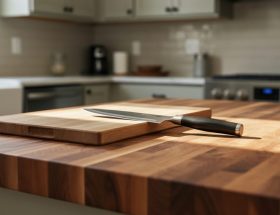
Butcher block countertops are solid wood surfaces constructed from strips of hardwood glued together under pressure. The manufacturing process creates thick, durable slabs that can withstand heavy use while providing a warm, natural aesthetic. Unlike laminate or synthetic materials that mimic wood grain, these countertops are genuine lumber from edge to edge.
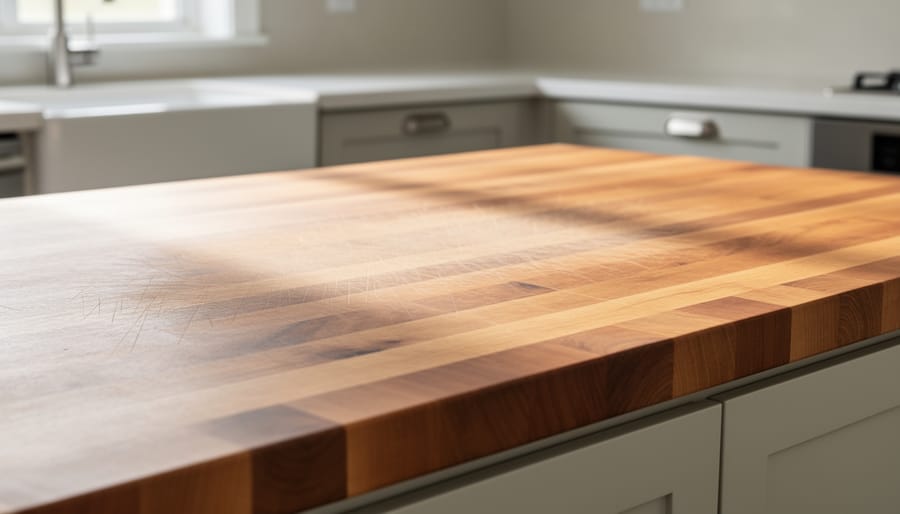
The construction typically falls into three categories: edge grain, where wood planks are glued side-by-side with the grain running horizontally; end grain, featuring wood pieces standing upright with their ends forming the surface, similar to a traditional cutting board; and face grain, where wider planks lie flat showing the broad face of the wood. End grain construction offers the most durability and knife-friendly properties but comes at a premium price point.
Most manufacturers favor specific hardwood species for their balance of durability, workability, and appearance:
- Maple: The most popular choice, offering light color, tight grain, and excellent hardness that resists dents and scratches.
- Oak: Features prominent grain patterns and good durability, available in red or white varieties with distinct color variations.
- Walnut: Delivers rich, dark chocolate tones and moderate hardness, though it shows scratches more visibly than lighter woods.
- Cherry: Provides reddish-brown hues that deepen with age and exposure to light, offering moderate hardness.
In residential settings, butcher block appears most frequently as kitchen island tops, breakfast bar surfaces, and standalone prep stations. Commercial applications include restaurant prep areas, bakery work surfaces, and artisan food shops where the wood’s antimicrobial properties and cutting-friendly surface prove valuable. Some homeowners install butcher block throughout their entire kitchen, while others use it strategically alongside more durable materials like natural stone for a mixed-material design approach.
The Pros of Butcher Block Countertops
Warmth and Natural Beauty
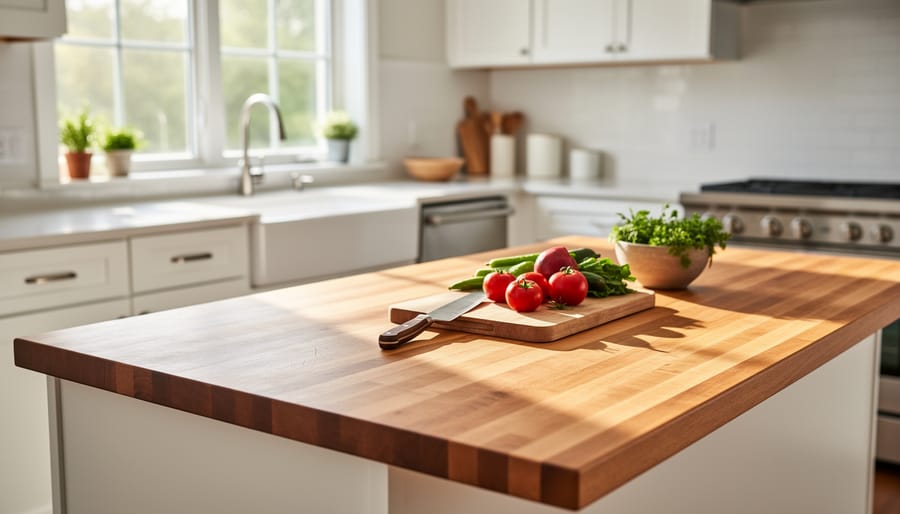
Wood brings an inherent warmth to kitchen spaces that synthetic materials simply cannot replicate. The natural grain patterns in butcher block create visual interest and organic texture, with each board displaying unique character through swirls, knots, and color variations. Unlike cold, hard surfaces, wood feels inviting to the touch and adds a sense of comfort that makes kitchens feel more lived-in and welcoming.
The aesthetic versatility of butcher block works across nearly every design style. In farmhouse kitchens, it reinforces rustic charm and traditional appeal. Modern spaces benefit from the contrast between wood’s organic warmth and sleek cabinetry or stainless steel appliances. Scandinavian designs embrace the light tones of maple, while walnut’s rich darkness complements industrial aesthetics. Even transitional kitchens find balance through wood’s ability to bridge contemporary and classic elements.
Different wood species offer distinct visual personalities. Maple provides clean, subtle grain with blonde hues that brighten spaces. Oak displays prominent grain patterns and medium tones. Walnut delivers dramatic chocolate browns with striking grain contrast. Cherry develops a deeper patina over time, evolving from pinkish tones to reddish-brown warmth. This natural aging process adds character rather than diminishing appeal, creating surfaces that grow more beautiful with use.
Food-Safe Work Surface
Butcher block excels as a food preparation surface because the wood fibers are gentler on knife edges than hard stone or synthetic materials. Professional chefs prefer wooden cutting boards for this reason: blades stay sharper longer, requiring less frequent honing and sharpening. You can chop vegetables, knead dough, or roll pastry directly on the countertop without damaging your tools.
Certain wood species offer natural antimicrobial properties that resist bacterial growth. Maple, the most popular choice for butcher block, contains compounds that inhibit bacteria better than plastic cutting boards in some studies. The wood’s cellular structure also draws moisture away from surface bacteria, reducing their ability to multiply. However, this protection only works when the surface is properly maintained with food-grade mineral oil or beeswax, creating a sealed barrier that prevents deep contamination.
Unlike stone countertops where you must use separate cutting boards, butcher block becomes your prep surface. This saves kitchen space and streamlines workflow, though you’ll still need to clean thoroughly between raw meat preparation and other tasks to prevent cross-contamination.
Repairable and Renewable
One of butcher block’s standout advantages is its ability to bounce back from damage that would permanently mar other materials. Minor scratches from knives disappear with light sanding. Deeper gouges can be filled, sanded smooth, and refinished to blend seamlessly with the surrounding surface. Even stubborn stains that penetrate the wood often sand out completely.
The refinishing process is straightforward. You sand the affected area with progressively finer grits, wipe away dust, and reapply food-safe oil or finish. For widespread wear, a full countertop resanding restores the original appearance. This repair capability means a well-maintained butcher block surface can last decades, making it a genuinely long-term investment.
Compare this to granite or quartz, where chips and cracks require professional repair and never fully disappear. With butcher block, you control the countertop’s lifespan through periodic maintenance rather than replacing it when damage accumulates. The wood essentially renews itself each time you refinish.
Cost-Effective Option
Butcher block offers significant savings compared to premium natural stone surfaces. Expect to pay $40 to $100 per square foot installed, positioning it as a mid-range choice. This compares favorably when you examine broader countertop costs: granite typically runs $50 to $200 per square foot, while marble ranges from $75 to $250. Quartz falls in a similar bracket at $60 to $150 per square foot. For a standard 30-square-foot kitchen, choosing butcher block over marble could save you $2,000 to $4,500. The material itself costs less, and installation charges run lower since contractors don’t need specialized stone-cutting equipment or multiple crew members to handle heavy slabs. This affordability makes butcher block accessible for budget-conscious renovations without sacrificing the custom, high-end look that solid-surface countertops provide.
Eco-Friendly and Sustainable
Wood stands as one of the few truly renewable countertop materials. Unlike stone quarried from finite deposits or petroleum-based synthetics, butcher block comes from trees that can be replanted and regrown. Many manufacturers now source from sustainably managed forests certified by organizations like the Forest Stewardship Council, ensuring responsible harvesting practices that maintain forest health.
The production process requires significantly less energy than manufacturing quartz or mining and transporting natural stone slabs. Local hardwoods reduce shipping distances and carbon emissions, particularly when you choose domestic species like maple or oak over exotic imports. At the end of its lifespan, wood decomposes naturally rather than sitting in landfills for centuries like laminate or solid surface materials.
For environmentally conscious homeowners weighing butcher block countertops pros and cons, the sustainability factor often tips the scale. Reclaimed wood options take this benefit further by repurposing lumber from old barns, factories, or wine barrels, giving new life to materials that might otherwise be discarded.
DIY-Friendly Installation
Unlike heavy stone slabs that demand professional installation and specialized equipment, butcher block countertops are significantly lighter and easier for homeowners to install themselves. Standard woodworking tools can cut and shape the material to fit your space, eliminating expensive fabrication fees. You can drill holes for sinks and faucets without diamond-tipped bits, and securing the countertop requires basic carpentry skills rather than epoxy expertise. This accessibility translates to lower labor costs if you hire help, or substantial savings if you tackle the project yourself with careful planning and patience.
The Cons of Butcher Block Countertops
High Maintenance Requirements
Butcher block countertops demand consistent upkeep to maintain their appearance and structural integrity. Unlike granite or quartz that need only a quick wipe-down, wood requires a regular maintenance schedule that many homeowners underestimate before installation.
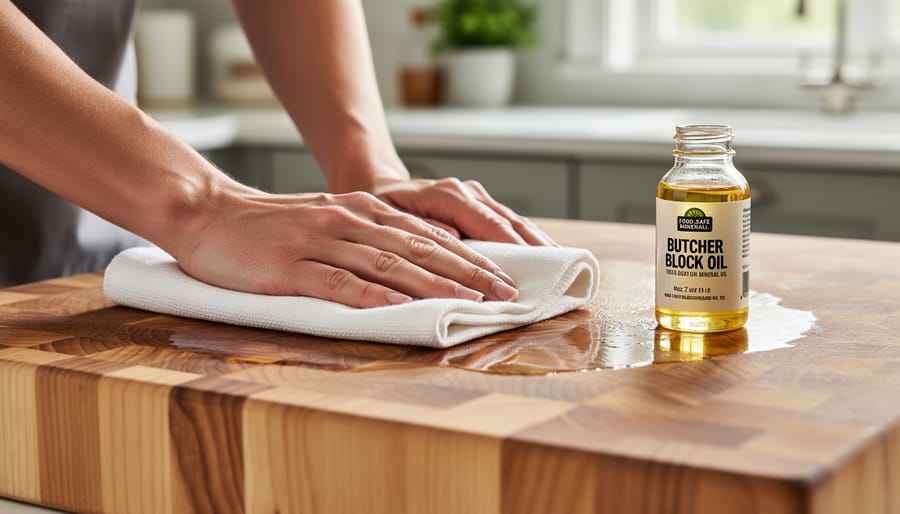
You’ll need to oil your butcher block every four to six weeks initially, then monthly once the wood is properly conditioned. This process involves applying food-grade mineral oil or a specialized wood conditioner, letting it soak for several hours, then wiping away excess. Skip this routine, and the wood dries out, cracks, and becomes vulnerable to moisture penetration.
Sealing presents another decision point. While oiling keeps the surface food-safe, many homeowners choose to seal high-traffic areas or zones near the sink with polyurethane or varnish. This adds protection but eliminates the ability to use those sections for direct food prep. The sealed finish still requires reapplication every few years as it wears down.
Beyond oiling, you’ll need to address spills immediately, avoid standing water near the sink, and periodically sand and refinish the surface when it shows wear. This ongoing time investment makes butcher block far more demanding than stone alternatives that maintain their finish with minimal effort.
Susceptibility to Water Damage
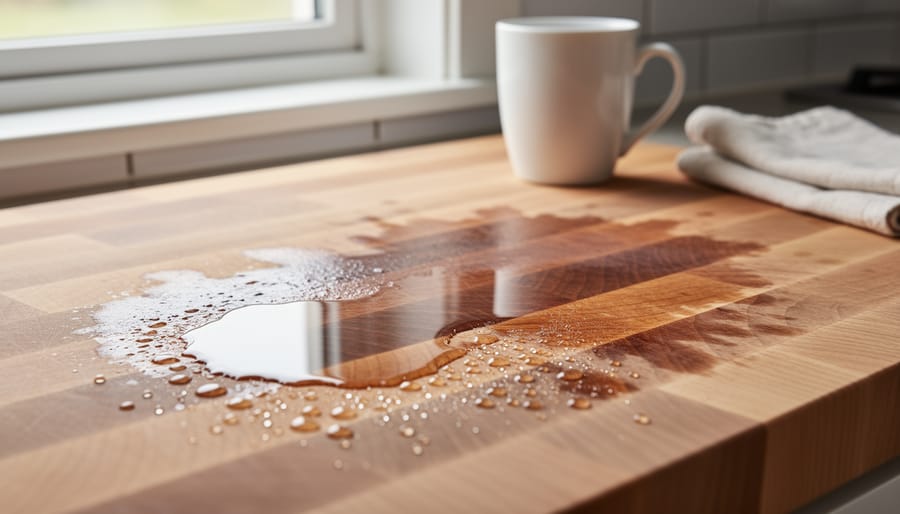
Water poses one of the most serious threats to butcher block countertops. Unlike sealed stone surfaces that naturally repel moisture, wood is porous and readily absorbs water when the protective finish wears thin or gets compromised. Prolonged exposure causes the wood fibers to swell, leading to visible warping, cupping along the surface, and eventual cracking as the material expands and contracts.
The area around sinks presents the highest risk, where standing water and constant humidity create perfect conditions for damage. Even brief contact with water can penetrate unsealed grain, especially at seams and edges where protection is hardest to maintain. This vulnerability means you must wipe up spills immediately, something that requires far more vigilance than materials like granite, which withstand water without the urgent cleanup demands of wood. Unlike the straightforward maintenance routines associated with granite cleaningbutcher block demands constant attention to moisture.
The consequences of water damage often require extensive sanding and refinishing to restore the surface, and severe cases may necessitate replacing entire sections.
Vulnerability to Heat and Stains
Wood countertops react poorly to heat and absorb stains far more readily than stone surfaces. Setting a hot pot or pan directly on butcher block creates immediate scorch marks and burns that penetrate deep into the wood fibers. Unlike granite or soapstone, which handle heat without issue, wood requires constant vigilance with trivets and hot pads.
Staining presents an equally persistent challenge. Red wine, coffee, beet juice, and tomato sauce leave stubborn discoloration that seeps into the grain. Acidic ingredients like lemon juice and vinegar darken the wood over time, creating uneven patches. While you can sand out some stains during refinishing, deeply penetrated ones often remain visible.
The porous nature of wood means spills need immediate attention. Even oil-based stains from cooking can create dark spots if left to soak in. This constant monitoring differs sharply from the stain resistance of sealed natural stone, which typically wipes clean without absorbing liquids.
Scratches and Dents Easily
Wood countertops show scratches and dents from everyday kitchen activities far more readily than stone surfaces. Dropping a heavy pot, dragging a stand mixer, or even setting down a knife carelessly leaves visible marks. This happens because wood registers around 900-1,400 on the Janka hardness scale (varying by species), while granite measures above 6,000. Some homeowners embrace this weathering as desirable patina that adds character and tells the kitchen’s story. Others find the imperfections frustrating, especially in high-visibility areas. If you prefer pristine, unchanging surfaces, the natural aging process of butcher block countertops may conflict with your aesthetic preferences.
Potential for Bacterial Growth
Bacteria can colonize the knife cuts, scratches, and worn areas that inevitably develop in butcher block surfaces, particularly in high-moisture zones near sinks. Unlike non-porous granite or marble, wood’s cellular structure creates tiny spaces where bacteria may harbor if the surface isn’t properly sealed and maintained. Food particles and moisture trapped in these crevices provide breeding grounds for pathogens like E. coli and Salmonella.
Regular sealing with food-safe oil or finish creates a protective barrier that minimizes bacterial penetration, but this protection degrades with use and requires reapplication every few weeks. Deep scratches must be sanded out and resealed to eliminate contamination risks. While certain wood species like maple contain natural antimicrobial compounds, these properties alone don’t guarantee a sanitary surface without consistent maintenance.
Proper cleaning with mild soap and water, thorough drying, and immediate attention to spills significantly reduce bacterial risks, but the maintenance demands exceed those of sealed stone countertops.
Limited Durability Compared to Stone
Butcher block simply can’t match stone’s lifespan. Granite and marble countertops routinely last 50-plus years with minimal maintenance, while butcher block typically needs replacement after 20 years, even with diligent care. A durability comparison reveals that stone rates 6-7 on the Mohs hardness scale, whereas wood sits around 2-3, making it far more susceptible to impact damage. Engineered quartz resists scratches, heat, and stains without the ongoing oiling and refinishing butcher block demands. If you prioritize a low-maintenance surface that holds up under heavy daily use, natural stone provides superior longevity and resilience.
Butcher Block vs. Natural Stone Countertops
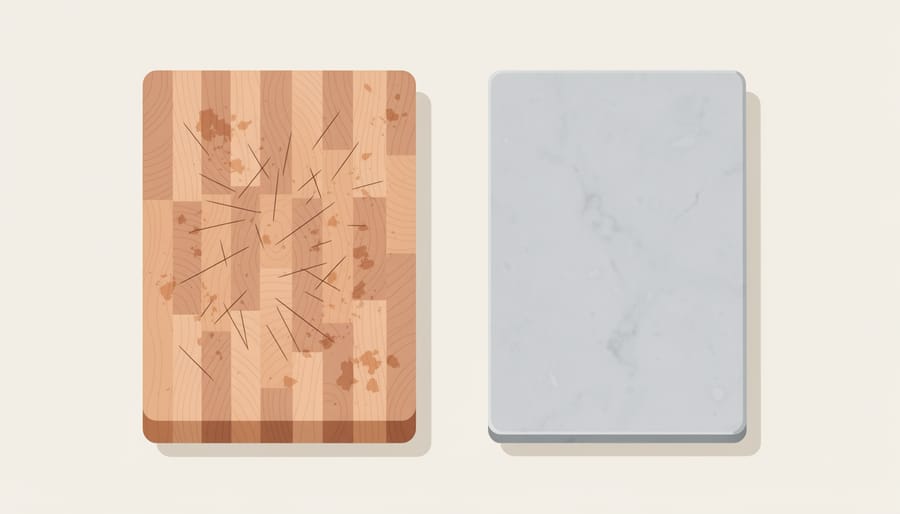
Choosing between butcher block and natural stone fundamentally depends on how you use your kitchen and what you value most in a countertop. Each material brings distinct strengths to different applications.
| Material | Maintenance | Durability | Cost Range | Best For |
|---|---|---|---|---|
| Butcher Block | High (monthly oiling) | Moderate (scratches, dents) | $40-$100/sq ft | Prep areas, warm aesthetics |
| Granite | Low (annual sealing) | Excellent (heat, scratch resistant) | $50-$200/sq ft | High-traffic kitchens, durability |
| Marble | Moderate (regular sealing) | Good (etches from acids) | $75-$250/sq ft | Baking stations, luxury look |
| Soapstone | Low (occasional oiling) | Excellent (heat proof) | $70-$120/sq ft | Around stoves, rustic designs |
Granite outperforms butcher block in pure durability. It resists heat up to 1,200°F without damage, won’t scratch from knives, and handles acidic spills that would stain wood. For families who cook frequently and need surfaces that tolerate abuse, granite’s minimal upkeep makes daily life easier.
Marble excels in specific applications where butcher block struggles. Pastry chefs prefer marble’s cool surface for rolling dough, and it handles moisture near sinks better than wood when properly sealed. However, both materials develop patina over time, though marble’s etching from lemon juice is permanent while butcher block scratches can be sanded out.
Soapstone bridges the gap between wood’s warmth and stone’s resilience. Like butcher block, it darkens beautifully with age and accepts mineral oil treatments, but it won’t warp from water or crack near dishwashers. The quartz pros and cons reveal another alternative combining durability with lower maintenance than either wood or natural stone.
Butcher block shines where granite feels cold and sterile. For island tops used primarily for casual meals, homework, or morning coffee, wood creates an inviting gathering spot that stone can’t replicate. It’s also unmatched for dedicated cutting and chopping zones, though you’ll sacrifice the set-it-and-forget-it convenience that stone provides everywhere else.
Is Butcher Block Right for Your Kitchen?
Choosing between butcher block and other materials comes down to honest self-assessment. Ask yourself these questions: Do you cook daily or mostly reheat meals? Are you willing to oil your countertops every month? Can you wipe up spills immediately, or do water rings and coffee stains linger for hours?
Butcher block thrives in kitchens where the cook values a warm, tactile work surface and doesn’t mind regular maintenance rituals. It’s ideal if you bake frequently, enjoy the visual aging process (patina versus pristine), and want a forgiving surface for knife work. Home cooks who appreciate wood’s natural character and view oiling as part of kitchen care, not a burden, will find butcher block rewarding.
Conversely, busy households with minimal time for upkeep should reconsider. If you frequently set down hot pans without trivets, spill wine and walk away, or need surfaces that tolerate neglect, butcher block will frustrate you. Families with young children who need genuinely carefree counters often regret choosing wood.
Stone becomes the better choice for high-traffic areas near sinks and cooktops, where moisture and heat exposure is constant. Many homeowners find success pairing butcher block on an island (for prep work) with granite or marble perimeter counters (for durability near water sources). This hybrid approach maximizes each material’s strengths.
Consider countertop value beyond initial cost. While butcher block costs less upfront, factor in maintenance supplies, potential refinishing, and replacement timelines. Natural stone’s higher purchase price often delivers better long-term value through decades of low-maintenance service. Your cooking style, cleaning habits, and aesthetic priorities should guide this decision more than price alone.
Butcher block countertops present a compelling option for homeowners who value warmth, character, and a food-safe work surface in their kitchens. The pros are significant: natural beauty that ages gracefully, repairability that extends lifespan, and affordability compared to premium natural stone. However, the cons demand honest consideration. The maintenance commitment is real and ongoing, with regular oiling, vulnerability to water damage, and susceptibility to heat and stains requiring vigilant care.
Your choice ultimately depends on your lifestyle and priorities. If you cook frequently, appreciate the patina of lived-in materials, and don’t mind dedicating time to upkeep, butcher block can reward you with decades of service and evolving beauty. But if you prefer low-maintenance surfaces, frequently work with hot cookware, or want maximum durability without the hassle, natural stone options like granite or marble deliver superior performance with minimal effort.
There’s no universal right answer. Weigh these butcher block countertops pros and cons against your daily habits, aesthetic preferences, and willingness to maintain the surface. Both wood and stone have earned their place in well-designed kitchens for different reasons.