# Butcher Block Countertops: Pros and Cons
Butcher block countertops bring warmth and functionality to kitchens, but they demand more attention than most homeowners expect. This natural wood surface requires regular oiling, scratches easily, and can’t handle heat or prolonged water exposure without damage. Yet many choose it anyway for the rich character and knife-friendly workspace it provides.
The reality is straightforward. Wood countertops cost between $40 to $150 per square foot installed, making them competitive with mid-range materials. They age visibly, developing a patina that some view as charm and others see as wear. You can sand away years of damage, which granite and quartz can’t claim, but you’ll need to reseal the surface every few months to prevent warping and staining.
Understanding both advantages and drawbacks helps you decide if butcher block suits your cooking habits, maintenance tolerance, and design goals. This guide examines real-world performance, compares wood to alternative materials like natural stone, and clarifies exactly what ownership entails. You’ll learn which kitchens benefit most from butcher block and where other countertop options make more practical sense.
What Are Butcher Block Countertops?
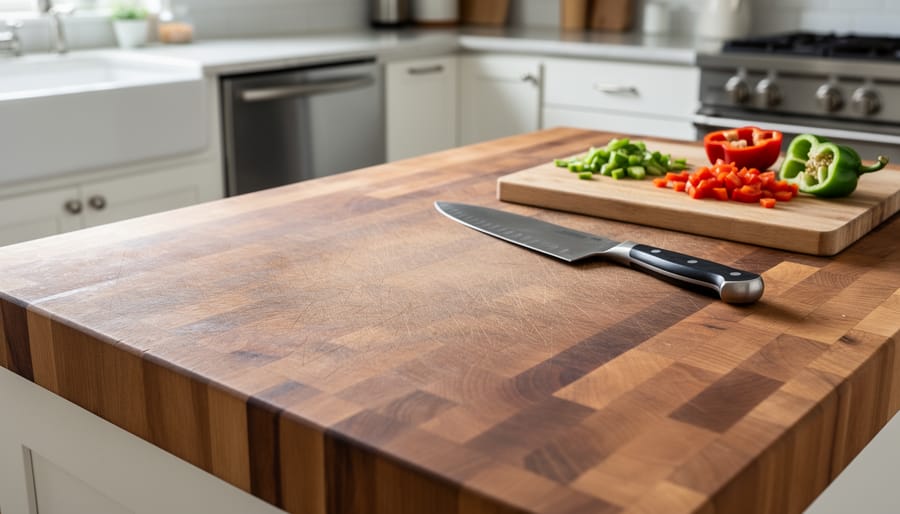
Butcher block countertops consist of strips of hardwood glued together to create a solid working surface. Unlike natural stone slabs quarried from the earth, these countertops are manufactured by arranging wood pieces in specific patterns, edge grain, face grain, or end grain, then bonding them under pressure with food-safe adhesives.
Manufacturers typically use dense hardwoods that can withstand daily kitchen use. Maple remains the most popular choice due to its tight grain, light color, and natural resistance to bacteria. Oak offers distinctive grain patterns and durability at a slightly lower price point. Walnut brings rich, dark tones that create dramatic contrast in modern kitchens. Cherry provides warm, reddish hues that deepen with age and exposure to light.
The manufacturing process transforms raw lumber into finished countertops through several stages. Wood boards are cut into strips, sorted by color and grain pattern, then arranged and glued. After curing, the surface is sanded smooth and treated with mineral oil or a protective finish. This multi-step fabrication contrasts sharply with stone countertops, which are cut directly from natural formations and require minimal processing beyond cutting and polishing.
This fundamental difference, engineered wood versus geological stone, shapes everything from maintenance needs to longevity. Wood remains a living material that expands and contracts with humidity changes, while stone stays dimensionally stable. Understanding this distinction helps explain the specific advantages and limitations we’ll examine next.
The Advantages of Butcher Block Countertops
Warmth and Natural Beauty
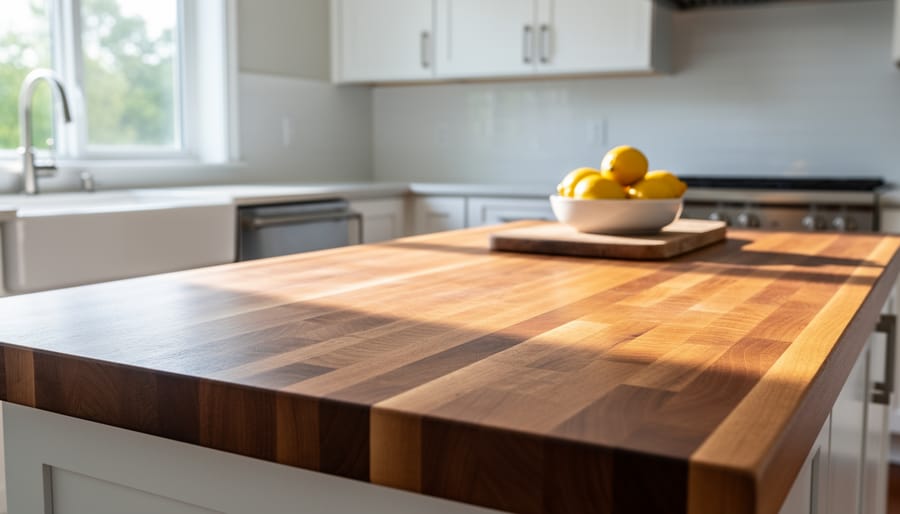
Wood countertops introduce an unmistakable warmth that stone surfaces simply cannot replicate. The rich grain patterns, subtle color variations, and tactile softness create an inviting focal point that makes kitchens feel more lived-in and approachable. Where granite and marble bring cool elegance, butcher block delivers earthy comfort.
Each wood species offers distinct character. Maple provides clean, consistent grain with light honey tones. Walnut adds dramatic depth through chocolate browns and occasional purplish undertones. Cherry develops a warm, reddish patina over time, while white oak showcases prominent grain striping that adds rustic texture.
This organic aesthetic pairs beautifully with farmhouse, Scandinavian, and transitional designs. The natural material softens industrial elements like stainless steel appliances and creates visual warmth in spaces dominated by white cabinetry. Unlike the permanence and formality of polished stone, butcher block feels casual and welcoming, a surface that invites everyday use rather than demands preservation.
Cost-Effective Installation
Butcher block typically costs $40 to $100 per square foot installed, making it one of the more accessible budget countertop options for homeowners. Compare this to granite at $60 to $150 per square foot, marble at $75 to $250, or quartzite at $100 to $200, and the cost advantage becomes clear.
Installation costs also favour butcher block. The lighter weight reduces labour expenses, and many DIY-capable homeowners can handle installation themselves with basic woodworking tools. Natural stone requires professional installation with specialized equipment and expertise, adding $30 to $50 per square foot to the total investment.
For a standard 30-square-foot kitchen, expect to spend $1,200 to $3,000 for butcher block versus $2,700 to $7,500 for premium stone. This price gap explains why budget-conscious renovators often choose wood, though the ongoing maintenance costs and shorter lifespan should factor into long-term value calculations.
Repairable and Renewable Surface
One of butcher block’s most compelling advantages is its ability to recover from damage that would permanently mar other surfaces. Scratches from knives, dents from dropped items, and even stubborn stains don’t spell disaster, they’re simply opportunities for renewal.
When your wood countertop shows wear, you can sand down the affected area with progressively finer grits of sandpaper, removing the damaged layer entirely. This process exposes fresh wood underneath, effectively erasing years of use. After sanding, reapply food-safe mineral oil or a wood conditioner to restore the protective finish and luster.
This DIY-friendly repair capability sets butcher block apart from stone. While granite chips require professional filling and marble etches need expert honing, you can restore wood countertops with basic tools and weekend effort. The surface literally renews itself multiple times throughout its life.
That said, deep gouges may require more aggressive sanding, potentially creating slight depressions in the surface. And excessive refinishing eventually thins the wood to unusable levels. Still, for minor everyday damage, the repair simplicity is unmatched.
Gentler on Dishes and Glassware
When you accidentally drop a glass or ceramic dish on your counter, the surface material determines whether you’ll be sweeping up shards or breathing a sigh of relief. Wood’s natural give creates a forgiving landing zone that significantly reduces breakage compared to the unforgiving hardness of granite or marble.
This softer surface doesn’t just protect your dishware, it also minimizes chips on the countertop edge itself. Stone countertops, while incredibly durable, can chip when hit by heavy cookware or metal utensils. Butcher block absorbs these impacts, typically showing only minor dents that blend into the wood’s character over time.
The cushioning effect proves particularly valuable in busy kitchens where multiple people work simultaneously. If you have children helping with meal prep or frequently handle delicate stemware, wood’s shock-absorbing properties offer practical protection. However, this same softness that prevents breakage also makes butcher block more susceptible to scratches and gouges from sharp objects, a trade-off worth considering when evaluating countertop materials for your specific needs.
Versatile Design Integration
Butcher block countertops adapt seamlessly across interior design styles, from traditional farmhouse kitchens to sleek modern spaces. The natural wood grain and warm honey to rich walnut tones work equally well in Scandinavian minimalism, rustic country designs, and contemporary urban lofts. Unlike the cool elegance of marble or the industrial feel of concrete, wood surfaces soften hard edges and add organic warmth to any aesthetic.
This versatility extends to installation options. Many homeowners choose butcher block for kitchen islands while pairing it with granite or quartz perimeter counters, creating visual interest and functional zones. The wood adds character without overwhelming the space. Smaller applications like breakfast bars, coffee stations, or baking zones let you incorporate butcher block’s charm in specific areas where its maintenance requirements are manageable.
The ability to customize thickness, edge profiles, and wood species means butcher block can be tailored to match existing cabinetry or create deliberate contrast. This design flexibility makes it a practical choice when you want warmth and texture but aren’t ready to commit to wood throughout your entire kitchen.
The Drawbacks of Butcher Block Countertops
High Maintenance Requirements
Butcher block demands consistent attention to stay functional and attractive. You’ll need to oil the surface every four to six weeks with food-safe mineral oil or a specialized butcher block conditioner to prevent the wood from drying out and cracking. Miss a few treatments, and the surface becomes brittle and prone to splintering.
Beyond oiling, periodic sanding smooths out scratches and restores the finish, a task you’ll face once or twice yearly depending on use. Each sanding session removes wood material, which limits how many times you can refinish before replacement becomes necessary. The daily care costs add up when you factor in time, materials, and the learning curve for proper technique.
Spills require immediate cleanup to avoid staining and water penetration. Unlike sealed stone that resists most liquids, untreated wood absorbs moisture within minutes. This maintenance schedule becomes particularly challenging in busy kitchens where counters see heavy daily use and constant exposure to food prep messes.
Susceptibility to Water Damage
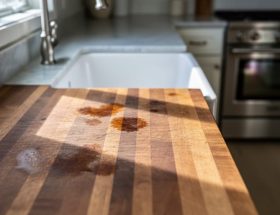
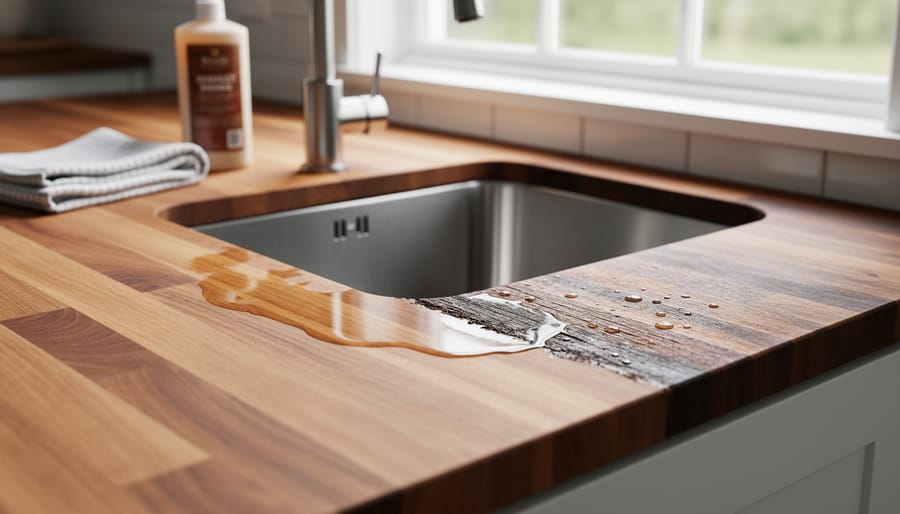
Water poses the single greatest threat to butcher block countertops. Wood is hygroscopic, meaning it absorbs and releases moisture from the surrounding environment. When water penetrates the surface, whether from standing puddles, spills left too long, or high humidity, the wood fibers swell. This expansion doesn’t happen uniformly, leading to warping, cupping, and eventually cracking as the material contracts during drying cycles.
The area around sinks is particularly vulnerable. Even a few hours of water exposure can cause visible swelling in the seams where wood planks join together. Repeated wet-dry cycles gradually open these joints, creating gaps that trap more moisture and debris.
Beyond structural damage, trapped moisture creates ideal conditions for mold and mildew growth, especially on the underside of the countertop where air circulation is limited. Black spots appearing along seams or edges signal this problem. In contrast, natural stone surfaces resist water damage entirely when properly sealed, making them far more practical for areas with frequent moisture exposure. Butcher block requires vigilant wiping and immediate spill cleanup to prevent these costly water-related failures.
Vulnerability to Heat and Stains
Butcher block’s vulnerability to heat represents one of its most significant drawbacks compared to natural stone. Placing a hot pot directly on wood can scorch the surface, leaving permanent dark marks that penetrate deep into the grain. Even moderately warm cookware can cause discoloration over time, requiring you to always use trivets and hot pads, an extra step that becomes tedious in busy kitchens.
Staining poses an equally persistent challenge. Wine, coffee, beet juice, tomato sauce, and citrus fruits can all leave stubborn marks that darken the wood grain. Acidic liquids like lemon juice or vinegar not only stain but can also break down the protective finish, exposing bare wood to further damage. You must wipe up spills immediately, which isn’t always practical during meal preparation.
Natural stone countertops handle both issues far more effectively. Granite withstands direct heat from pots and pans without damage, and while you might wonder do granite stain?properly sealed granite resists most common kitchen stains that would permanently mark butcher block. This fundamental difference in durability makes stone surfaces significantly more forgiving in active cooking environments.
Sanitation and Food Safety Concerns
Wood’s porous nature creates small crevices where bacteria can settle, particularly in the end-grain construction common to butcher block. Unlike nonporous natural stone surfaces, wood can harbor bacteria if not maintained with proper cleaning protocols.
Daily washing with hot, soapy water is essential after food preparation. For deeper sanitization, use a diluted bleach solution or food-safe disinfectant, followed by thorough rinsing and drying. Never let water pool on the surface, as moisture penetration compounds sanitation risks.
Butcher block requires immediate attention to spills, especially from raw meat, poultry, or fish. These organic materials can seep into wood grain faster than you can wipe them up, creating potential contamination zones that are difficult to eliminate completely.
For households with compromised immune systems or those preparing food for infants and elderly family members, the sanitation demands may outweigh butcher block’s aesthetic appeal. Commercial kitchens typically avoid wood surfaces in primary prep zones for this reason. Natural stone countertops offer nonporous alternatives that resist bacterial growth and require less intensive cleaning routines, making them more suitable for high-stakes food safety environments.
Durability Limitations Over Time
While butcher block countertops can last 20 years with diligent care, they show their age far sooner than natural stone. The wood inevitably develops deep scratches and gouges that penetrate beyond what sanding can fix. Repeated refinishing gradually thins the material, eventually leaving insufficient thickness for further restoration.
Wood’s inherent instability presents ongoing challenges. Seasonal humidity changes cause the boards to expand and contract, creating gaps at seams and potentially pulling apart end-grain constructions. Areas near dishwashers and sinks face accelerated deterioration from constant moisture exposure, often requiring localized replacement within a decade.
Compare this to granite or quartzite, which maintain their structural integrity and appearance for 50-plus years without dimensional changes. While butcher block offers charm and can be refinished multiple times, you’re essentially committing to periodic restoration work and accepting that replacement becomes necessary when the wood loses too much thickness. Natural stone eliminates these concerns entirely, maintaining its original durability throughout its considerably longer lifespan without the gradual degradation inherent to wood surfaces.
Butcher Block vs. Natural Stone: A Direct Comparison
When weighing the pros and cons of butcher block countertops against natural stone, a direct comparison reveals distinct trade-offs that affect long-term satisfaction. Each material excels in different areas, and understanding these differences helps you choose the right surface for your specific needs.
| Factor | Butcher Block | Natural Stone (Granite/Marble/Soapstone) |
|---|---|---|
| Maintenance | Monthly oiling/sealing required; ongoing time commitment | Annual or bi-annual sealing; minimal routine care |
| Durability | Scratches and dents easily; sanding repairs possible | Extremely hard and scratch-resistant; chips require professional repair |
| Water Resistance | Prone to warping, swelling, and staining from moisture | Highly water-resistant when sealed; ideal near sinks |
| Heat Tolerance | Burns and darkens from hot cookware; trivets essential | Withstands high heat without damage (granite best, marble moderate) |
| Cost (installed) | $40-$100 per square foot | $50-$200+ per square foot depending on stone type |
| Lifespan | 10-20 years with diligent maintenance | Lifetime material; 50+ years common |
The aesthetic comparison comes down to personal preference. Butcher block delivers organic warmth with visible grain patterns that soften modern kitchens, while natural stone provides dramatic veining, mineral depth, and a sense of permanence. Maple and oak butcher block offer lighter, neutral tones, whereas walnut brings richer chocolate hues. Stone counters range from the speckled consistency of granite to marble’s flowing veins and soapstone’s matte, charcoal finish.
From a practical standpoint, natural stone wins on durability and convenience. Granite handles daily abuse without showing wear, marble develops a lived-in patina that many find appealing, and soapstone’s non-porous nature eliminates sealing altogether. Butcher block requires you to become an active participant in countertop maintenance, rewarding if you enjoy hands-on care, frustrating if you prefer a set-it-and-forget-it surface. The repairability advantage of wood matters less when stone rarely needs repairs in the first place.
Is Butcher Block Right for Your Space?
Butcher block works best in specific scenarios where its unique qualities shine. Consider it for kitchen islands away from the main sink, where you want a warm prep surface and can monitor its condition easily. It excels as a baking station, providing a cool surface ideal for rolling dough. Bar tops and breakfast counters also benefit from butcher block’s inviting aesthetic without exposure to heavy water use.
However, skip butcher block around your primary sink or dishwasher. The constant moisture exposure accelerates warping and requires vigilant maintenance that most homeowners underestimate. In high-traffic family kitchens where spills happen frequently and time is limited, the maintenance burden becomes a genuine problem rather than a minor inconvenience.
Your lifestyle matters more than aesthetics alone. If you love hands-on home maintenance and enjoy the ritual of oiling wood surfaces quarterly, butcher block can be rewarding. But if you want surfaces that handle neglect gracefully, natural stone delivers better countertop value over decades with minimal care.
Consider a hybrid approach: install natural stone for your main work zones and wet areas, then add butcher block as an island or accent piece. This strategy gives you the warmth of wood without compromising your kitchen’s functionality or creating maintenance headaches in critical areas.
The right choice depends on honest assessment of your habits. Natural stone suits busy households, rental properties, and anyone prioritizing durability. Butcher block rewards those who view kitchen maintenance as enjoyable and have controlled moisture environments where wood can thrive.
Butcher block countertops present a compelling option for homeowners who value warmth, natural beauty, and the ability to refresh their surfaces over time. The pros are clear: affordability, repairability, and a forgiving surface that brings organic character to any kitchen. However, the cons demand honest consideration. Regular maintenance, vulnerability to water and heat, and sanitation concerns make butcher block a higher-commitment choice than many realize.
For those prioritizing durability and minimal upkeep, natural stone surfaces like granite, marble, or soapstone deliver superior performance with less daily attention. Stone withstands heat, resists moisture damage, and maintains its integrity for decades without the oiling schedules wood requires. When comparing countertop costs against long-term value, stone often proves the wiser investment for busy households.
Your decision ultimately hinges on lifestyle and priorities. If you enjoy hands-on maintenance and want a repairable, warm aesthetic, butcher block can serve you well in the right applications. But if you need a low-maintenance workhorse that ages gracefully without constant care, natural stone remains the gold standard for kitchen countertops.