
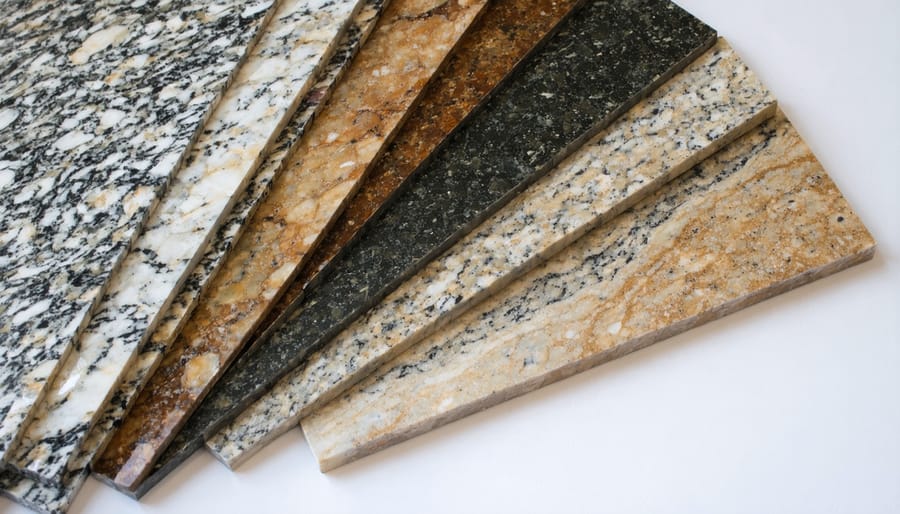
Granite countertops typically cost between $40 to $100 per square foot installed, with most homeowners spending $3,000 to $8,000 for their entire project. This natural stone’s price varies dramatically based on color, pattern complexity, and origin. Before choosing the right granite for your space, understand that exotic varieties with rare patterns can exceed $200 per square foot, while basic options start around $40.
Labor costs, which typically range from $35 to $85 per hour, significantly impact your final investment. Additional expenses include edge treatments ($10-30 per linear foot), sealing ($5-10 per square foot), and potential structural reinforcement for your cabinets ($100-300).
Current market trends show pricing fluctuations due to global supply chain dynamics and local availability. Mid-2023 data indicates that popular granite colors like Baltic Brown and Uba Tuba remain competitively priced, while newly discovered quarries introduce premium options at higher price points.
This investment typically returns 80-100% of its value during resale, making granite countertops a sound financial decision for both immediate enjoyment and long-term property value.
Average Granite Countertop Costs Breakdown
Per Square Foot Pricing
Granite countertops are typically priced per square foot, with costs varying significantly based on the grade and quality of the stone. The granite price per square foot for material alone ranges from $40 to $100+, while installed costs typically run between $57 and $170 per square foot depending on the stone grade and complexity of your project.
Entry-level or builder-grade granite ranges from $40 to $60 per square foot for the material. These granites often feature simple patterns and common colors like basic blacks, browns, and beiges. With installation included, expect to pay roughly $57 to $80 per square foot, making this tier an attractive option for budget-conscious homeowners.
Mid-grade granite costs between $60 and $90 per square foot installed. The granite cost per square foot for material in this category typically falls in the $50 to $70 range. You’ll find more varied patterns, distinctive veining, and a broader color palette here. Popular options like Santa Cecilia, Uba Tuba, and Baltic Brown sit comfortably in this range. On average, homeowners pay around $80 to $100 per square foot installed for mid-grade granite.
Premium or high-end granite commands $90 to $170+ per square foot installed, with material costs alone reaching $100 or more per square foot. These exotic granites feature rare colors, dramatic movement patterns, and unique characteristics. Examples include Blue Bahia, Van Gogh, and Fusion quartzite-like varieties.
Keep in mind that professional installation labor adds $35 to $85 per hour to your total project cost. The national average for a complete granite countertop installation runs about $3,250, though your actual costs will depend on your kitchen size and layout.
Remember that these prices can fluctuate based on your location, market conditions, and stone availability. Some suppliers may also charge extra for slabs with larger dimensions or special features like book-matching. Always request detailed quotes from multiple suppliers to ensure competitive pricing for your specific project.
Installation Costs
The granite countertop installation typically involves professional labor costs of $35 to $85 per hour, depending on your location and the complexity of the project. When combined with materials like adhesives, seams, and finishing supplies, total installed costs generally range from $57 to $170 per square foot. The professional granite installation process requires skilled craftsmen and specialized tools to ensure proper placement and sealing.
Several factors can influence granite installation cost:
– Complex layouts with multiple corners or curves
– Sink and appliance cutouts ($100-300 per cutout)
– Edge treatments and profiles ($10-40 per linear foot)
– Seam placement and quantity ($200-400 per seam)
– Removal and disposal of existing countertops ($200-500)
– Reinforcement of cabinets if needed ($100-300)
Most installers charge a minimum project fee, typically starting at $500, even for small areas. It’s crucial to obtain detailed quotes from multiple licensed installers, ensuring they include all necessary preparations, modifications, and finishing work. Many homeowners find that proper professional installation, while representing a significant portion of the total cost, is essential for long-term satisfaction and maintaining warranty coverage.
What Affects Granite Countertop Prices?
Granite Quality and Color
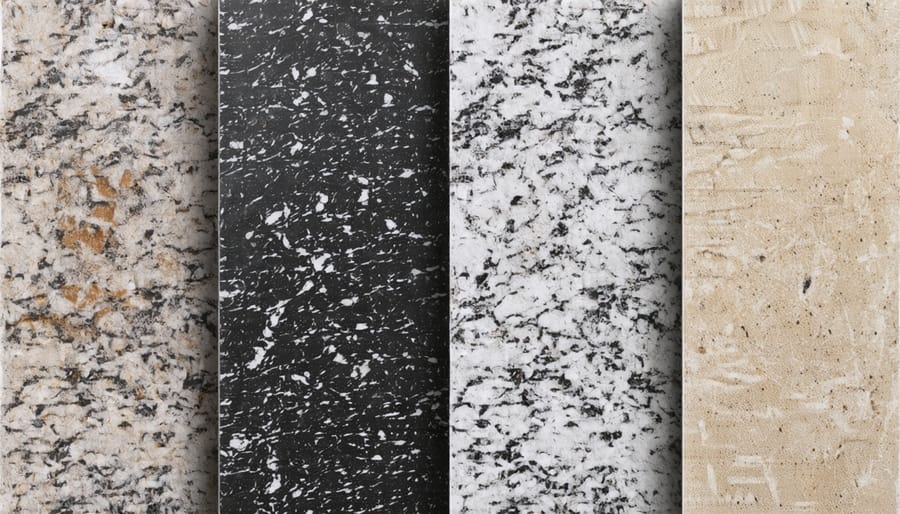
Granite quality and color significantly influence countertop pricing, with variations typically falling into three distinct grades: builder, mid, and premium. Builder-grade granite, priced at $40-60 per square foot, often features simple patterns and common colors like Uba Tuba green or Santa Cecilia gold. These stones usually come from larger quarries with abundant supply.
Mid-grade granite, ranging from $60-90 per square foot, offers more varied patterns and popular colors like Kashmir White or Blue Pearl. These stones typically show more character and movement in their patterns, with fewer inclusions or imperfections than builder grade.
Premium or exotic granite commands $90-200+ per square foot due to its rare colors, unique patterns, or limited availability. Examples include Blue Bahia or Van Gogh, featuring dramatic veining and spectacular color variations. These stones often come from smaller quarries or require more complicated extraction processes.
Color also plays a crucial role in pricing. Common colors like browns and beiges tend to cost less, while blues, reds, and pure whites often command premium prices due to their rarity. The stone’s origin can affect costs too – Brazilian and Indian granites typically cost less than Italian or Norwegian varieties.
When evaluating granite quality, look for consistent coloring, minimal pitting, and few fissures. Higher-grade stones generally offer better durability and more striking aesthetics, though all grades provide excellent functionality for kitchen countertops.
Edge Profiles and Finishes
The choice of edge profiles and finishes can significantly impact your granite countertop costs. Basic granite edge profile options like straight (eased) or bullnose typically add $10-15 per linear foot to your total cost. More elaborate profiles such as ogee, waterfall, or dupont can range from $25-40 per linear foot, reflecting the additional craftsmanship and machine time required.
Surface finishes also affect pricing, with polished being the standard option included in base pricing. Alternative finishes like honed (matte), leathered, or brushed typically add $5-10 per square foot to your costs. These specialty finishes require additional processing steps and expertise to achieve their distinctive appearances.
When selecting edge profiles and finishes, consider both aesthetics and practicality. Complex edge profiles may require more maintenance and are more susceptible to chipping, while certain finishes might show wear differently over time. Polished surfaces, while classic, tend to show fingerprints more readily than honed finishes. Leathered finishes, though premium-priced, excel at hiding water spots and fingerprints, potentially reducing long-term maintenance needs.
Remember that combining premium edges with specialty finishes will compound your costs, but can create truly distinctive looks that set your countertops apart.
Additional Features
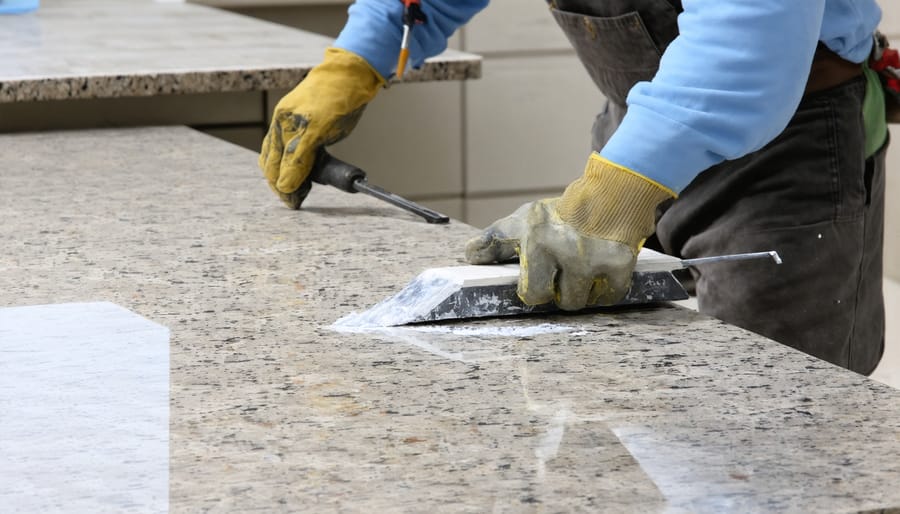
When planning your granite countertop budget, it’s essential to account for additional features that can significantly impact the final cost. Cutouts for sinks, faucets, and cooktops typically range from $100 to $300 per opening, depending on complexity and location. Undermount sink cutouts generally cost more than drop-in varieties due to the additional finishing work required.
Seams are another crucial consideration, especially for larger countertops or L-shaped layouts. Each seam typically costs between $200 to $400, including labor and materials needed for proper alignment and finishing. While some seams are unavoidable, strategic placement can minimize their visibility and number.
Special edge profiles add both visual interest and cost to your project. Standard edges like straight or eased are usually included in base pricing, but premium options such as ogee, bullnose, or waterfall edges can add $20 to $40 per linear foot. Decorative edge treatments require additional fabrication time and expertise.
Other special features that affect pricing include:
– Support brackets for overhangs ($50-$150 each)
– Drainboards ($200-$400)
– Built-in soap dispensers ($75-$150)
– Custom radius corners ($150-$300)
– Backsplash mounting ($10-$30 per linear foot)
Always discuss these additional features during initial consultations to ensure accurate project estimates and avoid unexpected costs later in the process.
Hidden Costs to Consider
Preparation Costs
Before installing new granite countertops, proper preparation of the existing space is essential and comes with its own set of costs. Understanding these granite preparation costs upfront helps you budget accurately for your kitchen renovation.
| Preparation Task | Cost Range | Notes |
|---|---|---|
| Old countertop removal | $200-$800+ | Higher costs for integrated sinks or complex configurations |
| Cabinet reinforcement | $300-$600 | Necessary to support granite’s weight |
| Plumbing modifications | $150-$400 | For sink reinstallation and adjustments |
| Electrical work | $200-$500 | Relocating outlets or updating connections |
| Cabinet leveling/subtops | $100-$400 | Includes plywood subtops and structural adjustments |
The countertop removal cost varies significantly based on your existing material and installation complexity. Simple laminate countertops typically fall at the lower end of the range, while tile or older granite with extensive adhesive requires more labor and can push costs higher.
The condition of your existing cabinets plays a crucial role in preparation expenses. Granite is substantially heavier than most other countertop materials, so cabinets must be structurally sound and level. If your cabinets sag or aren’t properly secured, reinforcement becomes mandatory rather than optional.
These preparation costs are separate from the actual granite installation. While some homeowners attempt DIY removal of old countertops to save money, professional removal ensures proper disposal and minimizes the risk of cabinet damage. Most granite fabricators include basic preparation in their installation quotes, but complex situations requiring additional work will incur extra charges. Always confirm what preparation work is included in your estimate to avoid unexpected costs.
Maintenance Expenses
While the initial cost of granite countertops is significant, homeowners should also consider ongoing maintenance expenses to protect their investment. Understanding these granite maintenance requirements is essential for long-term budgeting.
The primary recurring cost is sealing, which typically needs to be done every 1-3 years depending on use and the specific granite type. Professional sealing services range from $200 to $400 per application, though DIY options are available for $25-50 per bottle of sealer.
Daily cleaning requires specialized granite cleaners, which cost $10-20 per bottle and last about 2-3 months. Using regular household cleaners can damage the stone, leading to costly repairs or replacement.
If chips or cracks occur, professional repairs typically cost $200-500 per incident. Deep stains may require professional restoration, which can range from $300-800 depending on severity.
Annual professional deep cleaning and inspection services, while optional, are recommended and cost between $150-300. This preventive maintenance helps avoid more expensive repairs and extends the life of your countertops.
When factoring these maintenance costs into your budget, expect to spend approximately $300-600 annually to keep your granite countertops in optimal condition.
How to Save Money on Granite Countertops
While granite countertops represent a significant investment, several strategic approaches can help reduce costs without compromising quality. With installed costs ranging from $57 to $170 per square foot and an average project total of around $3,250, smart planning can make a real difference in your final bill.
Here are the most effective ways to save money on your granite countertop project:
- Compare quotes from 3-5 suppliers and fabricators. Rates can vary significantly between vendors, and shopping around gives you leverage to negotiate better pricing.
- Use remnant pieces for smaller projects. Islands, bathroom vanities, and bar areas can often be completed with leftover material from larger jobs, sometimes at half the cost of new slabs.
- Choose common granite colors. Browns, beiges, and tans like Uba Tuba, Santa Cecilia, and New Caledonia typically cost less than exotic or rare varieties while still providing excellent durability.
- Simplify edge profiles. Stick with standard eased or bullnose edges rather than elaborate ogee or waterfall profiles to reduce fabrication costs.
- Bundle purchases if doing multiple rooms. Buying all your granite at once, whether for kitchen, bathrooms, or laundry areas, often qualifies you for volume discounts.
- Consider builder-grade granite that still offers durability. These mid-tier options provide the same longevity and maintenance benefits as premium grades without the designer price tag.
Opting for thinner slabs (2cm instead of 3cm) can lower costs, though you’ll need to ensure proper support. Reducing the number of cutouts and seams in your design can significantly decrease fabrication costs, as labor runs between $35 and $85 per hour depending on project complexity.
Timing your purchase during seasonal sales or year-end clearances can yield substantial savings. Some suppliers offer discounts during slower periods, typically during winter months. Being flexible with your color choices and willing to consider multiple options increases your chances of finding good deals.
To maximize value, maintain control over your square footage calculations. Minimize waste by carefully planning your layout and considering L-shaped cuts that can utilize single slabs more efficiently. A mix-and-match approach, using premium granite for high-visibility areas like kitchen islands while selecting more affordable options for peripheral counters, can create an upscale look for less.
Remember to factor in long-term durability when making cost-saving decisions. Choosing a slightly more expensive but harder granite variety might prove more economical over time due to better resistance to scratches and stains. Always ensure your selected supplier provides a warranty and maintains a reputation for quality workmanship, as repairs or replacements can quickly eliminate any initial savings.
Granite countertops typically cost between $80 and $100 per square foot installed, with most homeowners spending around $3,250 for their entire project. The final cost depends on stone quality, edge treatment, installation complexity, and your location. To get the best value, compare multiple quotes, consider remnants for smaller projects, and be flexible with color selections. While premium grades and exotic stones can push costs toward the higher end of the $57 to $170 per square foot range, mid-grade granite offers an excellent balance of durability and aesthetics. With proper research and planning, granite countertops can provide lasting beauty and functionality while potentially increasing your home’s resale value.