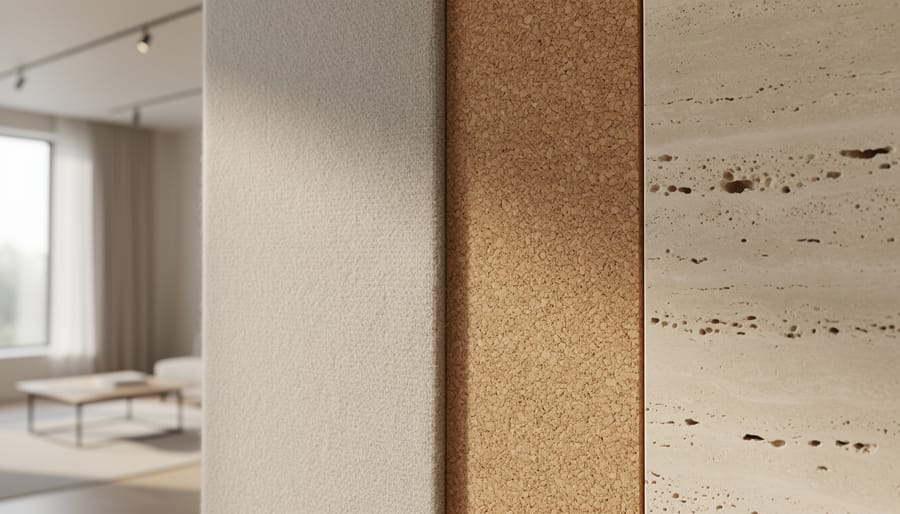
Natural sound absorbing materials are porous or fibrous substances derived from renewable biological sources or geological formations that reduce noise levels by converting sound energy into minimal heat through friction within their structure. These materials include wool, cork, wood fiber, recycled cotton, hemp, and certain stone varieties like porous limestone and travertine.
The growing demand for these materials reflects a broader shift in architectural design. Building professionals and homeowners increasingly reject synthetic foam panels and fiberglass treatments in favor of solutions that deliver acoustic performance without off-gassing volatile organic compounds or contributing to landfill waste. This preference aligns with the principles of mindful stone selection and biophilic design, where material choices support both human wellness and environmental responsibility.
Understanding how natural materials absorb sound requires looking beyond marketing claims to actual acoustic coefficients and installation contexts. A two-inch thick wool panel performs differently than a polished granite wall, yet both can serve acoustic functions when specified correctly. The distinction matters because poor material selection leads to disappointing results and wasted budget.
This article explains what qualifies a material as genuinely natural in acoustic terms, how sound absorption works at the molecular level, and which materials deliver measurable performance across different frequency ranges. You’ll find practical guidance on matching materials to specific applications, from residential spaces requiring modest noise control to commercial environments demanding strict acoustic standards. Special attention goes to natural stone options, an often overlooked category that combines durability with authentic sound management when properly processed and installed.
What Natural Sound Absorbing Materials Are
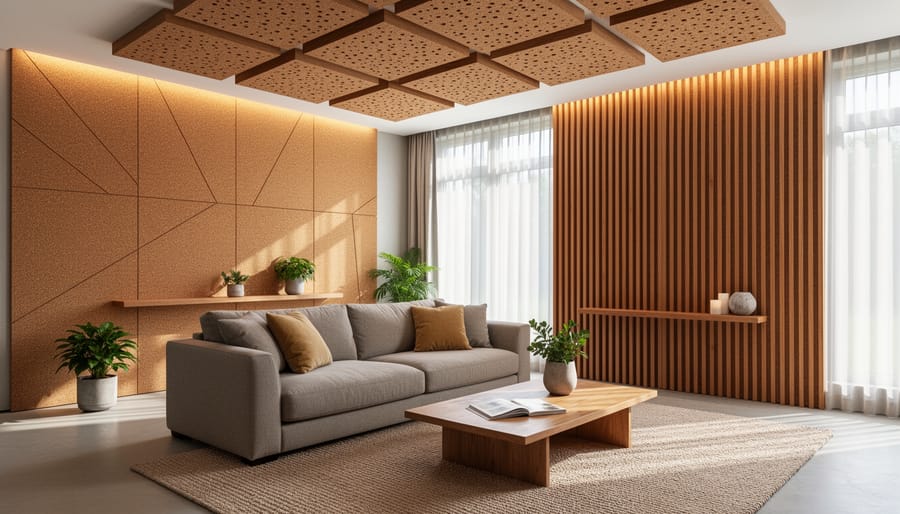
Natural sound absorbing materials are substances derived from non-synthetic sources that reduce sound reflection and control reverberation in interior spaces. Unlike synthetic foam, fiberglass, or polyester products, these materials come directly from geological, plant, or animal origins with minimal chemical processing. They include traditional options like wood, cork, wool felt, and hemp fiber, as well as less obvious choices such as natural stone, compressed straw, and mycelium-based composites.
What makes a material effective at absorbing sound comes down to three fundamental physical properties. Porosity determines how easily sound waves can enter the material’s internal structure. When sound travels into tiny air pockets and interconnected channels, the acoustic energy converts to small amounts of heat through friction, preventing the sound from bouncing back into the room. Density affects how the material responds to different sound frequencies, with denser materials typically performing better at lower frequencies while lighter, more porous materials excel at absorbing higher-pitched sounds. Surface texture plays a crucial role by scattering sound waves in multiple directions rather than reflecting them uniformly back toward the source, which reduces echo and improves speech clarity.
Understanding a few key terms helps when evaluating how these materials perform:
- Absorption Coefficient
- A number between 0 and 1 that indicates what percentage of sound energy a material absorbs at a specific frequency, where 1 means complete absorption and 0 means total reflection.
- NRC Rating
- The Noise Reduction Coefficient averages absorption performance across common speech frequencies (250-2000 Hz) into a single number, making it easier to compare materials at a glance.
- Reverberation Time
- The time it takes for sound to decay by 60 decibels after the source stops, which natural absorbers help reduce to create clearer acoustics in a space.
- Diffusion
- The scattering of sound waves in multiple directions rather than absorbing them, which textured natural materials like rough-cut stone or wood slats provide alongside absorption.
Natural stone offers particularly interesting acoustic properties due to its geological structure. A polished marble slab reflects sound almost completely, but the same stone with a flamed, bush-hammered, or split-face finish creates microscopic surface irregularities that scatter mid-to-high frequencies effectively. Perforated stone panels take this further by combining the material’s inherent density with engineered porosity, allowing sound waves to penetrate into backing cavities where absorption occurs. Travertine’s natural pitting provides built-in texture without additional processing.
How Natural Sound Absorbing Materials Work
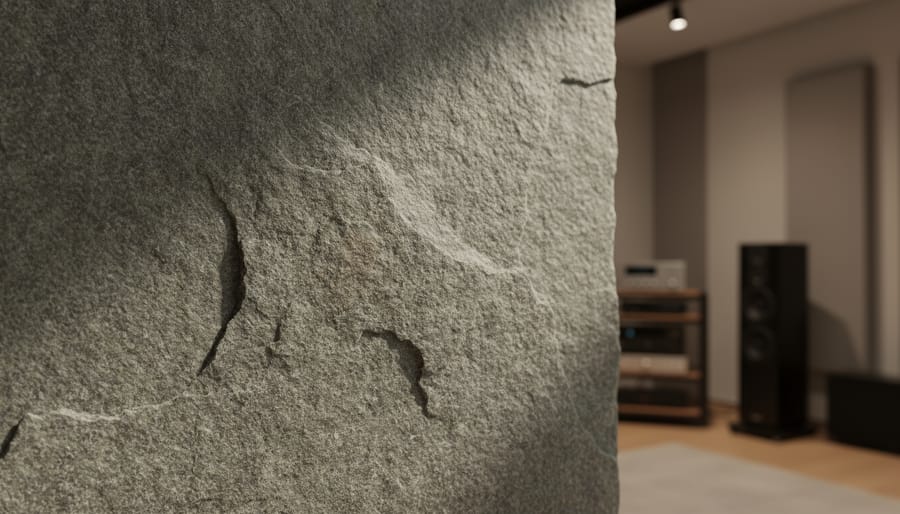
Sound absorption happens when materials convert acoustic energy into tiny amounts of heat through friction and air resistance. Natural materials achieve this through three primary mechanisms that work individually or in combination, depending on the material’s physical properties and how it’s processed.
Porous structures are the most common sound-absorbing mechanism in natural materials. When sound waves enter a porous material, whether it’s the interconnected air pockets in volcanic stone or the cellular structure of cork, the air molecules inside those tiny cavities vibrate and collide with the pore walls. This friction converts sound energy into heat. The effectiveness depends on pore size, interconnectivity, and depth. Materials with open, interconnected pores work best because porous absorbers trap sound waves more effectively than closed-cell structures. Thicker materials generally absorb lower frequencies better, while smaller, denser pore networks excel at higher frequencies.
Surface texture controls how sound reflects or scatters when it hits a material. Smooth surfaces bounce sound waves uniformly, creating echoes and flutter. Rough or irregular surfaces, like a bush-hammered granite wall or split-face limestone, scatter incoming sound in multiple directions, breaking up coherent reflections and reducing perceived reverberation. This diffusion doesn’t eliminate sound energy the way absorption does, but it prevents problematic acoustic patterns in a space. Natural stone’s texture options range from polished mirror finishes that reflect sound directly to deeply textured finishes that provide substantial scattering alongside moderate absorption.
Material density and mass influence how materials respond to sound vibration. Denser materials like marble or limestone resist vibration and provide what acousticians call transmission loss, they block sound from passing through while damping vibrations at the surface. Natural stone’s crystalline molecular structure contributes to this performance. When stone surfaces are perforated or textured through flaming, thermal shock, or mechanical treatment, the material gains porosity while retaining its mass benefits, creating hybrid performance that addresses both absorption and isolation needs.
The interplay between these mechanisms explains why a single material can perform differently based on processing. A polished travertine slab primarily provides mass and reflection control. The same stone with its natural voids exposed or enhanced through perforation becomes an effective mid-to-high frequency absorber while maintaining structural rigidity.
Categories of Natural Sound Absorbing Materials
Fibrous and Porous Materials
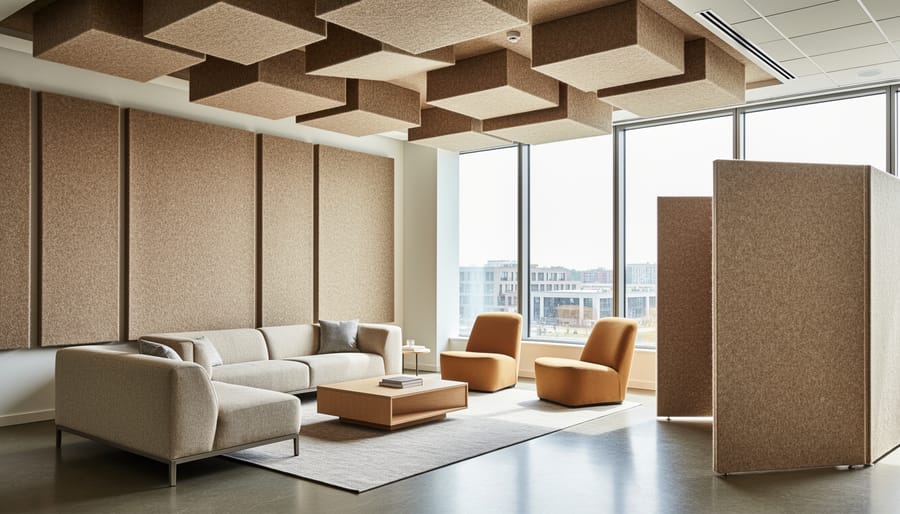
Fibrous and porous materials represent the most established category of natural sound absorbers, relied on for decades before synthetic alternatives dominated the market. These materials work by trapping sound waves within interconnected air pockets and fibrous structures, converting acoustic energy into minimal heat through friction.
Wood wool, made from long strands of wood shavings bound together, offers excellent mid-to-high frequency absorption with Noise Reduction Coefficients (NRC) typically ranging from 0.60 to 0.85 depending on thickness and density. Industrial spaces and workshops favor wood wool panels for their durability and fire-resistant treatment options. Cork panels provide similar acoustic performance (NRC 0.55-0.75) while adding thermal insulation benefits, making them popular in recording studios and home theaters where both sound control and temperature stability matter.
Hemp and recycled cotton batts deliver strong broadband absorption (NRC 0.70-0.90) when installed at sufficient thickness, typically 50-100mm. Architects specify these materials for wall cavities and suspended ceiling systems in offices and educational facilities where sustainability credentials align with acoustic needs. The materials compress easily during installation without losing performance, unlike rigid synthetic boards.
Wool felt stands apart for combining acoustic function with refined aesthetics. Pressed felt panels absorb across a wide frequency range (NRC 0.35-0.65 at 12mm thickness, higher for thicker applications) and accept dyes well, allowing integration as both acoustic treatment and design feature in restaurants, conference rooms, and residential spaces where visible panels must contribute to interior character rather than compromise it.
Natural Stone Acoustic Applications
Natural stone has emerged as a sophisticated solution in acoustic design, combining aesthetic refinement with measurable sound absorption properties. Unlike traditional porous absorbers, stone relies on surface manipulation and engineered modifications to control sound behavior in high-end spaces.
The acoustic performance of marble, limestone, travertine, and granite hinges on how their surfaces interact with sound waves. Polished stone reflects sound nearly completely, but textured finishes transform these materials into effective diffusers and partial absorbers. A bush-hammered limestone wall scatters sound across multiple angles, reducing echo while maintaining the material’s visual presence. Travertine’s natural pitting and cellular structure absorb mid-to-high frequency sounds even without additional treatment, making it particularly valuable in lobbies and atriums where intelligibility matters more than complete silence.
Surface treatments that enhance stone’s acoustic function include:
- Flamed finishes that create micro-roughness through thermal fracturing
- Sandblasted surfaces offering controlled texture depth
- Bush-hammered treatments producing pronounced relief patterns
- Perforated panels with precision-drilled holes over absorbent backing
- Three-dimensional textured panels combining visual drama with sound diffusion
Perforated stone panels represent the most acoustically aggressive application. Marble or limestone slabs drilled in calculated patterns allow sound to penetrate a concealed absorption layer, typically mineral wool or open-cell foam, while the stone face maintains design continuity. These systems achieve noise reduction coefficients between 0.60 and 0.85 across speech frequencies, comparable to dedicated acoustic products but with stone’s permanence and luxury appeal.
The Elbphilharmonie concert hall in Hamburg demonstrates this approach at scale, using custom stone composite panels throughout its public circulation spaces to manage the acoustic transition between the reverberant main hall and everyday lobby conversation. Closer to residential scale, real-looking stone veneer systems now incorporate acoustic backing layers, delivering both the visual weight of stone and functional sound control in home theaters and media rooms where full-thickness slabs would be impractical.
Stone composites, thin stone layers bonded to lightweight honeycomb or polymer cores, expand design possibilities further, allowing curved acoustic baffles and suspended ceiling elements that would be structurally impossible in solid stone.
Wood and Wood-Based Materials
Wood ranks among the most versatile natural sound absorbers, offering acoustic control through multiple mechanisms depending on form and installation. Solid wood panels absorb mid-to-high frequency sound when mounted with an air gap behind them, creating a resonant cavity that dissipates sound energy. The wood itself provides minimal absorption when installed flush against a wall, but strategic spacing transforms it into an effective low-frequency trap.
Slatted wood systems leverage gaps between horizontal or vertical slats to achieve broader frequency absorption. Sound waves enter the spaces, bounce within the cavity, and lose energy through friction. The slat width, gap spacing, and depth of the backing cavity all influence which frequencies get absorbed most effectively. Wider gaps and deeper cavities typically target lower frequencies, while tighter configurations handle higher ranges.
Grain patterns affect surface interaction with sound waves, though the impact is subtle compared to installation geometry. Open-grain woods like oak create slightly more surface friction than tight-grain species, but this difference matters less than whether the wood surface is smooth, grooved, or textured. Engineered wood products including perforated panels, acoustic plywood with micro-perforations, and wood wool boards expand design options. These products combine wood fibers or veneers with specific hole patterns or densities engineered for predictable absorption coefficients across target frequency ranges, offering consistency that solid wood’s natural variation sometimes lacks.
Plant-Based and Recycled Natural Materials
The sustainable acoustic design field has embraced a new generation of plant-based and recycled materials that combine environmental responsibility with genuine sound-absorbing performance. These emerging alternatives appeal to projects pursuing rigorous green building certifications while delivering measurable acoustic benefits.
Mycelium acoustic panels represent one of the most innovative developments. Grown from fungal networks rather than manufactured, these lightweight panels offer surprisingly effective mid-frequency absorption while being fully biodegradable at end-of-life. Their natural porosity creates irregular cell structures that trap sound waves, and manufacturers can control density during the growing process to tune acoustic properties for specific applications.
Compressed agricultural waste products have moved from experimental to commercially viable. Wheat straw and rice husk panels achieve noise reduction coefficients comparable to conventional fiberglass when properly processed, transforming agricultural byproducts into functional acoustic treatments. These panels work particularly well in educational facilities and community spaces where sustainability messaging reinforces institutional values.
Bamboo maintains its position as a versatile acoustic material, used both as solid panels and in woven configurations. Its rapid growth cycle and structural strength make it attractive for large-scale installations, though acoustic performance varies significantly based on processing methods and panel construction.
Recycled cellulose products pressed into rigid panels offer cost-effective solutions for ceiling and wall applications. Made from post-consumer paper and cardboard, these materials provide reliable sound absorption in office environments and schools where budget constraints limit options but acoustic control remains essential.
Where Natural Sound Absorbing Materials Are Used
Residential Applications
Home theaters benefit significantly from natural sound absorbing materials, where stone accent walls with textured finishes, flamed granite or split-face limestone, reduce echo while adding visual weight that complements media equipment. Combining stone with wood paneling on ceilings creates balanced absorption across frequency ranges, preventing the hollow sound common in dedicated theater spaces.
Music rooms and practice spaces require materials that manage reflections without deadening the room entirely. Wood slatted walls allow controlled sound diffusion, while natural wool panels in corners trap low-frequency buildup. A bush-hammered marble feature wall can serve as both a decorative focal point and a mid-frequency absorber.
Open-concept living areas present unique challenges where sound travels freely between kitchen, dining, and living zones. Cork ceiling tiles or perforated travertine panels above conversation areas reduce noise transfer without visual barriers. Natural stone flooring with area rugs provides hard surfaces for cleanability while textile elements manage reverberation.
Home offices converted from spare bedrooms often suffer from boxy acoustics that make video calls echo-prone. A single wall clad in textured stone or wood wool panels dramatically improves speech clarity, while maintaining the professional aesthetic remote workers need for virtual meetings.
Commercial and Public Spaces
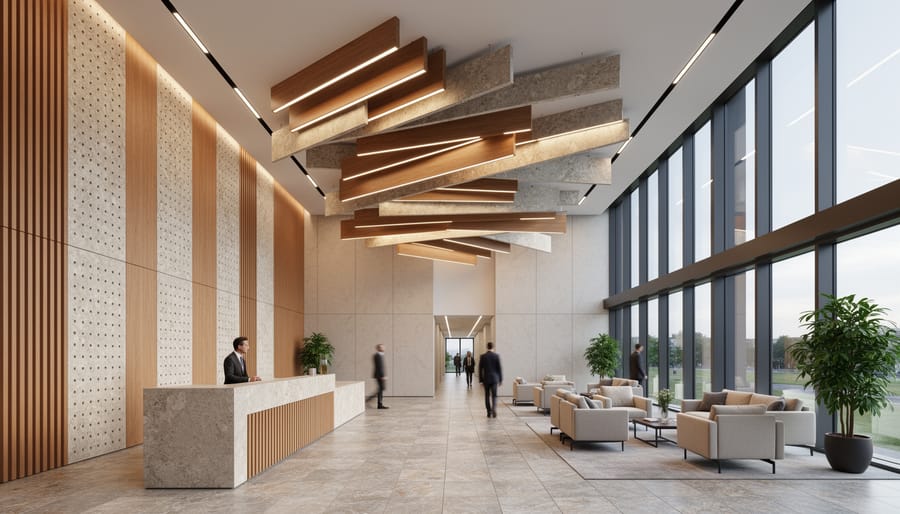
In restaurants, the acoustics can make or break the dining experience. Hard surfaces that create a lively atmosphere often tip into uncomfortable noise levels during peak hours. Natural stone acoustic panels, particularly flamed or bush-hammered marble, offer an elegant solution that absorbs mid-frequency chatter while maintaining the visual warmth hospitality designers want. Paired with wood slat ceilings or cork wall sections, these materials create layered absorption across different frequencies.
Corporate lobbies present a similar challenge: impressive volumes and reflective finishes that create echoing, impersonal spaces. The Marriott Marquis Houston solved this by installing travertine acoustic panels with subtle perforation patterns throughout its 30-story atrium lobby. The textured stone absorbs ambient noise from foot traffic and conversation while complementing interior stone columns and other design elements. The result is a space that feels both grand and intimate, where conversation happens comfortably without raising voices.
Open-plan offices increasingly incorporate natural materials to combat productivity-killing noise. Stone feature walls with acoustic backing, positioned strategically in breakout areas, work alongside fabric-wrapped panels and wool felt dividers to manage sound zones without visual clutter. Retail environments apply similar thinking, using stone’s durability where high-traffic acoustics meet design standards influenced by urban stone design trends that blend interior and exterior material palettes.
Performance and Specialized Venues
Concert halls and recording studios demand acoustic precision that synthetic treatments often achieve at the cost of warmth. Natural materials meet both requirements. Limestone and travertine panels with micro-perforated surfaces absorb mid-range frequencies while preserving the tonal richness musicians depend on. Wood diffusers made from oak or walnut scatter sound evenly across seating areas without the clinical feel of foam.
Lecture halls benefit from natural stone feature walls that reduce echo while projecting authority. A university auditorium in Boston installed flamed granite panels along rear walls, cutting reverberation time by 40% while maintaining the room’s visual gravitas. Places of worship use cork underlay beneath wooden pews and textured stone columns to balance spoken word clarity with musical resonance, creating spaces that feel sacred rather than sterile.
Choosing the Right Natural Sound Absorbing Material
Selecting the right natural sound absorbing material requires balancing acoustic performance targets with practical considerations specific to your space. Start by identifying the frequency range causing issues, low-frequency rumble demands thick, dense materials like stone panels or heavy wood, while mid-to-high frequencies respond well to fibrous materials like cork or wool felt. Measure the noise reduction coefficient (NRC) you need; conference rooms typically require materials with an NRC of 0.60 or higher, while home offices function adequately with NRC values around 0.40-0.50.
Durability matters significantly in high-traffic or moisture-prone areas. Natural stone excels in restaurant dining rooms, hotel lobbies, and commercial corridors where impact resistance and cleanability justify the investment. Cork and wood perform well in climate-controlled interior spaces but deteriorate faster in humid environments without proper sealing. Mycelium panels and compressed straw suit temporary installations or spaces with minimal wear, while perforated limestone or travertine maintains both acoustic function and structural integrity for decades.
Maintenance requirements vary dramatically across material types. Natural stone demands periodic resealing depending on porosity but otherwise needs only routine cleaning with pH-neutral products. Wood systems require more frequent inspection for warping or finish degradation, particularly in spaces with variable humidity. Plant-based materials like hemp or recycled cotton accumulate dust within their fibrous structures, necessitating professional cleaning every few years to maintain acoustic performance.
Budget planning should account for total lifecycle costs rather than initial purchase price alone. Solid stone acoustic panels represent significant upfront investment, often $80-150 per square foot installed, but require minimal replacement or maintenance over twenty-plus years. Cork or wood alternatives cost $15-40 per square foot initially yet may need refinishing or replacement within ten years. For projects prioritizing sustainable architecture seek materials with third-party certifications like Cradle to Cradle or Environmental Product Declarations that verify extraction, manufacturing, and disposal impacts.
Combining materials yields superior results. Use natural stone on lower wall sections for durability and visual grounding, wood slats at mid-height for warm aesthetics and diffusion, and cork or fabric panels near ceilings where accessibility for future replacement matters less. This layered approach addresses multiple frequency ranges while creating visual interest that purely synthetic solutions cannot match.
Frequently Asked Questions
Natural sound absorbing materials raise practical questions for anyone considering them for a project. The answers often reveal both the versatility and the specific considerations that come with choosing natural materials over synthetic alternatives.
Can natural stone really absorb sound?
Yes, when properly treated or textured. Polished stone reflects sound, but textured finishes like flamed granite, split-face limestone, or perforated stone panels create the surface irregularity and air gaps needed to trap and scatter sound waves effectively.
How does natural stone compare to acoustic foam in performance?
Natural stone with textured or perforated surfaces absorbs sound differently than foam, it excels at mid-to-low frequencies and adds mass that prevents sound transmission, while foam primarily absorbs high frequencies. Stone provides comparable acoustic control with superior durability and a refined aesthetic that suits high-end applications.
What maintenance do natural sound absorbing materials require?
Most natural materials need minimal upkeep. Stone can be cleaned with appropriate pH-neutral cleaners and doesn’t degrade or discolor like foam; wood may need occasional refinishing; and fibrous materials like cork or wool simply require periodic vacuuming to prevent dust buildup in porous surfaces.
Are natural materials more expensive than synthetic acoustic treatments?
Initial costs typically run higher, natural stone panels and quality wood systems cost more per square foot than foam or fiberglass, but the lifespan advantage often balances the investment. A stone installation can last decades without replacement, while synthetic materials may need renewal every 10-15 years.
Can natural acoustic materials be retrofitted into existing spaces?
Absolutely. Perforated stone panels mount to existing walls with standard anchoring systems, wood slat systems install over drywall or concrete, and lightweight options like cork tiles or wool panels attach with adhesive, making acoustic upgrades feasible without major construction.
These considerations matter most during the planning phase. Budget conversations should account for both material and installation costs, especially with heavier options like stone that may require structural evaluation. The weight factor isn’t a dealbreaker, engineers routinely design mounting systems for stone cladding, but it does mean involving the right specialists early.
Retrofitting often works best when acoustic goals align with aesthetic upgrades. Adding a textured limestone feature wall to a hotel lobby or installing perforated marble panels in a conference room solves reverberation issues while elevating the space visually. The dual function justifies the investment in ways that utilitarian acoustic foam cannot match, particularly in client-facing environments where first impressions carry weight.
Natural sound absorbing materials have established themselves as the intelligent choice for acoustic design in 2026, delivering measurable performance improvements while enhancing visual impact. Unlike synthetic alternatives that treat acoustics as purely functional, materials like natural stone, wood, cork, and wool felt solve sound challenges without compromising design intent. They absorb unwanted reverberation, reduce noise transmission, and create comfortable acoustic environments that feel as good as they look.
The sustainability case strengthens their appeal. Natural materials carry lower embodied carbon, don’t off-gas harmful chemicals, and often improve indoor air quality while performing their acoustic function. For projects pursuing LEED or WELL certification, they contribute to multiple credit categories simultaneously. They age gracefully rather than deteriorating into landfill-bound waste after a decade.
Natural stone occupies a unique position in high-end acoustic applications. Marble, limestone, and travertine bring unmatched visual presence to lobbies, performance venues, and executive spaces while delivering acoustic control through textured finishes and engineered perforations. The material communicates permanence and quality that synthetic panels cannot replicate, making it the preferred choice where aesthetics carry equal weight with acoustic performance.
Selecting the right combination of natural materials requires balancing acoustic targets, budget realities, and maintenance capabilities. Working with stone specialists and acoustic consultants ensures your project achieves both measurable sound absorption and the timeless aesthetic natural materials provide. The investment pays dividends in occupant comfort, environmental responsibility, and spaces that remain acoustically effective and visually compelling for decades.