# Granite Countertop Edge Profiles: Your Complete Selection Guide
The edge profile you choose transforms your granite countertop from a functional surface into a design statement that defines your kitchen’s entire aesthetic. This single decision affects everything from your space’s visual style to daily safety, maintenance requirements, and overall project cost—with price variations ranging from standard fabrication fees to premium charges exceeding $30 per linear foot for intricate profiles.
Understanding the twelve most popular edge profiles empowers you to make an informed choice that balances your design vision with practical considerations. A sleek straight edge delivers contemporary minimalism and budget-friendly installation, while an ornate ogee profile adds Old World elegance to traditional spaces. Families with young children prioritize rounded bullnose or half-bullnose edges for safety, eliminating sharp corners that pose injury risks. Meanwhile, busy households appreciate how simpler profiles like beveled or eased edges resist chipping and simplify cleaning compared to complex designs with crevices that trap debris.
This guide provides detailed visual descriptions of each profile type, practical selection criteria based on your kitchen style and lifestyle needs, and expert insights for productive conversations with your fabricator about customization options and cost implications.
What Are Granite Countertop Edge Profiles?
Granite countertop edge profiles are the finished shapes applied to the exposed edges of your countertops, transforming a simple cut slab into a polished, functional surface. These profiles serve as both decorative elements and practical features that define your kitchen’s overall aesthetic while affecting durability, maintenance, and safety.
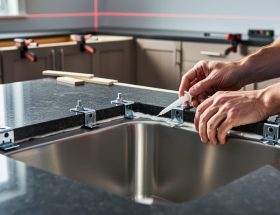
Fabricators create these edges through precision cutting, grinding, and polishing techniques that shape the stone’s perimeter. The process begins with cutting the granite to the specified dimensions, then applying specialized tools and diamond-embedded pads to sculpt the desired profile. Multiple stages of polishing follow, creating the smooth, lustrous finish that distinguishes professional installations from basic cuts.
The impact of granite edge profiles extends beyond visual appeal. From a design perspective, edges significantly influence how your countertops complement cabinetry, flooring, and architectural details. A simple, streamlined edge reinforces contemporary minimalism, while ornate profiles with curves and bevels enhance traditional or transitional spaces.
Practically speaking, edge selection affects daily functionality. Rounded edges provide safety in homes with children, reducing injury risks from sharp corners. Certain profiles are easier to clean, with fewer crevices that trap crumbs and debris. Budget considerations also come into play, as complex edges with multiple curves require more fabrication time and expertise, increasing overall costs.
Your edge choice matters because it’s a permanent decision that influences how your kitchen looks, functions, and feels for years to come. Understanding the relationship between profile design and your specific needs—whether prioritizing safety, style, maintenance ease, or budget—ensures you select an edge that truly serves your space.
The Most Popular Granite Edge Profiles
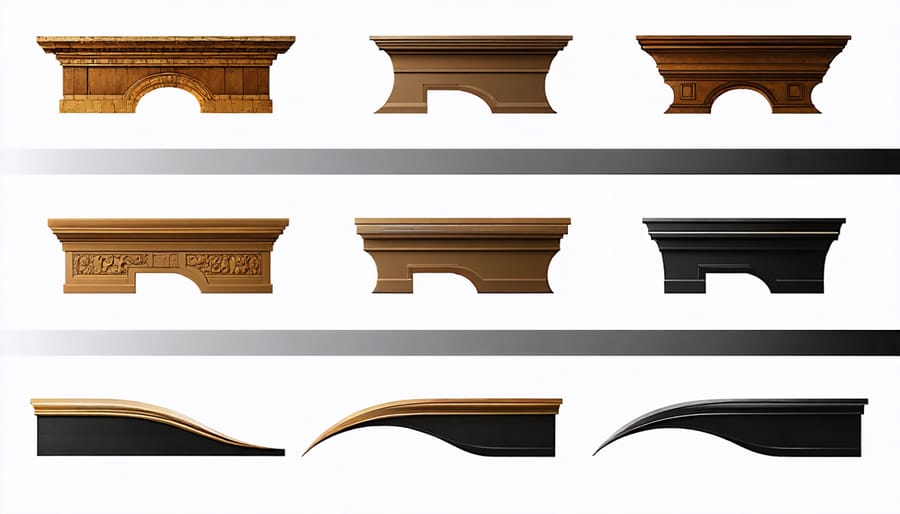
Straight and Simple Edges
For homeowners and designers seeking a contemporary, minimalist look, straight and simple edge profiles offer an ideal combination of modern aesthetics and practical advantages. These understated options have surged in popularity alongside the clean-lined design movement, proving that sometimes less truly is more.
The **eased edge** represents the most basic profile, featuring a slightly rounded top corner that removes the sharpness of a completely square edge. This subtle modification creates a soft, safe surface while maintaining an overwhelmingly flat appearance. The eased edge works beautifully in modern and transitional kitchens, complementing both bold granite patterns and subtle solid colors without competing for visual attention.
The **straight edge** (also called a flat or flat-polished edge) delivers maximum minimalism with its crisp 90-degree angles on both top and bottom. This completely flat profile creates razor-sharp lines that emphasize the natural beauty and thickness of your granite slab. While stunning in contemporary spaces, the straight edge requires careful consideration in households with young children due to its sharper corners.
The **beveled edge** adds architectural interest through an angled cut—typically 45 degrees—along the top edge of the countertop. This single diagonal facet catches light beautifully, creating subtle visual dimension while maintaining clean lines. Beveled edges work exceptionally well with darker granite colors, as the angled surface reflects light differently than the flat top, adding depth to the stone’s appearance.
**Cost and Maintenance Advantages**
These simple profiles rank among the most affordable options since they require minimal fabrication time and specialized tooling. The straightforward geometry also translates to easier cleaning—there are no intricate curves or crevices where dirt and bacteria can accumulate. For budget-conscious projects prioritizing both style and functionality, these edges deliver exceptional value without sacrificing design integrity.
Rounded and Curved Edges
Rounded and curved edges offer a softer, more organic aesthetic that appeals to homeowners seeking gentler transitions and enhanced safety. These profiles eliminate sharp corners, making them particularly popular in family-friendly kitchens where children are present.
The **full bullnose** creates a complete semicircular edge from top to bottom, delivering the smoothest possible profile. This classic option presents a timeless look that works beautifully in traditional and transitional kitchens. Its continuous curve provides maximum safety while creating visual softness that complements cabinetry with similar rounded details. Full bullnose edges are excellent at reducing visible seams in longer countertop runs.
A **half bullnose** rounds only the top edge while maintaining a straight vertical drop, offering a compromise between contemporary and traditional styling. This profile is slightly more modern than its full-radius counterpart while still providing safety benefits. The half bullnose works well in kitchens where you want rounded comfort without the fully traditional appearance of a complete semicircle.
The **demi-bullnose** (also called a quarter round) creates a gentler radius than half bullnose profiles, typically featuring a smaller curved edge with a subtle flat section. This option bridges the gap between completely rounded and squared edges, providing a sophisticated look that adapts to various design styles. It’s an ideal choice when you want understated elegance without dramatic curves.
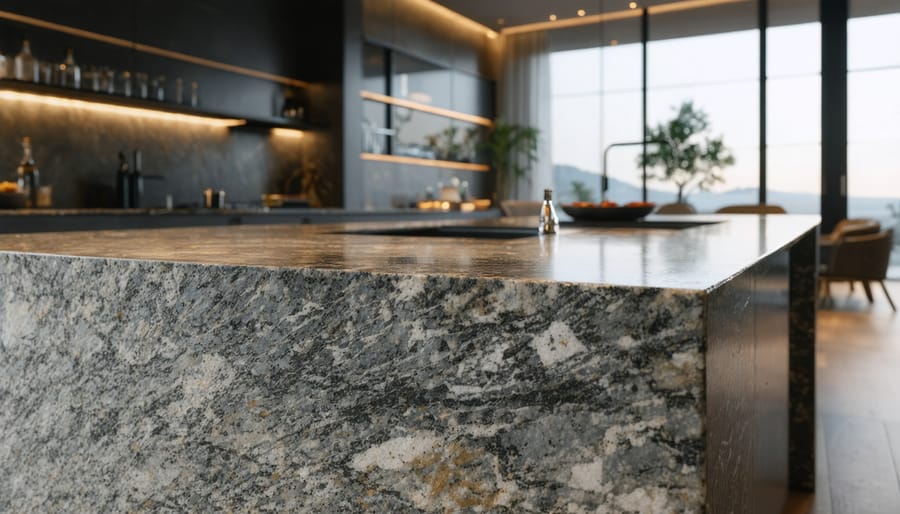
**Waterfall edges** extend the countertop material vertically down the sides of cabinets or islands, creating a continuous flow from horizontal to vertical surfaces. While not exclusively rounded, waterfall edges often incorporate curved transitions and deliver stunning visual impact. This dramatic profile works exceptionally well with heavily veined or uniquely patterned granite, showcasing the stone’s natural beauty across multiple planes and creating a striking focal point in contemporary kitchens.
Decorative and Ornate Edges
For homeowners seeking to make a dramatic design statement, decorative and ornate edge profiles transform granite countertops into architectural focal points. These elaborate profiles feature intricate curves, multiple levels, and classical detailing that elevate kitchen aesthetics from functional to luxurious.
The **ogee edge** stands as the most recognizable ornate profile, featuring an elegant S-curve that creates dimensional depth and visual interest. This classic design draws from traditional European architecture and pairs beautifully with raised-panel cabinetry, ornate hardware, and formal kitchen layouts. The ogee’s sophisticated silhouette catches light differently throughout the day, adding subtle drama to granite’s natural patterns.
**Dupont edges** offer another level of complexity with their rounded top transitioning into a distinctive lip detail at the bottom. This profile provides substantial visual weight, making it ideal for statement islands and perimeter countertops in traditional or transitional kitchens. The dupont works particularly well with lighter granite colors, where the edge detailing becomes more pronounced.
For maximum opulence, the **cove dupont** (also called cove ogee) combines multiple curves into a single flowing profile. This edge features a concave cove detail beneath a rounded top, creating an almost furniture-like appearance. It’s the premium choice for luxury homes, Mediterranean-inspired designs, and spaces where countertops serve as jewelry-quality design elements.
**When these profiles work best:** Ornate edges complement formal dining spaces, butler’s pantries, and master suites where elegance takes priority. They require thicker granite slabs (typically 3cm minimum) and skilled fabrication, resulting in higher costs. Consider these profiles when your design emphasizes Old-World charm, architectural detail, and timeless sophistication rather than contemporary minimalism.
Contemporary and Custom Edges
Contemporary granite installations increasingly feature dramatic edge treatments that serve as architectural statements. **Mitered edges** create seamless 90-degree corners where two pieces meet, producing a thick, substantial appearance ideal for waterfall islands and modern aesthetics. This technique requires precision fabrication but delivers impressive visual impact.
**Stacked profiles** combine multiple edge treatments—such as an ogee over a bullnose—creating dimensional depth and luxury appeal. These multi-layered designs work exceptionally well in transitional kitchens bridging traditional and contemporary styles.
**Chiseled or rock-faced edges** preserve the stone’s natural, rough-hewn texture along the perimeter, offering organic contrast to polished surfaces. This treatment highlights granite’s geological character and suits rustic, industrial, or nature-inspired designs.
**Custom combinations** allow designers to specify unique profiles tailored to specific projects. Fabricators can blend standard elements or create entirely original edges using CNC technology and hand-finishing techniques.
These contemporary edges typically add 15-30% to fabrication costs but transform countertops into focal points. When selecting dramatic profiles, consider sightlines from multiple room angles and ensure the edge complements rather than overwhelms your overall design vision. Request samples or visit showrooms displaying full-scale installations to appreciate dimensional qualities photographs cannot capture.
How to Choose the Right Edge Profile for Your Kitchen
Kitchen Style and Design Aesthetic
Your kitchen’s design aesthetic plays a crucial role in selecting the perfect granite edge profile. Each style carries distinct visual characteristics that either complement or clash with specific edge treatments.
**Contemporary and Modern Kitchens** thrive with clean-lined profiles that emphasize minimalism. Straight edges, quarter round, and half bullnose options create the sleek, uncluttered look these spaces demand. Mitered waterfall edges have become particularly popular in ultra-modern designs, extending granite seamlessly from countertop to floor for dramatic visual impact.
**Traditional Kitchens** call for more ornate profiles that reflect classical design principles. Ogee, cove ogee, and dupont edges add the decorative detail and sophistication these spaces require. These profiles feature elegant curves and multiple transitions that complement crown molding, raised-panel cabinetry, and other traditional architectural elements.
**Transitional Styles** bridge contemporary and traditional aesthetics, making them ideal candidates for versatile profiles like eased edges, beveled edges, or simple bullnose treatments. These options provide subtle detail without committing to either extreme, allowing the granite’s natural beauty to take center stage.
**Farmhouse and Rustic Kitchens** benefit from understated profiles that don’t compete with reclaimed wood, shiplap, or vintage fixtures. Quarter round and eased edges work exceptionally well, maintaining the relaxed, unpretentious character these designs embrace while ensuring practical durability.
**Coastal and Mediterranean Styles** pair beautifully with rounded profiles like full bullnose or demi-bullnose edges, which echo the organic, flowing lines found in these design traditions.
Safety and Functionality Considerations
When selecting a granite countertop edge profile, safety and functionality should be top priorities alongside aesthetic appeal. Different edge styles present varying levels of risk and maintenance requirements that can significantly impact your daily experience.
For households with young children or elderly family members, rounded edges like bullnose, half bullnose, and ogee profiles offer the safest option. These smooth, curved designs eliminate sharp corners that could cause injury during falls or collisions. In contrast, squared edges and certain decorative profiles with prominent angles pose greater safety risks in active households.
Cleaning ease varies considerably across edge profiles. Simple designs like straight, beveled, and eased edges feature minimal crevices where food particles and bacteria can accumulate, making them ideal for busy kitchens. Complex profiles such as ogee, cove, and dupont edges create decorative grooves that require more diligent cleaning with small brushes or cloths to maintain hygiene standards. Regular attention to these details is essential for maintaining granite countertops in pristine condition.
Durability concerns center primarily on chipping vulnerability. Sharp corners and thin edges are most susceptible to damage from impact. Bullnose and rounded profiles distribute stress more evenly, reducing chip risk. Heavily detailed edges like waterfall or stacked profiles require expert fabrication and careful handling during installation. Professional fabricators can reinforce vulnerable areas, but homeowners should understand that intricate edges demand greater care during use. Granite’s natural hardness provides excellent wear resistance across all profiles, though edges with minimal material thickness remain the most fragile points requiring ongoing vigilance.

Budget and Cost Factors
Edge profile selection significantly impacts your overall granite countertop costs. Simple profiles like straight or eased edges typically add minimal cost to fabrication, often included in base pricing. These standard options require less labor and create minimal waste, making them budget-friendly choices that still deliver clean, modern aesthetics.
Complex profiles such as ogee, dupont, or custom combinations can add $10 to $30 per linear foot to your project. These intricate designs demand specialized tooling, additional fabrication time, and skilled craftsmanship. The increased pricing reflects both labor intensity and the precision required to achieve flawless results, especially with harder granite varieties.
Most fabrication costs include templating, cutting, polishing, and installation of your selected edge profile. However, decorative enhancements like hand-finished details, laminated edges, or custom designs may incur additional charges. Always request itemized quotes to understand exactly what’s included.
**Where to save**: Choose standard profiles for large kitchen islands where complex edges won’t be highly visible. Opt for simple edges on perimeter countertops and reserve decorative profiles for focal points.
**Where to splurge**: Invest in premium edges for kitchen islands, bathroom vanities, or entertainment areas where countertops serve as design statements. A sophisticated edge profile on prominent surfaces delivers maximum visual impact and can elevate your entire space without dramatically increasing the overall project budget.
Edge Profiles and Granite Patterns: What Works Together
The relationship between granite patterns and edge profiles significantly impacts your countertop’s final appearance. Understanding this connection ensures a harmonious design that enhances rather than overwhelms your space.
**Busy Patterns and Complex Veining**
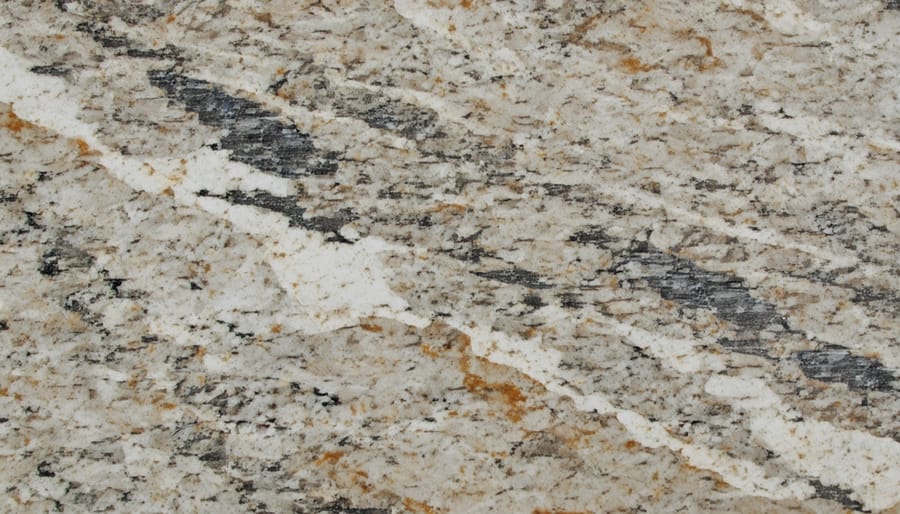
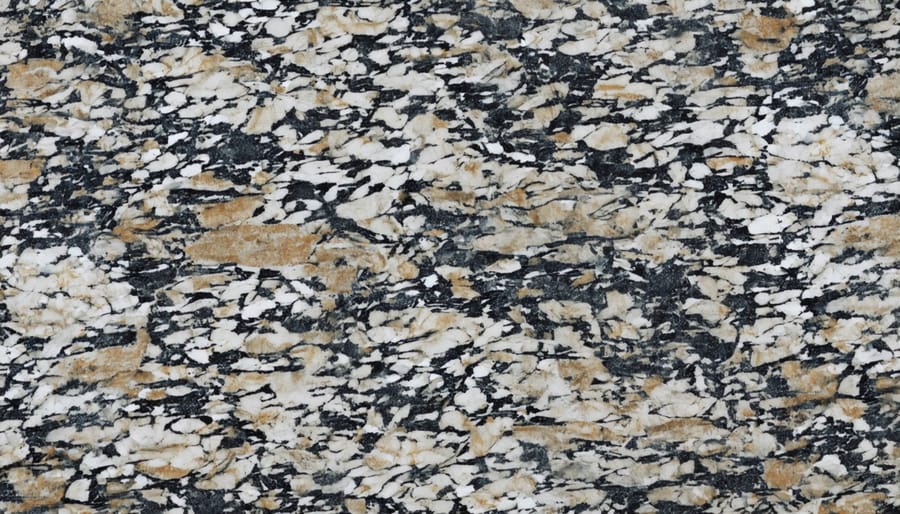
Granites with dramatic veining, speckled patterns, or high visual activity pair best with simpler edge profiles. A straight, eased, or half-bullnose edge allows the stone’s natural beauty to remain the focal point without competing details. Ornate edges like ogee or dupont on heavily patterned granite create visual chaos, making it difficult for the eye to rest. Consider stones like Typhoon Bordeaux or Blue Bahia—their intricate patterns shine brightest with understated edges that provide clean boundaries.
**Solid Colors and Subtle Patterns**
Solid-colored granites or those with minimal veining offer flexibility for more decorative edge treatments. Black Absolute, Uba Tuba, or Kashmir White can accommodate elaborate profiles like waterfall, cove dupont, or stacked edges without visual conflict. These understated stones actually benefit from ornamental edges, which add architectural interest and prevent the countertop from appearing too plain or industrial.
**Movement and Direction**
Linear veining requires special consideration. If your granite features strong directional movement, ensure your edge choice doesn’t interrupt the flow. Beveled or mitered edges can actually enhance linear patterns by creating clean geometric lines that complement natural striations.
When choosing granite, bring edge profile samples to your selection appointment. View them directly against your chosen slab under various lighting conditions. What appears balanced in a catalog may clash in reality. The edge should frame your granite like a picture frame—present but not distracting, enhancing the stone’s inherent beauty rather than competing with it.
What to Discuss with Your Fabricator
Before committing to your edge profile selection, schedule a thorough consultation with your fabricator to ensure the best outcome for your project. Start by requesting physical samples of your chosen granite with various edge profiles applied. Photographs rarely capture the true interaction between stone patterns and edge details, so viewing actual samples under different lighting conditions is essential.
Ask your fabricator about any limitations specific to your granite selection. Certain stone types with heavy veining, fissures, or natural pitting may not be suitable for intricate edge profiles like ogee or dupont, as these features can become more pronounced or structurally compromised during detailed fabrication. Similarly, softer granite varieties may chip more easily with exposed sharp corners.
Request to see the fabricator’s portfolio of completed edges, particularly examples matching your chosen profile and granite color. This provides realistic expectations for the finished product. Inquire about their experience level with complex profiles and whether they use CNC machinery or hand-finishing techniques, as this affects precision and consistency.
Before granite countertop installation, ask for a mockup or digital rendering showing how your selected edge will look on your actual slab. Discuss the additional costs associated with upgraded edge profiles and confirm whether pricing includes polishing, reinforcement, or special underlayment requirements for overhangs.
Finally, clarify the timeline, as elaborate edge profiles require additional fabrication time. Understanding these details upfront prevents surprises and ensures your countertops meet your aesthetic and functional expectations.
Selecting the right edge profile for your granite countertops is far more than a minor detail—it’s a crucial design decision that will impact your kitchen’s aesthetics, functionality, and safety for decades to come. While online research provides valuable information, nothing replaces the experience of viewing and touching actual granite samples with different edge profiles in person. The interplay between stone color, pattern, and edge detail can dramatically differ from what you see on a screen.
As you make your selection, resist the temptation to follow fleeting design trends. Instead, focus on what genuinely complements your home’s architecture and your personal aesthetic. A timeless edge profile that aligns with your lifestyle needs will provide far greater long-term satisfaction than a trendy option that may feel dated in a few years.
Before finalizing your decision, consult with experienced fabricators and designers who can offer insights specific to your granite selection and installation requirements. Their expertise can help you navigate technical considerations like structural integrity, maintenance implications, and how your chosen edge will perform in your particular space. This professional guidance ensures your investment delivers both the beauty and functionality you envision.