
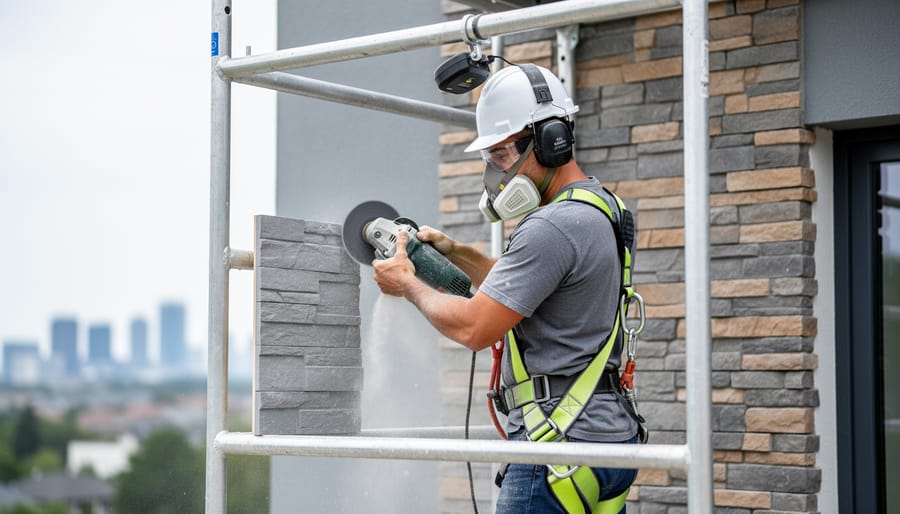
Understand that safety harnesses are not optional equipment when working at heights above six feet during stone cutting, installation, or maintenance projects. While DIY stone projects often focus on ground-level work, tasks like installing stone veneer on upper-story facades, cutting materials on scaffolding, or maintaining elevated stone features require proper fall protection.
Select a Class II full-body harness rated for at least 5,000 pounds, ensuring it includes dorsal and front D-rings, adjustable leg and chest straps, and current ANSI Z359.11 certification. Inspect all components before each use for fraying, cuts, rust, or deterioration that could compromise structural integrity.
Anchor your harness to a fixed structural point capable of supporting 5,000 pounds per attached worker, positioning the anchor point above your work area whenever possible to minimize fall distance. Calculate total fall clearance by adding your height, lanyard length, deceleration distance, and a five-foot safety margin to ensure adequate clearance from ground or obstacles below.
Attach shock-absorbing lanyards or self-retracting lifelines to your harness D-rings, maintaining three points of contact when moving across elevated surfaces. Never attach to unstable materials like scaffolding cross-braces, stone pallets, or temporary structures that cannot support fall arrest loads.
Stone work presents unique hazards including airborne silica dust, heavy material handling at height, and awkward cutting positions that increase fall risk. This guide addresses proper harness selection, setup protocols, and usage techniques specific to elevated stone cutting applications.
Understanding Fall Risks in DIY Stone Work
Common Stone Cutting Scenarios That Require Fall Protection
Understanding when fall protection becomes necessary during stone cutting operations is essential for DIY safety. Working with elevated surfaces presents immediate risk—any cutting table, workbench, or platform positioned more than six feet above ground level requires proper fall protection equipment. This commonly occurs when cutting large granite or marble slabs that demand sturdy, raised work surfaces for easier handling and precise cuts.
Projects involving building natural stone walls or installing stone features on facades frequently require workers to position themselves at dangerous heights while simultaneously operating cutting tools. The combination of elevation, heavy materials, and power equipment creates compounded fall hazards that demand comprehensive protection strategies.
Handling oversized stone pieces presents another critical scenario. Large slabs weighing 100 pounds or more can significantly compromise your balance, especially when maneuvering them near edges or on uneven terrain. The physical strain of controlling heavy materials while maintaining safe positioning often leads to momentary instability—precisely when falls occur.
Outdoor stone retaining wall projects on sloped properties introduce additional complexity, as working on inclines naturally reduces stability. Even ground-level cutting can become hazardous when terrain features create drop-offs or when temporary scaffolding becomes necessary to reach specific installation points. Recognizing these scenarios before beginning work allows you to prepare appropriate fall protection equipment and establish safe working protocols.
The Weight Factor: Why Stone Makes Falls More Dangerous
Natural stone’s physical properties create unique hazards that distinguish stonework from typical DIY projects. A single granite countertop slab can weigh between 400-1,200 pounds, while marble tiles often exceed 20 pounds per square foot. This substantial mass means that even small pieces, when dropped from height, carry tremendous kinetic energy capable of causing severe injuries.
The awkward dimensions of stone materials compound these risks. Large slabs lack convenient handholds and require two-handed grips that leave workers vulnerable when working at elevation. Unlike lumber or drywall that can be easily maneuvered, stone’s rigidity and weight distribution make sudden shifts in balance more likely. When cutting or installing stone on scaffolding or ladders, the physical strain of controlling these heavy materials increases fatigue, reducing reaction time during potential falls.
Stone dust created during cutting also introduces slip hazards on work surfaces and ladders. The combination of substantial material weight, awkward handling requirements, and reduced traction creates a cascading risk profile. A fall while holding or positioned near stone materials can result in both impact injuries and crushing trauma, making proper fall protection systems essential rather than optional for elevated stonework projects.
Safety Harness Basics: What DIYers Need to Know
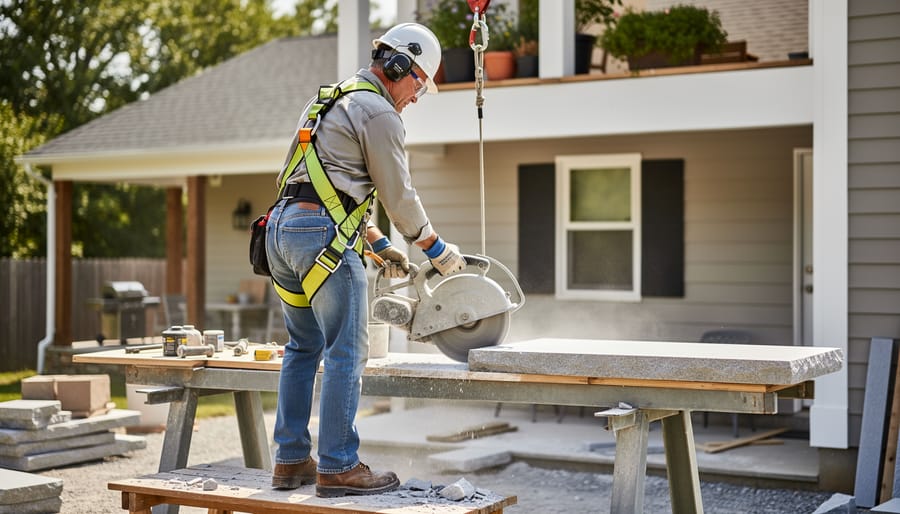
Types of Safety Harnesses for Stone Work
When selecting a safety harness for stone cutting and handling projects, understanding the different types available is essential for both safety and efficiency. Full-body harnesses are the gold standard for stone work and represent the only acceptable option for most DIY applications involving elevation or fall hazards.
Full-body harnesses distribute fall arrest forces across the shoulders, thighs, and pelvis, minimizing injury risk if a fall occurs. These harnesses feature multiple attachment points, including dorsal (back), frontal (chest), and sometimes side D-rings. For stone work involving scaffolding, ladders, or elevated cutting platforms, a full-body harness with a dorsal D-ring attachment is your primary choice. This configuration allows for proper fall arrest system connection and keeps the attachment point away from cutting operations.
Body belts and positioning belts, while still available in some markets, are no longer recommended or permitted for fall arrest in most jurisdictions. These devices only secure around the waist and can cause serious spinal and internal injuries during a fall. However, positioning belts may occasionally serve as secondary support when working on angled stone surfaces, though never as primary fall protection.
For specific stone work tasks, consider these applications. Installing stone veneer on upper-story exteriors requires a full-body harness with dorsal attachment connected to an appropriate anchor point. Cutting large stone slabs on ground-level work tables generally doesn’t require fall protection but may benefit from back support belts to prevent strain injuries during heavy lifting. When operating elevated saws or working on stone walls above six feet, full-body harnesses become non-negotiable safety equipment.
Suspension trauma straps, which attach to full-body harnesses, provide crucial post-fall relief by allowing workers to stand in their harness while awaiting rescue. These additions are particularly valuable for solo DIY projects where immediate assistance may not be available.
Key Components: D-Rings, Lanyards, and Anchor Points
A fall protection system relies on three interconnected components working together to prevent serious injury. Understanding how these elements function will help you create a reliable safety setup for your stone cutting project.
D-rings serve as the primary connection point on your harness, typically positioned between the shoulder blades on the dorsal area. This attachment location distributes forces across your entire body during a fall, rather than concentrating stress on a single point. Quality harnesses feature forged steel D-rings rated for at least 5,000 pounds, providing the structural integrity necessary for fall arrest situations.
Lanyards act as the critical link between your harness and anchor point. For stone work at moderate heights, a six-foot shock-absorbing lanyard offers the best balance of mobility and protection. The shock absorber component gradually decelerates your body during a fall, reducing the impact force from potentially fatal levels to survivable ranges. When selecting a lanyard, verify it meets ANSI Z359 standards and includes clearly visible inspection indicators that show if the device has been deployed or damaged.
Anchor points must support at least 5,000 pounds per attached worker. In residential stone projects, this might include structural roof trusses, properly installed anchor brackets, or temporary anchor systems secured to substantial framing members. Never anchor to chimneys, vent pipes, or decorative elements. The anchor should be positioned directly above your work area when possible, minimizing swing fall distances and keeping the total fall distance within safe limits based on your available clearance.
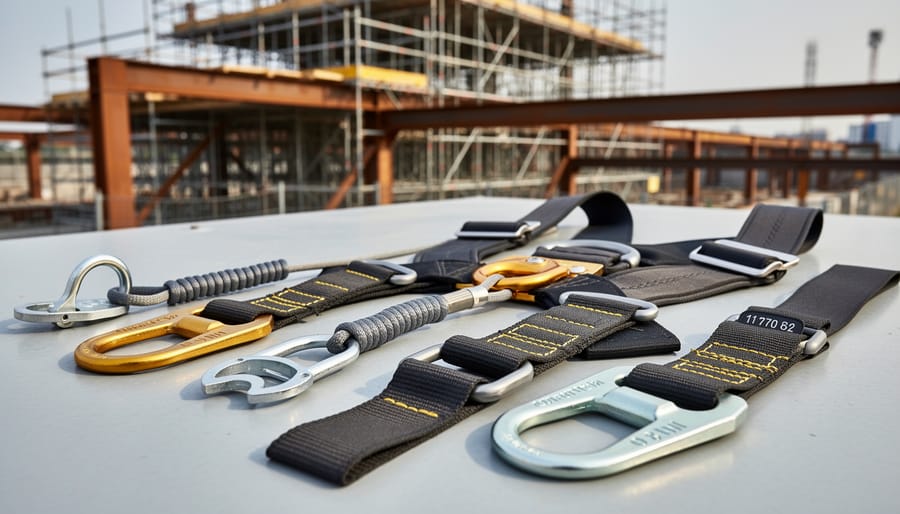
Choosing the Right Safety Harness for Your Stone Project
Budget-Friendly Options That Don’t Compromise Safety
For homeowners tackling occasional stone cutting projects, safety harnesses don’t need to break the bank. Full-body harnesses from reputable manufacturers typically range from $50 to $150 for entry-level models that meet ANSI and OSHA standards. These budget-conscious options provide adequate protection for DIY applications without the premium features designed for daily professional use.
When evaluating affordable harnesses, prioritize models with visible compliance markings (ANSI Z359.11 or similar certifications) stamped directly on the equipment. Look for harnesses featuring at least one dorsal D-ring for fall arrest connections, adjustable leg and chest straps for proper fit, and reinforced stitching at stress points. Brands offering reliable entry-level options include FallTech, 3M Protecta, and Guardian Fall Protection, with models in the $60-$100 range providing solid construction and necessary safety features.
Consider purchasing a complete kit that bundles a harness with a shock-absorbing lanyard and appropriate connectors. These packages typically cost $120-$200 and eliminate compatibility concerns while ensuring all components work together as designed. While these kits lack advanced comfort padding or multiple attachment points found in professional-grade equipment, they deliver essential fall protection for periodic use.
Avoid purchasing used harnesses or extremely cheap no-name brands under $40, as their safety history and manufacturing standards remain unverified. Remember that even budget-friendly equipment requires proper inspection before each use and should be replaced after any fall event or visible wear, regardless of initial cost.
Sizing and Fit: Getting Your Harness Right
A properly fitted harness is non-negotiable for fall protection effectiveness. An ill-fitting harness can shift during a fall, cause injury, or fail to distribute forces correctly across your body.
Start by adjusting the shoulder straps so the dorsal D-ring (the attachment point on your back) sits between your shoulder blades. The chest strap should rest mid-chest, approximately at armpit level. Leg straps require particular attention—they should be snug enough that you can only fit one flat hand between the strap and your thigh. Too loose, and the harness can slide during a fall; too tight restricts circulation and becomes uncomfortable during extended stone cutting sessions.
When fully adjusted, perform a suspension test in a controlled environment close to the ground. The harness should hold you upright without excessive shifting or pressure points. Sub-pelvic straps, if included, should support your weight comfortably when suspended.
Remember that harnesses worn over bulky clothing need readjustment. Check all connection points before each use, as straps can loosen over time. For multi-day stone projects, reassess fit periodically, especially if you notice any discomfort or restriction. A harness that fits correctly allows you to focus on precision cutting work rather than constantly adjusting equipment.
Setting Up Your Fall Protection System
Identifying and Creating Safe Anchor Points
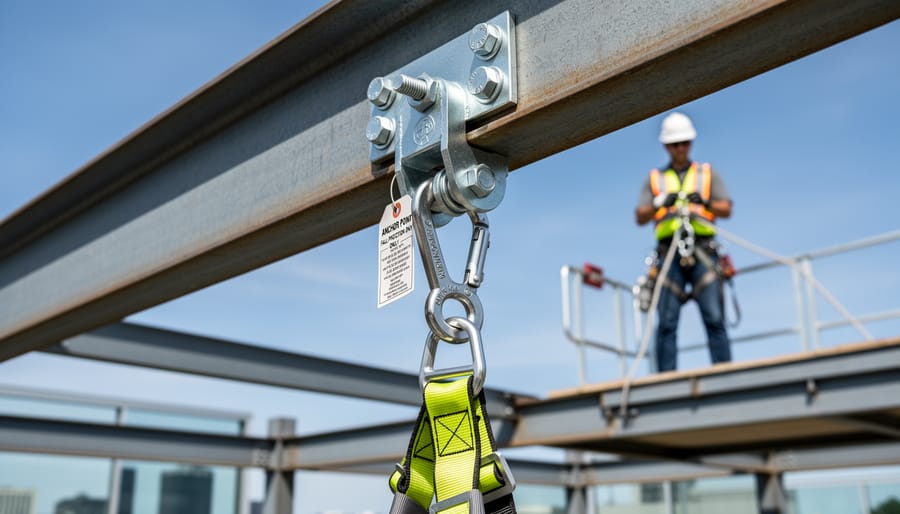
Selecting a proper anchor point is perhaps the most critical decision in your fall protection setup. Your anchor must support at least 5,000 pounds per attached worker, as specified by OSHA standards. This substantial requirement means not every overhead structure will suffice, especially when working with stone cutting equipment that may already stress building components.
In typical DIY environments, look for structural elements rather than decorative features. Roof trusses, solid steel beams, and reinforced concrete columns make excellent anchor candidates. Avoid attaching to items like rain gutters, fascia boards, or ceiling joists not rated for dynamic loads. When working on residential stone installations, exterior brick chimneys often lack the internal reinforcement needed for safe anchoring.
Testing your chosen anchor point involves both visual inspection and practical assessment. Examine the structure for rust, rot, cracks, or previous damage. Check connection points where beams meet walls or other supports. For wooden structures, probe with a screwdriver to confirm solid wood without soft spots indicating decay.
If existing structures prove inadequate, portable anchor systems offer reliable alternatives. Roof anchors that distribute load across multiple rafters, adjustable beam anchors for I-beams, and weighted deadman anchors for flat surfaces all provide certified attachment points. These typically include load ratings clearly marked by manufacturers.
Before relying on any anchor, perform a preliminary load test by having someone of similar weight to the intended user gently stress the system while remaining close to the ground. This practical verification, combined with professional installation of permanent anchors when needed, ensures your safety harness functions as designed. Remember that anchor point placement should minimize swing distance and keep you clear of hazards below, particularly important when operating stone cutting equipment that creates tripping hazards from debris.
Calculating Fall Clearance and Safe Work Zones
Understanding fall clearance is essential before working at height, yet many DIYers overlook this critical calculation. Fall clearance refers to the total vertical distance required between your working surface and the ground or any obstruction below to arrest a fall safely without striking objects or the lower level.
To calculate minimum fall clearance distance, you need to account for several factors. First, consider the length of your lanyard or shock absorber when fully deployed, typically 3.5 to 6 feet. Add the distance your body travels during deceleration, usually 3.5 feet for most shock-absorbing lanyards. Include your height or estimated body length, approximately 6 feet for an average person. Finally, add a 3-foot safety margin to account for variables like anchor point stretch or harness adjustment.
For example, when installing stone veneer on a second-story exterior wall using a 6-foot shock-absorbing lanyard, your minimum clearance would be approximately 19 feet: 6 feet (lanyard) + 3.5 feet (deceleration) + 6 feet (body length) + 3 feet (safety margin). If your work platform sits 20 feet above ground level, you have adequate clearance. However, at 15 feet, a fall could result in ground impact before full arrest.
Always measure clearance distances before beginning work. Identify potential swing hazards if your anchor point is not directly overhead. When adequate clearance is unavailable, consider alternative fall protection methods like guardrail systems or select shorter lanyards with reduced free-fall distance, though this may limit your working mobility.
Proper Harness Use While Cutting and Handling Stone
Pre-Work Inspection Checklist
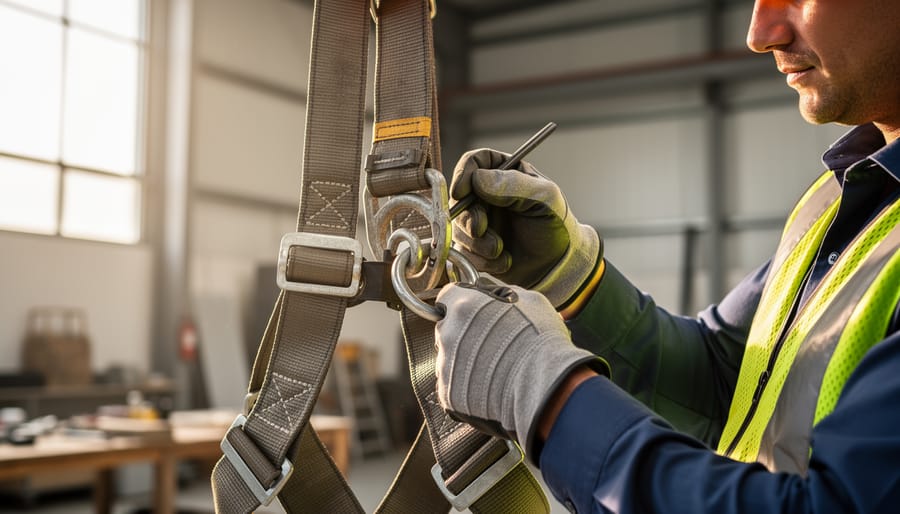
Before each use, conduct a systematic inspection of your safety harness to identify potential hazards. Begin by examining all webbing for cuts, fraying, burns, or excessive wear. Pay particular attention to areas around attachment points and buckles where stress concentrates during use. Check for discoloration or stiffness that might indicate chemical contamination or UV damage, both common when working outdoors with stone materials.
Inspect all metal components including D-rings, buckles, and connectors for cracks, sharp edges, corrosion, or deformation. These hardware elements must function smoothly without binding or excessive play. Verify that stitching remains intact throughout the harness, especially at load-bearing seams. Any broken or loose threads compromise structural integrity.
Examine labels and manufacturing tags to confirm the harness hasn’t exceeded its service life, typically five to seven years from manufacture date depending on usage frequency. Document your inspection with a simple checklist noting the date and any concerns observed.
If you discover any damage, deterioration, or questionable condition during inspection, remove the harness from service immediately. Safety equipment tolerates no compromise. The modest cost of replacement far outweighs the catastrophic consequences of equipment failure during a fall while cutting stone or working at height.
Maintaining Mobility While Staying Protected
Effective harness use requires balancing protection with the freedom to work efficiently. When working with stone materials, you’ll need sufficient mobility to position pieces, operate cutting tools, and move safely across your workspace while maintaining continuous fall protection.
Position your anchor point directly above or slightly behind your primary work area. This placement allows natural movement while keeping the fall arrest system engaged. For stone projects spanning larger areas, consider using a horizontal lifeline system that permits lateral movement along your workspace while maintaining constant protection. The lanyard should have enough length to reach all necessary work zones without creating excess slack that could increase fall distance.
When selecting lanyards for stone work, shock-absorbing models provide the best protection while allowing necessary reach. However, avoid lanyards so long that a fall could result in striking lower levels or the ground. Calculate your total fall distance by adding your lanyard length, deceleration distance (typically 3.5 feet for shock absorbers), your height, and a safety margin. Self-retracting lifelines offer an excellent solution for stone projects, automatically adjusting slack as you move and locking instantly during a fall.
Practice moving through your work area before beginning actual stonework. This trial run reveals restrictions or problem spots where the harness setup might impede necessary movements. Adjust anchor points or lanyard lengths accordingly. Remember that maintaining three points of contact while climbing or working on elevated surfaces remains essential, even when harnessed. Your safety system serves as backup protection, not permission to work carelessly around stone materials.
When You Don’t Need a Harness (And When You Absolutely Do)
Understanding when a safety harness is essential versus when it’s optional comes down to assessing fall risk and potential consequences. As a general rule, OSHA requires fall protection when working at heights of six feet or more in construction settings, though some jurisdictions set the threshold at four feet. For DIY stone projects, this guideline provides a solid starting point.
You don’t typically need a harness when working at ground level, such as cutting pavers for a patio, installing stone veneer on a first-floor wall within arm’s reach, or building a ground-level retaining wall. Similarly, working from a stable platform less than four feet high with proper footing generally doesn’t require fall protection equipment.
However, a harness becomes absolutely necessary in several scenarios. When installing stone cladding on second-story exteriors or higher, you’re exposed to serious fall risk. Working on stone chimneys, cutting or setting capstones on elevated walls, or any task performed from a roof requires proper fall protection. Steep-slope roofing projects involving slate or stone tiles demand harness use regardless of the working height, as the angle itself creates fall hazards.
Other situations requiring harnesses include working above water features or hard surfaces like concrete where a fall could result in severe injury, and any scenario where you’re leaning outward or cannot maintain three points of contact. If you’re working on scaffolding or ladders above six feet while handling heavy stone materials that could throw you off balance, a harness isn’t just recommended—it’s critical.
When in doubt, err on the side of caution. The few minutes spent securing a harness can prevent life-altering injuries or worse.
Integrating Harness Safety with Other Stone Work Protections
Fall protection is just one component of a comprehensive safety strategy for stone work projects. When working at heights while cutting stone safely, multiple hazards exist simultaneously, requiring coordinated protective measures.
Eye protection is essential whenever cutting, grinding, or chiseling stone, as flying chips and dust particles can cause serious injury. Safety glasses or goggles rated for impact resistance should be worn at all times, even when wearing a harness. If you’re working at height on scaffolding or a roof, secure your eyewear with a retention strap to prevent them from falling and leaving you unprotected.
Respiratory equipment protects against silica dust, a serious health hazard in stone work. Use N95 respirators or higher-rated masks, particularly during cutting operations. When combining a harness with respiratory protection, ensure mask straps don’t interfere with harness positioning or create entanglement risks.
Proper lifting techniques prevent back injuries when handling heavy stone materials. Never compromise your stance or footing to lift materials while wearing a harness. Plan material placement to minimize awkward lifting positions, and use mechanical aids like hoists or pulleys when possible. Your harness anchor system can sometimes accommodate lifting equipment, creating an integrated safety solution.
Finally, maintain clear communication with anyone assisting your project. Establish signals for material handoffs, emergency situations, and when adjusting safety equipment. A comprehensive safety approach means every protection element works together seamlessly.
Maintenance, Storage, and Lifespan of Your Safety Equipment
Cleaning and Storage Best Practices
Proper maintenance of your safety harness directly impacts its reliability during stone cutting projects. After each use, inspect the harness for stone dust, debris, and moisture. Clean using a mild soap solution and lukewarm water, gently scrubbing webbing and hardware with a soft brush. Never use bleach, harsh chemicals, or solvents that can degrade synthetic fibers. Rinse thoroughly and air-dry completely in a shaded, well-ventilated area away from direct sunlight or heat sources, which can weaken materials.
Store your harness in a cool, dry location away from chemicals, sharp objects, and UV exposure. Hang it loosely or lay flat in a dedicated container rather than compressed in a toolbox where stone dust accumulates. Avoid garages or workshops where cutting oils, acids, or silica-laden dust may contact the equipment. Keep detailed records of cleaning dates, inspections, and any exposure to harsh conditions encountered during stone work. This documentation helps track equipment lifespan and ensures you replace components before they compromise your safety on elevated cutting platforms.
Recognizing When to Retire Your Harness
Safety harnesses have a finite lifespan and must be retired when they show signs of deterioration. Always follow manufacturer guidelines, which typically recommend replacement after five years from the date of first use, regardless of condition. However, immediate replacement is necessary if you notice frayed or cut webbing, damaged stitching, burns or chemical exposure, stretched fibers, or deformed metal hardware. After any fall event, retire the harness immediately, even if damage isn’t visible—the impact forces can compromise the internal structure. UV exposure from outdoor stone cutting projects accelerates wear, so inspect harnesses more frequently if used in sunlight. Keep a log noting purchase date, first use date, and inspection records. When in doubt about a harness’s integrity, replace it. The cost of new equipment is minimal compared to the potential consequences of equipment failure. Store your harness in a cool, dry location away from chemicals, sharp tools, and direct sunlight to maximize its service life.
When working with stone at elevated heights, a safety harness isn’t optional equipment—it’s essential protection that can prevent life-altering injuries or fatalities. Throughout this guide, we’ve explored how proper harness selection, correct fitting, and diligent maintenance form the foundation of safe elevated stonework. Remember that full-body harnesses meeting ANSI standards provide superior protection compared to lesser alternatives, while compatible anchor points and lanyards complete your fall protection system.
The minutes spent properly donning your harness, inspecting equipment before each use, and ensuring secure anchor points are investments in your wellbeing that far outweigh any perceived time savings from skipping these steps. Stone cutting and installation already demand focus and precision—don’t compromise your safety by rushing through protection protocols. Store your harness properly, replace it according to manufacturer guidelines or after any fall, and never modify equipment beyond its intended design.
Your DIY stone project will only be successful if you’re healthy enough to enjoy the finished results. Make fall protection your first priority, not an afterthought, and approach every elevated task with the respect it deserves.