
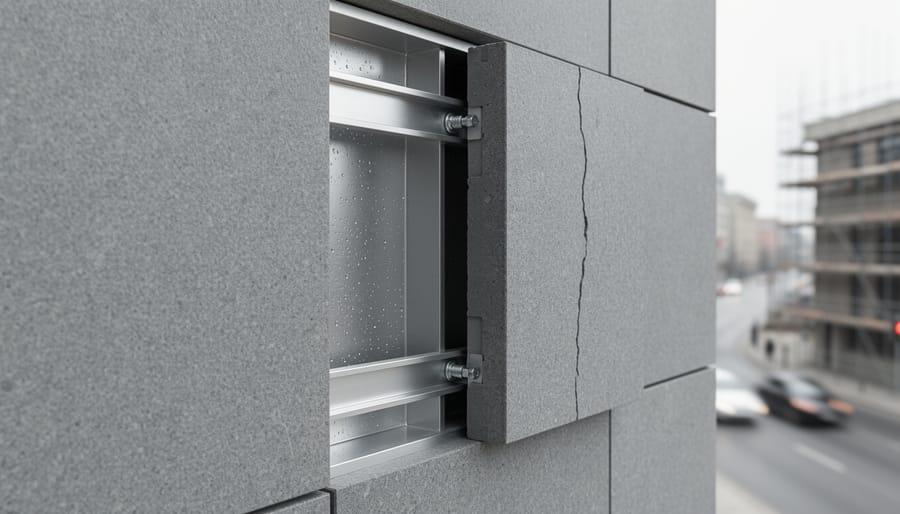
Facade stone cladding transforms ordinary buildings into architectural statements, but behind every stunning exterior lies a complex network of engineering decisions that determine whether the installation will endure for decades or become a costly liability. Each year, stone cladding failures result in millions of dollars in repair costs, property damage, and in severe cases, pose serious safety risks to building occupants and pedestrians below.
The difference between a successful stone facade and a catastrophic failure often comes down to understanding three critical factors: proper anchoring systems that account for thermal movement and load distribution, adequate drainage pathways that prevent moisture accumulation behind stone panels, and selecting appropriate stone types based on their porosity, strength characteristics, and compatibility with the building’s structural system. When any of these elements fails, the consequences escalate quickly from minor aesthetic issues to complete system failure.
Modern stone cladding installations require collaboration between architects, structural engineers, and experienced installers who understand how natural stone behaves under varying environmental conditions. Unlike synthetic materials with predictable properties, natural stone presents unique challenges due to its inherent variations in density, water absorption rates, and structural integrity. A granite panel sourced from one quarry may perform entirely differently than material from another location, even within the same geological formation.
This comprehensive guide examines the structural and safety considerations that separate exceptional stone cladding installations from preventable failures. Whether you’re planning a new project or managing an existing building, understanding these principles protects your investment, ensures occupant safety, and preserves the timeless beauty that makes stone cladding a premier architectural choice.
Understanding Facade Stone Cladding Systems
Types of Stone Cladding Installation Methods
The method used to install facade stone cladding significantly impacts both the longevity and safety of the system. Three primary installation approaches dominate the industry, each with distinct characteristics and risk considerations.
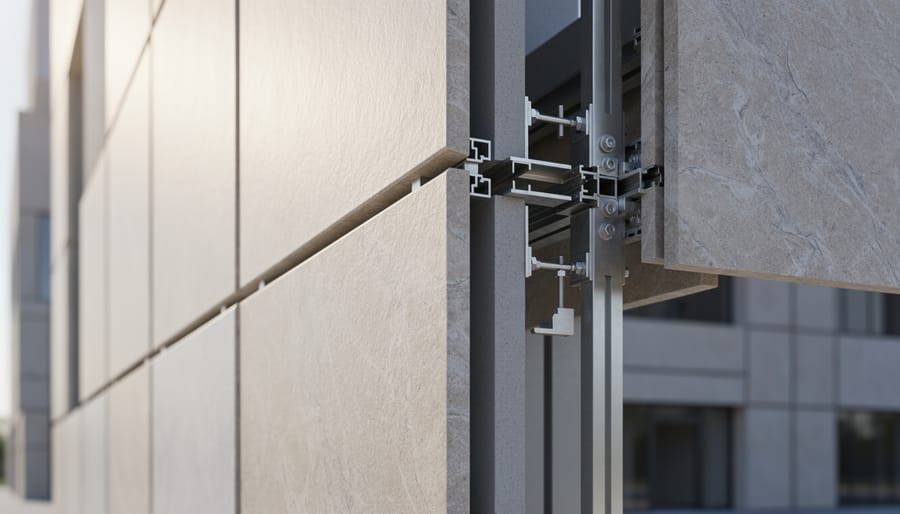
Mechanical anchoring systems use metal brackets, pins, or rails to secure stone panels to the building structure. These systems excel in distributing loads effectively and allow for thermal expansion, making them ideal for large-format panels and high-rise applications. The primary advantage lies in their predictability and inspectability—connections remain visible and accessible for maintenance. However, proper engineering is essential, as inadequate anchor sizing or spacing can lead to concentrated stress points and eventual failure.
Adhesive systems rely on specialized mortars or epoxies to bond stone directly to substrate walls. This method offers a cleaner aesthetic with no visible hardware and works well for smaller, lighter panels on low to mid-rise buildings. The critical risk factor involves substrate compatibility and proper surface preparation. Adhesive failures often stem from moisture infiltration, incompatible materials, or inadequate bonding surface area. Environmental conditions during installation also significantly affect cure times and bond strength.
Hybrid approaches combine mechanical and adhesive elements, providing redundancy that enhances overall system reliability. These systems use adhesives as the primary attachment method with mechanical anchors serving as safety backups. While more complex to install, hybrid systems offer increased security, particularly in seismic zones or areas with extreme weather conditions. The dual-system approach ensures that if one attachment method fails, the secondary system maintains panel stability until repairs can be completed.
The Critical Role of Anchoring Systems
Anchoring systems serve as the invisible lifeline of facade stone cladding, transferring the weight of heavy stone panels and resisting external forces to the building structure. These mechanical fasteners must support significant dead loads—the stone’s own weight, which can exceed 15 pounds per square foot—plus live loads from wind pressure, seismic activity, and thermal expansion. A typical stone panel relies on just four to six anchor points, meaning each fastener bears substantial responsibility for the entire system’s integrity.
The anchoring mechanism works through a combination of compression, tension, and shear resistance. Stainless steel anchors, the industry standard, connect to channels or brackets embedded in the backup wall, creating a secure attachment that allows for controlled movement while preventing panel displacement. This flexibility is essential, as natural stone expands and contracts with temperature variations, sometimes moving several millimeters across large surfaces.
Anchor failure represents the primary cause of stone cladding collapse. Corrosion from moisture infiltration, improper material selection, inadequate load calculations, or installation errors can compromise anchor integrity over time. Even minor weaknesses multiply across hundreds of connection points, potentially leading to catastrophic results. Regular inspection of anchor systems, particularly in coastal or industrial environments where corrosion accelerates, remains non-negotiable for long-term facade safety.
Primary Structural Risks in Stone Cladding
Anchor Corrosion and Material Degradation
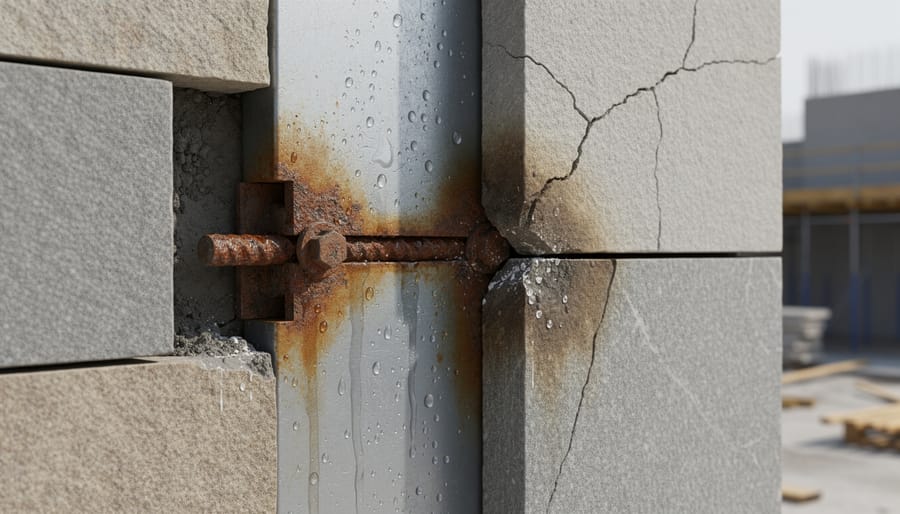
Anchor corrosion represents one of the most insidious threats to stone cladding systems because it often progresses invisibly behind the facade until catastrophic failure occurs. When moisture penetrates through cracks, inadequate sealants, or poor flashing details, it reaches the metal anchors supporting the stone panels. This moisture, combined with oxygen and often chlorides from deicing salts or marine environments, initiates electrochemical corrosion that gradually weakens the anchoring system.
The problem intensifies when dissimilar metals come into contact within the anchor assembly, creating galvanic corrosion. For instance, using stainless steel anchors with carbon steel clips or aluminum components accelerates deterioration significantly. Temperature fluctuations compound these issues by causing expansion and contraction cycles that crack protective coatings and create pathways for moisture ingress.
A notable example occurred at a Chicago office tower where original carbon steel anchors corroded within 15 years due to inadequate waterproofing and exposure to harsh Midwestern winters. Inspectors discovered rust staining on the stone surface, indicating advanced anchor deterioration beneath. The building required complete recladding at substantial cost.
Similarly, coastal buildings face accelerated corrosion from salt-laden air. A Miami condominium experienced anchor failure after just 12 years when standard stainless steel anchors proved inadequate for the aggressive marine environment. The project required emergency stabilization and replacement with higher-grade marine-specification anchors.
Material compatibility matters tremendously. Certain stones, particularly those containing pyrite or other sulfides, can chemically react with metal anchors, accelerating corrosion even in seemingly benign conditions. Understanding these interactions during the design phase prevents expensive remediation later.
Thermal Movement and Expansion Issues
Stone and metal components in facade cladding systems respond differently to temperature fluctuations, expanding when heated and contracting when cooled. This natural behavior becomes problematic when design or installation fails to accommodate these movements adequately.
Stone panels can experience temperature variations of 100°F or more between direct sunlight exposure and shade, causing measurable dimensional changes. When rigidly restrained by anchoring systems, this expansion generates internal stress within the stone. Over time, these repetitive stress cycles lead to fractures along natural veining or near anchor points, compromising the panel’s structural integrity.
Metal components, particularly stainless steel and aluminum anchors and support brackets, have different expansion coefficients than stone. Without proper allowances, differential movement creates concentrated stress points. A common failure pattern occurs when anchor holes are drilled too tightly, preventing the panel from moving freely. The resulting friction and constraint force the stone to crack rather than slide within its mounting system.
Proper design addresses thermal movement through strategically placed expansion joints, oversized anchor holes with flexible tolerances, and soft setting materials that cushion movement. Joint widths typically range from three-eighths to three-quarters of an inch, depending on panel size and expected temperature range. Regular inspection of joint sealants and movement capabilities helps identify problems before catastrophic failure occurs.
Wind Load and Seismic Forces
Stone facade cladding must withstand more than just its own weight. Dynamic loads from wind and seismic activity create forces that differ fundamentally from static weight loads. While the stone’s mass remains constant, wind pressure and earthquake movements generate lateral forces, uplift, and cyclic stresses that test the anchoring system’s strength and flexibility.
Wind loads vary based on building height, geographic location, and exposure. High-rise buildings face particularly intense wind pressures that can create both positive pressure pushing against the facade and negative pressure pulling it outward. Hurricane-prone regions require cladding systems engineered to withstand sustained high winds and flying debris impact.
Seismic forces introduce sudden lateral movements and inter-story drift, where different building levels shift relative to each other. Rigid stone cladding systems can crack or fail without proper design accommodation. Understanding seismic performance requires engineered anchoring systems that allow controlled movement while maintaining structural integrity.
Professional engineering calculations are essential for both wind and seismic considerations. These analyses account for regional building codes, site-specific conditions, building geometry, and stone properties. The anchoring system must transfer loads from the stone panels to the building structure without overstressing either component. Proper engineering ensures that beauty and durability extend through the most extreme weather and seismic events your building may encounter.
Stone Quality and Selection Problems
The foundation of any successful facade stone cladding system begins with selecting appropriate stone materials. Natural stone contains inherent characteristics that can compromise structural integrity if not properly evaluated. Microfractures, veining patterns, and porosity variations within the stone can create weak points susceptible to cracking or delamination over time, especially when exposed to freeze-thaw cycles and moisture infiltration.
Stone thickness plays a critical role in cladding performance. Panels cut too thin lack the structural strength to withstand wind loads and thermal expansion, while excessively thick panels create unnecessary weight that stresses anchoring systems. Industry standards typically recommend minimum thickness requirements based on panel size and installation height, but these specifications must account for the specific stone type being used.
Certain stone varieties simply aren’t suitable for exterior cladding applications. Highly porous stones absorb excessive moisture, leading to staining, efflorescence, and accelerated weathering. Stones with pronounced cleavage planes or weak mineral compositions may fail prematurely under stress. Understanding the geological properties of limestone, granite, marble, and sandstone helps determine appropriate applications. Professional testing for water absorption, flexural strength, and freeze-thaw resistance provides essential data for specification decisions, ensuring the selected stone can withstand environmental demands throughout the building’s lifespan.
Design Phase Risk Management
Engineering Analysis and Load Calculations
Professional structural engineering is non-negotiable for facade stone cladding projects. Engineers must calculate dead loads (the weight of the stone panels themselves), live loads (wind pressure, seismic forces), and thermal movement to ensure the building structure and anchorage system can safely support the installation throughout its lifespan.
Load calculations vary significantly based on stone type, panel dimensions, building height, and geographic location. A granite panel weighing 30 pounds per square foot creates vastly different structural demands than limestone at 22 pounds per square foot. Wind loads become exponentially more critical on high-rise buildings, while seismic considerations dominate in earthquake-prone regions.
Site-specific factors require thorough analysis. Engineers must evaluate the existing building’s structural capacity, substrate conditions, and environmental exposure. Coastal installations face salt air corrosion concerns, while freeze-thaw cycles in northern climates demand different anchorage specifications than temperate zones.
Professional load testing validates design assumptions before full-scale installation. Pull tests on anchor systems, mockup assemblies subjected to simulated wind loads, and thermal cycling tests identify potential weaknesses. These investments in upfront engineering analysis prevent catastrophic failures and costly remediation.
Building codes provide minimum standards, but experienced engineers often specify more conservative safety factors for stone cladding. This approach accounts for long-term material degradation, unforeseen stress concentrations, and the severe consequences of facade failure. Quality engineering protects both public safety and project investments.
Material Compatibility and Selection
Successful facade stone cladding depends on selecting materials that complement each other structurally and chemically. When choosing quality stone materials, consider how different stone types react with anchoring systems and weather conditions. Dense stones like granite generally pair well with stainless steel anchors, while porous limestone may require specific corrosion-resistant fixings to prevent staining from metal oxidation.
Material incompatibility often manifests as rust staining, deterioration at contact points, or structural failure. For example, certain carbonate stones react adversely with acidic metals or sealants, causing discoloration or weakening. The backing system must also accommodate the stone’s natural movement without creating stress points. Vapor barriers, air gaps, and drainage planes should work together to manage moisture while allowing thermal expansion.
Specify stainless steel or aluminum anchors appropriate for coastal or industrial environments where corrosion accelerates. Ensure sealants and adhesives are compatible with both the stone mineralogy and adjacent materials. Testing material combinations beforehand prevents costly remediation and extends the cladding’s service life, protecting both your investment and building occupants.
Building Code Compliance and Standards
Facade stone cladding installations must comply with multiple building codes and industry standards to ensure safety and structural integrity. The International Building Code (IBC) establishes baseline requirements for exterior wall systems, including load-bearing capacity, fire resistance, and anchorage specifications. Local jurisdictions may impose additional requirements, making it essential to consult municipal building departments before project commencement.
ASTM International provides critical testing standards for stone cladding systems. ASTM C1242 evaluates the flexural strength of stone anchors, while ASTM C1354 assesses stone strength and dimensional tolerances. These standards help architects and contractors select appropriate materials and verify their performance characteristics.
The National Building Code and regional variations address specific concerns like seismic zones, wind loads, and moisture barriers. Non-compliance carries serious legal implications, including project delays, costly retrofits, liability for structural failures, and potential injuries. Insurance claims may be denied if installations fail to meet code requirements. Working with experienced professionals who understand applicable codes and maintain proper documentation throughout the installation process protects all stakeholders and ensures long-term performance of the cladding system.
Installation Best Practices for Risk Mitigation
Proper Anchor Installation Techniques
Successful facade stone cladding relies heavily on meticulous anchor installation. Following proper installation techniques ensures both structural integrity and long-term performance.
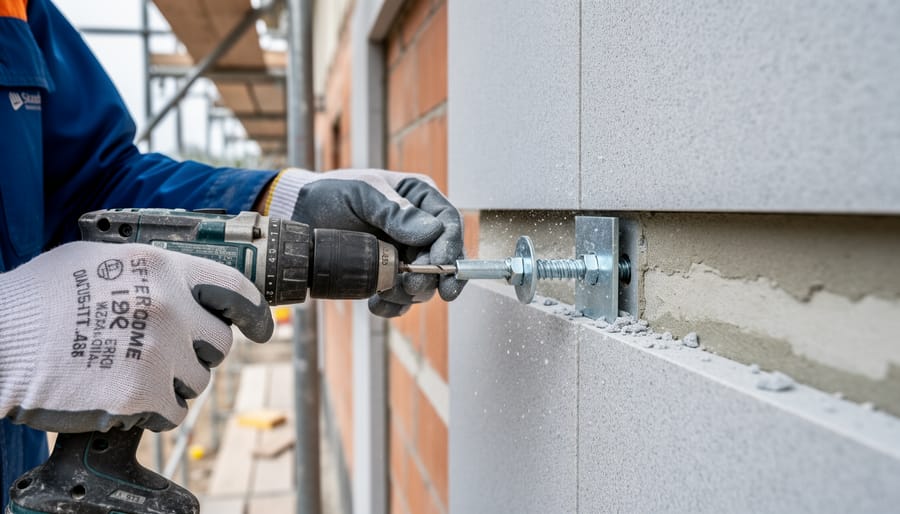
Begin by verifying substrate conditions before drilling. The backing material must be sound, clean, and capable of supporting the anticipated load. Mark anchor locations according to engineering specifications, typically spacing anchors every 16 to 24 inches depending on stone size and weight.
Drill holes to the precise depth specified in your installation drawings, usually 1/4 to 1/2 inch deeper than the anchor embedment length to accommodate debris. Use appropriate drill bits for your substrate type, whether concrete, masonry, or steel framing.
Install anchors plumb and level, maintaining consistent projection from the wall surface. This uniformity is critical for achieving proper stone alignment. For mechanical anchors, ensure full expansion by following manufacturer torque specifications. Epoxy-set anchors require clean, dry holes and adequate cure time before loading.
Verify anchor pull-out strength through periodic testing during installation. Each anchor should be inspected visually and tested for firmness before attaching stone clips or brackets. Maintain detailed installation records, documenting anchor locations, types, and test results for future reference and maintenance planning.
Moisture Management and Drainage Systems
Proper moisture management is essential to prevent water infiltration that can lead to structural damage, staining, and premature cladding failure. A comprehensive drainage system creates multiple lines of defense against moisture penetration.
The foundation of effective moisture control begins with a water-resistive barrier installed behind the stone cladding. This membrane prevents water that passes through joints or cracks from reaching the building substrate. However, the barrier alone isn’t sufficient—you need an air gap or cavity between the cladding and the barrier to allow moisture to drain and evaporate.
Weep holes serve as critical drainage outlets, typically positioned at the base of walls and above window openings. These small openings allow accumulated water to exit the cavity system while providing ventilation that promotes drying. Space weep holes approximately every 24 to 32 inches horizontally, ensuring they remain unobstructed during and after installation.
Proper flashing installation at vulnerable transition points—including window sills, door heads, and shelf angles—directs water away from the building interior. Flashing should overlap correctly and extend beyond the face of the cladding to prevent water from tracking back behind the facade.
Regular inspection of drainage components ensures long-term performance. Check that weep holes remain clear of mortar debris and that sealants at joints maintain their integrity. Addressing minor drainage issues promptly prevents costly repairs and extends the lifespan of your stone cladding system significantly.
Quality Control During Installation
Successful facade stone cladding installation requires systematic quality control at every stage. Begin with pre-installation inspections of all stone panels, checking for cracks, chips, color variations, and dimensional accuracy against shop drawings. Each piece should be catalogued and matched to its designated location on the building elevation.
During installation, implement daily inspection protocols that verify anchor placement, spacing, and proper engagement with the stone. Use calibrated tools to measure gaps between panels, ensuring they meet specifications for sealant joints, typically between 10-15mm. Check that drainage cavities remain clear of mortar debris and that weep holes are properly positioned and unobstructed.
Testing procedures should include random pull tests on anchors to confirm load capacity, typically testing 5% of installed connections or as specified by the structural engineer. Document moisture barrier continuity and flashings at transitions, penetrations, and terminations. Photographic documentation proves invaluable, capturing conditions before concealment by subsequent trades.
Create detailed installation logs recording panel locations, weather conditions during installation, any deviations from specifications, and corrective actions taken. Mock-up evaluations performed before full-scale installation serve as the quality benchmark throughout the project. This documentation becomes essential for warranty compliance and future maintenance planning, providing a complete record of the installation’s integrity and adherence to design requirements.
Long-Term Maintenance and Inspection Strategies
Recommended Inspection Schedules
Establishing a regular inspection schedule is essential for maintaining the safety and longevity of facade stone cladding systems. Visual inspections should be conducted twice annually, typically in spring and fall, focusing on visible signs of deterioration such as cracks, staining, displacement, or efflorescence. Pay particular attention to areas around windows, corners, and building transitions where stress concentrations are highest.
Annual detailed inspections should include checking the condition of sealants and mortar joints, examining anchor points where accessible, and assessing water drainage systems. Look for rust stains indicating corroded anchors, gaps between stone panels and backing walls, or any movement in the cladding system.
Every five years, engage qualified professionals to perform comprehensive structural assessments using specialized equipment. This includes infrared thermography to detect hidden moisture infiltration, acoustic testing to identify delamination, and detailed anchor integrity evaluations. Professional inspections become particularly critical for buildings over 15 years old or those in harsh coastal or freeze-thaw environments.
Call professionals immediately if you observe bulging panels, sudden appearance of cracks, falling debris, or water penetration behind the cladding. Early detection and professional intervention prevent minor issues from escalating into costly repairs or safety hazards.
Warning Signs of Structural Problems
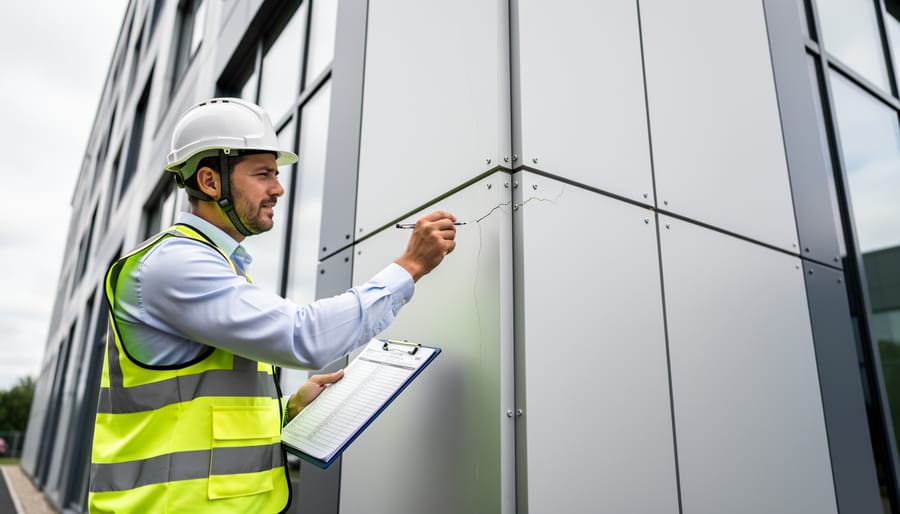
Recognizing early warning signs can prevent catastrophic failure and costly repairs. One of the most critical indicators is visible displacement or bowing of stone panels, suggesting anchor failure or inadequate structural support. Cracks in the stone itself, particularly horizontal or diagonal fractures, may indicate excessive stress or thermal movement issues. Pay attention to spalling, where stone surfaces flake or chip away, often caused by water infiltration and freeze-thaw cycles.
Discoloration or efflorescence, the white crystalline deposits that appear on stone surfaces, signals moisture problems within the system. Rust staining around anchor points indicates corroding metal components that compromise structural integrity. Open joints between panels or separation from the building substrate are serious concerns requiring immediate investigation.
Listen for hollow sounds when gently tapping stone panels, which suggests delamination or loss of adhesion. Water staining patterns on interior walls adjacent to cladding installations often reveal hidden moisture penetration. Pooling water on horizontal surfaces or inadequate drainage also accelerates deterioration.
If you observe any of these signs, engage a qualified facade inspector immediately. Early intervention through systematic assessment and targeted repairs protects both building occupants and your investment, preventing minor issues from escalating into major structural concerns.
Repair and Remediation Approaches
Repair strategies depend on the extent and severity of identified issues. Minor surface deterioration, such as localized spalling or hairline cracks, often requires targeted stone replacement or patching with color-matched repair mortars. These interventions maintain aesthetic continuity while addressing isolated problems without major disruption.
More serious structural concerns, particularly those involving anchor system failure or deterioration, demand comprehensive solutions. Partial anchor replacement involves installing supplemental anchors adjacent to failing components, distributing loads across both existing and new support points. This approach works well when damage is confined to specific areas.
Complete re-anchoring becomes necessary when widespread anchor corrosion or systemic installation defects compromise overall stability. This process requires temporarily supporting stone panels while installing entirely new anchor systems designed to current building codes. Though costly and disruptive, complete replacement eliminates underlying vulnerabilities and extends facade lifespan significantly.
Sealant renewal represents another common remediation need. Deteriorated joint sealants permit water infiltration, accelerating anchor corrosion and stone deterioration. Regular sealant replacement, typically every 10-15 years, provides cost-effective protection against moisture-related damage. All repairs should be executed by experienced professionals familiar with stone cladding systems to ensure proper material selection and installation techniques that match original design intent.
Case Studies: Learning from Failures and Successes
Examining real-world projects reveals valuable insights into what can go wrong with stone cladding installations and how proper planning prevents catastrophic failures.
The Broadgate Tower in London stands as a cautionary tale. In 2012, limestone panels began detaching from the 35-story building, requiring emergency closures and extensive remediation. Investigation revealed inadequate fixing systems that couldn’t accommodate thermal movement. The panels expanded and contracted with temperature changes, but the rigid anchoring system created excessive stress at connection points. This case underscores the critical importance of designing fixing systems that allow for natural stone movement while maintaining structural integrity.
Conversely, the Getty Center in Los Angeles demonstrates exemplary stone cladding execution. Completed in 1997, this complex uses 300,000 square feet of travertine cladding that has performed flawlessly for over two decades. Success factors included comprehensive geological assessment of the stone source, rigorous testing of panels under simulated conditions, and a sophisticated anchoring system designed specifically for seismic activity. The project team conducted extensive mockup testing before installation, identifying and resolving potential issues in controlled conditions rather than on the building itself.
The 2013 incident at Toronto’s Shangri-La Hotel offers another instructive example. Granite cladding panels fell from the tower during construction, injuring pedestrians below. Investigators determined that improper installation procedures and inadequate quality control during the construction phase were primary causes. Workers had deviated from approved fixing methods, and supervision failed to catch these errors. This case emphasizes that even the best design becomes meaningless without proper execution and oversight during installation.
The renovation of the Empire State Building provides lessons in successful retrofit projects. When updating the facade, engineers faced the challenge of integrating modern waterproofing and insulation systems with the existing limestone cladding. They developed innovative solutions that preserved the building’s historic character while enhancing performance. Detailed condition assessments identified which stones could remain and which required replacement, demonstrating how thorough evaluation informs cost-effective restoration decisions.
These cases collectively highlight recurring themes: the necessity of proper engineering analysis, importance of quality control throughout installation, value of comprehensive testing programs, and need for long-term maintenance planning. Whether planning new construction or maintaining existing facades, learning from both failures and successes helps stakeholders make informed decisions that prioritize safety, durability, and performance.
The structural integrity of facade stone cladding systems is not a matter of preference or optional consideration. It represents a fundamental responsibility that directly impacts building safety, occupant protection, and long-term property value. Throughout every phase of a stone cladding project, from initial design concepts through decades of service life, proper structural risk management must remain the central focus.
The evidence is clear: failures in stone cladding systems result from preventable causes. Inadequate load calculations, improper anchorage systems, poor installation practices, and neglected maintenance consistently appear as contributing factors in cladding failures. These issues don’t resolve themselves over time; they compound, creating increasingly dangerous conditions that ultimately compromise the entire facade system.
Working with qualified professionals is non-negotiable. Architects and engineers with specific experience in stone cladding systems bring essential expertise in designing appropriate support structures and specifying correct materials. Similarly, experienced installers who understand the nuances of different stone types and anchorage methods are critical to successful implementation. Attempting to reduce costs by compromising on professional qualifications inevitably leads to higher expenses through remediation, liability, and potential catastrophic failure.
Equally important is recognizing that installation completion is not the endpoint of structural responsibility. Regular inspections, proactive maintenance, and prompt repairs form the essential framework for ensuring continued performance and safety. Establishing maintenance protocols at project inception, not as an afterthought, protects your investment and the people who interact with your building daily.
Stone cladding offers exceptional aesthetic and performance benefits when executed properly. By prioritizing structural considerations and committing to professional oversight throughout the entire lifecycle, you ensure your facade system delivers beauty, durability, and safety for generations to come.