

Assess your current racking system by measuring the width-to-height ratio—any structure taller than four times its base width enters high-risk territory for tip-over incidents. Stone fabrication facilities face unique stability challenges because natural stone slabs create massive concentrated loads that shift during access, making proper racking design a life-or-death consideration rather than a simple storage solution.
Install anti-tip anchoring systems that secure racking structures to reinforced concrete floors using expansion bolts rated for seismic zones, even in non-earthquake regions. The lateral forces from accessing a 600-pound slab can generate surprising momentum that compromises stability in seconds. Understanding material storage dangers starts with recognizing that conventional warehouse racking specifications fail to address the unique physics of storing large-format stone materials.
Calculate the load distribution across your racking bays by dividing total slab weight by contact points, ensuring no single upright bears more than 75% of its rated capacity. Professional fabricators know that uneven loading creates torque forces that accumulate over time, slowly loosening connections and degrading structural integrity until catastrophic failure occurs without warning.
This comprehensive guide examines the engineering principles behind safe racking structures, identifies the specific risk factors that lead to tip-over accidents in stone facilities, and provides actionable assessment criteria based on industry standards. Whether you manage an established fabrication shop or design new facilities, understanding racking stability fundamentals protects both personnel and valuable inventory from preventable disasters.
What Is a Racking Structure for Stone Slabs?
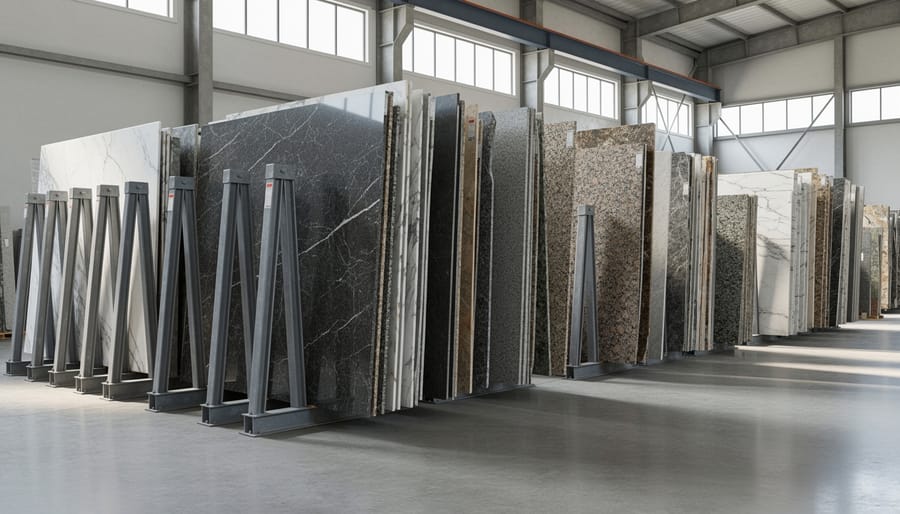
Types of Stone Racking Systems
Stone fabrication and storage facilities rely on specialized racking systems designed to safely accommodate the unique dimensions and weight characteristics of natural stone slabs. Understanding the various configurations available helps facilities select the most appropriate solution for their operational needs and safety requirements.
A-frame racks represent one of the most common storage configurations in the industry. These systems feature two angled supports that meet at the top, creating a triangular profile. The angled design allows slabs to lean against the frame at a stable angle, typically between 5 and 15 degrees from vertical. A-frame racks work particularly well for facilities that require frequent access to inventory, as slabs can be easily viewed and extracted. They accommodate various slab sizes and are often modular, allowing for facility expansion as inventory grows.
Vertical slab racks store stone in a completely upright position, maximizing floor space efficiency. These systems utilize dividers or slots that keep individual slabs separated and prevent direct contact between pieces. Vertical storage proves ideal for high-value materials or thinner slabs that require extra protection. However, this configuration demands precise weight distribution and robust structural integrity to prevent tip-over incidents.
Tilted storage systems position slabs at a predetermined angle, typically ranging from 10 to 20 degrees. This configuration offers a middle ground between A-frame and vertical storage, providing good visibility while maintaining stability. The controlled tilt angle reduces stress on the slab edges and facilitates safer handling during loading and unloading operations.
Mobile racking solutions incorporate wheels or rail systems, enabling facilities to reconfigure storage layouts as needed. These dynamic systems maximize space utilization in facilities with limited square footage while maintaining accessibility. Mobile racks must feature robust locking mechanisms and level flooring to ensure stability during movement and storage.
Key Components That Keep Slabs Secure
A properly designed slab racking system relies on several interconnected components working in harmony to ensure stability and prevent catastrophic tip-overs. Understanding these elements helps you evaluate existing storage solutions and make informed decisions about new installations.
The foundation begins with sturdy base supports, typically made from reinforced steel or heavy-duty metal frameworks. These bases must be level and anchored to the floor, creating a stable footprint that can handle the tremendous weight of stone slabs without shifting. The width and depth of the base directly correlate to the rack’s overall stability.
Vertical posts form the backbone of any racking structure, running from the base to the top of the system. These posts must be engineered to withstand both compressive loads from the weight above and lateral forces that could cause tipping. Quality posts feature adequate thickness and are positioned at appropriate intervals to distribute weight evenly.
Crossbeams connect vertical posts horizontally, creating a rigid framework that prevents lateral movement. These beams also serve as attachment points for additional safety features and help transfer loads throughout the structure.
Dividers separate individual slabs, preventing them from leaning into one another. This seemingly simple component is critical for maintaining proper weight distribution and preventing domino-effect failures.
Rubber padding protects slabs from direct metal contact while providing friction that reduces slippage. This cushioning material absorbs minor impacts and vibrations that could otherwise destabilize the load.
Finally, tie-down systems and restraints secure slabs in position, particularly important in areas prone to seismic activity or heavy forklift traffic. These active safety features provide the final layer of protection against tip-over incidents.
The Physics Behind Slab Tip-Over Accidents
How Marble and Granite Weight Creates Risk
Natural stone materials present unique weight challenges that directly impact racking stability. Granite typically weighs 18-20 pounds per square foot at standard 3cm thickness, while marble averages 13-15 pounds per square foot. A single large-format granite slab measuring 10 feet by 6 feet can weigh approximately 1,200 pounds, creating substantial force concentrated at specific contact points on the racking structure.
The physics of leverage amplifies these risks considerably. When slabs are stored vertically in an A-frame configuration, the weight distribution creates cantilever forces that multiply the effective load on the base. A 1,000-pound slab positioned at even a slight angle exerts forces far exceeding its static weight, particularly at the pivot points where it contacts the rack. This leverage effect intensifies as slabs lean further from vertical, making proper angle maintenance critical.
Granite requires notably different storage considerations than lighter stones like limestone or soapstone due to its superior density. The cumulative weight of multiple granite slabs in a single bay can easily exceed 5,000 pounds, demanding higher load capacity ratings and more robust structural reinforcement. Additionally, the hardness of granite means less material compression at contact points, transferring more concentrated stress to the rack frame.
Understanding these weight-related dynamics helps facility managers select appropriate racking systems rated for their specific inventory. Materials certificates should be reviewed to verify actual weights, as natural stone density varies by quarry and mineral composition. Proper load distribution becomes essential when mixing different stone types within the same racking structure.
When Racking Systems Fail: Common Scenarios
Understanding how racking systems fail is essential for preventing catastrophic accidents in stone storage facilities. These failures rarely happen without warning, and most can be traced to specific, preventable causes.
Improper foundation and slab placement ranks among the leading culprits. When racking systems are installed on uneven, cracked, or inadequately reinforced concrete slabs, the entire structure becomes compromised from the ground up. Even minor settlement or floor deflection can create instability that worsens over time, particularly when supporting heavy stone loads.
Overloading represents another critical failure point. Each racking system has engineered load capacities that account for both individual bay limits and overall structural integrity. Exceeding these limits, even temporarily during busy production periods, stresses the framework beyond safe parameters. This becomes especially dangerous when combined with uneven weight distribution, where one section bears disproportionate loads while others remain underutilized.
Structural deterioration develops gradually but poses serious long-term risks. Corrosion from water exposure, weld failures at connection points, and damage to base plates or anchoring systems all weaken the racking’s ability to resist tipping forces. Regular inspections should identify bent uprights, loose connections, and metal fatigue before they escalate into safety hazards.
External forces introduce unpredictable variables that test racking resilience. Seismic activity in earthquake-prone regions can topple even properly loaded systems lacking adequate bracing. Forklift impacts during material handling operations damage structural members, while nearby machinery generates vibrations that slowly loosen connections and anchors.
The common thread connecting these scenarios is that prevention requires vigilance. Understanding these failure modes enables facility managers to implement targeted inspection protocols, establish clear loading procedures, and maintain the structural integrity necessary for safe slab storage operations.
Critical Stability Factors for Racking Structures
Proper Angle and Tilt Requirements
Proper positioning of slabs in storage racks is fundamental to preventing tip-over accidents and ensuring long-term stability. Industry standards recommend storing slabs at angles between 85 and 88 degrees from horizontal. This near-vertical positioning maximizes space efficiency while maintaining adequate stability for heavy stone materials.
The slight backward tilt—typically 3 to 5 degrees from true vertical—serves a critical safety function. This angle creates a natural lean against the back support of the rack, utilizing gravity to keep slabs pressed securely in place rather than allowing them to lean forward. When slabs rest firmly against the rear structure, they’re significantly less likely to shift, slide, or topple during routine handling operations or minor vibrations in the facility.
Deviations from these recommended angles introduce serious hazards. Racks tilted too far forward create unstable conditions where slabs may gradually creep toward the front, eventually losing contact with rear supports and falling. Conversely, excessive backward angles—beyond 88 degrees—can stress the rack frame and make slab extraction difficult, potentially causing workers to pull or tug unsafely during material handling.
Temperature fluctuations and floor settling can gradually alter rack angles over time. Regular measurements using a digital level or inclinometer should be part of routine safety inspections. If angles drift outside the acceptable range, immediate adjustment is necessary. Installing adjustable feet or shims during initial rack setup allows for future corrections without major structural modifications. Proper angle maintenance isn’t merely a best practice—it’s essential for protecting both valuable inventory and worker safety in high-risk stone storage environments.
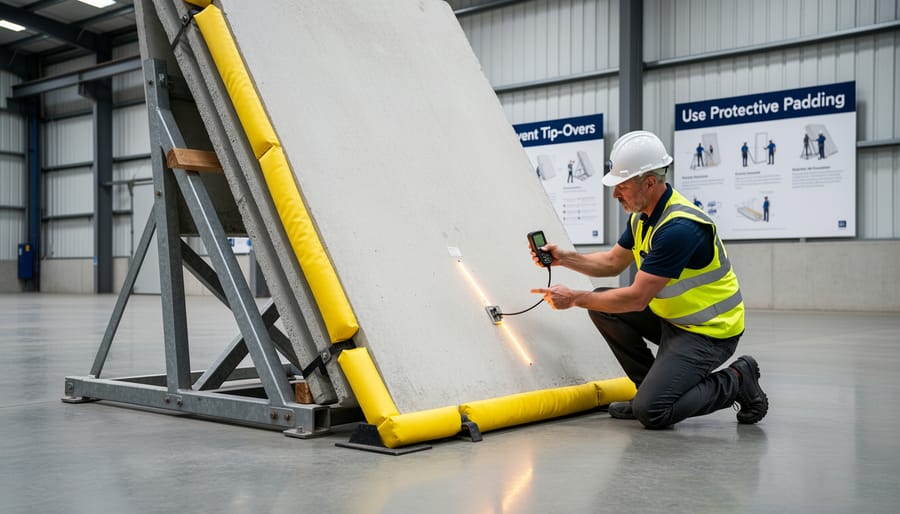
Load Capacity and Weight Distribution
Understanding load capacity begins with consulting the manufacturer’s specifications for your racking system. Each rack has a maximum weight rating per shelf level and an overall system capacity. To calculate safe loading limits, divide the total weight of your stone slabs by the number of storage positions, ensuring no single bay exceeds its rated capacity. Always account for the weight of A-frames or storage aids in your calculations.
Even distribution of weight across the rack structure is essential for stability. Concentrate heavy slabs on lower levels where the center of gravity remains low, reducing tip-over risk. Avoid loading one side of a rack significantly heavier than the other, as this creates lateral stress on the frame and anchoring points. Position your heaviest materials near vertical support columns where the structure is strongest.
The cascading effect of improper weight distribution can be catastrophic. When weight concentrates on upper levels or one side of the system, it creates instability that compounds across connected rack units. A single overloaded bay can compromise adjacent sections, particularly in multi-bay systems where frames share uprights. This domino effect increases the likelihood of progressive collapse, where failure in one area triggers failures throughout the facility.
Regular weight audits help maintain safe conditions. Document the weight and location of stored materials, especially when handling dense stones like granite or thick quartzite slabs. Consider implementing a color-coded system to identify load levels at a glance, making it easier for warehouse staff to maintain proper distribution patterns during daily operations.
Base Width and Anchoring Systems
The stability of any slab racking system fundamentally depends on the relationship between its height and base width. As a general rule, taller racks require proportionally wider bases to maintain a safe center of gravity. The industry standard typically calls for a base width of at least one-third to one-half the total rack height, though this varies based on slab weight, material density, and specific loading conditions. Narrower bases create higher tip-over risk, particularly when heavy natural stone slabs are stored in upper positions.
Floor anchoring transforms a freestanding rack into a secured system, dramatically reducing tip-over potential. Two primary anchoring methods dominate the industry: concrete expansion bolts and embedded steel plates. Concrete bolts offer versatility for existing facilities, allowing installation through drilling and mechanical or chemical anchoring directly into concrete floors with minimum 4-inch thickness. Embedded plates, cast into concrete during initial floor construction, provide superior holding strength and distribute forces across larger surface areas, making them ideal for new construction or major renovations.
Anchoring becomes non-negotiable under specific conditions. Any rack exceeding 10 feet in height should be anchored regardless of load. High-traffic environments where forklifts or other equipment operate nearby require anchoring to protect against accidental impacts. Facilities in seismic zones must anchor all racking to meet local building codes. Additionally, racks storing particularly heavy stone varieties like granite or quartzite, or those loaded near maximum capacity, demand secure floor attachment. The minimal investment in proper anchoring provides invaluable protection against catastrophic failure and potential injury.
Tip-Over Risk Assessment for Stone Storage Areas
Warning Signs Your Racking System Is Unsafe
Regular inspection of your racking system is essential for maintaining a safe stone storage environment. Recognizing warning signs early can prevent catastrophic failures and protect both personnel and valuable inventory.
Start by examining the vertical supports. Any visible bending, leaning, or distortion indicates structural compromise, often caused by impacts from forklifts or overloading. Even slight deformations can significantly reduce load-bearing capacity. Check for cracks or breaks in welds, particularly at connection points where beams meet uprights. These critical junctions bear tremendous stress, and weld failure can trigger sudden collapse.
Inspect the base of your racking system carefully. Unanchored or improperly secured bases represent a major tip-over hazard, especially when storing heavy stone slabs. Floor anchors should be tight and undamaged, with no visible gaps between base plates and the concrete slab. If your system exhibits excessive lean—typically more than 1 inch out of plumb—immediate corrective action is necessary.
Examine protective padding between slabs for wear, tears, or compression. Degraded padding allows direct stone-to-metal contact, increasing breakage risk and creating unstable stacking conditions. Look for improper slab arrangement patterns, such as mixed slab sizes creating uneven weight distribution, slabs extending beyond support beams, or inadequate spacing between stored materials.
Rust, corrosion, or missing safety components like beam clips and locking pins also signal potential danger. Document any irregularities and consult with qualified structural engineers or racking manufacturers before continuing to use compromised systems. Prevention through vigilant monitoring always costs less than responding to accidents.
Environmental Factors That Increase Risk
External conditions significantly impact racking system stability and must be evaluated during facility planning and ongoing operations. Locations in seismic activity zones require specialized anchoring systems and flexible connections that accommodate ground movement while preventing slab displacement. Nearby equipment producing continuous vibration, such as cutting machinery or heavy forklifts, can gradually loosen fasteners and compromise structural integrity over time.
Uneven or deteriorating concrete floors create an unstable foundation, causing racks to lean and increasing tip-over risk. Regular floor inspections should identify settling, cracks, or surface degradation that requires remediation. Temperature fluctuations in outdoor or semi-conditioned storage areas cause materials to expand and contract, potentially stressing connection points and affecting vertical alignment.
High-traffic areas present additional challenges, with increased collision risk from material handling equipment and reduced visibility for operators navigating congested spaces. Position racking systems away from main thoroughfares when possible, install protective barriers around support columns, and maintain clear sight lines. Consider implementing traffic flow patterns that minimize sharp turns near vulnerable storage zones to reduce accidental impact potential.
Best Practices for Safe Slab Storage and Racking
Proper Slab Placement Techniques
Proper slab placement directly impacts the stability and safety of your racking system. Following systematic loading protocols reduces tip-over risk and protects both your inventory and personnel.
Begin by placing the heaviest slabs on the bottom level of your racking structure. This low center of gravity provides foundational stability and prevents top-heavy conditions that increase tip-over risk. As you move upward, gradually decrease the weight and size of slabs on each successive level.
Group similar-sized slabs together on the same rack section. This practice creates uniform weight distribution and prevents smaller slabs from slipping or becoming damaged between larger pieces. When mixing sizes becomes necessary, position smaller slabs toward the center of the rack where support is strongest.
Maintain consistent spacing between slabs, typically 1 to 2 inches apart. This spacing allows air circulation, facilitates inspection, and prevents the friction and pressure that can cause edge chipping or cracking. Never pack slabs tightly together, as this makes removal difficult and increases handling risks.
Install appropriate separators between individual slabs. Rubber, foam, or wood strips protect stone surfaces from direct contact and prevent scratching or staining. Choose separator materials that won’t react chemically with your specific stone types.
Establish and maintain the proper lean angle, typically 5 to 10 degrees from vertical. This slight backward lean prevents slabs from falling forward while keeping them stable. Use angle gauges or level indicators to verify correct positioning. Too steep an angle creates unnecessary pressure on the rack frame, while insufficient lean allows slabs to shift forward dangerously during access or movement.
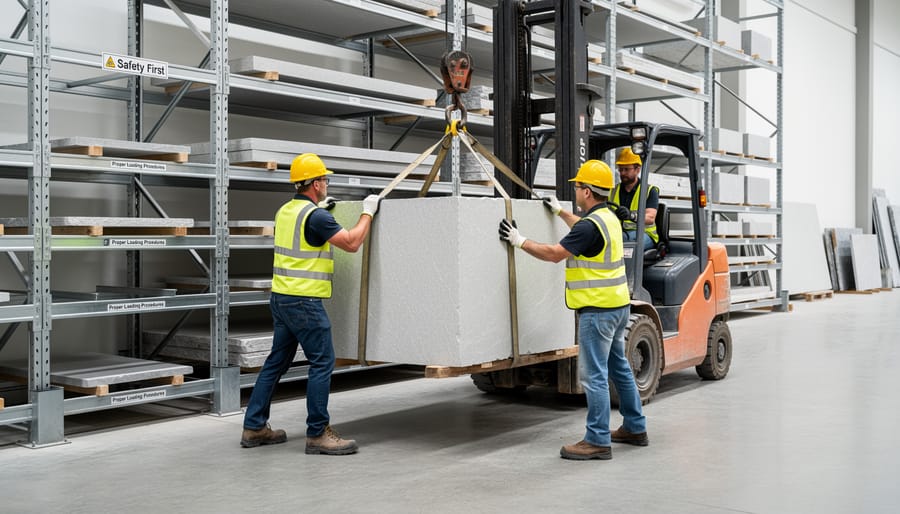
Regular Maintenance and Inspection Schedules
Establishing a proactive maintenance routine is essential for preventing racking failures and ensuring long-term storage safety. Industry best practices recommend conducting visual inspections weekly, with more comprehensive assessments performed quarterly and annually. Weekly walkthroughs should focus on identifying obvious damage such as bent frames, missing bolts, or floor anchor displacement. Look for load imbalance, overhanging slabs, and any signs of structural stress including unusual noises or movement.
Quarterly inspections require a detailed checklist covering all structural components: uprights, beams, bracing, connections, and base plates. Document any corrosion, weld cracks, or deformation using photographs and measurements. Verify that load capacity placards remain visible and accurate, and confirm that aisles maintain proper clearance widths. These inspections should involve multiple staff members familiar with daily operations who can identify gradual changes.
Annual professional assessments by qualified structural engineers or certified rack inspectors are critical, particularly for facilities storing high-value natural stone inventory. Engineers can perform load calculations, assess foundation integrity, and determine whether modifications or upgrades are necessary as storage needs evolve. They bring specialized equipment to measure plumbness, levelness, and load distribution that aren’t available during routine checks.
Maintain comprehensive documentation including inspection reports, repair records, load capacity calculations, and any modifications made to the system. This documentation protects your business during insurance claims and demonstrates compliance with workplace safety regulations. Consider implementing a color-coded tagging system to quickly identify components requiring immediate attention, scheduled repair, or replacement. When damage exceeds manufacturer tolerances or regulatory limits, immediately reduce loads and engage professionals before continuing operations.
Training Requirements for Personnel
Anyone working with slab racking systems requires comprehensive training to prevent accidents and ensure safe material handling. Effective personnel safety training should cover several critical areas that directly impact warehouse safety.
Proper lifting and handling techniques form the foundation of safe slab management. Workers must understand how to assess slab weight, use mechanical assistance when needed, and maintain correct body positioning to prevent injuries. Training should emphasize team lifting protocols for larger pieces and the importance of never exceeding individual capacity limits.
Recognizing structural instability is equally crucial. Personnel should learn to identify warning signs such as leaning slabs, damaged frame components, uneven weight distribution, and compromised support beams. Understanding load capacity limits for specific racking systems prevents overloading situations that lead to catastrophic failures.
Comprehensive emergency protocols ensure workers know exactly how to respond during tip-over incidents or structural failures. This includes evacuation procedures, communication chains, and first responder coordination.
Regular refresher training sessions keep safety awareness high and help integrate new employees into established safety cultures. Documentation of completed training provides accountability and helps facilities maintain compliance with industry safety standards and insurance requirements.
Industry Standards and Compliance Considerations
Proper slab racking systems must comply with a comprehensive framework of safety standards designed to protect workers and reduce liability exposure. Understanding and implementing these requirements is essential for any facility storing natural stone materials.
OSHA regulations form the foundation of workplace safety requirements for material storage systems. OSHA 1910.176 addresses general material handling and storage, requiring that stored materials be stacked, racked, blocked, or interlocked to prevent sliding, falling, or collapse. Additionally, OSHA 1910.22 mandates that walking-working surfaces remain free from hazards that could cause slips, trips, or falls. Facilities must maintain clear aisles and passageways, with adequate clearance around racking structures for safe navigation and emergency access.
The Marble Institute of America provides industry-specific guidance through their best practices documentation, which addresses proper slab storage angles, rack design specifications, and load distribution requirements tailored to natural stone materials. These guidelines recognize the unique properties of granite, marble, and other stone products that differentiate them from standard warehouse inventory.
The Rack Manufacturers Institute also publishes standards covering design, testing, installation, and inspection protocols for industrial storage systems. Following RMI specifications helps ensure structural integrity under expected load conditions.
Non-compliance carries significant consequences beyond regulatory fines. Facilities face potential workers’ compensation claims, civil liability for injuries, property damage costs, and business interruption from accidents. Insurance providers increasingly require documented compliance with recognized standards, and failure to meet these requirements may void coverage. Regular third-party inspections, documented maintenance programs, and employee training records demonstrate due diligence and help protect against liability claims while creating genuinely safer work environments.
When it comes to storing heavy natural stone slabs, proper racking structures are absolutely non-negotiable. The consequences of inadequate or poorly maintained systems extend far beyond property damage—they put lives at risk and can devastate businesses through costly accidents, regulatory violations, and irreversible harm to your workforce.
Throughout this article, we’ve explored the critical factors that separate safe storage systems from disasters waiting to happen. Load capacity calculations ensure your racks can handle the substantial weight of stone materials. Proper anchoring and base stability prevent the catastrophic failures that lead to tip-over incidents. Regular inspections catch warning signs before they become emergencies. Employee training creates a culture of safety awareness that protects everyone in your facility.
The reality is straightforward: investing in quality racking structures and maintaining them diligently is far less expensive than dealing with the aftermath of a collapse. Every slab stored represents both valuable inventory and a potential hazard if not properly secured. The standards and best practices we’ve discussed aren’t suggestions—they’re essential safeguards developed from decades of industry experience and, unfortunately, preventable accidents.
Now is the time to take action. Walk through your facility with fresh eyes and honestly assess your current racking systems. Are they rated for your actual loads? Are inspections documented and consistent? Do your employees understand proper loading procedures? If you have any doubts about your storage infrastructure, consult with qualified structural engineers or racking specialists who understand the unique demands of natural stone storage. Your team’s safety depends on it.