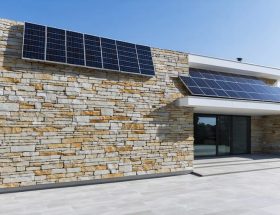
Understanding the complete environmental footprint of natural stone requires examining every phase from quarry extraction to final disposal. Life cycle analysis (LCA) provides this comprehensive view, measuring energy consumption, carbon emissions, water usage, and waste generation across each stage of a material’s existence. For natural stone, this cradle-to-grave assessment reveals surprising insights that challenge common assumptions about sustainability.
Natural stone’s environmental profile differs dramatically from synthetic alternatives, primarily because it requires no chemical manufacturing or intensive processing. The extraction phase accounts for the majority of energy use, while transportation distances significantly influence overall carbon impact. Processing facilities consume water and electricity, yet natural stone generates minimal waste since offcuts become aggregate, tiles, or decorative elements. Installation methods affect long-term performance, and the material’s exceptional durability extends useful life spans to centuries rather than decades.
The true environmental advantage emerges in the end-of-life phase. Natural stone contains no toxic binders, resins, or synthetic components that create disposal challenges. Demolished stone returns to construction aggregate, landscaping material, or artistic applications without requiring energy-intensive recycling processes. This inherent recyclability, combined with minimal processing requirements and extraordinary longevity, positions natural stone favorably against manufactured surfaces when evaluated through complete lifecycle metrics.
This analysis examines each stage systematically, providing quantifiable data on environmental impacts, comparing natural stone performance against alternative materials, and identifying specific strategies to minimize ecological footprint. Whether selecting materials for residential projects or commercial developments, understanding these lifecycle dynamics enables informed decisions that balance aesthetic goals with environmental responsibility. The following sections break down extraction, processing, transportation, installation, use, and end-of-life considerations with specific metrics and practical recommendations.
What Cradle-to-Grave Analysis Actually Measures
The Four Critical Stages of Stone’s Lifecycle
Understanding the complete environmental journey of natural stone requires examining four distinct phases that comprise its cradle-to-grave lifecycle. Each stage carries specific environmental implications that contribute to the material’s overall sustainability profile.
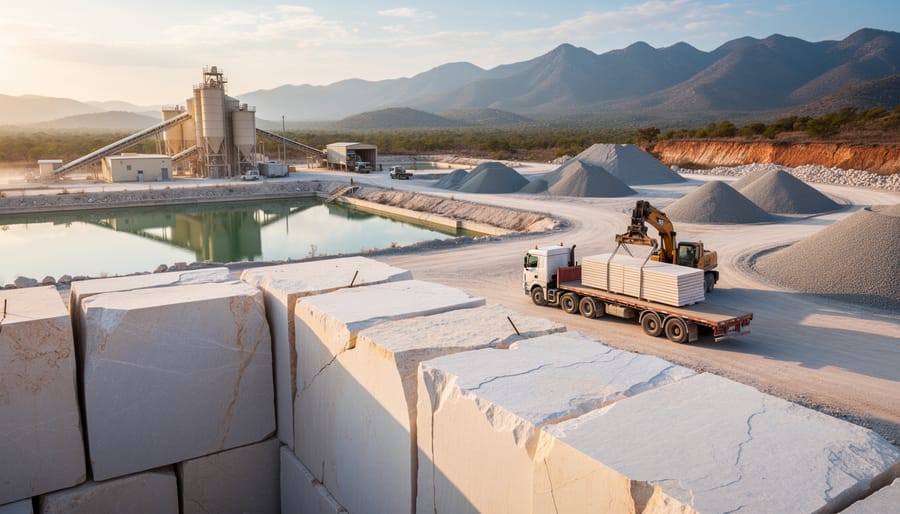
The first phase, raw material extraction, involves quarrying stone from the earth using methods ranging from traditional hand-cutting to modern wire saws and controlled blasting. This stage accounts for significant energy consumption and generates waste material, though many quarries now implement reclamation strategies to minimize landscape disruption and repurpose stone remnants.
Processing and manufacturing represents the second critical phase, where raw blocks undergo cutting, grinding, polishing, and finishing. This transformation requires substantial water usage for cooling and cleaning, along with electricity to power machinery. Modern fabrication facilities increasingly incorporate water recycling systems and energy-efficient equipment to reduce their environmental footprint during this intensive production period.
Transportation and installation constitute the third phase, encompassing the movement of finished products from processing facilities to project sites. The distance traveled and shipping method significantly impact carbon emissions, making regional sourcing an important consideration. Installation itself requires adhesives, sealants, and sometimes mortar, each adding to the material’s environmental account.
The final phase addresses end-of-life scenarios, where stone demonstrates remarkable advantages over many alternative materials. Natural stone’s exceptional durability often extends its useful life across multiple generations, delaying disposal considerably. When eventual removal occurs, stone can be salvaged for reuse in new applications, crushed for aggregate in construction projects, or returned to landscapes as decorative elements. Unlike synthetic materials, stone biodegrades naturally without releasing harmful chemicals, completing its environmental cycle with minimal lasting impact.
Key Environmental Metrics Being Tracked
Life cycle analysis studies measure several critical environmental indicators to provide a complete picture of natural stone’s impact. Carbon footprint tracks greenhouse gas emissions at each stage, from quarry operations and transportation to processing and eventual disposal, typically measured in kilograms of CO2 equivalent per ton of material. Energy consumption quantifies the total power required throughout the stone’s lifecycle, including diesel for extraction equipment, electricity for cutting and polishing, and fuel for transportation.
Water usage assessment examines consumption during quarrying, processing, and finishing operations. Natural stone generally requires less water than manufactured alternatives like concrete or porcelain, though specific usage varies by stone type and processing methods. Waste generation measures both solid waste from cutting and shaping operations and any chemical byproducts from treatments or sealants applied to finished stone.
Additional metrics include resource depletion rates, which evaluate how quarrying affects local geology and landscapes, and ecosystem impact assessments that examine effects on biodiversity and habitat. Many LCA studies also track air quality indicators, measuring particulate matter and emissions from processing facilities. These quantifiable metrics allow architects and designers to compare natural stone objectively against alternative materials and make data-driven decisions for sustainable building projects.
Stage 1: Quarrying and Raw Material Extraction
Modern Quarrying Methods and Their Environmental Footprint
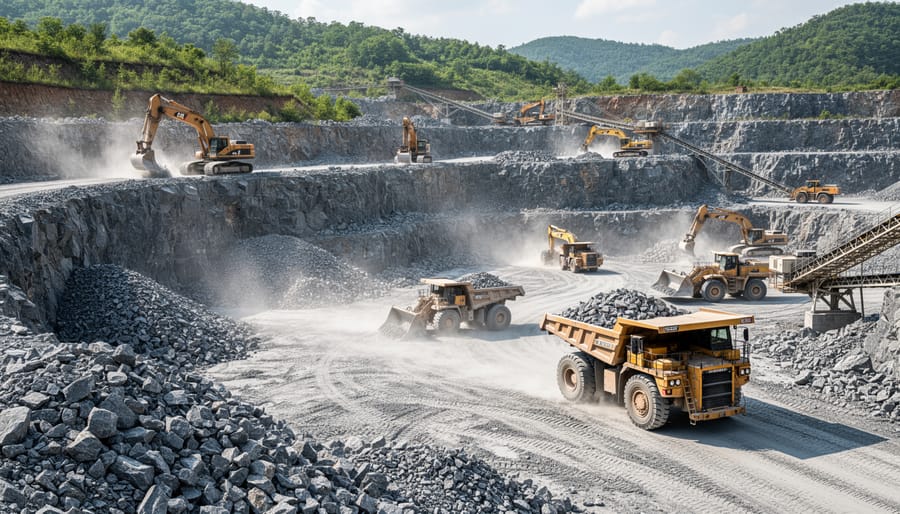
Modern quarrying has evolved significantly from historical methods, though it remains an energy-intensive process. Today’s extraction techniques vary based on stone type and geological conditions, each with distinct environmental implications.
Diamond wire saws and chain saws represent the primary extraction methods for dimensional stone. These technologies slice through stone blocks with remarkable precision, reducing material waste compared to older explosive techniques. However, they require substantial electricity—a typical quarry operation consumes between 30-50 kWh per cubic meter of extracted stone. Diesel-powered excavators and loaders add another layer of energy consumption and emissions to the extraction phase.
The environmental footprint varies considerably depending on stone characteristics. Softer stones like limestone and sandstone demand less energy for cutting and processing than harder materials such as granite or quartzite. Granite extraction typically requires 40-60% more energy than limestone due to its density and hardness. Marble falls somewhere in the middle, requiring moderate energy input but producing marketable byproducts from cutting waste.
Water usage presents another consideration, with modern quarries using 100-200 liters per cubic meter for dust suppression and cooling cutting equipment. Progressive operations increasingly implement closed-loop water recycling systems, reducing freshwater consumption by up to 90%.
Site disruption, habitat disturbance, and landscape alteration constitute the most visible impacts. However, responsible quarry operators now develop comprehensive restoration plans, often transforming exhausted quarries into ecological reserves, recreational lakes, or productive land, mitigating long-term environmental consequences.
Site Restoration and Quarry Rehabilitation
Once extraction concludes, responsible quarry operators implement comprehensive site restoration plans to minimize long-term environmental impact. Modern quarrying practices increasingly integrate rehabilitation strategies from the planning phase, ensuring damaged landscapes are returned to productive use.
Restoration efforts typically involve several key steps. Operators remove temporary infrastructure, recontour the land to match surrounding topography, and replace topsoil stockpiled during initial development. Native vegetation is then planted to restore biodiversity and prevent erosion. Many sites are successfully transformed into wetlands, recreational parks, wildlife habitats, or even residential developments.
Progressive rehabilitation, where restoration occurs in sections as extraction moves through a quarry, has become industry standard. This approach reduces the total disturbed area at any given time and accelerates ecosystem recovery. Some operations incorporate innovative solutions like terraced quarry walls that create diverse microhabitats for local fauna.
Leading natural stone suppliers now provide detailed closure plans addressing water management, soil quality, and long-term monitoring commitments. These efforts demonstrate that with proper planning and investment, quarried land can support thriving ecosystems decades after operations cease. For sustainability-conscious specifiers, choosing stone from operators with proven restoration track records ensures their material selections support responsible environmental stewardship throughout the complete lifecycle.
Local vs. Imported Stone: The Extraction Location Factor
Stone extraction location significantly influences environmental impact through varying regulatory frameworks and operational standards. Quarries in regions with stringent environmental laws—common in Europe and North America—typically enforce dust control, water management, and site rehabilitation requirements. These measures add costs but reduce ecological harm. Conversely, quarries in countries with less rigorous oversight may have lower carbon footprints from minimal processing but potentially greater environmental damage from unregulated practices.
Transportation distance also factors heavily into the equation. Locally sourced stone eliminates thousands of shipping miles, dramatically reducing carbon emissions. However, environmental gains from proximity can be offset if local quarries operate with poor practices. When selecting ethically sourced stone, evaluate both extraction methods and transport logistics. Third-party certifications and supplier transparency regarding quarry practices help ensure your material choice supports responsible environmental stewardship throughout the supply chain.
Stage 2: Processing, Fabrication, and Manufacturing
Energy Demands of Stone Processing
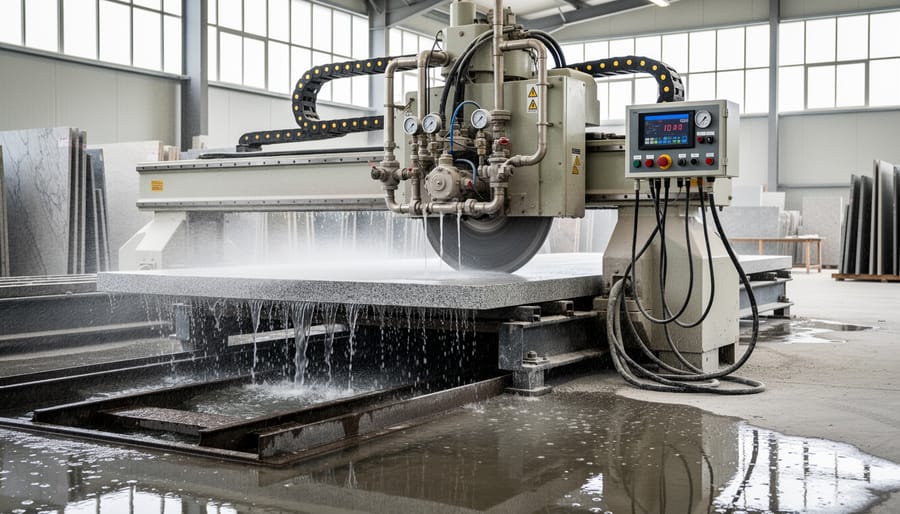
Stone processing transforms raw quarried blocks into finished products through several energy-intensive operations. Sawing represents the first major energy demand, where diamond-tipped gang saws or wire saws cut massive blocks into slabs. This process typically consumes 15-25 kWh per square meter, depending on stone hardness and thickness. Marble and limestone require less energy than dense materials like granite or quartzite.
Polishing operations demand substantial electricity to achieve desired surface finishes. Industrial polishing machines with multiple grinding heads progressively refine surfaces using increasingly fine abrasives, consuming approximately 8-12 kWh per square meter for standard finishes. High-gloss or specialized finishes require additional passes and energy.
Cutting slabs to specification adds another 3-5 kWh per square meter, while edge profiling, waterjet cutting for intricate designs, and finishing treatments contribute further energy demands. Water consumption during these wet processes also represents a significant resource consideration, with modern facilities using 50-100 liters per square meter.
Overall, processing accounts for roughly 30-40 percent of stone’s total embodied energy. However, modern facilities increasingly incorporate energy recovery systems, LED lighting, and optimized equipment scheduling to reduce consumption. Some processors now source renewable energy, substantially lowering the carbon footprint of these essential manufacturing stages.
Water Usage and Waste Management
Modern stone fabrication has made significant strides in minimizing water consumption and waste generation throughout the production cycle. Stone cutting and polishing operations require substantial water for cooling and dust suppression, but today’s advanced water recycling systems can reclaim and reuse up to 90% of process water through closed-loop filtration systems.
These systems separate stone particles from water using settling tanks and filter presses, allowing clean water to return to production while creating manageable solid waste. The resulting stone slurry, once considered problematic waste, now finds secondary applications in cement production, soil amendments, and even as aggregate in construction materials, effectively creating a circular economy approach.
Leading fabrication facilities have implemented zero-discharge policies, capturing all process water on-site and eliminating contaminated runoff. Advanced equipment like CNC machines and waterjet cutters optimize material usage while minimizing water requirements compared to traditional methods. Some operations have reduced freshwater intake by 70% through these combined strategies, demonstrating that responsible stone production can align environmental stewardship with operational efficiency while maintaining the quality standards expected in architectural and design applications.
Chemical Treatments and Sealants
Stone processing relies on various chemical treatments including epoxy resins for filling fissures, sealants for stain protection, and polishing compounds. These products contribute to the environmental footprint through VOC emissions, chemical production energy, and disposal concerns. Traditional petroleum-based resins can release volatile organic compounds during application, while water-based alternatives offer lower emissions but may sacrifice durability.
The volume of chemicals varies by stone type—porous materials like limestone require more sealing than dense granite. Industry shifts toward bio-based resins and low-VOC formulations are reducing impact, though these alternatives often carry higher costs. Proper application techniques minimize waste, and selecting appropriate treatments based on stone porosity and intended use prevents over-application. End-of-life considerations include potential leaching from treated stone in landfills, making proper disposal or recycling critical. When evaluating stone sustainability, factor in the type and quantity of chemical treatments required for your specific application and environment.
Stage 3: Transportation and Installation
The Weight Factor: Transportation’s Environmental Cost
Stone’s exceptional density—typically 160-180 pounds per cubic foot—creates significant transportation challenges that directly impact its environmental footprint. A single granite countertop can weigh 600-1,000 pounds, meaning shipping multiplies fuel consumption and carbon emissions compared to lighter building materials.
Transportation typically accounts for 5-20% of natural stone’s total lifecycle emissions, with the percentage rising dramatically when materials travel internationally. A marble slab shipped from Italy to the United States can generate 200-300 kg of CO2 per ton just in transit, while locally quarried stone might produce only 20-50 kg per ton for regional delivery.
This weight penalty makes sourcing decisions crucial for sustainability-minded projects. Specifying stone quarried within 500 miles of a project site can reduce transportation emissions by up to 80% compared to imported alternatives. Regional sourcing also supports local economies and allows for better supply chain transparency.
For projects requiring specific stone varieties only available from distant quarries, consolidating shipments and choosing efficient transportation modes—such as rail over truck for long distances—can partially offset the environmental cost. Understanding these transportation dynamics helps architects and designers balance aesthetic preferences with environmental responsibility throughout the material selection process.
Installation Materials and Methods
The installation phase of natural stone introduces additional materials that contribute to the overall environmental footprint. Adhesives, mortars, and grouts are essential components, but their composition matters significantly from a sustainability perspective.
Traditional cement-based mortars and grouts generate substantial CO2 emissions during production, with Portland cement alone accounting for approximately 8% of global carbon emissions. Modern alternatives include low-VOC adhesives, polymer-modified thin-set mortars, and epoxy-based systems that may offer improved performance but require careful evaluation of their chemical constituents and long-term off-gassing potential.
The quantity of installation materials varies by application method. Thin-set installations for tiles typically require 3-5 pounds of adhesive per square foot, while thick-bed methods can demand significantly more material. Grout consumption depends on joint width and tile thickness, generally ranging from 0.5 to 2 pounds per square foot. These seemingly modest quantities accumulate substantially across large projects.
Installation waste represents another environmental consideration often overlooked in lifecycle assessments. Stone cutting generates dust and small fragments, while material packaging contributes to landfill volume. Industry studies indicate that installation waste can range from 5-15% of total material volume, depending on project complexity, installer skill, and design patterns requiring extensive cutting.
Responsible contractors implement waste reduction strategies including precise material calculations, on-site recycling of cutting remnants, and proper disposal protocols for chemical containers. Water usage during cutting and cleanup also warrants consideration, particularly in water-scarce regions where recirculation systems offer environmental benefits.
Stage 4: Use Phase and Longevity Benefits
Durability as an Environmental Advantage
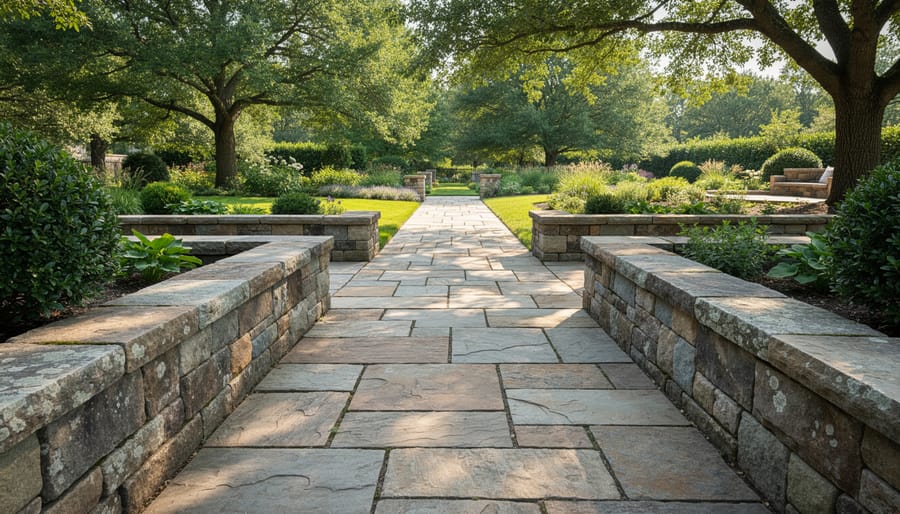
Stone’s exceptional durability represents one of its greatest environmental advantages when conducting a comprehensive life cycle analysis. With a functional lifespan of 50 to 100+ years—far exceeding alternatives like ceramic tile (15-20 years), vinyl flooring (10-15 years), or even engineered materials (20-30 years)—natural stone significantly reduces the cumulative environmental burden associated with material replacement cycles.
Consider a marble floor installed in a commercial building. Over a 100-year building lifespan, that stone may never require replacement, representing a single extraction, processing, and installation event. In contrast, vinyl flooring would need replacement approximately 6-10 times during the same period, multiplying the environmental impacts of raw material extraction, manufacturing energy, transportation emissions, and construction waste generation by that factor.
This longevity advantage becomes even more pronounced when considering embodied carbon over time. While stone may have higher initial embodied energy compared to some alternatives, this investment is amortized over decades of use. A 2019 study found that granite countertops, when calculated per year of service life, demonstrated 40% lower environmental impact than laminate alternatives requiring periodic replacement. The avoidance of demolition waste, new material production, and repeated installation labor translates directly into reduced carbon emissions, resource conservation, and decreased landfill burden—making durability a cornerstone of stone’s environmental value proposition.
Low Maintenance, Low Impact
Natural stone’s performance during its use phase contributes significantly to its favorable lifecycle assessment. Unlike synthetic materials that may release volatile organic compounds (VOCs) over time, natural stone is inert and produces zero off-gassing, maintaining healthy indoor air quality throughout its lifespan. This characteristic makes it particularly valuable for residential spaces, healthcare facilities, and educational institutions where air quality is paramount.
The maintenance requirements for natural stone are remarkably minimal compared to alternative materials. Routine cleaning typically requires only water and pH-neutral soap, eliminating the need for harsh chemical cleaners that introduce environmental pollutants during manufacturing and disposal. Periodic sealing—recommended every one to three years depending on stone type and application—uses significantly fewer resources than the refinishing, replacement, or intensive chemical treatments required by many competing materials.
This low-maintenance profile reduces the environmental burden associated with cleaning product manufacturing, packaging, transportation, and wastewater treatment. When stone eventually reaches the end of its functional life in one application, numerous stone recycling options exist, from repurposing in new construction projects to crushing for aggregate use, further extending its lifecycle value and minimizing landfill impact.
Stage 5: End-of-Life and Recyclability
Reclamation and Reuse Possibilities
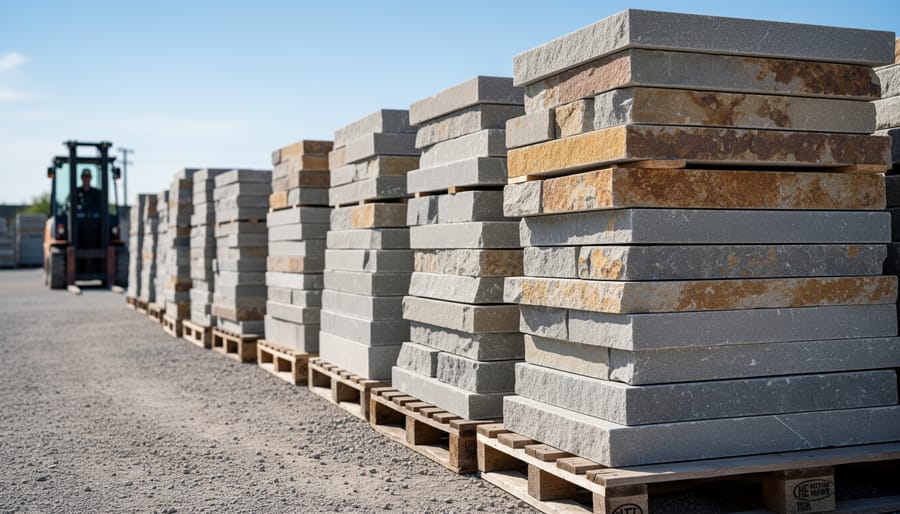
Natural stone’s durability extends its value far beyond its initial installation, creating significant opportunities for reclamation and reuse. When buildings are renovated or demolished, stone elements like countertops, flooring, and cladding can be carefully removed and resold through architectural salvage companies, stone yards, or online marketplaces. This extends the material’s lifespan and reduces demand for newly quarried stone.
Reclaimed stone often finds new life in different applications. Large slabs can be cut into smaller pieces for mosaic work, backsplashes, or accent walls. Damaged sections can be resurfaced or fabricated into entirely different products like pavers, garden edging, or decorative aggregates. Some designers specifically seek reclaimed stone for its aged patina and character, which adds historical authenticity to restoration projects.
The environmental advantage of stone reuse is substantial compared to disposal. Unlike many building materials that degrade or lose structural integrity, stone maintains its physical properties indefinitely. This circular economy approach particularly benefits natural versus engineered stone, as natural stone requires no chemical binders that might deteriorate over time, making it perpetually suitable for repurposing across multiple lifecycle iterations.
Recycling Options and Aggregate Uses
When natural stone reaches the end of its primary lifecycle, it rarely ends up in landfills. Instead, discarded stone becomes a valuable secondary resource with multiple applications. Demolished stone countertops, flooring, and cladding are typically crushed into various aggregate sizes for use in road construction, concrete production, and drainage systems. This crushed stone aggregate performs identically to freshly quarried material, making it an economically viable and environmentally responsible choice for infrastructure projects.
Larger pieces unsuitable for crushing often find new life in landscaping applications. Stone fragments become decorative garden borders, retaining wall components, or pathway materials. Some architectural salvage companies specialize in reclaiming intact slabs for resale, allowing premium materials like marble and granite to serve multiple generations of users.
The inert nature of natural stone means it poses no contamination risk during recycling or reuse. Unlike synthetic materials that may degrade or release harmful substances, recycled stone maintains its structural integrity and chemical stability indefinitely. This recyclability significantly extends the material’s overall lifecycle, reducing the need for new quarrying and minimizing waste. By viewing stone as a perpetually recyclable resource rather than a disposable product, the industry continues reducing its environmental footprint while maximizing material value.
How Natural Stone Compares to Alternative Materials
Natural Stone vs. Engineered Alternatives
When comparing natural stone to engineered alternatives like quartz surfaces or porcelain slabs, the lifecycle analysis reveals significant differences in environmental impact. Natural stone extraction requires minimal processing—quarrying, cutting, and polishing—resulting in relatively low embodied energy. Studies indicate natural stone carries approximately 1.2 to 5.5 MJ per kilogram of embodied energy, depending on stone type and transportation distance.
Engineered stone products, conversely, demand intensive manufacturing processes. These materials combine crushed stone with polymer resins (typically 7-10% by weight), requiring high-temperature curing, chemical additives, and significant energy inputs. The production process for engineered quartz generates embodied energy levels 3-4 times higher than natural stone. Additionally, the resin component introduces petroleum-based materials with substantial carbon footprints and end-of-life disposal challenges.
Manufacturing impacts extend beyond energy consumption. Engineered stone production releases volatile organic compounds during resin curing and creates waste streams containing non-biodegradable materials. Natural stone processing generates stone dust and water usage concerns, but produces inert waste that can be repurposed for aggregate or landscaping applications.
From a cradle-to-grave perspective, natural stone offers biodegradability advantages—it returns to earth without chemical leaching. Engineered products face landfill disposal challenges due to their composite nature, which prevents effective recycling. However, engineered alternatives may reduce transportation emissions when manufactured locally, while natural stone often travels internationally from quarry to project site.
The choice ultimately depends on project priorities, but comprehensive lifecycle data increasingly favors natural stone’s lower overall environmental burden when durability and end-of-life considerations are included.
The Total Cost Calculation
When evaluating material choices, the true cost extends far beyond the initial purchase price. A comprehensive lifecycle cost analysis reveals that natural stone often represents exceptional long-term value despite higher upfront expenses.
Consider a typical flooring comparison: Natural stone may cost $15-30 per square foot installed, while vinyl flooring runs $3-8 per square foot. However, natural stone routinely lasts 100+ years with minimal maintenance, whereas vinyl typically requires replacement every 10-20 years. Over a 50-year period, vinyl flooring might need three complete replacements, dramatically narrowing the cost gap when factoring in removal, disposal, and reinstallation expenses.
Maintenance costs further tip the scales. Natural stone requires periodic sealing and basic cleaning with pH-neutral products, costing approximately $0.50-1.00 per square foot annually. Synthetic alternatives often demand specialized cleaning products and show wear patterns requiring professional refinishing or earlier replacement.
The longevity advantage becomes even more compelling in commercial applications. A limestone facade or granite countertop maintains its aesthetic appeal and structural integrity for decades, while manufactured alternatives fade, crack, or delaminate under sustained use. This durability translates to reduced lifecycle costs, fewer disruptions from replacement projects, and lower environmental impact from repeat manufacturing and transportation cycles.
Projects pursuing environmental certifications increasingly recognize these lifecycle advantages. The embedded energy in natural stone gets amortized over extraordinary timeframes, making its per-year environmental footprint remarkably low compared to materials requiring frequent replacement cycles.
Making Environmentally Conscious Stone Choices
Sourcing Locally and Verifying Quarry Practices
Choosing regional stone suppliers significantly reduces transportation emissions while supporting local economies. Start by contacting stone yards and fabricators within a 200-mile radius of your project location. Many regions have native stone varieties that offer unique aesthetic qualities while minimizing environmental impact.
When evaluating quarry operations, ask specific questions about their extraction methods. Inquire whether they use water recycling systems during cutting and processing, as this reduces freshwater consumption. Request information about their dust control measures and how they manage overburden and waste material. Responsible quarries often repurpose stone byproducts for aggregate or soil amendments rather than sending them to landfills.
Verify whether the quarry has reclamation plans for exhausted sites. Well-managed operations should demonstrate commitments to land restoration, including topsoil preservation and native plant reestablishment. Ask about their energy sources and whether they’ve implemented renewable energy systems or fuel-efficient machinery.
Request third-party certifications or Environmental Product Declarations (EPDs) that document the stone’s environmental footprint. While not all quarries have formal certifications, transparency about their practices indicates responsible stewardship. Consider visiting the quarry site if feasible to observe operations firsthand and assess their environmental commitments beyond marketing materials.
Certifications and Third-Party Verification
Independent certifications provide objective validation of natural stone’s environmental performance throughout its lifecycle. The Natural Stone Institute’s certification program verifies that quarries and fabricators meet rigorous sustainability standards, including responsible extraction practices, water management, and waste reduction protocols. NSF/ANSI 373 certification specifically evaluates natural stone products across multiple environmental criteria, including raw material extraction, energy consumption, water use, and greenhouse gas emissions.
For architects and designers, these third-party verifications simplify sustainable material selection. Natural stone products with proper certifications can contribute to LEED v4 credits in several categories, particularly in Materials and Resources, where regionally sourced stone can earn points for responsible extraction and transparency. The USGBC recognizes natural stone’s inherent durability and minimal maintenance requirements as significant sustainability advantages.
Environmental Product Declarations (EPDs) offer another layer of transparency, providing standardized data on a product’s environmental impact across its entire lifecycle. These independently verified documents allow direct comparison between different stone types and alternative materials, enabling informed decision-making based on quantifiable environmental metrics rather than marketing claims alone.
Understanding the complete environmental story of natural stone—from quarry extraction through decades of use to eventual recycling or disposal—reveals a nuanced picture that sets it apart from many manufactured alternatives. The cradle-to-grave analysis demonstrates that while stone extraction and transportation create environmental impacts, the material’s exceptional durability fundamentally changes the lifecycle equation. A granite countertop lasting 50-100 years or a marble floor serving multiple generations distributes its initial environmental cost across an extended timeline that few synthetic materials can match.
The key takeaway is that longevity matters profoundly in sustainability calculations. Natural stone’s minimal maintenance requirements, resistance to degradation, and potential for complete recyclability at end-of-life create advantages that short-lived materials simply cannot replicate, regardless of their production efficiency. When stone products avoid landfills through reuse, repurposing, or crushing for aggregate, their lifecycle loop closes with minimal waste generation.
However, not all stone choices carry equal environmental weight. Transportation distances, quarry practices, finishing processes, and sealant selections all influence the overall impact. Informed decision-making means asking suppliers about extraction methods, choosing regionally sourced materials when feasible, selecting appropriate finishes for the application, and committing to proper maintenance that extends product life.
As you evaluate materials for your next project, resist the temptation to focus solely on initial production impacts. Consider the complete lifecycle: How long will this material last? What maintenance will it require? Can it be reclaimed at end-of-life? For natural stone, the answers to these questions consistently reveal environmental benefits that become more pronounced with each passing year. Make material decisions that account for decades, not just installation day, and you’ll align aesthetic choices with genuine environmental responsibility.