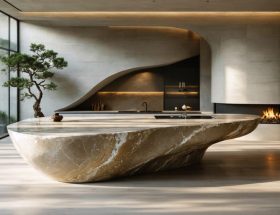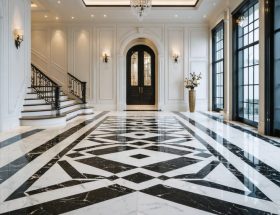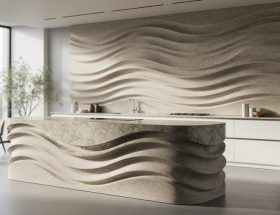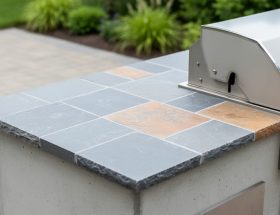
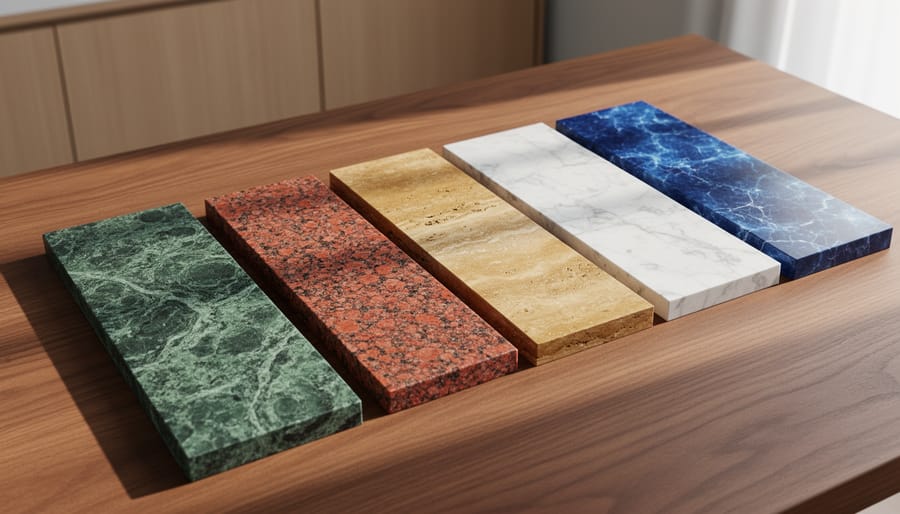
Harmonizing natural stone with wood through the five element system transforms ordinary spaces into balanced, intentional environments that resonate with ancient design wisdom while meeting contemporary aesthetic demands. The five elements—wood, fire, earth, metal, and water—each correspond to specific stone types that, when thoughtfully paired with wooden materials, create interiors and exteriors that feel both grounded and dynamic.
Fire element stones like red granite and carnelian marble bring warmth and energy to wooden frameworks, ideal for statement fireplaces or kitchen islands where activity centers. Earth element stones, including travertine and sandstone in golden and ochre tones, anchor wood cabinetry and flooring with stabilizing, nurturing qualities that work exceptionally well in family gathering spaces. Metal element stones such as white marble and grey limestone introduce clarity and precision, cutting through the organic warmth of wood in modern bathrooms and minimalist kitchens. Water element stones—black granite, slate, and deep blue marbles—add depth and flow when paired with darker wood species, particularly effective in spa-like bathrooms or meditation rooms.
Understanding these elemental correspondences allows you to move beyond simple color coordination into intentional material selection that serves both functional and psychological needs. Whether you’re a homeowner planning a renovation, an architect specifying materials for a wellness center, or a designer crafting a residential sanctuary, the five element framework provides a proven methodology for creating spaces where stone and wood don’t merely coexist but actively enhance each other’s inherent properties.
Understanding the Five Element Stone System
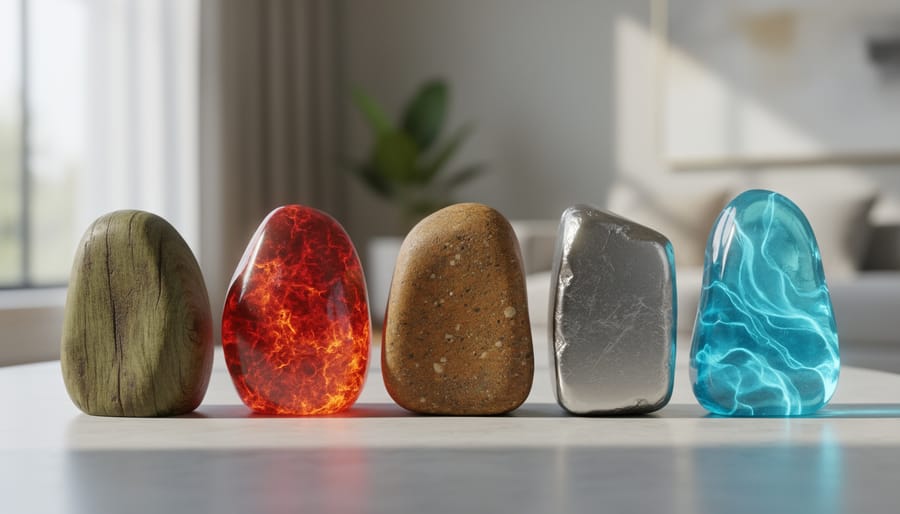
The Philosophy Behind Element-Based Stone Selection
The integration of five element theory with natural stone selection represents a meaningful convergence of ancient Eastern philosophy and contemporary design practices. Rooted in Traditional Chinese Medicine and Feng Shui principles, this approach assigns earth, water, fire, metal, and wood to specific stone characteristics based on color, texture, and visual energy. Modern designers and architects are rediscovering this framework as a sophisticated method for creating harmonious interior and exterior spaces that resonate with occupants on an intuitive level.
When applied thoughtfully, element-based stone selection goes beyond aesthetic appeal to incorporate biophilic design principles that connect inhabitants with natural materials and elemental balance. This methodology provides practical guidance for pairing stones with complementary elements like wood, creating spaces that feel both grounded and dynamic. Each stone’s inherent qualities—whether the cooling tranquility of blue limestone representing water or the warm vitality of amber travertine embodying earth—offer designers a nuanced palette for crafting environments that support specific intentions, from energizing commercial spaces to creating serene residential retreats.
Matching Stone Types to Each Element
Understanding which natural stones align with each element creates a foundation for balanced, harmonious design. This relationship draws from traditional five element theory while considering the inherent properties and visual characteristics of each stone type.
Wood element stones embody growth and vitality through their organic patterns and earthy tones. Travertine, with its naturally porous texture and warm beige to brown colorations, exemplifies this element perfectly. Sandstone also fits here, displaying layered formations that echo wood grain patterns. These stones typically feature horizontal veining and softer, more textured surfaces that suggest natural development over time.
Fire element stones radiate energy through bold colors and dramatic patterns. Red granite varieties, such as Imperial Red or African Red, capture fire’s intensity with their vibrant hues and crystalline structures. Marble with strong red or orange veining, like Rosso Levanto, also embodies this element. The polished finishes common to these stones reflect light dynamically, amplifying their energetic presence.
Earth element stones represent stability and grounding through neutral tones and solid composition. Limestone in beige, cream, and tan shades serves as the quintessential earth stone. Its dense, uniform appearance and natural stone color palette of warm neutrals creates foundational strength in any space. Buff-colored sandstone and certain travertine varieties also fall within this category.
Metal element stones showcase precision through crystalline structures and cool tones. White and gray granites, particularly those with metallic flecks like Silver Pearl or Steel Grey, capture metal’s refined quality. Polished marble in white, gray, or black, such as Carrara or Nero Marquina, reflects metal’s sleek characteristics through its smooth surface and geometric veining patterns.
Water element stones flow through dark colors and fluid patterns. Black granite varieties like Absolute Black or Galaxy Black embody water’s depth. Slate in deep grays and blues, with its natural cleft surface suggesting rippling water, also represents this element. Stones with flowing, wave-like veining patterns reinforce the connection to water’s fluid nature.
Creating Harmonious Fusion: Pairing Element Stones with Wood
Wood Element Stones and Natural Wood: A Natural Partnership
The Wood element in design represents growth, vitality, and natural harmony, making it an ideal partner for organic materials. Green marble varieties, including Verde Guatemala and Rainforest Green, bring lush botanical tones that naturally complement wooden cabinetry, flooring, and furniture. These stones feature verdant veining that echoes the living quality of wood grain.
Forest-toned granite options like Ubatuba and Verde Peacock offer deeper, richer greens with subtle movement that pairs beautifully with both light and dark wood finishes. In kitchens, these stone and wood combinations create grounded, balanced environments where countertops and cabinets work in visual harmony rather than competition.
Wood-grain stones, such as Sequoia Brown granite and certain quartzites with linear patterns, take this partnership further by mimicking the directional flow of natural wood. These materials excel in bathrooms where wooden vanities meet stone countertops, and in living spaces where feature walls benefit from the warmth of faux-bois patterns with stone’s durability.
The key to successful Wood element applications lies in respecting the natural variation within both materials, allowing their organic patterns to interact without overwhelming the space.
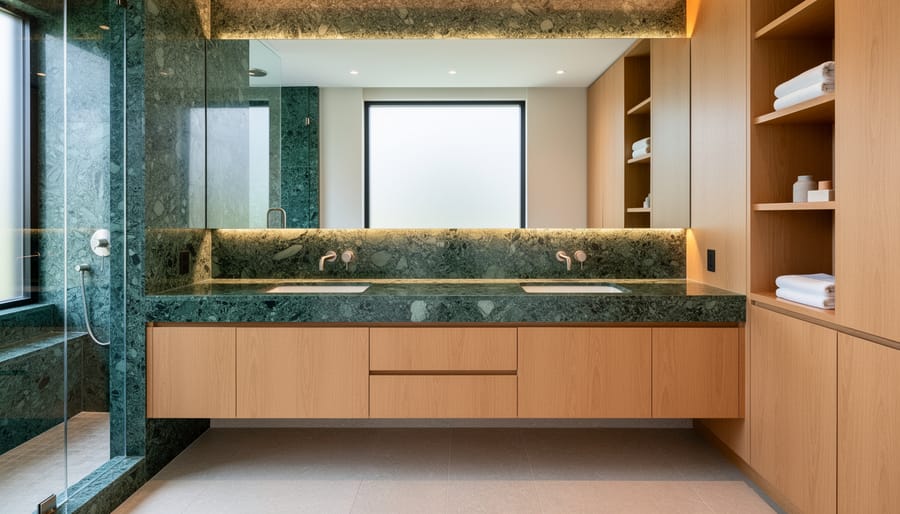
Balancing Contrasting Elements
Creating visual drama through contrast requires thoughtful pairing of fire and water element stones with wood. Fire element stones, characterized by warm reds, oranges, and amber tones found in materials like red travertine or sunset onyx, bring dynamic energy to spaces. When combined with wood, these stones work best alongside lighter, cooler wood species like ash or maple to prevent overwhelming warmth. The contrasting temperatures create balanced visual tension.
Water element stones feature blues, grays, and black tones, including materials like bluestone, soapstone, or gray marble. These cooling influences pair beautifully with warm-toned woods such as walnut, cherry, or teak. The juxtaposition of cool stone against warm wood grain establishes sophisticated depth while maintaining elemental harmony.
Successful contrast balancing involves considering scale and proportion. In kitchen applications, a deep blue soapstone island countertop against honey-toned oak cabinetry demonstrates how mixing stone patterns and materials creates compelling focal points. Similarly, a feature wall combining red travertine with blonde wood paneling delivers energizing visual interest without discord.
The key lies in anchoring contrasts with neutral elements. When pairing bold fire or water stones with wood, incorporate earth element stones in transitional spaces or surrounding surfaces. This creates breathing room, allowing contrasting elements to shine while preventing sensory overload. Consider texture variations too—polished stone against rough-hewn wood intensifies the interplay between elements, enhancing the overall design narrative.
Earth and Metal Element Stones as Grounding Features
Earth and metal element stones serve as essential grounding forces in five element design, providing stability and balance when paired with wood materials. These neutral, calming stones anchor spaces and prevent the dynamic energy of wood from overwhelming interiors.
Earth element stones include warm, grounding materials like travertine, sandstone, and terra cotta-toned limestone. These stones in beige, tan, and ochre hues create a nurturing foundation that stabilizes wood’s upward growth energy. In practical applications, earth-toned stone flooring paired with wood ceiling beams establishes vertical balance, while sandstone accent walls beside wooden furniture pieces create harmonious horizontal relationships.
Metal element stones encompass cool, reflective materials such as granite, marble with gray veining, and polished concrete. Their metallic luster and crystalline structure bring precision and clarity to wood-dominated spaces. White Carrara marble countertops alongside walnut cabinetry exemplify this pairing, where metal’s contractive nature tempers wood’s expansive qualities.
When integrating these grounding elements, consider proportion and placement. Use earth stones for horizontal surfaces like floors and low walls to emphasize stability, while metal stones work effectively as vertical accents or countertops. The combination of grounding stones with wood creates environments that feel both dynamic and secure, satisfying the elemental need for balanced energy flow in residential and commercial spaces.
Practical Applications in Residential and Commercial Settings
Kitchen and Bathroom Applications
Element stones transform kitchens and bathrooms into spaces of natural harmony when thoughtfully integrated with wood elements. In kitchen applications, fire element granites like Imperial Red or Magma Gold create striking countertops that energize the space, particularly when paired with warm walnut or cherry cabinetry. These dramatic red and orange-toned stones anchor the room’s energy while wood cabinets provide grounding balance.
For water element applications, black granite or deep slate countertops paired with lighter wood tones like maple or birch create sophisticated contrasts in modern kitchens. Absolute Black granite countertops complement blonde wood cabinetry beautifully, establishing a calming yet refined atmosphere ideal for water’s flowing nature.
Earth element stones excel in both kitchens and bathrooms through beige travertine or cream limestone. These neutral tones work seamlessly with medium-toned wood vanities in oak or teak, creating spa-like bathroom retreats. Travertine backsplashes in warm taupe paired with reclaimed wood shelving bring organic warmth to kitchen designs.
Metal element stones like white marble or light granite appear stunning as bathroom vanity tops, especially when combined with dark walnut or ebony wood bases. This high-contrast pairing emphasizes metal’s precision and clarity while wood softens the overall aesthetic.
Wood element green marbles, such as Verde Guatemala, make exceptional kitchen islands or bathroom accent walls. When surrounded by natural wood flooring in similar earth tones, these installations create seamless transitions between stone and wood, embodying the wood element’s growth-oriented energy throughout the space.
Living Spaces and Commercial Interiors
Element stones create powerful focal points in both residential and commercial settings, transforming ordinary spaces into environments that balance natural energy and visual appeal. Feature walls constructed from earth element stones like travertine or limestone establish grounding foundations in living rooms and office lobbies, while their neutral tones complement wood flooring and furniture pieces beautifully.
Fireplace surrounds present an ideal opportunity to showcase fire element stones such as red granite or carnelian-toned marble. The warm hues naturally harmonize with wooden mantels and exposed beam ceilings, creating a cohesive design statement that draws the eye while maintaining elemental balance. In commercial applications, reception areas benefit from water element stones like black granite or blue limestone, particularly when paired with rich walnut or mahogany wood accents.
Accent walls using metal element stones, including white marble or quartz varieties, introduce reflective qualities that brighten spaces and pair exceptionally well with lighter wood species like maple or ash. These combinations work effectively in modern office environments and contemporary homes where clean lines meet natural textures.
Wood element stones, such as green marble or jade-toned granite, enhance spaces with organic wood elements. Consider kitchen backsplashes that transition seamlessly from stone countertops to wooden cabinetry, or statement columns in hotel lobbies where stone bases support wooden architectural details. The key lies in selecting stones and woods with complementary grain patterns and color temperatures, ensuring each element enhances rather than competes with the other.
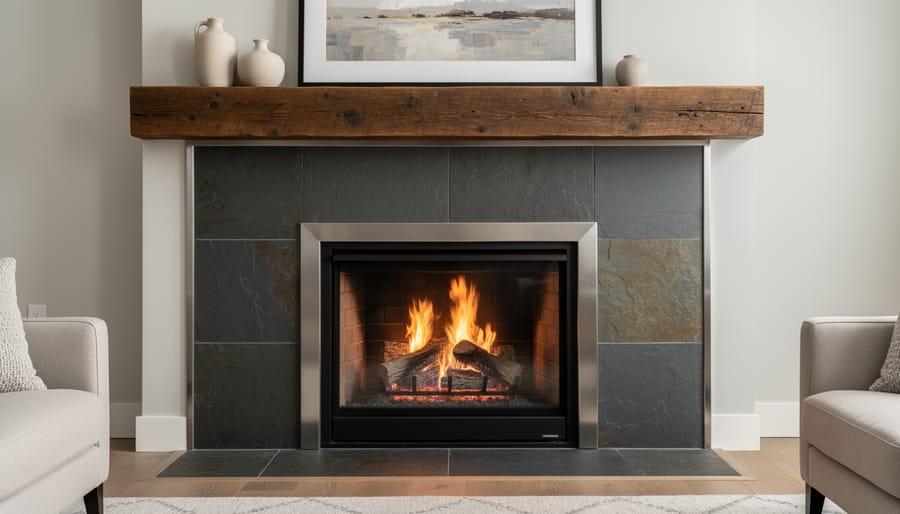
Case Study: A Balanced Mountain Home Renovation
Designer Sarah Chen transformed a dated Colorado lodge into a harmonious retreat by strategically incorporating all five element stones with reclaimed timber. She anchored the foyer with a dramatic black granite fireplace surround representing Water, promoting tranquility upon entry. The kitchen featured white marble countertops for Metal energy, paired with weathered oak cabinetry. In the living area, blue limestone flooring cooled the space while earthen terracotta tiles grounded the mudroom. Green serpentine accents in bathroom vanities introduced Wood element vitality. Finally, red sandstone outdoor steps provided Fire energy, creating welcoming warmth. The reclaimed Douglas fir beams unified all spaces, demonstrating how thoughtful stone selection across rooms creates elemental balance while celebrating natural materials in a cohesive mountain setting.
Selecting and Sourcing Your Five Element Stones
Quality Indicators and What to Look For
When selecting stones to represent the five elements, authenticity and quality directly impact both aesthetic appeal and energetic balance. Start by examining the stone’s origin and composition. Natural stones should display characteristic mineral patterns, color variations, and texture consistent with their geological type. Request certification or provenance documentation when purchasing higher-value pieces.
For element-specific suitability, assess color saturation and consistency. Fire element stones like red granite or carnelian should exhibit vibrant, warm hues without excessive veining that dilutes their energetic presence. Earth element stones benefit from even, grounding tones in yellows and browns. Metal element stones require bright whites or metallic sheens with crystalline clarity.
Evaluate physical durability based on intended use. High-traffic applications demand harder stones with Mohs ratings above 6. Check for structural integrity by inspecting for cracks, chips, or weak spots that compromise longevity. Surface finish matters too—polished stones enhance reflective qualities for water elements, while honed or natural finishes better suit earth applications.
Size and proportion should align with spatial context and design intent. Larger stones make bolder elemental statements in commercial projects, while smaller specimens work well in residential settings. Consider how the stone’s scale relates to accompanying wood elements to maintain visual harmony and balanced energy flow throughout the space.
Working with Stone Suppliers and Contractors
Successfully implementing five element stone and wood designs requires clear communication with your stone supplier and installation team. Start by presenting your elemental concept with visual references—photos, mood boards, or sketches that illustrate how specific stones correspond to each element and how they’ll integrate with wood components.
When discussing your project, explain the five element relationships you’re creating. For example, if pairing Water element black granite countertops with Wood element bamboo cabinetry, your supplier can recommend stone finishes that complement the wood grain while honoring the generative cycle. This upfront clarity helps suppliers suggest appropriate stone types, finishes, and edge profiles.
Address installation sequencing early. Stone and wood expand and contract at different rates, so proper spacing, sealants, and installation methods are essential. Your contractor should understand where elements meet—such as marble backsplashes against wooden shelving—to prevent moisture damage and ensure longevity.
Request samples of stones alongside your selected wood to evaluate color harmony and texture contrast in your actual lighting conditions. Many custom stonework specialists can provide these trial combinations.
Finally, discuss maintenance protocols for both materials. Your installer should seal stone appropriately and advise on cleaning products that won’t damage either stone or adjacent wood surfaces, preserving your elemental design for years to come.
Maintenance and Longevity: Keeping Stone and Wood in Harmony
Element-Specific Stone Care
Each elemental stone category requires specific maintenance protocols to preserve its unique characteristics and extend its lifespan. Understanding these differences ensures your stone installations maintain their beauty and structural integrity over time.
Water element stones like black granite and slate benefit from regular sealing to prevent moisture absorption and staining. Clean these darker stones with pH-neutral cleaners to avoid dulling their polished surfaces. Their dense composition makes them highly durable, but avoid harsh acidic cleaners that can etch the finish.
Earth element stones such as travertine and sandstone are more porous and require frequent sealing, typically every six to twelve months. Use soft brushes for cleaning to prevent surface abrasion, and address spills immediately to prevent deep staining. These stones naturally develop a patina over time, which many designers consider desirable.
Fire element stones like red granite demand minimal maintenance due to their exceptional hardness. Standard cleaning with mild detergent and water suffices for routine care. Reseal annually in high-traffic areas to maintain their vibrant appearance.
Metal element stones, including white marble and limestone, are sensitive to acidic substances. Avoid lemon juice, vinegar, and acidic cleaners entirely. Use coasters and trivets religiously, and clean spills promptly with water and soft cloths to prevent etching and discoloration.
Protecting Stone-Wood Transitions
Stone-wood transitions require careful attention to prevent moisture damage and maintain visual cohesiveness in five element designs. The primary concern at these junctions is water infiltration, which can cause wood rot and stone staining. Install proper flashing or waterproof membranes between materials, especially in horizontal applications like countertops meeting wooden cabinetry or stone flooring transitioning to wood decking.
Use compatible sealers on both materials, ensuring the wood finish won’t bleed into porous stone surfaces. Apply silicone-based caulking in expansion joints to accommodate the different expansion rates of stone and wood while preventing moisture penetration. This is particularly important in climate-controlled interiors where temperature fluctuations occur.
Regular inspection of transition points should occur semi-annually. Look for gaps in caulking, discoloration indicating water exposure, or separation between materials. Clean these areas with pH-neutral solutions that won’t damage either material. For exterior applications, ensure adequate drainage channels direct water away from transition zones. When designing these junctions, consider using threshold stones or metal transition strips that create physical barriers while enhancing the aesthetic contrast between earth and wood elements.
Incorporating five element stones alongside wood in your interior design projects offers a powerful pathway to creating spaces that resonate with both timeless beauty and contemporary sustainability. By thoughtfully selecting stones that represent each element—earth, fire, water, metal, and wood—you can craft environments that feel inherently balanced and harmonious. The natural variations in texture, color, and pattern found in stone provide endless design possibilities, while their pairing with wood creates a warm, organic aesthetic that appeals across diverse architectural styles.
Natural stone’s durability and low-maintenance characteristics make it an investment in long-term value, reducing the need for frequent replacements and contributing to more sustainable building practices. Whether you’re specifying materials for a commercial project or renovating your home, the versatility of stone allows it to adapt seamlessly to minimalist, rustic, or modern interiors.
As you plan your next project, consider how the elemental approach can elevate your design beyond mere aesthetics. The tactile quality of stone combined with wood’s warmth creates sensory-rich spaces that enhance daily living experiences. By embracing this philosophy, you’re not just selecting materials—you’re crafting environments that nurture well-being and stand the test of time.