Showing 28 Result(s)
Conceptual representation of culturally significant gemstones such as jade, turquoise, and sapphire integrated into modern architectural designs, highlighting cultural motifs and global market influences.
Cultural and Regional Stone Usage

How Cultural Gems Shape Regional Stone Markets (And Your Design Choices)

Gemstones transcend their physical beauty to embody the living heritage of civilizations, serving as powerful cultural ambassadors across centuries. From the jade markets of Asia to the turquoise traditions of the American Southwest, the cultural significance of stones continues to shape global markets and design preferences.
Today’s collectors and designers recognize that understanding a gemstone’s cultural context isn’t just about appreciation—it’s essential for …

A conceptual illustration of a factory assembly line depicting seven types of manufacturing waste affecting profits, including overproduction, excess inventory, unnecessary transportation, motion inefficiencies, waiting times, over-processing, and defects.
Installation and Manufacturing

Manufacturing Waste That’s Eating Your Profits (And How to Stop It)

In today’s competitive manufacturing landscape, waste reduction has become a critical factor separating industry leaders from their competitors. Modern manufacturing processes typically generate seven distinct types of waste that significantly impact operational efficiency and bottom-line results. From excess inventory tying up valuable capital to unnecessary motion depleting worker productivity, these wasteful elements collectively account for up to 95% of all manufacturing costs in typical…

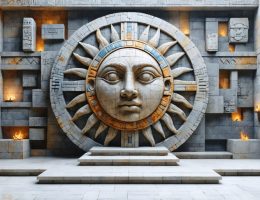
An artistic fusion of the Aztec Sun Stone and modern Aztec-inspired architectural patterns, symbolizing the enduring influence of Aztec stone artistry on contemporary design.
Stone in Cultural Heritage

How Aztec Stone Art Shaped Ancient Architecture (And Still Inspires Today)

Carved into the very soul of Mesoamerican civilization, Aztec stone art stands as one of humanity’s most remarkable achievements in sculptural mastery. From colossal monuments to intricate ceremonial pieces, these masterworks combine raw power with sophisticated artistic vision, reflecting a complex cosmology and unparalleled technical skill. The Aztec sculptors transformed volcanic rock into dynamic representations of gods, rulers, and cosmic forces, using only stone tools and an intimate understanding of their materials. Their works weren’t merely decorative—they served as physical manifestations of Aztec religious beliefs…

A quarry worker with natural stone tools on one side and a high-tech 3D digital twin of a stone project on a screen with holographic data on the other side, symbolizing the integration of traditional craftsmanship and digital innovation.
Digital Design and Modeling

3D Digital Twins Transform Natural Stone Projects: From Quarry to Installation

In the rapidly evolving landscape of digital construction and design, 3D digital twins are revolutionizing how we interact with natural stone projects. These exact virtual replicas capture every detail, texture, and characteristic of physical stone installations, enabling unprecedented levels of analysis, planning, and optimization.
Imagine walking through a detailed virtual representation of your stone project before a single slab is cut. From quarry to final installation, 3D digital twins are transforming how architects, designers, and stone professionals visualize, plan, and execute their projects. This technology creates a …

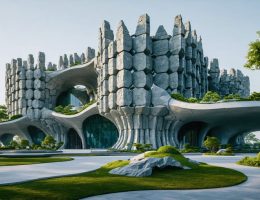
An innovative architectural design inspired by nature's stone formations, featuring hexagonal and organic patterns reminiscent of basalt columns and the Lotus Temple, surrounded by greenery.
Stone Art and Design

Nature’s Stone Secrets: How Biomimicry Transforms Modern Architecture

Nature’s genius meets human innovation in the remarkable world of biomimicry architecture, where buildings mirror the efficiency, resilience, and beauty of natural systems. From the Eastgate Centre in Harare, Zimbabwe – inspired by self-cooling termite mounds – to the lotus-like structure of Singapore’s ArtScience Museum, architects are revolutionizing sustainable design by studying Earth’s time-tested solutions.
The integration of biomimicry in modern architecture goes beyond mere aesthetic imitation. These buildings actively adapt to their environments, regulate temperature, conserve energy, and …

A split-screen illustration depicting the transformation of a traditional marble countertop into a modern interactive smart surface with touch controls and LED lighting.
Technical Aspects

Smart Stone: How Modern Tech Transforms Natural Stone Surfaces

Technology integration transforms business operations from siloed systems into interconnected powerhouses of efficiency and innovation. In today’s digital landscape, a well-crafted technology integration strategy serves as the backbone of successful digital transformation, enabling organizations to harness the full potential of their tech investments while minimizing disruption and maximizing ROI.
The convergence of cloud computing, artificial intelligence, and automation has created unprecedented opportunities for businesses to revolutionize their operations. However, implementing these technologies requires more than just …

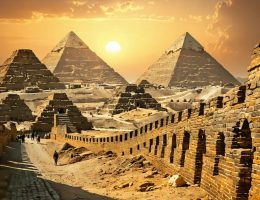
A montage of iconic ancient stone monuments, including the Great Pyramid of Giza, Petra's carvings, and the Great Wall of China, illuminated by a golden sunset, symbolizing their eternal durability and cultural significance.
Stone-Inspired Architectural Legacies

Stone Marvels That Survived Time: Ancient Wonders Still Standing Today

Standing defiantly against time, seven ancient monuments continue to captivate our imagination and reveal cultural stories carved in stone. These architectural marvels—from the towering Great Pyramid of Giza to the intricate stonework of Petra—demonstrate humanity’s mastery over stone and our enduring drive to create lasting legacies.
While countless ancient structures have crumbled, these seven wonders persist through millennia thanks to revolutionary engineering techniques and the …

Visual depiction of a balanced scale representing equity and efficiency in natural stone taxation. One side of the scale shows a quarry with workers, while the other side illustrates a corporate office, highlighting the fair tax distribution between small businesses and large distributors in the stone industry.
Economic Aspects

Natural Stone Taxes Made Simple: Equity and Efficiency in Action

The two foundational principles of taxation – equity and efficiency – shape how natural stone businesses operate and grow in today’s complex market. While equity ensures fair distribution of tax burden across industry players, from small quarries to large distributors, efficiency focuses on minimizing administrative costs and market distortions. These principles directly impact pricing strategies, inventory management, and operational decisions throughout the stone supply chain. Understanding how they work together helps stone industry professionals make informed business choices while maintaining compliance with tax …