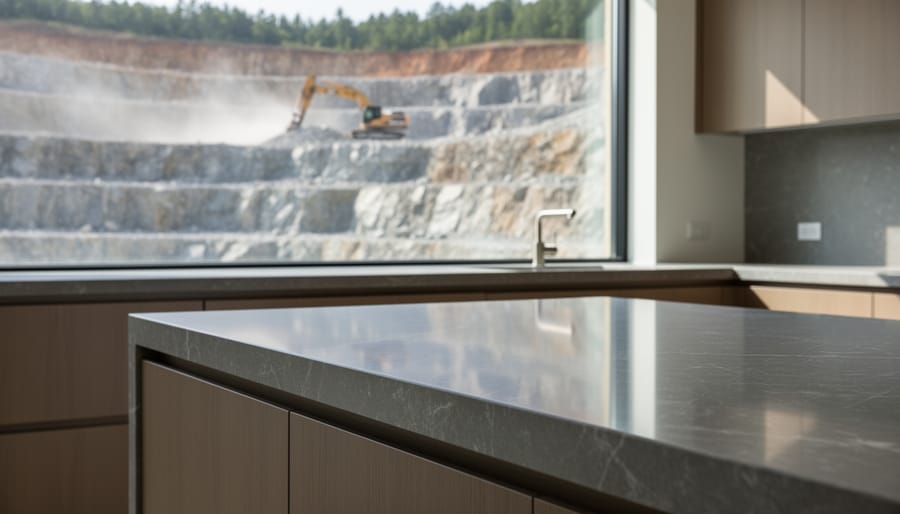
The natural stone industry harbors a troubling secret: many crystals and stone materials reach your countertop or design project through supply chains marked by environmental destruction, unfair labor practices, and community displacement. Understanding ethical sourcing isn’t merely about feeling good—it directly impacts the quality, authenticity, and long-term value of your stone investments.
Ethical sourcing in natural stone procurement means verifying that materials are extracted using environmentally responsible methods, workers receive fair wages and safe conditions, and local communities benefit from quarrying operations rather than suffer from them. This verification requires examining quarry certifications, demanding supply chain transparency from distributors, and prioritizing suppliers who provide documented proof of their sourcing practices.
The stakes extend beyond moral considerations. Unethical quarrying operations frequently compromise stone quality through rushed extraction methods, mislabel materials to inflate prices, and create legal liabilities for architects and designers who unknowingly specify problematic materials. Recent investigations have exposed child labor in mica mines, toxic waste dumping near marble quarries, and deceptive origin claims that leave professionals vulnerable to reputational damage.
Today’s informed consumers and industry professionals increasingly demand accountability. They recognize that ethical sourcing protects not only vulnerable workers and ecosystems but also ensures material authenticity, regulatory compliance, and project integrity. This guide provides the knowledge and tools to navigate sourcing decisions confidently, distinguishing genuinely responsible suppliers from those merely engaged in greenwashing while delivering the practical verification methods that transform good intentions into measurable impact.
The Hidden Cost of Beautiful Stone: What ‘Ethically Sourced’ Really Means
Labor Rights and Fair Wages in Stone Quarries
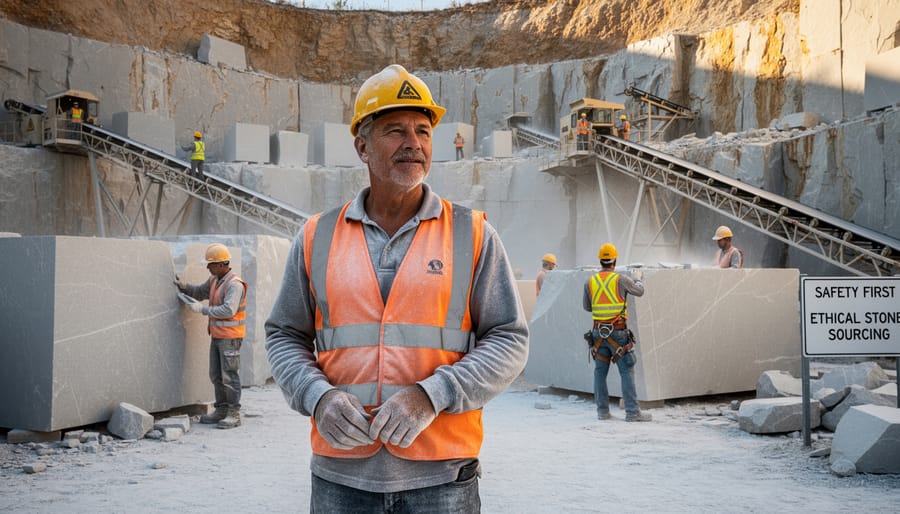
The human cost of stone extraction remains one of the most critical ethical considerations in the natural stone industry. Working conditions in quarries vary dramatically across regions, with significant disparities between operations in developed nations and those in countries with weaker labor protections.
In many developing countries where high-quality stone deposits exist, quarry workers face hazardous conditions with minimal safety equipment. Reports from India, China, and parts of Africa document workers operating heavy machinery without proper training, exposure to silica dust without respiratory protection, and inadequate medical support when injuries occur. Daily wages in these regions can fall below $5, barely enough to sustain families.
Child labor presents an ongoing concern, particularly in sandstone and granite quarries across South Asia. Organizations like the International Labour Organization have documented children as young as 10 working in Indian quarries, performing dangerous tasks from breaking stones to hauling materials. These practices persist due to poverty, lack of educational access, and insufficient enforcement of existing labor laws.
Fair wage standards differ considerably by location. European quarries typically comply with regulated minimum wages and provide comprehensive worker benefits, while operations in Madagascar or Myanmar often lack formal wage structures entirely. Ethically sourced stone certification programs now require third-party audits verifying fair compensation, reasonable working hours, and prohibition of child labor. When sourcing stone materials, requesting documentation of these audits helps ensure your purchases support dignified working conditions rather than exploitation.
Environmental Stewardship in Crystal and Stone Mining
Responsible crystal and stone mining begins with minimizing environmental disruption at extraction sites. Leading ethical suppliers implement precision extraction techniques that reduce the mining footprint, utilizing selective harvesting methods rather than large-scale quarrying operations. These approaches preserve surrounding ecosystems while accessing valuable mineral deposits.
Water management represents a critical component of sustainable mining operations. Ethical operations establish closed-loop water systems that filter and recycle water used in extraction and processing, preventing contamination of local water sources. Advanced filtration removes sediments and minerals before water returns to natural systems, protecting aquatic habitats and downstream communities.
Land rehabilitation programs distinguish responsible miners from conventional operations. Progressive companies develop detailed restoration plans before extraction begins, setting aside topsoil and native plants for eventual site recovery. Following mining completion, these organizations actively restore landscapes, reintroducing indigenous vegetation and recreating natural drainage patterns to support wildlife return.
Ecosystem preservation extends beyond the immediate mining area. Ethical suppliers conduct comprehensive environmental impact assessments, identifying sensitive habitats and establishing protected buffer zones around rare species populations. Some operations partner with conservation organizations to monitor biodiversity and implement adaptive management strategies that respond to ecological changes.
Energy efficiency improvements further reduce environmental impact. Modern sustainable operations increasingly utilize renewable energy sources for extraction equipment and processing facilities, significantly lowering carbon emissions. These comprehensive environmental stewardship practices demonstrate that crystal and stone mining can coexist with ecosystem health when operators prioritize long-term environmental responsibility over short-term extraction efficiency.

The Problem with Conventional Stone and Crystal Mining
High-Risk Regions and Red Flags
Understanding which regions and stone types carry elevated ethical risks empowers you to make informed sourcing decisions. While problematic practices exist globally, certain areas have documented patterns of concerning labor conditions and environmental degradation.
Madagascar stands out as a region of particular concern for crystal and gemstone extraction. Despite its rich mineral deposits, the country faces challenges with child labor in mica and quartz mining operations, inadequate safety measures for workers, and minimal regulatory oversight. Similarly, the Democratic Republic of Congo presents significant ethical red flags, particularly for coltan and certain mineral extracts used in various applications, where armed conflict funding and exploitative labor practices remain prevalent.
In South Asia, marble and granite quarries in parts of India have documented issues with bonded labor and hazardous working conditions, though this varies significantly by region and operator. Myanmar’s gem trade, especially jade and ruby extraction, continues to face scrutiny due to connections with military operations and human rights violations.
Specific stone types warrant extra scrutiny regardless of origin. Lapis lazuli from Afghanistan often funds conflict operations. Brazilian quartz and amethyst markets, while generally more regulated, still include operations with poor labor practices. Chinese granite and marble production varies widely in ethical standards, requiring careful vetting of specific suppliers.
These red flags don’t mean all products from these regions are unethical. Many responsible operators exist in these areas and actively work to improve conditions. However, stones from these sources demand enhanced due diligence. Request detailed documentation about the specific quarry location, ask for third-party certifications, and verify worker welfare programs. When documentation is vague or unavailable, consider it a warning sign to explore alternative suppliers with transparent, traceable supply chains.
How to Verify Ethical Sourcing: Certifications and Standards That Matter
Recognized Certification Programs for Natural Stone
When sourcing quality stone materials, understanding legitimate certification programs helps verify ethical claims. While the crystal and gemstone industry lacks universal certification, the broader natural stone sector offers several recognized standards.
The NSF/ANSI 373 Sustainable Materials standard provides one of the most comprehensive frameworks for natural stone certification. This program evaluates extraction practices, worker welfare, environmental impact, and supply chain transparency. Products meeting this standard undergo third-party audits covering everything from quarry operations to final processing.
The Natural Stone Institute’s Vetta Sustainable Products Program offers industry-specific certification focused on environmental stewardship and social responsibility. Vetta-certified companies must demonstrate reduced carbon emissions, water conservation efforts, and safe working conditions throughout their operations.
For European markets, the CE marking indicates compliance with EU health, safety, and environmental protection standards, though it focuses primarily on product performance rather than ethical sourcing practices.
The Responsible Mica Initiative, while specific to mica mining, demonstrates how certification programs address labor exploitation and child labor concerns prevalent in certain stone sectors. Similar frameworks are gradually emerging for other stone types.
It’s important to note that certification guarantees vary significantly. Some programs verify only environmental impact, while others include labor practices and community engagement. Always review what specific criteria each certification covers rather than assuming comprehensive ethical verification. Request documentation from suppliers and verify certifications through the issuing organization’s database to ensure authenticity and current compliance status.

Questions to Ask Your Stone Supplier
Before purchasing natural stone, equip yourself with these essential questions to verify ethical sourcing claims. Start by asking your supplier: Where exactly was this stone quarried, and can you provide documentation proving its origin? Request third-party certifications such as NSF/ANSI 373 for sustainable extraction or ISO 14001 for environmental management systems.
Inquire about labor practices by asking: What wages and working conditions do quarry workers receive? Are there independent audits verifying fair labor standards? Reputable suppliers should willingly share this information or connect you with quarrying operations directly.
Environmental stewardship matters too. Ask: What measures are taken to minimize ecological impact during extraction? How is water managed, and what happens to quarry sites after depletion? Request details about land restoration plans and biodiversity protection initiatives.
For transparency, question the supply chain: How many intermediaries handle this stone before reaching me? Can you trace each step from quarry to final delivery? Shorter supply chains typically indicate greater accountability.
Finally, ask about certifications and memberships in ethical trade organizations. If suppliers hesitate or provide vague answers, consider it a red flag and continue your search elsewhere.
Sustainable Sourcing Practices in Modern Stone Quarrying
Case Study: Ethical Marble and Granite Operations
Several quarries worldwide are demonstrating that ethical natural stone extraction is both achievable and economically viable. Polycor, a North American quarry operator, has implemented comprehensive sustainability programs across their marble and granite operations. Their Vermont quarries achieved carbon neutrality in 2021 through renewable energy integration and reforestation initiatives. The company also pioneered transparent supply chain tracking, allowing architects and designers to trace stone from extraction to delivery.
In India, where much of the world’s granite originates, the Sustainable Stone Initiative has helped transform operations at select quarries. Participating facilities have established worker safety protocols, eliminated child labor, and implemented proper ventilation systems to reduce silica dust exposure. One Karnataka-based quarry reduced workplace injuries by 73 percent over three years while increasing productivity through equipment modernization and worker training programs.
European operations provide additional models for ethical practices. Italian marble quarries in the Apuan Alps have adopted strict environmental regulations, including mandatory land restoration and water recycling systems that reuse 90 percent of processing water. These quarries also maintain living wages and provide comprehensive health coverage for workers.
The measurable outcomes from these operations demonstrate clear benefits: reduced environmental impact, improved worker health and safety, enhanced product traceability, and maintained profitability. These case studies prove that ethical sourcing doesn’t require compromising on quality or economic viability, offering a blueprint for industry-wide transformation.
The Role of Transparency in the Stone Supply Chain
Understanding exactly where your stone originated and the conditions under which it was extracted has become essential for ethical procurement. Supply chain transparency transforms vague marketing claims into verifiable facts, enabling architects, designers, and consumers to make genuinely informed decisions about their natural stone selections.
Traditional stone supply chains often involve multiple intermediaries between quarry and end user, creating opacity that can conceal unethical practices. A slab might pass through exporters, importers, distributors, and fabricators before reaching your project, with each handoff potentially obscuring critical information about extraction methods, labor conditions, and environmental impact. This fragmentation makes it difficult to verify whether sustainability claims hold up under scrutiny.
Modern traceability systems address this challenge by documenting each step from quarry to installation. Leading ethical suppliers now provide detailed provenance documentation that includes quarry location, extraction date, processing facilities involved, and transportation routes. Some operations photograph specific blocks at extraction and maintain digital records that follow the material throughout its journey. This level of detail allows buyers to confirm that their stone genuinely comes from responsibly managed sources rather than operations with questionable practices.
Blockchain technology is emerging as a powerful tool for supply chain verification in the stone industry. By creating immutable digital records of each transaction and transfer, blockchain systems prevent the falsification of origin documents and ensure that certificates of authenticity cannot be altered. Several quarrying operations in regions known for ethical extraction have begun implementing blockchain tracking, giving buyers unprecedented confidence in their material’s provenance.
Supply chain visibility matters because it enables accountability. When every stakeholder knows their practices will be documented and potentially scrutinized, the incentive to maintain high standards increases dramatically. Transparent supply chains also help identify and eliminate bad actors who might otherwise hide behind layers of intermediaries. For projects prioritizing sustainability credentials, comprehensive traceability provides the evidence needed to support green building certifications and satisfy stakeholder expectations about responsible material sourcing.
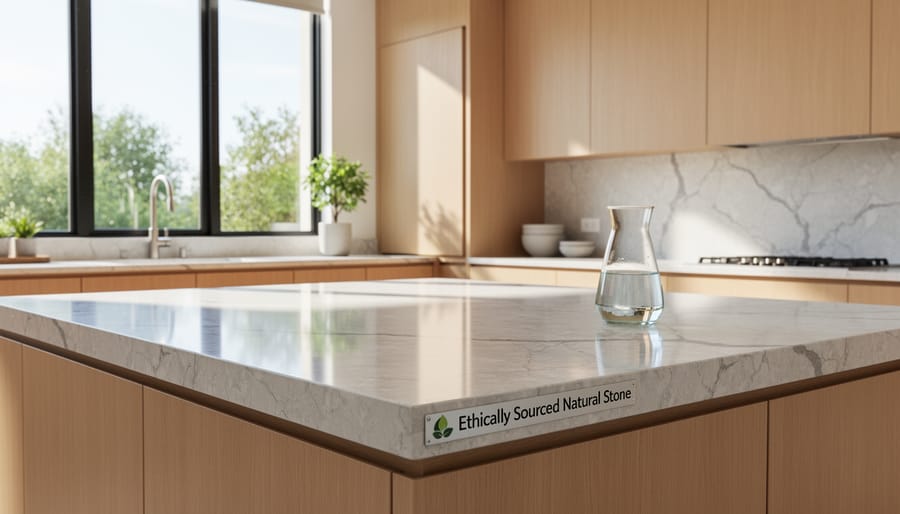
Choosing Ethically Sourced Stone for Your Project
Cost Considerations and Budget Planning
Ethically sourced crystals and natural stone typically cost 15-30% more than conventionally sourced materials, a difference that reflects fair labor practices, environmental restoration efforts, and transparent supply chain documentation. While this initial price gap may seem significant, understanding the long-term value proposition helps justify the investment.
The higher upfront cost covers third-party certifications, proper worker compensation, environmental remediation at quarry sites, and comprehensive traceability systems. These factors ensure your natural stone countertops or architectural features don’t carry hidden social or environmental costs that could impact your brand reputation or project sustainability goals.
Budget-conscious buyers can employ several strategies to access ethically sourced materials without overextending financially. Consider specifying ethical sourcing for high-visibility applications while using certified reclaimed stone for less prominent areas. Many suppliers offer payment plans or volume discounts for verified ethical materials, making larger projects more feasible.
The durability and timeless appeal of responsibly sourced stone also translates to better return on investment. These materials typically come with superior quality control, reducing replacement costs and maintenance expenses over the product lifecycle. For commercial projects, the marketing value of documented ethical sourcing increasingly resonates with consumers, potentially offsetting the premium through enhanced brand positioning and customer loyalty.
Request detailed cost breakdowns from suppliers to understand exactly what the ethical sourcing premium covers, ensuring transparency aligns with your values and budget parameters.
Choosing ethically sourced natural stone represents more than a purchasing decision—it’s an investment in transparency, environmental stewardship, and fair labor practices that ripple through entire supply chains. As we’ve explored, the path to responsible sourcing requires diligence: verifying supplier certifications, asking detailed questions about quarry operations, and prioritizing traceability from extraction to installation. While ethical sourcing may initially seem complex, the framework is straightforward—seek third-party certifications, demand documentation, and build relationships with suppliers who demonstrate genuine commitment to sustainable practices.
The impact of your choices extends far beyond individual projects. By supporting ethical suppliers, you contribute to improved working conditions in quarries, reduced environmental degradation, and market pressure that encourages industry-wide reform. Start by auditing your current suppliers, establishing ethical sourcing criteria for future projects, and educating clients about the value of responsibly sourced materials. Remember that perfect solutions may not always exist, but consistent progress toward more ethical practices creates meaningful change. Your decision to prioritize ethically sourced stone sets a professional standard and helps build a more sustainable, equitable natural stone industry.