Imagine walking through a building that doesn’t exist yet, examining the exact veining patterns of marble slabs before they’re installed, or identifying potential installation conflicts months before construction begins. This is the transformative power of 3D digital twins in natural stone design and construction.
A 3D digital twin is a precise virtual replica of a physical asset—in this case, natural stone materials, installations, and entire building projects—that bridges the gap between design vision and construction reality. Unlike traditional 2D drawings or static 3D models, digital twins are dynamic, data-rich representations that integrate seamlessly with Building Information Modeling (BIM) systems, creating a single source of truth for every stakeholder in a stone project.
For architects and designers working with natural stone, this technology addresses a fundamental challenge: each slab is inherently unique. Traditional project workflows often leave material selection and coordination to chance, resulting in costly surprises during installation. Digital twins eliminate this uncertainty by capturing the exact characteristics of specific stone pieces—dimensions, color variations, veining patterns, and physical properties—then positioning them virtually within the complete building model.
The implications extend far beyond visualization. When integrated with BIM platforms, 3D digital twins enable clash detection between stone elements and other building systems, accurate quantity takeoffs that account for material waste, and sequencing simulations that optimize installation workflows. This convergence of natural stone innovations and digital technology is fundamentally changing how the industry approaches design, fabrication, and installation—reducing errors, minimizing waste, and delivering outcomes that precisely match design intent.
What Are Natural Stone Digital Twins?

The Technology Behind Stone Digital Twins
Creating accurate stone digital twins requires sophisticated capture technologies that can record every nuance of natural stone’s appearance. Three primary methods work together to achieve this level of detail.
3D scanning technology uses laser or structured light systems to capture the physical dimensions and surface geometry of stone slabs. These scanners measure millions of points across the stone surface, creating a precise three-dimensional point cloud that maps every contour, texture variation, and relief feature down to sub-millimeter accuracy.
Photogrammetry complements 3D scanning by capturing the stone’s visual characteristics through high-resolution photography. Multiple images taken from different angles are processed using specialized software to reconstruct the stone’s color palette, veining patterns, and subtle tonal variations. This technique excels at documenting the intricate beauty that makes each stone slab unique, from dramatic marble veining to the crystalline structure of granite.
Digital modeling brings these technologies together, combining geometric data from 3D scans with visual information from photogrammetry to create comprehensive digital representations. Advanced algorithms process this data to generate accurate texture maps, reflectance properties, and material behaviors. The result is a digital twin that faithfully reproduces not just the stone’s appearance but also its dimensional properties for precise project planning.
These technologies integrate seamlessly with smart technology for material selection platforms, enabling designers to visualize exact stone slabs in their projects before installation. This combination ensures that what clients see digitally matches what they’ll receive physically, eliminating surprises and enhancing project confidence.
Why Natural Stone Needs Digital Twins More Than Other Materials
Natural stone presents unique challenges that make digital twin technology particularly valuable compared to conventional building materials. Unlike manufactured products with consistent specifications, every natural stone slab possesses distinctive veining patterns, color variations, and geological characteristics. This inherent variability means no two pieces are ever identical, creating significant visualization and planning difficulties for design professionals.
The stakes are considerably higher with natural stone due to its premium cost and limited availability. When architects specify a particular marble or granite for a project, they’re working with finite material from specific quarries. A single miscalculation in layout or an unexpected visual clash can result in expensive waste and project delays. Traditional 2D drawings and physical samples fail to convey how large-format stone installations will appear in actual spaces, leaving substantial room for costly surprises.
Digital twins address these challenges by creating precise virtual replicas of individual slabs, complete with their unique characteristics. Designers can visualize exact vein matching across multiple pieces, test different layout configurations, and preview how specific slabs will look under various lighting conditions and spatial contexts. This capability is transformative when working with book-matched or sequenced stone installations, where precise alignment is critical to achieving the desired aesthetic effect.
Furthermore, natural stone’s substantial weight and dimensional constraints require careful structural planning. Digital twins integrate this information into the broader Building Information Modeling workflow, enabling teams to identify potential installation challenges before materials arrive on site, ultimately reducing waste and ensuring optimal material utilization.
BIM Integration: Bringing Stone into the Digital Construction Workflow
How Stone Digital Twins Work with BIM Software
Stone digital twins integrate seamlessly with major Building Information Modeling platforms, creating a powerful connection between modern technology in production and design implementation. The compatibility extends across industry-standard software including Autodesk Revit, ArchiCAD, Vectorworks, and BIM 360, allowing architects and designers to work within their preferred environments without workflow disruption.
When a stone digital twin is imported into BIM software, it carries far more information than a simple 3D model. Each digital twin embeds comprehensive material properties including exact dimensions, weight calculations, density measurements, and structural load-bearing capabilities. The model also contains detailed visual data such as high-resolution surface textures, veining patterns, color variations, and finish specifications that accurately represent the physical stone slab.
Beyond physical characteristics, these digital models include crucial project information like quarry origin, batch numbers, availability status, and even sustainability certifications. This embedded data allows design teams to make informed decisions about material selection while ensuring specification accuracy throughout the project lifecycle.
The interoperability functions through standard file formats including IFC (Industry Foundation Classes) and proprietary plugins developed specifically for stone applications. These tools enable real-time synchronization between stone supplier databases and design software, ensuring that architects always work with current inventory information and accurate material properties.
For contractors and fabricators, the embedded information facilitates precise quantity takeoffs, cost estimations, and installation planning. The digital twin can be extracted from the BIM model with all its data intact, streamlining communication between design teams, suppliers, and installation crews while reducing the risk of material mismatches or specification errors during construction.

Real-Time Collaboration Across Project Teams
One of the most significant advantages of 3D digital twins in natural stone projects is their ability to serve as a single source of truth for all project stakeholders. When architects, designers, fabricators, and installers work from the same digital model, the risk of miscommunication drops dramatically.
Traditional workflows often involve multiple file formats, hand-drawn specifications, and verbal communications that can lead to costly misinterpretations. A contractor might misread dimensions, a fabricator could misunderstand installation sequences, or designers might specify stone that doesn’t align with structural requirements. Each handoff between teams introduces potential errors.
Digital twins eliminate these disconnects by providing every team member access to the same accurate, up-to-date stone data. When an architect makes a design revision, fabricators immediately see the changes reflected in their production specifications. If an installer identifies a site condition that requires adjustment, the entire team can review options using the same digital model.
This synchronized collaboration extends beyond basic geometry. Digital twins can embed critical information like stone vein orientation, finish specifications, support requirements, and installation sequences directly into the 3D model. A fabricator in the shop can see exactly how each piece should be oriented to match the designer’s aesthetic vision, while installers on-site access step-by-step assembly instructions linked to specific stone components.
The result is a more efficient workflow where teams spend less time clarifying ambiguous information and more time executing high-quality stonework that matches the original design intent.
Practical Benefits for Your Natural Stone Project
Accurate Visualization Before Purchase
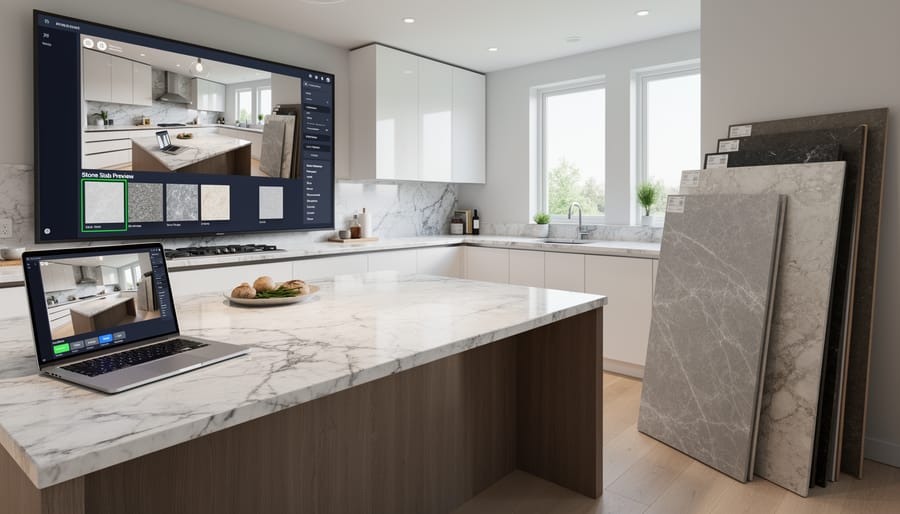
One of the most significant challenges in natural stone selection has always been visualization. A small sample in a showroom rarely conveys how a full slab will appear once installed, especially when considering the unique veining patterns, color variations, and movement that make natural stone so distinctive. Digital twins solve this problem by creating precise virtual representations of actual stone slabs that clients can view in the context of their specific project.
Using AR visualization technology powered by 3D digital twins, designers and clients can see exactly which section of a slab will be used for countertops, which will become backsplashes, and how the veining will flow across surfaces. This level of detail eliminates guesswork and reduces the anxiety that often accompanies significant material investments.
The technology captures every nuance of the stone, from subtle color shifts to dramatic veining patterns, allowing stakeholders to make informed decisions before fabrication begins. Clients can compare multiple slabs side by side in their virtual space, experiment with different orientations, and ensure the stone’s natural characteristics complement their design vision. This capability is particularly valuable for book-matched installations or projects requiring multiple slabs, where continuity and visual harmony are essential. The result is greater confidence in material selection and significantly fewer surprises during installation.
Optimized Material Usage and Reduced Waste
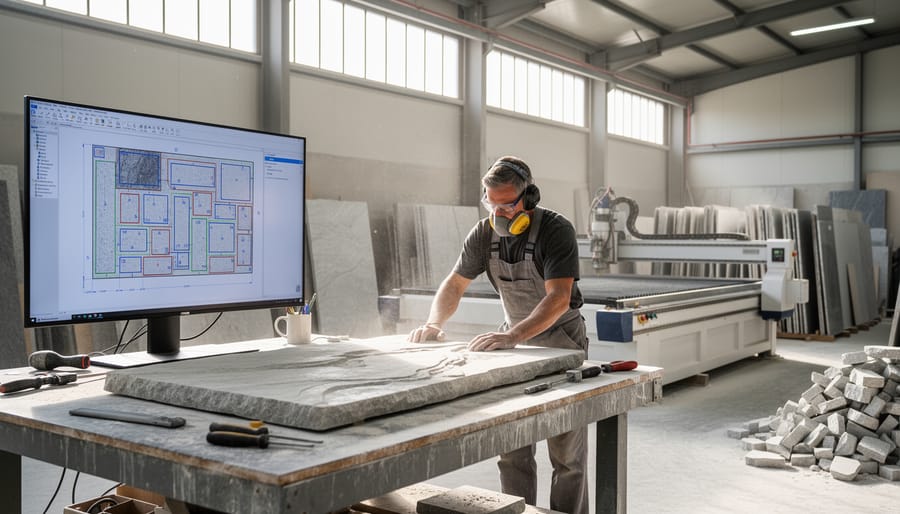
Natural stone represents a significant material investment in any project, making efficient usage critical for both economic and environmental reasons. Digital twins revolutionize how fabricators approach material optimization by creating precise virtual models before making a single cut in the physical slab.
Using 3D digital twin technology, fabricators can digitally map entire stone slabs, including their unique veining patterns, color variations, and any natural imperfections. This comprehensive digital inventory allows project teams to strategically plan how each piece will be cut and positioned, ensuring the most visually appealing sections are used for prominent areas while maximizing overall yield.
The software calculates optimal nesting patterns, determining how to arrange multiple pieces from a single slab with minimal waste between cuts. This digital planning identifies the most efficient cutting sequences and helps avoid costly mistakes that would otherwise result in unusable material. When CNC technology transforms fabrication processes, these digital plans translate directly to machine instructions, ensuring precision execution.
The financial impact is substantial. Industry studies show that digital planning can reduce material waste by 15-25% compared to traditional layout methods. For high-end materials like rare marbles or exotic granites costing hundreds of dollars per square foot, this optimization translates to thousands of dollars saved per project. Additionally, reduced waste means fewer slabs need to be quarried and transported, lowering the environmental footprint of stone projects while preserving natural resources for future use.
Clash Detection and Installation Planning
One of the most valuable applications of 3D digital twins in natural stone projects is their ability to identify installation conflicts before materials ever reach the job site. By creating a precise virtual replica of both the stone elements and the surrounding environment, project teams can detect potential problems during the planning phase rather than discovering them during installation when corrections become exponentially more expensive.
Digital twins excel at identifying spatial conflicts that might otherwise go unnoticed until installation day. For example, a marble countertop design might inadvertently interfere with plumbing fixtures, electrical outlets, or HVAC components. The digital twin reveals these clashes by overlaying the stone installation with building systems, allowing teams to adjust measurements, modify fabrication plans, or redesign layouts before cutting begins. This capability is particularly valuable in renovation projects where existing conditions may not match original blueprints.
Beyond spatial conflicts, digital twins help catch measurement errors and material miscalculations. A recent hotel lobby project prevented a costly mistake when the digital twin revealed that the specified travertine wall panels would create clearance issues with door swings. The team adjusted panel dimensions and installation sequences virtually, avoiding a situation that would have required on-site modifications and material waste.
The financial impact is substantial. Industry estimates suggest that clash detection through digital twins can reduce installation delays by 30-40% and minimize material waste by identifying errors before fabrication. For high-value natural stone projects, where materials and skilled labor represent significant investments, this preventive approach transforms project economics while ensuring installations proceed smoothly and efficiently.
Long-Term Asset Management
A 3D digital twin serves as a permanent, comprehensive record of your stone installation, providing significant advantages throughout the building’s lifecycle. This digital archive preserves critical information about each stone element, including quarry origin, batch numbers, fabrication specifications, and installation dates. When maintenance or repairs become necessary years later, facilities managers can instantly access this data to source matching materials from the same quarry or lot, ensuring seamless repairs that maintain visual consistency.
For renovations and expansions, digital twins eliminate guesswork. The model documents exact dimensions, joint patterns, and structural connections, allowing architects and contractors to plan modifications without extensive site investigations. This historical record proves particularly valuable for heritage buildings or high-profile installations where preserving aesthetic integrity is paramount. The digital twin also tracks warranty information and recommended maintenance schedules, enabling proactive care that extends the lifespan of stone installations. By maintaining this living digital record, property owners protect their investment and simplify future decision-making, whether addressing routine maintenance, emergency repairs, or ambitious renovation projects.
Real-World Applications and Case Studies
Digital twins are transforming natural stone projects across residential and commercial sectors, moving from theoretical promise to practical implementation. Here’s how real projects are leveraging this technology today.
In high-end residential kitchens, digital twins are revolutionizing the selection and installation process. A recent luxury home project in California used 3D digital twin technology to help homeowners visualize Calacatta marble countertops in their actual kitchen space before purchase. The digital model incorporated the exact veining patterns from photographed slabs, allowing the designer to rotate and position the stone virtually to achieve the desired aesthetic. This approach eliminated the guesswork traditionally associated with natural stone selection and reduced material waste by 30 percent, as homeowners could commit confidently to their choice before fabrication began.
Commercial installations demonstrate even more sophisticated applications. A prominent hotel renovation in New York utilized digital twins to coordinate the installation of 5,000 square feet of bookmatched marble in their lobby. The project team created precise digital replicas of each stone slab, complete with vein mapping and color variations. These models were integrated into the building information modeling system, enabling the general contractor, stone fabricator, and installation team to collaborate seamlessly. The result was a 25 percent reduction in installation time and zero material rejections on-site.
Museums and cultural institutions are also adopting this technology for restoration projects. A historic building restoration in Boston employed digital twins to match replacement stone panels with century-old limestone facades. By creating detailed 3D models of the existing stonework, including weathering patterns and patina, conservators could specify quarry blocks that would blend naturally after installation and aging. This precision preserved the building’s architectural integrity while meeting modern structural requirements.
In the commercial office sector, a recent corporate headquarters project used digital twins to optimize natural stone flooring layouts across multiple floors. The technology allowed designers to test different laying patterns, predict material requirements with 99 percent accuracy, and identify potential installation challenges before breaking ground. This proactive approach saved the project approximately $150,000 in material costs and prevented a three-week delay in the construction schedule.
These case studies demonstrate that digital twin technology delivers measurable benefits including reduced waste, improved collaboration, faster project timelines, and enhanced client satisfaction. As the technology becomes more accessible, its adoption across natural stone projects of all scales continues to accelerate.
Getting Started with Digital Twins for Your Stone Project
What to Ask Your Stone Supplier
When evaluating stone suppliers and fabricators for your project, asking the right questions about digital twin capabilities can ensure seamless integration with your design workflow. Start by inquiring whether they provide 3D digital twins of their stone slabs and what level of detail these models include. Ask specifically about file formats—do they offer compatibility with industry-standard formats like .RVT for Revit, .IFC for open BIM platforms, or .OBJ and .FBX for other 3D applications?
Understanding their scanning technology is equally important. Find out what equipment they use to capture stone surfaces and whether their digital twins include accurate vein mapping, color representation, and dimensional data. Question how frequently they update their digital inventory and whether you can access these models through a cloud-based platform or downloadable library.
For BIM integration, ask if their digital twins include embedded material properties, technical specifications, and metadata that populates automatically in your project documentation. Confirm whether they provide technical support for implementing their digital assets into your workflow and if they offer training resources. Finally, inquire about customization options—can they create digital twins of specific slabs you’ve selected, and what is the turnaround time for these custom models?
Software and Tools You’ll Need
Working with 3D digital twins for natural stone projects doesn’t require expensive or complicated software. The accessibility of viewing tools has made this technology practical for all project stakeholders, regardless of their technical background.
For professionals already using Building Information Modeling (BIM) workflows, digital twins integrate seamlessly with platforms like Autodesk Revit, ArchiCAD, and Vectorworks. These programs can import and display detailed 3D models with embedded material specifications, allowing designers to incorporate stone elements directly into their project files.
However, clients and contractors who don’t use BIM software have numerous free viewing options. Web-based viewers like Autodesk Viewer and BIMx allow anyone with an internet browser to explore 3D models, rotate views, and access embedded information without installing specialized software. Many stone suppliers now provide simple links that open directly in standard browsers, making collaboration effortless.
Mobile applications have further democratized access to digital twins. Apps like BIMx for iOS and Android enable on-site teams to view models from their phones or tablets, comparing digital specifications with physical installations in real-time. This mobility ensures that everyone from project managers to installation crews can reference accurate stone details wherever they work, improving communication and reducing errors throughout the construction process.
The integration of 3D digital twins into natural stone projects represents a transformative shift in how we approach this timeless material. By bridging the gap between stone’s inherent natural variability and the precision demanded by modern construction, digital twin technology makes natural stone more accessible, predictable, and manageable than ever before. Rather than diminishing the unique character that makes stone desirable, this technology actually helps preserve and showcase its beauty while eliminating the uncertainties that have traditionally complicated its use.
For architects and designers, digital twins provide the confidence to specify natural stone with accuracy, knowing exactly how each slab will appear and perform within their vision. For fabricators and installers, the technology streamlines workflows, reduces waste, and minimizes costly errors. For building owners, it ensures that the beauty and investment in natural stone are protected and documented throughout the building’s lifecycle.
As the construction industry continues to embrace digital transformation and BIM integration becomes standard practice, the adoption of 3D digital twin technology for natural stone will only accelerate. Early adopters are already experiencing the competitive advantages and project benefits this technology delivers.
When planning your next natural stone project, seek out suppliers and fabricators who have invested in digital twin capabilities. Ask about their scanning technology, digital inventory systems, and BIM integration processes. By choosing partners who embrace this technology, you ensure your project benefits from both the timeless elegance of natural stone and the precision of modern digital innovation.