
Step into the future of architectural visualization with augmented reality walls, a groundbreaking technology transforming how we experience and select natural stone innovations and building materials. This powerful tool merges digital imaging with physical spaces, allowing designers, architects, and homeowners to instantly visualize different stone patterns, textures, and finishes on any wall surface before making permanent decisions. By projecting high-resolution, true-to-scale images onto existing walls, AR technology eliminates the guesswork from material selection while reducing costly mistakes and client revisions. The technology’s real-time visualization capabilities, combined with precise material rendering and pattern matching, have revolutionized the traditional approach to architectural design and stone selection, making it an indispensable tool for modern construction and renovation projects.
What is an Augmented Reality Wall?
Core Technology Components
The foundation of augmented reality walls rests on several sophisticated technologies working in harmony. At the core is a high-resolution projection system, coupled with advanced motion and depth sensors that track user movements and interactions. These components work alongside smart technology in stone selection to create seamless interactive experiences.
The system employs computer vision algorithms that recognize spatial features and gestures, while real-time rendering software generates responsive visual elements. A crucial component is the calibration system, which ensures perfect alignment between the projected content and the physical wall surface, particularly important when working with textured materials like natural stone.
Supporting these elements is a powerful processing unit that handles complex calculations for 3D mapping and environmental analysis. The display technology utilizes specialized coating materials that enhance projection visibility while maintaining the natural characteristics of the wall surface. Integration software ties these components together, enabling smooth communication between sensors, processors, and display systems while maintaining real-time responsiveness.
This technological framework allows for precise visualization of different stone patterns, textures, and finishes, making it an invaluable tool for design professionals and homeowners alike.
Real-time Visualization Features
AR walls employ sophisticated visualization technology to render stone patterns, textures, and finishes with remarkable accuracy in real-time. The system uses high-resolution cameras and advanced image processing algorithms to capture the physical space, while powerful rendering engines project photorealistic stone textures onto the designated wall surface.
Users can instantly switch between different stone varieties, from polished marble to rough-cut granite, seeing how each option would look in their actual space. The technology accurately simulates natural stone characteristics, including veining patterns, color variations, and surface reflectivity, providing a true-to-life preview of the final installation.
The visualization system also accounts for environmental factors such as lighting conditions and viewing angles, adjusting the displayed stone appearance accordingly. This dynamic rendering ensures that users can evaluate how different stone options will look throughout the day and from various perspectives in the room.
Advanced AR systems can even display grout lines, dimensional patterns, and custom laying configurations, allowing for complete visualization of the finished installation before any physical work begins.

Benefits for Stone Selection
Accurate Pattern Visualization
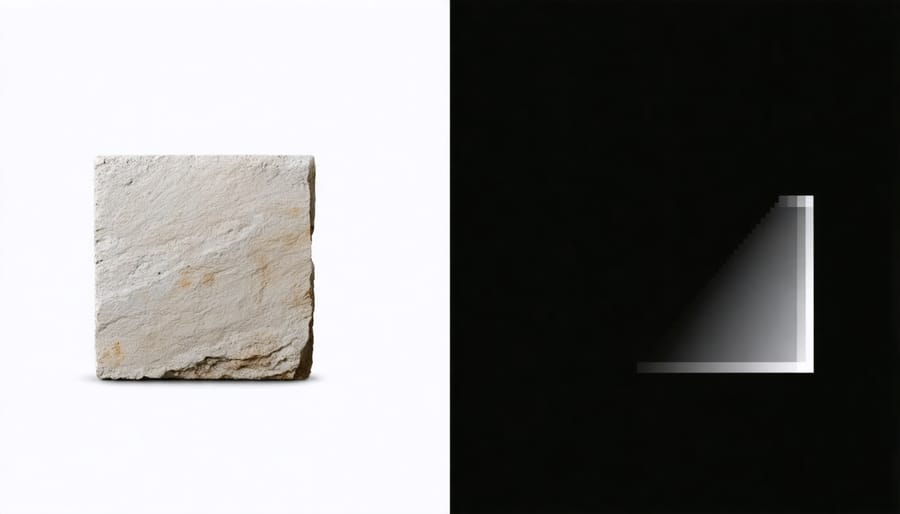
AR wall technology revolutionizes stone pattern visualization by providing an exceptionally accurate preview of how natural stone surfaces will appear in modern interior design applications. The system uses high-resolution scanning and mapping to capture intricate details of stone veining, color variations, and natural patterns, projecting them onto walls in real-time and true-to-scale dimensions. This advanced visualization allows designers and clients to see exactly how book-matched marble patterns will flow across surfaces, how veining will connect at corners, and how different lighting conditions will affect the stone’s appearance. The technology eliminates guesswork by showing precise pattern continuity and helping identify potential aesthetic challenges before installation, ensuring the final result matches the client’s vision perfectly.
Cost and Time Savings
Implementing augmented reality technology for wall design significantly reduces both time and financial investments in the selection process. Traditional methods often require multiple site visits, physical samples, and time-consuming mock-ups. With AR visualization, clients and designers can instantly preview countless stone varieties and patterns on their walls, eliminating the need for physical samples and reducing transportation costs. The technology also minimizes the risk of costly mistakes by providing accurate representations of how different stone options will look in the actual space. Project timelines can be compressed from weeks to hours, as decision-makers can quickly evaluate multiple options and make confident choices without waiting for physical samples or creating elaborate presentation boards. This streamlined process typically results in a 40-60% reduction in the selection phase timeline and substantial savings in sample procurement costs.
Practical Applications
Showroom Integration
Leading stone suppliers are revolutionizing their showrooms with AR wall installations, creating immersive experiences for customers. These interactive displays allow visitors to visualize different stone varieties in various settings and lighting conditions without the need for physical samples. Customers can swipe through vast collections of marble, granite, and other natural stones, viewing them in real-time at full scale. The technology enables instant visualization of veining patterns, color variations, and finish options, making the selection process more efficient and engaging. Many showrooms now feature dedicated AR zones where clients can experiment with different stone combinations and see how they complement existing design elements. This integration has proven particularly valuable for architects and designers during client presentations, helping to bridge the gap between imagination and reality.

Augmented reality walls represent a transformative development in the natural stone industry, revolutionizing how professionals and consumers visualize and select stone materials. As technology continues to advance, we can expect even more sophisticated AR applications that offer enhanced precision, realistic textures, and seamless integration with design software. The growing adoption of AR walls by showrooms, architects, and designers signals a shift toward more efficient, sustainable, and client-focused practices in stone selection and project planning. This technology not only reduces the environmental impact of physical samples but also streamlines the decision-making process, ultimately leading to better outcomes and higher customer satisfaction. As we look ahead, AR walls will likely become a standard tool in the natural stone industry, bridging the gap between digital visualization and physical implementation while driving innovation in design and installation processes.