Stone strength isn’t measured by compression tests alone—it’s proven through centuries of athletes hoisting rounded boulders overhead and masons building cathedrals that still stand today. When Highland Games competitors lift 300-pound stones or modern architects specify marble for high-traffic lobbies, they’re both relying on the same fundamental material properties: compressive strength, tensile resistance, and structural integrity under real-world stress.
The stones used in traditional lifting sports reveal critical insights about natural stone performance. Atlas stones, husafell stones, and lifting rocks selected by strongmen worldwide share characteristics that translate directly to residential and commercial applications. Dense granite withstands repeated impacts without fracturing. Smooth river stones demonstrate how natural weathering affects surface durability. The grip required to lift a 400-pound boulder mirrors the slip resistance needed in flooring applications.
Understanding stone strength through this dual lens—athletic performance and architectural specification—provides practical knowledge for material selection. A limestone block that crumbles under point-load pressure in competition would fail equally under concentrated furniture weight in a home. Conversely, basalt dense enough to challenge elite athletes offers exceptional durability for kitchen countertops and exterior cladding.
This connection between traditional strength sports and modern stone applications bridges historical craftsmanship with contemporary engineering standards, offering actionable insights for anyone selecting natural stone for projects requiring proven durability and long-term performance.
The Origins of Regional Stone Lifting Traditions

From Quarry to Competition
In quarries throughout history, workers developed practical methods to assess stone quality before extraction and transport. Dense, non-porous stones that could withstand repeated handling without cracking became prized for their reliability. Workers naturally tested these properties through lifting, carrying, and maneuvering stones during their daily labor, building intimate knowledge of which formations possessed superior structural integrity.
This practical assessment evolved into informal challenges among quarry workers, who competed to lift increasingly heavy stones as demonstrations of both personal strength and their ability to identify quality material. These contests served a dual purpose: they celebrated physical prowess while simultaneously validating the stone’s durability under stress. A stone that remained intact through repeated competitive lifting proved its worthiness for construction projects, connecting directly to ancient stone cutting traditions where material selection determined structural longevity.
By the 19th century, these informal quarry competitions formalized into organized strength sports, particularly in Scotland, Iceland, and Basque regions. Specific stones gained legendary status, their smooth surfaces worn by generations of lifters. Today, stone lifting competitions preserve this heritage while offering modern insights into natural stone properties that remain relevant for architects and designers evaluating material performance.
Notable Regional Stone Lifting Traditions
Stone lifting traditions have emerged from stone quarrying communities worldwide, where testing one’s strength against heavy stones became both practical necessity and cultural ritual. These traditions provide remarkable insights into stone durability and handling characteristics that remain relevant today.
Scotland’s legendary Dinnie Stones represent perhaps the most challenging lifting feat in history. Weighing a combined 733 pounds, these granite boulders have tested competitors for over 150 years. Their irregular shape and awkward dimensions reveal how granite’s density and structural integrity withstand repeated stress without fracturing, qualities that translate directly to architectural applications.
Iceland’s Husafell Stone, a roughly 409-pound volcanic rock, served as a traditional test for aspiring strongmen. This basalt specimen demonstrates exceptional compression strength and weather resistance, having endured Iceland’s harsh climate for generations without degradation. These properties make basalt ideal for outdoor installations and heavy-traffic areas.
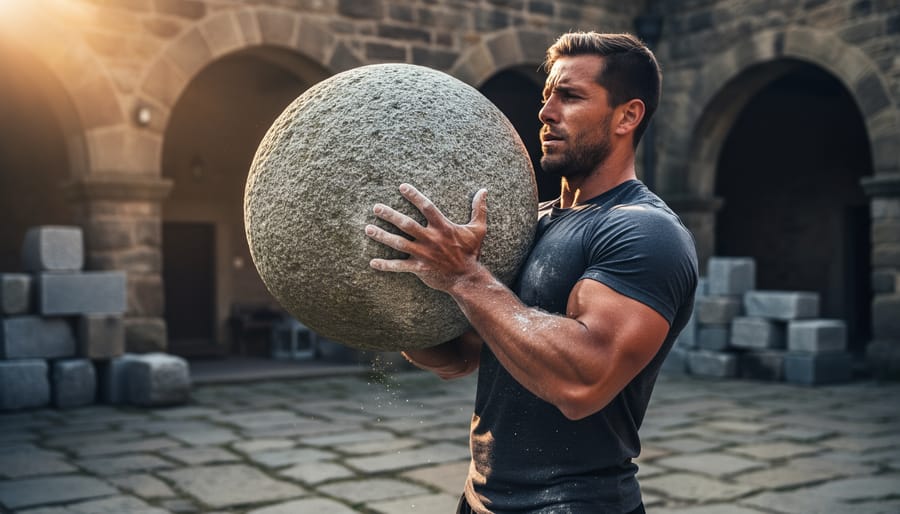
Atlas Stones, spherical stones ranging from 100 to 400 pounds, originated in strongman competitions but echo ancient lifting practices. Typically crafted from granite or sandstone, these stones showcase how different materials respond to concentrated loads and repeated handling. Granite’s crystalline structure provides superior load-bearing capacity, while sandstone’s porosity affects both weight distribution and surface durability.
The Basque Country’s harri-jasotzea tradition features lifting rectangular limestone blocks, demonstrating this sedimentary stone’s reliable compression characteristics. These regional practices offer practical demonstrations of stone properties that architects and designers can reference when selecting materials for demanding applications.
What Stone Lifters Actually Test: Practical Strength Properties
Structural Integrity Under Stress
Traditional stone lifting puts natural stone through extreme physical challenges that mirror, and often exceed, real-world architectural stresses. When athletes hoist massive stones onto platforms or carry them across distances, they’re essentially conducting practical stress tests that reveal crucial information about the material’s structural integrity.
Compressive strength becomes immediately apparent during lifting. The concentrated pressure points where hands grip the stone test its ability to withstand intense localized forces without crumbling or spalling. Quality stone distributes this pressure effectively throughout its crystalline structure, while inferior specimens may develop surface cracks or fragment under the concentrated load. This same principle applies when stone countertops support heavy appliances or when building facades bear structural weight.
Fracture resistance faces scrutiny during the transport phase. As stones are carried, they experience dynamic loading—constant shifts in weight distribution and minor impacts that probe for weaknesses. Stones with uniform density and minimal internal flaws maintain their integrity, while those containing hidden fissures, veining inconsistencies, or porous sections may develop propagating cracks. These same vulnerabilities become critical concerns in high-traffic flooring or exterior cladding exposed to thermal expansion.
Perhaps most revealing is the drop test, where stones impact the ground after a failed lift. This sudden shock load exposes internal flaws invisible to standard inspection. Stones that shatter completely typically contain significant pre-existing fractures or compositional weaknesses, while those that remain intact demonstrate superior structural cohesion—exactly the durability professionals seek when specifying stone for demanding applications like exterior pavers or commercial installations.
Surface Durability and Grip
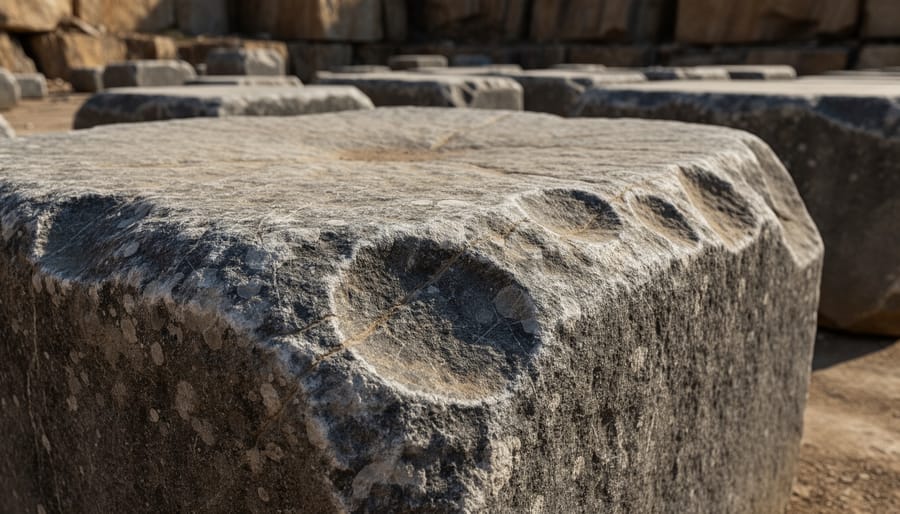
The surface of lifting stones tells a remarkable story about durability through visible wear patterns that develop from repeated handling. Traditional atlas stones and husafell stones bear distinctive smoothing on grip zones, where countless hands have grasped the same positions over decades or even centuries. These polished areas indicate a stone’s abrasion resistance—the harder and denser the stone, the slower these wear patterns develop.
Granite and basalt typically show minimal surface degradation even after years of intensive use, while softer sedimentary stones like sandstone may develop noticeable grooves and depressions within months of regular handling. This real-world testing provides valuable insights for architectural applications where foot traffic, cleaning, or environmental exposure create similar wear conditions.
Surface texture changes also reveal weathering potential. Stones that maintain consistent grip characteristics despite moisture exposure demonstrate superior resistance to freeze-thaw cycles and chemical weathering. Competition stones frequently exposed to outdoor elements show how different stone types respond to temperature fluctuations and water absorption.
For designers and architects, examining high-use lifting stones offers a practical preview of how materials will perform in demanding commercial environments like restaurant floors, public plazas, or building facades. The握 grip zones on well-used stones essentially simulate decades of real-world wear compressed into observable patterns, making them unexpected but valuable indicators of long-term surface performance.
Density and Weight Distribution
Understanding a stone’s density provides crucial insights into its structural reliability and performance in building applications. Density, measured as weight per unit volume, serves as a key indicator of how tightly packed the mineral composition is within the stone. Higher-density stones typically offer superior strength, durability, and resistance to weathering compared to their lighter counterparts.
When evaluating stone for construction projects, professionals often assess the weight-to-size ratio as a quick field test for quality. A granite slab that feels surprisingly heavy for its dimensions generally indicates excellent compression strength and minimal porosity, making it ideal for high-traffic applications or load-bearing installations. Conversely, a lighter-than-expected stone may contain micro-fissures or higher porosity, potentially compromising longevity.
This principle has practical implications across applications. Dense basalt and granite excel in outdoor paving where freeze-thaw cycles demand resilience, while moderately dense limestone balances workability with adequate strength for interior features. Weight distribution also matters during installation, as denser materials require enhanced structural support systems. By understanding the relationship between density and performance characteristics, designers and homeowners can make informed decisions that ensure both aesthetic appeal and long-term structural integrity in their stone selections.
Modern Stone Strength Measurements vs. Traditional Knowledge
Laboratory Testing Standards
The American Society for Testing and Materials (ASTM) has established comprehensive standards to measure stone strength properties, providing reliable benchmarks for selecting natural stone in various applications. ASTM C170 measures compressive strength by applying force to stone samples until failure, revealing how much weight a stone can support vertically. This test is particularly relevant for columns, load-bearing walls, and flooring installations.
For flexural strength, which indicates a stone’s resistance to bending, ASTM C880 and C99 provide standardized testing methods. These measurements help determine appropriate thicknesses for countertops, cladding panels, and other spanning applications. The modulus of rupture test specifically evaluates how much stress stone can withstand before breaking under bending forces.
Additional industry standards include ASTM C97 for measuring absorption and bulk specific gravity, which correlate with overall durability and freeze-thaw resistance. European standard EN 1926 offers comparable testing protocols, ensuring global consistency in stone evaluation.
These laboratory standards translate directly to real-world performance. A granite with high compressive strength exceeding 19,000 psi suits high-traffic commercial flooring, while marble with moderate flexural strength around 1,500 psi works well for interior wall applications with proper installation methods.
What Traditional Methods Reveal That Labs Miss
Traditional stone lifting practices offer invaluable insights that laboratory compression tests simply cannot capture. While lab equipment measures how much vertical pressure a stone can withstand before cracking, real-world handling reveals different vulnerabilities that matter tremendously for practical applications.
Stone lifters throughout history have observed that certain stones develop hairline fractures not from crushing force, but from repeated impacts and lateral stress during transport and manipulation. This impact resistance tells us which varieties can withstand the inevitable bumps and drops that occur during installation, renovation, or even daily use in high-traffic environments. Granite and basalt consistently demonstrate superior shock absorption compared to more brittle limestone or marble varieties, explaining why they’ve been preferred for thresholds, steps, and load-bearing applications for millennia.
Equally important is what we learn about long-term durability under handling. Stones used repeatedly in lifting competitions develop wear patterns that mirror decades of use in architectural settings. The edges that chip easily during athletic practice are the same edges that will fail first on countertops and flooring. Stone varieties that maintain their integrity through countless lifting sessions demonstrate reliable performance characteristics for commercial installations where maintenance access may be limited.
These traditional methods also reveal how moisture absorption affects structural integrity over time. Porous stones that perform adequately in controlled lab conditions may weaken significantly when subjected to repeated wetting and drying cycles during outdoor use. This practical knowledge helps designers select appropriate materials for fountains, exterior cladding, and wet environments where laboratory data alone provides incomplete guidance.
Stone Types Featured in Traditional Strength Sports
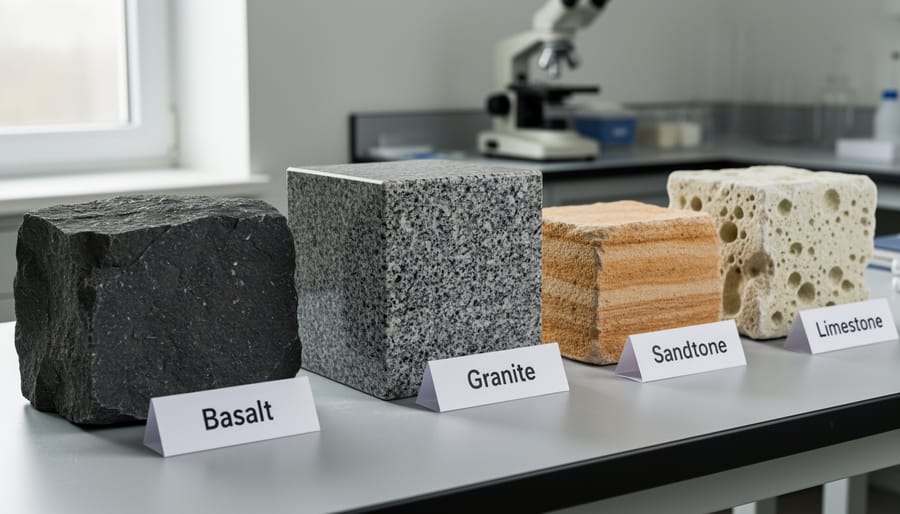
Granite: The Champion’s Choice
In traditional stone lifting competitions, granite consistently emerges as the material of choice, and for good reason. Competitors worldwide gravitate toward granite lifting stones because the material’s exceptional strength-to-weight ratio provides reliable performance during intensive training and competition.
Granite’s dominance in these events directly reflects its compressive strength, typically ranging from 19,000 to 25,000 PSI (pounds per square inch). This remarkable density means granite stones maintain structural integrity even when subjected to repeated impacts, drops, and the immense forces generated during lifting maneuvers. Unlike softer stones that might fracture or chip under stress, granite withstands the punishment of competitive use year after year.
The crystalline structure of granite contributes significantly to its resilience. Composed of interlocking quartz, feldspar, and mica crystals, granite distributes stress throughout its mass rather than concentrating force at weak points. This same characteristic makes granite ideal for high-traffic flooring, outdoor installations, and architectural elements exposed to weather extremes.
Competition organizers also favor granite for practical reasons beyond pure strength. The stone’s resistance to moisture absorption prevents degradation from outdoor storage, while its hardness resists surface wear from handling. These properties translate directly to real-world applications where longevity and minimal maintenance matter most, whether in kitchen countertops, building facades, or public monuments requiring decades of dependable performance.
Basalt and Volcanic Stones
Basalt and other volcanic stones have earned their reputation in strength sports through exceptional density and durability. These igneous rocks, formed from rapidly cooled lava, possess a crystalline structure that creates remarkable compressive strength, often ranging from 15,000 to 30,000 PSI. In Iceland, where stone lifting traditions run deep, athletes historically preferred local basalt for its combination of manageable weight and superior grip properties created by the stone’s naturally rough surface texture.
The dense composition of volcanic stones makes them considerably heavier than sedimentary alternatives, with basalt typically weighing 180-190 pounds per cubic foot. This high density results from minimal porosity, meaning the stone absorbs little water and resists weathering exceptionally well. Stone lifters quickly discovered what modern engineers now confirm: volcanic rocks maintain structural integrity under extreme stress conditions.
Beyond athletics, these same properties make basalt highly valued in construction applications requiring durability. The stone’s resistance to chemical weathering and freeze-thaw cycles explains its prominence in Icelandic architecture and its growing popularity in contemporary landscape design. When selecting stones for projects demanding long-term performance, volcanic varieties offer proven resilience backed by centuries of real-world testing in the most demanding environment imaginable: competitive strength sports.
Regional Variations and Local Stone
Throughout history, communities have shaped their stone-lifting traditions around locally available materials, offering valuable insights into regional stone characteristics. Scottish lifters favor granite from the Highlands, prized for its exceptional density and resistance to weathering. Basque regions utilize dense sandstone rounded by rivers, demonstrating how natural erosion reveals stone integrity over time. Iceland’s volcanic basalt stones showcase extreme durability under harsh environmental conditions. These traditional practices teach us that communities inherently understood which stones would withstand repeated stress without fracturing. For architects and designers, observing which stones endured generations of handling provides practical evidence of compressive strength and structural reliability, informing modern material selection for projects requiring long-term performance and minimal maintenance.
Applying Stone Lifting Insights to Construction and Design
Selecting Stone for High-Traffic Applications
The lessons learned from traditional stone lifting sports provide valuable insights when selecting natural stone for high-traffic environments. Stones used in athletic competitions endure repeated impacts, compression forces, and handling stress—similar to the demands placed on flooring, countertops, and outdoor installations in commercial and residential settings.
When choosing stone for entryways, commercial lobbies, or busy kitchens, prioritize materials with proven compressive strength and impact resistance. Granite, basalt, and dense limestone varieties that perform well under concentrated weight in lifting contexts also excel in applications where furniture movement, foot traffic, and daily wear are constant concerns. The surface characteristics that prevent slipping during athletic lifts—natural texture and grip—translate directly to safety considerations in wet areas and exterior paving applications.
Durability testing in stone sports reveals how different geological formations respond to stress cycles. Stones with tight crystalline structures and minimal porosity maintain structural integrity longer, making them ideal for high-use countertops and public spaces. Similarly, varieties resistant to micro-fracturing from repeated handling demonstrate superior performance in environments requiring long-term durability with minimal maintenance. Understanding these performance parallels helps architects and homeowners make informed decisions that balance aesthetic preferences with practical longevity requirements.
Understanding Load-Bearing Requirements
Understanding how stone performs under compression is essential for making informed decisions about structural applications. When selecting stone for load-bearing elements like columns, walls, and foundations, compressive strength ratings directly determine safety margins and longevity. For instance, granite with compressive strength exceeding 20,000 psi can confidently support multi-story structures, while softer limestone at 8,000 psi suits single-story applications or non-critical decorative columns.
Lintels spanning doorways and windows require careful calculation. The stone must not only withstand vertical loads from above but also resist potential cracking from concentrated stress points at support edges. Historic structures demonstrate this principle beautifully—many centuries-old stone lintels remain intact because builders intuitively selected dense, high-strength materials like granite or basalt for these critical spans.
Foundation applications demand stones that maintain integrity under constant compression while resisting moisture infiltration and freeze-thaw cycles. Basalt and dense sandstone excel in these roles, combining high compressive strength with low porosity. Modern sustainable stone architecture leverages these time-tested principles, matching specific stone types to structural demands while minimizing material waste and maximizing building performance across decades of service.

Evaluating Stone Quality Beyond the Spec Sheet
While technical specifications provide valuable baseline data, experienced stone professionals know that hands-on assessment reveals crucial details about material integrity. Before committing to a stone selection, conduct a thorough visual inspection for natural fissures, veining patterns, and color consistency. Dense, uniform coloring typically indicates stronger composition, while excessive veining or pitting may signal potential weak points.
The tap test, borrowed from traditional stone cutting practices, offers immediate insight into internal structure. Gently strike the stone with a small hammer or metal object—a clear, resonant ring suggests solid density, while a dull thud may indicate hidden cracks or voids within the material. This simple technique has helped stonemasons identify quality pieces for centuries.
Handle smaller samples whenever possible to assess weight relative to size. Surprisingly heavy pieces often contain superior mineral density and structural integrity. Examine edges and corners closely, as these vulnerable areas demonstrate how the stone will perform under stress in real-world applications.
Request samples from different parts of the quarry block, since stone quality can vary significantly even within a single extraction. Compare multiple pieces side-by-side to identify consistency issues before large-scale ordering. These traditional evaluation methods complement modern testing protocols, providing a complete picture of stone performance potential.
Common Misconceptions About Stone Strength
Myth: All Stone is Equally Strong
One of the most persistent misconceptions about natural stone is that it possesses uniform strength across all varieties. In reality, stone strength varies dramatically between different types and even among specimens extracted from the same quarry. Granite, for instance, typically exhibits compressive strength ranging from 19,000 to 50,000 psi, while marble averages between 10,000 to 20,000 psi. Limestone and sandstone often measure lower still, sometimes below 8,000 psi depending on their composition.
These variations stem from multiple factors including mineral composition, crystalline structure, porosity, and the geological conditions under which the stone formed. A dense basalt will substantially outperform a porous travertine in load-bearing applications. Even within a single quarry, variations in density, natural fissures, and mineral concentrations create measurable differences in performance characteristics.
For strength sport enthusiasts lifting natural stones, these inconsistencies present unique challenges, as two similarly sized stones can behave completely differently. For architects and designers, understanding these variations is essential for proper material selection. Specifying granite for high-traffic commercial flooring makes practical sense, while choosing softer limestone for the same application could lead to premature wear and costly replacements.
Myth: Heavier Stone is Always Stronger
A common misconception is that a heavier stone automatically means greater strength. While weight and strength are related, they don’t tell the complete story. Density, which contributes to weight, is just one factor among many that determine a stone’s structural integrity.
In stone lifting sports, competitors quickly learn that a dense, compact stone may be easier to grip and control than a lighter, more porous one. However, in construction and design applications, the relationship becomes more nuanced. A dense stone like granite typically offers excellent compressive strength, making it ideal for countertops and high-traffic flooring. Yet basalt, while incredibly dense and heavy, may prove overly rigid for certain applications where some flexibility is beneficial.
The key lies in understanding that structural strength depends on multiple characteristics: compressive strength, tensile strength, porosity, and mineral composition. A lighter travertine, for instance, may not match granite’s density, but its cellular structure provides adequate strength for many architectural applications while offering unique aesthetic benefits. When selecting stone, professionals should evaluate the specific performance requirements rather than simply choosing the heaviest option available. Weight matters, but context determines whether that weight translates to the right kind of strength for your project.
The centuries-old tradition of stone lifting offers more than just a window into athletic prowess—it provides genuine, field-tested insights into the durability and performance characteristics of natural stone. These traditional practices, which subjected stones to extreme stress over generations, effectively served as long-term durability trials that complement modern laboratory testing methods.
When selecting natural stone for your next project, whether residential or commercial, consider adopting a balanced approach that honors both historical wisdom and contemporary science. The stones that survived decades of competitive lifting—granite, basalt, and dense limestone—proved their resilience under real-world conditions that laboratory tests can only approximate. This practical evidence shouldn’t replace modern compressive strength testing and quality certifications, but rather inform your decision-making process alongside technical specifications.
For architects and designers, understanding how stones performed in traditional applications provides context for predicting longevity in high-traffic areas, outdoor installations, or structural elements. For homeowners, recognizing that certain stone types withstood generations of intensive use offers reassurance about durability in everyday applications like countertops and flooring.
As you evaluate natural stone options, ask suppliers about both traditional uses and modern test results. Request samples that allow you to assess density, texture, and visual appeal. By combining ancestral knowledge with contemporary material science, you’ll make informed choices that ensure your stone investment delivers lasting beauty and performance for generations to come.