Behind every marble countertop, limestone facade, and granite monument lies a human story carved from generations of specialized knowledge, community identity, and cultural tradition. Stone quarrying represents far more than extracting raw material from the earth—it embodies entire ecosystems of craftspeople, families, and regional identities shaped by the geological resources beneath their feet.
For centuries, quarrying communities have developed distinctive cultural fingerprints tied directly to the stone they extract. From the marble workers of Carrara, Italy, whose families have passed down extraction techniques for over 2,000 years, to the granite quarriers of Vermont and the sandstone cutters of India’s Rajasthan region, these communities share profound connections between their livelihoods, social structures, and the stone that defines their landscape. The quarry becomes not just a workplace but a cultural anchor, influencing local architecture, festivals, culinary traditions, and even dialect.
Understanding this human dimension transforms how we appreciate natural stone products. Each slab carries the imprint of specific communities—their expertise, their struggles with modernization, their efforts to preserve traditional methods while adopting sustainable practices, and their pride in supplying materials that become permanent fixtures in buildings worldwide. This intersection of geology, labor, heritage, and identity reveals stone quarrying as a living cultural practice, where the physical act of extraction intertwines inseparably with questions of belonging, tradition, and community survival in an industrializing world.
The Legacy Written in Stone: Historical Roots of Quarrying Communities
Ancient Quarrying Traditions and Their Modern Descendants
The world’s most celebrated quarrying regions emerged from ancient civilizations that recognized stone’s architectural potential and developed sophisticated extraction methods. Egypt’s limestone and granite quarries supplied materials for the pyramids, while Carrara in Italy became synonymous with pristine white marble prized by Roman sculptors and architects. Greece’s Pentelic marble quarries provided the stone for the Parthenon, and India’s sandstone quarries produced materials for magnificent temples and palaces.
These historic quarrying centers established techniques and cultural practices that continue influencing contemporary operations. In Carrara, families have worked the same marble veins for generations, passing down ancient stone cutting traditions alongside modern technology. Egyptian quarry workers near Aswan maintain connections to their pharaonic heritage, operating in regions their ancestors first explored thousands of years ago. Indian stone workers in Rajasthan continue traditional hand-carving methods alongside mechanized extraction, preserving craftsmanship that dates back centuries.
Today’s quarrying communities recognize their role as custodians of both geological resources and cultural heritage. Many historic quarrying regions have established museums, educational programs, and heritage sites that celebrate their stoneworking legacy. This cultural continuity enriches the stone industry, reminding us that every slab carries not just geological history, but human stories of skill, tradition, and community identity spanning millennia.
Regional Quarrying Identities: From Carrara to Vermont
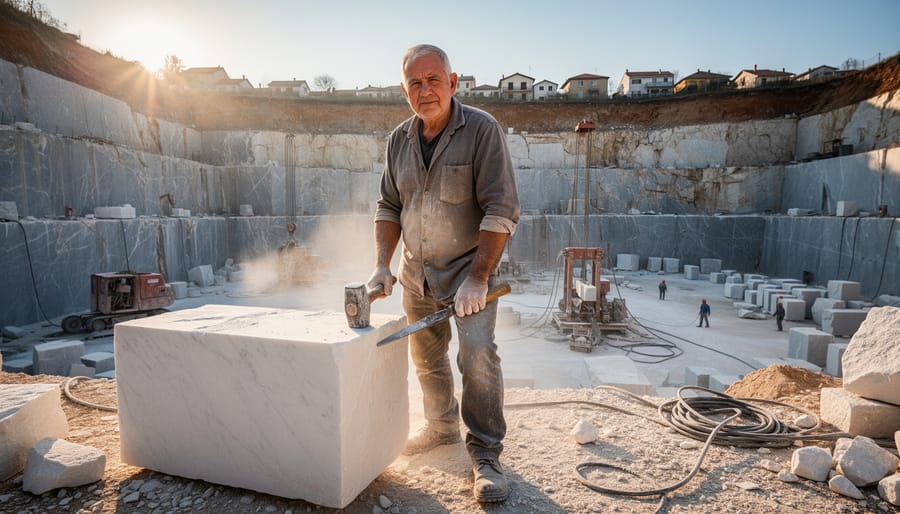
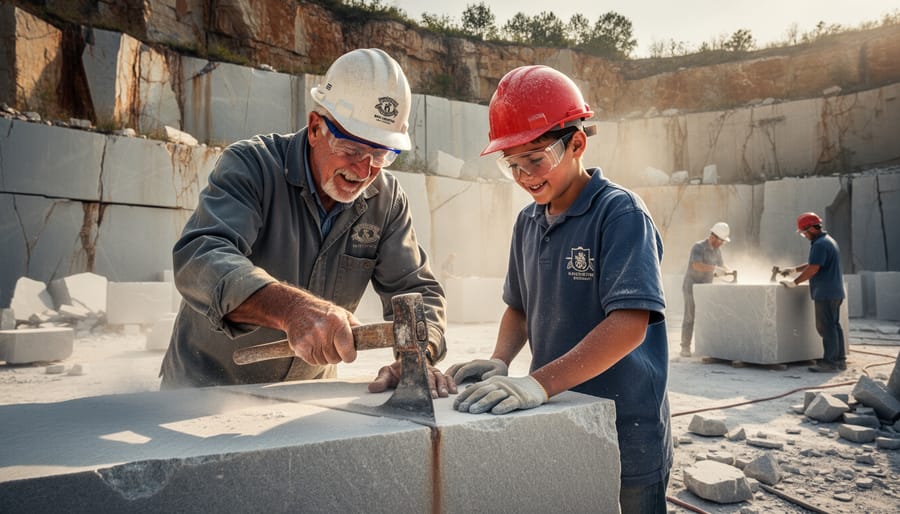
Certain regions have become synonymous with their stone, forging identities that span centuries. Carrara, Italy, represents perhaps the most iconic example—this Tuscan town has extracted luminous white marble since Roman times, with Michelangelo himself selecting blocks for his masterpieces. The quarrymen of Carrara, known as cavatori, developed specialized techniques and a distinct cultural pride that persists today, with families passing down quarrying knowledge through generations.
Across the Atlantic, Vermont’s Danby and Proctor communities built their identities around marble extraction beginning in the 1780s. Vermont Danby marble, prized for its pure white color, shaped these towns’ economies and social structures. Quarry workers formed tight-knit communities with their own traditions, social clubs, and collective identity centered on stone craftsmanship.
In England, Portland stone has defined the Isle of Portland for over four centuries. This oolitic limestone built St. Paul’s Cathedral and countless London landmarks, making Portland synonymous with durability and British architectural heritage. The island’s quarrying families developed distinctive dialects and customs that reflected their geological profession.
These regional identities directly influence regional stone markets and continue to shape how communities view themselves. Today, these quarrying regions market their heritage as part of their stone’s value proposition, recognizing that centuries of extraction have created not just products, but cultural legacies that designers and consumers increasingly appreciate in an era of mass-produced materials.
Skills, Knowledge, and Craft: The Cultural Transmission of Quarrying Expertise
Generational Knowledge: Family Traditions in Stone
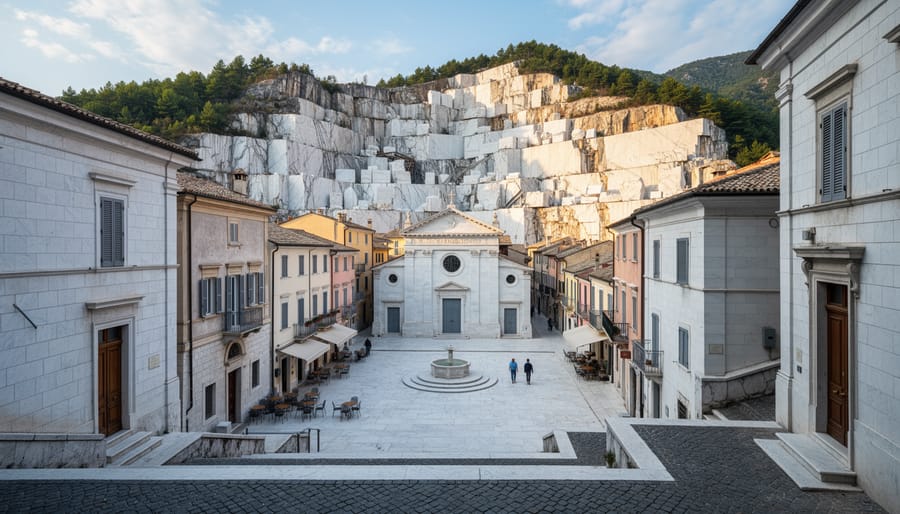
In quarrying communities, knowledge flows through bloodlines as reliably as veins of marble run through mountains. Multi-generational quarrying families preserve essential expertise that cannot be found in textbooks or formal training programs. A grandfather teaching his grandson to read stone fracture patterns by touch, a mother showing her daughter how seasonal temperature shifts affect extraction—these intimate transfers of wisdom form the backbone of successful quarrying operations.
This generational knowledge encompasses far more than mechanical techniques. Quarrying families develop an intuitive understanding of their local geology, accumulated through decades of observation. They can predict where the finest quality stone lies, recognize subtle color variations that indicate structural integrity, and identify the optimal seasons for extracting specific stone types. This geological literacy, refined over generations, often proves more valuable than modern surveying equipment.
The apprenticeship model remains prevalent in traditional quarrying regions, where young family members spend years working alongside experienced relatives before assuming independent responsibilities. This extended learning period builds not just technical skill but also cultural identity and pride in craftsmanship. Children grow up hearing stories of legendary quarrymen, learning the regional dialect specific to stonework, and understanding their place within a centuries-old tradition.
However, younger generations increasingly pursue alternative careers, creating knowledge gaps that threaten these living libraries of geological and cultural expertise.
The Artisan Identity: More Than Laborers
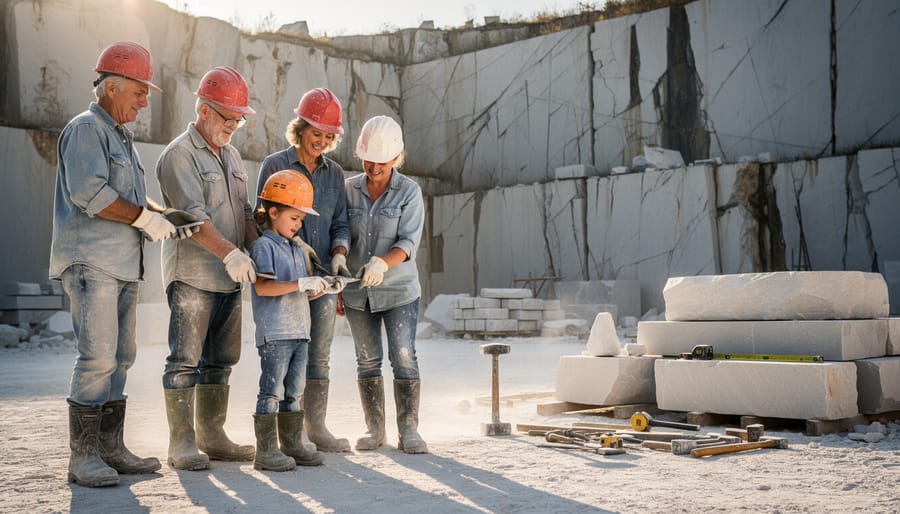
In quarrying communities worldwide, workers consistently reject the notion that they’re simply laborers performing repetitive tasks. Instead, they view their work through the lens of craftsmanship and artisanship, a perspective that profoundly influences both individual identity and collective community pride.
This artisan mindset stems from the specialized knowledge required to read stone formations, understand geological variations, and extract blocks without compromising material integrity. Quarry workers often apprentice for years, learning techniques passed down through generations. They take pride in identifying the perfect seam, executing precise cuts, and recognizing which blocks will yield exceptional slabs for architectural applications.
This craftsperson identity manifests in how communities celebrate their work. Many quarrying regions host festivals showcasing local stone varieties, where workers demonstrate traditional extraction methods alongside modern innovations. Families display stone samples in their homes like artwork, each piece representing specific quarries, geological conditions, or notable projects their relatives contributed to.
The artisan perspective also creates strong mentorship cultures. Senior quarry workers view themselves as keepers of specialized knowledge, responsible for training newcomers in both technical skills and the ethical responsibilities of working with finite natural resources. This transmission of expertise reinforces community bonds and ensures quality standards that benefit architects, designers, and consumers seeking authentic natural stone products.
Language, Festivals, and Social Bonds: Cultural Expressions of Quarrying Life
The Specialized Language of Stone
Quarrying communities have developed a rich, specialized vocabulary that reflects generations of hands-on experience and intimate knowledge of stone. Terms like “freestone” describe limestone or sandstone that can be cut equally in any direction, while “dimension stone” refers to blocks extracted for specific architectural purposes. Workers distinguish between “sound rock” and “shaky ground,” assessing structural integrity through language passed down through families.
Regional dialects add another layer of cultural identity. Vermont granite quarriers speak of “motion” when describing a stone’s grain direction, while Italian marble workers use “vena” to identify veining patterns. The Scottish term “snecked rubble” describes a specific masonry technique unique to their quarrying tradition. These linguistic distinctions create an immediate sense of belonging among workers and serve as markers of expertise.
Beyond technical terms, quarry communities have developed coded language for safety and efficiency. Hand signals communicate across noisy worksites, while shorthand references to specific extraction methods or stone qualities facilitate rapid decision-making. This specialized vocabulary functions as both practical tool and cultural badge, distinguishing insiders from outsiders and preserving knowledge that textbooks cannot fully capture. Understanding this language offers architects and designers deeper appreciation for the craftsmanship behind every stone they specify.
Festivals, Monuments, and Community Celebrations
Quarrying communities worldwide honor their stonemason heritage through vibrant cultural celebrations that showcase the craftsmanship and geological wealth that define their identities. Many regions host annual stone-centered festivals featuring demonstrations of traditional quarrying techniques, stone carving competitions, and exhibitions of local stonework. Vermont’s granite towns celebrate Granite Days with parades and historical reenactments, while Italian marble communities in Carrara host the Bianco Carrara Festival, attracting architects and designers from around the globe.
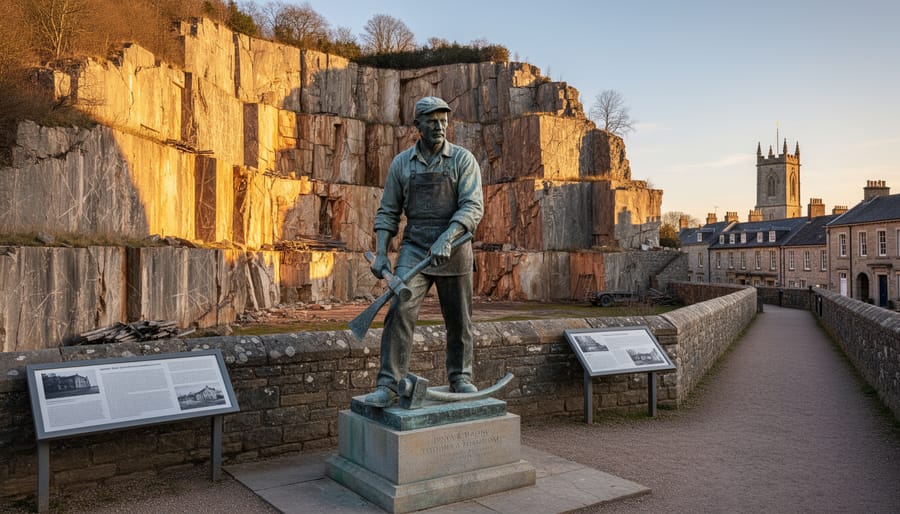
Public monuments carved from locally quarried stone serve as powerful symbols of community pride, often commemorating the quarryworkers who shaped regional economies. Sculptural installations in town squares, engraved memorial walls listing quarry workers’ names, and preserved historic quarry sites transformed into heritage parks help educate visitors about the industry’s cultural significance. These celebrations and monuments preserve traditional knowledge while connecting contemporary audiences to the human stories behind architectural stone. For industry professionals and design enthusiasts, attending these events offers invaluable insight into the passion and artistry embedded in natural stone products, deepening appreciation for the material’s journey from quarry face to finished installation.
Social Structures and Community Cohesion
Quarrying communities have historically developed distinctive social structures born from the shared dangers and physical demands of stone extraction. Workers formed tight-knit brotherhoods bound by mutual dependence, where each person’s safety relied on their colleagues’ skill and attentiveness. This interdependence created solidarity systems that extended beyond the quarry face into daily life, with families supporting one another during injuries, economic hardship, or loss.
These communities established informal networks of knowledge transfer, where experienced quarrymen mentored newcomers in reading stone grain, identifying structural weaknesses, and executing precise extraction techniques. The shared risk of working in hazardous environments fostered deep respect among workers regardless of formal hierarchy, creating egalitarian bonds rarely seen in other industrial sectors.
Many quarrying regions developed cooperative systems for tool sharing, profit distribution, and collective bargaining with quarry owners. Cultural traditions emerged around these social structures, including communal celebrations after successful extractions and rituals honoring fallen workers. These practices reinforced group identity and provided psychological resilience against the occupation’s physical toll. Understanding these human connections adds depth to appreciating natural stone products, revealing how each piece carries not just geological history but also the legacy of collaborative human effort and community strength.
Economic Dependency and Cultural Vulnerability
When the Stone Runs Out: Communities in Transition
When quarries close, entire communities face existential challenges that extend far beyond economics. In Vermont’s marble quarrying towns like Proctor and West Rutland, the decline of extraction operations has left residents grappling with identity loss as generations of specialized knowledge risk disappearing. Families who spent centuries perfecting stone-cutting techniques find their skills suddenly obsolete, creating a cultural void that unemployment statistics alone cannot capture.
The Portuguese village of Pêro Pinheiro, once renowned for its limestone quarries, exemplifies this transition. As operations wound down in the late twentieth century, the community lost not just jobs but the festivals, traditions, and social structures built around quarrying rhythms. Local schools that once taught stone-working alongside standard curricula have closed, severing the transmission of craft knowledge to younger generations.
In India’s Rajasthan region, sandstone quarrying communities face similar pressures from mechanization and environmental regulations. While necessary for sustainability, these changes threaten centuries-old extraction methods and the artisan communities that depended on them. The challenge lies in preserving cultural heritage while adapting to modern realities.
These transitions reveal an urgent need to document quarrying traditions and support communities in developing new identities that honor their stone-working heritage while building sustainable futures. Without intervention, invaluable cultural knowledge embedded in these communities may be permanently lost.
Preserving Identity Beyond Active Quarrying
When quarries close, communities face the challenge of preserving their unique heritage. Many former quarrying regions have successfully transformed their industrial past into living cultural assets through thoughtful preservation initiatives.
Heritage sites serve as powerful anchors for community identity. Abandoned quarries are repurposed into open-air museums where visitors can explore preserved cutting faces, historic tools, and original equipment. These sites offer educational programs that demonstrate traditional extraction techniques, ensuring knowledge passes to younger generations. In Vermont’s marble quarrying towns, former workers serve as guides, sharing firsthand accounts that bring the stone extraction story to life.
Museums dedicated to quarrying history house extensive collections of photographs, geological specimens, and personal artifacts. These institutions document not just industrial processes but the social fabric of quarrying communities—the families, traditions, and daily rhythms that defined these settlements. Interactive exhibits allow visitors to understand the skill and physical demands of quarrying work.
Cultural festivals celebrating stone heritage have become annual traditions in many former quarrying regions. These events feature stone carving demonstrations, historical reenactments, and exhibitions of local artisans working with indigenous stone. Such celebrations reinforce community bonds while attracting tourism that supports local economies.
Digital archives and oral history projects capture the voices of retired quarry workers, preserving personal narratives that might otherwise be lost. These efforts ensure that the cultural identity forged through generations of stone extraction remains accessible and relevant.
Modern Quarrying: Balancing Tradition with Technology and Sustainability
Technology’s Impact on Quarrying Culture
The arrival of mechanized equipment and digital technologies has fundamentally transformed quarrying operations, creating both opportunities and challenges for traditional communities. Modern wire saws, hydraulic splitters, and computer-guided cutting systems have replaced many manual extraction methods that defined quarrying culture for generations. While these innovations improve safety, efficiency, and precision, they also diminish the demand for artisanal skills passed down through families over centuries.
In historic quarrying regions like Carrara, Italy, and Vermont’s marble belt, long-time quarry workers express concern that younger generations no longer learn the nuanced techniques of reading stone grain or hand-splitting blocks. The transition from master-apprentice training models to operator certification programs represents a significant cultural shift. Traditional skills like scappling, banker work, and hand-finishing are increasingly relegated to specialty restoration projects rather than everyday production.
However, technology has also created new opportunities for preserving cultural identity. Digital documentation projects now record traditional techniques before they disappear, while some quarries blend modern extraction with heritage methods for premium markets. Architects and designers increasingly value stones cut using traditional practices, creating niche markets that support skilled craftspeople.
The challenge lies in finding balance—leveraging technology’s benefits while maintaining the human expertise and cultural knowledge that give quarrying communities their distinctive identity. Forward-thinking operations invest in training programs that combine mechanical proficiency with traditional stone knowledge, ensuring that cultural heritage evolves rather than vanishes in the face of modernization.
Sustainable Quarrying as Cultural Evolution
Today’s quarrying communities are redefining their cultural identity through environmental stewardship, transforming sustainability from regulatory compliance into a source of collective pride. This cultural evolution reflects a fundamental shift in how quarry workers view their role—not merely as extractors of resources, but as custodians of the land who balance economic needs with ecological responsibility.
Modern quarrying operations increasingly adopt sustainable stone practices that minimize environmental impact through water recycling systems, habitat restoration programs, and renewable energy integration. These initiatives have become points of distinction for quarrying communities, who take genuine pride in demonstrating that stone extraction can coexist with environmental protection. Workers now often participate in reclamation projects, transforming exhausted quarries into wetlands, recreational areas, or wildlife habitats—activities that strengthen community bonds while creating lasting positive legacies.
This cultural transformation extends beyond operational practices to shape how younger generations view careers in quarrying. Many communities now celebrate sustainability achievements alongside traditional quarrying milestones, incorporating environmental education into apprenticeship programs and community events. The integration of ecological consciousness into quarrying culture represents more than corporate responsibility—it embodies a profound reimagining of what it means to work with stone, honoring both ancestral extraction traditions and contemporary environmental values. This evolution ensures quarrying communities remain vital and relevant while producing materials that architects and consumers can specify with confidence.
The Broader Impact: How Quarrying Communities Influence Architecture and Design
The relationship between quarrying communities and the built environment extends far beyond raw material extraction. These communities serve as custodians of geological knowledge and cultural expertise that profoundly shapes how architects and designers select, specify, and incorporate natural stone into contemporary projects. The intimate understanding that quarry workers possess about stone characteristics—grain patterns, color variations, durability, and workability—directly influences design possibilities and architectural outcomes worldwide.
Quarrying regions often develop distinctive aesthetic traditions that ripple through global design trends. Italian marble quarries in Carrara, for instance, haven’t just supplied material for centuries; they’ve cultivated a culture of stone craftsmanship that informs how designers approach luxury interiors and sculptural applications. Similarly, Indian sandstone quarrying communities have preserved techniques for selecting and cutting stone that maintains structural integrity while showcasing natural beauty, knowledge that architects increasingly seek when designing sustainable, locally-sourced projects.
This cultural expertise manifests in practical ways. Quarrying communities often guide architects on optimal stone orientation for exterior cladding based on geological formation, recommend specific blocks for particular applications, and share insights about how stone will weather and age. Their generational knowledge prevents costly mistakes and enhances project longevity.
The growing appreciation for provenance in architecture has elevated quarrying communities from invisible suppliers to valued collaborators. Design professionals now visit quarries to understand material origins, consult with extraction teams about feasibility, and incorporate quarry stories into project narratives. This shift acknowledges that exceptional architecture requires not just quality materials but also the cultural intelligence embedded within quarrying communities—knowledge about reading stone, respecting geological formations, and honoring the relationship between extraction methods and final aesthetic results. As sustainable design prioritizes local materials and transparent supply chains, these communities’ influence on architecture will only deepen.
The cultural identity of stone quarrying communities represents centuries of accumulated knowledge, specialized craftsmanship, and deep connections to place. These traditions transform raw geological material into architectural elements that shape our built environment, carrying forward the values and techniques of generations past. When you choose natural stone for a project, you’re not simply selecting a building material—you’re participating in a living cultural tradition that connects quarry workers, master craftspeople, and consumers across time and geography.
As these communities face modern economic pressures and technological changes, their resilience becomes evident in how they adapt while preserving core identities. Young quarry workers integrate advanced extraction techniques with traditional stone-reading skills passed down through apprenticeships. Regional stone varieties continue to define local architectural character, even as global markets expand access to diverse materials.
Looking forward, the sustainability of quarrying communities depends on recognizing their cultural contributions alongside their economic output. By understanding the human stories behind natural stone, industry professionals and consumers alike can make choices that support these communities, ensuring their craft traditions and cultural heritage endure for future generations while evolving to meet contemporary needs.