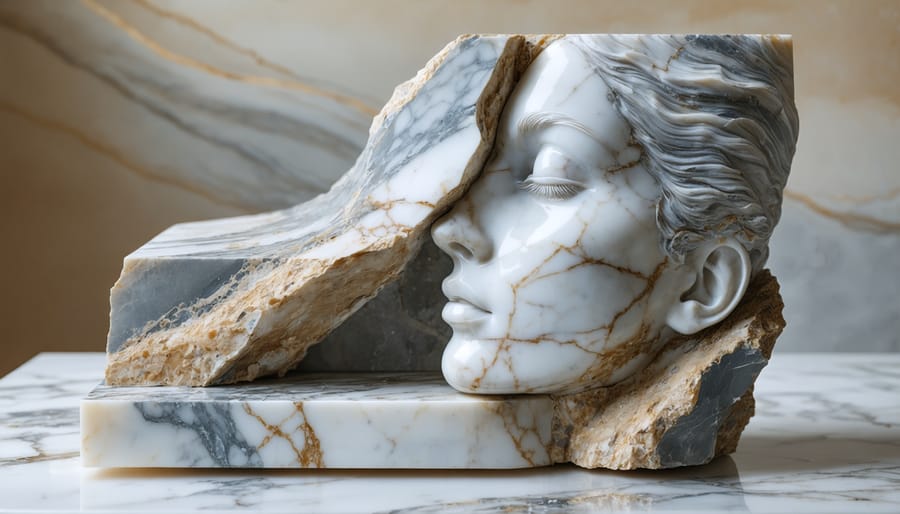
In the heart of nature’s art gallery lies an ancient muse – the inspiration stone. These geological wonders, shaped by millions of years of pressure and transformation, serve as powerful catalysts for creative expression across art, architecture, and design. From the swirling patterns of marble that inspired Renaissance masters to the raw texture of granite that defines modern minimalism, inspiration stones bridge the gap between Earth’s raw beauty and human artistic vision.
Natural stones speak a universal language of color, texture, and pattern that transcends cultural boundaries and time periods. Each piece tells a unique story through its distinctive veining, crystalline structures, and organic imperfections. Whether it’s the translucent depth of alabaster, the bold striations of sandstone, or the mysterious depths of obsidian, these materials continue to spark innovation in contemporary creative practices.
For artists, designers, and visionaries, inspiration stones offer more than just physical material – they provide a tangible connection to the planet’s creative forces. Their enduring presence in human artistic expression, from prehistoric cave paintings to cutting-edge architectural installations, demonstrates their timeless ability to inspire and transform creative vision into reality.
Nature’s Canvas: Understanding Inspiration Stones
Patterns and Textures
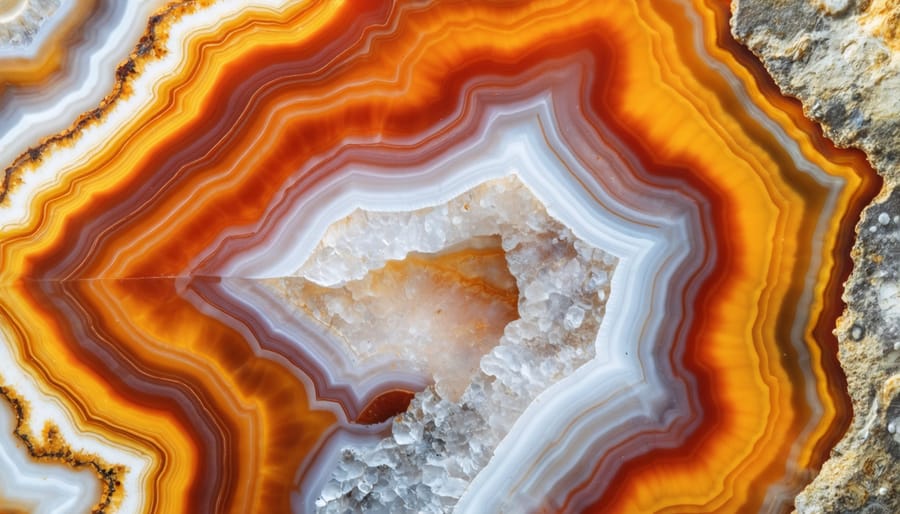
Nature’s artistry reveals itself most eloquently in the patterns and textures found within inspiration stones. From the delicate veining of marble that resembles abstract paintings to the rippling bands of agate that tell stories of ancient geological processes, these natural formations serve as endless sources of creative inspiration.
The intricate patterns found in stones often showcase remarkable mathematical precision. Crystalline structures create geometric patterns that appear almost engineered, while flowing lines in metamorphic rocks demonstrate nature’s fluid artistry. These organic designs frequently inspire everything from textile patterns to architectural facades.
Surface textures add another dimension to stone’s inspirational qualities. Rough, weathered surfaces suggest antiquity and persistence, while polished faces reveal hidden depths and color variations. The way light interacts with these textures creates ever-changing displays throughout the day, offering artists and designers new perspectives with each viewing.
Some of the most captivating patterns emerge from cross-sections of stones, revealing internal structures that have developed over millions of years. These natural compositions often display perfect balance and harmony, providing valuable lessons in artistic composition and color relationships that designers frequently reference in their work.
Color Variations and Mineral Compositions
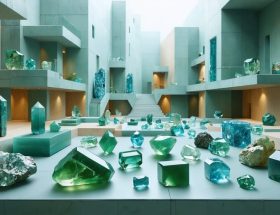
The diverse color palette found in inspiration stones stems from their unique mineral compositions and geological formations. From the deep blues of lapis lazuli to the ethereal greens of jade, each stone’s distinctive hue reflects its chemical makeup and formation conditions. Iron oxides create warm reds and browns, while copper compounds contribute to vibrant blues and greens. These variations not only influence the energetic properties of natural stones but also their aesthetic appeal in design applications.
Quartz varieties showcase nature’s color spectrum particularly well, ranging from clear crystal to purple amethyst and golden citrine. Trace elements within the mineral structure can dramatically alter a stone’s appearance – chromium creates the rich green of emeralds, while titanium produces the remarkable color-changing effect in alexandrite. Understanding these mineral compositions helps designers and artists select stones that perfectly complement their vision, whether for architectural features, sculptural works, or decorative elements. The interplay of light with these mineral structures creates depth and movement, bringing surfaces to life with natural brilliance.
From Raw Stone to Masterpiece
Sculpture and Carving
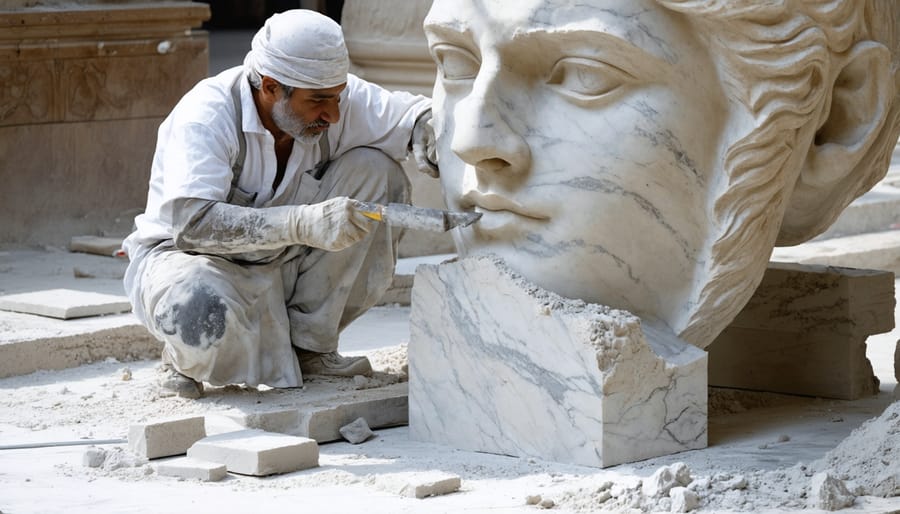
Stone sculpture and carving represent the intersection of artistic vision and geological beauty, transforming raw materials into enduring works of art. Building upon ancient stone cutting techniques, modern artisans employ both traditional and innovative methods to reveal the hidden potential within each stone.
Traditional hand tools like chisels, hammers, and points remain fundamental to stone carving, allowing artists to maintain precise control over their work. These tools create different textures and finishes, from rough-hewn surfaces to polished smoothness that highlights the stone’s natural patterns.
Contemporary sculptors increasingly incorporate modern technology, such as diamond-tipped power tools and CNC machines, to achieve previously impossible precision and detail. However, the essence of stone carving remains a deeply personal interaction between artist and material.
The choice of stone significantly influences the final artwork. Soft stones like soapstone and alabaster are ideal for intricate details, while harder materials like granite and marble challenge artists to work with nature’s resistance. Each type of stone presents unique opportunities for expression through its color, grain, and inherent characteristics.
Successful stone sculpture requires understanding both the material’s physical properties and its aesthetic potential. Artists must work with the stone’s natural features, incorporating veining and color variations into their design rather than fighting against these distinctive qualities.
Stone Inlay and Mosaic Work
Stone inlay and mosaic work represents one of the most intricate and visually stunning applications of inspiration stones in decorative art. This ancient technique involves precisely cutting and fitting stones of various colors, textures, and sizes to create complex patterns or pictorial designs. Artists carefully select stones based on their natural coloration, veining patterns, and light-reflecting properties to achieve desired artistic effects.
Traditional stone inlay work often features semi-precious stones like malachite, lapis lazuli, and mother-of-pearl embedded into marble or other base materials. The Taj Mahal showcases some of the world’s finest examples, with floral patterns crafted from precisely cut precious stones inlaid into white marble. Modern artists have expanded these techniques, incorporating contemporary designs and innovative material combinations.
Mosaic work differs slightly, typically using smaller, uniform pieces called tesserae to create larger images or patterns. These pieces can range from natural stone fragments to specially cut marble or granite tiles. Contemporary artists often combine traditional methods with modern technology, using water-jet cutting to achieve precise shapes for complex designs.
The durability of stone makes these artworks particularly suitable for both indoor and outdoor installations. From decorative wall panels to elaborate floor designs, stone inlay and mosaic work adds lasting beauty and value to architectural spaces. The interplay of different stones’ natural characteristics creates depth, movement, and visual interest that synthetic materials simply cannot replicate.
Contemporary Stone Art
Contemporary artists have revolutionized stone-based art by combining traditional techniques with modern aesthetics and technology. Digital fabrication methods now allow for precise stone cutting and intricate designs that were previously impossible to achieve by hand. Artists utilize advanced tools like CNC machines and laser cutters to create detailed geometric patterns and complex sculptural forms while maintaining the natural beauty of the stone.
Environmental consciousness has become a significant focus in modern stone art, with many artists incorporating found stones and sustainable practices into their work. Installation artists create large-scale works that integrate naturally weathered stones with manufactured elements, challenging viewers to consider the relationship between nature and human intervention.
The rise of social media has sparked new interest in stone balancing art, where practitioners create seemingly impossible arrangements of stones, photographing these ephemeral installations before nature reclaims them. This art form emphasizes mindfulness and connection with natural materials.
Urban spaces have become showcases for contemporary stone art, with architects and designers incorporating artistic stone elements into building facades, public squares, and corporate environments. These installations often combine stone with other materials like glass, steel, and lighting to create dynamic, interactive experiences.
Digital technology has also enabled virtual stone art experiences, where artists use 3D scanning and augmented reality to create immersive installations that blend physical stone elements with digital projections and interactive components.
Notable Stone-Inspired Artworks
Historical Masterpieces
Throughout history, stone has served as a canvas for some of humanity’s most enduring masterpieces. The historical significance of marble art is perhaps best exemplified by Michelangelo’s David, carved from a single block of Carrara marble, demonstrating the material’s capacity for capturing profound human expression.
The ancient Egyptians left us an impressive legacy of stone artistry through their pyramids and sphinx, crafted primarily from limestone and granite. These monuments showcase not only architectural brilliance but also the artistic possibilities inherent in stone. Similarly, the Aztec Sun Stone, carved from basalt, represents a masterful fusion of astronomical knowledge and artistic expression.
In Asia, the Ellora Caves of India stand as a testament to stone’s versatility, with intricate temples carved directly into solid rock. The Buddhist stone sculptures of Southeast Asia, particularly in Thailand and Cambodia’s Angkor Wat, demonstrate how different cultures have approached stone as an artistic medium.
Modern masterpieces continue this tradition, with works like Henry Moore’s abstract stone sculptures and Isamu Noguchi’s landscape designs proving that stone remains a vital medium for contemporary artistic expression. These works bridge the gap between ancient traditions and modern aesthetics, inspiring new generations of artists to explore stone’s creative potential.
Modern Interpretations
Contemporary artists are revolutionizing the use of inspiration stones in ways that blend traditional craftsmanship with modern innovation. Leading sculptors like Emily Hawkins and James Chen create large-scale installations that incorporate LED lighting within translucent stone varieties, producing ethereal effects that change throughout the day.
Digital artists have embraced 3D scanning technology to capture the intricate patterns of natural stones, transforming these scans into immersive virtual reality experiences. These digital interpretations allow viewers to explore the microscopic details of mineral formations in unprecedented ways.
Sustainable art practices have emerged as a significant trend, with artists like Maria Torres pioneering the use of reclaimed stone in her award-winning sculptures. Her work demonstrates how weathered stones can be repurposed into stunning contemporary pieces while promoting environmental consciousness.
Architectural designers are incorporating inspiration stones in innovative ways, creating feature walls that combine natural stone with interactive elements. These installations respond to touch or movement, merging the permanence of stone with dynamic digital displays.
The fusion of traditional stone carving with modern technology has given rise to precision-cut stone art, where computer-controlled tools create intricate patterns impossible to achieve by hand alone. This marriage of ancient material and contemporary technique has opened new possibilities for artistic expression while maintaining the timeless appeal of natural stone.
Incorporating Stone Art in Contemporary Spaces
Residential Applications
Incorporating stone art into residential spaces creates a powerful connection between natural elements and modern living environments. From elegant entryways to serene garden spaces, inspiration stones can transform ordinary areas into extraordinary focal points that reflect both personality and style.
In living rooms, large stone installations serve as dramatic conversation pieces, while smaller stone arrangements can create intimate meditation corners. Popular applications include stone-clad feature walls, which add texture and visual interest, and custom-built stone fireplaces that combine functionality with artistic expression.
For kitchens and bathrooms, inspiration stones find their place in decorative backsplashes, countertop inlays, and artistic vessel sinks. These applications not only showcase the stone’s natural beauty but also provide durability and timeless appeal. Homeowners often choose river rocks or polished stones for shower floors, creating a massage-like sensation underfoot while adding an organic element to the space.
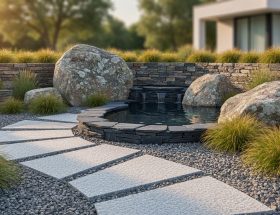
Outdoor living spaces offer unlimited potential for stone art integration. Garden pathways featuring carefully arranged stone patterns, meditation labyrinths constructed from varying stone types, and water features incorporating naturally sculpted stones all contribute to a harmonious outdoor environment. Stone sculptures and cairns can serve as garden focal points, while stacked stone walls provide both practical and aesthetic value.
When selecting stones for residential applications, consider factors such as local climate, maintenance requirements, and the overall design aesthetic of your home. The key is to create a balance between artistic expression and practical functionality.
Commercial and Public Spaces
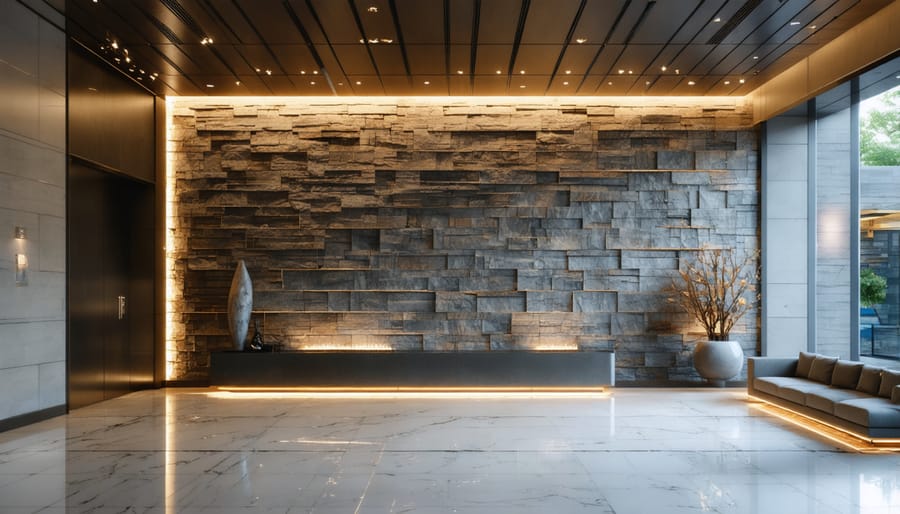
In commercial and public spaces, inspiration stones serve as powerful design elements that create lasting impressions and enhance the built environment. From corporate lobbies to public plazas, natural stone installations capture attention and convey messages of permanence, sophistication, and connection to nature.
Modern architects and designers increasingly incorporate dramatic stone features into their projects, following sustainable stone design practices while creating memorable spaces. Notable examples include water-worn boulder seating in urban parks, geometric stone wall cladding in office buildings, and massive stone sculptures in hospital healing gardens.
These installations often combine different stone types and textures to create visual interest and emotional resonance. For instance, polished granite might contrast with rough-hewn limestone, while serpentine or quartzite add bursts of color. LED lighting techniques frequently enhance these stone features, creating dramatic shadows and highlighting natural patterns after dark.
The success of stone art in commercial spaces lies in its ability to bridge function and aesthetics. Reception desks carved from single blocks of marble become conversation pieces, while outdoor stone benches provide both practical seating and artistic merit. Many corporations also commission custom stone artwork that reflects their brand values and creates distinctive environments that employees and visitors remember long after leaving the space.
The enduring appeal of stone-inspired art continues to evolve in contemporary design, bridging ancient traditions with modern aesthetics. As sustainability and natural materials gain prominence in architecture and interior design, inspiration stones remain at the forefront of creative expression. Artists and designers increasingly combine traditional stone working techniques with innovative technologies, creating pieces that honor the material’s natural beauty while pushing creative boundaries. The timeless quality of stone, coupled with its infinite variations in color, texture, and pattern, ensures its lasting relevance in the design world. Looking ahead, we can expect to see even more innovative applications as designers experiment with digital fabrication, sustainable practices, and mixed-media approaches, all while maintaining the authentic character that makes stone such a compelling source of inspiration.