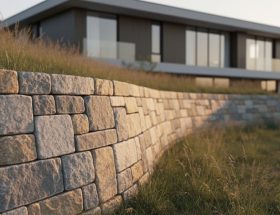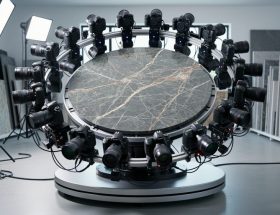
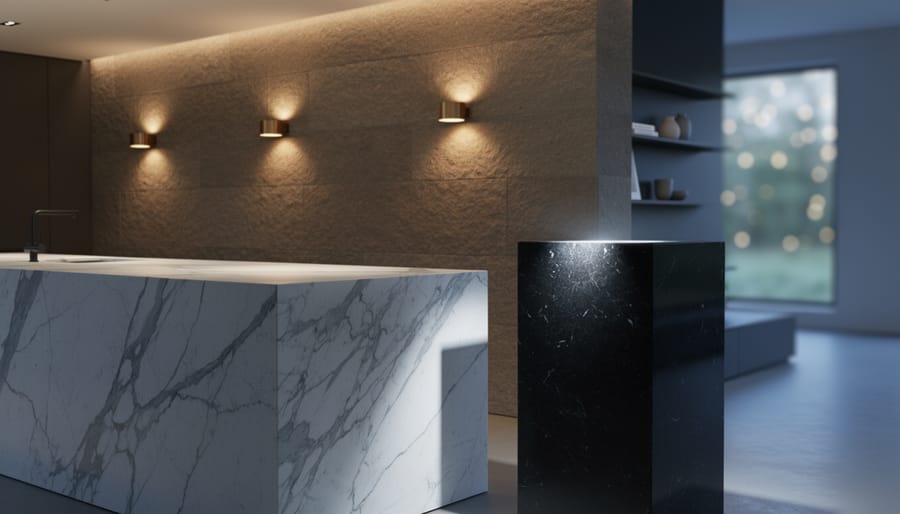
Observe how light transforms across marble’s crystalline surface throughout the day, revealing veining patterns that shift from subtle whispers at dawn to bold statements under midday sun. Natural stone and illumination form a symbiotic relationship where each element amplifies the other’s inherent beauty—a principle essential for creating spaces that feel both grounded and luminous.
Position light sources at varying angles to test how different stone specimens respond before finalizing your selection. Limestone absorbs and diffuses light gently, creating warm ambient environments ideal for intimate spaces, while polished granite reflects direct light with dramatic intensity suited for statement areas. The interaction depends on three physical properties: surface finish, mineral composition, and inherent color depth.
Measure the color temperature of your lighting carefully, as warm LEDs (2700-3000K) enhance earth-toned stones like travertine and sandstone, while cooler temperatures (4000-5000K) bring clarity to white marbles and quartzites. This technical consideration becomes the foundation for transformative stone design that feels intentional rather than accidental.
Layer multiple light sources—ambient, task, and accent—to create depth and prevent flat, institutional appearances that diminish stone’s natural dimensionality. A single overhead fixture cannot capture the complex interplay of shadows within stone’s surface irregularities, which is where true visual interest emerges. Understanding this symbiotic dance between geology and illumination empowers you to make selections that perform beautifully under real-world lighting conditions rather than showroom ideals.
Understanding Architectural Symbiosis: When Stone Meets Light
The Science Behind Stone and Light Interaction
Understanding how stone and light interact begins with three fundamental optical properties: reflection, absorption, and refraction. Each natural stone possesses unique characteristics that determine how it responds to illumination, creating dramatically different visual effects in your space.
Reflection occurs when light bounces off the stone’s surface. Polished stones like granite and marble feature smooth, mirror-like finishes that reflect light directly, creating bright, luminous surfaces that can make rooms feel more spacious. In contrast, honed or leathered finishes scatter light in multiple directions, producing a softer, more muted appearance. The mineral composition plays a crucial role here—stones with high quartz or mica content, such as certain granites, create sparkle effects as light catches individual crystal structures.
Absorption determines how much light the stone retains rather than reflects. Darker stones like absolute black granite or soapstone absorb more light wavelengths, which is why they appear deeper in color and create dramatic, grounding effects in spaces. Lighter stones such as Carrara marble or travertine absorb less light, reflecting more wavelengths back to our eyes and contributing to brighter, airier environments.
Refraction, while subtler in opaque stones, becomes significant in translucent varieties like onyx or certain alabasters. Light penetrates the stone’s surface and bends as it passes through different mineral layers, creating an internal glow when backlit. This property makes these stones ideal for feature walls or statement pieces where dramatic lighting effects are desired.
The stone’s color further influences light interaction. Warm-toned stones like beige travertine enhance golden and amber lighting, while cool gray marbles complement blue-toned or neutral white light sources. Understanding these principles empowers you to select stones that achieve your desired aesthetic and functional lighting goals.
Why This Partnership Matters for Your Project
Understanding how stone and light interact transforms the way you approach material selection and spatial design. When you recognize that each stone type responds uniquely to different lighting conditions, you move beyond choosing based solely on color or pattern to making informed decisions that maximize your investment.
For homeowners, this knowledge prevents costly disappointments. A marble that appears luminous in a showroom under bright commercial lighting may look dramatically different in your dimly lit bathroom. By testing stone samples in your actual space at various times of day, you can predict how the stone will perform throughout its lifetime. This proactive approach aligns with biophilic design principles that emphasize natural material authenticity and connection to the environment.
Architects and designers gain a competitive advantage by mastering this symbiotic relationship. You can confidently specify materials knowing how they’ll interact with your lighting design, reducing callbacks and enhancing client satisfaction. This expertise allows you to create spaces that evolve beautifully throughout the day rather than appearing static or disappointing under certain conditions.
The financial implications matter too. Strategic stone placement based on light exposure can reduce material waste and lower installation costs. High-figure stones deserve prominent positions with optimal lighting, while more subtle varieties can excel in supporting roles. This intentional approach ensures every square foot of stone contributes meaningfully to your design vision while respecting project budgets.
Natural Light: Stone’s Most Important Design Partner
Direction and Intensity: Positioning Stone for Maximum Impact
Understanding how light moves through your space throughout the day is essential for maximizing the visual impact of natural stone. The direction and intensity of natural light dramatically affects how stone reveals its character, from subtle veining to dramatic color shifts.
In north-facing rooms, light remains consistently cool and indirect throughout the day. This creates ideal conditions for stones with warm undertones like travertine, beige limestone, or honey onyx. These materials absorb and reflect the cooler light, adding warmth to spaces that might otherwise feel sterile. Position feature walls perpendicular to north-facing windows to capture the soft, even illumination that prevents harsh shadows and highlights the stone’s natural texture.
South-facing installations receive the most intense, warm light, particularly during midday hours. This orientation works beautifully with cooler-toned stones such as white marble, gray slate, or blue limestone. The abundant light penetration allows translucent stones like onyx or alabaster to showcase their internal structure when installed as backlit features or positioned near windows. However, be mindful that prolonged exposure to intense southern light can cause certain stones to fade over time, making UV-protective treatments worth considering.
East and west exposures present dynamic lighting scenarios. Eastern light brings cool morning illumination that gradually warms, while western exposures deliver dramatic afternoon and evening light. These orientations suit stones with varied coloration or strong veining patterns, as changing light conditions create evolving visual interest throughout the day. Consider installing stone samples in your actual space and observing them at different times before making final selections.
Seasonal Changes and Stone Appearance
Natural stone’s appearance transforms dramatically throughout the year as seasonal light conditions change. Winter’s low-angle sunlight creates longer shadows and cooler color temperatures, often emphasizing blue and gray undertones in stone surfaces. Summer’s intense, direct overhead light can brighten warm tones like beige, gold, and terracotta hues, while autumn’s diffused light tends to enrich mid-range colors.
These seasonal variations are particularly noticeable in spaces with abundant natural light, such as entryways, kitchens with large windows, or outdoor applications. A limestone that appears warm and inviting during summer months may take on a cooler, more austere quality in winter light. Similarly, granite with subtle veining might reveal hidden depth during certain seasons while appearing more uniform in others.
When selecting natural stone, view samples in the actual installation space at different times of day and, if possible, during different seasons. Consider how the stone will interact with both natural daylight and artificial lighting throughout the year. For critical applications, request larger samples and observe them over several weeks to understand how seasonal light shifts will affect the stone’s appearance. This evaluation process helps ensure your stone selection maintains its desired aesthetic impact year-round, preventing costly regrets after installation.
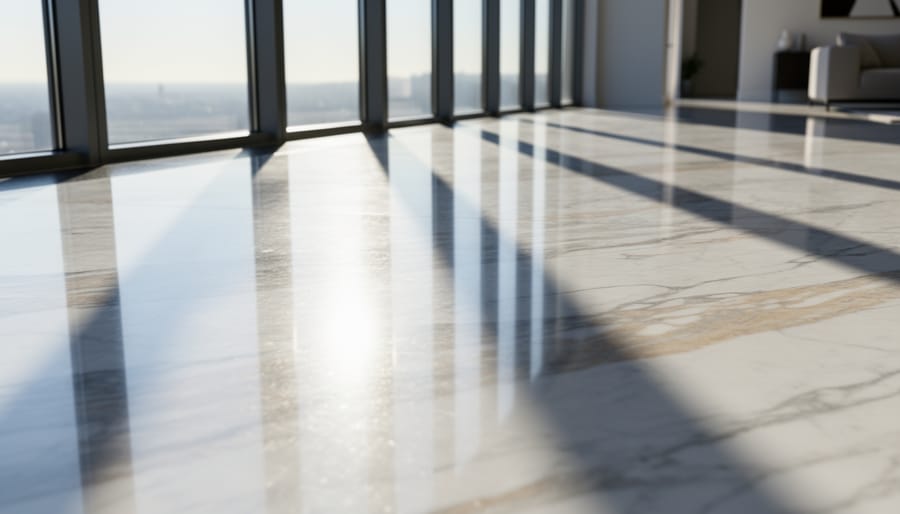
Real-World Case Study: Marble Flooring in a Sunlit Atrium
The headquarters of a prominent design firm showcases how marble and natural light create an evolving visual experience throughout the day. The three-story atrium features Calacatta marble flooring with distinctive gray and gold veining running diagonally across 2,000 square feet. Floor-to-ceiling windows on the eastern and southern walls flood the space with natural light from sunrise to late afternoon.
During morning hours, direct sunlight enters at a low angle, creating dramatic shadows that emphasize the marble’s three-dimensional surface texture and crystalline structure. The veining appears most pronounced, with the gold tones becoming luminous and the gray veins casting subtle shadows. By midday, diffused overhead light reveals the stone’s creamy white background and creates a softer, more uniform appearance. Late afternoon sun produces warm amber tones that transform the entire floor into a golden canvas, while the veining takes on copper and bronze hues. The facility manager reports that visitors consistently pause to photograph the floor, noting how different it appears during each visit, demonstrating marble’s dynamic relationship with changing natural light conditions.
Artificial Lighting Strategies That Enhance Stone Beauty
Ambient Lighting for Stone Surfaces
Ambient lighting serves as the foundation for showcasing stone surfaces, providing overall illumination that reveals the material’s inherent beauty without creating dramatic contrasts. This approach works particularly well with natural stone because it allows the eye to appreciate subtle variations in color, pattern, and texture across the entire surface rather than focusing on isolated highlights.
The key to effective ambient lighting lies in creating even, diffused light that mimics natural daylight conditions. Recessed ceiling fixtures with wide beam angles, cove lighting, and wall-mounted sconces positioned strategically around a space can achieve this balanced effect. For stone installations, aim for color temperatures between 2700K and 3500K, which complement the warm tones found in many natural stones like travertine, limestone, and warmer granites.
Layer your ambient lighting at appropriate intensities to prevent washing out the stone’s details. Too much light flattens the surface, eliminating the dimensional qualities that make stone visually compelling, while insufficient lighting obscures the material’s character entirely. Consider installing dimmer controls to adjust light levels throughout the day, allowing the stone to interact naturally with changing conditions. This flexibility ensures the material remains the focal point without competing shadows or excessive brightness that detracts from its organic beauty.
Accent and Directional Lighting Techniques
Strategic lighting techniques transform natural stone from a static material into a dynamic design element. Spotlights excel at creating drama by focusing narrow beams on specific stone features, such as the crystalline structure in granite or the fossil patterns in limestone. Position adjustable spotlights at 30-degree angles to emphasize depth and create captivating shadow play across textured surfaces.
Wall washers provide uniform illumination across large stone installations, making them ideal for feature walls or entryways. These fixtures distribute light evenly from top to bottom, revealing the full scope of veining patterns in marble or the layered striations in quartzite. Install wall washers approximately 12-18 inches from the stone surface for optimal effect.
Directional fixtures offer versatility in highlighting specific areas without overwhelming the entire space. Recessed adjustable downlights work particularly well for illuminating stone countertops, allowing the light to graze the surface and accentuate polished finishes or honed textures. Track lighting systems provide flexibility to adjust focal points as design needs evolve.
Consider using narrow beam angles (15-25 degrees) for accent lighting and wider beams (40-60 degrees) for general illumination. Layering these techniques creates visual hierarchy, guiding the eye to your stone’s most compelling features while maintaining balanced ambient lighting throughout the space.
Color Temperature and Stone Selection
Light temperature, measured in Kelvin (K), dramatically influences how stone colors appear in your space. Warm lighting (2700K-3000K) produces yellowish tones that enhance beiges, creams, and warm-toned stones like travertine and golden marble. This temperature creates inviting, cozy atmospheres ideal for residential interiors. Conversely, cool lighting (4000K-5000K) emits bluer tones that accentuate whites, grays, and cool-toned stones such as Carrara marble and blue limestone, resulting in crisp, contemporary aesthetics.
When making your stone color selection, consider the finish as well. Polished stones with reflective surfaces appear more vibrant under cool lighting, which intensifies their natural brilliance. Honed and textured finishes perform better with warm lighting, as cooler temperatures can make them appear dull or flat.
For optimal results, match light temperature to stone undertones. Warm-veined marbles pair beautifully with 2700K-3000K sources, while stark white and gray stones shine under 3500K-4000K neutral white lighting. Avoid mismatched combinations—cool lighting on warm stones creates muddy, unappealing tones, while warm lighting on cool stones produces an unintended yellow cast. Test samples under your intended lighting conditions before finalizing selections to ensure the symbiotic relationship between stone and light achieves your desired aesthetic.

Real-World Case Study: Granite Kitchen Countertops Under Layered Lighting
A recently renovated kitchen in Portland showcases how strategic lighting transforms Black Galaxy granite countertops. The design combines recessed LED ambient lighting with under-cabinet task lighting positioned 18 inches apart. The ambient layer provides overall illumination at 3000K, while focused task lights at 4000K target work surfaces. This dual approach reveals the granite’s signature gold and bronze flecks during food preparation while creating dimensional depth during evening entertaining. The mica crystals sparkle differently under each light source, demonstrating how layered lighting maximizes granite’s natural light-reflective properties and creates visual interest throughout the day.
Stone Finish and Texture: The Third Element in the Symbiotic Triangle
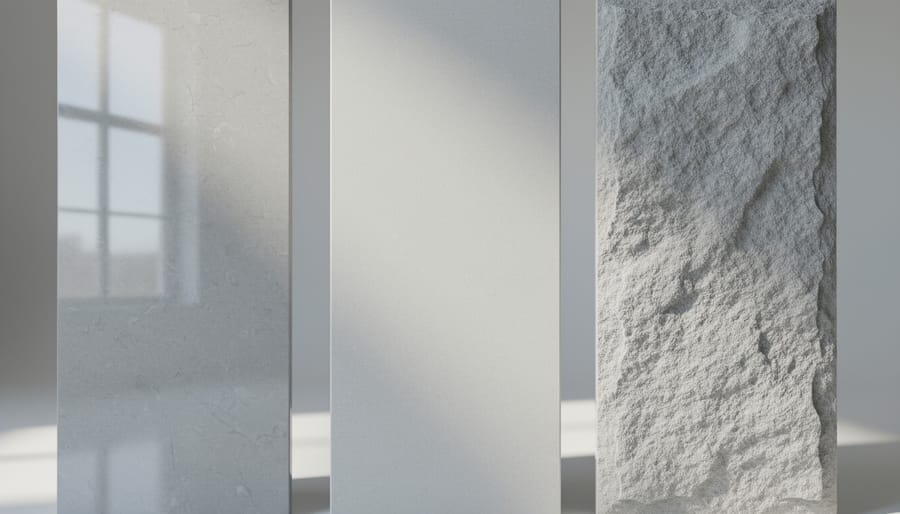
Polished Surfaces: Maximizing Light Reflection
Polished stone finishes act as natural mirrors, maximizing light reflection and creating luminous, spacious environments. The high-gloss surface of polished marble, granite, or quartzite can reflect up to 90% of incident light, dramatically amplifying both natural and artificial illumination. This makes polished finishes particularly valuable in areas with limited natural light or where creating a sense of openness is desired.
However, this reflective quality requires careful planning. In spaces with intense direct sunlight or poorly positioned lighting, polished surfaces can create uncomfortable glare that diminishes visual comfort and obscures the stone’s natural beauty. Strategic solutions include positioning polished stone perpendicular to primary light sources rather than directly opposite them, incorporating diffused lighting fixtures instead of harsh spotlights, and using window treatments to modulate natural light intensity during peak hours.
Consider the room’s function when selecting polished finishes. They excel in formal entryways, bathrooms, and kitchens where their light-enhancing properties create an upscale aesthetic. For residential spaces prone to heavy traffic, be aware that polished surfaces show scratches and etching more readily than honed alternatives, though their reflective qualities can make rooms appear larger and brighter, an advantageous trade-off in compact urban spaces.
Honed and Matte Finishes: Softening the Light
While polished stone surfaces create dramatic light effects, honed and matte finishes offer a gentler approach to the stone-light relationship. These non-reflective surfaces absorb rather than reflect light, producing a soft, diffused glow that enhances the stone’s natural color and texture without overwhelming visual glare.
Honed finishes, created by stopping the polishing process before achieving high gloss, provide a smooth yet matte surface that reveals the stone’s true character. This treatment works particularly well in spaces where reduced glare is essential—bathrooms where morning light can be harsh, kitchens with overhead task lighting, or commercial spaces requiring visual comfort throughout the day.
The absence of reflectivity allows the stone’s inherent veining and color variations to take center stage. Light penetrates slightly into the surface before being diffused back, creating depth and dimensional interest without the mirror-like quality of polished stone. This makes honed finishes ideal for flooring in high-traffic areas, where they provide a sophisticated, understated elegance while concealing minor wear patterns.
In modern design, matte-finished stones paired with warm, diffused lighting create calming, spa-like environments. Designers increasingly specify these finishes for feature walls and countertops where subtle sophistication trumps dramatic shine, demonstrating that restraint in reflectivity can be as powerful as high-polish brilliance.
Textured and Natural Finishes: Creating Depth Through Shadow
Natural stone’s inherent surface variations create dynamic shadow patterns that evolve throughout the day as light angles shift. Honed finishes offer subtle texture that produces soft, diffused shadows, while leathered and brushed surfaces generate pronounced dimensional effects. These textural elements work in symbiosis with both natural and artificial lighting to reveal the stone’s depth and character.
Split-face stone delivers the most dramatic shadow play, with irregular surfaces catching and reflecting light at varying intensities. This effect is particularly striking on feature walls where raking light emphasizes the three-dimensional relief. Even polished surfaces contribute to this interplay through their veining patterns, which create visual texture that responds to changing light conditions. The key is understanding how different finish types interact with specific lighting scenarios to achieve your desired atmosphere and visual impact.
Practical Applications: Room-by-Room Guidance
Kitchens: Balancing Function and Beauty
Kitchen design presents unique opportunities to showcase the dynamic relationship between natural stone and light. Countertop materials like granite, marble, and quartzite interact dramatically with varied lighting sources throughout the day. When selecting stone for kitchen surfaces, consider how morning sunlight streaming through windows will highlight the material’s crystalline structure differently than evening task lighting.
Under-cabinet LED fixtures create focused illumination that emphasizes stone veining and mineral deposits in backsplashes, transforming functional work surfaces into artistic focal points. Position these fixtures 18-24 inches apart to minimize shadows and create even light distribution across polished or honed finishes. Natural light from strategically placed windows enhances the depth and movement within the stone, revealing subtle color variations that artificial lighting alone cannot replicate.
Task lighting above islands and peninsulas should be selected based on your stone’s reflective properties. Highly polished granite surfaces may create glare under intense directional lighting, while leathered or brushed finishes diffuse light more softly. The interplay between ambient natural light, focused task lighting, and accent illumination creates a layered lighting approach that maximizes both the functional and aesthetic potential of natural stone installations.
Bathrooms: Creating Spa-Like Atmospheres
Bathrooms present unique opportunities for symbiotic stone and light interactions that transform functional spaces into tranquil retreats. Light-colored marbles like Carrara or Calacatta excel in vanity applications, where their translucency allows backlighting to create a soft, ambient glow. This strategic placement reduces harsh shadows during grooming tasks while establishing a serene atmosphere.
For shower enclosures, consider honed limestone or travertine, which maintain slip-resistance while their matte finish diffuses light uniformly across wet surfaces. Position recessed lighting at strategic angles to highlight the stone’s natural veining without creating glare on water droplets. This approach enhances both safety and visual appeal.
Flooring benefits from darker stones like slate or granite, which absorb light strategically to ground the space while lighter walls reflect illumination upward. Install warm LED strips beneath floating vanities or within recessed baseboards to create an ethereal floating effect that accentuates the stone’s texture.
Layer your lighting with dimmers to control intensity throughout the day—bright task lighting for mornings transitioning to softer ambient light for evening relaxation. This flexibility allows the same stone surfaces to adapt their appearance and mood, maximizing the symbiotic relationship between material and illumination.

Living Spaces and Entryways: Making First Impressions Count
Entryways and living spaces present prime opportunities to showcase the interplay between stone and light. In these high-traffic areas, flooring choices become foundational to the entire design scheme. Polished marble or limestone catches and reflects both natural daylight and artificial illumination, creating luminous pathways that welcome guests while enhancing spatial perception. The reflective qualities of honed or polished finishes can make compact entryways feel more expansive.
Accent walls in living rooms benefit from the textural depth of natural stone, particularly when positioned to interact with directional lighting. Rough-hewn slate or stacked stone veneer develops pronounced shadow patterns under strategically placed spotlights, adding dimensional interest throughout the day as light angles shift. Fireplace surrounds serve as natural focal points where stone and light converge most dramatically. Light-colored travertine or white marble surrounding a fire source creates a warm glow that radiates throughout the room, while darker granites provide striking contrast that grounds the space. Consider how modern stone applications utilize both ambient and task lighting to highlight veining patterns and crystalline structures, transforming functional surfaces into artistic statements that evolve with changing light conditions.
Commercial Applications: Lobbies and High-Traffic Areas
Commercial lobbies and high-traffic areas demand stone selections that withstand constant foot traffic while maintaining their aesthetic appeal. Granite, quartzite, and honed marble offer superior durability and scratch resistance, making them ideal for these demanding environments. The symbiosis between stone and light becomes crucial in these spaces, where consistent illumination must showcase the material’s beauty throughout the day. LED fixtures with high Color Rendering Index ratings preserve the stone’s natural color variations despite constant use. Strategic uplighting on vertical stone features creates dramatic focal points in hotel lobbies, while cove lighting softens the atmosphere in corporate reception areas. Consider traffic patterns when positioning statement stone walls, ensuring they receive optimal natural and artificial light without creating glare that disrupts wayfinding or guest comfort.
Common Mistakes That Break the Symbiosis
Overlooking Light Evaluation During Stone Selection
One of the most critical yet frequently overlooked mistakes in stone selection is evaluating samples only under showroom lighting conditions. The same stone can appear dramatically different under various light sources, making it essential to view your chosen material in the actual environment where it will be installed.
Natural daylight, warm incandescent bulbs, cool LED fixtures, and fluorescent lighting each reveal different characteristics in stone. A marble that appears crisp white under showroom spotlights might take on a yellow cast under warm residential lighting, while granite that looks muted indoors can sparkle brilliantly in natural sunlight. The direction and intensity of light also matter—stone placed near south-facing windows will display different qualities than the same material in a north-facing room with indirect light.
Before finalizing your selection, request samples to view in your specific space at different times of day. Observe how morning light versus afternoon sun affects the stone’s appearance. Test the samples under your planned artificial lighting to ensure the color, veining, and finish align with your vision. This simple step prevents costly disappointments and ensures the symbiotic relationship between your stone and lighting delivers the desired aesthetic impact in your completed space.
Inadequate or Inappropriate Lighting Design
Even premium natural stone can appear lackluster when lighting fails to complement its unique characteristics. Poor lighting design represents one of the costliest mistakes in stone installations, undermining both aesthetic appeal and functional performance.
The most common error involves relying solely on overhead ambient lighting, which creates flat, one-dimensional surfaces that fail to reveal the depth, veining, and crystalline structure that make natural stone valuable. Without directional or accent lighting, a stunning marble countertop may look indistinguishable from laminate, effectively wasting the investment in quality materials.
Color temperature mismatches present another significant challenge. Cool, blue-tinted LED fixtures can make warm-toned stones like travertine or gold granite appear washed out and uninviting, while overly warm lighting can distort the true colors of cooler stones like certain marbles or soapstone. This misalignment affects not only aesthetics but also maintenance, as homeowners struggle to match grout, sealants, or adjacent materials when the stone’s actual color remains obscured.
Insufficient lighting in high-use areas creates practical problems beyond aesthetics. Inadequate illumination makes it difficult to detect spills, stains, or damage on stone surfaces, leading to delayed cleaning and potential permanent etching or discoloration. Dark corners and shadowed zones around stone installations also accumulate dirt and grime that goes unnoticed until significant buildup occurs, increasing maintenance demands and potentially shortening the stone’s lifespan.
The transformative power of natural stone emerges most completely when illumination is considered an equal partner in the design process. Stone and light function as interdependent elements—each amplifying the qualities of the other to create spaces that engage both visually and emotionally. The crystalline structures, veining patterns, and surface characteristics that make each stone unique only reveal their full potential when thoughtfully illuminated, while lighting itself gains depth and interest through interaction with stone’s varied textures and reflective properties.
This symbiotic relationship demands integrated planning from the earliest design stages. Rather than selecting stone first and addressing lighting as an afterthought, optimal results emerge when both specialists collaborate simultaneously. Lighting designers bring expertise in color temperature, beam angles, and fixture placement, while stone specialists understand how different materials respond to various lighting conditions. Together, they can identify combinations that enhance your space’s functionality and aesthetic goals.
As you plan your next project involving natural stone, commit to this collaborative approach. Schedule consultations with both lighting designers and stone specialists during initial planning phases. Request material samples and evaluate them under your proposed lighting conditions. This investment in comprehensive planning ensures your finished space fully realizes the dynamic interplay between stone and light.