Showing 27 Result(s)
A modern green building featuring innovative uses of natural stone, utilizing textured walls and precision-cut veneers, set against a backdrop of lush greenery.
Sustainability and Environmental Impact

Why Stone is Making a Comeback in Modern Green Buildings

Natural stone is revolutionizing sustainable architecture in 2024, transforming from a luxury accent into an essential component of eco-conscious building design. From carbon-neutral quarrying practices to innovative recycling techniques, the stone industry has embraced environmental stewardship while delivering unprecedented aesthetic versatility.
Today’s leading architects and designers are reimagining stone’s potential through groundbreaking applications: textured feature walls that regulate indoor temperatures naturally, precision-cut stone veneers that reduce material waste by 60%, and modular stone systems that …

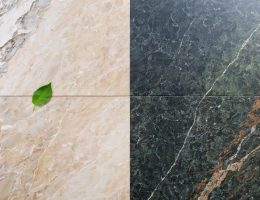
Split view of a natural stone surface showing the impact of a sustainable enhancer sealer: one side untreated and the other vibrantly colored and enhanced, symbolizing eco-friendly stone care.
Sustainability and Environmental Impact

Natural Stone Sealer Certifications: Making Sustainable Choices for Your Stone

Transform your natural stone surfaces from ordinary to extraordinary with advanced enhancer sealers that penetrate deep into the material’s pores. These innovative solutions not only protect against stains and environmental damage but also intensify the stone’s natural colors and unique patterns. Professional-grade stone enhancer sealers create a molecular bond with minerals in granite, marble, and travertine, delivering long-lasting protection while maintaining the stone’s natural breathability.
Unlike conventional sealers, modern enhancer formulations offer dual-action performance: they deepen rich earth tones …

Illustration depicting a stone building demonstrating energy efficiency through thermal mass, with highlighted heat flow and layers displaying different stone types and R-values.
Sustainability and Environmental Impact

Natural Stone R-Values: The Secret to Energy-Efficient Stone Buildings

Natural stone’s thermal performance plays a pivotal role in modern construction, where energy efficiency with stone can significantly impact building performance. R-values for stone materials typically range from R-0.05 to R-0.80 per inch, depending on density and composition. While these values may seem modest compared to conventional insulation materials, stone’s thermal mass properties create a dynamic energy performance that extends beyond simple R-value measurements. Dense …

Illustration of a modern home using natural stone to demonstrate heat absorption and release, with a color overlay showing energy flow, surrounded by lush greenery.
Sustainability and Environmental Impact

Natural Stone’s Secret Energy Advantage: The Most Efficient Heat Source for Your Home

In our quest for sustainable energy solutions, the debate over the most efficient power source has never been more crucial. As global energy demands surge and environmental concerns intensify, understanding the true efficiency of different energy sources becomes essential for making informed decisions about our energy future.
Energy efficiency isn’t just about raw power output – it encompasses the entire lifecycle of production, from resource extraction to final consumption, including environmental impact, cost-effectiveness, and reliability. Modern energy solutions must balance technical efficiency with practical …

Conceptual image of natural stone textures intertwined with green leaves, representing sustainable construction practices and the Natural Stone Council's certification program.
Sustainability and Environmental Impact

How the Natural Stone Council Drives Sustainable Stone Certification

The Natural Stone Council (NSC) stands at the forefront of sustainable building practices, pioneering environmental stewardship in the stone industry through rigorous certification standards and innovative sustainability protocols. As the definitive authority on natural stone sustainability, the NSC transforms how we evaluate, select, and implement stone materials in modern construction. Their certification program, ANSI/NSC 373, has become the gold standard for verifying environmentally responsible stone production practices, addressing crucial factors from water conservation to workplace safety. For architects, builders, and …

Split image contrasting a dull, damaged marble surface cleaned with harsh products versus a shiny, pristine surface maintained with a pH-neutral cleaner.
Sustainability and Environmental Impact

Safe and Effective Natural Stone Cleaners That Won’t Harm Your Investment

Protect your natural stone’s timeless beauty with pH-neutral cleaners specifically formulated for marble, granite, and limestone surfaces. Harsh household cleaners can etch, dull, or permanently damage expensive stone surfaces, making proper cleaning essential for maintaining their value and appearance. Professional stone cleaners contain specialized surfactants that lift dirt and grime while preserving the stone’s protective sealant and natural luster.
For daily maintenance, a combination of warm water and a stone-specific cleaner offers the safest and most effective solution. These specialized cleaners eliminate common…

Illustration of the stone paper recycling process, showcasing calcium carbonate and resin components with eco-friendly symbols and industrial machinery.
Sustainability and Environmental Impact

The Truth About Stone Paper: Can You Really Recycle It?

Stone paper, a revolutionary material made from calcium carbonate and non-toxic resin, presents a complex recycling scenario that demands our attention in today’s sustainability-focused world. As consumers increasingly seek ethically sourced materials, understanding the recyclability of stone paper becomes crucial for making informed environmental choices. Unlike traditional paper, stone paper doesn’t follow conventional recycling processes, yet its unique composition offers …

A side-by-side comparison of natural stone and engineered stone countertops in a modern kitchen setting, highlighting the unique patterns of natural stone and the uniform appearance of engineered stone.
Sustainability and Environmental Impact

Natural Stone vs Engineered Stone: Which One is Right for You?

When choosing between natural stone and engineered stone for your project, it’s crucial to understand their key differences. Natural stone, quarried from the earth, offers unique beauty and durability that has stood the test of time. Engineered stone, meticulously crafted by humans, combines the allure of natural stone with enhanced performance and consistency. By examining the pros and cons of each material, including aesthetics, durability, maintenance requirements, and cost, you can make an informed decision that aligns with your specific needs …

A collection of natural cleaning ingredients including lemons, vinegar, baking soda, and essential oils displayed on a kitchen counter, representing eco-friendly cleaning practices.
Sustainability and Environmental Impact

7 Natural Cleaning Recipes That Ditch Toxic Chemicals & Shine Your Home

Mix equal parts distilled white vinegar and water in a spray bottle for an all-purpose eco-friendly cleaning solution that tackles most surfaces. Sprinkle baking soda on grimy areas before spraying for extra scouring power. Combine 1 cup baking soda, 1/4 cup Castile soap, and 10-15 drops of tea tree essential oil to create a natural soft scrub for tubs, tile, and toilets. Freshen and deodorize carpets by sprinkling a thin layer of baking soda, letting it sit for at least 15 minutes, then vacuuming thoroughly.

"A modern home featuring natural stone walls and flooring, emphasizing the thermal insulation benefits of high R value stones. Heat waves are depicted bouncing off stone surfaces, symbolizing energy efficiency and sustainability."
Sustainability and Environmental Impact

Boost Your Home’s Efficiency with R Value Stones: What You Need to Know

Select natural stones with high R values to enhance insulation in construction projects. Evaluate the specific R value needed for your climate zone to ensure optimal thermal efficiency. Integrate R value stones within exterior walls and flooring systems to reduce energy expenditure and improve overall sustainability. Consult architectural case studies demonstrating successful applications of R value stones to gain insights into best practices and innovative uses.
Understanding R Value: A Key to Energy Efficiency