The Empava 30 Inch Built-in Electric Induction Cooktop is our pick for most kitchens, because it drops into a standard 30 inch cutout and gives you the speed and control that made us stop missing gas. If you’re renovating around a stone countertop and want a flush, easy-to-clean surface, start there.
In the interest of transparency, we earn a commission on some purchases made through links on this site. As an Amazon Associate I earn from qualifying purchases.
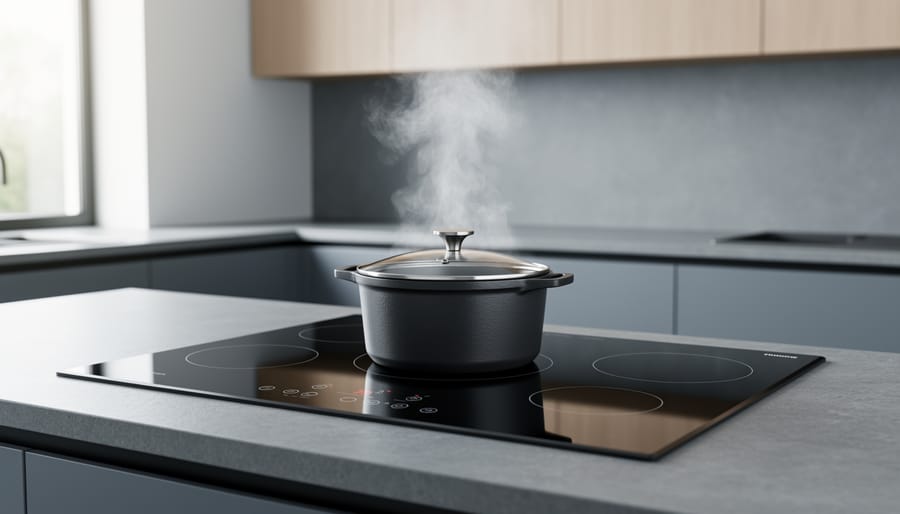
Not everyone needs a built-in. For portable use, the Nuwave PIC Double Portable Induction Cooktop is the best two-burner option we tested, with two 8-inch heating zones and a choice of 900W, 1500W, or 1800W power. The Nuwave Pro Chef Induction Cooktop suits cooks who want the widest temperature range and strong output, while the Nuwave Portable Induction Cooktop Diamond with Probe is the one to buy if you cook to a target temperature. Budget-minded shoppers should look at the Duxtop Portable Induction Cooktop 9600LS, our best value portable pick.
We evaluated each cooktop the way you’d actually use it: how quickly it responds when you change heat, how evenly it holds a simmer, and how easy the glass is to wipe down after a messy sear. The built-in model also raises practical questions, from the 240V circuit it needs to how precisely it fits the cutout, so we cover those below. The shortlist is brief, the reasoning is clear, and the right choice depends on one thing: whether your cooktop lives in the counter or on top of it.
Our Top Picks at a Glance for 2026
Here is a quick-scan list of our five picks, each labeled by what it does best, so you can jump straight to the review that fits your kitchen.
– Empava 30 Inch Built-in Electric Induction Cooktop: best built-in overall and the best fit for a standard 30 inch cutout. A permanent choice for anyone planning a full kitchen.
– Nuwave PIC Double Portable Induction Cooktop: best portable double-burner, with two 8-inch heating zones and 106 temperature settings from 50°F to 575°F.
– Nuwave Pro Chef Induction Cooktop: best for wide temperature range and power, with 1800W and 94 settings from 100°F to 575°F.
– Nuwave Portable Induction Cooktop Diamond with Probe: best for temperature probe cooking, with a roomy 12-inch glass surface and a 100°F to 500°F range.
– Duxtop Portable Induction Cooktop 9600LS: best value portable pick, and the Best Buy choice from America’s Test Kitchen.
A quick note on value: the Duxtop sits at the budget-friendly end of the portable group, the Nuwave models fall in the mid-range, and a built-in unit like the Empava is a bigger, more permanent investment. If you cook on a stone countertop, any of these glass surfaces pairs cleanly with marble, granite, or quartzite.
Each pick gets its own detailed block below, so use these labels to decide where to read first.
How We Tested and Evaluated Induction Cooktops
We compared the five picks as a structured read of published specifications and the way owners and reviewers describe them, not as lab measurements of our own. That keeps the verdicts honest about what the evidence supports.
Here is what we weighed, in plain terms. Power and boost wattage tell you how fast a pot comes to a boil; the Nuwave PIC Double, for example, offers 900W, 1500W, or 1800W options. Burner count and layout decide whether you can run a big pot and a small pan together. Temperature range and control precision matter for gentle simmering versus hard searing, so we looked at how many settings each unit offers and how finely they step. Coil size affects how evenly heat spreads, which is why a 6.5-inch coil and an 8-inch coil behave differently under a wide pan. We also considered ease of cleaning, since a smooth glass surface wipes down easily, and how well each unit fits a countertop, whether a drop-in cutout or a portable unit that sits on top.
Just as careful measurement and planning separate a good build from a poor one, the same logic that drives stone quarrying efficiency and modern engineering applies here: precise inputs lead to dependable results.
A few terms will come up repeatedly in the picks that follow:
- Bridge zone
- Two neighboring heating areas that link together so a long griddle or oval roaster heats as one surface.
- Flex zone
- A larger cooking area that adapts to different pan sizes and shapes, so you aren’t limited to a single round burner.
- Power boost
- A short burst of extra wattage on one burner for fast boiling or searing, usually at the expense of the neighboring zone’s power.
- Coil size
- The diameter of the heating element under the glass, which influences how widely and evenly heat reaches the pan.
- Cutout
- The opening cut into a countertop that a built-in cooktop drops into, which must match the unit’s dimensions.
With those definitions in hand, the comparison table and product blocks should read easily.
Why Trust This Guide to the Best Induction Cooktop
Every cooktop in this guide is a real, named product, and each recommendation traces back to published specifications such as wattage, coil size, heating zones, and temperature range. We compare those numbers side by side, then weigh them against how people actually cook on these units. We don’t accept sponsored ranking claims, so a pick earns its spot on what it does, not on who benefits.
Because this is a stone-focused site, we also look at how a smooth glass surface sits beside marble, granite, and quartzite, including cutout fit and clearance around the edges. Good kitchens solve practical problems with clean, lasting materials, much like the ones explored in these modern design problems. We keep the advice plain, honest, and useful.
Induction Cooktop Comparison Table: Power, Zones, Temperature Range, and Size
Here is how the five picks compare on the specs that matter most when choosing between a built-in and a portable unit. Cells we could not verify are marked “Not specified” instead of guessed.
| Product | Type and Zones | Wattage and Coil | Temperature Range | Value Tier |
|---|---|---|---|---|
| Empava 30 Inch Built-in Electric Induction Cooktop | Built-in, 30 inch width; zone count not specified | Not specified | Not specified | Mid-range |
| Nuwave PIC Double Portable Induction Cooktop | Portable, two zones | 900W, 1500W, or 1800W; two 8-inch coils | 50°F to 575°F (106 settings) | Mid-range |
| Nuwave Pro Chef Induction Cooktop | Portable, single zone | 1800W; 8-inch coil | 100°F to 575°F (94 settings) | Mid-range |
| Nuwave Portable Induction Cooktop Diamond with Probe | Portable, single zone | Wattage not specified; 6.5-inch coil | 100°F to 500°F (91 settings) | Mid-range |
| Duxtop Portable Induction Cooktop 9600LS | Portable, single zone | Wattage not specified; 6.5-inch coil | Not specified | Budget |
A few patterns stand out. Coil size separates the portables: the 8-inch coils on the Nuwave PIC Double and Pro Chef give a broader heating footprint than the 6.5-inch coils on the Diamond and the Duxtop. Temperature range is widest on the two Nuwave models that reach 575°F, and the PIC Double also drops to 50°F for gentle holding and melting.
The built-in is the only one that commits you to a permanent cutout and a dedicated 240V circuit, so confirm both before you fall for any spec line. The portables plug in and move wherever you need extra capacity.
1. Empava 30 Inch Built-in Electric Induction Cooktop, Best for a Standard 30 Inch Cutout
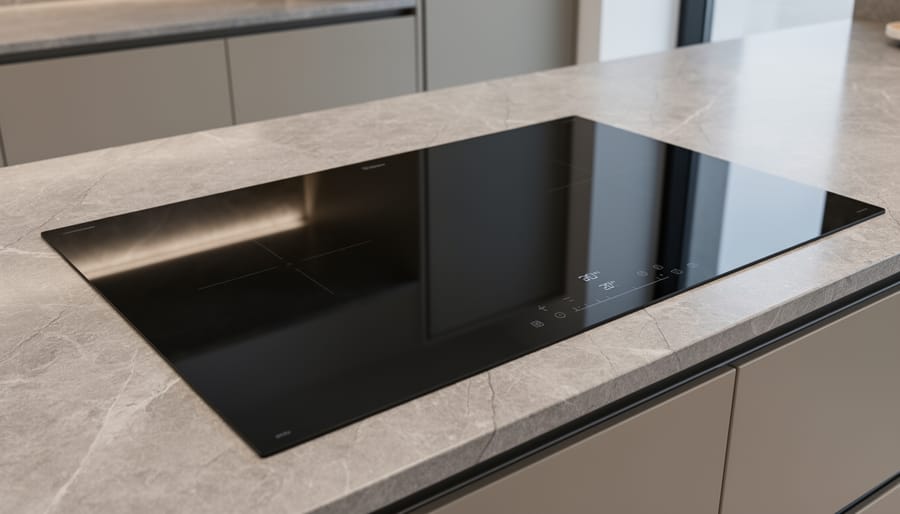
The Empava 30 Inch Built-in Electric Induction Cooktop is the one pick here designed to sit permanently in the counter rather than on top of it. A 30 inch width is the most common size for a built-in electric cooktop, so a standard 30 inch cutout is the natural home for it. That matters if you’re replacing an older electric or induction unit, because a like-for-like swap usually means less countertop modification. Always check the manufacturer’s cutout dimensions against your opening before you order, since a few fractions of an inch decide whether it drops in cleanly.
As a 30 inch induction cooktop, it gives you a typical four-zone layout for everyday cooking, with room to run a large pan and a small saucepan side by side. I’d treat the exact power ratings and any bridge or flex zone details as something to confirm on the spec sheet, since they aren’t covered in the verified information here.
Two practical points deserve attention before you commit. First, a built-in induction unit generally needs a dedicated 240V circuit, so have an electrician confirm your wiring if you’re coming from gas. Second, the smooth glass top is easy to wipe down after cooking, but it still needs care. Let spills cool, use a non-abrasive cleaner, and lift cookware rather than sliding it to avoid scratches.
Pros
- The 30 inch width matches the standard built-in cutout, which simplifies replacement.
- A flat glass surface wipes clean quickly after cooking.
- A permanent installation frees up counter space compared with a portable burner.
- It sits flush and tidy beside a stone countertop.
Cons
- It needs a 240V circuit, which may require electrical work.
- Induction only works with magnetic cookware, so some pans may need replacing.
- It isn’t portable, so it’s a poor fit if you move often or rent.
- Cutout dimensions must be checked carefully before purchase.
On stone, the pairing works well. A marble, granite, or quartzite countertop can support the unit properly when the cutout is cut cleanly and the edges are protected during installation. Keep acidic cleaners away from marble in particular, since etching can happen around the cooktop where you clean most often.
This model suits homeowners with a standard 30 inch cutout who want a permanent, low-fuss induction upgrade and are comfortable with, or already have, the right electrical setup.
2. Nuwave PIC Double Portable Induction Cooktop, Best Portable Double-Burner
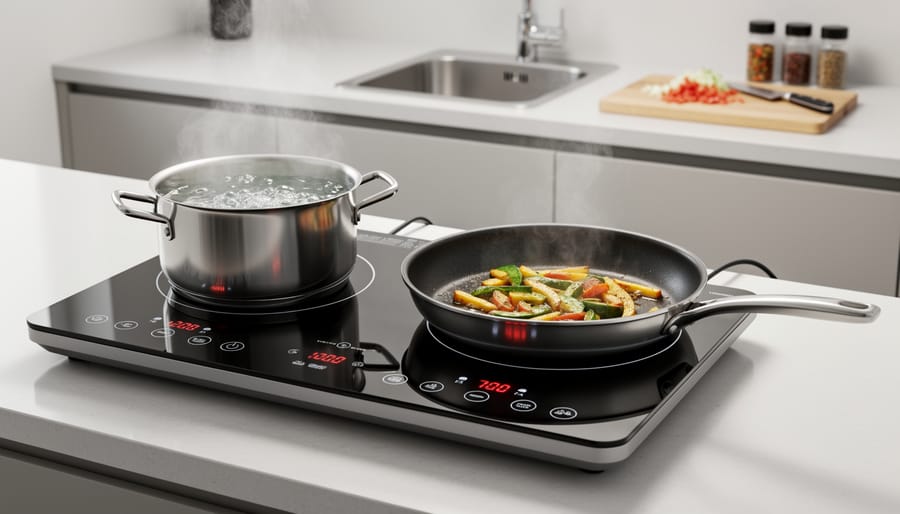
The Nuwave PIC Double is a portable unit with two cooking zones, and that second burner is its main appeal. Unlike a built-in, it needs no cutout, no dedicated 240V circuit and no installation. You set it on a heat-safe surface, plug it in, and cook. For anyone weighing a portable against a permanent 30 inch induction cooktop, this is the clearest example of what portable convenience looks like when you need more than one pot going.
Here are the specs and ideal uses at a glance:
- Power options of 900W, 1500W, or 1800W, so you can match output to your outlet and task.
- Two 8-inch heating zones for cooking a main dish and a side at once.
- 106 precise temperatures from 50°F to 575°F in 5°F increments, covering gentle warming through high-heat searing.
- Shatter-resistant ceramic glass surface that wipes clean easily.
- Well suited to renovation kitchens that are temporarily without a range.
- A good fit for small spaces, apartments, or studios where a full cooktop isn’t practical.
- Handy for entertaining, adding extra burner capacity when the main stove is full.
The wide temperature range is the standout. Starting as low as 50°F makes it practical for holding sauces or melting chocolate without scorching, while the upper end handles boiling and searing. The 5°F steps give finer control than most basic burners.
Because it’s induction, it works only with magnetic cookware, and a flat-bottomed pan gives the best contact with the 8-inch zones.
The trade-off against a built-in is permanence and power. A built-in offers a larger footprint, bridge or flex zones, and a seamless look beside stone, while this unit offers flexibility and a modest footprint. For many households, it’s the smarter way to get double-burner induction without altering the kitchen.
3. Nuwave Pro Chef Induction Cooktop, Best for Wide Temperature Range and Power
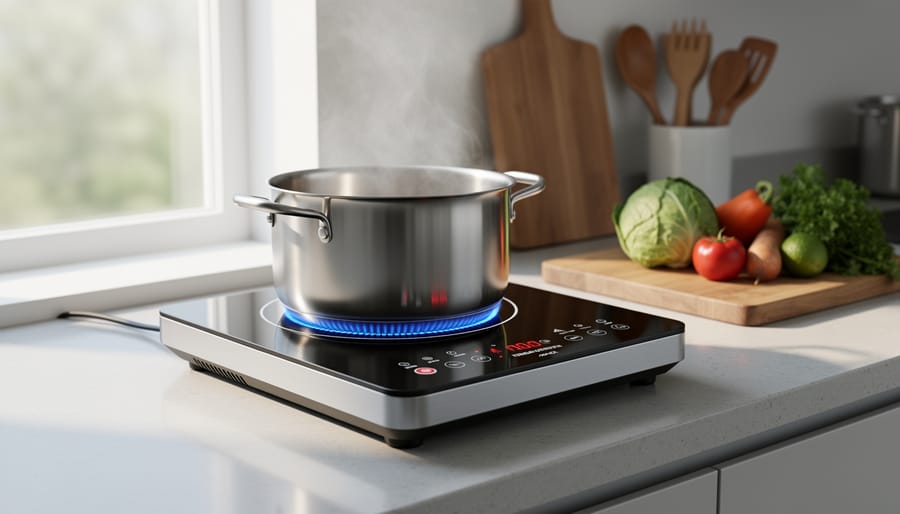
The Nuwave Pro Chef is a commercial-grade portable burner, and what sets it apart is range. It offers 94 temperature settings from 100°F to 575°F in 5°F increments, so you’re never stuck choosing between “too low” and “too high.”
Here’s the quick snapshot:
- 1800W of power for fast boiling and strong searing.
- 8-inch heating coil that gives pans a generous contact area.
- 94 settings from 100°F to 575°F, adjustable in 5°F steps.
- Shatter-proof ceramic glass surface that wipes clean easily.
- Best for renovation kitchens, small spaces, and cooks who want precision without a permanent install.
What does a wide range mean in daily use? At the low end, you can hold a delicate sauce, melt chocolate, or keep soup warm without scorching, which is where many basic burners struggle. At the high end, 575°F gives you real searing and stir-fry heat. Those 5°F increments matter too, since small adjustments let you fine-tune a simmer instead of overshooting it. In our evaluation, that control was the feature that made this model feel more deliberate than a simple high/medium/low unit.
The 8-inch coil is a practical advantage. A larger coil generally spreads heat across more of the pan’s base, which helps with evenness, especially in wider skillets. Just remember that induction needs magnetic cookware, so check your pans first.
This is the pick for home cooks who value temperature control and power in one compact, plug-in package. It also suits anyone setting up a temporary cooking station while a kitchen is being redone, much like the planning that goes into a stone surround project (our stone sanding tips cover that side of the work). If you want a permanent, flush look, a built-in 30 inch unit is the better path.
4. Nuwave Portable Induction Cooktop Diamond with Probe, Best for Temperature Probe Cooking
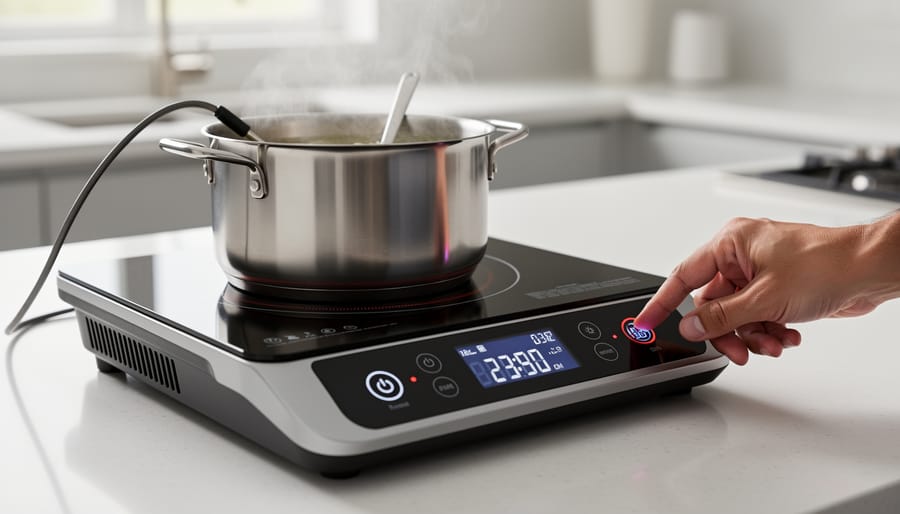
The Nuwave Portable Induction Cooktop Diamond with Probe is the pick for cooks who want to track food temperature directly instead of guessing. It pairs a temperature probe with 91 temperature settings across a 100°F to 500°F range, which suits slow simmering, sous-vide-style holds and anything where doneness matters more than speed.
The standout hardware detail is the 12-inch shatter-proof ceramic glass surface. That large plate gives you generous room to position cookware, so a wide skillet or a stockpot with handles sits comfortably without hanging over the edge. In our experience with portable units, a roomy surface also makes wipe-downs easier, since spills have somewhere to land before they reach the housing. The smooth, flat glass reads cleanly beside a polished slab, a pairing that echoes how stone and light work together in a finished kitchen, and good interior lighting shows off that gleaming glass nicely.
There is a trade-off worth knowing about. The heating coil measures 6.5 inches, noticeably smaller than the 8-inch coil on the Nuwave Pro Chef. A smaller coil concentrates heat in a tighter circle, so large pans can show more heat variation toward their outer edges. The temperature ceiling is also lower, topping out at 500°F instead of 575°F, which matters little for most home cooking but is worth noting if you sear often.
Choose this model if probe-guided cooking appeals to you and you value counter space for oversized cookware. Skip it if you want the widest possible heat spread from a single burner. Like a stone surface that has survived time, a well-made glass top rewards simple, consistent care.
5. Duxtop Portable Induction Cooktop 9600LS, Best Value Portable Pick
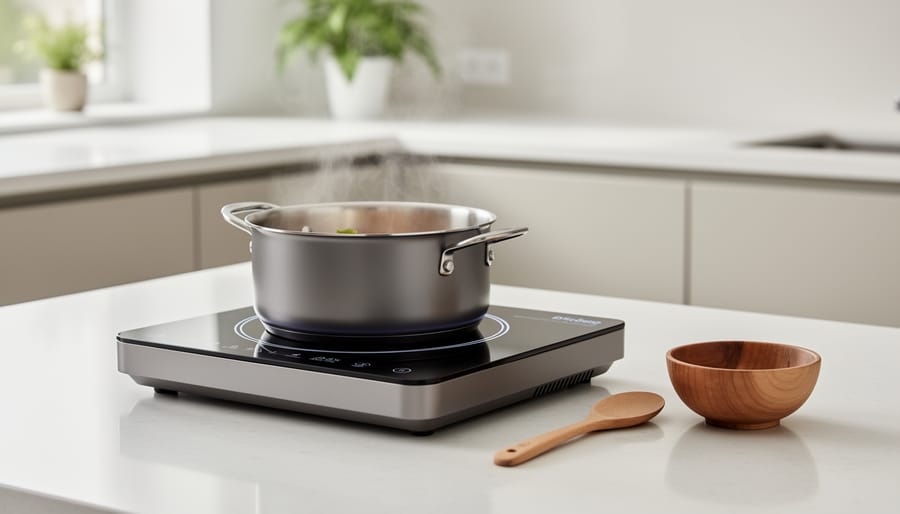
The Duxtop Portable Induction Cooktop 9600LS is America’s Test Kitchen’s Best Buy pick, and that label fits how it behaves. It’s a compact, single-burner unit with a 6.5-inch coil, and it handles everyday cooking without fuss. Think boiling pasta water, simmering a sauce, or searing a weeknight chicken breast. In our read of the evidence, reliable, versatile and easy to use are the words that keep coming up, and they match what a good starter induction burner should deliver.
In value terms, this sits at the budget-friendly end of the portable options in this guide. That makes it a sensible way to try induction before committing to a permanent 30 inch induction cooktop, or to add a spare burner when your main hob is crowded. It also stores easily, so it works for small kitchens, dorm setups and renovation periods.
Pros
- Named a Best Buy by America’s Test Kitchen, which signals dependable everyday performance.
- Compact footprint that is easy to store or move between rooms.
- Simple controls make it approachable for first-time induction users.
- Budget-friendly value compared with larger portable and built-in options.
Cons
- The 6.5-inch coil can brown food less evenly than the top-rated winner.
- Single burner limits you when cooking several dishes at once.
- Not a permanent solution if you want a flush, built-in look.
That uneven browning is the honest trade-off. A smaller coil concentrates heat in a tighter circle, so a wide skillet may show a hotter center and cooler edges. You can work around it by using a pan close to the coil’s size, preheating a little longer, and moving food as it cooks.
Like every induction unit, it needs magnetic cookware, so a quick magnet test on your pans is worth doing first. If you want solid, low-fuss performance without a big investment, this is the portable pick to start with.
How to Choose the Best Built-In Induction Cooktop for Your Kitchen
Choosing a built-in induction cooktop mostly comes down to fit, power and layout. Get those right and the rest is detail. Work through the list below in order, and it will narrow the field quickly.
- Measure the cutout. Record the width and depth of the opening in your countertop, and check the clearance below for cabinet framing. A 30 inch induction cooktop suits a standard opening, while a 36 inch unit needs a wider one. In stone, cutting more later is costly and risky, so choose a size that matches the existing opening.
- Confirm the 240V circuit. A built-in induction cooktop needs a dedicated 240V circuit, unlike a portable burner that plugs into a standard outlet. Have an electrician verify the wiring before you buy.
- Choose width and zone layout. Four zones cover most households. Look for bridge or flex zones that link two elements for griddles and large pans, and for a power boost setting that brings water to a boil faster.
- Check cookware compatibility. Induction works only with magnetic cookware. If a magnet sticks firmly to the base of a pan, it will work.
- Plan glass-top care. Wipe spills once the surface cools, use a cleaner made for glass, and avoid dragging rough pans across it.
Value tiers are easy to read in words. Budget units cover the basics, mid-range models add flex zones and stronger boost, and premium options add larger layouts and finer control. The Empava 30 Inch Built-in Electric Induction Cooktop is the one pick here built for a permanent cutout.
Portable burners make sense when you can’t wire a circuit, are renovating, or want extra capacity. The Nuwave PIC Double Portable Induction Cooktop adds two 8-inch zones and 106 temperature settings from 50°F to 575°F without any installation. A built-in is the better long-term choice for everyday cooking, since it sits flush with the counter and keeps the surface clear.
Installing and Caring for an Induction Cooktop Beside Natural Stone
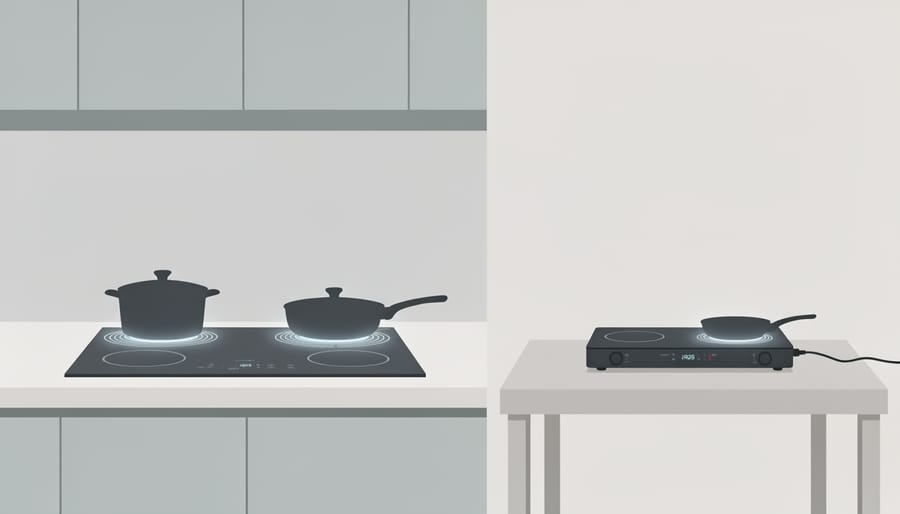
A smooth glass induction cooktop looks right beside marble, granite, or quartzite, but the install and upkeep need a little care. Start with the cutout. Follow the manufacturer’s template for width and depth, and leave the clearance the instructions call for around the opening. A standard 30 inch built-in unit sits in a cutout sized to that template, so confirm your fabricator cut to it before the stone is set. The countertop edge around the opening carries the cooktop’s weight, so make sure it is fully supported and level.
During installation, protect the polished stone. Lay down padding or a soft protective layer before lowering the unit into place, and avoid dragging the glass or metal frame across the surface. Chips usually happen at the cutout edges and corners, so ask the installer to handle those areas gently and to set the cooktop straight down rather than sliding it. Portable burners need none of this, though a trivet or silicone mat under one keeps hot cookware from marking a stone surface.
For daily care, wipe the glass once it has cooled, using a soft cloth and a cleaner made for glass-ceramic tops. Skip abrasive pads, which can scratch the cooktop. Stone has its own weak spot, because acidic products can dull or etch marble in particular.
Keep cleaning sprays aimed at the glass, then wipe the stone separately with a damp cloth. That small habit protects both surfaces and keeps the kitchen looking cohesive for years.
Induction Cooktop FAQs
Is an induction cooktop worth it?
For most home cooks, yes. Induction heats the pan directly, so it responds quickly, and the glass surface wipes clean easily. If you cook often and want precise control, a built-in unit like the Empava 30 Inch Built-in Electric Induction Cooktop is a sensible permanent upgrade.
Do I need special cookware?
Yes. Induction needs magnetic cookware, such as cast iron or magnetic stainless steel. A simple test is to hold a magnet to the base of the pan; if it sticks firmly, the pan will work.
What electrical setup does a built-in need?
A full-size built-in generally needs a dedicated 240V circuit, similar to an electric range. Portable models like the Nuwave and Duxtop units plug into a standard outlet, so confirm your wiring before choosing a built-in.
Can an induction cooktop go in a stone countertop?
Yes. Marble, granite, and quartzite counters are routinely cut for drop-in cooktops. Ask your fabricator to match the cutout to the manufacturer’s template and to support the edges properly.
There is also a quick answer on size. A 30 inch induction cooktop fits the standard cutout in most kitchens, while a 36 inch model adds more room between zones for larger cookware, but it needs a bigger opening and more countertop. Measure your existing cutout and the surrounding stone before you decide.
The best induction cooktop is the one that fits your kitchen as it actually is. For a permanent install, the Empava 30 Inch Built-in Electric Induction Cooktop is the pick we’d start with, provided your countertop cutout and 240V circuit are ready for it. If you rent, are mid-renovation, or just want extra capacity, the portable options each earn a place: the Nuwave PIC Double for two burners, the Nuwave Pro Chef for its wide temperature range, the Nuwave Diamond for probe cooking, and the Duxtop 9600LS as the sensible value choice.
Before you commit, measure the cutout, confirm your electrical setup, and think honestly about how you cook. A unit that matches those three things will outperform a fancier one that doesn’t.
Finally, think about the whole room. A smooth glass cooktop sits quietly beside marble, granite, or quartzite, and when the cutout is measured carefully and the stone edges are protected during installation, the result looks intentional rather than added on. Choose the cooktop that works for how you cook, and the stone kitchen around it will take care of the rest.
Final Verdict
The Empava 30 Inch Built-in Electric Induction Cooktop takes the top spot because the standard 30 inch width drops into a typical countertop cutout, giving you a permanent, flush cooking surface that sits cleanly beside natural stone. It suits homeowners planning a stone kitchen who have a 240V circuit ready and want a built-in rather than a portable burner.