Inspect stone veneer installations annually by examining mortar joints for cracks wider than 1/16 inch, checking for loose or hollow-sounding panels through tap testing, and documenting any visible displacement or bowing that exceeds 1/4 inch over 10 feet. Professional inspections should occur within the first year after installation, again at five years, and then every three to five years depending on climate exposure and building height.
Stone veneer failures pose serious safety risks and costly repairs when left undetected. Unlike solid masonry walls, adhered and anchored veneer systems rely on specific attachment methods and proper water management to maintain structural integrity. Understanding inspection protocols protects both building occupants and property investments while ensuring compliance with current building codes and natural stone facing safety standards.
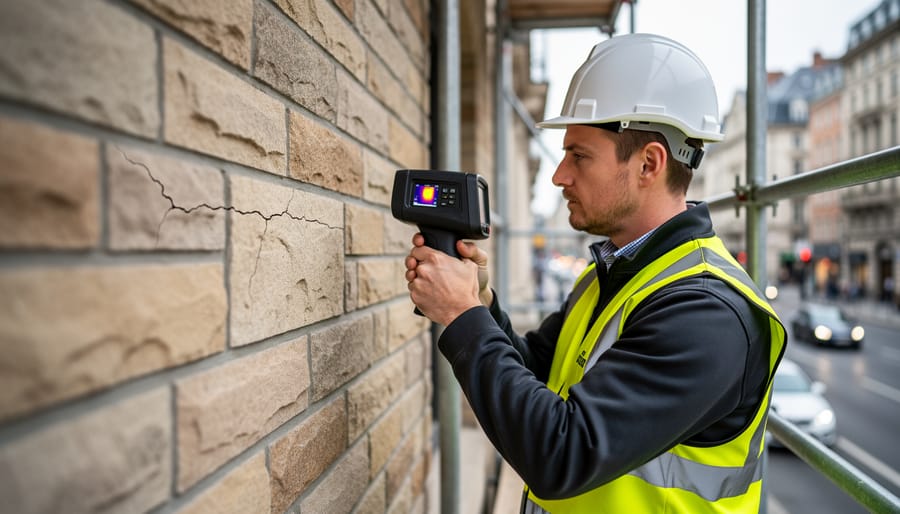
Modern inspection techniques combine visual assessment with advanced diagnostic tools including infrared thermography to detect moisture intrusion, pull testing to verify anchor strength, and endoscopic examination of cavity spaces. These methods identify hidden deterioration before visible failure occurs. Property owners and facility managers who implement systematic inspection programs can address minor issues during routine maintenance rather than facing emergency repairs or potential liability from falling veneer panels.
This comprehensive guide examines industry-standard inspection protocols, required documentation procedures, common failure patterns, and remediation strategies that preserve the aesthetic appeal and structural performance of stone veneer installations. Whether planning new construction or maintaining existing facades, proper inspection practices extend the service life of these architectural features while maintaining occupant safety.
Understanding Stone Veneer Systems and Common Failure Points
What Makes Stone Veneer Different from Full-Thickness Stone
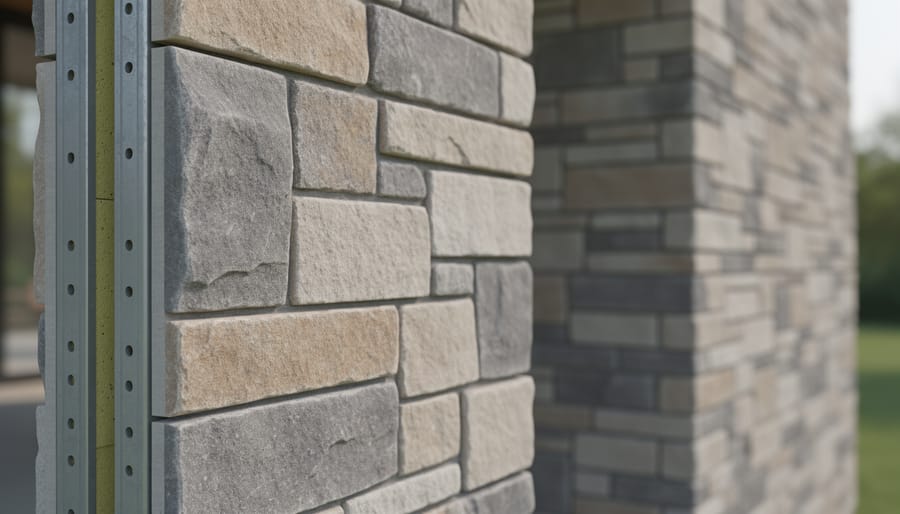
Stone veneer differs fundamentally from full-thickness stone in both construction and installation methodology. Traditional full-thickness stone walls, typically 4 to 8 inches deep, are structural elements that bear their own weight and often contribute to the building’s load-bearing capacity. In contrast, stone veneer consists of thinner stone pieces, usually 3/4 inch to 2 inches thick, that are attached to an existing structural wall system rather than serving as the primary structure themselves.
The attachment methods for stone veneer vary considerably based on building type, height, and local codes. Modern installations commonly use mechanical anchoring systems with metal ties, adhesive mortars, or a combination approach. Each stone piece connects to a backing wall through these deliberate attachment points, creating a cladding system that relies entirely on the integrity of both the veneer material and its connection mechanism.
This fundamental difference in construction creates unique inspection requirements. While full-thickness stone primarily needs assessment for structural integrity and mortar joint condition, veneer systems demand specialized evaluation of the attachment system’s performance, water management details, and the condition of the cavity space behind the veneer. Inspectors must understand how moisture moves through these assemblies, recognize signs of attachment failure, and identify potential issues that may not be visible from the surface.
The concealed nature of veneer attachment systems means that problems can develop undetected until they become serious safety concerns, making regular professional inspection essential for these installations.
The Three Critical Failure Zones
Stone veneer systems can fail in three distinct areas, each presenting unique risks to both structural integrity and occupant safety. Understanding these failure zones helps property owners and professionals identify potential problems before they escalate into costly repairs or dangerous conditions.
The first critical zone involves substrate attachment, where anchoring systems connect the veneer to the building structure. Metal ties, anchors, or support angles must resist both the weight of the stone and lateral forces from wind or seismic activity. Corrosion of these hidden components often goes undetected until stones begin shifting or falling. A 2019 case study from a Chicago high-rise revealed that inadequate anchor spacing led to partial facade failure after only eight years, despite the building meeting initial code requirements.
Mortar bonding represents the second failure zone, encompassing both the bond between stone and backing material and the joints between individual pieces. Improper mortar mix ratios, inadequate curing time, or incompatible materials can compromise adhesion. Water infiltration accelerates deterioration through freeze-thaw cycles, causing mortar to crack and crumble. Regular inspections should evaluate joint integrity, looking for gaps, cracks, or areas where mortar has separated from stone surfaces. Implementing proper maintenance protocols can significantly extend the lifespan of mortar joints.
The third zone focuses on weather barrier penetration. Stone veneer relies on continuous moisture barriers behind the installation to prevent water from reaching structural elements. Damaged or improperly installed barriers allow moisture accumulation, leading to mold growth, wood rot, and metal corrosion. These hidden problems often manifest only after significant damage has occurred, making proactive inspection of penetrations around windows, doors, and utility connections essential for long-term performance.
Current Safety Standards for Stone Veneer Installation and Inspection
ASTM and Industry Standards That Apply to Veneer Inspection
Understanding applicable standards is essential for ensuring stone veneer installations meet safety and performance requirements. Several ASTM International standards provide the framework for proper installation and inspection practices.
ASTM C1780 serves as the primary standard specification for adhered manufactured stone masonry veneer units. This comprehensive document outlines requirements for material properties, installation methods, and quality control measures. It addresses critical factors including unit dimensions, moisture absorption rates, and bonding strength. For inspectors, C1780 provides clear benchmarks for evaluating whether installations comply with accepted industry practices.
ASTM C1242 focuses specifically on the design and installation of anchored stone veneer systems. This standard is particularly relevant for natural stone applications where mechanical anchors support the veneer weight. It specifies anchor spacing, load requirements, and installation procedures that inspectors should verify during field examinations. The standard emphasizes the importance of proper corrosion-resistant materials and adequate clearances behind veneer panels.
Additional relevant standards include ASTM C97, which covers physical testing of dimensional stone, and ASTM C99, addressing modulus of rupture testing. These material-focused standards help inspectors understand the inherent properties of stone being used and whether it’s appropriate for the intended application.
Building codes typically reference these ASTM standards as minimum requirements. The International Building Code, for example, incorporates several ASTM standards by reference, making compliance mandatory in most jurisdictions. Inspectors should verify that installations meet both the letter and intent of these standards.
For property owners and professionals, understanding these standards provides a common language for discussing installation quality. When hiring inspectors or contractors, asking about their familiarity with relevant ASTM standards ensures you’re working with knowledgeable professionals who follow industry-accepted practices rather than shortcuts that could compromise long-term performance and safety.
Building Code Requirements and Regional Variations
The International Building Code (IBC) serves as the foundational framework for stone veneer installations across the United States, though specific requirements often depend on local amendments and regional conditions. Understanding these code requirements is essential for ensuring safe installations and passing required inspections.
Under current IBC provisions, adhered stone veneer typically cannot exceed specific height limitations without additional engineering requirements. For most residential applications, the code permits installations up to 30 feet, while manufactured stone veneer may have different restrictions. These height limits directly relate to weight distribution and structural loading concerns that inspectors will verify during their assessments.
Attachment requirements represent a critical component of code compliance. The IBC mandates specific fastener types, spacing intervals, and backing materials depending on the veneer weight and substrate type. Metal lath must be properly attached to weather-resistant barriers, and weep screeds must be installed at the bottom of veneer applications to allow moisture drainage. These requirements align with broader stone installation safety standards that protect both installers and building occupants.
Inspection intervals vary significantly by jurisdiction. Many regions require inspections at multiple stages: after substrate preparation, following lath installation, and upon project completion. Some municipalities mandate periodic post-installation inspections for commercial buildings, particularly in high-traffic areas.
Regional variations reflect local climate challenges. Coastal areas often impose stricter corrosion-resistant fastener requirements due to salt exposure. Cold climate regions may require enhanced moisture barriers and additional attention to freeze-thaw cycle resistance. Seismic zones mandate supplementary anchoring systems and flexible connections to accommodate building movement. Before beginning any stone veneer project, always consult local building departments to understand specific regional amendments and inspection protocols that apply to your location.
The Professional Stone Veneer Inspection Process
Visual Inspection Techniques and Warning Signs
Visual inspection forms the foundation of any comprehensive stone veneer assessment, allowing trained professionals to identify potential problems before they escalate into costly failures. Understanding what inspectors examine during these assessments helps property owners recognize when professional evaluation is necessary.
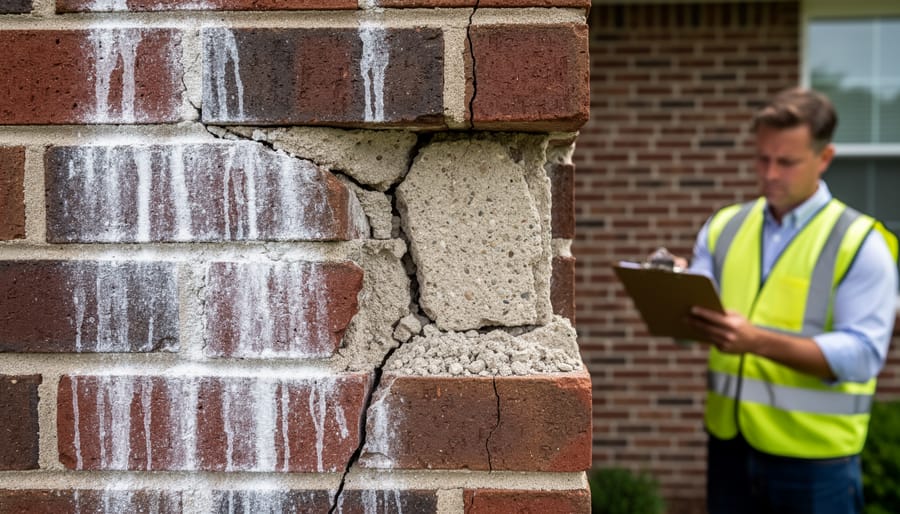
During a visual inspection, professionals systematically examine the entire veneer installation, beginning with cracking patterns. Horizontal cracks often indicate structural movement or inadequate support, while vertical cracks may suggest thermal expansion issues or improper joint spacing. Spider-web patterns typically signal impact damage or substrate problems. Inspectors pay particular attention to crack locations, as those near corners or openings often indicate stress concentration points.
Efflorescence appears as white, powdery deposits on stone surfaces and signals moisture infiltration. This crystalline residue forms when water-soluble salts migrate through the stone and evaporate at the surface. While sometimes merely cosmetic, persistent efflorescence suggests ongoing moisture problems that require immediate attention to prevent further deterioration.
Displacement and bowing represent serious structural concerns. Inspectors look for stones that protrude from the wall plane or appear to lean outward, indicating potential anchor failure or inadequate attachment. Even minor bulging warrants investigation, as it often precedes complete veneer detachment.
Mortar deterioration manifests as crumbling joints, missing sections, or recessed mortar lines. Healthy mortar should be intact and slightly recessed from the stone face. Eroded joints allow water penetration and compromise the veneer system’s integrity.
Moisture staining appears as dark patches, streaking, or discoloration on stone surfaces. These stains indicate active water infiltration pathways and help inspectors trace moisture sources. Staining below window sills, along flashing lines, or at control joints often points to specific deficiencies in the weather-resistant barrier or drainage system.
Regular visual assessments enable early detection of these warning signs, preventing minor issues from developing into major structural hazards.
Advanced Testing Methods for Hidden Problems
When visual inspection reveals concerns or when assessing older installations, advanced testing methods can uncover hidden problems that threaten structural integrity. These techniques range from simple non-destructive approaches to more invasive procedures, each suited to specific diagnostic needs.
Tap testing remains one of the most practical initial methods for detecting voids or delamination behind stone veneer. Using a lightweight plastic mallet or even knuckles, inspectors systematically tap across the veneer surface, listening for hollow or dull sounds that indicate poor adhesion or gaps between the stone and substrate. Solid installations produce a consistent, higher-pitched sound, while compromised areas sound notably different. This technique requires experience to interpret accurately but offers immediate feedback during field inspections.
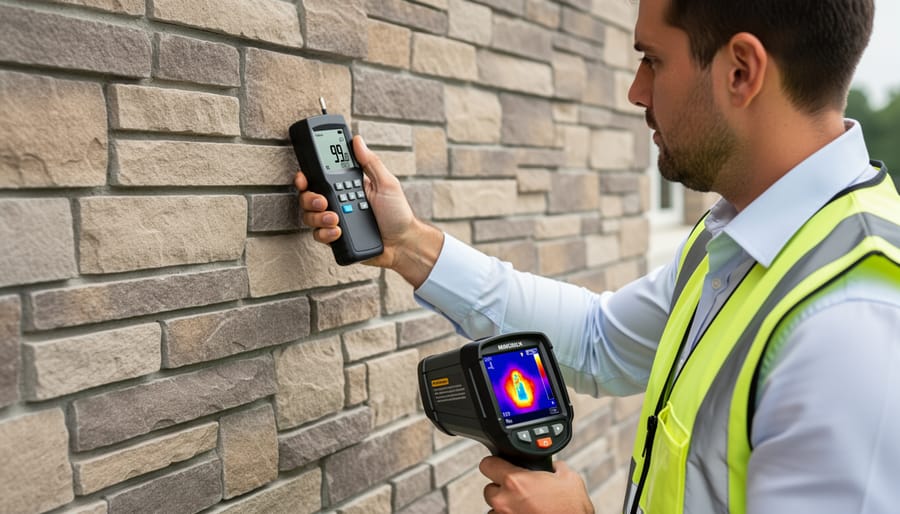
Moisture meters provide quantitative data about water infiltration, a primary cause of veneer failure. Pin-type meters measure electrical resistance between two probes inserted into mortar joints, while non-invasive meters use electromagnetic sensors to detect moisture without penetrating the surface. Elevated moisture readings, especially in areas that should be dry, signal potential water entry points, trapped moisture, or failed waterproofing systems. Regular moisture monitoring helps identify problems before they cause visible damage.
Infrared thermography offers a sophisticated, non-contact method for large-scale assessments. Thermal imaging cameras detect temperature variations across the veneer surface, revealing moisture accumulation, missing insulation, or delaminated areas that retain different thermal properties than properly bonded sections. This technology proves particularly valuable for tall buildings or extensive facades where physical access is challenging.
When non-destructive testing raises significant concerns, probe investigations or limited destructive testing becomes necessary. This involves removing select stones or drilling small diagnostic holes to directly examine mortar condition, substrate integrity, and anchorage systems. While requiring repair afterward, these invasive methods provide definitive answers about structural conditions that influence safety decisions. Professional judgment determines when the benefits of destructive testing outweigh the temporary disruption, typically when renovation planning, safety concerns, or liability issues demand certainty about hidden conditions.
Safety Risks Associated with Compromised Stone Veneer
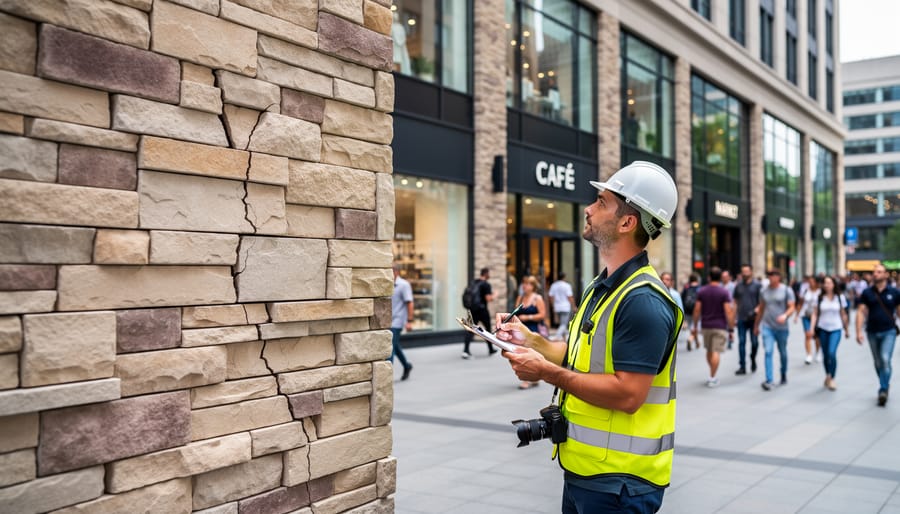
Detachment Hazards in High-Traffic Areas
When stone veneer detaches from a building façade, the consequences can be catastrophic. The physics behind veneer failure involves the combined forces of gravity, structural movement, and the breakdown of anchoring systems. Stone panels, which can weigh between 15 to 25 pounds per square foot, become dangerous projectiles when attachment mechanisms fail. The risk escalates dramatically in high-traffic areas where pedestrian volume increases the likelihood of injury.
Commercial buildings and entrance zones present particularly hazardous scenarios. Morning rush hours at office buildings, busy retail entrances, and hotel drop-off zones concentrate dozens or hundreds of people in areas directly beneath veneer installations. A single falling stone piece from even modest heights can cause severe injury or death. Wind uplift and thermal cycling compound these risks by creating dynamic stress on already compromised attachment points.
The liability exposure for property owners is substantial. Beyond the obvious human cost, detachment incidents trigger investigations, potential litigation, and regulatory scrutiny. Insurance claims for veneer-related injuries have reached millions of dollars in documented cases. Regular inspection programs serve as the primary defense against these outcomes, allowing professionals to identify deteriorating anchors, corroded ties, and compromised mortar joints before failure occurs. Proactive assessment transforms stone veneer from a liability into the durable, safe building component it was designed to be.
Water Infiltration and Hidden Structural Damage
When stone veneer systems fail or become compromised, they create pathways for water to infiltrate behind the façade, leading to serious structural consequences that often remain invisible until significant damage occurs. Even small cracks, loose mortar joints, or gaps in sealant can channel water into wall cavities where it becomes trapped against substrate materials.
Once moisture penetrates the building envelope, it can saturate sheathing materials, corrode metal fasteners and anchors, and deteriorate structural framing components. Wood substrates are particularly vulnerable, experiencing rot and decay that weakens load-bearing capacity. In freeze-thaw climates, trapped moisture expands when frozen, causing progressive deterioration that accelerates over seasonal cycles.
Beyond structural concerns, persistent moisture creates ideal conditions for mold and mildew growth within wall cavities. These biological contaminants compromise indoor air quality and pose health risks to building occupants, while remediation requires extensive demolition and rebuilding that far exceeds the cost of preventive maintenance.
Professional inspections identify early warning signs of water infiltration before hidden damage becomes extensive. Inspectors look for moisture staining, efflorescence on stone surfaces, rust bleeding from anchor points, and thermal irregularities that indicate wet insulation. Detecting these indicators early allows for targeted repairs that restore building envelope integrity and prevent costly structural rehabilitation projects that compromise both safety and property value.
When to Schedule Stone Veneer Inspections
Inspection Intervals for Existing Veneer Installations
Regular inspection schedules help identify potential issues before they compromise safety or require costly repairs. The frequency of inspections should vary based on several key factors.
For newer installations (less than 5 years old), an initial inspection at the 2-year mark is recommended to catch any installation-related defects that may emerge after initial settling. Buildings between 5 and 15 years old should undergo inspections every 3 to 5 years, as this period often reveals the first signs of weathering or material degradation.
Climate exposure significantly influences inspection frequency. Coastal properties exposed to salt air, buildings in freeze-thaw climates, and structures facing severe weather conditions warrant annual or biennial inspections. The harsh environmental conditions accelerate deterioration of mortar joints, sealants, and anchoring systems. Properties in moderate climates can typically extend intervals to every 5 years.
Veneer type also matters. Thin adhered veneer systems require more frequent monitoring than anchored systems due to their reliance on adhesive bonds. Similarly, darker stone varieties that absorb more heat may experience faster thermal cycling and expansion-contraction stress.
Buildings over 20 years old should receive professional inspections every 2 to 3 years regardless of apparent condition. Hidden deterioration often progresses unnoticed until visible failure occurs, making preventive assessment critical for older installations.
Post-Installation and Restoration Verification
Post-installation and restoration inspections serve as essential quality control checkpoints, verifying that stone veneer work meets safety standards and design specifications. These inspections should occur at specific intervals: an initial review within 24-48 hours after installation, a follow-up assessment at 30 days, and a final verification at 90 days once materials have fully cured and settled.
During these evaluations, inspectors verify proper adhesion between veneer and substrate, checking for hollow spots, cracks, or separation. They assess mortar joint consistency, water drainage effectiveness, and the integrity of sealants and flashing systems. Proper implementation of restoration safety protocols during the work should also be documented.
For restoration projects, inspections confirm that cleaning methods haven’t damaged stone surfaces and that repairs maintain structural integrity. New installations require verification of anchor placement, load distribution, and compliance with engineered drawings. Documentation through photographs and detailed reports creates an essential baseline for future maintenance planning. This systematic approach identifies potential issues before they escalate into costly repairs or safety hazards, protecting both property investment and occupant safety.
Selecting Qualified Stone Veneer Inspectors
Finding a qualified stone veneer inspector requires careful vetting to ensure they possess the specific expertise needed for these complex building systems. The ideal inspector should have specialized knowledge beyond general home inspection credentials, as stone veneer installations involve unique structural, moisture management, and material-specific concerns.
Start by looking for inspectors with relevant certifications from recognized organizations such as the International Code Council, the American Society of Home Inspectors, or specialized masonry associations. Certifications specific to building envelope systems or masonry inspection carry particular weight, as these demonstrate focused training in the areas most critical to stone veneer performance.
Experience matters significantly in this field. Ask potential inspectors about their specific background with stone veneer systems, including the number of veneer inspections they’ve completed and whether they’ve worked with both natural stone and manufactured alternatives. Inspectors who have construction or installation experience with stone veneer bring valuable practical knowledge to the assessment process.
During your initial consultation, ask targeted questions to gauge their expertise. Inquire about their familiarity with local building codes and how these apply to stone veneer installations. Request examples of common failure modes they’ve identified in previous inspections and how they document their findings. A qualified inspector should readily discuss water intrusion testing methods, proper flashing techniques, and tie-back anchor systems without hesitation.
Request sample inspection reports to evaluate their documentation thoroughness. Quality reports should include detailed photographs, clear descriptions of deficiencies, and specific recommendations for remediation. Don’t hesitate to ask for references from previous clients, particularly those involving similar property types or installation methods. The right inspector will demonstrate both technical competency and the ability to communicate complex issues in understandable terms.
Stone veneer inspection represents far more than a regulatory checkbox—it’s a fundamental investment in safety, structural integrity, and long-term value. Whether you’re managing a historic building with aging stone facades or overseeing a contemporary installation, proactive inspection protocols protect both people and property while preserving the timeless beauty that makes natural stone such a compelling architectural choice.
The cost implications alone make regular inspection worthwhile. Identifying minor mortar deterioration or early signs of water infiltration during routine assessments allows for targeted repairs that cost a fraction of emergency remediation. More importantly, these preventive measures help avoid catastrophic failures that can result in injury, liability claims, and extensive structural damage.
For property owners and facility managers, now is the time to evaluate your stone veneer installations. Start with a visual assessment from ground level, looking for obvious signs like cracking, displacement, or staining. If your building is over a decade old, features exterior stone veneer above pedestrian areas, or shows any concerning symptoms, professional inspection should be your next step.
Design professionals and contractors bear responsibility for specifying appropriate inspection intervals and ensuring clients understand ongoing maintenance requirements. Quality installation deserves quality care—proper inspection protocols ensure that natural stone applications continue to perform beautifully for generations.
Don’t wait for problems to become visible from the ground. Schedule a comprehensive inspection and protect your investment in natural stone’s enduring elegance.