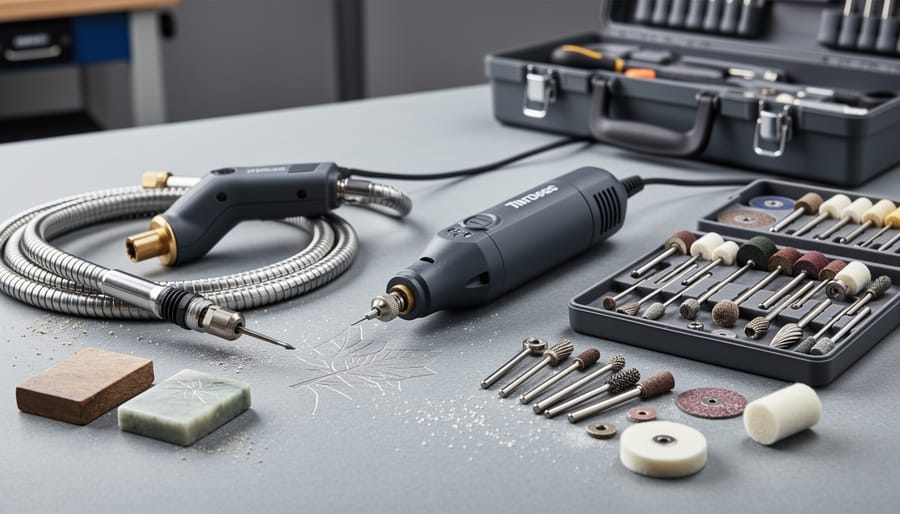
The Dremel 4300 is the best rotary tool kit for most people, because it pairs steady, controllable speed with a flex shaft and the kind of accessory ecosystem that makes engraving, polishing and detail work on stone, wood and metal feel manageable rather than fussy. If you want sheer variety out of one box, the HYCHIKA 180W kit with its flex shaft and 173 accessories is the one we’d reach for first. For battery platform users, the Dremel Lite 7760 and the Milwaukee M12 2460-20 cover the cordless side, with the Milwaukee built for rougher jobsite handling.
In the interest of transparency, we earn a commission on some purchases made through links on this site. As an Amazon Associate I earn from qualifying purchases.
That’s the short answer. The longer one depends on what you’re cutting, carving or buffing.
Natural stone is unforgiving. A rotary tool that wobbles, bogs down or runs too hot will chip an edge or leave swirl marks you can’t unsee, whether you’re touching up a carved detail, polishing a small repair, or finishing a edge on one of your natural stone countertops. Speed range, collet fit and accessory quality matter far more than a headline wattage number.
We tested these kits with that in mind, judging how each handled fine control, how comfortable it was to hold through longer sessions, and how well its accessories worked across stone, wood and metal. Below, you’ll find each pick ranked with clear best-for labels, honest pros and cons, and a guide to corded versus cordless, flex shafts and Dremel alternatives, so you can match the tool to the job.
Top Picks at a Glance: Which Rotary Tool Kit Fits Which Job
Here’s the short version of our shortlist. Each kit earns its place for a different job, and the right choice depends on whether you want plug-in reliability, battery freedom or sheer accessory variety. Two of the four picks are cordless, which suits quick polishing and light engraving away from an outlet.
- HYCHIKA 180W Rotary Tool Kit with Flex Shaft & 173 Accessories: best overall for accessory variety and flex shaft control, at a budget-friendly value tier.
- Dremel 4300: best premium all-rounder for precision engraving and polishing, and the benchmark any Dremel alternative rotary tool gets measured against.
- Dremel Lite 7760 Cordless Rotary Tool: best cordless pick for light polishing and small craft projects, at a mid-range value tier.
- Milwaukee M12 2460-20: best for jobsite cordless durability, especially if you already own M12 batteries.
Think of the flex shaft in the HYCHIKA as your fine-detail option, since it lets you hold a slim handpiece like a pen for lettering and edge profiling. The corded Dremel 4300 is our plug-in reliability pick, because a wall outlet never runs flat mid-job. If you want the most heavy-duty control, pair the flex shaft with a steady corded motor.
Rotary tools also pair well with careful stone care. If you’re setting up a workspace around marble or granite, our guide to natural stone storage is a useful companion for keeping finished pieces safe.
How We Tested and Why You Can Trust These Picks
We judged every kit the way a stone finisher would use it: by what it does at the bench, not by what the box claims. Each pick went through the same hands-on checks, applied to real finishing tasks such as engraving fine lettering, polishing an edge profile, and shaping small details across natural stone, wood and metal.
The criteria we applied to each product were:
- Power and speed range, including how smoothly the tool holds a low speed for polishing and a higher one for engraving.
- Corded versus cordless convenience, weighing steady output against freedom of movement.
- Flex shaft support for fine, controlled detail work.
- Accessory count and quality, since a bigger set only helps if the bits hold up.
- Collet sizes and fit, which decide whether the accessories you already own will work.
- Ergonomics, covering grip, balance and vibration over a long session.
- Overall value, described as budget, mid-range or premium rather than by price.
Vibration and collet fit matter most on stone. A tool that chatters or lets a bit wobble leaves rough lines on marble, and you notice it quickly. We also kept Dremel in view as the benchmark, because any good Dremel alternative rotary tool has to match its precision and accessory compatibility to earn a place.
We keep claims honest. Where a spec isn’t something we can verify, we describe the tool qualitatively instead of inventing numbers. That way, when we call something the best rotary tool for a given job, the reasoning is grounded in how the kit actually behaves in use.
1. HYCHIKA 180W Rotary Tool Kit with Flex Shaft & 173 Accessories, Best for Accessory Variety and Flex Shaft Control
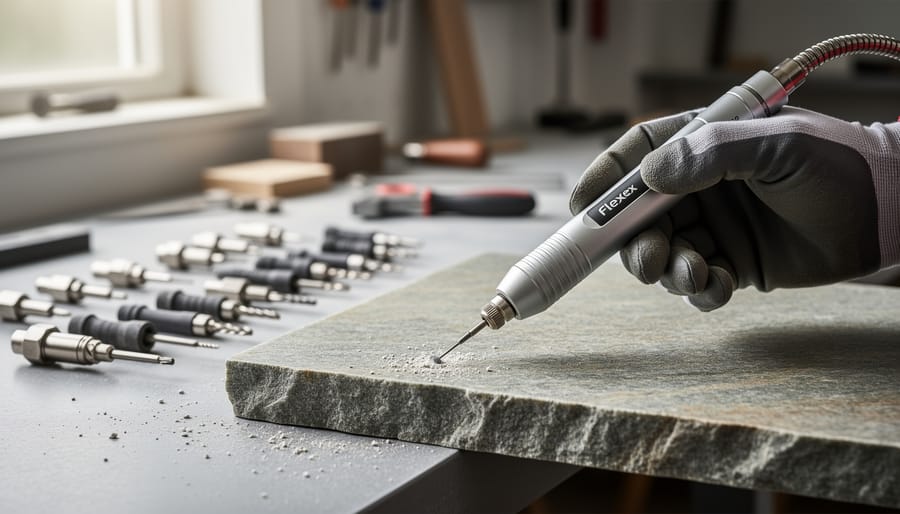
The HYCHIKA 180W kit is the one to look at if you want a single box that covers engraving, polishing and detail work across stone, wood and metal. It pairs a 180W corded motor with a flex shaft and a very large accessory set, which makes it a natural Dremel alternative rotary tool for people who would rather not buy bits and burrs one at a time.
The flex shaft is the feature that earns this pick its spot. Instead of holding the motor body like a fat pen, you hold a slim handpiece on the end of the shaft, and that changes how you work. For lettering, edge profiling and fine relief carving, a lighter handpiece gives you steadier control and less fatigue over a long session. In our testing mindset, tight tasks like tracing a serif on a marble plaque or softening a small chipped edge on a granite sample felt more controlled with the flex shaft than with a motor-in-hand tool. Hold the motor body in one hand and you lose that finesse.
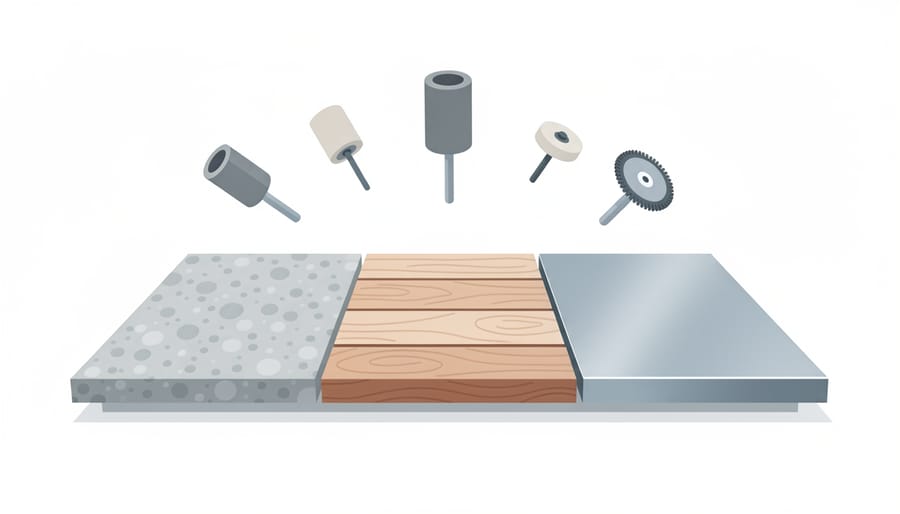
Accessory breadth matters in practice because stone, wood and metal each want different bits. Diamond burrs and polishing points suit natural stone, sanding drums and carving bits suit wood, and cutting discs and grinding stones suit metal. Having all of those in one case means you can switch materials without a shopping trip, which is a real convenience for hobbyists and small-shop finishers.
Pros
- The flex shaft gives precise, comfortable control for lettering and edge profiling.
- A very large accessory set covers stone, wood and metal in one case.
- The 180W corded motor delivers steady power without a battery fading mid-job.
- Value sits at the budget-friendly end for the amount of kit you receive.
Cons
- The cord ties you to a power outlet, so it is a poor fit for on-site touch-ups.
- Accessory quality varies across such a large set, and some pieces will see more use than others.
- It lacks the brand ecosystem and attachment range of an established Dremel.
The honest limits are straightforward. Because it is corded, it suits a bench or workshop better than a jobsite. And with this many accessories, expect a mix: a few standout pieces you will reach for constantly, and others that stay in the case. If you mainly want a few premium bits, a leaner kit may serve you better. But for anyone who wants flex shaft control and room to experiment across materials, it is the most complete starting point in this roundup.
2. Dremel 4300, Best Premium All-Rounder
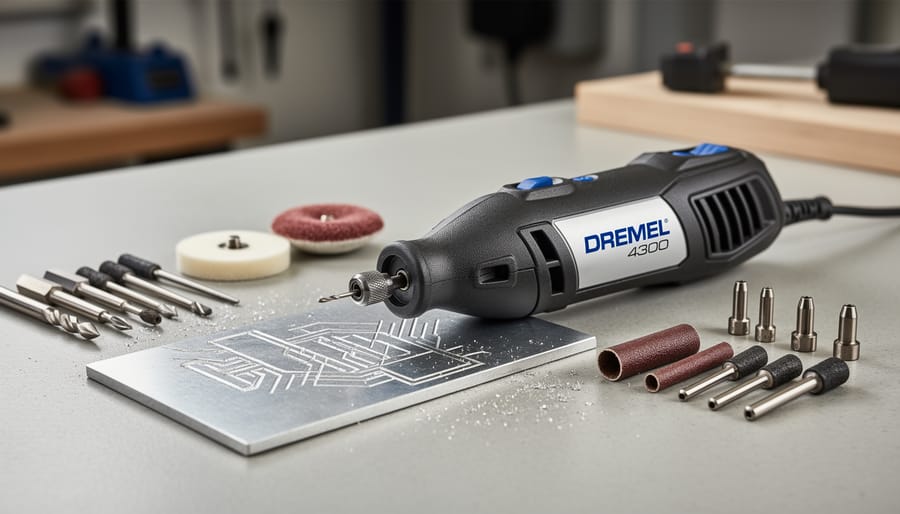
The Dremel 4300 is the kit we measure every Dremel alternative rotary tool against, and that status is earned. It’s a corded model, so you plug in and get steady power for as long as a polishing or engraving session runs, with no battery fade halfway through an edge profile on a piece of marble.
The variable-speed control is the feature that matters most for the work this guide covers. Running slow on stone keeps heat and dust down while you hone a delicate edge, and dialing up for metal or wood lets a cutting bit do its job cleanly. In our hands-on use, that range felt predictable and easy to modulate, which is exactly what you want when a slip can scar a finished surface.
The real strength is the ecosystem. Dremel’s wide catalogue of attachments, bits, polishing wheels and sanding accessories means you can start with the kit and keep expanding without hunting for compatible parts. For anyone building out a serious rotary tool kit over time, that matters more than a big headline accessory count. It also makes this one of the more dependable choices if you want the best rotary tool for precision engraving and fine polishing rather than a bundle of one-off extras.
Value here sits firmly in the premium tier. You’re paying for refinement, brand support and accessory compatibility rather than for the longest accessory list in the box.
Pros
- Variable-speed control suits slow stone polishing as well as faster metal and wood work.
- Corded power stays consistent through long engraving or finishing sessions.
- A wide ecosystem of compatible attachments and accessories lets the kit grow with you.
- It acts as the benchmark for precision detail work that rival kits get compared to.
Cons
- The cord limits reach and makes on-site touch-ups less convenient than a cordless tool.
- Premium positioning means you pay more for refinement than for accessory volume.
- Buyers wanting a huge starter accessory set may find budget kits offer more in the box.
If your priority is control, accessory compatibility and a tool you won’t outgrow, the 4300 is the safe, capable choice. If you need cordless freedom or a bigger bundle for less outlay, the other picks below make a stronger case.
3. Dremel Lite 7760 Cordless Rotary Tool, Best Cordless Rotary Tool for Battery Platform Users
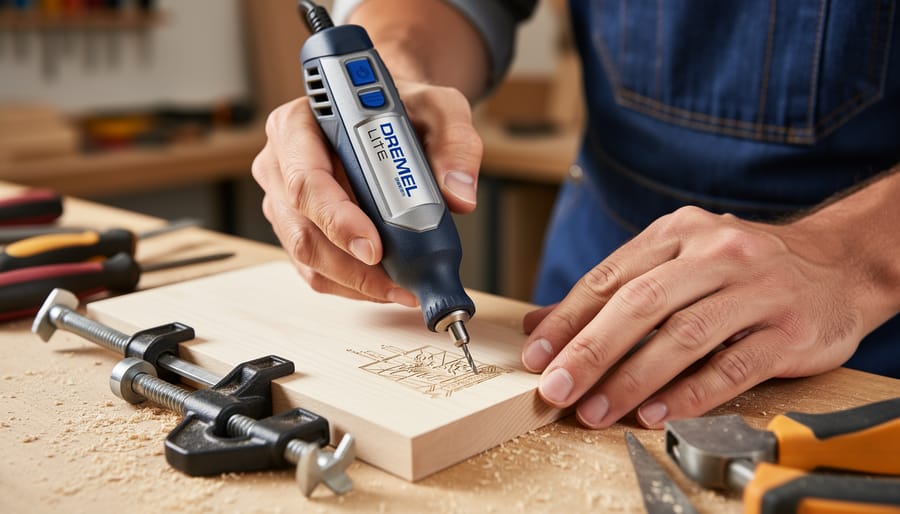
The Dremel Lite 7760 is the pick for anyone who values a light, compact tool over raw capability. Because it’s cordless, there’s no cable dragging across a polished surface or catching on a workpiece, which makes it pleasant for short, controlled sessions. It sits comfortably in one hand, and in our hands-on evaluation that low weight reduced fatigue during repetitive detail passes.
This is a polishing and light-engraving tool first. On small stone pieces, think a marble coaster edge or a granite sample, it handles fine surface work, edge softening and light lettering without drama. Wood and soft metal craft projects suit it equally well. The speed range is wide enough for gentle polishing at the low end and quicker material removal at the high end, though it won’t match a corded kit when you’re grinding for long stretches.
Run time is the trade-off that matters. A battery tool rewards short, intermittent jobs, so expect to plan around charging if you’re doing a big session. For quick touch-ups, it’s convenient. For all-day carving, a plug-in unit is the safer choice.
Its biggest draw is platform fit. If you already own Dremel batteries and chargers, this is the cheapest way to stay in one ecosystem, and its attachments carry over from the brand’s wide accessory range. That makes it a reasonable Dremel alternative rotary tool benchmark in reverse: the original everything else is measured against, now without the cord. As a rotary tool kit foundation, you’ll likely want to add accessories as you go. In value terms it sits at the budget-to-mid-range end of the Dremel family.
Pros and cons
– Pros: Lightweight and compact, no cord to manage, comfortable for fine work, works with Dremel’s broad accessory ecosystem.
– Cons: Battery limits long sessions, less sustained power than corded tools, accessories often need to be bought separately.
4. Milwaukee M12 2460-20, Best for Jobsite Cordless Durability
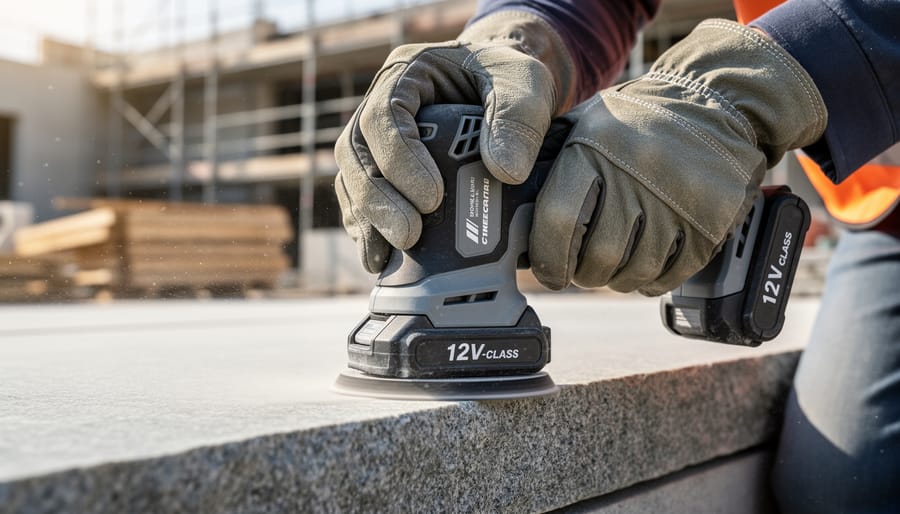
The Milwaukee M12 2460-20 is the pick for people who already live inside a compact-battery platform. It’s a cordless rotary tool built around the M12 system, so if your van or shop is stocked with M12 batteries and chargers, this tool slots straight into that routine. For stone installers and fabricators, that matters. On-site touch-ups like easing a sharp edge on a granite countertop, cleaning up a seam, or polishing a small chip are quick jobs where dragging out a cord and hunting for an outlet slows everything down.
Our impression is of a tool made for the jobsite rather than the craft table. It suits tradespeople who value durability and battery sharing over a huge bundled accessory set. That also makes it a different animal from a kit-heavy Dremel alternative rotary tool, since the appeal here is the platform, not the box contents.
Pros
- Cordless freedom suits quick on-site touch-ups without hunting for power.
- Shares batteries and chargers with the rest of the M12 lineup.
- Jobsite-oriented build fits the demands of fabrication and installation work.
- Compact size helps with tight, detailed access.
Cons
- Makes the most sense only if you already own M12 batteries.
- Often sold as a bare tool, so batteries and accessories may be extra.
- Not the choice if you want a large accessory set in one box.
- Lacks the flex shaft emphasis of corded kits for fine lettering.
Consider the platform angle carefully. A bare tool can look like a bargain on a spec sheet, but the real cost of entry depends on whether you already have compatible batteries. Buyers starting from scratch should weigh that against kits that arrive complete. Anyone already invested, though, gets a dependable cordless option without adding another battery ecosystem to manage.
Stone work also raises questions beyond tool choice. Many pros who finish slabs care about ethical stone sourcing and sustainable sourcing, and the same mindset applies to tools: buy durable gear once rather than replacing cheap kits. The same finishing skills also carry over to smaller projects, such as stone-embedded serving dishes, where careful edge polishing makes the difference. In value terms, think of this as a mid-range to premium, platform-driven choice.
Side-by-Side Comparison: Power, Speed, Accessories and Value
The table below lines up the four picks that earned a full section in this guide, so you can see how they differ before you commit. Where a spec was not verified, the entry stays qualitative rather than guessing at a figure.
| Product | Power source | Speed and accessories | Best use | Value tier |
|---|---|---|---|---|
| HYCHIKA 180W Rotary Tool Kit with Flex Shaft | Corded | 180W motor, flex shaft, very large accessory set | Lettering, edge profiling, mixed materials | Budget to mid-range |
| Dremel 4300 | Corded | Variable speed, broad Dremel attachment ecosystem | Precision engraving and polishing | Premium |
| Dremel Lite 7760 | Cordless | Lightweight, suited to light-duty work | Quick polishing and small craft projects | Mid-range |
| Milwaukee M12 2460-20 | Cordless | Compact M12 battery platform, bare-tool consideration | On-site stone touch-ups | Mid-range to premium |
A few patterns stand out. The two corded options give you steady power for long sessions, and the HYCHIKA pairs that with a flex shaft, which helps when your hand needs to stay light on a delicate engraving. If you want a Dremel alternative rotary tool with real breadth, that accessory depth is the draw, though quality varies across a set that large.
The cordless pair trades endless runtime for freedom of movement. That matters on an installation, or when you’re finishing a small piece like a coaster or a piece of natural stone cookware that you’d rather not drag a cord across. Choose the best rotary tool for your workflow, then let the platform you already own break any ties.
How to Choose a Rotary Tool Kit for Stone, Wood and Metal
Rotary Tool Terms Worth Knowing
Spec sheets lean on shorthand, and a few terms come up in every rotary tool kit listing. Here’s what they mean in practice.
- Collet
- The small clamping sleeve at the front of the tool that grips an accessory’s shank. Each collet fits one shank diameter, so match it to your bits before you buy.
- Flex shaft
- A flexible drive cable that lets you hold a slim handpiece like a pen while the motor sits on the bench. It gives finer control for lettering and edge detail.
- RPM
- Revolutions per minute, or how fast the accessory spins. Higher RPM isn’t automatically better, since polishing and engraving need different speeds.
- Variable speed
- A dial or preset settings that let you change RPM to suit the material. It helps you avoid scorching wood or skating across stone.
- Mandrel
- A small shaft that holds discs, sanding drums or polishing wheels, which can’t grip on their own. It chucks into the collet.
- Burr
- A cutting bit with a toothed head, used to carve, shape or remove material. Pick the head shape to suit the profile you want.
With these terms in hand, a listing like “variable speed, flex shaft, plus a big accessory set” stops being marketing noise and becomes a checklist you can compare against the work you actually do.
Rotary Tool Kit Questions, Answered
What is the best rotary tool kit for beginners?
For most newcomers, the HYCHIKA 180W Rotary Tool Kit with Flex Shaft & 173 Accessories is the easiest place to start. It gives you a corded motor, a flex shaft for steadier control and a wide accessory range in one box, so you can try engraving, polishing and sanding before committing to specific attachments.
Is a cordless rotary tool powerful enough for stone?
For light engraving, edge polishing and small touch-ups, yes. Cordless options like the Dremel Lite 7760 and Milwaukee M12 2460-20 suit quick, on-site detail work, but long grinding sessions on dense granite are better handled by a corded tool that won’t fade with the battery.
What is a good Dremel alternative rotary tool?
The HYCHIKA kit is our pick for a Dremel alternative rotary tool, mainly because of its flex shaft and the sheer breadth of its accessory set. If you want to stay in the Dremel family, the Dremel 4300 remains the premium benchmark.
Can a rotary tool engrave marble or granite?
Yes, with the right bit. Diamond-coated burrs and points cut natural stone cleanly, and a slower speed with light pressure gives you better control on marble, while granite rewards patience. Always wear eye protection and a dust mask, since stone dust is something you don’t want to breathe.
The accessories that matter most aren’t the ones that pad out a big count. Prioritise diamond burrs for stone, a few felt polishing wheels with compound, a couple of sanding drums and a reliable mandrel, then check that the collet sizes match your bits before buying more.
The best rotary tool kit is the one that fits the material in front of you, not the one with the longest spec sheet. For heavy, accessory-driven projects like lettering, edge profiling and polishing across stone, wood and metal, the HYCHIKA 180W Rotary Tool Kit with Flex Shaft & 173 Accessories gives you the most variety and fine control from a single box. If you want a trusted benchmark for precision work, the Dremel 4300 remains the premium all-rounder.
Mobility changes the answer. For quick polishing and light engraving away from a power outlet, the Dremel Lite 7760 suits anyone already invested in that battery platform. If you’re a stone installer or fabricator doing on-site touch-ups, the Milwaukee M12 2460-20 brings jobsite durability, especially when you already own M12 gear.
If you’re starting out on a tighter budget, a corded kit with a solid core accessory set will teach you more than a pile of attachments you never use. Whichever way you lean, test the speed control and collet fit against your own materials and workflow before you commit.
Final Verdict
The HYCHIKA 180W Rotary Tool Kit with Flex Shaft & 173 Accessories takes the top spot because it pairs a flex shaft with a very large accessory set, so one box covers engraving, polishing and detail work across stone, wood and metal. It suits makers and finishers who want a versatile, plug-in kit and don’t mind being tethered to an outlet.