Granite countertops remain a cornerstone of kitchen design, evolving beyond traditional aesthetics to meet contemporary demands for both visual impact and functionality. Today’s homeowners face a sophisticated marketplace where selecting the right granite involves understanding current color movements toward warm neutrals and dramatic veining, recognizing how different finishes complement modern cabinetry styles, and integrating edge profiles that balance timeless appeal with current sensibilities.
The strategic advantage of granite lies in its unique ability to anchor multiple design directions—from minimalist Scandinavian kitchens requiring subtle, uniform patterns to transitional spaces where bold movement patterns create focal points. Modern applications emphasize larger slab installations that minimize seams, pairing granite with complementary materials like matte-finished cabinetry, stainless steel appliances, and engineered backsplashes that enhance rather than compete with the stone’s natural character.
Success in contemporary granite selection requires moving beyond surface-level aesthetics to consider practical elements: how lighting conditions affect pattern visibility throughout the day, which edge treatments provide clean lines without trending toward dated territory, and how specific granite varieties perform in high-traffic kitchen environments. This comprehensive approach ensures your investment delivers both immediate visual satisfaction and lasting relevance as design preferences continue evolving.
Why Granite Still Dominates Modern Kitchen Design
Despite the constant emergence of innovative countertop materials, granite’s enduring popularity in kitchen design remains remarkably strong. This natural stone continues to outperform many competitors due to several compelling advantages that resonate with today’s homeowners and designers.
Durability stands as granite’s most significant selling point. This igneous rock withstands daily kitchen activities including heat exposure, knife marks, and heavy use without compromising its integrity. Unlike synthetic alternatives that may deteriorate over time, properly sealed granite maintains its appearance and functionality for decades, often outlasting the kitchen itself.
The inherent natural beauty of granite offers something no manufactured material can replicate: absolute uniqueness. Each slab features distinct mineral patterns, color variations, and crystalline structures formed over millions of years. This authenticity appeals to design-conscious consumers seeking one-of-a-kind surfaces that serve as focal points rather than mere backgrounds.
From a financial perspective, granite provides excellent value retention. Homes featuring quality granite countertops typically command higher resale values compared to those with alternative materials. This return on investment makes granite particularly attractive for homeowners viewing their kitchen renovation as a long-term asset.
Perhaps most impressively, granite demonstrates remarkable versatility across design aesthetics. In traditional kitchens, rich browns and warm golds create timeless elegance. Contemporary spaces benefit from sleek black, white, or gray granites with minimal veining. Transitional designs find balance with neutral tones featuring subtle movement. This adaptability ensures granite remains relevant regardless of shifting style preferences, allowing homeowners to update surrounding elements without replacing their countertops. The material’s proven track record, combined with its natural resilience and aesthetic flexibility, explains why granite continues dominating modern kitchen design conversations.
The New Face of Granite: Current Color and Pattern Trends
Neutral and Minimalist Selections
Neutral granite selections remain the foundation of timeless kitchen design, offering versatility that adapts to evolving décor while maintaining a sophisticated, uncluttered aesthetic. These understated stones create the perfect canvas for modern spaces where clean lines and minimal visual noise take precedence.
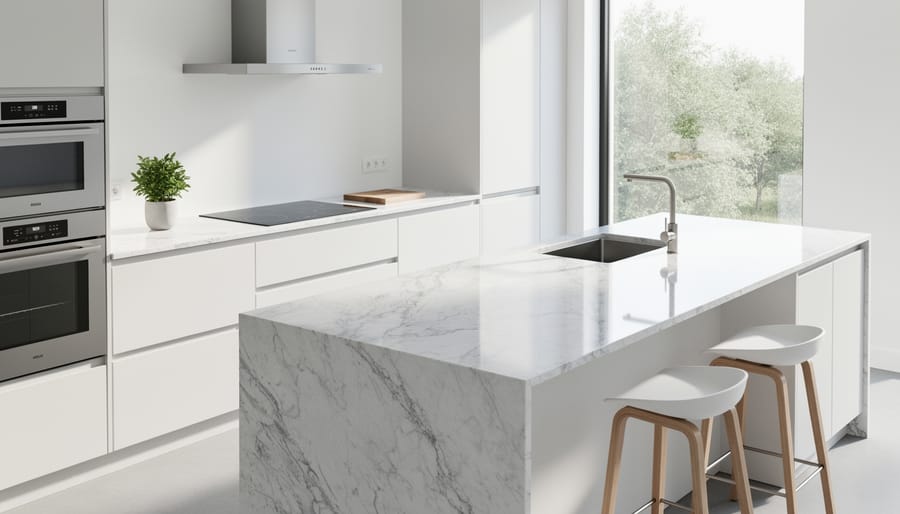
White Ice granite exemplifies contemporary minimalism with its pale background and subtle gray veining. This Brazilian stone provides just enough movement to avoid appearing sterile while maintaining the crisp, airy feel essential to Scandinavian-inspired and modern farmhouse kitchens. Its light-reflective properties make smaller kitchens feel more spacious and open.
Kashmir White offers slightly more character with delicate burgundy and gray flecks dispersed across a creamy white base. This Indian granite bridges the gap between stark white and warmer tones, making it ideal for kitchens seeking neutrality without coldness. The stone’s fine-grained pattern reads as nearly solid from a distance while revealing subtle complexity up close.
River White granite presents soft gray and burgundy veining against an ivory background, creating gentle movement that enhances rather than dominates kitchen design. Its understated elegance pairs seamlessly with both warm wood cabinetry and cool stainless appliances, demonstrating remarkable versatility.
For true gray enthusiasts, stones like Luna Pearl and Steel Grey provide contemporary options ranging from silvery shimmer to deeper charcoal tones. These granites complement industrial-modern aesthetics while offering the durability and easy maintenance that make granite practical for everyday use. Beige varieties such as Giallo Ornamental and Colonial Cream deliver warmth without overwhelming minimalist sensibilities, proving that neutral doesn’t mean boring.
Dramatic Veining and Statement Pieces
For homeowners and designers seeking to make a bold statement, dramatic granite varieties with prominent veining patterns have emerged as commanding focal points in contemporary kitchens. These high-contrast stones transform countertops from functional surfaces into artistic centerpieces that define the entire space.
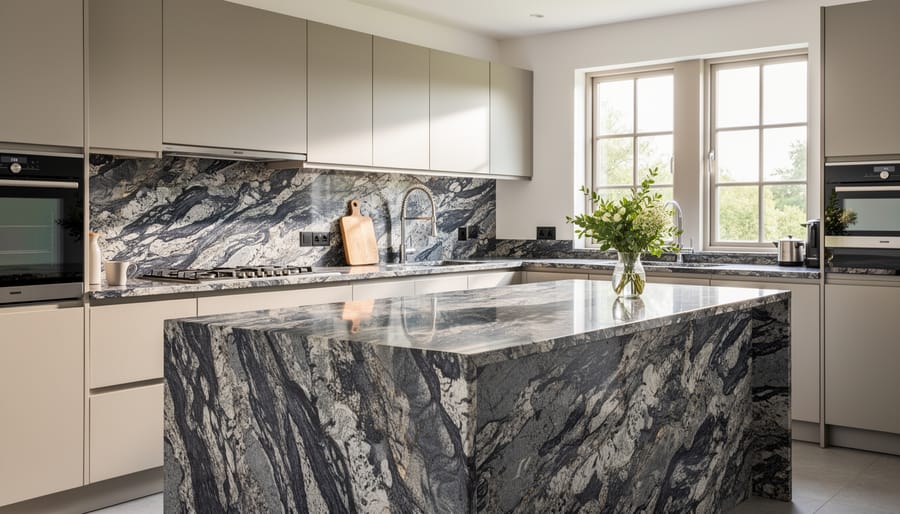
Black Forest granite exemplifies this trend with its deep charcoal background interrupted by sweeping white and gray veins that create natural movement across the surface. This variety pairs exceptionally well with minimalist cabinetry, allowing the stone’s inherent drama to take center stage without visual competition.
Fusion granite offers another striking option, featuring dynamic swirls of black, white, and gold that appear almost three-dimensional. The complex patterns in Fusion create visual interest from every angle, making it particularly effective for kitchen islands where the stone can be viewed from multiple perspectives.
Exotic varieties like Patagonia and Blue Bahia push boundaries even further with unexpected color combinations and dramatic veining that challenges traditional granite expectations. These rare stones command premium prices but deliver unparalleled visual impact that can anchor an entire design concept.
When incorporating dramatic granites, consider the scale of your space. Large, uninterrupted slabs showcase veining patterns most effectively, while smaller kitchens benefit from waterfall edges or extended islands that maximize the stone’s visibility. Balance is essential—pair bold countertops with simpler backsplashes and neutral cabinetry to prevent visual overwhelm while allowing the granite’s natural artistry to shine as the kitchen’s defining element.
Warm Earth Tones Making a Comeback
After years of cool grays and stark whites dominating kitchen design, warm earth tones are experiencing a significant resurgence in granite countertop selections. Browns, golds, caramels, and amber-veined granites are bringing much-needed warmth and organic character back into contemporary kitchens.
This shift reflects a broader design movement toward creating more inviting, livable spaces that feel grounded and connected to nature. Granites like Golden Oak, Venetian Gold, and Juparana varieties showcase rich honey and caramel tones that pair beautifully with natural wood cabinetry, brass fixtures, and warm-toned metals that have become increasingly popular.
The appeal of warm-toned granite extends beyond aesthetics. These earth-inspired colors offer excellent practicality by concealing minor stains and water spots more effectively than lighter options. They also create visual continuity in open-concept spaces, complementing hardwood flooring and natural textile selections.
Designers are finding that warm granite countertops serve as an anchor point for layered color schemes, allowing homeowners to incorporate both warm and cool accent colors throughout the space. This versatility makes them particularly valuable in long-term design planning, as they adapt well to evolving decor trends while maintaining their timeless, natural appeal.
Edge Profiles and Finishes: What’s Trending Now
Modern Edge Profiles
Contemporary kitchen design has shifted toward cleaner, more streamlined aesthetics, and granite edge profiles have evolved to match this minimalist approach. Understanding which edges suit different design goals helps create a cohesive, modern look.
Straight or eased edges remain the most popular choice for contemporary kitchens. These profiles feature a simple squared-off appearance with slightly rounded corners to prevent chipping. The minimal detailing creates clean horizontal lines that complement flat-panel cabinetry and sleek appliances. This edge works particularly well in modern, transitional, and Scandinavian-inspired spaces where simplicity takes precedence.
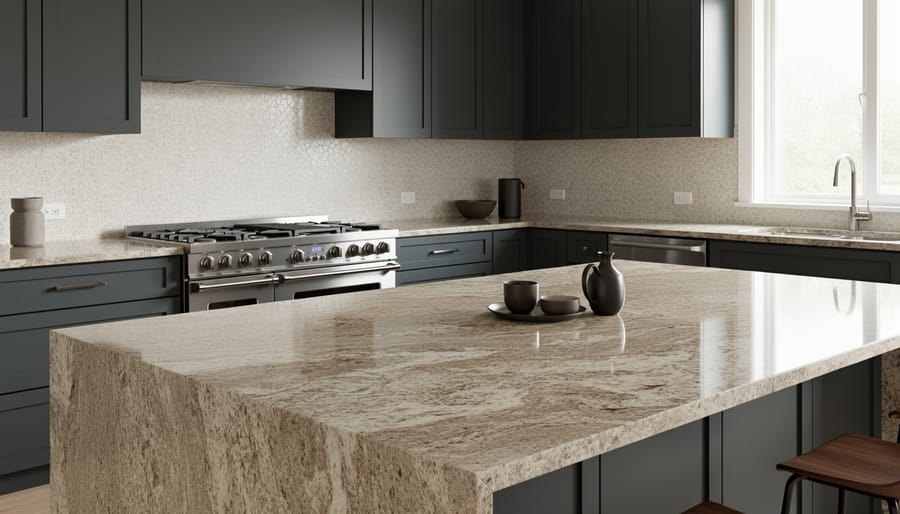
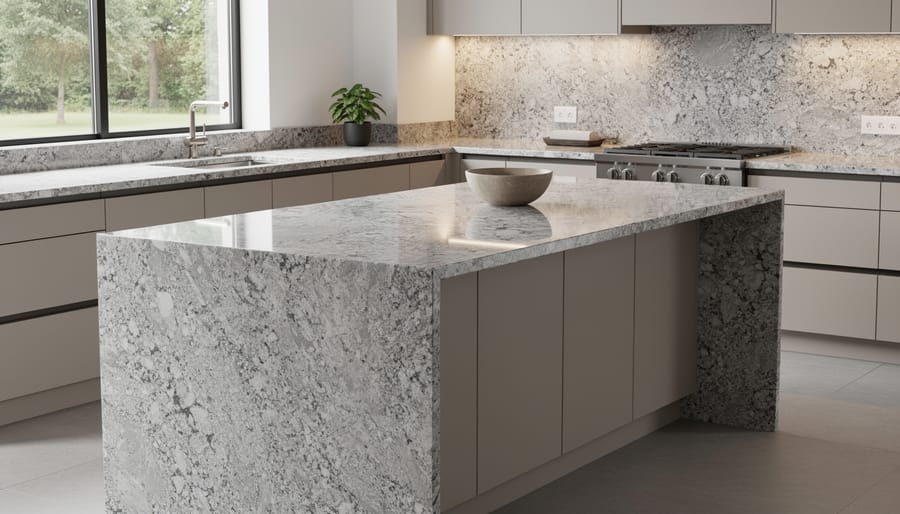
Waterfall edges have emerged as a dramatic focal point in high-end kitchen design. This technique extends the granite vertically down the sides of an island or peninsula, creating a continuous flow from countertop to floor. The seamless appearance showcases the stone’s natural veining and works exceptionally well with bold, statement-making granite patterns. Waterfall edges suit open-concept layouts where the island serves as a visual anchor and entertaining hub.
Mitered edges offer another sophisticated modern option, creating the illusion of thick, substantial slabs through precise angular cuts. Two pieces of granite meet at a 45-degree angle, forming crisp corners that add architectural interest without ornate detailing. This profile complements luxury contemporary designs and works beautifully on islands and peninsula ends where the edge detail is visible from multiple angles.
Surface Finish Options Beyond Polished
While polished granite remains popular, alternative finishes are increasingly sought after for their distinctive texture and relaxed aesthetic. These finishes transform granite’s appearance and feel, making them ideal for homeowners seeking departure from traditional high-gloss surfaces.
Leathered finishes have emerged as a top choice in contemporary kitchen design. This finish preserves the stone’s natural color while adding subtle texture through a process that gently distresses the surface. The result is a soft, leather-like feel that hides fingerprints and water spots better than polished surfaces—a practical advantage for busy kitchens. Leathered granite works particularly well with darker colors and stones featuring dramatic veining, as the texture enhances depth and visual interest.
Honed finishes offer a smooth, matte appearance without the glossy reflection of polished granite. This satiny surface creates an understated, sophisticated look that complements both modern minimalist and rustic farmhouse designs. Honed granite typically requires more frequent sealing than polished versions, as the process leaves stone pores more exposed. However, many homeowners find the maintenance worthwhile for the elegant, timeless appearance it delivers.
Brushed finishes, while less common, provide another textured alternative. This finish creates subtle linear patterns across the surface, adding dimensional interest while maintaining a casual, lived-in aesthetic. The technique works especially well for granite with consistent color patterns rather than bold veining.
Each finish option affects not only appearance but also maintenance requirements and price points, making it essential to consider your lifestyle and design goals when selecting the right surface treatment for your kitchen.
Integrating Granite Into Popular Kitchen Design Styles
Contemporary and Minimalist Kitchens
Contemporary kitchens demand granite that complements their clean aesthetic rather than competing with it. The most successful modern applications feature large-format slabs with subtle, uniform patterns that create visual calm. Consider granite varieties like Absolute Black, Steel Grey, or New Caledonia—stones with minimal veining and consistent coloration that reinforce the minimalist design philosophy.
Slab selection becomes critical in modern spaces. Specify book-matched or sequence-matched slabs to ensure pattern continuity across expansive islands and perimeters. Minimize seam placement by working with your fabricator early in the design process, positioning unavoidable seams at sink cutouts or cooktop locations where they become less noticeable. Large islands benefit from single-slab installations when dimensions allow, creating uninterrupted surfaces that emphasize the stone’s natural beauty.
Pairing granite with sleek cabinetry requires thoughtful contrast. Matte-finish cabinets in white, grey, or natural wood tones provide the perfect backdrop for polished granite surfaces. For handleless cabinet systems, consider waterfall edges that extend the countertop material vertically, creating architectural continuity. Alternatively, straight-edge profiles maintain the geometric precision that defines contemporary design. The key is allowing the granite’s natural character to serve as the room’s singular organic element within an otherwise streamlined environment.
Transitional and Farmhouse Styles
Granite offers exceptional versatility for transitional and farmhouse kitchens, where warmth and timeless appeal take center stage. These design styles bridge traditional comfort with contemporary functionality, making granite an ideal countertop choice.
For transitional spaces, select granite with warm undertones such as Venetian Gold, Santa Cecilia, or Colonial Gold. These varieties feature gentle movement and rich caramel, cream, and amber tones that complement both traditional cabinetry and modern fixtures. The natural variation in granite prevents the space from feeling too uniform while maintaining visual cohesiveness.
Farmhouse kitchens benefit from lighter granite options like Kashmir White, River White, or Bianco Romano. These stones provide the clean, airy aesthetic farmhouse designs require while offering the durability needed for active cooking spaces. Their subtle veining adds character without overwhelming rustic elements like shiplap walls or apron-front sinks.
Edge profile selection significantly impacts the overall aesthetic. Opt for eased or half-bullnose edges in transitional kitchens for a softer, refined appearance. Farmhouse designs work beautifully with slightly more detailed profiles like the ogee or dupont edge, which add traditional charm without excessive ornamentation.
Pair granite countertops with natural wood elements, matte black hardware, and neutral color palettes to achieve authentic transitional or farmhouse appeal that remains current for years to come.
Luxury and High-End Kitchens
High-end kitchens demand granite selections that transcend ordinary applications, showcasing the stone’s most spectacular natural variations. Exotic varieties like Blue Bahia from Brazil, with its electric azure veining, or Fusion quartzite with its dramatic movement, command premium prices but deliver unmatched visual impact. These rare materials transform countertops into genuine works of art.
Book-matching and quarter-matching techniques elevate granite installations to gallery-worthy displays. Book-matching mirrors slabs along a central seam, creating symmetrical patterns that emphasize the stone’s natural beauty. This approach works exceptionally well on kitchen islands, where the continuous surface becomes a focal point. Quarter-matching produces kaleidoscopic effects by rotating slabs around a center point, ideal for statement islands in open-concept spaces.
Thickness choices further distinguish luxury installations. While standard three-centimeter slabs suit most applications, four-centimeter or laminated edges create substantial, furniture-like profiles that communicate quality and permanence. Mitered edge details, where stone wraps seamlessly around corners without visible seams, showcase precision craftsmanship.
Premium installations extend beyond countertops to include full-height backsplashes, waterfall edges on islands, and coordinated stone wall cladding. These continuous applications require careful slab selection to maintain color consistency and pattern flow throughout the space. Working with experienced fabricators becomes essential, as these complex installations demand expert templating, precise cutting, and meticulous seam placement. The investment yields kitchens that combine natural stone’s timeless appeal with contemporary luxury aesthetic.
Smart Design Choices for Granite Countertops
Pairing Granite with Backsplash Materials
Coordinating your granite countertops with the right backsplash creates visual harmony and elevates your entire kitchen design. The key is balancing contrast with cohesion while letting each material shine.
For busy granite patterns with multiple colors, consider a simple, neutral backsplash in ceramic, porcelain, or glass tile. White subway tiles or solid-colored glass panels provide breathing room and prevent visual overwhelm. Pull one accent color from your granite’s veining for grout or tile selection to tie the look together.
With solid or subtly patterned granite, you have more flexibility. Natural stone backsplashes like marble, travertine, or slate add texture and depth. Mosaic tiles in complementary tones create interest without competing with your countertops.
Full-height granite backsplashes offer a seamless, dramatic look that simplifies maintenance and creates striking continuity. This works particularly well behind ranges or in contemporary designs where minimalism reigns.
When planning your granite backsplash coordination, consider your cabinet color, hardware finish, and overall aesthetic. Bring granite samples home to view them against potential backsplash materials in your actual lighting conditions. This ensures your selections work harmoniously before installation begins.
Island vs. Perimeter Countertop Strategies
Creating visual distinction between your island and perimeter countertops offers an effective way to add depth and define functional zones in your kitchen. This approach has grown increasingly popular as homeowners move away from matchy-matchy aesthetics toward more layered, personalized designs.
The most common strategy involves selecting a statement granite for the island while using a complementary but different material or color for perimeter counters. For example, pairing a dramatic black granite with gold veining on the island with a neutral white or gray granite on surrounding counters creates an elegant focal point. Alternatively, some designers reserve exotic, heavily patterned granites exclusively for the island to maximize visual impact while keeping costs manageable.
From a budget perspective, this mixed-material approach allows strategic allocation of resources. Premium or exotic granites typically range from 75 to 200 dollars per square foot installed, while standard options cost 40 to 60 dollars per square foot. By featuring expensive stone only on the island, which generally represents 15 to 25 percent of total counter space, you can achieve a high-end look without the corresponding full-kitchen price tag.
Design considerations include ensuring sufficient contrast without creating visual chaos. The two granite selections should share either complementary undertones or a unifying element like veining style. Lighting also plays a crucial role, as different granites reflect light uniquely. Test samples in your actual kitchen lighting conditions before committing. This zoning strategy works particularly well in open-concept layouts, where the island serves as a natural transition point between kitchen and living spaces.
Sustainability and Long-Term Value Considerations
Granite countertops represent a sustainable choice for kitchen design when considering their complete lifecycle and environmental impact. As a natural material formed over millions of years, granite offers inherent durability that translates directly into long-term value and reduced environmental burden through decreased replacement frequency.
Modern quarrying practices have evolved significantly, with leading suppliers implementing responsible extraction methods that minimize environmental disruption. Many quarries now employ advanced cutting technologies that reduce waste, reclaim water used in processing, and rehabilitate sites after extraction. The natural stone industry increasingly prioritizes sustainable operations, including energy-efficient processing facilities and reduced transportation emissions through regional sourcing networks.
The exceptional longevity of granite countertops fundamentally supports sustainable design principles. With proper maintenance and care, granite surfaces can last 50 years or more, eliminating the need for replacement that generates construction waste and consumes additional resources. This durability stands in stark contrast to synthetic alternatives that may require replacement within 10-15 years, creating ongoing environmental costs through manufacturing, transportation, and disposal.
Granite’s thermal mass properties contribute to energy efficiency by helping regulate indoor temperatures, while its resistance to heat, scratches, and stains means fewer harsh cleaning chemicals are needed throughout its lifetime. The material requires no chemical sealants in many applications, and when sealing is recommended, modern low-VOC options minimize indoor air quality impacts.
For environmentally conscious homeowners and designers, granite offers the rare combination of natural beauty, practical performance, and genuine sustainability through longevity. This lifecycle perspective positions granite as an investment in both aesthetic quality and responsible resource stewardship, aligning with contemporary values around lasting, thoughtful design choices.
Granite countertops continue to prove their lasting appeal in kitchen design, offering an impressive combination of durability, natural beauty, and investment value. From the timeless elegance of classic speckled patterns to the bold drama of leathered dark slabs and the soft sophistication of creamy whites, granite adapts seamlessly to virtually any design vision. The key to successful granite selection lies in understanding how color, pattern, and finish work together with your overall aesthetic goals.
Before making your final decision, always view full slabs in person rather than relying solely on small samples. Natural stone varies significantly from piece to piece, and seeing the complete slab allows you to appreciate its unique character and ensure it complements your design vision. Working with experienced fabricators and stone specialists provides invaluable guidance on practical considerations like maintenance requirements, edge profiles, and layout optimization.
When you’re ready to move forward, partnering with experts for professional installation ensures your investment delivers decades of beauty and performance. Granite remains a smart choice that combines natural elegance with practical functionality for kitchens that truly stand the test of time.