
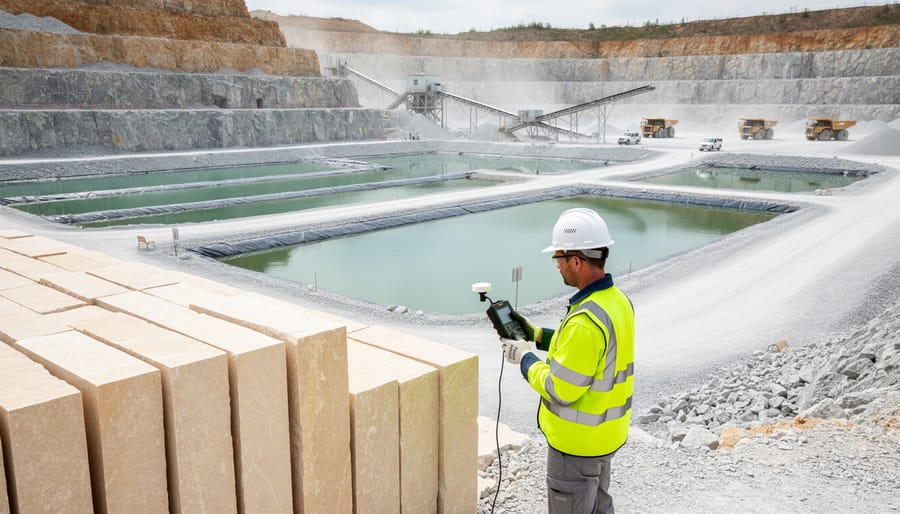
When you select natural stone for your next project, the price tag reflects far more than the material itself. Aggregate costs in quarrying operations encompass a complex web of expenses that begin long before the first stone is extracted and continue well after it leaves the quarry site.
The true cost structure starts with regulatory compliance and permitting fees, which can represent 15-25% of initial operational expenses. Quarry operators must navigate environmental impact assessments, water discharge permits, air quality monitoring systems, and land reclamation bonds. These aren’t one-time expenses but ongoing commitments that ensure responsible extraction practices and environmental stewardship.
Beyond regulatory requirements, extraction costs include specialized equipment maintenance, fuel consumption, skilled labor, and geological surveying. A single diamond wire saw can cost upward of $500,000, while the diamond cables themselves require replacement after cutting approximately 1,000 square meters of stone. Transportation from remote quarry locations adds another substantial layer, with some operations moving materials hundreds of miles to processing facilities.
Processing and finishing operations demand additional investment in cutting equipment, polishing machinery, quality control systems, and waste management protocols. Approximately 50-70% of extracted material becomes waste during processing, a reality that significantly impacts final pricing.
Understanding these aggregate costs transforms your perspective on natural stone pricing. What appears expensive at first glance represents decades of geological formation, responsible environmental management, skilled craftsmanship, and complex logistics. This knowledge empowers you to evaluate stone suppliers based on comprehensive value rather than simple price comparison, ensuring your investment delivers both quality and ethical sourcing standards.
What Are Aggregate Costs in Quarry Operations?
Direct vs. Indirect Cost Components
Understanding the cost structure of aggregate production requires distinguishing between two fundamental categories: direct operational costs and regulatory compliance costs.
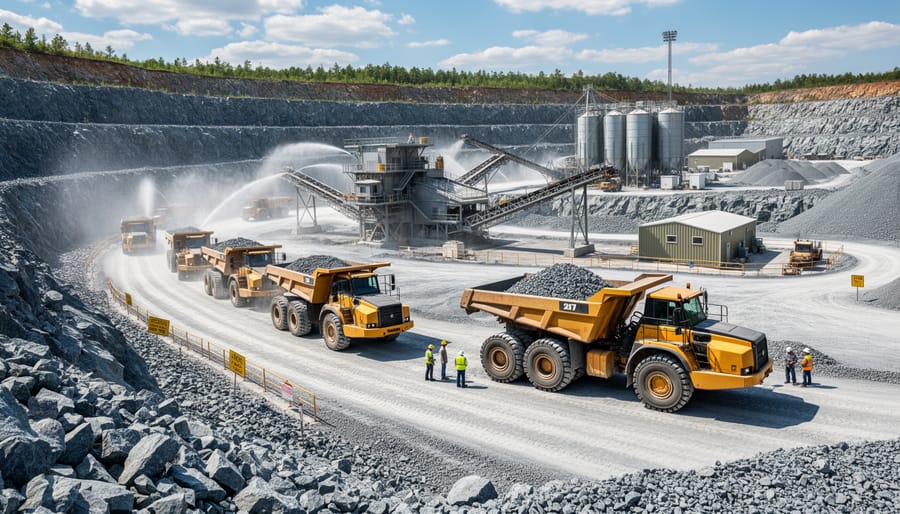
Direct operational costs represent the tangible expenses of extracting and processing stone. Labor constitutes a significant portion, encompassing quarry workers, equipment operators, geologists, and safety personnel. Equipment costs include purchasing, maintaining, and fueling heavy machinery like excavators, crushers, loaders, and haul trucks. The extraction process itself generates expenses through drilling, blasting materials, fuel consumption, and wear on cutting tools. Processing costs cover crushing, screening, washing, and quality control procedures that transform raw stone into market-ready aggregate.
Regulatory costs, while less visible, substantially impact the bottom line. Permit acquisition fees vary by jurisdiction and quarry size, often requiring substantial upfront investment before operations begin. Environmental compliance demands ongoing monitoring of air quality, water discharge, and noise levels, along with implementing dust suppression systems and erosion controls. Regular inspections by local, state, and federal agencies necessitate documentation, testing, and sometimes remediation work. Reclamation bonds and eventual site restoration represent long-term financial commitments that quarry operators must factor into pricing.
The ratio between these cost components shifts based on location, quarry size, and operational complexity. Regions with stringent environmental regulations typically see regulatory costs comprise 15-25% of total aggregate costs, while areas with minimal oversight may experience lower percentages. Understanding this distinction helps explain price variations across markets and suppliers.
The Lifecycle Cost Perspective
Understanding the total financial commitment of quarrying natural stone requires looking beyond the upfront extraction costs to examine the complete operational timeline. Before a single block leaves the ground, quarry operators invest substantial capital in environmental impact assessments, geological surveys, and permit applications—processes that can span several years and cost hundreds of thousands of dollars. These initial expenditures establish the foundation for all subsequent operations.
Once extraction begins, costs continue accumulating through equipment maintenance, labor, safety compliance, and ongoing environmental monitoring mandated by regulatory agencies. Modern quarrying operations must account for dust suppression systems, water treatment facilities, and wildlife habitat protection measures, all of which demand continuous investment throughout the quarry’s active life. These operational expenses directly influence the market forces behind pricing that consumers encounter when purchasing natural stone products.
The financial obligations don’t end when extraction ceases. Site restoration represents a significant deferred cost that quarry operators must plan for from day one. Reclamation bonds, required in most jurisdictions, ensure funds are available to restore the land to a safe, environmentally stable condition. This includes regrading slopes, establishing vegetation, and sometimes creating recreational spaces or wildlife habitats. These long-term financial commitments, spanning decades from initial permitting through final restoration, fundamentally shape the true cost of bringing natural stone to market.
The Permitting Process: Where Costs Begin to Accumulate
Environmental Impact Assessments
Before any quarry operator can extract a single stone, comprehensive environmental impact assessments must be completed—representing a significant portion of upfront environmental compliance costs. These studies typically range from $50,000 to $500,000 depending on site complexity and location.
The assessment process begins with baseline environmental surveys documenting existing conditions. Wildlife biologists conduct multi-season habitat studies to identify protected species, migration patterns, and nesting areas. These surveys alone can cost $20,000 to $100,000, as they often require year-round monitoring to capture seasonal variations.
Water quality testing forms another critical component, involving extensive sampling of groundwater, surface water, and wetlands. Hydrologists must establish baseline data for pH levels, mineral content, and flow rates to demonstrate that quarrying won’t contaminate local water supplies. Testing programs typically cost $15,000 to $75,000 initially, with ongoing monitoring required throughout operations.
Geological assessments evaluate subsurface conditions, fault lines, and potential impacts on surrounding terrain stability. These studies prevent issues like groundwater contamination or unexpected slope failures that could halt operations and trigger costly remediation.
Air quality baseline studies, noise impact analyses, and archaeological surveys add additional layers to the assessment process. Together, these studies create a comprehensive picture that regulatory agencies require before approving permits. While these costs may seem substantial, they protect both natural resources and the quarry’s long-term operational viability, ultimately contributing to responsible stone sourcing practices that conscious consumers increasingly value.
Permit Application and Legal Fees
Before a single ton of stone leaves the ground, quarry operators must navigate a complex permitting landscape that significantly impacts aggregate costs. Government filing fees vary considerably by jurisdiction but typically range from $5,000 to $50,000 for initial applications. These fees cover environmental impact assessments, zoning variance requests, mining permits, and water usage rights. Many jurisdictions require annual renewal fees that add recurring expenses throughout the quarry’s operational life.
Legal representation constitutes another substantial cost component, often running between $20,000 and $100,000 for the initial permitting phase. Experienced mining attorneys guide operators through regulatory requirements, represent them at public hearings, and negotiate with local authorities. The complexity of environmental regulations and land use laws makes professional legal counsel practically essential for successful permit approval.
Environmental consultants add further expenses, typically charging $15,000 to $75,000 for baseline studies, including geological surveys, wildlife habitat assessments, and hydrological reports. These specialized consultants provide the technical documentation that regulatory agencies require before granting permits.
Together, these upfront costs can exceed $200,000 before any extraction begins. While seemingly steep, proper legal and regulatory compliance protects operators from costly violations and ensures sustainable quarrying practices that ultimately benefit the entire natural stone industry and its customers.
Community Engagement and Public Hearings
Beyond environmental studies and technical assessments, quarry operators face substantial costs related to community engagement that often surprise those new to the industry. Public hearings, mandated by most jurisdictions, require extensive preparation including presentation materials, expert testimony, and legal representation. Operators typically spend $15,000 to $50,000 per hearing cycle, with multiple sessions common throughout the approval process.
Community outreach programs represent another significant investment. Responsible quarry developers conduct town halls, neighbor meetings, and information sessions to address concerns about noise, traffic, dust, and property values. These initiatives require dedicated staff time, venue rentals, and frequently the services of public relations professionals who can cost $5,000 to $20,000 monthly during active permitting phases.
Many operators establish community benefit agreements or commit to local infrastructure improvements as goodwill gestures. These might include road upgrades, traffic studies, or funding for community projects, adding tens of thousands to permitting costs. While not always mandatory, these expenditures help build crucial local support that can mean the difference between approval and rejection. When factored across a quarry’s productive lifetime, these community-related expenses contribute meaningfully to the final price consumers pay for natural stone products.
Ongoing Regulatory Compliance: The Continuous Cost Burden
Environmental Monitoring and Reporting
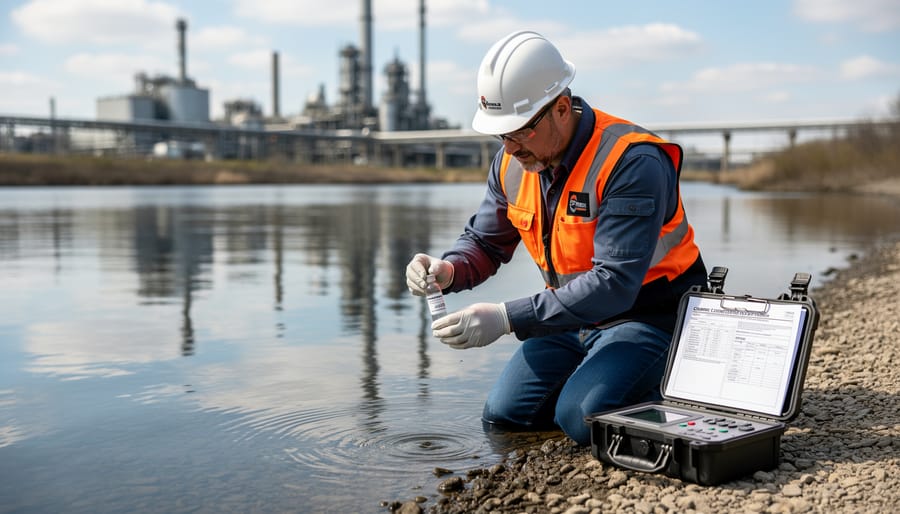
Quarry operators must implement comprehensive environmental monitoring systems that directly impact operational costs. These monitoring programs aren’t optional extras but mandatory requirements that ensure compliance with environmental regulations and protect surrounding communities.
Air quality testing represents a significant ongoing expense. Quarries must regularly measure particulate matter, dust levels, and other airborne pollutants both on-site and at property boundaries. Testing frequency varies by jurisdiction but typically occurs monthly or quarterly, requiring specialized equipment and certified laboratory analysis. These costs can range from several thousand to tens of thousands of dollars annually depending on quarry size and production volume.
Water discharge monitoring is equally critical. Quarries must track pH levels, sediment content, and potential contaminants in runoff water before it enters natural waterways or municipal systems. Many operations install automated monitoring stations that provide continuous data streams, requiring substantial initial investment plus ongoing maintenance and calibration costs.
Noise level assessments help ensure operations don’t exceed permitted decibel limits, particularly important for quarries near residential areas. Sound monitoring equipment and periodic professional assessments add to the compliance budget.
All monitoring data must be compiled into detailed reports submitted to regulatory agencies on predetermined schedules. This reporting process requires dedicated personnel or environmental consultants, adding administrative costs. Non-compliance can trigger costly fines, operational shutdowns, or permit revocations, making thorough monitoring a necessary investment. These environmental safeguards ultimately contribute to the final cost of natural stone products while ensuring responsible resource extraction.
Safety Regulations and MSHA Compliance
Safety regulations represent a substantial and non-negotiable component of aggregate production costs. The Mine Safety and Health Administration (MSHA) oversees all quarrying operations, establishing rigorous standards that protect workers while adding measurable expenses to every ton of material produced.
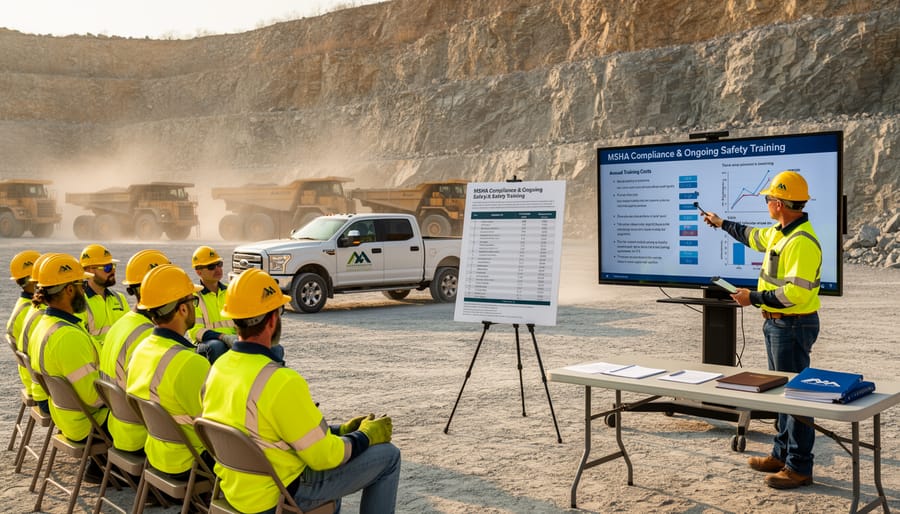
Compliance begins with mandatory training programs. Every quarry employee must complete initial MSHA training before working and participate in ongoing refresher courses throughout their employment. These programs cover equipment operation, hazard recognition, emergency procedures, and proper use of personal protective equipment. Training costs include instructor salaries, materials, and the productivity loss during training hours.
Safety equipment expenses extend beyond basic hard hats and steel-toed boots. Modern quarries invest in sophisticated dust suppression systems, ventilation equipment, machinery guards, fall protection systems, and emergency response gear. Many operations now incorporate advanced monitoring technology that detects hazardous conditions in real-time, alerting workers to potential dangers before accidents occur.
Regular inspections by MSHA officials require quarries to maintain meticulous records and address any violations promptly. Preparation for these inspections demands dedicated staff time and resources. Additionally, quarries conduct internal safety audits to identify and correct issues proactively, avoiding potential fines and work stoppages that could prove far more expensive than preventive measures.
These comprehensive safety investments ultimately protect workers while contributing to the stable, reliable supply of quality aggregates that construction projects depend upon.
Land Reclamation Reserves
Before a single stone leaves a quarry, operators must set aside substantial funds to guarantee the site’s eventual restoration. These land reclamation reserves represent a significant upfront and ongoing cost that directly impacts aggregate pricing.
Regulatory agencies require quarry operators to post financial assurance—typically through surety bonds, letters of credit, or cash deposits—to ensure proper site restoration occurs even if the business ceases operations. Bond amounts vary by jurisdiction and site size but commonly range from $3,000 to $10,000 per acre of disturbed land. A medium-sized quarry disturbing 50 acres might therefore need to secure $150,000 to $500,000 in bonding.
These aren’t one-time expenses. Many jurisdictions require periodic bond adjustments to account for inflation, expanded operations, or updated restoration cost estimates. Administrative fees for maintaining these financial instruments add another layer of expense, often running several thousand dollars annually.
The reclamation plan itself—detailing how the site will be graded, revegetated, and returned to beneficial use—requires expert preparation by environmental consultants and engineers, typically costing $20,000 to $75,000 initially, with periodic updates required throughout the quarry’s operational life.
These protective measures ensure responsible environmental stewardship, but they represent capital tied up for decades that could otherwise generate returns, making them a hidden yet essential component of natural stone’s final cost structure.
How Regulatory Costs Impact Stone Pricing
Cost Pass-Through to Consumers
Quarry operators face a straightforward business reality: regulatory compliance costs must be incorporated into their pricing structures to maintain viable, long-term operations. These costs don’t simply disappear; they become part of the aggregate’s final price that reaches consumers, contractors, and project developers.
The pass-through of compliance costs serves several essential purposes. First, it ensures quarries can continue meeting environmental and safety standards without compromising operational quality. When a quarry invests in advanced water treatment systems, dust suppression equipment, or habitat restoration programs, these expenditures protect both the environment and the surrounding community. Second, sustainable pricing allows operators to maintain necessary insurance coverage, worker safety programs, and equipment upgrades that prevent operational disruptions.
For consumers and industry professionals, understanding this cost structure is crucial for making informed purchasing decisions. When comparing aggregate prices between suppliers, the lowest price doesn’t always represent the best value. Quarries that maintain rigorous compliance standards typically produce more consistent product quality, demonstrate greater operational reliability, and pose fewer risks of supply chain interruptions due to regulatory violations or safety incidents.
The pricing premium for responsibly sourced aggregates is generally modest, often representing just a small percentage of total project costs. However, this investment supports quarries that prioritize environmental stewardship, community relations, and worker safety. For architects and designers specifying materials, choosing suppliers with transparent compliance records ensures project timelines remain stable and aligns with increasingly important sustainability goals that clients and stakeholders expect from modern construction projects.
Regional Variations in Compliance Costs
Quarrying and fabricating identical stone types can result in surprisingly different costs depending on where operations occur. State and local governments impose varying regulatory requirements that directly impact extraction and processing expenses, which ultimately influence market prices.
California exemplifies stringent environmental oversight, requiring comprehensive air quality monitoring, water reclamation systems, and extensive permitting processes. A granite quarry in the Sierra Nevada region might spend $150,000 annually on compliance alone, while a similar operation in Texas could spend half that amount due to less restrictive state regulations. These differences don’t reflect stone quality but rather the administrative and technical requirements each jurisdiction mandates.
Transportation costs compound these regional variations. Vermont marble commands premium pricing partly due to strict local environmental standards, but also because northeastern quarries face higher labor costs and seasonal weather limitations. Meanwhile, Georgia marble benefits from year-round operations and proximity to major transportation corridors, reducing supply chain factors that influence final pricing.
Local zoning ordinances create additional cost disparities. Some municipalities require expensive buffer zones between quarries and residential areas, while others mandate regular geological surveys or impose extraction volume limits. A limestone quarry in Indiana might operate with minimal restrictions, while a comparable Tennessee operation could face quarterly reporting requirements costing tens of thousands annually.
These regional compliance variations mean that comparing stone prices requires understanding the regulatory landscape behind each product. Higher costs often reflect stricter environmental stewardship rather than superior material quality, making regional context essential for informed purchasing decisions.
The Value Proposition: Why Compliance Costs Benefit Everyone
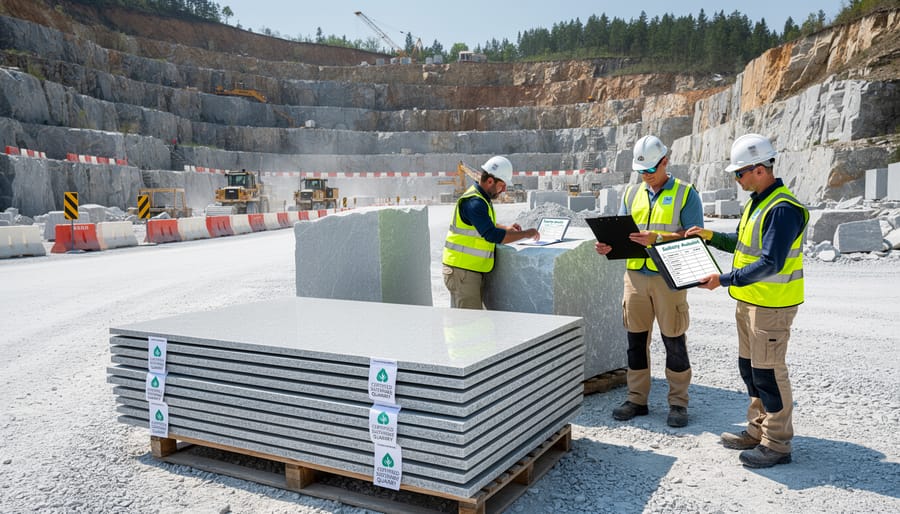
Environmental Protection and Sustainability
Environmental compliance costs represent far more than regulatory expenses—they’re investments in protecting our planet’s finite natural resources. Modern quarrying operations allocate significant budgets toward environmental monitoring, habitat restoration, and water quality management. These expenditures ensure that stone extraction doesn’t compromise local ecosystems or deplete resources that communities depend on.
Reclamation bonds, often required before quarrying begins, guarantee that sites will be properly restored after extraction concludes. These costs typically range from tens of thousands to millions of dollars depending on the operation’s scale. The funds cover everything from topsoil replacement and native plant restoration to ensuring groundwater systems remain uncontaminated.
Water management systems prevent sediment runoff and protect nearby streams, while dust suppression equipment maintains air quality for surrounding communities. Quarry operators also invest in wildlife corridor preservation and noise reduction technologies that minimize ecological disruption.
Though these environmental safeguards add to aggregate costs, they’re essential for sustainable practice. When you purchase natural stone from responsibly managed quarries, you’re supporting operations that prioritize long-term environmental stewardship over short-term profit. This approach ensures that future generations can access these remarkable natural materials while inheriting healthy ecosystems. Understanding these costs helps consumers appreciate that premium pricing often reflects genuine commitment to environmental responsibility rather than arbitrary markups.
Quality Assurance and Industry Standards
Rigorous permitting and regulatory oversight significantly impacts the quality and consistency of quarried stone products. Operations that comply with comprehensive environmental and safety standards typically implement systematic quality control measures throughout the extraction and processing phases. These protocols ensure each stone shipment meets specific dimensional tolerances, compositional standards, and aesthetic criteria.
Regulated quarries maintain detailed documentation tracking each stone block from extraction point to final delivery. This traceability system allows architects and designers to verify the source, composition, and processing history of their materials—essential information when specifying stone for high-profile projects or restoration work requiring precise color and texture matching. Such documentation becomes particularly valuable when projects require additional stone years after initial installation.
Industry certifications like ANSI/NSC 373 for sustainable natural stone and ISO 9001 for quality management demonstrate a quarry’s commitment to consistent production standards. These certifications require regular third-party audits, ensuring operations maintain their quality benchmarks over time. While these compliance measures contribute to aggregate costs, they directly translate to reduced project risk through predictable material performance.
The quality assurance embedded in regulated operations ultimately enhances the investment value of natural stone. Consistent grading, reliable supply chains, and comprehensive documentation reduce costly surprises during construction and provide confidence in long-term material performance.
Making Informed Purchasing Decisions
Questions to Ask Your Stone Supplier
When evaluating stone suppliers, start by asking about their sourcing practices and quarry locations. Request documentation showing their environmental permits, mining licenses, and compliance with local and federal regulations. Understanding where and how your stone is extracted provides insight into the legitimacy of pricing and operational standards.
Inquire about third-party certifications such as ISO standards, sustainability ratings, or industry-specific accreditations. These certifications often indicate higher operational costs but also demonstrate commitment to responsible practices. Ask suppliers to explain how their compliance investments affect pricing structures.
Questions about extraction methods, transportation logistics, and processing facilities help reveal the true cost picture. Request information about dust control measures, water management systems, and reclamation plans, as these regulatory requirements significantly impact aggregate costs.
Don’t hesitate to ask for transparency regarding their pricing breakdown. Reputable suppliers should be able to explain how permitting fees, environmental compliance, labor costs, and transportation contribute to final prices. Understanding these components helps you distinguish between fair pricing based on legitimate operational costs versus inflated margins. Finally, request references from previous projects and inquire about material consistency, delivery reliability, and their approach to handling supply chain challenges that might affect pricing or availability.
Recognizing True Value Beyond Price
Understanding aggregate costs reveals why price alone doesn’t tell the complete story when selecting natural stone. A comprehensive true cost analysis considers multiple factors that contribute to long-term value.
Ethically sourced natural stone reflects responsible quarrying practices, including fair labor conditions, workplace safety standards, and community investment. Quarries adhering to strict environmental protocols may have higher operational costs, but these practices ensure ecosystem preservation, water quality protection, and land reclamation commitments. These investments translate into pricing that supports sustainable industry practices.
Environmental responsibility extends beyond extraction to include reduced carbon footprints through efficient transportation logistics and minimal processing requirements. Natural stone’s durability means fewer replacements over decades, reducing waste and resource consumption compared to synthetic alternatives requiring more frequent renewal.
When evaluating stone options, consider certifications demonstrating regulatory compliance, quarry transparency regarding sourcing locations, and documented environmental stewardship programs. The premium attached to responsibly sourced materials represents an investment in industry integrity and environmental protection. This broader perspective helps buyers make informed decisions aligning with both quality expectations and ethical values, ensuring their purchases support sustainable practices while delivering lasting beauty and performance.
Understanding aggregate costs in quarry permitting and regulatory compliance fundamentally changes how we should evaluate natural stone pricing. These expenses aren’t arbitrary additions to boost profit margins—they represent essential investments in environmental stewardship, worker safety, community well-being, and long-term resource sustainability. When you purchase natural stone from a properly permitted and compliant operation, you’re supporting practices that protect watersheds, minimize ecological disruption, ensure fair labor conditions, and contribute to local infrastructure through tax revenues and impact fees.
The comprehensive cost structure we’ve explored—from initial permitting fees and environmental assessments to ongoing monitoring, reclamation bonds, and compliance documentation—demonstrates the complexity of responsible quarrying. Each component serves a specific purpose in the broader framework of sustainable resource extraction. Operations that cut corners on these requirements may offer lower prices initially, but they externalize costs onto communities and ecosystems, creating environmental debts that society ultimately pays.
For architects, designers, and consumers making sourcing decisions, compliance-driven pricing should serve as a quality indicator rather than a deterrent. Materials from fully compliant quarries come with documented chain-of-custody, verified environmental standards, and assurance that extraction occurred under regulated conditions. This transparency becomes increasingly valuable as green building certifications and sustainable design principles gain prominence in construction and renovation projects.
By viewing aggregate costs as markers of responsible sourcing, you make purchasing decisions that align with broader sustainability goals. The quarrying industry’s future depends on operations that balance economic viability with environmental responsibility—and understanding these costs empowers you to support businesses committed to that balance. Informed consumers drive market standards upward, making compliance the norm rather than the exception.