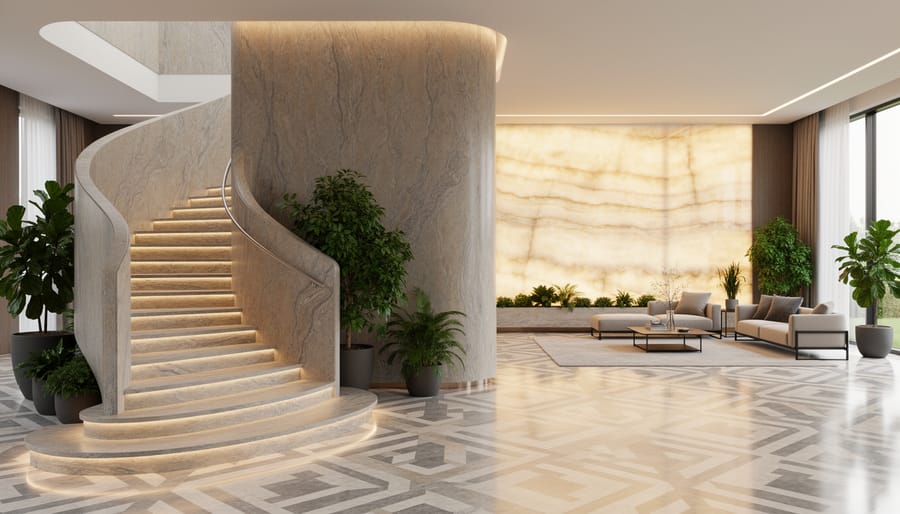
Stone interior design has evolved from conventional countertops and flooring into a transformative design language that redefines spatial experiences. Today’s designers are pushing boundaries by integrating stone as three-dimensional sculptural elements, backlit feature walls, and even flexible stone veneers that wrap curved surfaces—applications once considered impossible with this ancient material.
The shift toward innovative stone applications stems from advances in fabrication technology and a growing demand for biophilic design that connects interior spaces with nature. Ultra-thin stone panels now allow for vertical installations on furniture and cabinetry without structural reinforcement. Water-jet cutting enables intricate patterns and geometric compositions that transform marble, granite, and quartzite into artistic statements rather than merely functional surfaces.
Sustainability drives much of this innovation. Natural stone’s longevity, minimal processing requirements, and timeless aesthetic make it a responsible choice for environmentally conscious projects. Unlike synthetic materials that degrade or become dated, quality stone installations appreciate in value and maintain their visual impact for decades.
This guide explores contemporary stone applications that challenge traditional boundaries: from translucent onyx partitions that manipulate light to textured stone cladding that adds acoustic benefits. You’ll discover selection criteria for innovative installations, understand emerging fabrication techniques, and learn how leading designers are reimagining stone’s role in residential and commercial spaces. Whether you’re planning a statement feature or a comprehensive stone-integrated interior, these insights provide the foundation for informed, forward-thinking design decisions.
The Evolution of Stone in Interior Spaces
From Traditional to Transformative
For decades, stone in interiors meant predictable applications: granite countertops, marble flooring, and limestone fireplaces. While these traditional uses honor stone’s historical significance, today’s designers are pushing boundaries in unexpected ways.
Modern installations now feature stone as three-dimensional wall art, backlit translucent panels, and sculptural room dividers. Ultra-thin stone veneers wrap columns and curved surfaces once deemed impossible, while bookmatched slabs create dramatic feature walls that transform entire spaces. Stone now appears in suspended ceiling installations, integrated lighting fixtures, and even acoustic panels that combine function with aesthetics.
Advanced fabrication techniques enable intricate perforations, textured finishes, and seamless joints that blur the line between architecture and art. Designers mix stone types within single installations, pairing rough-hewn slate with polished onyx or combining fossilized limestone with contemporary quartz composites. These innovative approaches prove stone is no longer confined to horizontal or purely structural roles, instead becoming a dynamic medium for creative expression that challenges every preconception about this ancient material.
Why Modern Designers Are Choosing Stone
Today’s designers are gravitating toward stone for compelling reasons that extend far beyond aesthetics. Sustainability stands at the forefront of this revival. As the design industry prioritizes eco-conscious materials, natural stone emerges as an ideal choice—it’s quarried rather than manufactured, requires minimal processing, and integrates seamlessly into sustainable architecture initiatives. Unlike synthetic alternatives, stone doesn’t emit volatile organic compounds and can be locally sourced to reduce transportation impacts.
Durability plays an equally significant role. In an era of fast furniture and disposable design, stone offers permanence. A properly installed stone feature can last generations, requiring minimal maintenance while developing a desirable patina over time. This longevity translates to cost-effectiveness and reduced waste, aligning with circular economy principles.
Versatility rounds out stone’s appeal. Modern fabrication technologies have unlocked unprecedented design possibilities. Stone can now be cut paper-thin for dramatic backlit installations, CNC-machined into complex three-dimensional forms, or finished with specialized treatments that create unexpected textures. From minimalist Scandinavian interiors to maximalist statement spaces, stone adapts to virtually any design vision while maintaining its inherent authenticity and tactile richness.
Breakthrough Stone Applications Reshaping Interiors
Ultra-Thin Stone Panels and Surfaces
Ultra-thin stone panels represent a revolutionary advancement in natural stone applications, offering the beauty and authenticity of real stone with dramatically reduced weight and increased versatility. These engineered panels, typically ranging from 3 to 6 millimeters in thickness, consist of a thin layer of genuine stone bonded to a lightweight backing material such as fiberglass, aluminum honeycomb, or resin composite. This innovative construction reduces weight by up to 80% compared to traditional stone slabs while maintaining the natural veining, color variation, and tactile qualities that make stone distinctive.
The technical advantages extend beyond weight reduction. These panels can be applied to surfaces that would never support conventional stone, including existing walls without structural reinforcement, ceilings, curved surfaces, and even furniture pieces. Installation methods vary from adhesive mounting systems to mechanical fastening, with many products designed for straightforward application that reduces labor costs and installation time by up to 50%. The flexibility of ultra-thin panels enables designers to clad entire rooms in marble or granite without the structural concerns and extensive preparation traditional stone requires.
Visually, these panels deliver remarkable impact while opening new creative possibilities. Designers can specify bookmatched marble for dramatic wall features, wrap columns in seamless stone, or create backlit installations where the panel’s translucency adds ambient lighting effects. The technology has made stone accessible for commercial interiors like hotels and restaurants where weight restrictions previously limited options, and for residential projects where budget constraints made full-thickness stone prohibitive.
Backlit and Translucent Stone Features
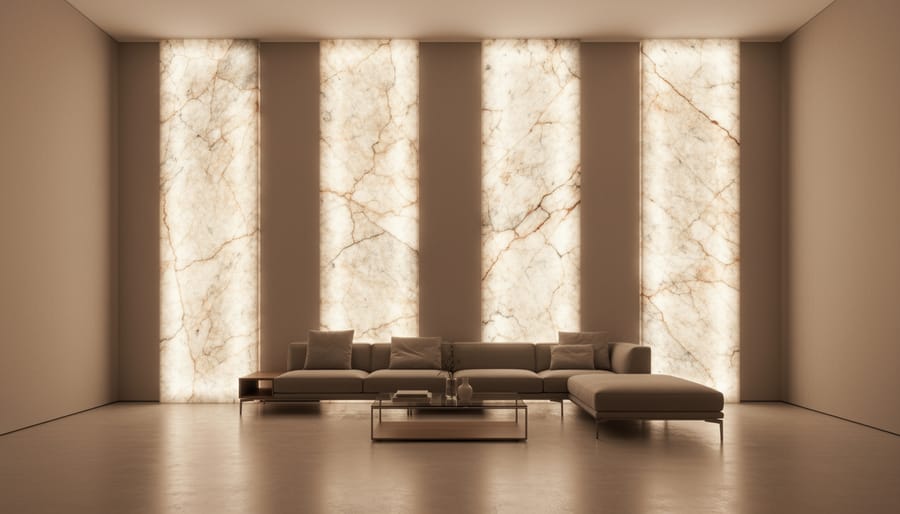
Backlighting transforms stone from a static surface into a luminous architectural element, capitalizing on the natural translucency of certain materials. Semi-precious stones like agate, onyx, and quartz possess varying degrees of light transmission, creating ethereal glows when illuminated from behind. These materials range from nearly opaque to highly translucent, with color intensity and veining patterns becoming more pronounced under lighting.
Thin marble slabs, typically cut to 10-20mm thickness, also exhibit translucency when backlit. White Calacatta and Statuario marbles produce soft, diffused illumination that highlights their distinctive veining, while colored marbles like Green Onyx or Honey Onyx generate warm, saturated hues. The key lies in material selection—stones with consistent translucency and interesting natural patterns yield the most dramatic results.
LED strip lighting has revolutionized backlit stone applications, offering energy efficiency, minimal heat generation, and customizable color temperatures. Installation typically involves mounting LED panels or strips within a frame behind the stone panel, with careful attention to even light distribution to avoid hot spots or shadowing.
Common applications include reception desk fronts, bar facades, bathroom vanity walls, and decorative wall panels. These installations serve dual purposes—providing ambient lighting while showcasing the stone’s natural beauty. The effect creates memorable focal points in residential and commercial spaces, from hotel lobbies to luxury residences.
When planning backlit features, consider the stone’s thickness, translucency rating, structural requirements for mounting, and electrical specifications. Working with experienced fabricators ensures proper material selection and professional installation for optimal visual impact and longevity.
3D Textured Stone Walls
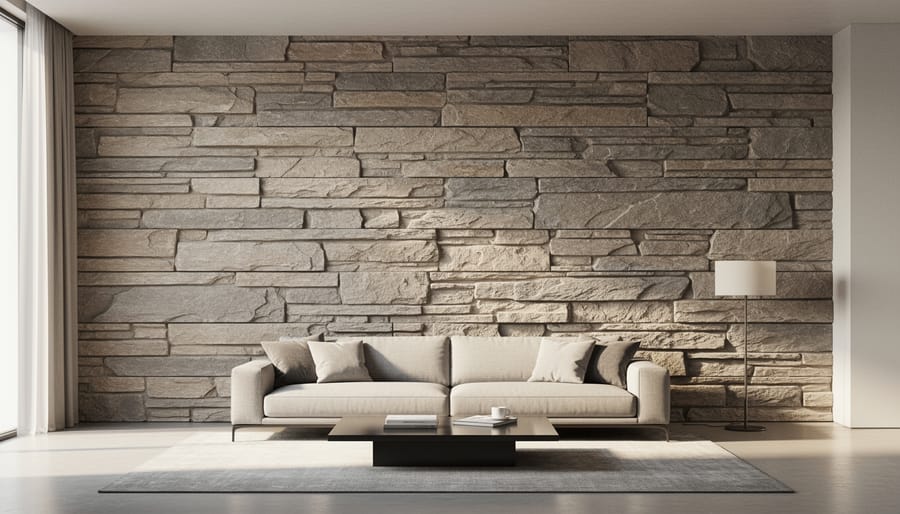
Three-dimensional textured stone walls transform flat surfaces into dynamic focal points that engage both sight and touch. These installations move beyond traditional smooth finishes to incorporate carved patterns, undulating wave effects, and sculptural reliefs that create depth and visual intrigue. Advanced fabrication techniques, including CNC machining and waterjet cutting, allow designers to achieve intricate geometric patterns, organic ripples, and custom motifs that would be impossible to execute by hand.
Wave-pattern walls have become particularly popular in contemporary interiors, where flowing vertical or horizontal grooves catch light and shadow differently throughout the day, creating ever-changing visual effects. Limestone, marble, and sandstone work especially well for these applications due to their workability and grain structure. Stacked stone panels offer another dimensional approach, with individual pieces projecting at varying depths to create a textured, layered appearance ideal for accent walls in living rooms or hospitality spaces.
The tactile quality of textured stone adds sensory richness that smooth surfaces cannot replicate. When planning these installations, consider lighting placement carefully, as angled illumination dramatically enhances the dimensional effect. While more complex to install than flat stone, the dramatic impact justifies the additional investment for spaces seeking distinctive architectural character.
Stone in Unexpected Places
Stone has evolved far beyond traditional countertops and flooring, finding its way into unexpected applications that showcase stone’s sculptural potential and functional versatility.
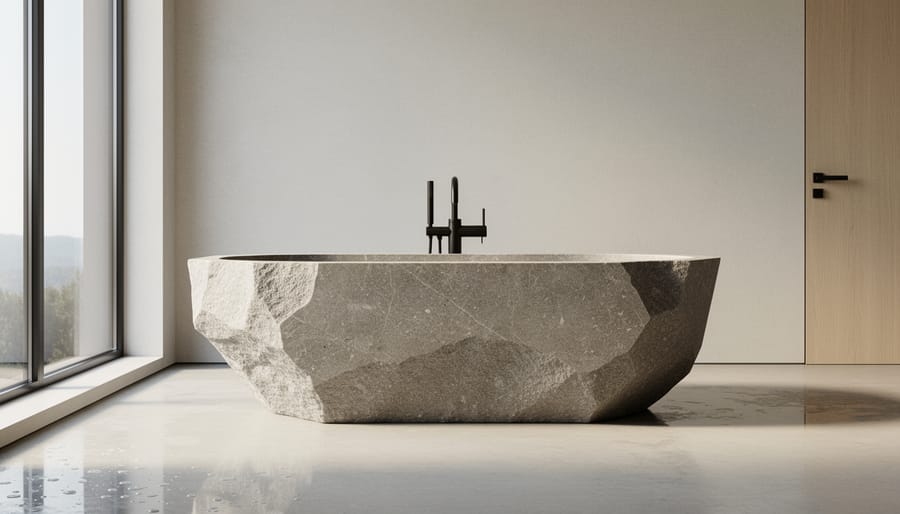
Freestanding bathtubs carved from single blocks of marble or granite represent the pinnacle of luxury and craftsmanship. These monolithic pieces, weighing up to several thousand pounds, require specialized extraction and carving techniques. The thermal properties of stone naturally maintain water temperature longer than acrylic alternatives, while the unique veining patterns ensure each tub becomes a one-of-a-kind centerpiece. Popular materials include creamy Crema Marfil, dramatic Nero Marquina, and earthy travertine.
Stone room dividers offer a contemporary solution for defining spaces without sacrificing natural light. Thin stone panels, often backlit to highlight translucent qualities, create visual separation while maintaining openness. Materials like onyx and alabaster work particularly well for this application, their natural transparency creating ambient lighting effects when illuminated from behind.
Acoustic stone panels address both aesthetic and functional needs in modern interiors. Specially engineered perforated stone panels absorb sound while maintaining the authentic appearance of natural material. These panels work effectively in home theaters, music rooms, and open-concept living areas where sound management is essential.
Integrated stone furniture pieces push creative boundaries further. Custom-fabricated stone desks, dining tables with stone bases, and built-in stone seating demonstrate how designers merge architecture with furnishings. Some installations feature stone shelving systems that appear to float from walls or stone fireplace surrounds that extend into entire feature walls. These applications require careful structural planning and collaboration between designers, fabricators, and installers to ensure proper support and installation.
Material Innovation: New Stone Types and Finishes
Exotic and Rare Stone Selections
Beyond traditional marble and granite, discerning designers are increasingly turning to exotic stones that offer distinctive character and visual impact. Quartzite, often confused with engineered quartz, delivers natural durability with striking veining patterns reminiscent of marble but with superior hardness, making it ideal for high-traffic kitchen countertops and dramatic feature walls. Soapstone’s velvety matte finish and exceptional heat resistance have elevated it from laboratory counters to luxurious culinary spaces, developing a natural patina that enhances its character over time.
Onyx captures attention with its translucent properties, transforming into luminous focal points when backlit—perfect for statement bar fronts, reception desks, or glowing wall installations. Modern designers are also exploring travertine beyond its traditional tumbled finish, employing honed and filled variations for sleek contemporary applications.
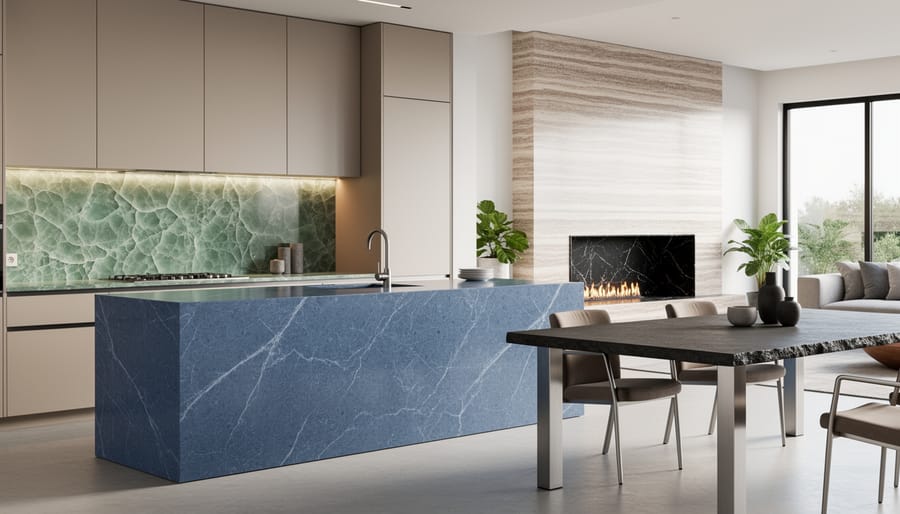
The growing interest in regional stone varieties has introduced specialty materials like Canadian sodalite with its brilliant blue coloring, Brazilian azul macaubas quartzite, and Italian pietra grey limestone. These distinctive stones allow designers to create truly unique interiors while supporting sustainable sourcing practices and celebrating geological diversity.
Contemporary Surface Treatments
Modern stone finishing techniques have revolutionized interior design possibilities, moving far beyond traditional polished surfaces. Leathered finishes create a subtle, textured appearance with slight dimensional variation that retains the stone’s natural color while reducing glare and hiding fingerprints—making it particularly popular for kitchen countertops and bathroom vanities. Honed finishes offer a smooth, matte surface that provides contemporary sophistication without the high shine of polished stone, ideal for high-traffic areas where slip resistance matters.
Brushed finishes use wire brushes to create gentle texture and enhanced grip, perfect for flooring applications in wet areas. These treatments also emphasize the natural veining and crystalline structure within the stone, adding depth and character.
Water-jet cutting technology has opened entirely new creative frontiers, allowing designers to create intricate patterns, custom mosaics, and decorative inlays with precision impossible through traditional methods. This technique enables the combination of different stone types to produce stunning geometric designs, brand logos, or artistic installations that transform walls and floors into focal points. These contemporary treatments maintain stone’s inherent durability while offering designers unprecedented creative flexibility to achieve specific aesthetic goals and functional requirements.
Combining Stone with Other Materials
Stone’s inherent beauty amplifies when thoughtfully paired with complementary materials, creating dynamic visual contrasts and enhanced functionality. Metal inlays in marble or granite flooring introduce geometric patterns and modern edge detailing, with brass, copper, or stainless steel strips defining zones or adding decorative interest. These combinations work particularly well in commercial lobbies and luxury residential entries where durability meets sophistication.
Resin-stone composites offer designers unprecedented flexibility, allowing for backlit translucent panels, embedded objects, or color-enhanced slabs that maintain stone’s textural appeal while pushing creative boundaries. This pairing suits feature walls and custom furniture pieces where artistic expression takes priority.
Wood and stone combinations balance warm and cool elements, grounding contemporary interiors with organic authenticity. Consider walnut shelving against travertine walls or teak cabinetry alongside honed granite countertops for spaces that feel both refined and welcoming.
Glass pairings maximize stone’s visual impact through transparency and reflection. Glass balustrades with stone treads create open stairways, while tempered glass shelves mounted on marble walls showcase collections without visual interruption. These mixed-material applications demonstrate stone’s versatility as both primary material and supporting element in sophisticated design compositions.
Designing With Stone: Practical Considerations
Selecting the Right Stone for Your Application
Choosing the appropriate stone for your interior project requires balancing several key factors to ensure both visual impact and long-term performance. Start by evaluating the intended use and traffic levels. High-traffic areas like flooring and kitchen countertops demand harder stones such as granite or quartzite, while decorative wall applications offer more flexibility with softer materials like marble or limestone.
Your aesthetic vision should guide stone selection based on color palette, veining patterns, and finish options. Consider how natural variations in each stone type will complement your overall design scheme. Polished finishes create dramatic, reflective surfaces ideal for contemporary spaces, while honed or textured finishes suit more organic, relaxed environments.
Maintenance requirements vary significantly between stone types. Marble requires regular sealing and careful cleaning to prevent etching and staining, making it less suitable for busy kitchens but perfect for bathrooms or accent walls. Granite and quartzite offer superior stain resistance with minimal upkeep, ideal for practical applications.
Budget considerations extend beyond initial material costs to include installation complexity, required substrate preparation, and ongoing maintenance expenses. Exotic stones with dramatic veining command premium prices, while locally sourced options provide cost-effective alternatives without sacrificing quality. Request samples and consult with stone specialists to evaluate how different options perform under your specific conditions before making final selections.
Installation Requirements and Structural Considerations
Successful stone installations begin with thorough structural assessment. Natural stone materials vary significantly in weight, from lighter limestone at approximately 140 pounds per cubic foot to dense granite exceeding 175 pounds per cubic foot. Before installation, verify that floors, walls, and supporting structures can accommodate these loads. For large-format slabs, feature walls, or suspended applications, consult a structural engineer to evaluate load-bearing capacity and determine necessary reinforcements.
Substrate preparation proves critical for longevity and performance. Surfaces must be clean, level, and structurally sound. Concrete substrates should cure completely, while drywall installations require moisture-resistant backing boards rated for stone weight. Moisture barriers and waterproofing membranes are essential in wet areas like bathrooms and kitchens to prevent deterioration and staining.
Installation techniques vary by application and stone type. Thin-set mortar works well for most floor and wall tiles, while mechanical anchoring systems suit large slabs and cladding projects. Epoxy adhesives provide superior bonding for vertical installations and non-porous stones. Professional installers understand expansion joint placement, grout selection, and proper sealing procedures that protect your investment.
Complex projects involving cantilevered elements, backlit installations, or integrated water features demand specialized expertise. Partner with experienced fabricators and installers familiar with contemporary stone applications to ensure structural integrity and design success.
Maintenance and Longevity
Contrary to popular belief, stone surfaces don’t require excessive maintenance when properly sealed and installed. Modern sealant technologies have dramatically improved stone protection, with many requiring reapplication only every 1-3 years depending on the stone type and application. Daily care is straightforward: use pH-neutral cleaners and avoid acidic substances on acid-sensitive stones like marble and limestone.
For innovative applications such as backlit panels or textured feature walls, maintenance remains minimal. Dust textured surfaces with soft brushes or microfiber cloths, and clean backlit installations with the lighting off to prevent streaking. Stone’s natural durability means it resists scratching, heat damage, and wear far better than many synthetic alternatives.
The longevity of stone interior design is unmatched, with properly maintained installations lasting decades or even centuries. This durability makes stone a sustainable choice, eliminating the need for replacement and reducing long-term environmental impact. When selecting stone for unconventional applications, consult with suppliers about finish-specific care requirements, as honed, polished, and textured surfaces may have slightly different maintenance needs.
Sustainability and the Future of Stone Design
The Environmental Case for Natural Stone
Natural stone stands as one of the most sustainable materials available for interior design. Unlike synthetic alternatives that require extensive manufacturing processes, natural stone needs minimal processing from quarry to installation, significantly reducing energy consumption and emissions. The material’s exceptional durability means stone installations can last centuries rather than decades, eliminating the need for frequent replacements and reducing long-term waste.
The environmental advantages of stone extend beyond longevity. Stone is completely recyclable and often repurposed from demolished structures into new applications. Its thermal mass properties contribute to energy-efficient buildings by naturally regulating indoor temperatures. When a stone feature eventually reaches the end of its lifecycle, it returns harmlessly to the earth without releasing toxic chemicals or pollutants. Compared to manufactured materials like engineered quartz, porcelain, or plastics that rely heavily on petroleum-based resins and energy-intensive production, natural stone maintains a considerably lower carbon footprint throughout its entire lifecycle.
Emerging Trends to Watch
The future of stone interior design is being shaped by technological breakthroughs that expand creative possibilities while maintaining stone’s inherent beauty. Digital printing technology now allows designers to transfer high-resolution images, patterns, and artwork directly onto stone surfaces, creating customized feature walls and countertops that blend natural material with personalized design elements.
Bio-receptive stone represents another frontier, engineered with specific surface textures and porosity levels that support moss and microflora growth. These innovative materials enable living walls and green facades that combine stone’s structural qualities with biophilic design principles, improving indoor air quality while creating dynamic, evolving surfaces.
Smart stone integration is emerging through embedded sensors and LED technology within stone slabs. These advancements allow for heated countertops, illuminated pathways, and surfaces that monitor environmental conditions. While still in early adoption phases, these technologies promise to transform stone from a passive material into an interactive design element that responds to user needs and environmental changes, opening unprecedented possibilities for residential and commercial applications.
The landscape of interior design continues to evolve, and stone stands at the forefront of this transformation. What was once considered purely functional or relegated to specific applications has emerged as one of the most versatile and dynamic materials available to contemporary designers. From ultra-thin stone veneers that bring natural beauty to unexpected surfaces, to illuminated installations that turn walls into living art, the possibilities extend far beyond conventional countertops and flooring.
As you consider your next project, challenge yourself to view stone through a fresh lens. Think beyond the familiar applications and explore how textured finishes can create tactile experiences, how different stone types can define zones within open-concept spaces, or how sustainable quarrying practices align with your environmental commitments. The innovations in fabrication technology, installation methods, and finishing techniques mean that limitations once imposed by weight, thickness, or installation complexity have largely disappeared.
Whether you’re a homeowner seeking to create a distinctive living space, an architect designing a commercial project, or a designer pushing creative boundaries, stone offers unprecedented opportunities for innovation. Begin by researching contemporary applications, consulting with experienced fabricators about new possibilities, and examining case studies that demonstrate successful implementation. The key is approaching stone not as a traditional material bound by convention, but as a transformative element capable of defining spaces, creating atmosphere, and delivering lasting value. Your next project awaits the distinctive character that only natural stone can provide.