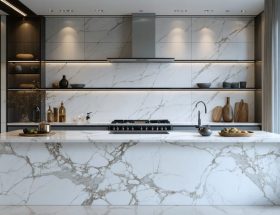

Transform your kitchen’s aesthetic with quartz countertops, a versatile material experiencing growing popularity in modern kitchens. From sleek waterfall edges to intricate veining patterns, quartz offers unprecedented design flexibility while maintaining its renowned durability and low maintenance requirements.
Modern fabrication techniques have revolutionized quartz customization, allowing homeowners to select from an extensive range of colors, patterns, and finishes that rival natural stone. Edge profiles can be customized from simple eased edges to elaborate ogee designs, while thickness options typically range from 2cm to 3cm to accommodate various aesthetic preferences and structural requirements.
Beyond traditional countertop applications, quartz can be fabricated into seamless backsplashes, integrated sinks, and dramatic waterfall islands. Advanced manufacturing processes now enable book-matching, where veining patterns flow continuously across multiple slabs, creating stunning visual continuity throughout your space. Whether you’re seeking the timeless elegance of marble-look quartz or the bold statement of engineered patterns, today’s customization options ensure your countertops perfectly align with your design vision while delivering superior performance.

Color and Pattern Possibilities
Solid Colors and Tones
Solid color quartz countertops offer a clean, contemporary aesthetic that appeals to both minimalist and modern design sensibilities. The spectrum ranges from crisp whites and warm creams to dramatic blacks and rich earth tones, providing options for any design scheme. Popular neutral choices include Pure White, Concrete Gray, and Absolute Black, which serve as versatile foundations for various kitchen styles.
For those seeking subtle sophistication, warm beige and taupe tones create an inviting atmosphere while maintaining a professional appearance. These understated hues work exceptionally well in transitional kitchens where traditional and contemporary elements merge. Cool grays and slate tones offer a modern industrial feel while remaining practical for everyday use.
Bold color options have gained popularity in recent years, with deep blues, forest greens, and rich burgundies making striking statements in designer kitchens. These dramatic choices can serve as focal points in otherwise neutral spaces or complement equally bold design schemes.
The consistency of solid-colored quartz countertops provides distinct advantages over natural stone variations. Each slab maintains uniform color throughout, ensuring perfect matching across large surfaces and multiple pieces. This consistency also makes future repairs less noticeable and simplifies the selection process for large-scale projects.
When selecting solid colors, consider how lighting conditions affect appearance. Natural daylight and artificial lighting can significantly impact how the color presents in your space, making sample viewing under various light conditions essential for accurate color assessment.
Natural Stone Patterns
Modern quartz manufacturing techniques have revolutionized the ability to replicate natural stone-inspired patterns with remarkable accuracy. The most popular options include Carrara and Calacatta marble-inspired designs, featuring elegant white backgrounds with distinctive gray veining that captures the timeless appeal of Italian marble. These patterns offer the classic luxury look without the maintenance concerns of natural stone.
Granite-inspired patterns present bold, speckled appearances with variations in color density and crystal-like formations. These designs range from salt-and-pepper patterns to more dramatic combinations featuring gold, burgundy, or blue mineral deposits scattered throughout the surface.
For those seeking the raw beauty of travertine or limestone, manufacturers offer options with subtle color variations and gentle movement patterns that mirror these natural formations. Some collections even replicate the appearance of rare stones like onyx, with translucent effects and dramatic veining that create stunning visual impact.
The advantage of these engineered patterns lies in their consistency and predictability. Unlike natural stone, where each slab varies significantly, quartz patterns can be reproduced with minimal variation, ensuring perfect pattern matching across large installations. This controlled manufacturing process also allows for customized color selections within established pattern styles, helping homeowners achieve their exact design vision while maintaining the authentic look of natural stone.
Edge Profile Options
Standard Edge Profiles
The edge profile of your quartz countertop significantly impacts both its aesthetic appeal and functionality. The most popular standard edge profile is the straight (or eased) edge, featuring clean lines and minimal detailing that complement modern kitchen designs. This profile offers excellent durability and is the easiest to maintain.
The beveled edge adds sophistication with its angled cut, creating an elegant transition from the horizontal surface to the vertical face. Available in various angles and depths, beveled edges can either subtly enhance your countertop’s appearance or make a bold design statement.
Bullnose edges, featuring a completely rounded profile, remain a classic choice for traditional kitchens. This smooth, curved edge not only looks inviting but also provides enhanced safety, especially in households with young children. The half-bullnose variation, rounded on top while remaining flat below, offers a perfect compromise between classic and contemporary styles.
Other common options include the ogee, featuring an S-shaped curve for traditional elegance, and the waterfall edge, which creates a dramatic vertical drop to the floor. Each profile affects not only the countertop’s appearance but also its cleaning requirements and durability, making it essential to consider both style and practicality when making your selection.

Premium Edge Designs
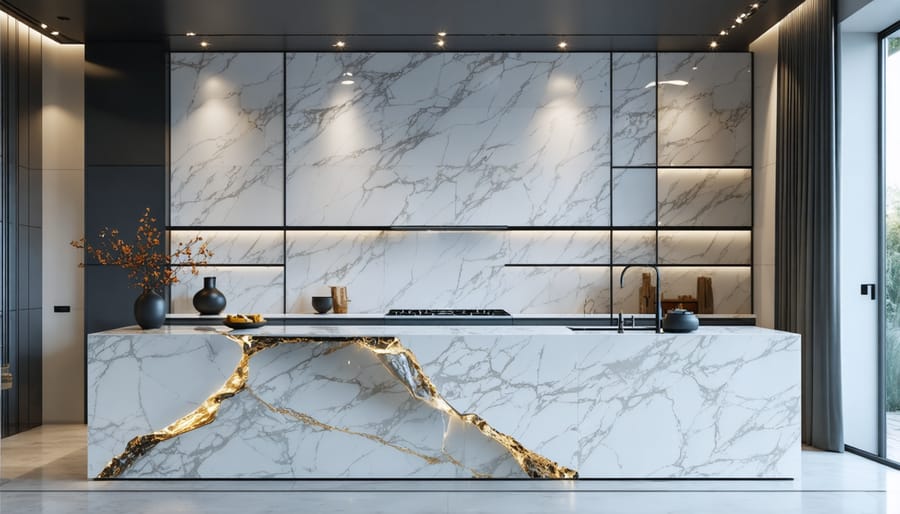
Premium edge profiles elevate quartz countertops from functional surfaces to striking design statements. The waterfall edge, increasingly popular in modern kitchens, creates a dramatic vertical drop where the countertop material continues seamlessly down the side of the cabinet to the floor. This sophisticated design choice creates visual continuity and adds a luxurious architectural element to your space.
The ogee edge, with its distinctive S-shaped curve, brings classical elegance to contemporary settings. This timeless profile adds depth and visual interest while creating beautiful shadow lines that enhance the countertop’s appearance. Other premium options include the dupont edge, which combines a bullnose top with a curved bottom, and the chiseled edge that mimics natural stone’s raw beauty.
These specialty edges require precise fabrication techniques and advanced CNC machinery to achieve flawless results. While premium edge profiles typically add to the overall cost, they offer unique opportunities to personalize your space. When selecting an edge profile, consider how it complements your kitchen’s style, its practicality for daily use, and how it coordinates with other design elements like cabinet hardware and backsplash materials.
Surface Finishes
Polished vs. Honed Finishes
When choosing your quartz countertop finish, you’ll typically encounter two main options: polished and honed surfaces. Polished finishes, the most traditional choice, feature a glossy, mirror-like appearance that reflects light and showcases the depth of the quartz’s pattern. This high-shine finish not only creates a sophisticated look but also offers superior stain resistance and easier maintenance due to its sealed surface.
Honed finishes, on the other hand, provide a softer, more matte appearance that’s gained popularity in contemporary design. This finish has a smooth, flat surface without reflection, creating a more natural, understated aesthetic. While honed surfaces may require slightly more maintenance and can show fingerprints more readily, they excel at hiding minor scratches and are less likely to show water spots.
Both finishes maintain the durability and non-porous qualities of quartz. The choice often comes down to your design preferences and lifestyle needs. Polished finishes work well in traditional kitchens and spaces where easy cleaning is paramount, while honed finishes complement modern, industrial, or farmhouse-style designs where a more organic look is desired.
Textured and Specialty Finishes
Beyond traditional polished surfaces, quartz countertops are now available in an array of sophisticated textural finishes that add depth and character to your space. The leather finish, achieved through specialized manufacturing processes, offers a soft, suede-like texture that masks fingerprints and reduces glare while maintaining the material’s durability. This finish is particularly popular in contemporary designs where a matte look is desired.
Brushed finishes create a subtle, directional texture that mimics the appearance of natural stone weathering. This treatment works exceptionally well with darker quartz colors, adding visual interest without compromising the surface’s functionality. Some manufacturers also offer honed finishes, which provide a smooth, matte appearance that’s less reflective than polished surfaces.
For those seeking unique aesthetics, specialty finishes like concrete-look, river-washed, and hammered textures are available. These treatments can transform the quartz surface to mimic different materials while retaining its superior durability and low maintenance properties. When selecting a textured finish, consider both its aesthetic appeal and practical implications, as some textures may require specific cleaning techniques to maintain their appearance.
Thickness and Installation Options
Standard and Custom Thicknesses
Quartz countertops typically come in two standard thicknesses: 2cm (approximately ¾ inch) and 3cm (approximately 1¼ inch). The 3cm thickness is the most popular choice for kitchen countertops, offering robust durability and a substantial appearance that complements modern kitchen designs. The 2cm option is often preferred for bathroom vanities and vertical applications like backsplashes, providing a sleeker profile.
For unique design requirements, custom thickness options are available through specialized fabricators. These can range from ultra-thin 1cm panels for wall cladding to hefty 5cm edges created through mitring and lamination techniques. Mitered edges can create the illusion of a thicker slab while maintaining the material’s inherent strength.
When selecting thickness, consider both aesthetic and practical factors. Thicker slabs generally offer better impact resistance and allow for more elaborate edge profiles. However, they also add weight to the installation and may require additional cabinet support. Thinner slabs are more economical and easier to work with in vertical applications.
Most manufacturers recommend specific minimum thicknesses for different applications to ensure structural integrity and longevity. Always consult with a certified fabricator to determine the most appropriate thickness for your specific project requirements.
Creative Installation Techniques
Modern quartz countertop installations have evolved beyond simple flat surfaces, offering homeowners innovative ways to showcase this versatile material. The waterfall edge design, where the countertop material cascades down the sides to the floor, creates a dramatic architectural statement perfect for kitchen islands and peninsulas. This seamless flow transforms functional surfaces into stunning focal points.
Custom inlays present another creative installation technique, allowing for personalized designs through the integration of contrasting quartz colors or complementary materials. Metallic strips, glass accents, or different quartz patterns can be precisely cut and embedded to create unique patterns, borders, or decorative elements.
Advanced fabrication methods now enable curved installations and radius edges that soften the overall appearance while maintaining quartz’s durability. Integrated drainboards can be carved directly into the surface near sinks, while built-in trivets offer practical solutions for hot cookware placement.
For a truly distinctive look, stepped edges create a layered effect that adds visual depth, while mitered edges achieve sharp, clean lines that emphasize the material’s thickness. These installation techniques can be combined with various edge profiles and surface finishes to create truly customized designs that reflect individual style preferences while maintaining the material’s practical benefits.
Practical Considerations
Budget Impact of Customization
The budget impact of customization choices can significantly influence your final project cost. Basic customization options like standard edge profiles typically add $10-20 per linear foot, while premium edges such as waterfall or ogee designs can increase costs by $30-50 per linear foot. Unique color selections and specialty finishes may add 15-25% to your base material costs.
Complex installations involving multiple seams, intricate corners, or specialized cutouts for fixtures can increase labor costs by 20-30%. Waterfall edges, while stunning, effectively double the material needed for that section, substantially affecting overall expenses. Premium finish options like leather or honed surfaces typically add $5-10 per square foot compared to standard polished finishes.
Decorative inlays or mixed material designs can increase costs by 40-50% over standard installations. However, strategic customization choices, such as selecting simpler edge profiles for less visible areas, can help balance aesthetic preferences with budget constraints. Understanding these cost implications helps in making informed decisions about which customization options deliver the most value for your specific project.
Maintenance Requirements
Different customization choices can affect the maintenance requirements of your quartz countertops. Polished finishes typically require minimal upkeep, needing only regular cleaning with mild soap and water. Honed or matte surfaces, while offering a sophisticated look, may show fingerprints and watermarks more readily, necessitating more frequent cleaning.
Dark-colored quartz varieties tend to show dust and fingerprints more prominently than lighter shades, requiring more regular attention to maintain their appearance. Textured finishes, such as leather or concrete-look surfaces, may need occasional deep cleaning to prevent debris from settling in the subtle indentations.
Edge profiles also influence maintenance needs. Simple straight edges are easiest to clean, while more elaborate profiles like ogee or waterfall edges may require additional attention to keep their contours spotless. Integrated features such as drainboards or built-in soap dishes need regular cleaning to prevent water spots and soap scum buildup.
Remember that while quartz is highly durable, avoiding harsh chemicals and abrasive cleaners is essential regardless of the customization options chosen.
Quartz countertops offer an impressive range of customization possibilities to suit any design vision. From diverse color selections and edge profiles to unique finishes and thickness options, homeowners and designers can create truly personalized surfaces that perfectly complement their space. When planning your quartz countertop project, consider how different customization choices will impact both aesthetics and functionality. For optimal results, work with experienced fabricators who can guide you through the selection process and ensure precise implementation of your chosen features. Remember that while some customization options may increase initial costs, they can significantly enhance your countertop’s visual appeal and long-term value. By carefully weighing these options and considering your specific needs, you can create a stunning, durable quartz countertop that serves as the centerpiece of your kitchen or bathroom for years to come.