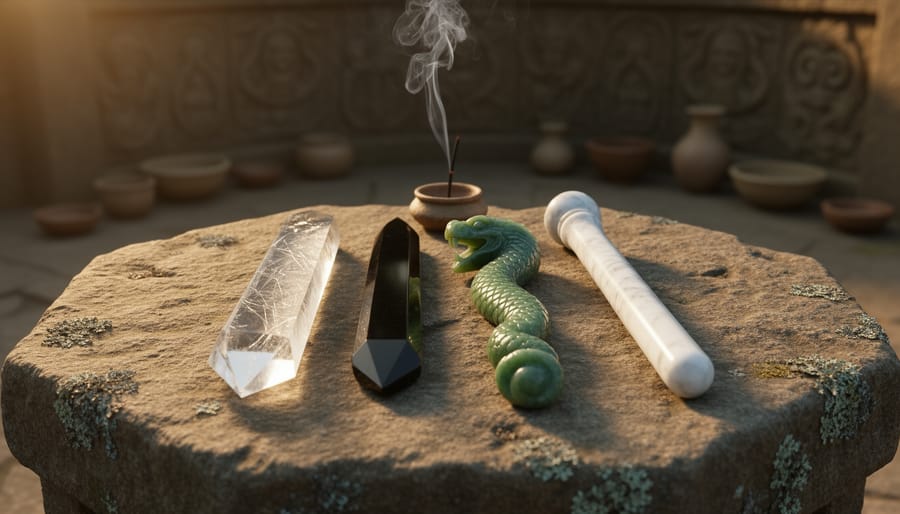
Ceremonial wands represent humanity’s oldest spiritual tools, carved from stone, wood, and precious materials across cultures spanning millennia. These sacred implements served as conduits between the physical and spiritual realms, wielded by shamans, priests, and healers in rituals from ancient Egypt to indigenous Americas. Unlike ordinary objects, ceremonial wands embodied power through their materials—particularly stone varieties chosen for specific properties and symbolic meanings.
Archaeological evidence reveals ceremonial wands dating back 8,000 years, with notable examples crafted from marble, obsidian, jade, and quartz. Egyptian priests held serpent-headed wands during protective rituals, while Celtic druids favored oak and stone combinations. Indigenous cultures worldwide developed distinct wand traditions, often incorporating locally sourced stones believed to channel natural energies or ancestral wisdom.
The craftsmanship behind these ceremonial stone tools demonstrates remarkable skill, as ancient artisans shaped hard materials using primitive techniques to achieve precise forms and polished surfaces. Stone selection followed deliberate patterns: quartz for clarity and amplification, obsidian for cutting negative energy, marble for purity and transformation.
Today, ceremonial wands maintain relevance in spiritual practices, museum collections, and cultural heritage studies. Understanding their historical context, material composition, and symbolic significance offers insights into human spirituality’s evolution and our enduring relationship with natural stone as a medium for sacred expression. This exploration examines stone ceremonial wands through archaeological, anthropological, and material perspectives.
What Are Ceremonial Wands and Their Historical Significance
Ceremonial wands represent some of humanity’s oldest ritual implements, serving as powerful symbols of authority, spiritual connection, and transformative energy across diverse cultures throughout history. These specialized tools, crafted from carefully selected materials including various types of natural stone, have played central roles in religious ceremonies, healing practices, and leadership rituals for thousands of years.
At their core, ceremonial wands function as extensions of human intention and spiritual power. Ancient civilizations believed these implements could channel divine energy, mark sacred boundaries, direct blessings, and facilitate communication between the physical and spiritual realms. Unlike purely decorative objects, ceremonial wands held profound functional significance within their cultural contexts, often reserved for use by priests, shamans, healers, and tribal leaders during important rites and gatherings.
The historical record reveals ceremonial wands across numerous ancient societies. Egyptian priests wielded stone-tipped wands during temple rituals and funerary ceremonies, while indigenous cultures throughout the Americas crafted wands from locally sourced stone materials for healing ceremonies and seasonal celebrations. In many traditions, the specific stone used in a wand’s construction carried symbolic meaning—jade represented purity and wisdom in Asian cultures, while obsidian symbolized protection and truth-telling in Mesoamerican societies.
Among ceremonial stone implements, wands occupy a unique position due to their portable nature and intimate connection to the individual wielder. Unlike larger stone altars or monuments, ceremonial wands served as personal ritual tools, often passed down through generations or created specifically for individual practitioners. The choice of stone material reflected both practical considerations—durability, workability, local availability—and spiritual attributes associated with different minerals and crystals.
Today, ceremonial wands continue to hold significance in various spiritual practices while also attracting interest from collectors, anthropologists, and those studying the sophisticated ways ancient cultures worked with natural stone materials to create meaningful ritual objects.
Stone Materials Used in Ceremonial Wands Throughout History
Crystal Quartz and Clear Stone Wands
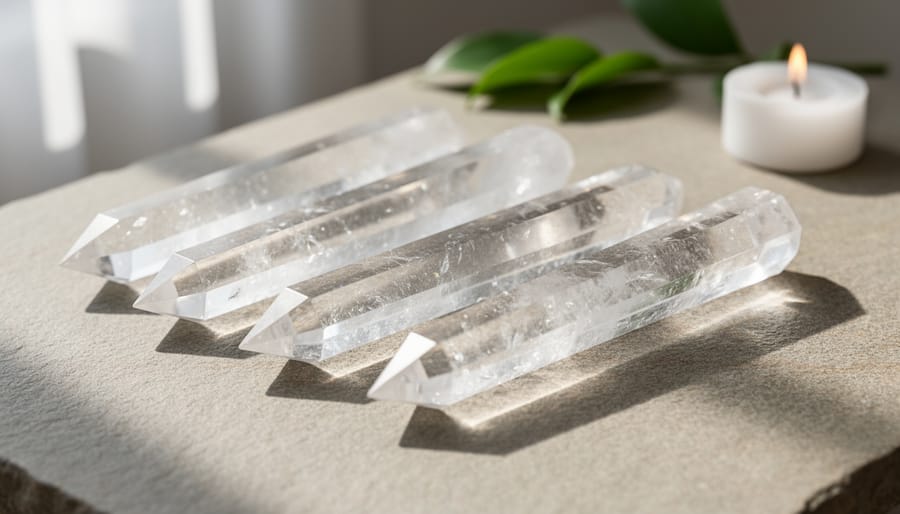
Crystal quartz and clear transparent stones have held central importance in ceremonial wands across cultures for millennia. These materials were prized not only for their striking visual clarity but also for what ancient practitioners believed were powerful energy-conducting properties. Clear quartz, in particular, appears in ceremonial implements from ancient Egypt to indigenous American traditions, valued for its ability to amplify intention and focus spiritual energy.
The enduring appeal of crystal quartz ceremonial wands stems from several factors. Their transparency symbolizes purity and divine connection, while their natural hexagonal structure was thought to channel cosmic forces. Many traditions associated clear stones with healing, divination, and communication with higher realms. The spiritual properties of stone made quartz wands essential tools for shamans, healers, and spiritual leaders.
In modern ceremonial contexts, crystal quartz wands remain remarkably popular among practitioners of various spiritual traditions. Contemporary artisans craft these wands by selecting high-quality clear quartz specimens, often incorporating copper wire wrapping or wooden handles to enhance their functionality. The stones’ piezoelectric properties—their ability to generate electrical charge under pressure—lend scientific credibility to ancient beliefs about their energetic qualities, bridging traditional wisdom with modern understanding of natural stone capabilities.
Marble and Polished Stone Ceremonial Implements
Marble has served as a premier material for ceremonial wands throughout history, prized for its unique combination of workability, beauty, and endurance. Ancient craftspeople discovered that marble’s medium hardness allowed for detailed carving and polishing while maintaining structural integrity for implements meant to last multiple generations. The stone’s natural veining and color variations—from pure white Carrara to green serpentine marble—provided each wand with distinctive visual character that enhanced its perceived spiritual power.
The polishing process transforms raw marble into objects of extraordinary beauty. Skilled artisans could achieve mirror-like surfaces that reflected light dramatically during ceremonies, creating visual effects that amplified the wand’s ritual significance. This lustrous finish also made marble ceremonial wands symbols of status and authority within religious hierarchies.
Durability proved essential for objects used repeatedly in sacred contexts. Marble’s resistance to weathering meant these implements could withstand decades or centuries of handling, storage, and ritual use. Archaeological discoveries of well-preserved marble wands demonstrate the material’s longevity, with some examples retaining intricate surface details after thousands of years.
Modern stone specialists continue to appreciate marble’s qualities for creating meaningful ceremonial objects, recognizing how this natural material connects contemporary practices to ancient traditions through both its physical properties and symbolic associations.
Obsidian and Volcanic Stone Wands
Obsidian holds profound cultural significance in Mesoamerican ceremonial wands, revered for its razor-sharp edges and deep spiritual symbolism. Aztec and Maya civilizations incorporated this volcanic glass into ritual implements, believing its formation from molten earth connected users to underworld deities and transformative forces. The stone’s reflective black surface was thought to reveal hidden truths and facilitate communication with the spirit realm.
Indigenous traditions throughout Mexico and Central America crafted ceremonial wands from obsidian, basalt, and other volcanic stones, each material carrying distinct spiritual properties. Obsidian wands often featured intricate knapping techniques that created symbolic patterns and functional edges for ceremonial bloodletting rituals. The durability and natural beauty of these volcanic materials made them ideal for implements passed down through generations of spiritual leaders.
Today, archaeological discoveries of obsidian ceremonial wands provide valuable insights into pre-Columbian religious practices, while contemporary artisans continue honoring these ancient traditions by creating modern interpretations that celebrate volcanic stone’s enduring cultural importance.
Cultural Examples of Stone Ceremonial Wands Across Civilizations
Ancient Egyptian Stone Ritual Tools
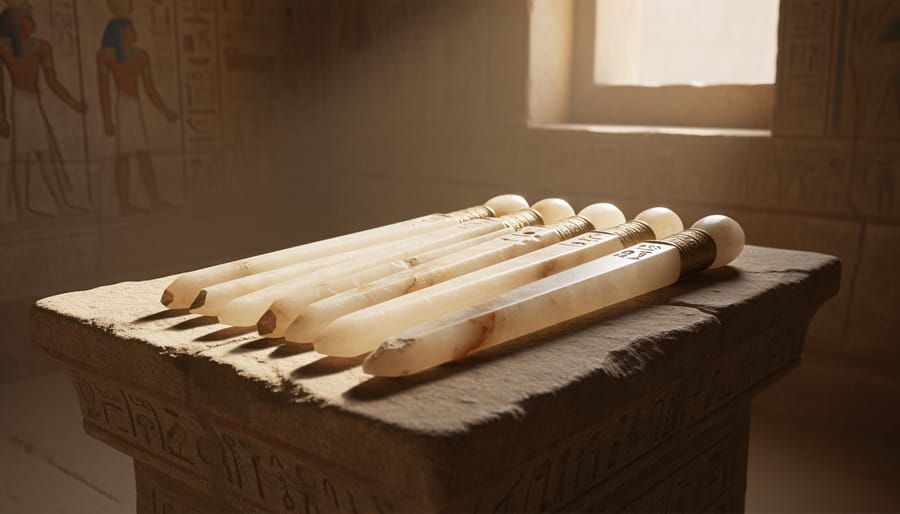
Ancient Egyptian priests wielded ceremonial wands crafted from carefully selected stone materials, with alabaster and granite emerging as the most prestigious choices for ritual implements. These sacred tools, dating back to the Middle Kingdom period (2055-1650 BCE), served as physical manifestations of divine authority during temple ceremonies and funerary rites.
Alabaster ceremonial wands, prized for their translucent quality and smooth texture, were associated with purity and spiritual illumination. Egyptian artisans selected calcite alabaster from quarries near Hatnub, believing its luminous properties channeled divine energy. The stone’s workability allowed craftsmen to create intricate carvings of protective deities and hieroglyphic inscriptions that invoked specific powers during rituals.
Granite wands represented permanence and strength, typically reserved for high-ranking priests performing state ceremonies. Red granite from Aswan symbolized the life-giving powers of the sun god Ra, while black granite connected to protective underworld deities. These dense stone implements required exceptional skill to shape and polish, making them valuable indicators of temple wealth and craftsman expertise.
Archaeological evidence from temple complexes reveals that priests used these stone wands for blessing ceremonies, consecration rituals, and as focal points during astronomical observations aligned with sacred calendars.
Indigenous and Shamanic Stone Wands
Shamanic traditions worldwide have employed stone ceremonial wands as essential tools for spiritual practice and healing rituals. These implements, crafted from materials like obsidian, quartz, jade, and local river stones, served as conduits between the physical and spiritual realms across Indigenous cultures in the Americas, Siberia, and Australia.
Native American medicine practitioners fashioned ceremonial wands from carefully selected stones believed to hold inherent power. Obsidian wands, prized for their sharp energy and protective qualities, were particularly significant in Mesoamerican shamanic traditions. Clear quartz wands appeared frequently in North American indigenous ceremonies, valued for their ability to amplify intention and channel healing energy.
Siberian shamans integrated stone-tipped wands into complex ritual frameworks, often combining sacred stones with wooden staffs adorned with symbolic carvings. These implements functioned as directional tools during ceremonies, pointing toward spirits or marking sacred spaces.
The craftsmanship of shamanic stone wands reflected deep geological knowledge and spiritual understanding. Practitioners selected stones based on color, translucency, and energetic properties, then shaped them through grinding, polishing, and sometimes heat treatment. Many wands incorporated multiple stone types, with crystal points or polished river stones secured to wooden handles using natural adhesives and leather bindings, creating ceremonial tools that embodied both artistic skill and spiritual purpose.
Asian Stone Ceremonial Implements
Across East and Southeast Asia, jade ceremonial wands held profound spiritual significance in imperial courts and religious ceremonies for thousands of years. Chinese ritual implements, particularly the ruyi scepter, were crafted from nephrite jade and represented authority, wisdom, and good fortune. These s-shaped wands featured intricate carvings of dragons, clouds, and auspicious symbols, with the finest examples displaying the translucent apple-green jade prized by emperors and scholars.
Japanese Shinto priests employed stone wands called shaku during purification rituals and ceremonial proceedings. Traditionally carved from fine-grained white jade or black obsidian, these flat, elongated implements symbolized the connection between earthly and divine realms. The careful selection of stone material was essential, as practitioners believed the inherent properties of each stone type influenced the wand’s spiritual effectiveness.
Southeast Asian cultures developed distinctive ceremonial wands from regional stones including serpentine, jadeite, and volcanic rock. Burmese artisans particularly excelled at working the vibrant green jadeite found in northern Myanmar, creating ceremonial implements for Buddhist monasteries and royal households. These wands often incorporated gilded metal fittings and gemstone inlays, demonstrating the sophisticated stoneworking techniques that paralleled developments in architectural applications. The legacy of Asian stone ceremonial wands continues influencing contemporary stone carving traditions and spiritual practices throughout the region.
The Craftsmanship Behind Stone Ceremonial Wands
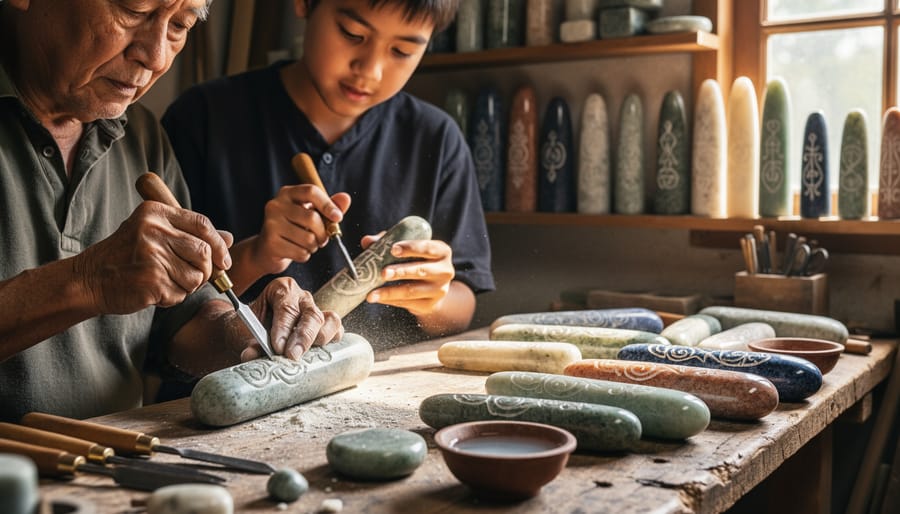
Creating ceremonial wands from natural stone requires both technical expertise and deep understanding of material properties. The process connects ancient sacred stone craftsmanship with contemporary artisan methods, producing implements that serve both functional and spiritual purposes.
Stone selection forms the foundation of ceremonial wand creation. Artisans evaluate hardness, grain structure, and natural color patterns to determine workability and final appearance. Obsidian, jade, quartz, and marble each present unique challenges and opportunities. Harder stones like jade require diamond-tipped tools and patient grinding, while softer materials like marble respond well to traditional stone carving techniques using chisels and rasps.
The traditional creation process follows specific stages:
- Select raw stone material based on intended purpose and energetic properties
- Rough cut the stone to approximate wand dimensions using saws or knapping techniques
- Shape the form through grinding, filing, and carving to achieve desired proportions
- Smooth surfaces using progressively finer abrasives, from coarse grit to polishing compounds
- Apply final polish to enhance natural luster and reveal internal crystal structures
- Consecrate the finished wand through ritualistic methods specific to its cultural tradition
Modern craftspeople have adapted these methods with powered rotary tools and synthetic abrasives while maintaining respect for ancestral techniques. The stone’s inherent characteristics dictate design choices—natural fracture patterns in obsidian might suggest specific shapes, while banded agate inspires spiraling forms that follow its internal structure.
Finishing methods vary by intended use. Ceremonial wands for display often receive high-polish treatments that showcase the stone’s beauty, while those meant for handling may retain slightly textured surfaces for improved grip. Some artisans incorporate metal fittings, gemstone inlays, or carved symbols, though purists prefer leaving the stone unadorned to preserve its natural integrity. Understanding these craftsmanship principles helps appreciate the skill required to transform raw geological material into meaningful ceremonial objects.
Modern Applications and Contemporary Ceremonial Use
Ceremonial wands crafted from natural stone continue to find relevance in today’s world, bridging ancient traditions with contemporary applications. Modern spiritual practitioners incorporate these implements in meditation practices, energy healing sessions, and personal rituals, often selecting stones like quartz, obsidian, or jade for their specific mineral properties and cultural significance.
In interior design, ceremonial stone wands have evolved into striking cultural artifacts that serve as conversation pieces and artistic focal points. Design professionals display these items in curated collections, appreciating both their historical context and the natural beauty of the stone materials. High-end residential projects and hospitality spaces increasingly feature authentic ceremonial wands as part of broader themes celebrating indigenous cultures and natural materials.
Museums worldwide preserve and showcase ceremonial wands as important archaeological artifacts, educating visitors about ancient civilizations and their sophisticated stone-working techniques. These exhibitions highlight the craftsmanship required to shape hard stones like basalt, granite, and marble into ceremonial objects, demonstrating the advanced technical knowledge of past cultures.
Contemporary architecture honors traditional stone craftsmanship by incorporating ceremonial design elements into building features. Architects and designers reference the elegant proportions and symbolic meanings of ceremonial wands when creating stone columns, handrails, and decorative elements. These applications celebrate the enduring relationship between humans and natural stone while respecting indigenous traditions.
The revival of interest in ceremonial wands reflects broader cultural movements toward sustainability, authentic materials, and connection with ancestral wisdom. Whether displayed as art, used in spiritual practice, or inspiring modern design, these stone implements demonstrate the timeless appeal of natural materials and the craftsmanship required to transform raw stone into objects of cultural significance.
Preserving and Caring for Stone Ceremonial Implements
Proper preservation of stone ceremonial wands ensures these precious objects maintain their integrity and spiritual significance for generations. Whether you possess an ancient artifact, a modern collectible, or a functional ritual tool, understanding the unique properties of natural stone is essential for appropriate care.
Different stone types require specific attention. Softer stones like soapstone and serpentine are vulnerable to scratches and should be handled with clean, dry hands. Harder materials such as obsidian, quartzite, and jade prove more durable but remain susceptible to impact damage and thermal shock. Always identify your ceremonial wand’s specific stone composition before implementing any cleaning regimen.
For routine maintenance, gentle dry dusting with a soft-bristled brush removes surface particles without risk. If deeper cleaning becomes necessary, use only distilled water at room temperature with a soft, lint-free cloth. Avoid all chemical cleaners, soaps, and abrasive materials that can damage the stone’s surface or strip away natural patinas that contribute to the object’s historical value.
Essential care practices include:
- Store ceremonial wands wrapped in acid-free tissue or soft cotton cloth
- Maintain stable temperature and humidity levels between 40-50% relative humidity
- Keep stone implements away from direct sunlight to prevent color fading
- Never expose ceremonial wands to extreme temperature changes
- Handle artifacts with clean hands or cotton gloves to prevent oil transfer
Professional conservation becomes necessary when cracks, chips, or significant deterioration appear. Museum-grade storage solutions, including archival boxes and custom display cases with UV-filtering glass, provide optimal protection for valuable pieces while allowing appreciation of these remarkable examples of stone craftsmanship and spiritual heritage.
Ceremonial wands stand as profound testimony to humanity’s enduring relationship with natural stone, bridging millennia of spiritual practice and cultural expression. From ancient Egyptian granite scepters to jade implements in Asian traditions, these ritual objects demonstrate how communities across civilizations recognized the inherent power and permanence of stone materials. The careful selection of specific stones—whether serpentine, obsidian, marble, or precious jade—reveals sophisticated understanding of both aesthetic beauty and symbolic meaning that transcends time and geography.
Today’s appreciation for natural stone applications in architecture and design echoes this ancient reverence. The same qualities that made stone ideal for ceremonial wands—durability, visual impact, and tactile presence—continue to inspire contemporary creators and designers. Museums worldwide preserve these artifacts not merely as historical curiosities but as masterworks demonstrating exceptional craftsmanship and deep spiritual resonance.
The legacy of ceremonial wands reminds us that our connection to natural stone extends far beyond functional considerations. These implements embody the timeless human impulse to transform earth’s raw materials into objects of meaning, beauty, and transcendence. As we continue exploring innovative applications for natural stone in modern contexts, we remain linked to ancestors who first recognized stone’s capacity to elevate the ordinary into the extraordinary.