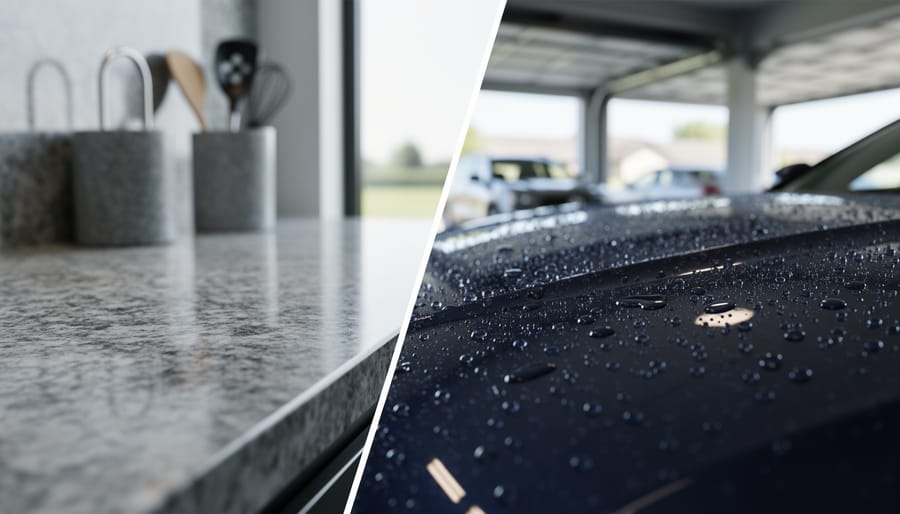
Surface protection technology works by creating a microscopic barrier that shields porous materials from water, stains, UV damage, and chemical intrusion. Whether applied to a granite countertop or a vehicle’s paint, these protective coatings share fundamental chemistry: they bond at the molecular level to fill microscopic surface irregularities and form a hydrophobic or oleophobic shield that repels contaminants before they penetrate.
This article examines the parallel technologies behind natural stone sealants and automotive ceramic coatings, two product categories that solve the same core challenge in different contexts. Both industries have evolved from basic topical treatments toward advanced nano-technology solutions that prioritize long-term material preservation over temporary cosmetic enhancement. Understanding how these coatings function, and why protection matters more than surface gloss, helps consumers and professionals make informed decisions about safeguarding substantial investments.
Natural stone surfaces face constant exposure to acids, oils, moisture, and abrasion. Without proper protection, marble etches under lemon juice, limestone absorbs wine stains, and granite dulls from repeated cleaning. Automotive paint confronts similar threats: road salts, bird droppings, tree sap, and UV radiation. The protective strategies developed for each application offer valuable insights into the other.
The gap between marketing claims and actual performance remains wide in both markets. Manufacturers frequently emphasize shine and water-beading theatrics while downplaying the coating’s primary function: creating a sacrificial barrier that absorbs environmental damage so the underlying surface doesn’t. By examining the chemistry, application methods, and performance characteristics that define modern ceramic coating for cars and stone sealants, this guide provides a framework for evaluating protection products based on measurable durability rather than visual appeal alone.
What Surface Protection Technology Means
Surface protection technology refers to products engineered to form a chemical or molecular bond with a substrate, creating a functional barrier that prevents damage from water, stains, UV rays, and environmental contaminants. Unlike cosmetic treatments that simply make surfaces look better temporarily, protection-first products alter the surface chemistry itself to defend against degradation over time.
The critical distinction lies in how these products interact with the material they’re protecting. Waxes, polishes, and traditional shine products sit on top of a surface as a temporary film. They wash away, wear off with use, and provide minimal actual protection, their primary function is aesthetic. In contrast, true protection technology penetrates into porous materials or bonds at the molecular level to non-porous surfaces, becoming integrated with the substrate rather than resting atop it.
This fundamental difference determines everything from durability to maintenance needs. A car wax might last a few weeks before needing reapplication; a properly applied ceramic coating can protect for years. A topical stone polish might make marble shine for a day or two; a penetrating sealant bonds within the stone’s pores and continues protecting for months or years, even as the surface is scrubbed and used.
Understanding the core terminology helps clarify how protection actually works:
- Substrate bonding
- The chemical attachment of protective molecules to the surface material, creating a permanent or semi-permanent connection rather than a removable layer.
- Penetrating sealant
- A formulation designed to soak into porous materials like natural stone, bonding below the surface to block contaminant absorption while maintaining breathability.
- Topical coating
- A product that bonds to the outermost surface layer, forming a protective shell over non-porous or sealed materials.
- Sacrificial layer
- The protective barrier that absorbs wear, chemical exposure, and environmental damage so the underlying substrate remains intact.
- Hydrophobic effect
- Water-repellent properties that cause liquids to bead up and roll off, preventing absorption and staining.
- Chemical bond
- A molecular-level connection between the protective product and the substrate, creating durability that mechanical adhesion alone cannot achieve.
These concepts apply equally whether you’re protecting granite countertops or automotive paint. The technology doesn’t care about the application, it cares about creating a durable barrier that extends the life of whatever sits beneath it. That’s the essence of protection over shine.
How Protection-First Products Work
The Chemistry of Bonding
At the molecular level, siloxane and silane-based protection products work through a process called hydrolysis and condensation. When applied to natural stone or automotive surfaces, these molecules seek out hydroxyl groups, the chemically reactive sites naturally present on mineral and glass surfaces. Think of these hydroxyl groups as docking stations where protection molecules can anchor themselves.
The bonding sequence starts when silane molecules react with moisture in the air or on the surface. This triggers hydrolysis, breaking down the silane structure and releasing alcohol byproducts. What remains are reactive silanol groups that immediately seek chemical bonds with the substrate’s hydroxyl sites. As the product cures, these silanol groups form permanent covalent bonds, the strongest type of chemical connection, with the surface at depths measured in nanometers.
Multiple silane molecules link together simultaneously through a process called cross-linking, creating a three-dimensional network rather than just a thin film. This networked structure becomes integrated with the top molecular layer of the stone or paint, which explains why properly bonded protection can’t simply be wiped away like a coating that sits on top.
The porosity of the substrate determines penetration depth. On natural stone like marble or limestone, smaller silane molecules can penetrate several millimeters into the pore structure before bonding. On denser automotive paint, the network forms primarily at the surface layer. In both cases, the result is identical: a chemically anchored protective barrier that becomes part of the material itself, wearing away only as the surface beneath it naturally erodes over time.
Creating the Protective Barrier
Once siloxane or silane molecules bond to the surface, they create a nanoscopic protective layer that fundamentally changes how the substrate interacts with its environment. This barrier doesn’t just sit passively, it actively works through three mechanisms to shield the material beneath.
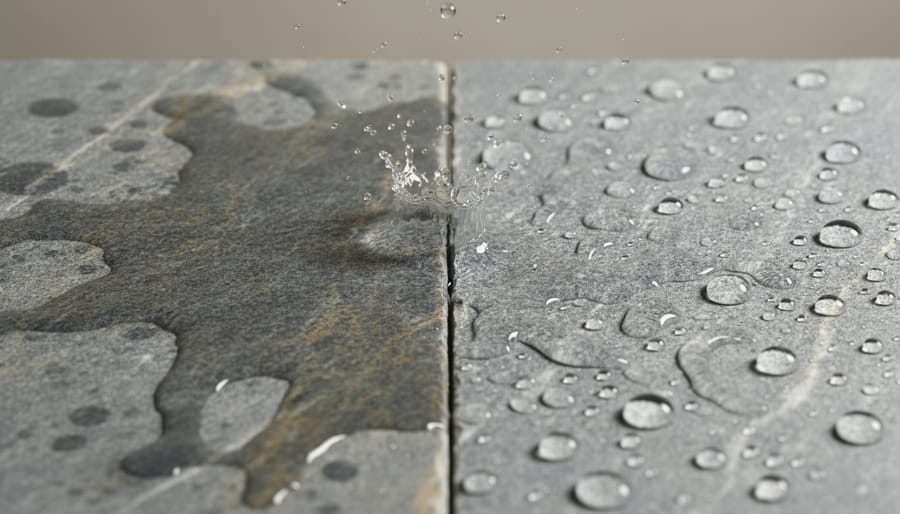
The bonded layer alters the surface energy, making it hydrophobic. Water molecules cannot penetrate because they’re physically repelled by the modified surface chemistry. On natural stone, this means liquids bead up and roll off before they can seep into the porous structure. On automotive paint, the same principle prevents water spots and makes contamination less likely to adhere. The contact angle, the degree to which water beads, indicates protection quality, with angles above 90 degrees showing effective hydrophobic performance.
Contaminant prevention works similarly. Oils, acids, salts, and organic materials struggle to penetrate the barrier because the molecular structure leaves no gaps for absorption. The protective layer fills the microscopic valleys and pores in the substrate, eliminating the pathways that stains and contaminants would normally exploit. This is why sealed granite resists wine stains and ceramic-coated car paint sheds road grime more easily than untreated surfaces.
Most importantly, the bonded layer becomes the sacrificial surface. Environmental wear, UV exposure, and chemical contact degrade this protective barrier first, leaving the actual substrate, the stone or paint, intact underneath. When the barrier eventually wears thin, reapplication restores full protection without the substrate having suffered damage. This sacrificial principle is why protection-first products extend material lifespan far beyond what cosmetic treatments can achieve.
Types of Protection Technology in Both Industries
Penetrating Protection
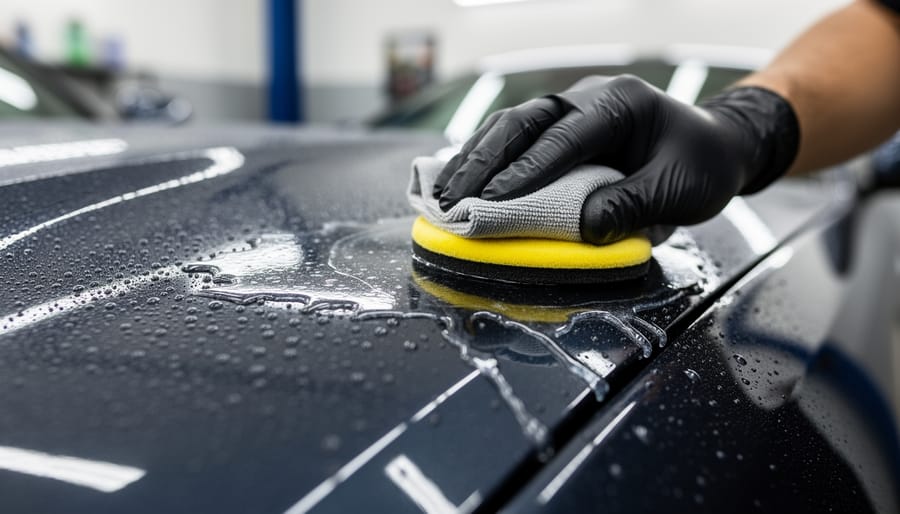
Penetrating sealants work by soaking into the microscopic pores of stone or porous automotive materials rather than coating the surface. In natural stone applications, impregnating sealers contain small siloxane or silane molecules that migrate deep into marble, granite, limestone, and other porous materials. These molecules settle within the stone’s capillary structure and chemically react to create a water-repellent barrier inside the material itself. The result is protection from within, liquids and contaminants bead on the surface instead of being absorbed, yet the stone retains its natural breathability and appearance. Homeowners who seal natural stone tile with penetrating products maintain the original texture and colour while gaining stain resistance.
In automotive contexts, penetrating protection appears in fabric and leather treatments, convertible top sealers, and wheel sealants that protect porous surfaces like uncoated aluminium or bare carbon fibre. The chemistry mirrors natural stone impregnators: small molecules enter the substrate, bond internally, and repel moisture and oils without creating a visible film. This sub-surface approach means the protected material feels unchanged to the touch while resisting damage that would otherwise require deep cleaning or restoration.
Surface-Bonding Coatings
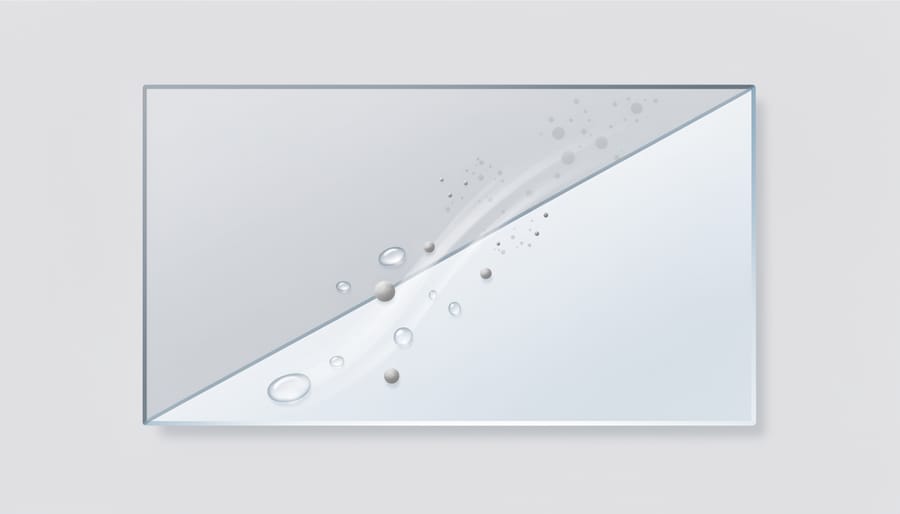
Surface-bonding coatings work differently than penetrating products by forming a distinct protective layer on top of the substrate rather than soaking into it. These formulations create a hard, sacrificial shell that takes the brunt of daily wear, UV exposure, and chemical contact before the surface underneath suffers any damage.
In natural stone applications, topical sealants create a film barrier that sits atop the stone surface. They excel at protecting high-traffic areas like polished marble floors or granite countertops where abrasion resistance matters. The coating bonds chemically to the stone’s top layer, forming a semi-permanent shield that repels liquids and resists scratching better than the raw stone could alone.
Automotive ceramic coatings operate on the same principle but target vehicle paint and glass. A trained installer applies a liquid polymer that cures into a glass-like finish bonded to the clearcoat. This hardened layer provides measurable scratch resistance (typically rated 9H on the pencil hardness scale) and extreme hydrophobic properties that cause water to bead and roll off.
Both types sacrifice themselves gradually over time, absorbing damage that would otherwise degrade the protected surface beneath.
Hybrid Formulations
Hybrid formulations represent an evolution in protection technology, merging the deep penetration of impregnating sealers with the surface-strengthening properties of topical coatings. These products typically apply in two stages or use advanced chemistry that allows a single formulation to penetrate porous substrates while simultaneously building a protective layer at the surface.
In natural stone applications, hybrid sealers work by first soaking into the stone’s capillary structure to block stain pathways, then cross-linking at the surface to create a harder, more scratch-resistant barrier. This dual-action approach addresses both internal vulnerability and surface wear.
Automotive hybrid coatings function similarly, with smaller molecules penetrating microscopic pores in clear coat finishes while larger polymer chains form a ceramic-like shell on top. The result is protection that anchors more securely than purely topical products while offering better gloss and water-beading performance than penetrating treatments alone.
These formulations typically cost more than single-action products but deliver measurably longer protection intervals. Testing shows hybrid products maintaining performance for three to five years on natural stone and two to four years on automotive surfaces under normal conditions.
Where Surface Protection Is Applied
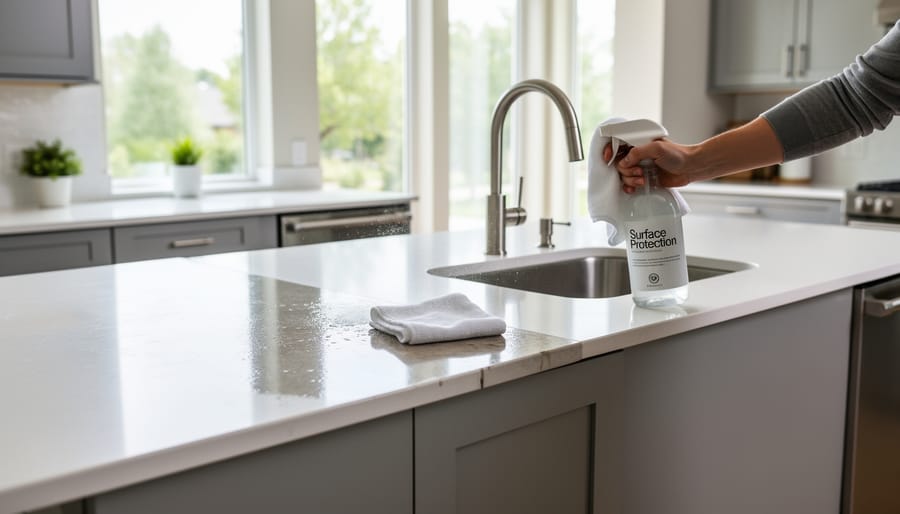
Protection-first products find their way onto surfaces wherever durability matters more than temporary shine. Understanding where these technologies actually work reveals the shared logic behind natural stone sealants and automotive ceramic coatings, both protect high-value surfaces from real-world damage.
In residential settings, natural stone protection starts with kitchen countertops made from marble, granite, or quartzite. These surfaces face daily exposure to acidic foods, oils, and cleaning products that can etch or stain unsealed stone. Bathroom vanities encounter similar challenges from cosmetics, hair products, and moisture. Stone flooring in entryways and living areas needs protection against tracked-in dirt, grit that scratches the surface, and spills that seep into porous stone. The distinction between penetrating vs topical protection becomes critical here, countertops benefit from breathable penetrating sealants that won’t trap moisture, while some floors handle topical coatings better.
Exterior stone facades on homes and buildings face harsher conditions: freeze-thaw cycles, UV radiation, acid rain, and airborne pollutants. Protection products for these applications must resist weathering while allowing the stone to breathe and release trapped moisture. Without proper sealing, limestone and sandstone facades deteriorate visibly within years.
Common applications across both industries include:
- Interior natural stone surfaces like countertops, backsplashes, and fireplace surrounds
- Exterior stone facades on residential and commercial buildings
- Automotive paint and clear coat finishes on cars, trucks, and motorcycles
- Glass and windshields requiring water-repellent coatings
- Wheels and trim pieces exposed to brake dust and road chemicals
- High-traffic commercial stone floors in hotels, restaurants, and retail spaces
Commercial stone installations, lobby floors in office buildings, restaurant bar tops, retail store facades, demand protection that withstands constant use. A hotel lobby floor might see thousands of footsteps daily, tracked-in sand acting like sandpaper against unprotected marble.
In automotive contexts, ceramic coatings protect paint from UV fading, bird droppings, tree sap, and road tar. Glass coatings improve visibility by causing water to sheet off windshields. Wheel coatings make brake dust easier to rinse away. Specialty applications extend to marine gelcoat, aircraft surfaces, and even industrial equipment where chemical resistance matters. The thread connecting all these uses: creating a barrier that takes the abuse so the substrate beneath stays intact.
The Shared Benefits: Why Protection Matters More Than Shine
The practical value of both natural stone sealants and automotive ceramic coatings lies in measurable performance benefits that extend far beyond making surfaces look better. While a glossy finish might catch the eye initially, the real advantage is the invisible shield that prevents damage, reduces wear, and protects your investment for years. Understanding these shared benefits helps you evaluate products based on function rather than cosmetic appeal.
Stain Resistance and Contamination Prevention
Both technologies create a barrier that prevents liquids and contaminants from penetrating the surface. On natural stone countertops, this means spilled wine or oil sits on top rather than seeping into the porous structure where it becomes a permanent stain. Automotive ceramic coatings provide the same protection against bird droppings, tree sap, and road chemicals that would otherwise etch into paint. The hydrophobic effect causes liquids to bead up and roll off, taking dirt and debris with them before bonding can occur.
Dramatically Easier Cleaning
Protected surfaces require less aggressive cleaning and fewer harsh chemicals. Natural stone sealed with quality protection technology can be wiped clean with pH-neutral cleaners instead of requiring poultices or professional stain removal. Ceramic-coated vehicles rinse cleaner because contaminants don’t grip the surface, water pressure alone often removes what would otherwise require scrubbing. This translates to less physical labor and reduced exposure to cleaning chemicals over the surface’s lifetime.
UV and Environmental Protection
Unprotected surfaces degrade under ultraviolet exposure and environmental stress. Stone loses color vibrancy and develops surface degradation; automotive paint oxidizes and fades. Quality protection products contain UV inhibitors that slow this process significantly. When you protect outdoor stone you’re defending against not just stains but the cumulative damage from sun, freeze-thaw cycles, and acid rain that would otherwise require replacement decades sooner.
Chemical Resistance
Modern protection formulations resist acidic and alkaline substances that attack unprotected surfaces. Marble and limestone naturally react to acids, a sealed surface provides critical reaction time to wipe away the threat before etching occurs. Ceramic coatings on vehicles similarly resist pH extremes from car wash chemicals, road salt, and industrial fallout.
Extended Surface Longevity and Cost Savings
Protected surfaces last measurably longer than unprotected ones. Natural stone installations properly sealed from the start can serve for generations without replacement. Automotive paint protected with ceramic coatings maintains clarity and gloss for years longer than waxed vehicles, preserving resale value. The math is straightforward: spending $300 on professional-grade protection that extends a $15,000 stone installation’s life by 15 years delivers exponential returns compared to premature replacement or costly restoration.
What Makes Quality Protection Products Different
Quality protection products distinguish themselves through verifiable performance characteristics rather than marketing promises. Understanding these criteria helps you assess both natural stone sealants and automotive ceramic coatings objectively.
The formulation itself reveals much about a product’s protective capability. Professional-grade products typically contain higher concentrations of active siloxane or silane compounds, often 15% to 40% by volume, compared to consumer formulations that may contain less than 5%. This concentration directly affects how deeply the product penetrates, how densely it bonds, and how long protection lasts. Manufacturers of genuine protection technology openly disclose active ingredient percentages, while those focused on appearance enhancements often obscure this information.
Durability testing separates legitimate protection from temporary surface treatments. Quality products undergo standardized testing protocols measuring resistance to specific threats: acidic substances (like lemon juice or wine for stone; bird droppings for automotive), abrasion cycles that simulate years of wear, UV exposure chambers that accelerate aging, and thermal cycling to test bond stability. Reputable manufacturers publish these test results rather than relying on vague claims of “long-lasting protection.”
For natural stone applications specifically, breathability ratings matter enormously. Stone needs to release moisture vapor trapped within its structure; non-breathable coatings can trap water and cause subsurface damage, staining, or efflorescence. Quality stone sealants specify their water vapor transmission rate (WVTR), typically measured in perms. Products with ratings above 15 perms allow adequate breathability while still blocking liquid water penetration, a balance essential for marble maintenance care and other porous stone protection.
Several quality indicators help distinguish professional-grade products from consumer alternatives:
- Third-party certification from independent testing laboratories, not just manufacturer claims
- Specific active ingredient concentrations disclosed on technical data sheets
- Published durability data with defined testing protocols and measurable results
- Breathability ratings (WVTR in perms) for natural stone applications
- Comprehensive warranty terms that cover specific performance failures, not just product defects
- Clear distinction between professional-grade formulations and consumer versions, with application requirements specified
Manufacturer reputation matters because protection technology relies on ongoing research and reformulation as new threats emerge. Established manufacturers invest in developing proprietary compounds, conduct field testing across diverse conditions, and support their products with technical guidance. Companies that have served professional applicators for decades demonstrate a commitment to performance over marketing hype.
Common Questions About Surface Protection Technology
Understanding what protection products can and can’t do helps you avoid expensive mistakes and set realistic expectations for both natural stone and automotive applications. Many consumers approach these products with questions shaped by marketing claims rather than the underlying chemistry.
How long does surface protection actually last?
Durability depends on the product chemistry, substrate porosity, and exposure conditions, penetrating sealants on interior natural stone typically last 3-5 years, while automotive ceramic coatings on paint may last 2-5 years. High-traffic areas, UV exposure, and chemical contact reduce longevity regardless of product type.
Can you apply too much protection product?
Yes, excess product that doesn’t bond to the substrate creates a hazy residue or uneven finish rather than additional protection. Once molecular bonding sites are filled, additional coats provide no benefit and can actually trap contaminants between layers.
Do protection products change how surfaces look?
Quality penetrating sealants leave no visible film and maintain the natural appearance of stone, while topical ceramic coatings typically add gloss and depth by creating a smooth surface layer. Any product claiming “no appearance change” while adding significant shine is contradicting basic physics.
How do you know when reapplication is needed?
Water no longer beads on the surface, stains penetrate more easily, or cleaning requires more effort, these indicate the protective barrier has degraded. Testing a small area with water after cleaning gives a clear indication of remaining hydrophobic performance.
Are professional and DIY products genuinely different?
Professional formulations typically contain higher concentrations of active ingredients and may require specific application conditions, equipment, or curing processes that justify expert installation. Consumer-grade products sacrifice some durability for easier application and more forgiving cure times.
The gap between professional and consumer products matters more for surface-bonding coatings than penetrating sealants. A DIY ceramic coating for cars might deliver 70% of professional-grade durability, which proves adequate for many applications. Penetrating stone sealants show less performance difference between professional and consumer versions when the active chemistry is similar, though application technique still affects coverage and longevity.
Removal becomes necessary when you want to switch product types or correct application errors. Penetrating sealants can’t be extracted once they’ve bonded within the stone’s pores, they must wear away naturally over time. Surface-bonding ceramic coatings can be removed through polishing or chemical stripping, though aggressive removal may damage the substrate beneath. This permanence factor makes product selection critical before application rather than easily reversible afterward.
Evaluating sealer certifications and third-party testing data provides more reliable guidance than manufacturer marketing claims. Products backed by standardized testing for water repellency, stain resistance, and durability give you measurable performance benchmarks rather than subjective promises. The chemistry determines what protection you actually get, regardless of whether the label emphasizes stone preservation or automotive shine.
Surface protection technology, regardless of whether it’s applied to natural stone or automotive paint, serves one fundamental purpose: extending the lifespan of valuable surfaces through chemical bonding rather than temporary cosmetic enhancement. The parallels between natural stone sealants and ceramic coatings reveal that effective protection stems from the same scientific principles, molecular bonding with substrates, creation of sacrificial barriers, and resistance to environmental contaminants.
Understanding this shared foundation empowers both consumers and industry professionals to cut through marketing noise and evaluate products based on measurable performance characteristics. When you recognize that siloxane chemistry works the same way on granite countertops as it does on vehicle clearcoat, you can make protection decisions grounded in chemistry rather than advertising claims about shine and gloss.
The protection-first approach transforms how we think about maintaining natural stone and other high-value surfaces. Instead of treating sealants as appearance enhancers that happen to protect, or ceramic coatings as shine products with protective benefits, we can prioritize what actually matters: breathability, chemical resistance, UV stability, and genuine durability measured in years rather than weeks.
As formulations continue advancing in 2026 and beyond, the line between natural stone protection and automotive ceramic technology will likely blur further. Hybrid products incorporating the best attributes of both categories already demonstrate how cross-industry innovation drives better solutions. The surfaces we protect may differ, but the science that preserves them remains remarkably consistent.