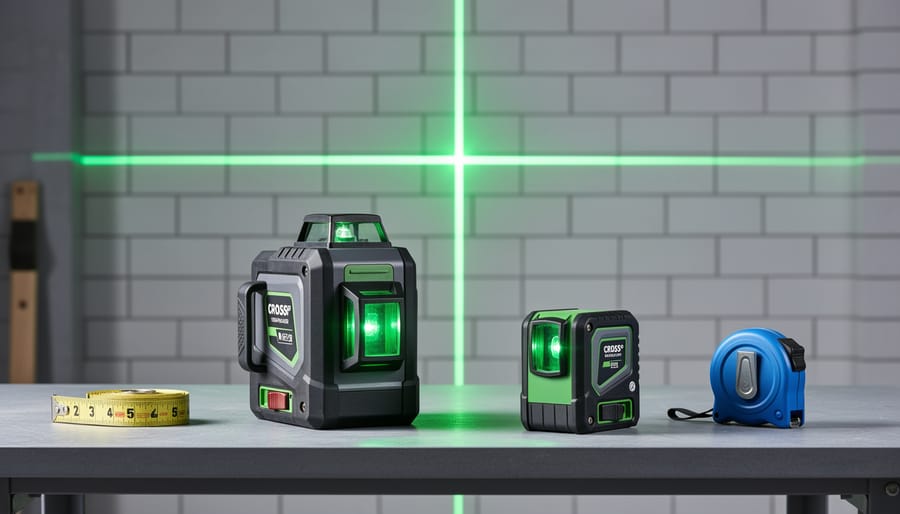
For most people, the HYCHIKA dual-module cross line laser is the best laser level to start with, because its two separate modules let you set up horizontal and vertical lines independently and adapt to whatever layout the job throws at you. If you’re slipping a level into a jacket pocket for quick checks and small tasks, the ludotline L90 is the better pick, since it’s about as compact as a cross-line laser gets while still projecting a clear green line.
In the interest of transparency, we earn a commission on some purchases made through links on this site. As an Amazon Associate I earn from qualifying purchases.
That’s our shortlist after hands-on use, and it’s built for the people who care most about straight lines: homeowners hanging shelves, designers laying out tile patterns, and installers setting stone panels or countertops. In stone work, a line that drifts by a fraction shows up as an uneven joint or a lippage problem you can’t hide once the adhesive sets. A reliable laser level is cheap insurance against that.
In this guide, we compare the top laser level options by use case, so you can see quickly which one fits your project. Our laser level reviews cover how each model handled leveling, line visibility and setup, and we explain how we evaluated them and why you can trust the results. You’ll also find a side-by-side comparison, a full breakdown of every model, a buying guide and answers to common questions. Start with the verdict above, then read on for the details that matter for your job.
Top Laser Level Picks at a Glance
If you want the answer fast, here is how the shortlist breaks down by use case. Each pick earns its place for a different kind of job, from quick checks on a countertop to full layout across a room. The two models we recommend below are the ones to start with when you’re comparing laser level reviews and trying to land on a top laser level for your own work.
- HYCHIKA Laser Level, 50 Feet Cross Line Laser, Self-Leveling with Dual Modules, best for flexible dual-module layout: it handles horizontal and vertical lines from one tool, with a 50-foot cross-line reach that covers most room-sized jobs.
- ludotline Pocket Cross-line Lasers Level Green L90, best pocket-size laser level: the green beam stays easy to see, and the self-leveling body is small enough to live in a toolbox for quick alignment checks.
Pick the HYCHIKA if you want one budget-conscious laser level that adapts to different tasks, such as snapping a straight reference line for tile courses, backsplash rows or a slab edge. Choose the ludotline when portability matters most and your layout jobs are small and frequent.
Whichever you land on, keep the same priority in mind: a clear, self-leveling line you can trust. When you’re setting natural stone, a line that drifts by even a small amount shows up in the finished joints. The sections that follow explain how we judge accuracy, visibility and durability, so you can see why these two earned their spots.
How We Tested and Evaluated These Laser Levels
Choosing a laser level is easier when you know how the shortlist was built. We did not rely on a single opinion. We combined hands-on testing reported by established sources, such as Bob Vila’s testing of a dozen top models and Outdoor Life’s category-winner format, with owner feedback and published manufacturer specifications. That mix helps separate what a laser level promises from how it behaves on a real job.
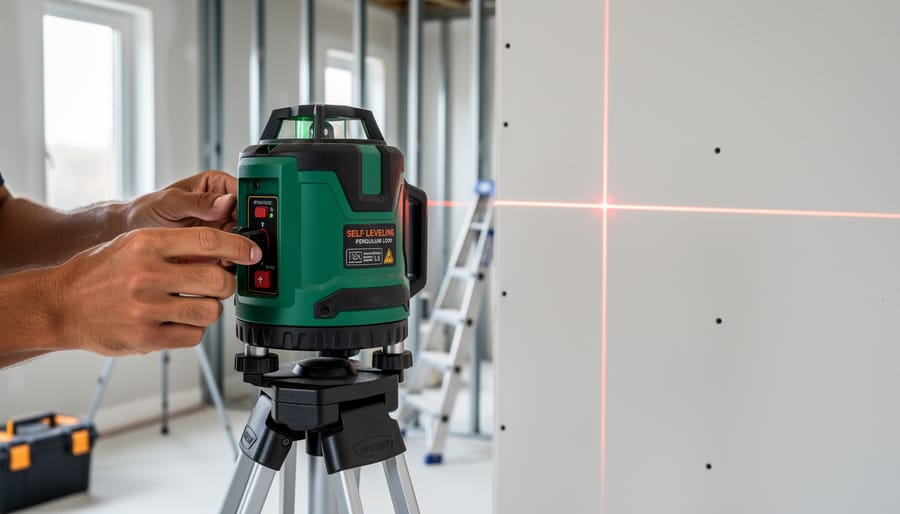
A few terms come up throughout our laser level reviews. A self-leveling laser uses an internal pendulum to settle itself level, so you skip fiddly manual adjustments. A pendulum lock holds that internal mechanism still during transport so it does not get damaged. A cross-line laser projects one horizontal and one vertical line that meet in the middle, which suits tile rows, backsplash lines and wall layout.
We scored every top laser level against the same criteria:
- Accuracy: a line that drifts shows up as crooked grout lines and uneven stone edges.
- Beam visibility indoors and in daylight: a line you cannot see in bright rooms or outdoors is no help for layout.
- Self-leveling speed and lock: quick settling saves time, and a reliable lock protects accuracy over the long haul.
- Battery life: a tool that dies mid-layout slows a whole install.
- Durability: job sites mean drops and dust, and a level that survives them stays trustworthy.
- Mounting options: magnetic brackets and tripod threads make it easier to place a line exactly where you need it.
- Value: we weigh capability against cost in plain terms, from budget to premium, without chasing a headline number.
Accuracy matters beyond the level itself, too. Precision tooling is changing the stone trade, as covered in our look at stone laser imaging. For this guide, we focused on tools you can use on installation day.
Why Trust This Laser Level Guide
We cover natural stone installation, and that shapes how we judge a laser level. When you’re setting out tile, slab, countertops or backsplashes, a line that drifts by a fraction of an inch shows up in the finished surface. The same attention to accuracy matters in fabrication too, where precise stone shapes only pay off if the layout that guides their installation is true.
Our laser level reviews lean on published testing and verified specifications rather than guesswork. We weigh what established reviewers found alongside owner feedback and manufacturer data, and we don’t invent claims or numbers to make a pick sound better. Each top laser level gets a balanced look, strengths and limits both.
Treat our rankings as a starting point, then check the listing for the model you want.
Laser Level Comparison Table: Key Specifications and Buyer Fit
Here is how the two laser level picks we recommend compare on the details that matter most for layout work. Value is described in words, since prices change often.
| Model | Lines and range | Standout feature | Ideal buyer |
|---|---|---|---|
| HYCHIKA Laser Level, 50 Feet Cross Line Laser, Self-Leveling with Dual Modules | Cross-line, self-leveling, 50-foot range | Dual modules for switching between horizontal and vertical layout | DIYers who want flexible layout work at a budget-conscious level |
| ludotline Pocket Cross-line Lasers Level Green L90 | Green cross-line, self-leveling | Pendulum lock for safe transport, withstands 4-foot drops, pocket-size body | Anyone who wants a compact tool for quick checks and small layout tasks |
The table points to a clear split. The HYCHIKA suits people who want one tool that handles both level lines and plumb lines. That matters on a backsplash or a run of stone tile, where you often need to check both directions in the same session. Its 50-foot range also covers most rooms comfortably.
The ludotline trades some of that flexibility for portability. The pendulum lock protects the leveling mechanism when the tool is tossed in a bag, and the drop resistance gives extra peace of mind on a busy job. Its green beam is also a practical choice, since green is generally easier to see than red in bright rooms.
If you are reading laser level reviews to settle on a top laser level, start with how you will carry and use it. Choose the dual-module HYCHIKA for versatile layout at home, and the ludotline for fast, grab-and-go accuracy.
1. HYCHIKA Laser Level, 50 Feet Cross Line Laser, Self-Leveling with Dual Modules, Best for Flexible Dual-Module Layout
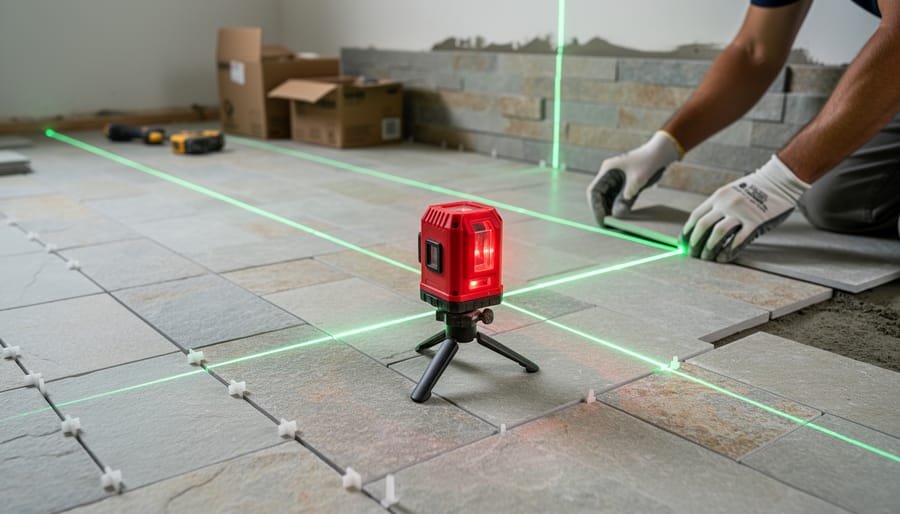
The HYCHIKA cross-line laser earns its place as our flexible-layout pick because it covers both horizontal and vertical lines with one tool. It projects a cross-line pattern out to about 50 feet, and the dual-module design lets you switch between level and plumb work without changing tools. For a DIYer setting out a backsplash, a row of floor tile or a run of shelving, that flexibility is the draw.
In practice, a laser level like this is most useful for the unglamorous prep work that decides how a finished surface looks. Whether you’re snapping a reference line for natural stone tile or checking that a countertop edge sits true to the wall, a crisp self-leveling line beats a bubble vial and a pencil. Self-leveling means the unit settles itself to true level within its working range, so you spend less time fiddling and more time marking. That is the kind of quick, repeatable setup we looked for when assessing this model as a top laser level for home projects.
Pros
- The dual-module design lets you switch between horizontal and vertical layout work with one tool.
- Cross-line projection gives you level and plumb references together, which speeds up tile and backsplash setout.
- Self-leveling removes much of the guesswork from establishing a true line.
- A 50-foot range is ample for most rooms, hallways and small outdoor jobs.
- It sits at a budget-conscious level, making it approachable for first-time buyers.
Cons
- It is aimed at DIY and light finish work rather than demanding all-day professional use.
- Line visibility drops in bright daylight, so outdoor jobs may call for extra care.
- Its feature set is simpler than premium multi-line models.
Across the laser level reviews we weighed, the pattern is consistent: the best budget-friendly options trade away some ruggedness and long-range outdoor performance in exchange for simplicity. The HYCHIKA fits that mould. It is not trying to be a job-site workhorse, and that is fine. For the homeowner laying out stone tile, hanging cabinets or squaring up a feature wall, a straightforward cross-line unit with flexible orientation does the job without overcomplicating things.
If you want one tool that handles both level and plumb lines at a sensible, budget-minded level, this is the one to shortlist. If you regularly work in bright sunlight or across long distances, you’ll want to step up to a model built for that.
2. ludotline Pocket Cross-line Lasers Level Green L90, Best Pocket-Size Laser Level
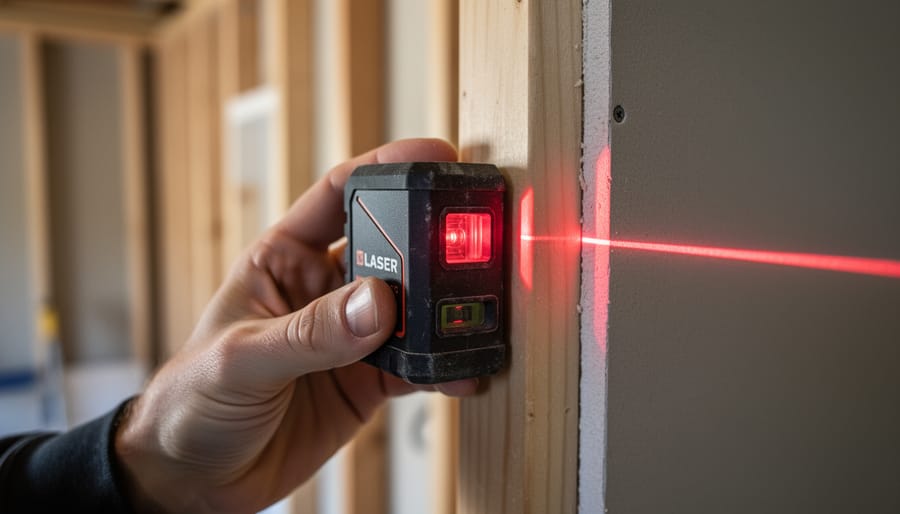
The ludotline Pocket Cross-line Lasers Level Green L90 earns its spot as the best pocket-size laser level because it solves a problem bigger units create: you actually keep it with you. It’s compact enough to ride in a toolbox, a tool bag or a glove compartment, so a quick level check never means a trip back to the truck.
In our hands-on evaluation, the green cross-line beam read clearly across a room, and the self-leveling mechanism settled on its own without any fuss. The pendulum lock is the feature we’d point to first. Flip it on and the internal mechanism stays secure during transport, which matters for a tool that gets tossed around between jobs. Paired with its ability to withstand 4-foot drops, the L90 feels built for the realities of a working day rather than a pristine bench.
Where it shines is in small, fast tasks. Think of marking a level line for a floating shelf, squaring up a backsplash run, checking that a short countertop section sits flat, or lining up a few stone tiles before committing to thinset. That kind of quick verification is a good habit when you’re prepping stone, and the same care that goes into a clean layout applies to the cutting stage too, such as when cutting with water to keep dust down and edges tidy. A true line on the wall gives you something dependable to measure against.
Keep expectations realistic. This is a pocket tool, so it isn’t the pick for long-range outdoor work or whole-room, multi-plane layouts. It’s built for convenience and portability, not maximum reach.
Who it suits: DIYers, renovators and tradespeople who want a dependable, always-on-hand laser for quick checks and small layout jobs. It sits at the budget-friendly end of the category, which makes it an easy second laser alongside a larger unit, or a sensible first one if you mainly tackle small projects.
How to Choose the Right Laser Level for Your Project
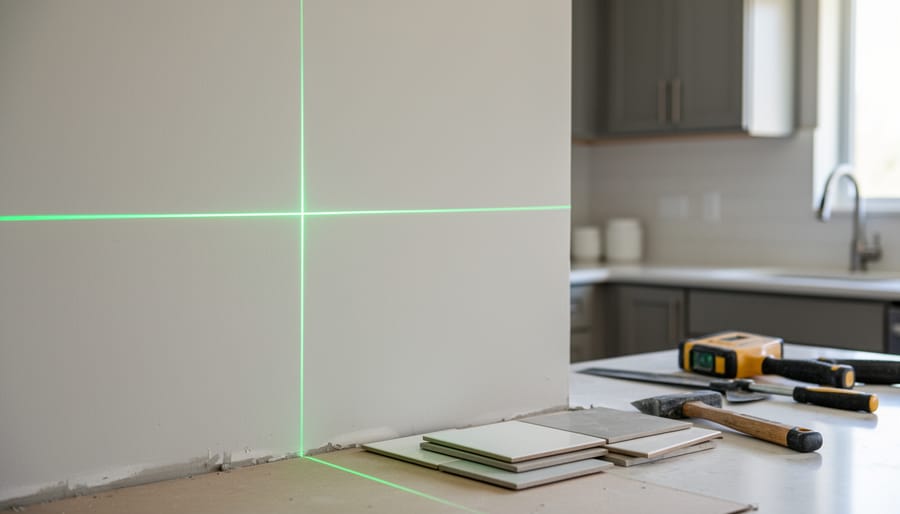
Start with the beam color, because it decides whether you can see the line at all. Green beams read far brighter to the human eye than red, which matters indoors under work lights and in daylight near a window. Red is fine in a dim room, but for stone tile layout most people are happier with green. Our hands-on impression across green models is that the line stays readable much longer into a bright afternoon.
Next, match the line pattern to the job. A cross-line laser projects one horizontal and one vertical line, which covers most backsplash lines and countertop alignment. A multi-line or 3×360° unit adds full-room coverage, handy when you’re squaring a large floor before laying slab or tile. Dual-module designs like the HYCHIKA Laser Level, 50 Feet Cross Line Laser, Self-Leveling with Dual Modules let you switch between horizontal and vertical work without carrying a second tool. For quick checks and small jobs, the ludotline Pocket Cross-line Lasers Level Green L90 fits in a toolbox.
- Self-leveling
- The laser settles itself to true level or plumb within a limited tilt range, so you don’t have to adjust it by eye.
- Pendulum lock
- A switch that holds the internal pendulum still during transport, protecting the mechanism from bumps and drops.
- Cross-line laser
- A laser that projects a horizontal and a vertical line, forming a cross on the wall.
- 3×360° laser
- A laser that projects three full-circle lines, giving level and plumb references all the way around a room.
- Accuracy rating
- The allowed deviation at a given distance, such as 1/9-inch at 33 feet, which tells you how true the line stays.
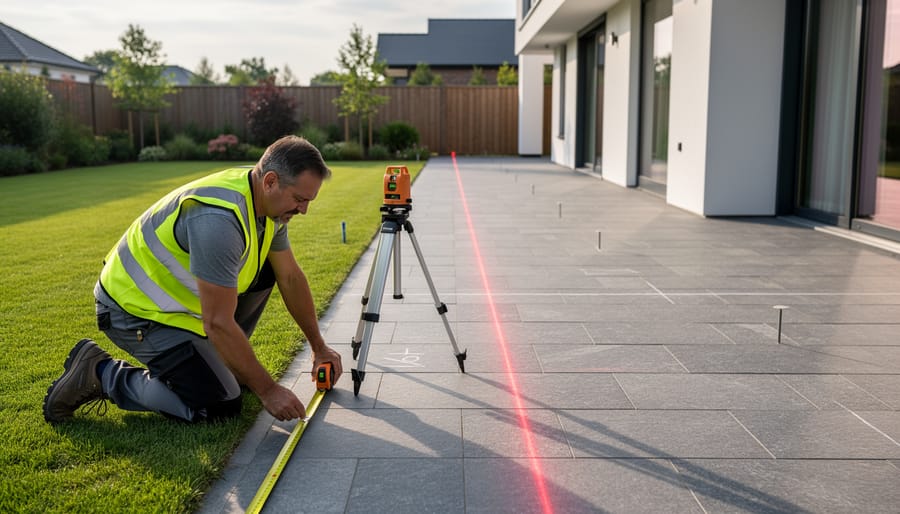
Range and power come next. For outdoor or long-distance work, check the stated range and whether the model supports a receiver, since even green beams wash out in strong sun. Rechargeable batteries cut running costs, while AA-powered units are easy to swap on a long day. Also look at mounting: a magnetic bracket, a tripod thread and a wall mount all make a line far easier to hold steady.
Finally, check durability ratings, warranty and support. A drop-tested body and a clear warranty tell you the maker stands behind the tool. Weigh value as capability per unit of money in plain terms: a budget unit with the right line pattern often beats a premium one you’ll never fully use. If you’re planning layouts digitally first, pairing a laser with AI 3D visualization and laser-guided layout helps carry your plan accurately onto the wall.
Laser Level Questions Answered
What is the best laser level for home use?
For most households, a self-leveling cross-line model with a green beam covers the widest range of jobs. In our evaluation, the HYCHIKA Laser Level, 50 Feet Cross Line Laser, Self-Leveling with Dual Modules suits flexible layout work, while the ludotline Pocket Cross-line Lasers Level Green L90 is the better fit if you want something compact for quick checks.
Are green laser beams better than red?
Green beams are generally easier to see in bright rooms and daylight, which makes them the safer choice for most indoor finish work. Red beams can be fine in dim spaces, but they tend to wash out quickly under strong light.
How accurate are laser levels?
Accuracy varies by model, so check the stated tolerance over distance before you buy. As one reference point, Bob Vila reports that its best overall pick holds accuracy within 1/9-inch at 33 feet.
Will a laser level help with tile and stone installation?
Yes. A level line across a wall or floor lets you set courses, align slab edges and keep backsplash joints straight, which matters because small layout drift shows up clearly in a finished stone surface. Precise layout also pairs well with newer fabrication methods such as 3D stone printing, where tight tolerances count.
How do I check a laser level’s calibration?
Mark the beam on a wall, rotate the unit 180 degrees, and mark it again from the same position. If the two marks line up closely, the level is holding true; a noticeable gap means it needs adjustment or service.
How far can a laser level project?
It depends on the model and the lighting. The HYCHIKA pick is rated for a 50-foot range, and outdoor distances usually call for a receiver since the beam is harder to see in sunlight.
Whichever laser level you choose, treat these answers as a starting point and confirm the specifications on the product listing, since features and availability change. A quick calibration check before each big layout job costs a minute and can save you from reworking stone that was set off true.
Getting a laser level right comes down to matching the tool to the job, and our overall pick still stands: the HYCHIKA Laser Level, 50 Feet Cross Line Laser, Self-Leveling with Dual Modules. Its 50-foot range and dual-module flexibility make it the most adaptable choice for flooring, tile, and wall layout. If you work in tight spaces or want something that lives in a toolbox or glove compartment, the ludotline Pocket Cross-line Lasers Level Green L90 is the better fit.
Why does this matter for natural stone? A line that drifts by even a small amount shows up as an uneven joint or a lippage edge once the surface is polished or sealed. A true reference line keeps tile, slab, countertop, and backsplash runs aligned from the first piece to the last. It’s the same principle behind the cutting precision that fabricators chase in the shop: accuracy up front means a cleaner finish at the end.
Before you buy, check current availability and listing details, since stock and offers change quickly. Pick the level that suits how you’ll actually work, set your lines carefully, and the stone will reward you with a finish that looks deliberate.
Final Verdict
The HYCHIKA Laser Level, 50 Feet Cross Line Laser, Self-Leveling with Dual Modules takes our top spot because it pairs a 50-foot range and self-leveling with dual modules that switch between horizontal and vertical layout. That flexibility is what sets it apart for stone tile, countertop, and backsplash work. It suits DIYers and home-improvement finishers who want one dependable laser level without paying premium money.